
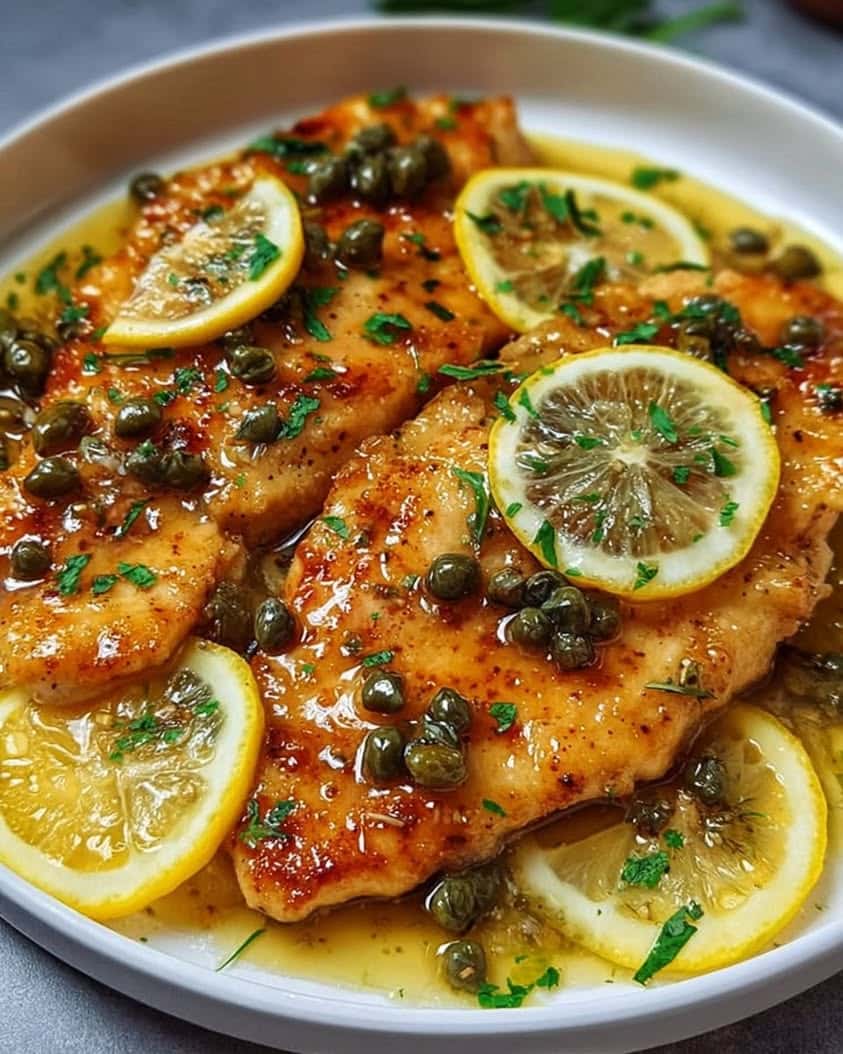
Chicken Piccata with Lemon & Capers: Creamy, tangy & ready in 30 mins! This easy Chicken Piccata recipe with lemon & capers is a restaurant-quality meal made at home.
Imagine a dish that delivers the bright, sophisticated flavors of a fancy Italian restaurant right in your own kitchen. This easy Chicken Piccata recipe does exactly that. It transforms simple chicken cutlets into a stunning main course featuring a vibrant, buttery sauce bursting with lemon and briny capers. Furthermore, it comes together in one pan with minimal prep work. Consequently, you get an impressive meal perfect for both busy weeknights and special occasions.
The magic of this Chicken Piccata lies in its perfect balance of flavors. Each bite offers tender, golden-brown chicken smothered in a sauce that is simultaneously rich, tangy, and savory. The lemon provides a refreshing zing, while the capers add a delightful salty pop. Ultimately, this dish feels luxurious and complex, yet its preparation is straightforward and surprisingly quick. You will wonder why you ever ordered takeout when such a delicious, homemade dinner is so achievable.
Moreover, the aroma that fills your kitchen while cooking this Chicken Piccata is absolutely intoxicating. The scent of searing chicken mingles with the sharp, clean fragrance of fresh lemon and the savory notes of white wine and garlic. This sensory experience builds anticipation for the incredible meal to come. Additionally, the final presentation, with the chicken nestled in a glossy, pale yellow sauce and dotted with green parsley and capers, is visually stunning. It is a feast for the eyes before it even reaches the palate.
Quick Recipe Highlights
- Flavor Profile: This Chicken Piccata masterfully balances bright, acidic lemon with rich, savory butter and the unique salty-briny punch of capers. The resulting sauce is complex and incredibly addictive, coating the mild chicken perfectly.
- Texture: You get wonderfully tender and juicy chicken encased in a thin, delicate crust from a light dusting of flour. Meanwhile, the sauce is luxuriously velvety, and the capers provide little bursts of firm texture.
- Aroma: As it cooks, the kitchen fills with an inviting fragrance. You will notice the savory scent of seared chicken, the sharp zest of fresh lemon, and the warm, aromatic notes of reduced white wine and garlic.
- Visual Appeal: The dish presents beautifully with golden-brown chicken cutlets draped in a glossy, pale yellow sauce. Finally, a sprinkle of fresh green parsley and the scattered dark green capers create a restaurant-worthy plate.
- Skill Level Needed: This is an accessible recipe for cooks of all levels. Basic techniques like pan-frying and making a simple pan sauce are all that is required. Therefore, even a beginner can achieve fantastic results.
- Special Equipment: A large skillet is the only essential tool. Ideally, use a stainless steel or cast-iron pan to achieve a perfect sear on the chicken and create a flavorful fond for the sauce.
Recipe Overview
- Difficulty Level: We classify this Chicken Piccata as easy because it uses fundamental cooking techniques. The process involves simple pan-frying and creating a quick pan sauce, which are foundational skills. Additionally, the ingredient list is short and the steps are sequential and logical. Consequently, it is a fantastic recipe for building kitchen confidence.
- Category: This dish fits perfectly into the main course category for any dinner. It is substantial enough to be the centerpiece of a meal. Furthermore, its elegant profile makes it suitable for both casual family dinners and more formal entertaining.
- Cuisine: Chicken Piccata is a classic of Italian-American cuisine. It draws inspiration from Italian coastal cooking, particularly from regions like Sicily where lemons and capers are staple ingredients. The dish exemplifies the Italian philosophy of using a few high-quality components to create something extraordinary.
- Cost: This is a very cost-effective meal to prepare at home. Chicken breasts are an affordable protein, and the other ingredients like lemon, butter, and capers are pantry staples or inexpensive to acquire. Compared to ordering it at a restaurant, you save a significant amount of money.
- Season: While delicious year-round, this Chicken Piccata truly shines in the spring and summer. The bright, citrusy notes of lemon feel refreshing and light during warmer weather. Conversely, it also brings a welcome burst of sunshine to the table during darker winter months.
- Occasion: Its versatility makes it perfect for many occasions. It is quick enough for a simple weeknight meal yet elegant enough for a date night at home or a dinner party with friends. You can easily dress it up or down based on your side dishes and presentation.
Why You’ll Love This Recipe
First and foremost, the taste and texture of this Chicken Piccata are simply phenomenal. The chicken remains incredibly juicy and tender inside while developing a delicate, golden crust. Meanwhile, the sauce is a symphony of flavors; it is rich and buttery yet cut through with the vibrant acidity of fresh lemon and the unique, salty tang of capers. Each component complements the others perfectly, creating a harmonious and sophisticated dish that feels far more complex than its simple preparation suggests. You will find yourself wanting to lick the plate clean.
From a convenience standpoint, this easy Chicken Piccata recipe is a true weeknight hero. It requires only one pan, which means cleanup is an absolute breeze. Furthermore, the entire cooking process from start to finish takes about thirty minutes. You can go from a bare countertop to a plated, restaurant-quality meal in the time it would take for pizza delivery to arrive. This efficiency makes it an invaluable addition to your regular dinner rotation, especially on those busy evenings when time is of the essence.
Nutritionally, this dish offers several advantages when prepared mindfully. Chicken breast is an excellent source of lean protein, which is essential for muscle maintenance and satiety. By controlling the amount of butter and using a light hand with the flour, you can manage the fat and calorie content. Additionally, lemons provide a healthy dose of Vitamin C, and using fresh ingredients avoids the hidden sodium and preservatives often found in pre-made sauces or restaurant versions. It is a meal that feels indulgent while still being a wholesome choice.
This Chicken Piccata also holds tremendous social and entertaining value. It is a true crowd-pleaser that impresses guests with its elegant appearance and refined flavor profile. Serving a homemade dish that tastes like it came from a fine dining establishment is a rewarding experience. Moreover, because most of the active cooking time is at the beginning, you can finish the sauce and serve the meal without being stuck in the kitchen away from your company. It allows you to be a present and relaxed host.
Finally, the cost-effectiveness and accessibility of this recipe cannot be overstated. The ingredients are common and affordable, available at virtually any grocery store. A single chicken breast, when sliced into cutlets, can easily serve two people, making it a budget-friendly protein option. When you compare the cost of making this Chicken Piccata at home to the price of ordering it at an Italian restaurant, the savings are substantial. You get a luxurious dining experience for a fraction of the cost, all from the comfort of your own home.
Historical Background and Cultural Significance
The origin story of Chicken Piccata is somewhat debated, but it is firmly rooted in Italian culinary tradition. The term “piccata” itself is Italian, traditionally referring to a method of preparing meat—often veal (Vitello Piccata)—by slicing it, dredging it in flour, and serving it with a sauce featuring lemon, butter, and capers. The dish is believed to have originated in Central Italy, though its exact birthplace is unclear. When Italian immigrants came to the United States, they adapted their classic recipes using locally abundant and affordable ingredients, leading to the popularization of chicken as the protein in this beloved dish.
Culturally, piccata represents a cornerstone of Italian “cucina povera,” or the cooking of the poor, which emphasizes transforming humble ingredients into extraordinary meals. The technique of creating a flavorful pan sauce from the browned bits left in the skillet after cooking the meat is a classic example of resourcefulness and avoiding waste. This philosophy of maximizing flavor from simple, high-quality components is a defining characteristic of Italian cooking. Consequently, Chicken Piccata is more than just a recipe; it is a testament to a culinary culture that values simplicity, quality, and ingenuity.
The evolution of the recipe from veal to chicken is a fascinating study in culinary adaptation. In Italy, veal was the traditional choice for piccata. However, upon arriving in America, Italian immigrants found chicken to be more readily available and significantly less expensive than veal. This substitution made the dish more accessible to a wider audience and helped it become a staple on the menus of Italian-American restaurants across the country. Over time, Chicken Piccata became so popular that many people now consider it the standard version, showcasing how immigrant cuisines dynamically evolve in their new environments.
Regional variations of piccata exist even within Italy and have further diversified in America. Some versions in Italy’s northern regions might use white wine more prominently, while others may omit the capers. In the United States, you might find adaptations that include a splash of cream for a richer sauce, or the addition of garlic and shallots for more aromatic depth. Some modern interpretations even use other proteins like fish or tofu. This ability to adapt while maintaining the core identity of a lemony, caper-brightened sauce demonstrates the recipe’s versatility and enduring appeal across different palates and dietary preferences.
Ingredient Deep Dive
Chicken breast is the perfect canvas for this dish. To ensure tender results, purchase plump, evenly-sized breasts. Pound them to an even ½-inch thickness; this step is non-negotiable as it guarantees quick, even cooking and prevents the thinner edges from drying out. For storage, keep raw chicken in its original packaging on a tray on the bottom shelf of your refrigerator for 1-2 days. For a substitution, you can use turkey cutlets or even thin pork loin chops, adjusting the cooking time slightly as needed.
Fresh lemons are the soul of this Chicken Piccata, providing the essential bright, acidic note. Always choose lemons that are heavy for their size with smooth, vibrant yellow skin, as these are the juiciest. You will use both the juice and the zest; the zest contains potent aromatic oils that intensify the lemon flavor without adding extra liquid. For the best yield, roll the lemon firmly on the countertop before juicing. In a pinch, you cannot substitute bottled lemon juice; it lacks the fresh, vibrant flavor and will result in a flat-tasting sauce.
Capers are the small flower buds of the caper bush, pickled in brine or salt, and they provide the signature briny, salty punch. Their unique flavor is irreplaceable. Look for nonpareil capers in a jar, as they are the smallest and most tender variety. Before using, it is a good practice to rinse them briefly to remove excess saltiness. If you are in an absolute bind, chopped green olives can provide a similar salty note, though the flavor profile will be distinctly different. Keep unused capers submerged in their brine in the refrigerator.
A dry, crisp white wine like Sauvignon Blanc or Pinot Grigio is ideal for deglazing the pan. The alcohol cooks off, leaving behind a complex acidity that balances the richness of the butter. The wine helps lift the flavorful browned bits, known as fond, from the bottom of the pan, incorporating them into the sauce. If you prefer not to cook with wine, you can substitute it with an equal amount of chicken broth plus an extra tablespoon of fresh lemon juice to maintain the necessary acidity.
Using a combination of butter and olive oil is a classic technique. The olive oil, with its higher smoke point, is used to sear the chicken, while the butter, added later, provides unparalleled richness and flavor and helps create a luxuriously emulsified sauce. Use unsalted butter so you can control the final seasoning of the dish. For the flour, all-purpose works perfectly to create a light coating that helps the chicken brown beautifully and also acts as a slight thickener for the sauce once it is added back to the pan.
Common Mistakes to Avoid
- Skipping the Pounding Step: Not pounding the chicken to an even thickness is a critical error. Consequently, the thin parts will overcook and become dry and tough long before the thicker center is done. Always take the time to create uniformly thin cutlets for perfectly cooked chicken.
- Overcrowding the Pan: Adding too many chicken cutlets to the pan at once will cause them to steam instead of sear. This prevents the development of a golden-brown crust and the creation of the flavorful fond needed for the sauce. Cook in batches if necessary to ensure proper browning.
- Burning the Garlic: Adding minced garlic too early in the sauce-making process will cause it to burn and become bitter. Always add the garlic after you have deglazed the pan with wine and let it cook for just 30 seconds until fragrant, not browned.
- Using Bottled Lemon Juice: This is perhaps the biggest flavor killer. Bottled juice lacks the bright, fresh, complex acidity of freshly squeezed lemons. It will make your sauce taste flat and overly sharp. Always use real, fresh lemons for both zest and juice.
- Not Letting the Sauce Reduce: After adding the lemon juice and broth, you must allow the sauce to simmer and reduce slightly. This step concentrates the flavors and allows the sauce to thicken to a nice, coating consistency. Rushing this step results in a thin, watery sauce.
- Adding Cold Butter at the End: When finishing the sauce, the butter should be added off the heat or with the heat very low. Adding cold butter and swirling it in gradually, a technique called “monter au beurre,” creates a smooth, glossy, emulsified sauce. Adding it over high heat can cause the sauce to break and become oily.
- Oversalting Too Early: Capers and chicken broth already contain a significant amount of salt. Therefore, always wait until the very end to season the sauce with additional salt and pepper. Taste it first, as you may find it needs little to no extra salt.
- Using a Non-Stick Pan for the Sauce: While a non-stick pan is fine for cooking the chicken, a stainless steel or cast iron skillet is superior for sauce-making. These pans develop a better fond (the browned bits), which is the flavor foundation of your pan sauce.
Essential Techniques
Pounding Chicken Cutlets: This technique is crucial for even cooking. Place a chicken breast between two sheets of plastic wrap or in a zip-top bag. Using the flat side of a meat mallet, a rolling pin, or even a heavy skillet, gently pound the thickest part of the breast until it is a uniform ½-inch thickness. Work from the center outward and use firm, controlled strikes. The goal is to flatten, not pulverize, the meat. This ensures every part of the cutlet cooks at the same rate, yielding perfectly tender chicken without any dry, overcooked edges.
Creating a Pan Sauce (Deglazing): This is the secret to a deeply flavorful sauce. After searing the chicken, you will see browned bits stuck to the bottom of the pan. This “fond” is packed with flavor. Deglazing involves adding a liquid—in this case, white wine—to the hot pan and using a whisk or wooden spoon to scrape all those browned bits loose. The liquid dissolves the fond, incorporating its rich, savory essence into the sauce. This simple step transforms what looks like a dirty pan into the foundation of a restaurant-quality sauce.
Emulsifying the Sauce with Butter (Monter au Beurre): This French technique is what gives the sauce its velvety, luxurious texture and glossy sheen. After the wine and lemon juice have reduced, the pan is taken off the heat. Cold butter, cut into pieces, is then added and swirled continuously until it melts and incorporates into the liquid. The agitation and the off-heat temperature prevent the butter from separating, creating a stable, emulsified sauce that clings beautifully to the chicken. This final enrichment is what makes the sauce taste incredibly rich and complex.
Pro Tips for Perfect Chicken Piccata
- For the most flavor, use a microplane to zest your lemon before you juice it. The zest contains intense aromatic oils that will supercharge the lemon flavor in your sauce without making it overly watery.
- Let your chicken cutlets sit at room temperature for 15-20 minutes before cooking. This takes the chill off and promotes more even cooking, preventing a cold center and an overcooked exterior.
- When dredging the chicken, use one hand for the dry ingredients (flour) and the other hand for the wet (egg wash, if using). This simple trick prevents your fingers from becoming coated in a gluey, clumpy mess.
- Ensure your pan is properly preheated before adding the chicken. A properly heated pan is essential for that initial sizzle, which sears the surface and prevents the chicken from sticking.
- Do not discard the browned bits in the pan after cooking the chicken. These are flavor gold. Deglaze the pan thoroughly to scrape every last bit into your sauce for maximum depth.
- When adding the final butter, take the pan completely off the heat source. This low temperature is critical for creating a smooth, emulsified sauce that won’t break and become oily.
- For a brighter, more herbaceous finish, stir in half of your fresh chopped parsley at the very end of cooking and use the other half as a fresh garnish on the finished plate.
Variations and Adaptations
For regional variations, explore different protein bases. The classic Italian version, Vitello Piccata, uses veal scaloppini. You can also make Piccata di Pesce using firm white fish like sole, flounder, or tilapia, adjusting the cooking time downward as fish cooks very quickly. In some American interpretations, a splash of heavy cream is added at the end for a richer, more decadent sauce. Alternatively, some cooks add sliced mushrooms to the pan after the chicken is removed, sautéing them until golden before proceeding with the sauce.
Seasonal adaptations are easy to implement. In the spring, garnish with fresh pea shoots or steamed asparagus spears arranged on the plate. During summer, incorporate fresh cherry tomatoes, halved and quickly warmed in the sauce at the very end. For a fall twist, serve the Chicken Piccata over a bed of creamy polenta or roasted squash puree instead of pasta. In the winter, pair it with hearty roasted root vegetables to create a more comforting and substantial meal that still features the bright, lifting qualities of the lemon-caper sauce.
Dietary modifications are straightforward. For a gluten-free version, simply substitute the all-purpose flour with your favorite gluten-free flour blend or even cornstarch for dredging the chicken. To make it dairy-free, replace the butter with a plant-based butter alternative that has a high fat content and a good flavor profile; olive oil can also be used, though the sauce will be less rich and creamy. For a lower-carb or keto-friendly dish, omit the flour dredging step entirely and just pan-sear the chicken; the sauce itself is naturally very low in carbohydrates.
Serving and Presentation Guide
Plating techniques can elevate your Chicken Piccata from a home-cooked meal to a restaurant-style presentation. Instead of piling everything together, artfully arrange one or two chicken cutlets slightly overlapping on the plate. Spoon the sauce over the top, allowing some to pool around the sides. Do not completely drown the chicken; let the beautiful sear on the meat show through. For a more modern look, use a squeeze bottle to drizzle the sauce in an elegant pattern around the plate before placing the chicken in the center.
Garnishing is the final touch that adds color and freshness. A generous sprinkle of freshly chopped Italian parsley is classic and non-negotiable for its color and fresh flavor. For an extra pop of color and a subtle oniony flavor, thin slices of fresh chives also work wonderfully. You can also add a few very thin slices of lemon, either fresh or quickly seared in the hot pan, placed directly on top of the chicken. Finally, ensure the capers are visible and evenly distributed across the dish for visual interest.
Traditional accompaniments include angel hair pasta or linguine, which are perfect for soaking up the delicious sauce. Alternatively, a simple side of creamy mashed potatoes or risotto provides a wonderful textural contrast to the tangy sauce. For a lighter option, serve with a simple arugula salad dressed with lemon vinaigrette, which complements the main dish without competing with its flavors. crusty, warm bread is also essential for sopping up every last drop of the incredible pan sauce from your plate.
Wine and Beverage Pairing
Selecting the right wine enhances the dining experience tremendously. The high acidity and citrus notes in this Chicken Piccata demand a wine with equally bright acidity to complement it, not fight it. A crisp, dry Italian white like Pinot Grigio or Vermentino is a classic and perfect choice. Their clean, mineral notes and citrus flavors mirror the sauce beautifully. A Sauvignon Blanc, with its characteristic grapefruit and herbaceous qualities, is another fantastic option that stands up well to the bold lemon and briny caper flavors.
For non-alcoholic alternatives, consider beverages that can balance the dish’s acidity and richness. A sparkling lemonade or a lime and soda water with a dash of bitters provides effervescence and citrus notes that cleanse the palate. Iced herbal teas, such as mint or lemongrass, are also excellent choices as their refreshing qualities contrast the rich, buttery sauce. Avoid overly sweet drinks like standard sodas, as the sugar will clash with the savory and tangy profile of the Chicken Piccata.
If you prefer red wine, choose a very light-bodied, low-tannin option. A chilled Beaujolais or a Pinot Noir served slightly cool can work surprisingly well. The key is to avoid big, bold, tannic reds like Cabernet Sauvignon or Malbec, as the tannins will conflict with the lemon’s acidity and create a metallic or bitter taste on the palate. Ultimately, the wine should refresh your mouth between bites of the rich chicken and tangy sauce, not overwhelm the delicate balance of flavors you have worked so hard to create.
Storage and Shelf Life
Proper storage is key to maintaining quality and safety. Allow any leftover Chicken Piccata to cool completely to room temperature before storing, but do not leave it out for more than two hours. Transfer the chicken and sauce to an airtight container and store it in the refrigerator. The sauced chicken will keep well for up to 3-4 days. The acidity from the lemon juice may cause the chicken to become slightly more tender over time, but the flavors will remain delicious.
Reheating requires care to prevent the chicken from becoming tough and the sauce from breaking. The best method is to reheat gently in a covered skillet over low heat, adding a tablespoon of water or chicken broth to loosen the sauce. Alternatively, you can reheat it in the microwave using a covered microwave-safe dish at 50% power, stirring the sauce occasionally. Avoid boiling the sauce during reheating, as high heat can cause the emulsion to separate, resulting in a greasy appearance.
Freezing is possible but not highly recommended for this particular dish. The texture of the cooked chicken can become somewhat mushy upon thawing, and the dairy-based sauce is very likely to separate and become grainy when frozen and reheated. If you must freeze it, store it in a freezer-safe container for up to one month. Thaw overnight in the refrigerator before reheating gently on the stovetop, and be prepared to whisk vigorously to try and re-emulsify the sauce.
Make Ahead Strategies
You can efficiently break down the preparation to save time on a busy night. The day before, you can pound the chicken cutlets to an even thickness. Then, place them in a single layer between sheets of parchment paper in an airtight container and store them in the refrigerator. You can also measure out your capers, juice and zest your lemons, and mince your garlic and parsley, storing each component in separate small containers in the fridge. This “mise en place” makes the actual cooking process incredibly fast and streamlined.
For partial cooking, you can sear the chicken cutlets ahead of time. Cook them for about 1-2 minutes per side, just until they have a light golden color but are not fully cooked through. Let them cool, then store them in the refrigerator. When ready to serve, you can quickly finish cooking the chicken in the oven or in the pan while you make the sauce from scratch. This method helps lock in the juices and ensures the chicken does not become overcooked while you prepare the other components of the sauce.
While you cannot make the entire sauce ahead of time due to the delicate butter emulsion, you can prepare the base. After removing the chicken, you can deglaze the pan with wine and lemon juice and reduce it. Let this base cool and store it separately. When ready to serve, reheat the base, return the chicken to the pan to finish cooking, and then proceed with swirling in the cold butter off the heat. This final step must always be done just before serving to guarantee a glossy, perfectly emulsified sauce.
Scaling Instructions
Halving the recipe is straightforward for a smaller meal. Use two chicken cutlets and simply divide all other ingredient quantities in half. The cooking times will remain largely the same, but keep a close eye on the sauce as it will reduce more quickly due to the smaller volume. Use a medium-sized skillet instead of a large one to ensure the liquid covers the bottom of the pan adequately for proper deglazing. This adjustment is perfect for a romantic dinner for two without excessive leftovers.
Doubling or tripling the recipe for a crowd requires some planning. You will need to cook the chicken in multiple batches to avoid overcrowding the pan; keep the cooked batches warm on a baking sheet in a low oven (around 200°F). For the sauce, use a very large, wide pan or a Dutch oven to accommodate the increased liquid. Be aware that the sauce may take slightly longer to reduce. You may also need to adjust seasoning at the end, as scaling up spices and acids does not always work perfectly linearly, so taste and adjust carefully.
Equipment adjustments are crucial when scaling. A single recipe works perfectly in a standard 12-inch skillet. When doubling, a 14-inch skillet or a wide sauté pan with high sides is ideal. If you only have smaller pans, commit to cooking in more batches. For very large gatherings, consider using two skillets simultaneously to manage the workload. Furthermore, have a large platter or baking sheets ready to hold the cooked chicken, and ensure you have a whisk that can comfortably handle the volume of sauce in your chosen pan.
Nutritional Deep Dive
From a macronutrient perspective, Chicken Piccata is a well-balanced dish. A single serving provides a substantial amount of high-quality lean protein from the chicken breast, which is essential for muscle repair, satiety, and metabolic function. The carbohydrates are relatively low, primarily coming from the small amount of flour used for dredging. The fat content comes mainly from the olive oil and butter, which provide a mix of monounsaturated and saturated fats. By controlling the amount of butter used, you can effectively manage the total fat and calorie count of the meal to align with your dietary goals.
Micronutrient analysis reveals several beneficial components. The fresh lemon juice is an excellent source of Vitamin C, a powerful antioxidant that supports immune function and skin health. Capers, though used in small quantities, contribute vitamin K, iron, and copper. Using fresh herbs like parsley adds a boost of Vitamin K, Vitamin A, and Vitamin C. If you serve it with a side of leafy greens or whole-grain pasta, you further increase the fiber, vitamin, and mineral profile of the overall meal, making it a nutritionally dense choice.
For those monitoring their intake, simple modifications can tailor this dish to various needs. To reduce sodium, be sure to rinse the capers thoroughly and use a low-sodium chicken broth. For a lower-fat version, you can reduce the amount of butter by half and rely more on the flavor from the reduced wine and lemon juice, or use a butter alternative. To minimize carbohydrates, omit the flour dredging step entirely; the chicken will still brown, and the sauce will be slightly thinner but equally flavorful. These small tweaks make the recipe adaptable without sacrificing its core identity.
Dietary Adaptations
For a gluten-free Chicken Piccata, the adaptation is incredibly simple. Substitute the all-purpose flour with an equal amount of a gluten-free all-purpose flour blend. Many blends containing rice flour and potato starch work perfectly for creating a light coating. Alternatively, you can use cornstarch or even almond flour for a different flavor and texture profile. Ensure that all other packaged ingredients, such as chicken broth, are certified gluten-free. This easy swap makes the dish completely safe and enjoyable for those with celiac disease or gluten sensitivity.
Creating a dairy-free version is also quite achievable. Replace the butter with a high-quality, plant-based butter stick that is designed for cooking and baking. Look for brands with a fat content similar to real butter to ensure proper emulsification in the sauce. Alternatively, you can finish the sauce with a generous glug of extra virgin olive oil, which will provide richness and flavor, though the sauce will be more oily and less creamy than the classic version. The result is still a delicious, tangy, and satisfying dish.
For a keto or low-carb adaptation, omit the flour dredging step entirely. Season the chicken cutlets generously with salt and pepper and sear them directly in the hot oil. The chicken will still develop a beautiful color, and the sauce will remain naturally low in carbohydrates. You can also add a tablespoon of heavy cream to the sauce at the end for extra richness and to help stabilize the emulsion if you find it needs more body without the slight thickening power of the flour. Serve with zucchini noodles or cauliflower mash to keep the entire meal keto-friendly.
Troubleshooting Guide
If your sauce breaks and looks oily or separated, do not panic. This usually happens if the butter was added over too high heat. To fix it, remove the pan from the heat immediately. Add an ice cube and swirl the pan vigorously; the rapid cooling and extra water can sometimes shock the emulsion back together. Alternatively, you can whisk in a teaspoon of cold water or a splash of cream. If all else fails, simply strain the sauce to remove the excess fat and serve it as a more brothy, though still flavorful, accompaniment.
If the chicken turns out tough or dry, the most likely culprit is overcooking. Chicken breast cooked to an internal temperature of 165°F will be juicy, but it continues to cook from residual heat after being removed from the pan. Next time, try removing the chicken from the pan when it reaches 160°F and let it rest for 5 minutes before serving. Also, ensure you have pounded the cutlets to an even thickness to prevent the thinner parts from overcooking. For the current batch, serving it with extra sauce can help mitigate the dryness.
If your sauce is too thin, you can thicken it a couple of ways. The simplest method is to let it simmer and reduce for a few more minutes until it reaches your desired consistency. If it is still too thin, make a quick slurry by mixing one teaspoon of cornstarch with one tablespoon of cold water. Whisk this into the simmering sauce and cook for another minute until thickened. Be careful not to over-thicken, as the sauce should coat the back of a spoon, not be as thick as gravy.
Frequently Asked Questions
Can I use chicken thighs instead of breasts?
Yes, you can use boneless, skinless chicken thighs. They are more forgiving and will remain juicy due to their higher fat content. However, the cooking time may be slightly longer as thighs are often thicker. Pound them to an even ½-inch thickness for best results, and ensure they reach an internal temperature of 165°F. The richer flavor of thighs pairs wonderfully with the bright piccata sauce.
What can I use if I don’t have white wine?
You can substitute the white wine with an equal amount of chicken broth. To mimic the acidity that the wine provides, add an extra tablespoon of fresh lemon juice to the broth. Another option is to use a dry vermouth, which is a fortified wine that keeps well and works beautifully in pan sauces. Avoid using cooking wines from the supermarket, as they are often loaded with salt and additives.
How do I know when the chicken is done cooking?
The most reliable method is to use an instant-read meat thermometer. Insert it into the thickest part of the chicken cutlet, and it should read 165°F. If you do not have a thermometer, you can make a small cut in the thickest part of one cutlet; the juices should run clear, and the meat should no longer be pink. Remember that the chicken will continue to cook slightly while resting.
Why is my sauce so bitter?
Bitterness usually comes from one of two sources. The most common is burned garlic. If you add minced garlic to very hot oil without any liquid, it can burn in seconds. Always add garlic after you have deglazed the pan with wine. The second source can be over-reduced lemon juice. If you cook the lemon juice for too long over very high heat, it can become unpleasantly sharp and bitter.
Can I make this recipe without capers?
While capers provide the signature briny flavor, you can omit them if you dislike them. The dish will still be a delicious lemon chicken. For a similar salty, briny note, you could try substituting with chopped green olives, but the flavor will be different. Alternatively, you can simply leave them out and enjoy the bright, buttery lemon sauce on its own.
Is it necessary to use A classic Italian-American dish featuring tender chicken cutlets in a bright, tangy lemon and caper sauce. You can customize the seasonings to taste.
PrintChicken Piccata with Lemon & Capers
Description
Ingredients
For the Crust:
Instructions
1. Prepare the Crust:
Notes

I’m Shaykee—born in Morocco, seasoned across continents. From airplane galleys to home kitchens, I share the flavors and stories that shaped my journey.