
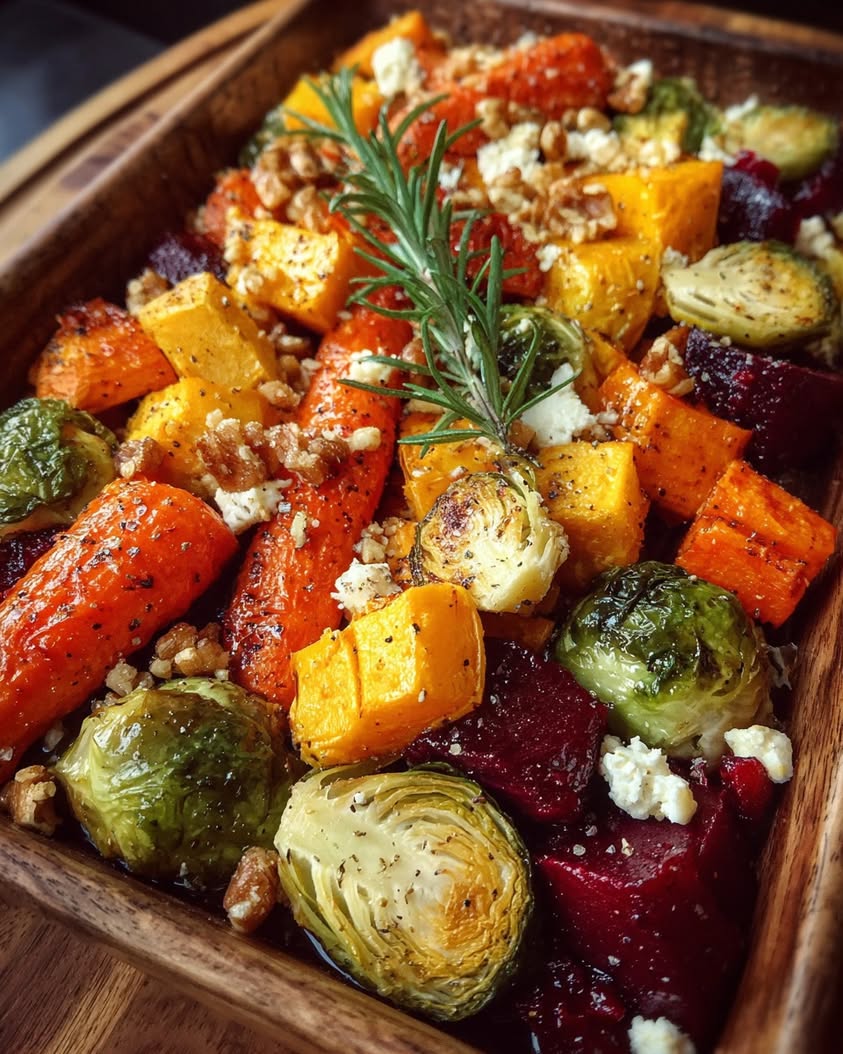
Christmas Roasted Brussels Sprouts, Sweet Potato, Butternut Squash, Carrot & Beet Medley with Maple-Feta Crumble, Walnut: A Colorful, Sweet & Savory Holiday Side Dish
Picture a stunning platter of jewel-toned vegetables, caramelized to perfection and crowned with a sweet, salty, and crunchy topping. This Christmas Roasted Brussels Sprouts, Sweet Potato, Butternut Squash, Carrot & Beet Medley with Maple-Feta Crumble, Walnut is that show-stopping dish. It transforms humble root vegetables and sprouts into the undisputed star of your holiday table. Moreover, this recipe masterfully balances deep, earthy flavors from the roasted vegetables with the bright, tangy punch of feta and the rich sweetness of maple.
Creating this festive roasted veggie medley is surprisingly straightforward. The magic happens in a hot oven where the natural sugars in the sweet potato, carrot, and beet concentrate and caramelize. Meanwhile, the Brussels sprouts develop those irresistible crispy, charred edges that everyone loves. Ultimately, the finishing touch of a warm maple-feta and walnut crumble adds a layer of texture and flavor complexity that makes this dish truly unforgettable for any holiday gathering.
This dish is more than just a side; it’s a celebration of winter’s bounty. The vibrant reds from the beets, the sunny orange of the squash and carrots, and the deep green of the Brussels sprouts create a visual feast that matches the flavors. Consequently, it brings a welcome pop of color and nutrition to a table often dominated by richer, heavier foods. This Christmas roasted vegetable medley is guaranteed to earn compliments and recipe requests from your guests.
Quick Recipe Highlights
- Flavor Profile: This dish offers a spectacular harmony of sweet and savory notes. The roasted vegetables become deeply caramelized and sweet, which contrasts beautifully with the salty, tangy feta cheese. Additionally, the maple syrup in the crumble adds a warm, autumnal sweetness that ties everything together.
- Texture: You get a wonderful contrast of textures in every bite. The roasted vegetables are tender with crispy, caramelized edges. Meanwhile, the walnut and feta crumble provides a delightful crunch and a creamy, crumbly element that makes the dish incredibly satisfying.
- Aroma: As this medley roasts, your kitchen will fill with the comforting, earthy scent of roasting root vegetables and the faintly nutty aroma of the Brussels sprouts. Furthermore, the moment you add the maple-feta crumble, a wave of sweet, salty, and toasty fragrance is released.
- Visual Appeal: This is one of the most colorful dishes you can serve. The plate becomes a canvas of festive hues: ruby red from the beets, bright orange from the squash and carrots, creamy yellow from the sweet potato, and emerald green from the Brussels sprouts, all speckled with the white and brown crumble.
- Skill Level Needed: This is an accessible recipe for cooks of all levels. The primary skills involved are simple vegetable chopping and tossing. There is no fancy knife work or complicated techniques required, making it a perfect stress-free recipe for busy holiday cooking.
- Special Equipment: You need only a few basic kitchen tools. A large, sturdy baking sheet is essential to avoid overcrowding the vegetables. Also, a good chef’s knife and cutting board for prepping the veggies, and a small mixing bowl for the crumble are all you require.
Recipe Overview
- Difficulty Level: We rate this recipe as “Easy” because it involves fundamental cooking techniques like chopping and roasting. The process is largely hands-off after preparation, and the ingredient list is composed of whole, recognizable foods. There is no intricate timing or precision required for success.
- Category: This dish fits perfectly into several categories. Primarily, it is a spectacular holiday side dish or a vegetarian main course. It can also be served as part of a festive brunch spread or even repurposed into grain bowls or salads for post-holiday meals.
- Cuisine: While not tied to one specific tradition, this recipe draws inspiration from modern American and Canadian farm-to-table cuisine. It utilizes classic winter ingredients popular in North American holiday cooking, like sweet potato and maple syrup, and presents them in a contemporary, elevated way.
- Cost: This is a very cost-effective dish, especially when root vegetables are in season. The vegetables are generally inexpensive, and the walnuts and feta cheese, while pricier, are used as a garnish so a little goes a long way. Overall, it provides immense visual and flavor impact for a reasonable price.
- Season: This recipe is quintessentially a fall and winter dish. It features hardy, cold-weather vegetables that are at their peak sweetness and flavor during the holiday season. The warm spices and maple syrup also evoke the cozy feelings of autumn and Christmas time.
- Occasion: It is the ideal centerpiece vegetable dish for Thanksgiving, Christmas, or New Year’s Eve dinners. Furthermore, it works wonderfully for potlucks, Friendsgiving gatherings, or any festive winter meal where you want to serve a beautiful, healthy, and crowd-pleasing side.
Why You’ll Love This Recipe
First and foremost, the taste and texture appeal of this festive roasted veggie medley is off the charts. Each vegetable roasts to bring out its unique natural sweetness, creating a complex base flavor. The maple-feta crumble then introduces a salty, tangy, and crunchy counterpoint that makes every single bite exciting. You get creamy sweet potato, tender-crisp Brussels sprouts, and juicy beets all on one fork, followed by the delightful crumble. This combination ensures that even vegetable skeptics will come back for seconds.
From a convenience standpoint, this Christmas roasted vegetable medley is a dream for a holiday host. A significant portion of the cook time is hands-off roasting in the oven, freeing you up to prepare other components of your meal. The preparation is simple chopping and tossing. Additionally, the vegetables can be prepped a day in advance and stored in the fridge, making your Christmas day cooking timeline smooth and manageable.
Nutritionally, this dish is a powerhouse. It is packed with fiber, vitamins, and antioxidants from its diverse array of colorful vegetables. The walnuts add healthy fats and omega-3s, while the feta provides protein and calcium. Unlike many heavy holiday sides, this medley feels nourishing and energizing. You can enjoy a generous serving without the post-meal lethargy, making it a brilliant choice for a balanced holiday feast.
For social and entertaining value, this platter is a true showstopper. Its vibrant colors and beautiful presentation make it the most photogenic dish on the table. It serves as a fantastic conversation starter and demonstrates care and thoughtfulness in your menu planning. Because it is naturally vegetarian, it comfortably accommodates guests with dietary preferences, ensuring everyone has a spectacular centerpiece vegetable dish to enjoy.
Finally, this recipe is remarkably cost-effective and accessible. Root vegetables are typically some of the most affordable produce items, especially in season. The recipe is also highly adaptable; you can swap in different nuts or cheeses based on what you have available. This flexibility, combined with its stunning results, makes it an invaluable addition to your repertoire of holiday sides that delivers maximum impact without straining your budget.
Historical Background and Cultural Significance
The tradition of roasting root vegetables stretches back centuries across many cold-climate cultures. Before modern agriculture, these hardy, starchy vegetables that could be stored through winter were literal lifesavers. Communities would roast beets, carrots, and turnips over open fires or in hearth ovens. The method of roasting caramelizes the natural sugars, transforming these humble staples into deeply flavorful, sweet dishes. Our modern Christmas roasted vegetable medley is a direct descendant of these practical, historical cooking practices, now elevated with global ingredients like maple syrup and feta.
In terms of cultural importance, the specific combination in this recipe speaks to the modern North American holiday table. The use of sweet potato and maple syrup is deeply rooted in American and Canadian Thanksgiving and Christmas traditions. Brussels sprouts, once often boiled and maligned, have undergone a culinary renaissance in recent decades, with roasting becoming the celebrated method for unlocking their best flavor. This dish represents a contemporary fusion, honoring historical preservation techniques while embracing current tastes for bold, contrasting flavors and textures.
The evolution of this recipe mirrors broader food trends. The move from boiling to roasting vegetables was a significant shift that prioritized texture and concentrated flavor. The addition of a “crumble” topping, more commonly associated with fruit desserts, to a savory vegetable dish is a modern, innovative twist. It reflects a playful, less rigid approach to cooking where the lines between sweet and savory are blurred to create more exciting eating experiences, especially for special occasions like Christmas.
Regional variations of this concept are endless. In the Mediterranean, a similar mix might be roasted with olive oil, lemon, and oregano, topped with kalamata olives and goat cheese. In a Nordic version, you might find parsnips and rutabaga with a dill and sour cream sauce. The version presented here, with its maple and walnut profile, leans into a North American aesthetic. This adaptability is the recipe’s strength, allowing cooks to incorporate local, seasonal produce and personal taste preferences while maintaining the core concept of a glorious, celebratory roasted vegetable platter.
Ingredient Deep Dive
Let’s start with Brussels Sprouts. This miniature cabbage has a long history, believed to have been cultivated in ancient Rome and later perfected in Belgium, hence its name. They are nutritional powerhouses, loaded with Vitamin K, Vitamin C, and antioxidants. When selecting sprouts, choose firm, bright green heads with tightly packed leaves; avoid those that are yellowing or have loose leaves. Store them unwashed in an open bag in your refrigerator’s crisper drawer. For a substitution, broccoli or cauliflower florets can be used, though the cooking time may vary slightly.
Sweet Potatoes are a New World native, central to many indigenous American cuisines long before colonization. They are incredibly rich in beta-carotene (which converts to Vitamin A), fiber, and potassium. Look for firm potatoes with smooth, unbruised skin. They do not need refrigeration; store them in a cool, dark, well-ventilated place. While yams are often used interchangeably in the US, true yams are starchier and less sweet. For this recipe, any orange-fleshed sweet potato variety will work beautifully.
Butternut Squash, another American native, is known for its sweet, nutty flavor and creamy texture when cooked. It provides a significant amount of Vitamin A, Vitamin C, and magnesium. Choose a squash that feels heavy for its size with a firm, matte rind and a long, solid neck. Store whole squash in a cool, dark place for months. Pre-cut, peeled squash from the grocery store is a fantastic time-saver. As a substitute, acorn squash or pumpkin can be used, though they may have a higher water content.
Carrots have been cultivated for thousands of years, originally for their aromatic leaves and seeds rather than their roots. The orange carrot we know today was developed in the Netherlands. They are famous for their beta-carotene content. Select firm, smooth carrots with vibrant color, preferably with their green tops still attached for freshness cues. Store them in the crisper drawer, separated from ethylene-producing fruits. There is no perfect substitute for their sweet earthiness, but parsnips would be the closest alternative.
Beets have a storied history, with evidence of cultivation dating back to the ancient Mediterranean. Both the root and the greens are edible and nutritious. Beets are unique for their betalain pigments, which provide antioxidant and anti-inflammatory benefits. They also contain dietary nitrates, which can support blood flow. Choose small to medium beets with smooth skin and vibrant greens if attached. Store beets in a plastic bag in the crisper, removing the greens to prevent moisture loss. Golden beets can be used for a less messy, equally sweet variation.
The Maple-Feta Crumble components are key. Pure maple syrup is a North American treasure, made by boiling down the sap of sugar maple trees. It contains minerals like manganese and zinc. Always opt for “pure maple syrup,” not pancake syrup. Feta cheese, a brined curd cheese with PDO status from Greece, adds a salty tang. It’s made from sheep’s or goat’s milk. For the best flavor, buy feta in a block stored in brine. Walnuts are one of the oldest tree foods, prized for their brain-like shape and omega-3 fatty acids. Store walnuts in the freezer to prevent their oils from turning rancid.
Common Mistakes to Avoid
- Overcrowding the Pan: This is the most common error. If the vegetables are piled on top of each other, they will steam instead of roast. You need space for moisture to evaporate so the edges can caramelize and crisp. Always use a large enough sheet pan or roast in batches.
- Uneven Vegetable Sizes: Cutting your vegetables into wildly different sizes guarantees uneven cooking. The smaller pieces will burn before the larger ones are tender. Aim for a uniform, bite-sized dice or chop so everything finishes roasting at the same time.
- Skipping the Preheating Step: Putting vegetables into a cold or under-heated oven is a recipe for soggy results. A properly preheated oven (at least 400°F) is crucial for that initial blast of heat that sears the exterior and promotes caramelization immediately.
- Using Wet Vegetables: If you wash your vegetables and do not dry them thoroughly, the excess water will create steam on the pan. Pat your chopped veggies completely dry with a clean kitchen towel before tossing them with oil to ensure the best browning.
- Neglecting to Season in Layers: Only salting the vegetables at the end results in a bland dish. Season the vegetables generously with salt and pepper before they go into the oven. The salt draws out moisture and seasons the vegetable from within as it roasts.
- Forgetting to Toss Halfway: Leaving the vegetables untouched for the entire roasting time means the ones on the bottom will cook faster and may burn, while the top ones steam. A simple toss or stir with a spatula halfway through ensures even exposure to the hot pan and air.
- Adding the Crumble Too Early: If you sprinkle the walnut and feta mixture on at the beginning, the nuts will burn and the cheese will melt into an oily mess. The crumble should be added in the last 5-10 minutes of cooking just to warm through and toast lightly.
- Using a Dark, Non-Stick Pan at High Heat: Dark-colored baking sheets absorb more heat and can cause the bottoms of the vegetables to burn before the tops are done. A light-colored, rimmed aluminum baking sheet is ideal for even roasting and browning.
Essential Techniques
Uniform Chopping: This is the foundational technique for success. Consistent size ensures even cooking. For root vegetables like sweet potato, squash, and carrot, aim for a 3/4-inch to 1-inch dice. Halve or quarter Brussels sprouts so they are roughly the same size as the diced veggies. Beets can be cut into wedges or a similar dice. Using a sharp chef’s knife and taking your time during prep makes the roasting process foolproof.
High-Heat Roasting: The principle here is dry-heat cooking that concentrates flavors through caramelization. A high oven temperature (400°F or above) is non-negotiable. It quickly cooks the exterior, creating a flavorful browned crust while the interior becomes tender. This technique transforms the natural sugars in the vegetables, making them taste sweeter and more complex than any other cooking method could achieve.
Creating the Crumble: This is a simple but impactful technique. The goal is to combine the crumbled feta, chopped walnuts, and maple syrup just until the feta becomes slightly sticky and clumps with the nuts. Do not overmix into a paste. The mixture should be loose and crumbly. Sprinkling it over the hot vegetables at the end allows the warmth to slightly melt the feta and toast the walnuts without burning them, creating perfect texture.
Pro Tips for Perfect Christmas Roasted Vegetable Medley
First, consider roasting your beets on a separate small piece of foil on the same pan if you want to prevent the other vegetables from turning pink. The beet juices are vibrant and will stain everything a lovely color, but for distinct hues, keep them slightly separated.
For the ultimate caramelization, resist the urge to stir the vegetables too often. Let them sit undisturbed for the first 15-20 minutes to develop a good sear on the side touching the hot pan. Then, give them one good toss to expose new surfaces to the heat.
If your vegetables are releasing a lot of liquid and not browning, your oven may not be hot enough. Use an oven thermometer to verify the temperature. Alternatively, switch your oven to the convection roast setting if available, as the circulating air promotes even browning and evaporation.
For a flavor boost, add whole, unpeeled garlic cloves or shallot halves to the pan before roasting. They become soft, sweet, and spreadable, offering a delicious bonus ingredient to mix in or spread on bread alongside the vegetables.
To make this dish ahead, roast the vegetables completely and prepare the crumble mixture separately. Store them in different containers in the fridge. Reheat the vegetables in a 350°F oven until warm, then add the cold crumble and return to the oven for 3-5 minutes to take the chill off.
For extra crispy Brussels sprouts, place them cut-side down on the pan and do not move them for the first half of roasting. This maximizes contact with the hot surface, giving you those desirable crispy, almost fried leaves.
Toast your walnuts in a dry skillet for a few minutes before adding them to the feta and maple. This deepens their nutty flavor and makes them extra crunchy, adding another layer of texture to the finished dish.
Finally, finish the platter with a final flourish just before serving. A drizzle of high-quality extra virgin olive oil, a sprinkle of flaky sea salt, or a handful of fresh chopped herbs like parsley or thyme elevates the presentation and adds a fresh flavor note.
Variations and Adaptations
For regional variations, think about the flavor profiles you love. A Mediterranean twist could include tossing the veggies with za’atar and olive oil, then topping with crumbled goat cheese and pistachios. A Nordic version might use parsnips and celeriac, roasted with caraway seeds, and finished with a dollop of sour cream and fresh dill.
Seasonal adaptations are easy. In spring, try asparagus, new potatoes, and radishes. For summer, zucchini, bell peppers, and eggplant work wonderfully, though they cook faster. The maple-feta crumble is versatile enough to complement almost any seasonal vegetable combination you choose.
Dietary modifications are straightforward. For a vegan version, omit the feta and use a vegan cheese alternative or simply increase the walnuts and add a sprinkle of nutritional yeast for a cheesy flavor. For a dairy-free option, use a plant-based feta or just the maple walnuts.
Flavor variations can change the entire character of the dish. Toss the vegetables with harissa paste and oil for a spicy kick. Use balsamic glaze instead of maple syrup in the crumble for a tangy-sweet note. Add fresh rosemary or thyme to the oil before tossing the vegetables for an herbal aroma.
Texture modifications can cater to different preferences. For a softer dish, cover the pan with foil for the first half of roasting. For maximum crunch, use the convection setting on your oven and spread the vegetables in a single, sparse layer across two sheet pans.
Presentation alternatives offer creative freedom. Instead of mixing everything, arrange the different roasted vegetables in distinct sections on a large platter. Serve the maple-feta crumble in a small bowl on the side for guests to sprinkle over their own portions, keeping the crunch intact until the last moment.
Serving and Presentation Guide
Plating techniques matter for a dish this beautiful. Transfer the hot roasted vegetable medley to a large, shallow serving platter or a rustic wooden board. Use a wide spatula to gently pile the vegetables, allowing their colors to show. Sprinkle the warm maple-feta walnut crumble generously over the top, letting it cascade down the sides.
Garnishing adds the final touch of freshness and color. Scatter a handful of microgreens, chopped fresh flat-leaf parsley, or delicate thyme leaves over the top. A final drizzle of a reduced balsamic glaze or a high-quality, fruity olive oil in a zigzag pattern adds shine and a touch of acidity.
For traditional accompaniments, this medley pairs classically with a holiday roast turkey, glazed ham, or prime rib. It also stands beautifully alongside other classic sides like creamy mashed potatoes, stuffing, or green bean casserole, providing a bright, lighter counterbalance.
Modern serving suggestions include presenting it as a vegetarian main course over a bed of farro, quinoa, or creamy polenta. You can also serve it at room temperature as part of a holiday buffet, where its flavors deepen as it sits. Leftovers are fantastic tossed into a winter salad with bitter greens and a citrus vinaigrette.
Temperature considerations are key. This dish is best served warm, when the feta in the crumble is slightly softened but not fully melted. If you must hold it, keep it in a warm oven (200°F) without the crumble, adding the crumble just before carrying it to the table.
Portion control tips are simple given its healthfulness. As a side dish, plan for about 1 to 1.5 cups per person. Because it is so colorful and substantial, it often takes up more plate real estate than other sides, naturally encouraging a balanced meal with smaller portions of heavier items.
Wine and Beverage Pairing
Wine pairings for this dish should complement its sweet and savory duality. A medium-bodied white wine with good acidity, like an Oregon Pinot Gris or a French Chenin Blanc, cuts through the richness and mirrors the sweetness of the vegetables. For red wine lovers, a fruity, low-tannin red like a Beaujolais or a Pinot Noir works beautifully. The bright red fruit notes in these wines harmonize with the earthy beets and sweet potatoes without overpowering them.
Non-alcoholic alternatives can be just as sophisticated. A sparkling apple cider offers sweet effervescence that cleanses the palate. For a warmer option, a maple-sweetened chai tea latte subtly echoes the maple notes in the crumble. A simple glass of chilled, sparkling water with a twist of orange peel also provides a refreshing contrast.
Coffee and tea pairings are excellent for a holiday brunch setting. A medium-roast coffee with notes of caramel or nut pairs wonderfully with the roasted flavors. For tea, consider a smoky Lapsang Souchong to complement the charred edges of the vegetables, or a spiced chai to align with the warm, festive spices often associated with the holiday season.
Temperature considerations are straightforward. Serve white wines and non-alcoholic sparklers well-chilled. Red wines should be served slightly below room temperature, around 60-65°F. Warm beverages like coffee or tea should be served piping hot to provide a comforting contrast to the warm, but not steaming hot, vegetable dish.
Serving suggestions include offering a couple of options to cater to different guest preferences. You might set out a bottle of Pinot Noir and a bottle of Pinot Gris alongside a carafe of sparkling apple cider. Clearly label non-alcoholic options so all guests feel included and can enjoy a thoughtful beverage pairing with this festive roasted veggie medley.
Storage and Shelf Life
Storage methods are simple but important for food safety and quality. Allow the leftover roasted vegetable medley to cool completely to room temperature before storing. Do not leave it out for more than two hours. Transfer the vegetables and crumble to separate airtight containers. This prevents the crumble from becoming soggy from the vegetables’ residual steam and moisture.
Temperature requirements are standard for cooked vegetables. Store the containers in the refrigerator at 40°F or below. The vegetables will keep well for 3 to 4 days. The crumble mixture, due to the dairy in the feta, should also be refrigerated and used within 4 days for the best quality and safety.
Container recommendations include glass containers with tight-fitting lids, which are ideal because they don’t absorb odors and allow you to see the contents. If using the crumble separately, a small zip-top bag or a small glass jar works perfectly. Avoid storing in the open roasting pan covered with foil, as it doesn’t provide an adequate seal.
Signs of spoilage to watch for include an off or sour smell, visible mold (often fuzzy spots in white, green, or black), or a significant change in texture where the vegetables become unpleasantly slimy. If the walnuts in the crumble smell rancid (like old paint or chemicals), discard the entire crumble.
Reheating instructions are best followed to restore texture. Reheat the vegetables in a 350°F oven spread on a baking sheet for 10-15 minutes until warmed through. The microwave will make them soft and soggy. Re-crisp the crumble in a dry skillet over low heat for 2-3 minutes, or add it to the vegetables for the last few minutes of oven reheating.
Freezing guidelines are not generally recommended for this specific dish. The high water content in the vegetables leads to a mushy, watery texture upon thawing. The dairy in the feta crumble also does not freeze and thaw well, becoming grainy. This is a dish best enjoyed fresh or refrigerated for a few days.
Make Ahead Strategies
Your prep timeline can be a huge help. You can chop all the vegetables (except the beets, if you want to prevent staining) 1-2 days in advance. Store them in separate airtight containers or large zip-top bags in the refrigerator. The maple-feta walnut crumble can also be mixed and stored in a container in the fridge a day ahead.
Storage between steps is easy with planning. Keep your pre-chopped veggies chilled. If you pre-chop beets, store them in their own bag as they release moisture and can soften other veggies slightly. The crumble may become a bit more cohesive in the fridge; simply break it apart with a fork before using.
Quality impact assessment is positive for most make-ahead steps. Pre-chopping vegetables has minimal impact, especially on hardy roots. The crumble holds up very well. The only step that truly must be done day-of is the actual roasting, as reheated roasted veggies, while still tasty, lose some of their freshly crisped texture.
Assembly tips for the day-of are streamlined. Simply pull your pre-chopped veggies from the fridge, toss them with oil and seasoning on the baking sheet, and roast. You may need to add 3-5 extra minutes to the roasting time if the vegetables are very cold from the fridge. Add the pre-made crumble from the fridge in the last few minutes.
Reheating guidelines for a fully made-ahead dish: If you roast the entire dish a day early, reheat it in a 375°F oven on a sheet pan until hot throughout, about 15-20 minutes. Then, add a *freshly made* batch of the maple-feta crumble for the best texture contrast. The nuts will be crunchier and the feta fresher.
Fresh element additions are your secret weapon. Even if you make everything ahead, have a fresh herb like parsley or chives chopped and ready. A final sprinkle of these fresh herbs after reheating, or a fresh drizzle of olive oil, instantly makes the dish taste vibrant and freshly prepared, masking any “leftover” taste.
Scaling Instructions
Halving the recipe is straightforward for smaller gatherings. Simply divide all ingredient quantities by two. Use a standard-sized baking sheet. The roasting time may be slightly reduced by 5-7 minutes since there is less mass in the oven, so start checking for doneness around the 30-minute mark. The crumble can also be halved easily.
Doubling or tripling the recipe for a large crowd is very doable. Double or triple all ingredients proportionally. The key is to use multiple baking sheets and rotate them between oven racks halfway through cooking to ensure even browning. You may also need to extend the total roasting time by 5-10 minutes due to the increased volume of food in the oven.
Equipment adjustments are necessary when scaling. For a double batch, you will absolutely need two large sheet pans. Do not try to cram everything onto one pan. For a triple batch, three pans are ideal, or roast in consecutive batches if oven space is limited. Ensure your oven can accommodate multiple pans with good air circulation.
Timing modifications are minimal but important. When using multiple pans, the total time may increase slightly. More importantly, the act of rotating the pans from top to bottom rack halfway through is non-negotiable for even cooking. Set a timer for the halfway point to remind yourself to perform this crucial step.
Storage considerations for scaled-up recipes are similar. You will simply have more leftovers. Store in multiple containers rather than one gigantic one to allow for faster cooling and easier reheating of single-meal portions. Remember, the crumble is best stored separately from the vegetables to maintain its distinctive texture.
Nutritional Deep Dive
The macro breakdown of this dish is favorable for a balanced diet. It is primarily a complex carbohydrate source from the vegetables, providing sustained energy. The olive oil and walnuts contribute healthy monounsaturated and polyunsaturated fats. The feta cheese adds a modest amount of protein and fat. This combination offers a good balance that is satiating without being overly heavy, making it a perfect holiday side.
Micronutrient analysis reveals a vitamin and mineral powerhouse. Sweet potatoes and carrots are loaded with beta-carotene (Vitamin A). Brussels sprouts provide a huge dose of Vitamin K and Vitamin C. Beets offer folate and potassium. Butternut squash adds more Vitamin A and Vitamin C. Together, they create a broad spectrum of essential nutrients that support immune function, vision, and bone health.
Health benefits are extensive due to the phytonutrients and fiber. The diverse colors indicate a range of antioxidants that combat oxidative stress. The high fiber content promotes digestive health and helps regulate blood sugar spikes. The anti-inflammatory properties of ingredients like walnuts and beets contribute to overall wellness, which is especially welcome during the indulgent holiday season.
Dietary considerations are largely positive. The dish is naturally vegetarian and gluten-free. It can be adapted to be vegan or dairy-free with simple swaps. The fiber and nutrient density make it suitable for many health-conscious eating plans. However, those on strict low-carb or keto diets may need to adjust the vegetable ratios, using fewer carrots and beets.
Portion analysis shows that a standard serving (about 1.5 cups) is volumous and satisfying without being excessively high in calories. The bulk comes from low-calorie, high-fiber vegetables, while the calorie-dense elements (oil, nuts, cheese) are used as accents. This allows you to feel full and nourished while managing overall holiday meal calorie intake.
Weight management tips include using this dish as the foundation of your holiday plate. Fill half your plate with this festive roasted veggie medley, then add smaller portions of protein and other starches. Its high fiber and water content promote satiety, helping to prevent overeating of more calorie-dense options. Enjoying it mindfully allows you to indulge in the full holiday experience without compromise.
Dietary Adaptations
Gluten-free: This recipe is naturally gluten-free as written. Simply ensure that all packaged ingredients, like maple syrup, are certified gluten-free if you have celiac disease or a severe sensitivity, as cross-contamination can sometimes occur in processing facilities.
Dairy-free: Omit the feta cheese. For a similar salty, tangy element, you can use a store-bought vegan feta alternative made from almonds or tofu. Alternatively, increase the walnuts and add a tablespoon of nutritional yeast to the crumble mixture for a cheesy flavor note.
Vegan: Follow the dairy-free adaptation above. Also, ensure your maple syrup is vegan (it almost always is, but some commercial blends may contain trace dairy). The rest of the ingredients are plant-based. This creates a stunning vegan centerpiece for any holiday table.
Low-carb/Keto: Focus on the Brussels sprouts and reduce or omit the sweet potato, carrot, and beet. Increase the quantity of Brussels sprouts and add low-carb vegetables like cauliflower or broccoli. The maple syrup in the crumble must be replaced with a keto-friendly syrup like monk fruit or allulose syrup.
Paleo: Omit the dairy (feta cheese). The rest of the ingredients are paleo-compliant. You could add a sprinkle of chopped, crispy bacon or pancetta to the crumble for a salty, protein-rich element that fits within the paleo framework beautifully.
Low-FODMAP: This requires careful modification. Omit the butternut squash and beet. Use only the green tops of green onions instead of any high-FODMAP alliums. Ensure the maple syrup is pure and not blended with high-FODMAP sweeteners. The feta cheese is generally low-FODMAP in moderate servings (about 40g).
Nut-free: Replace the walnuts with roasted pumpkin seeds (pepitas) or sunflower seeds. The seeds will provide the necessary crunch in the crumble without introducing tree nuts. Ensure your other ingredients are processed in a nut-free facility if allergies are severe.
Troubleshooting Guide
Vegetables are soggy, not crispy: This is almost always due to overcrowding or insufficient oven heat. Next time, use two pans to spread the vegetables in a single layer. Verify your oven temperature with a thermometer. Also, ensure you pat the chopped vegetables completely dry before oiling and roasting.
Some vegetables A festive roasted vegetable medley with a sweet and savory maple-feta walnut crumble, perfect for holiday gatherings. You can customize the seasonings to taste.
PrintChristmas Roasted Brussels Sprouts, Sweet Potato, Butternut Squash, Carrot & Beet Medley with Maple-Feta Crumble, Walnut
Description
Ingredients
For the Crust:
Instructions
1. Prepare the Crust:
Notes

I’m Shaykee—born in Morocco, seasoned across continents. From airplane galleys to home kitchens, I share the flavors and stories that shaped my journey.