
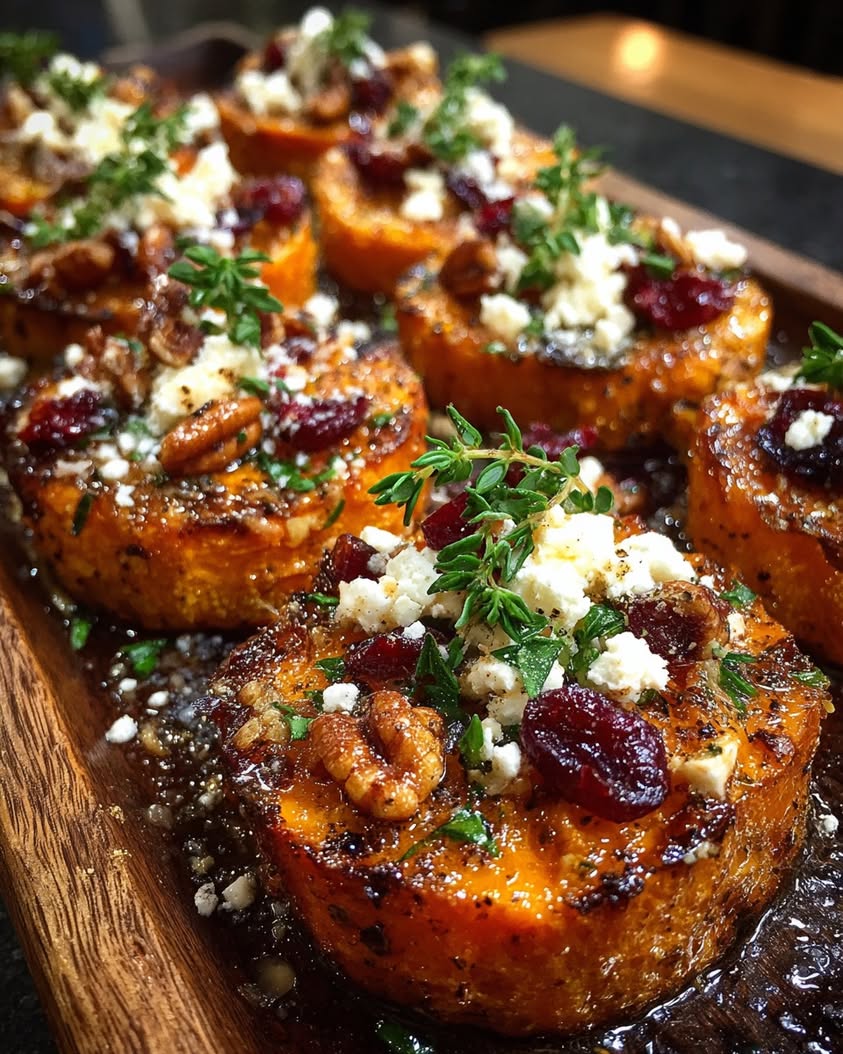
Cinnamon-Butter Sweet Potato Rounds with Feta, Cranberries & Honey Pecans: A Perfect Sweet & Savory Holiday Side Dish
Imagine a dish that perfectly balances sweet and savory flavors in every single bite. These Cinnamon-Butter Sweet Potato Rounds with Feta, Cranberries & Honey Pecans deliver exactly that experience. Consequently, they have become a staple on holiday tables and for good reason. The creamy feta, sweet cranberries, and crunchy honey pecans create a symphony of textures and tastes atop beautifully roasted cinnamon sweet potatoes. This sweet potato recipe transforms a humble root vegetable into an extraordinary culinary creation.
Furthermore, this dish brings warmth and comfort to any meal. The aroma of cinnamon and roasting sweet potatoes will fill your kitchen with an irresistible fragrance. Ultimately, this easy appetizer or side dish looks as spectacular as it tastes. The vibrant orange rounds topped with white feta, red cranberries, and golden pecans create a stunning visual presentation. This holiday side dish guarantees compliments from every guest at your table.
Additionally, the preparation process proves remarkably straightforward. You simply slice, season, roast, and top these beautiful rounds. The result is a sophisticated dish that belies its simple preparation. This sweet and savory combination works wonderfully for both casual family dinners and formal holiday gatherings. Moreover, the ingredients are readily available in most grocery stores year-round.
Quick Recipe Highlights
- Flavor Profile: This sweet potato recipe masterfully combines earthy sweetness from the roasted potatoes with warm cinnamon notes. The tangy feta cheese provides a sharp contrast, while the dried cranberries contribute bursts of tartness. Finally, the honey-glazed pecans add a delightful caramelized sweetness that ties everything together.
- Texture: You will experience multiple satisfying textures in each bite. The roasted sweet potato rounds become tender yet maintain structural integrity. Meanwhile, the creamy feta crumbles melt slightly from the warmth. The chewy dried cranberries offer resistance, and the honey pecans provide a satisfying crunch that completes the sensory experience.
- Aroma: As these rounds roast, your kitchen will fill with the warm, comforting scent of cinnamon mingling with the natural sweetness of caramelizing potatoes. The honey pecans toast to release their nutty fragrance, creating an olfactory experience that promises the delicious flavors to come. This aromatic profile makes the dish particularly appealing during colder months.
- Visual Appeal: The presentation showcases beautiful color contrasts that make this dish table-ready. Vibrant orange sweet potato circles create the perfect canvas for snowy white feta crumbles, ruby red cranberries, and golden brown pecans. This colorful arrangement makes the dish particularly photogenic and perfect for holiday entertaining.
- Skill Level Needed: This recipe requires only basic kitchen skills, making it accessible to cooks of all experience levels. You need only simple knife skills for slicing the potatoes and the ability to operate an oven. The assembly process involves straightforward layering of ingredients without any complicated techniques.
- Special Equipment: You need just a few standard kitchen tools to create this dish. A sharp knife and cutting board prepare the potatoes, while a baking sheet lined with parchment paper ensures even roasting. A small bowl for mixing the cinnamon butter and another for tossing the pecans with honey complete your equipment needs.
Recipe Overview
- Difficulty Level: This recipe earns its easy rating because it involves minimal preparation and basic cooking techniques. The steps are straightforward and logical, progressing from slicing to seasoning to roasting and finally assembling. Even novice cooks can achieve excellent results, while experienced cooks will appreciate the simplicity for busy holiday meals.
- Category: These versatile rounds function beautifully as either an appetizer or side dish. As an appetizer, they offer individual portions that are easy to serve and eat. As a side dish, they complement a wide variety of main courses from roasted turkey and ham to grilled chicken and pork chops.
- Cuisine: This dish draws inspiration from modern American cuisine with its creative use of sweet and savory combinations. The incorporation of sweet potatoes reflects Southern influences, while the feta cheese adds a Mediterranean touch. The result is a fusion dish that feels both familiar and excitingly new.
- Cost: The ingredients for this recipe are generally affordable and accessible. Sweet potatoes represent an economical vegetable choice year-round. Feta cheese, dried cranberries, and pecans might seem premium, but you use them in modest quantities that stretch throughout the entire dish. Overall, this recipe offers excellent value for its impressive presentation and flavor.
- Season: While this dish shines during fall and winter holidays, it truly works well throughout the year. The warm spices complement cooler weather perfectly, yet the bright flavors also refresh spring and summer meals. Sweet potatoes are available year-round, making this a versatile recipe for any season.
- Occasion: This dish suits everything from casual weeknight dinners to festive holiday feasts. It works wonderfully for Thanksgiving, Christmas, Easter, and other celebratory meals. Additionally, it makes an impressive offering for potlucks and parties where visual appeal matters as much as taste.
Why You’ll Love This Recipe
First, the taste experience is truly exceptional. Each component contributes distinct flavors that harmonize beautifully together. The natural sweetness of the roasted potatoes enhanced by cinnamon butter creates a warm foundation. Then, the salty tang of feta cheese cuts through the sweetness perfectly. Meanwhile, the tart cranberries provide bright counterpoints, and the honey pecans add their caramelized crunch. This sophisticated balance of sweet and savory elements keeps your palate interested throughout the entire eating experience.
Second, the convenience factor cannot be overstated. This recipe requires minimal active preparation time, allowing you to focus on other dishes or guests. The oven does most of the work, roasting the potatoes to tender perfection while you prepare the toppings. Furthermore, the assembly is quick and intuitive, making last-minute preparation stress-free. The entire process from start to finish takes just forty minutes, with only fifteen minutes of hands-on work.
Third, the nutritional profile offers significant benefits. Sweet potatoes provide abundant vitamin A, vitamin C, and fiber. Meanwhile, the pecans contribute healthy fats and protein. The feta cheese offers calcium and protein, while the cranberries add antioxidants. This combination creates a dish that satisfies both your taste buds and your nutritional needs. Compared to many traditional holiday sides loaded with cream and sugar, this recipe feels both indulgent and nourishing.
Fourth, the social and entertaining value is tremendous. These beautiful rounds make a stunning presentation that immediately elevates any table setting. Guests are invariably impressed by the professional appearance, never guessing how simple the preparation truly was. The individual portions create an elegant serving style that feels special and considered. This dish often becomes a conversation starter at gatherings, with guests requesting the recipe.
Finally, the cost-effectiveness and accessibility make this recipe a practical choice. The ingredients are readily available in most supermarkets throughout the year. Sweet potatoes represent an economical base, while the toppings use modest quantities of more premium ingredients. This approach creates a dish that tastes luxurious without straining your grocery budget. Additionally, the recipe scales easily for larger crowds, making it perfect for holiday entertaining when feeding many people.
Historical Background and Cultural Significance
The sweet potato has a rich history dating back thousands of years to Central and South America. Archaeological evidence suggests cultivation began as early as 2500 BCE. Spanish and Portuguese explorers subsequently introduced sweet potatoes to Europe, Africa, and Asia during the 15th and 16th centuries. Interestingly, the vegetable became particularly important in the American South, where it thrived in the warm climate. Today, the United States grows significant sweet potato crops, particularly in North Carolina, California, Louisiana, and Mississippi.
Sweet potatoes hold cultural significance across many societies. In the United States, they became associated with Thanksgiving and holiday meals during the 19th century. Meanwhile, in Asian cuisines, sweet potatoes feature prominently in both savory and sweet applications. The combination of sweet potatoes with warming spices like cinnamon reflects this global culinary influence. The modern interpretation represented by this recipe builds upon these traditional uses while incorporating contemporary flavor combinations.
The evolution of this specific recipe reflects broader food trends. The popularity of sweet and savory combinations has grown significantly in recent decades. Additionally, the move toward vegetable-centric dishes has elevated the status of sweet potatoes beyond simple casseroles. The incorporation of feta cheese represents Mediterranean influences that have become mainstream in American cooking. Similarly, the use of dried cranberries nods to both traditional American Thanksgiving flavors and modern gourmet ingredients.
Regional variations of sweet potato preparations abound throughout the world. In the American South, candied sweet potatoes with marshmallows represent a classic preparation. Meanwhile, in Peru, sweet potatoes often accompany ceviche. Japanese cuisine features sweet potato in both savory and dessert applications. This recipe draws inspiration from these diverse traditions while creating something uniquely its own. The result is a dish that feels simultaneously familiar and innovative, honoring tradition while embracing contemporary tastes.
Ingredient Deep Dive
Sweet potatoes form the foundation of this recipe. These root vegetables originated in Central and South America and have been cultivated for millennia. Nutritionally, they are powerhouses of vitamin A, vitamin C, manganese, and fiber. Their vibrant orange color comes from beta-carotene, an antioxidant that converts to vitamin A in the body. When selecting sweet potatoes, choose firm specimens with smooth, unblemished skins. Store them in a cool, dark place with good air circulation, but not in the refrigerator. For this recipe, medium-sized potatoes work best as they create uniform rounds.
Cinnamon brings warm, aromatic notes to the dish. This spice comes from the inner bark of trees from the Cinnamomum family and has been prized since ancient times. Cinnamon contains antioxidants and has anti-inflammatory properties. For the best flavor, choose Ceylon cinnamon if possible, though the more common Cassia variety works perfectly well. Store cinnamon in a cool, dark place in an airtight container to preserve its volatile oils. The cinnamon in this recipe enhances the natural sweetness of the potatoes without overwhelming the other flavors.
Feta cheese provides the crucial salty, tangy counterpoint to the sweet elements. Traditional feta originates from Greece and is made from sheep’s milk or a combination of sheep and goat’s milk. It offers protein, calcium, and phosphorus. When selecting feta, choose blocks packed in brine rather than pre-crumbled varieties for better texture and flavor. Store feta in its brine in the refrigerator, changing the brine every few days if necessary. For those who cannot consume dairy, goat cheese or vegan feta alternatives work well as substitutes.
Dried cranberries contribute chewy texture and tart flavor. Native to North America, cranberries have long been used by Indigenous peoples both as food and medicine. They are rich in vitamin C, fiber, and various antioxidants. When purchasing dried cranberries, check the ingredient list to avoid varieties with excessive added sugar. Store them in an airtight container in a cool, dark place. If you cannot find dried cranberries, dried cherries or chopped dried apricots make excellent alternatives that maintain the sweet-tart balance.
Pecans deliver the satisfying crunch element. These nuts are native to North America and were an important food source for Indigenous peoples. They provide healthy fats, protein, and various minerals including manganese and copper. When selecting pecans, look for plump, uniform pieces without signs of shriveling or moisture. Store them in an airtight container in the refrigerator or freezer to prevent rancidity. The honey coating in this recipe caramelizes slightly during preparation, creating an irresistible sweet crunch that complements the other textures perfectly.
Common Mistakes to Avoid
- Cutting uneven rounds creates inconsistent cooking. Sweet potato slices of varying thickness will roast unevenly, resulting in some pieces being overcooked while others remain underdone. Always use a sharp knife and take care to slice the potatoes into uniform rounds approximately half an inch thick for perfect results.
- Overcrowding the baking sheet prevents proper browning. When sweet potato rounds are placed too close together, they steam rather than roast. This results in soft, pale potatoes instead of caramelized, golden-brown rounds. Arrange the slices in a single layer with some space between each piece for optimal air circulation and browning.
- Skipping the parchment paper leads to sticking issues. Sweet potatoes naturally contain sugars that caramelize during roasting, causing them to adhere to baking sheets. Lining your pan with parchment paper ensures easy removal and simplifies cleanup. Alternatively, a silicone baking mat works equally well for this purpose.
- Using cold butter makes seasoning difficult. The cinnamon butter mixture should be soft enough to brush easily onto the potato rounds. If your butter is too firm, it will not distribute evenly. Simply microwave the butter for a few seconds until spreadable but not melted before mixing with cinnamon.
- Burning the honey pecans ruins their flavor. Toasting nuts requires careful attention as they can burn quickly. Cook them only until fragrant and lightly golden, stirring frequently. Remember that they will continue to cook slightly after removal from heat, so err on the side of under-toasting.
- Adding toppings too early compromises texture. The feta, cranberries, and pecans should be added after the sweet potatoes have finished roasting. Applying them before roasting would cause the cheese to melt completely, the cranberries to burn, and the pecans to become soggy rather than maintaining their distinct textures.
- Underseasoning the potatoes misses flavor opportunities. While sweet potatoes have natural sweetness, they still benefit from proper seasoning. In addition to the cinnamon butter, a light sprinkle of salt before roasting enhances all the flavors. Do not skip this step, as salt helps balance the sweetness.
- Neglecting to rotate the baking sheet causes uneven cooking. Most ovens have hot spots that can lead to inconsistent browning. Halfway through the roasting time, rotate your baking sheet to ensure all the rounds cook evenly. This simple step guarantees uniformly golden potatoes.
Essential Techniques
Uniform slicing represents the most critical technique for this recipe. Consistent thickness ensures even cooking, preventing some rounds from burning while others remain underdone. Use a sharp chef’s knife and apply steady pressure for clean cuts. Position the sweet potato securely on your cutting board, trimming a small slice from one side to create a stable base if necessary. Aim for half-inch thickness throughout, checking periodically to maintain consistency. This attention to detail separates mediocre results from professional-quality dishes.
Proper roasting technique transforms the sweet potatoes from raw to caramelized perfection. The high oven temperature of 400°F creates beautiful browning while cooking the interior thoroughly. Arranging the rounds in a single layer with space between allows hot air to circulate, promoting even browning rather than steaming. Rotating the pan halfway through addresses any hot spots in your oven. The visual cues for perfectly roasted sweet potatoes include golden-brown edges and tender flesh that yields easily to a fork.
Toasting nuts correctly maximizes their flavor and texture. Use a dry skillet over medium heat, spreading the pecans in a single layer. Shake the pan frequently to prevent burning, watching for color changes and sniffing for the rich, nutty aroma that indicates doneness. The honey should be added off the heat to avoid burning the sugars. The perfect honey pecans will be fragrant, lightly golden, and slightly sticky without being burnt or bitter. This technique elevates simple pecans into a gourmet topping.
Balancing flavors consciously creates the harmonious taste profile. The sweet elements—sweet potatoes, cinnamon, cranberries, and honey—need the counterpoint of salty feta to achieve complexity. When assembling, distribute each component thoughtfully, ensuring every bite contains multiple elements. The final drizzle of honey should be light, adding just a hint of additional sweetness without making the dish cloying. Mastering this balance between sweet and savory separates good dishes from memorable ones that keep people coming back for more.
Pro Tips for Perfect Cinnamon-Butter Sweet Potato Rounds
Choose similar-sized sweet potatoes for consistent rounds. This simple selection tip at the grocery store makes the slicing process much easier. Potatoes of equal diameter naturally yield rounds of matching size, ensuring uniform cooking times and presentation.
Par-cook extra-thick sweet potato rounds if needed. If some slices are significantly thicker than others, microwave them for one minute before roasting. This head start prevents undercooked centers while avoiding over-browned edges on thinner pieces.
Brush both sides of each round with cinnamon butter. While the recipe typically suggests brushing the tops, coating both sides enhances flavor throughout. The bottom side picks up additional flavor from the butter as it roasts against the baking sheet.
Toast extra pecans to have on hand. These honey-glazed nuts are delicious beyond this recipe. Make a double batch to use as salad toppings, yogurt mix-ins, or simple snacks. They store well in an airtight container for up to two weeks.
Experiment with different cheese varieties for variation. While feta provides the classic tang, goat cheese, blue cheese, or even sharp white cheddar create interesting alternatives. Each cheese brings its own character to the sweet and savory balance.
Add fresh herbs for color and freshness. A sprinkle of chopped rosemary or thyme added before serving introduces an aromatic element that complements the other flavors. The green flecks also enhance the visual appeal against the vibrant toppings.
Serve immediately for optimal texture. These rounds are best enjoyed warm from the oven when the contrasts between warm potatoes, cool feta, and crunchy pecans are most pronounced. The textures evolve as the dish sits, so timing matters.
Use a mandoline for perfectly even slices if you have one. This tool guarantees uniform thickness more efficiently than hand-cutting. Always use the safety guard to protect your fingers when working with this sharp kitchen implement.
Variations and Adaptations
Regional variations can transform this dish to suit different culinary traditions. For a Southern twist, incorporate a sprinkle of smoked paprika alongside the cinnamon and add crumbled bacon as a garnish. A Mediterranean version might include chopped Kalamata olives and fresh oregano instead of cranberries. Asian-inspired adaptations could feature a ginger-soy glaze and sesame seeds, while a Middle Eastern variation might include pomegranate seeds and za’atar seasoning. These regional twists demonstrate the recipe’s versatility while maintaining its core appeal.
Seasonal adaptations keep this dish relevant throughout the year. During spring, fresh peas and mint provide a lighter touch. Summer versions might feature fresh corn and basil, while autumn adaptations could include roasted apples and walnuts. Winter holidays naturally suit the original combination, though adding orange zest brightens the darker months. Seasonal produce guides these variations, ensuring the dish always feels fresh and appropriate regardless of when you serve it.
Dietary modifications accommodate various eating preferences without sacrificing flavor. Vegan versions use plant-based butter and vegan feta alternatives, while gluten-free needs no adaptation as the recipe naturally contains no gluten. For paleo diets, omit the cheese and increase the nuts, using coconut oil instead of butter. Low-carb adaptations might feature thinner sweet potato slices or substitute zucchini rounds, though this changes the character significantly. Each modification maintains the sweet-savory balance central to the dish’s appeal.
Flavor variations allow for personalization based on preference. Spice enthusiasts might add a pinch of cayenne to the cinnamon butter for subtle heat. Citrus lovers could incorporate orange or lemon zest into the butter mixture. Herb-infused versions might include chopped fresh rosemary or thyme. Smoky variations could feature smoked sea salt or smoked paprika. Sweet alternatives might use maple syrup instead of honey, while savory versions could incorporate garlic powder or onion powder into the seasoning blend.
Texture modifications cater to different preferences. For extra crunch, add toasted pumpkin seeds or sunflower seeds alongside the pecans. Softer versions might include roasted garlic cloves mashed into the butter mixture. Creamier adaptations could feature a dollop of Greek yogurt or labneh alongside the feta. Contrasting textures might include pomegranate arils for their juicy pop or fried shallots for crispy savoriness. Each textural variation adds dimension while respecting the original concept.
Presentation alternatives offer creative serving options. Stacking the rounds creates vertical height on the plate, while overlapping them in a baking dish creates a more family-style presentation. Mini versions using smaller sweet potatoes work beautifully as passed appetizers. Deconstructed versions might feature sweet potato mash topped with the traditional garnishes. Skewer presentations thread smaller rounds with the toppings between them. Each presentation style suits different occasions while delivering the same delicious flavors.
Serving and Presentation Guide
Plating techniques significantly impact the visual appeal of this dish. For individual servings, arrange three to four rounds slightly overlapping on each plate. This creates height and dimension rather than a flat presentation. Alternatively, for family-style service, arrange all rounds on a large platter in concentric circles or rows. The strategic placement allows each round to be visible with its toppings displayed attractively. Always consider the backdrop color—contrasting plates or platters make the vibrant colors pop more effectively.
Garnishing ideas extend beyond the core ingredients. Fresh herb sprigs such as rosemary or thyme add color and fragrance. Microgreens or arugula provide a peppery contrast and green accent. Edible flowers create a spectacular presentation for special occasions. A final light drizzle of high-quality olive oil or balsamic glaze adds shine and sophistication. These additional garnishes should complement rather than overwhelm the existing flavors and textures, serving as visual enhancements that might add subtle flavor notes.
Traditional accompaniments vary based on the meal context. As a holiday side dish, these rounds pair beautifully with roasted turkey, ham, or prime rib. For vegetarian meals, they complement stuffed squash or mushroom Wellington. As an appetizer, they stand alone beautifully but could be preceded by a light soup or followed by a substantial main course. Consider the overall menu balance when planning accompaniments, ensuring variety in flavors, textures, and colors across all dishes served together.
Modern serving suggestions include more casual approaches. For brunch, these rounds complement eggs Benedict or frittata. As part of a grazing board, they add vegetable content among cheeses, charcuterie, and breads. For dinner parties, they can be served as a first course on individual plates. Food truck or cafe interpretations might feature these rounds as a base for pulled pork or grilled chicken, transforming them into a complete meal. The versatility of this dish supports numerous contemporary serving contexts.
Temperature considerations impact the eating experience. These rounds are best served warm, when the sweet potatoes are tender and the feta just begins to soften from the residual heat. If prepared in advance, reheat the base rounds briefly before adding toppings. The contrast between warm potatoes and cool toppings creates textural interest. However, the dish remains delicious at room temperature, making it suitable for buffets or parties where food might sit for extended periods before serving.
Portion control tips help when planning for groups. As a side dish, plan for two to three rounds per person. As an appetizer, one to two rounds suffice. For heartier appetites or as a more substantial component, increase to four rounds. When doubling the recipe, use two baking sheets rather than overcrowding one, and rotate the sheets between oven racks halfway through cooking. Proper portion planning ensures everyone enjoys the dish without excessive leftovers, though any extras make excellent next-day snacks.
Wine and Beverage Pairing
Wine pairings should complement the sweet and savory balance of this dish. Off-dry white wines like Riesling or Gewürztraminer work beautifully as their slight sweetness mirrors the sweet potatoes while their acidity cuts through the richness. Light-bodied reds such as Pinot Noir provide enough structure without overwhelming the flavors. Rosé offers versatility with its fruit notes and crisp finish. For a truly special pairing, consider a sparkling wine like Prosecco or Cava, whose bubbles cleanse the palate between bites. The key is choosing wines with good acidity to balance the dish’s sweetness.
Non-alcoholic alternatives provide sophisticated options for all guests. Sparkling apple cider mirrors the sweet notes while providing effervescence. Ginger beer offers spicy complexity that complements the cinnamon. Iced hibiscus tea provides tartness that balances the sweetness, while a lemonade with mint refreshes the palate. For warmer notes, spiced hot apple cider echoes the cinnamon flavors. These non-alcoholic options should be considered as carefully as wine pairings, providing thoughtful alternatives that enhance rather than merely accompany the dining experience.
Coffee and tea pairings work particularly well for brunch servings. Medium-roast coffee with its balanced acidity and subtle sweetness complements without overwhelming. Chai tea naturally echoes the cinnamon notes while adding other warm spices. Earl Grey tea provides bergamot citrus notes that cut through the richness. For evening servings, decaffeinated coffee or herbal teas like peppermint or chamomile offer comforting warmth without caffeine. These hot beverages provide a contrasting temperature that highlights the dish’s flavors from a different perspective.
Temperature considerations for beverages ensure optimal pairings. White wines and rosés should be properly chilled but not ice-cold, which would mute their flavors. Red wines should be slightly cooler than room temperature. Non-alcoholic sparkling options benefit from thorough chilling, while hot beverages should be served at their ideal drinking temperatures. Proper beverage temperature ensures they complement rather than fight the dish, creating harmony between what you’re eating and drinking.
Serving suggestions for beverages complete the experience. Wine should be poured just before serving to preserve its characteristics. Non-alcoholic options might be presented in attractive pitchers with garnishes that echo the dish’s flavors—cinnamon sticks for cider, citrus slices for iced tea. Coffee and tea service should include appropriate sweeteners and milk options. Thoughtful beverage presentation demonstrates the same care and attention as the food itself, creating a cohesive dining experience that delights all the senses.
Storage and Shelf Life
Storage methods depend on whether the dish is fully assembled or components are stored separately. Unassembled roasted sweet potato rounds keep well in an airtight container in the refrigerator for up to four days. The toppings should be stored separately—feta in its brine or wrapped tightly, cranberries in their original packaging or an airtight container, and honey pecans in an airtight container at room temperature. This separate storage preserves the distinct textures of each component, which is crucial to the dish’s appeal.
Temperature requirements vary by component. Cooked sweet potatoes must be refrigerated within two hours of cooking and kept at 40°F or below. Feta cheese requires refrigeration at all times. Dried cranberries and honey pecans can be stored at cool room temperature, though refrigeration extends the pecans’ freshness. Fully assembled dishes should always be refrigerated if not consumed immediately. Understanding these different temperature needs ensures each element maintains its quality and safety.
Container recommendations prevent quality degradation. Glass containers with tight-fitting lids work best for sweet potato rounds as they don’t absorb odors. Feta should remain in its original brine or be transferred to a brine solution in a non-reactive container. Honey pecans stay crispest in airtight glass or metal containers rather than plastic. For fully assembled dishes, shallow containers prevent the toppings from becoming compressed and soggy. Proper container selection significantly impacts how well the components preserve their textures and flavors.
Signs of spoilage should be recognized promptly. Sweet potatoes develop off odors, slimy textures, or mold when spoiled. Feta cheese may develop surface mold or strong ammonia smells. Pecans become rancid, developing a sharp, bitter taste and sometimes visible mold. Cranberries may become excessively hard or develop moisture and mold. Any signs of spoilage warrant discarding the affected component immediately. When in doubt, remember the adage: when in doubt, throw it out.
Reheating instructions focus on restoring texture without compromising quality. To reheat sweet potato rounds, arrange them in a single layer on a baking sheet and warm at 350°F for 8-10 minutes until heated through. The microwave can make them soggy, though it works in a pinch if you place them between paper towels. Always add fresh toppings after reheating rather than before. This method restores the warm base while maintaining the contrasting cool and crisp toppings that define the dish.
Freezing guidelines apply primarily to the sweet potato rounds alone. Freeze roasted rounds in a single layer on a baking sheet before transferring to freezer bags. They’ll keep for up to three months. Thaw in the refrigerator before reheating. Toppings don’t freeze well—feta becomes crumbly, cranberries turn mushy, and pecans lose their crunch. Therefore, only freeze the base component and prepare fresh toppings when ready to serve. This approach preserves the quality of the final assembled dish.
Make Ahead Strategies
Prep timeline planning maximizes efficiency for busy occasions. The sweet potatoes can be sliced and stored in water in the refrigerator up to a day in advance—this actually prevents discoloration. The cinnamon butter can be mixed and refrigerated separately. The honey pecans can be prepared up to three days ahead and stored at room temperature. The feta can be crumbled and refrigerated, and the cranberries measured. This advance preparation means on serving day, you simply drain and dry the potatoes, then proceed with roasting and assembly.
Storage between steps maintains quality when preparing components ahead. Submerged sliced sweet potatoes in water prevents oxidation and keeps them fresh. The cinnamon butter should be covered tightly and refrigerated. Honey pecans must be completely cooled before storage to prevent condensation that would make them soggy. Feta should be stored in an airtight container with a damp paper towel to maintain moisture without becoming watery. Each component has specific storage needs that preserve its particular qualities until assembly.
Quality impact assessment helps determine which steps work best in advance. Sweet potatoes roasted ahead and reheated suffer minimal quality loss if properly stored and reheated. The honey pecans actually improve slightly as the flavors meld. Feta and cranberries experience no negative impact from advance preparation. The only element that doesn’t hold well is the fully assembled dish, as the toppings lose their distinct textures. Understanding these impacts allows you to strategically plan your preparation schedule for optimal results with minimal last-minute effort.
Assembly tips for make-ahead preparation ensure perfect final presentation. If preparing completely in advance for next-day serving, store all components separately and assemble just before serving. For parties where you’ll be busy with guests, roast the rounds and keep them warm in a low oven, then add toppings at the last moment. For potlucks, transport components separately and assemble on-site. These assembly strategies preserve the textural contrasts that make the dish special while accommodating practical entertaining needs.
Reheating guidelines for make-ahead components restore just-cooked quality. Sweet potato rounds should be reheated on a baking sheet in a 350°F oven until warm throughout—usually 8-10 minutes. The honey pecans can be briefly warmed in a dry skillet to restore crispness if they’ve softened. Feta and cranberries require no reheating. Always assemble after reheating the base, as heating the assembled dish would melt the feta and make the pecans soggy. Proper reheating techniques bridge the gap between advance preparation and fresh-made quality.
Fresh element additions can enhance make-ahead preparations. Even when using pre-prepared components, consider adding a fresh element at serving time. A sprinkle of flaky sea salt, a drizzle of high-quality olive oil, or fresh herbs added just before serving provides a bright note that makes the dish taste freshly made. These final touches require minimal effort but significantly impact the perception of freshness and care in preparation, elevating even make-ahead versions to special occasion status.
Scaling Instructions
Halving the recipe works beautifully for smaller households or meals. Use one medium sweet potato, reduce all other ingredients by half, and use a quarter sheet pan or smaller baking sheet. The roasting time may decrease slightly—check for doneness starting at 20 minutes. When halving, pay special attention to measuring the cinnamon accurately, as spice proportions become more critical in smaller quantities. Halved recipes also allow for experimentation with different topping combinations without committing to a full batch.
Doubling or tripling requires practical adjustments for success. Use multiple baking sheets rather than overcrowding one, and rotate them between oven racks halfway through cooking. You may need to roast in batches depending on oven size. Increase quantities proportionally, though you might slightly reduce the cinnamon relative to other ingredients as it can become overpowering in large batches. When scaling up, mix the cinnamon butter in larger batches for consistency across all rounds. These adjustments ensure quality remains high regardless of quantity.
Equipment adjustments become necessary when scaling. Multiple baking sheets require corresponding oven space and rack positions. Larger mixing bowls accommodate increased ingredient quantities. Additional small bowls for organizing toppings prevent cross-contamination and streamline assembly. For very large batches, consider using commercial sheet pans if available, as their standardized sizes facilitate even cooking. Proper equipment planning prevents bottlenecks and ensures efficient preparation regardless of batch size.
Timing modifications account for increased volume. While individual round roasting time remains consistent, batch roasting extends total preparation time. When doubling, add approximately 15 minutes to account for possible batch roasting. For larger quantities, consider partially roasting the first batch while preparing the second, then finishing both together. Strategic timing prevents the first batches from cooling completely before serving while ensuring all components are ready simultaneously.
Storage considerations change with scale. Larger batches may mean more leftovers, so plan appropriate storage containers in advance. When scaling up for events where the dish will sit before serving, consider holding components separately until the last possible moment. For very large gatherings, you might prepare a test batch days ahead to identify any scaling issues before the main event. These storage and planning considerations ensure successful execution regardless of quantity.
Nutritional Deep Dive
Macro breakdown reveals a balanced nutritional profile. Sweet potatoes provide complex carbohydrates for sustained energy release. The honey and cranberries contribute simple carbohydrates for quick energy. Feta cheese offers protein and fat, while pecans provide additional protein and healthy fats. The overall balance includes approximately 60% carbohydrates, 25% fats, and 15% protein, though this varies based on specific ingredient proportions. This macronutrient distribution provides both immediate and sustained energy, making the dish satisfying without being overly heavy.
Micronutrient analysis highlights the vitamin and mineral richness. Sweet potatoes deliver exceptional vitamin A as beta-carotene, crucial for vision, immune function, and skin health. They also provide vitamin C, manganese, and copper. Feta cheese contributes calcium, phosphorus, and vitamin B12. Pecans offer manganese, copper, thiamine, and zinc. Cranberries provide vitamin C, vitamin E, and vitamin K. Together, these ingredients create a micronutrient-dense dish that supports multiple bodily systems from bone health to antioxidant protection.
Health benefits extend beyond basic nutrition. The combination of fiber from sweet potatoes and healthy fats from pecans and feta promotes satiety and stable blood sugar levels. Antioxidants from the sweet potatoes, cranberries, and cinnamon provide anti-inflammatory benefits. The diverse nutrient profile supports cardiovascular health, digestive function, and immune response. Unlike many holiday dishes that are nutritionally empty, this recipe offers substantive health advantages while delivering exceptional flavor, making it a guilt-free indulgence.
Dietary considerations accommodate various needs. The dish is naturally gluten-free, appealing to those with celiac disease or gluten sensitivity. The vegetarian formulation works for meat-free diets, though vegans would need modifications. The high fiber content benefits digestive health, while the combination of protein, fat, and complex carbohydrates provides sustained energy
Print
Cinnamon-Butter Sweet Potato Rounds with Feta, Cranberries & Honey Pecans
Description
A sweet and savory side dish featuring roasted sweet potato rounds topped with tangy feta, tart cranberries, and crunchy honey pecans.
Ingredients
For the Crust:
- 2 large sweet potatoes, sliced into 1/2-inch rounds
- 2 tablespoons unsalted butter, melted
- 1 teaspoon ground cinnamon
- 1/2 teaspoon salt
- 1/4 teaspoon black pepper
- 1/2 cup crumbled feta cheese
- 1/4 cup dried cranberries
- 1/4 cup pecans, chopped
- 1 tablespoon honey
- 1 tablespoon olive oil
Instructions
1. Prepare the Crust:
- Preheat oven to 400°F (200°C). Line a baking sheet with parchment paper.
- In a bowl, toss sweet potato rounds with melted butter, cinnamon, salt, and pepper. Arrange in a single layer on the baking sheet.
- Roast for 20-25 minutes, flipping halfway, until tender and lightly browned.
- While potatoes roast, toast pecans in a small skillet over medium heat for 3-4 minutes. Drizzle with honey and stir until coated. Remove from heat.
- Top roasted sweet potato rounds with feta, dried cranberries, and honey pecans. Drizzle with olive oil before serving.
Notes
You can customize the seasonings to taste.

I’m Shaykee—born in Morocco, seasoned across continents. From airplane galleys to home kitchens, I share the flavors and stories that shaped my journey.