
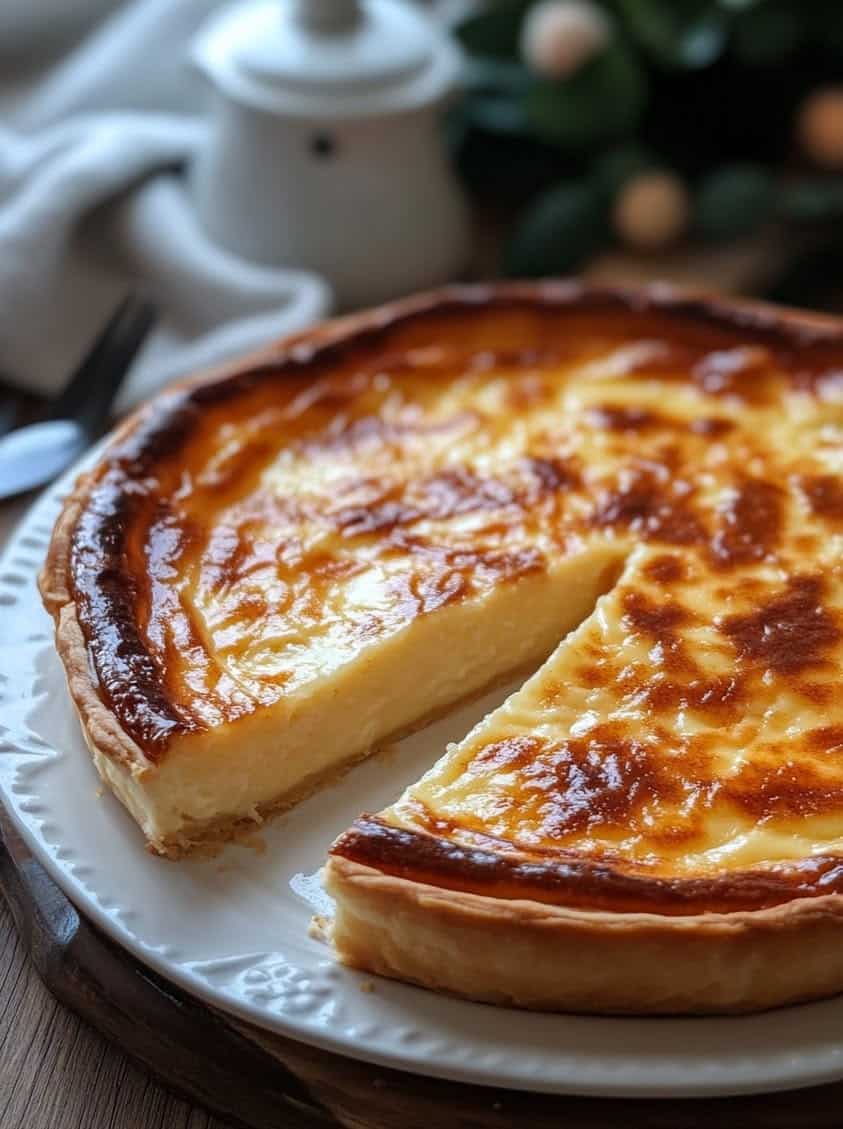
Classic French Grandmother’s Vanilla Custard Tart: An Elegant, Timeless Dessert
Imagine a dessert that whispers of French countryside kitchens and generations of culinary wisdom. This Classic French Grandmother’s Vanilla Custard Tart is precisely that. It is a masterpiece of simplicity, transforming humble ingredients into an elegant, timeless dessert. The magic lies not in complexity, but in technique and patience. Consequently, each bite delivers a profound sense of comfort and sophistication.
The star of this show is the creamy vanilla custard, cradled in a buttery, flaky crust. This classic French tart is an elegant, timeless dessert. Simple ingredients, stunning results. The filling bakes to a perfect, velvety set that jiggles just slightly in the center. Meanwhile, the aroma of real vanilla bean and toasted pastry fills your kitchen. Ultimately, it is a testament to the power of foundational baking.
Presenting this tart at your table creates an instant focal point. Its golden crust and pale, creamy filling are a study in understated beauty. You can serve it with a dusting of powdered sugar or a handful of fresh berries. Regardless, it promises to impress every guest. This recipe is your gateway to mastering a true French classic.
Quick Recipe Highlights
- Flavor Profile: This tart features a deep, aromatic vanilla flavor that is rich but not overly sweet. The buttery pastry crust provides a delightful savory contrast. Additionally, a hint of salt balances the creamy custard perfectly.
- Texture: The filling sets to a luxurious, smooth, and creamy vanilla custard that melts on the tongue. Conversely, the crust is crisp, tender, and shatters beautifully with each forkful. This contrast is the hallmark of a perfectly executed tart.
- Aroma: As it bakes, the scent of Madagascar vanilla bean and browning butter fills the air. There are warm, comforting notes of caramelized sugar and toasted flour. Ultimately, it is an irresistible fragrance that promises a delicious result.
- Visual Appeal: The tart presents a beautiful contrast between the pale yellow custard and the golden-brown pastry. Its surface is flawless and glossy. Therefore, it looks professionally made yet charmingly rustic.
- Skill Level Needed: This recipe requires basic pastry skills and attention to detail. You must manage a blind-baked crust and a custard that sets without curdling. However, with clear instructions, an intermediate home baker can achieve excellent results.
- Special Equipment: You will need a 9-inch tart pan with a removable bottom. Additionally, pie weights or dried beans for blind baking are essential. A fine-mesh sieve and a digital thermometer are highly recommended for custard success.
Recipe Overview
- Difficulty Level: We rate this recipe as medium difficulty. The process involves two key stages: creating a perfect pâte sucrée and baking a delicate custard. Each step requires precision, particularly when blind baking the crust to prevent shrinkage and ensuring the custard sets without bubbles. However, the techniques are fundamental and immensely rewarding to master.
- Category: This dish falls squarely into the dessert category. It is a baked custard tart, perfect for concluding a meal. Furthermore, it can also shine as part of an afternoon tea spread or a special brunch.
- Cuisine: This is a quintessential French dessert, hailing from the tradition of “cuisine de grand-mère”. It embodies the French philosophy of using few, high-quality ingredients to achieve maximum flavor. The technique is classic Parisian patisserie, adapted for the home kitchen.
- Cost: The cost is moderate, primarily driven by the quality of vanilla and butter. A real vanilla bean is an investment but provides unparalleled flavor. Using high-quality European-style butter makes a significant difference in the crust. Overall, it is far more affordable than buying a similar tart from a bakery.
- Season: This tart is truly a year-round dessert. It feels light and fresh in spring and summer, especially when paired with berries. Conversely, in fall and winter, its rich custard provides comforting warmth. It is endlessly adaptable to seasonal fruits and garnishes.
- Occasion: It is ideal for dinner parties, holiday celebrations, and birthdays. Moreover, it makes a stunning contribution to a potluck or bake sale. Simply put, it suits any event where you want to offer a homemade, elegant dessert.
Why You’ll Love This Recipe
First and foremost, the taste and texture are utterly divine. This Classic French Grandmother’s Vanilla Custard Tart delivers a symphony of flavor in every bite. The creamy vanilla custard is luxuriously smooth and infused with the nuanced, floral notes of real vanilla bean. Paired with the crisp, buttery shortcrust pastry, the contrast is nothing short of perfection. Each component complements the other, creating a balanced dessert that is rich yet not cloying. It is the kind of treat that makes people close their eyes and savor the moment.
From a practical standpoint, the recipe offers significant convenience and preparation benefits. While it requires attention, the steps are straightforward and can be broken down. For instance, you can prepare the tart dough a day ahead. Similarly, the custard filling comes together quickly with basic whisking. This make-ahead flexibility is a huge advantage when entertaining. You can assemble the tart hours before your guests arrive, eliminating last-minute kitchen stress.
Nutritionally, this homemade dessert allows for complete control over ingredients. You can choose organic eggs, high-quality dairy, and pure vanilla without additives or artificial flavors. Compared to store-bought versions laden with stabilizers and excess sugar, this is a cleaner option. While it is a treat, using wholesome ingredients makes it a more conscious indulgence. You are nourishing your guests with real food made with care.
The social and entertaining value of this tart is immense. Presenting a beautifully baked, classic French tart immediately elevates any gathering. It sparks conversation about tradition, baking, and flavor. Furthermore, it demonstrates a level of culinary skill and effort that guests always appreciate. Serving this elegant, timeless dessert creates a memorable finale to a meal and often becomes the recipe everyone requests.
Finally, it is remarkably cost-effective and accessible. The ingredient list is short and likely already in your pantry, save for perhaps the vanilla bean. Baking it at home costs a fraction of a similar tart from a French patisserie. Importantly, the technique you learn is transferable to countless other desserts. Mastering this recipe builds confidence and opens the door to more advanced baking projects.
Historical Background and Cultural Significance
The origin story of the custard tart stretches back centuries across Europe. However, the French version, or “tarte à la crème,” became refined during the 17th and 18th centuries. French pastry chefs, or pâtissiers, began perfecting the delicate balance of eggs, cream, and sugar. They encased it in “pâte sucrée,” a sweet, crumbly pastry. This creation moved from aristocratic tables to bourgeois homes, becoming a staple of family cooking. Grandmothers, or “grand-mères,” passed down their specific techniques, creating regional and familial variations. This recipe embodies that cherished lineage of home cooking.
Culturally, this tart holds immense importance in France. It represents the “cuisine de grand-mère,” a style of cooking known for its heartiness, simplicity, and reliance on technique over fancy ingredients. It is a dessert of comfort and celebration, equally at home at a Sunday family lunch or a festive occasion. Baking it connects you to a long tradition of French home bakers who valued precision and quality. It is a culinary heirloom, a symbol of shared knowledge and familial love transmitted through generations.
The evolution of the recipe is a story of refinement. Early custards were often baked in coarse pastry and could be grainy or eggy. Over time, techniques like straining the custard and baking at precise temperatures were developed. The introduction of vanilla from the New World transformed the flavor profile. Meanwhile, pastry recipes evolved from basic flour-and-water crusts to enriched, tender doughs with butter and sugar. Each innovation made the tart more consistent, delicate, and delicious.
Regional variations abound across France. In some areas, a pinch of flour is added to the custard for stability. Others might infuse the cream with citrus zest or a split vanilla bean pod. The Alsace region might use a lighter, brioche-like dough. Modern interpretations include adding a layer of frangipane or fruit compote beneath the custard. Despite these variations, the core principle remains: a smooth, vanilla-scented custard in a crisp shell. This classic French tart is an elegant, timeless dessert that adapts while honoring its roots.
Ingredient Deep Dive
Let us start with Vanilla Bean. The vanilla bean is the soul of this tart, providing a depth of flavor extract cannot match. Historically, vanilla originated in Mexico and was prized by the Aztecs. It traveled to Europe via Spanish explorers and later found ideal growing conditions in Madagascar. Nutritionally, vanilla contains small amounts of B vitamins and minerals like magnesium and potassium. Its primary benefit here is its complex flavor profile, containing hundreds of aromatic compounds. For selection, choose a plump, moist, and flexible bean with a glossy sheen. Store it in an airtight container in a cool, dark place. If you must substitute, use high-quality vanilla bean paste for the seeds, or 2-3 teaspoons of pure vanilla extract added to the warm cream.
Next, consider European-Style Butter. This butter has a higher butterfat content (around 82-86%) compared to standard American butter. This results in a more flavorful, tender, and flaky pastry crust. Butter has been a cornerstone of French pastry for centuries, with regions like Normandy and Brittany famous for their production. It provides essential fat-soluble vitamins like A, E, and K. For this recipe, always use unsalted butter to control the salt level. Ensure it is very cold when making the dough. Store butter tightly wrapped in the refrigerator or freezer. There is no true substitute for butter in this crust for authentic flavor and texture.
Now, examine Fresh Eggs. Eggs are the structural backbone of the creamy vanilla custard, providing proteins that coagulate to set the filling. They have been a dietary staple across cultures for millennia. Eggs are a nutritional powerhouse, offering high-quality protein, choline for brain health, and antioxidants like lutein. Use large, fresh eggs at room temperature for best emulsification. The fresher the egg, the thicker the white and yolk, leading to a richer custard. Store eggs in their carton on a refrigerator shelf, not the door. For a potential substitution in case of allergy, specialized egg replacers for baking exist, but they will alter the classic texture significantly.
Finally, look at Heavy Cream. Heavy cream, or “crème entière,” enriches the custard, giving it its luxurious mouthfeel and preventing a rubbery texture. Dairy farming has deep roots in French agricultural history. Cream provides energy from fat and contains fat-soluble vitamins. For this recipe, use heavy cream with at least 36% milkfat. Do not substitute with half-and-half or milk, as the custard may not set properly or will be less rich. Ultra-pasteurized cream works but can sometimes have a slightly cooked flavor. Store cream tightly sealed in the coldest part of your refrigerator. For a dairy-free version, full-fat canned coconut cream is the best alternative, though it will impart a coconut flavor.
Common Mistakes to Avoid
- Using Warm Butter for the Crust: This is a critical error. If your butter is soft or melted, it will coat the flour particles instead of creating small, discrete pockets. Consequently, your crust will be dense and greasy, not flaky and tender. Always start with very cold butter straight from the fridge.
- Overworking the Dough: When you mix the pastry dough too much, you develop the gluten in the flour. This leads to a tough, chewy crust that shrinks excessively during baking. Mix just until the dough comes together, then stop. Remember, a few dry crumbs are better than an overworked ball.
- Skipping the Blind Bake: Pouring custard into an unbaked crust guarantees a soggy bottom. The blind baking step partially cooks the shell, creating a moisture barrier. Without it, the liquid custard will soak into the raw dough, resulting in a pale, wet, and undercooked pastry base.
- Not Pricking the Dough: Before blind baking, you must prick the dough all over with a fork. This technique, called docking, allows steam to escape. If you forget, the pastry will puff up dramatically, creating an uneven surface that cannot hold the custard filling properly.
- Adding Hot Cream to Eggs Too Quickly: Tempering is non-negotiable. Pouring scalding cream directly onto the eggs will cook them instantly, creating scrambled egg strands in your custard. Instead, add the hot cream in a very slow, steady stream while whisking the eggs constantly and vigorously.
- Overbaking the Custard: The goal is a set but still creamy vanilla custard. Overbaking causes the proteins to tighten excessively, squeezing out moisture and creating a rubbery, curdled texture with bubbles on the surface. The center should still have a slight jiggle when you gently shake the pan.
- Using a Vanilla Bean Pod That’s Too Dry: A brittle, dry vanilla bean has lost much of its flavorful oils and seeds. It will not properly infuse the cream. Always select a bean that is supple and oily to the touch for the most potent aroma and taste.
- Not Straining the Custard: Even with perfect tempering, tiny cooked egg bits or vanilla bean membrane may remain. Straining through a fine-mesh sieve ensures an impeccably smooth, silky texture. Skipping this step can leave your custard with an unpleasant, grainy mouthfeel.
Essential Techniques
Blind Baking is the process of pre-baking a pastry crust before adding a wet filling. It is absolutely essential for this tart to prevent a soggy bottom. To master it, chill your shaped dough thoroughly, then line it with parchment paper and fill with pie weights. Bake until the edges are set, then carefully remove the weights and parchment to finish baking until golden. A common pitfall is removing the weights too early, which lets the crust slump. Visual cues for success are a fully set, dry-looking pastry that is lightly golden all over. This creates the perfect vessel for your creamy custard.
Tempering Eggs is the technique of gradually raising the temperature of eggs by adding a hot liquid. This prevents the eggs from scrambling. It is important because it allows the egg proteins to unwind gently and thicken the custard smoothly. To master it, whisk your eggs and sugar constantly while pouring the hot vanilla-infused cream in a very thin, steady stream. The common pitfall is adding the hot liquid too quickly. A visual cue for success is a homogenous, slightly thickened mixture without any visible cooked egg particles. Your custard base should be smooth and uniform before straining.
Pro Tips for Perfect Classic French Grandmother’s Vanilla Custard Tart
Chill your tart dough twice: once after mixing and once after pressing it into the pan. This double-chilling relaxes the gluten and firms the butter, minimizing shrinkage during baking. It is a simple step that guarantees a beautifully shaped crust.
Use ceramic baking beans or dried rice instead of metal pie weights if possible. They distribute heat more evenly and are less likely to create pressure points that distort the delicate pastry. This results in a more uniformly baked shell.
Infuse your cream with the vanilla bean slowly over low heat. Do not let it boil. A gentle simmer for about 10 minutes extracts maximum flavor without reducing the cream too much or creating a skin. Patience here builds the flavor foundation.
Place your filled tart shell on a preheated baking sheet in the oven. This gives the bottom crust an immediate blast of heat, helping it stay crisp against the cold custard. It is a professional trick for an impeccably baked base.
Let the baked tart cool completely at room temperature before attempting to remove the pan ring. The custard needs time to fully set, and the crust needs to firm up. Rushing this step can cause the delicate sides to crack or the filling to slump.
For the cleanest slices, use a sharp, thin-bladed knife dipped in hot water and wiped dry between each cut. The heat helps glide through the creamy custard without dragging or cracking the surface. This gives you picture-perfect portions.
Variations and Adaptations
For regional variations, consider the Parisian “Flan Parisien,” which is denser and often contains a hint of rum. In the south of France, you might find a lavender-infused custard. A Breton variation could use salted butter in the crust for a sweet-salty contrast. Exploring these twists connects you to France’s diverse culinary landscape while keeping the classic custard tart form.
Seasonal adaptations are effortless and beautiful. In spring, garnish with edible flowers or a rhubarb compote ribbon. Summer calls for a crown of fresh berries or a peach slice fan. For fall, consider a sprinkle of cinnamon or a side of poached pears. In winter, a dark chocolate sauce drizzle or candied citrus adds festive flair. The tart itself remains the elegant, timeless centerpiece.
Dietary modifications are entirely possible. For gluten-free, use a trusted 1:1 gluten-free flour blend in the crust. For dairy-free, substitute the butter with a high-quality vegan butter and the cream with full-fat coconut cream. For a vegan version, use plant-based butter, coconut cream, and a custard set with cornstarch or agar-agar. Note that each change will alter the final flavor and texture profile.
Flavor variations can personalize your tart. Infuse the cream with citrus zest, a cinnamon stick, or a split tonka bean instead of vanilla. You could stir a tablespoon of high-quality liqueur like Grand Marnier or Chambord into the strained custard. For a nutty dimension, sprinkle finely ground almonds into the bottom of the blind-baked shell before adding the custard.
Texture modifications might include adding a thin layer of frangipane (almond cream) under the custard for extra richness. For a more rustic, free-form version, bake the custard in individual ramekins without a crust for a classic “pot de crème.” You could also fold softly whipped cream into the cooled custard before setting for a lighter, mousse-like filling.
Presentation alternatives are endless. Serve individual mini tarts for a party. Create a marbled effect by swirling a tablespoon of fruit puree into the custard before baking. Or, for a stunning finish, use a kitchen torch to caramelize a thin layer of sugar on top just before serving, creating a “crème brûlée” tart.
Serving and Presentation Guide
Plating techniques should highlight the tart’s simple beauty. Slice it neatly on a serving board or cake stand. Use a pie server or thin spatula to transfer slices to individual plates. For a modern touch, serve on plain white or slate-gray plates to make the golden crust and pale custard pop. Always wipe the plate edges clean for a polished look.
Garnishing ideas should be minimal and elegant. A light dusting of powdered sugar through a fine sieve is classic. Fresh berries, a mint sprig, or edible flowers add color. A quenelle of lightly sweetened whipped cream or a drizzle of fruit coulis on the plate provides contrast. Remember, the tart itself is the star; garnishes are supporting actors.
Traditional accompaniments include a pot of strong coffee or tea. In France, it might be served with a small glass of dessert wine like Sauternes or a sweet Champagne. A dollop of crème fraîche offers a delightful tang that cuts the richness. These pairings honor the dessert’s heritage.
Modern serving suggestions might involve deconstruction. Serve a scoop of the baked custard in a glass with crumbled pastry and fresh fruit. Alternatively, pair a slice with a scoop of complementary sorbet, like raspberry or lemon. This approach keeps the classic flavors in a contemporary format.
Temperature considerations are key. This tart is best served at cool room temperature or slightly chilled. Straight from the fridge, the custard can be too firm and the crust too hard. Let it sit out for 15-20 minutes before serving to allow the flavors to bloom and the texture to soften perfectly.
Portion control tips are simple given its richness. A standard 9-inch tart yields 8 generous slices or 10 more modest ones. Use a sharp knife to mark even portions before cutting. Because it is rich, smaller slices are often satisfying, allowing you to stretch this elegant dessert to serve more guests.
Wine and Beverage Pairing
Wine pairings should complement, not compete with, the delicate vanilla flavor. A classic French pairing is Sauternes, a sweet Bordeaux wine whose honeyed apricot notes mirror the custard’s richness. A demi-sec Vouvray or a late-harvest Riesling also work beautifully. For a sparkling option, a slightly sweet Crémant d’Alsace or a Prosecco adds a festive touch. The key is to choose a wine that is as sweet as or slightly sweeter than the dessert itself.
Non-alcoholic alternatives can be just as sophisticated. A vanilla-infused sparkling water or a homemade lavender lemonade offers a refreshing contrast. A rich, cold glass of whole milk is a surprisingly perfect, nostalgic pairing. For a warm option, a cup of rooibos tea or a creamy white hot chocolate complements the creamy vanilla custard wonderfully.
Coffee and tea pairings are a natural fit. Serve with a strong espresso or a French press coffee to cut through the dessert’s sweetness. For tea, choose a black tea like Earl Grey, whose bergamot notes play well with vanilla, or a creamy, nutty oolong. Avoid overly bitter or smoky varieties that could clash with the tart’s delicate profile.
Temperature considerations for beverages depend on the season. In warmer months, iced coffee, cold brew, or chilled dessert wines are refreshing. In cooler weather, hot tea, coffee, or even a small snifter of brandy served warm are comforting. Always consider the overall dining experience when choosing serving temperatures.
Serving suggestions include offering a choice. Place a carafe of cold water on the table alongside the coffee pot and a bottle of dessert wine. This allows guests to customize their pairing. Present beverages in elegant glassware to match the sophistication of this classic French tart, completing the elegant, timeless dessert experience.
Storage and Shelf Life
Storage methods are straightforward but important for maintaining quality. Once completely cooled, cover the tart loosely with plastic wrap or place it under a cake dome. You must refrigerate it due to the dairy and egg content. Do not leave it at room temperature for more than two hours. Proper storage prevents spoilage and preserves the perfect texture of your creamy vanilla custard.
Temperature requirements are non-negotiable. This tart must be kept refrigerated at or below 40°F (4°C). The cold environment keeps the custard set and inhibits bacterial growth. For serving, remember to let it temper to cool room temperature for the best flavor and mouthfeel. Never freeze an assembled tart, as the custard will separate and become watery upon thawing.
Container recommendations include the tart pan itself with the ring left on for support. Alternatively, you can transfer slices to an airtight container, separating layers with parchment paper. If using a cake carrier, ensure it has a tight seal. The goal is to protect the tart from absorbing other refrigerator odors while preventing the crust from becoming soggy from trapped moisture.
Signs of spoilage are usually visible or olfactory. Look for an off smell, a slimy surface on the custard, or significant liquid separation (weeping). Mold may appear as fuzzy spots. The crust may become unpleasantly soggy or develop an off taste. When in doubt, adhere to the shelf life guidelines and discard the tart if anything seems amiss.
Reheating instructions are generally not recommended for this dessert. The custard is meant to be enjoyed cool. However, if you absolutely desire a warm slice, place an individual portion on an oven-safe plate in a 250°F (120°C) oven for just 5-7 minutes. Watch it closely, as overheating will melt and break the custard. This is not traditional but can be done cautiously.
Freezing guidelines are limited. You can successfully freeze the unbaked tart dough for up to 3 months. The baked, filled tart does not freeze well; the custard will crack and separate. If you must, freeze individual slices on a tray before wrapping tightly. Thaw overnight in the fridge, but expect significant texture loss. It is best enjoyed fresh.
Make Ahead Strategies
Your prep timeline can be spread over two days for stress-free entertaining. On Day 1, prepare and shape the tart dough in the pan. Wrap it tightly in plastic and refrigerate overnight. You can also make the custard base up to the point of straining, then cover and refrigerate it. On Day 2, blind bake the crust, finish the custard, assemble, and bake. This split schedule makes the process very manageable.
Storage between steps is simple. The wrapped, shaped dough benefits from a long, cold rest. The strained custard base can be kept in a sealed container in the fridge for up to 24 hours. When ready to bake, give the custard a good whisk to recombine any separation. Do not pour cold custard into a hot shell, as the temperature shock can affect baking time.
Quality impact assessment shows that make-ahead steps often improve the final product. Chilling the dough overnight relaxes the gluten, leading to a more tender crust that shrinks less. Letting the custard base rest allows the vanilla flavor to deepen and any air bubbles to dissipate, resulting in a smoother bake. These are advantages, not compromises.
Assembly tips for the make-ahead method are crucial. Ensure your blind-baked crust is completely cool before adding the custard. If the crust is warm, it can start cooking the eggs prematurely. Pour the custard into the shell while it is still on the baking sheet to avoid spills. Transfer the sheet to the oven carefully to avoid sloshing.
Reheating guidelines do not apply to the finished tart, as it is served cool. However, if you baked the tart a day in advance, simply store it covered in the fridge. There is no need to reheat. The flavors meld and improve slightly overnight. This makes it an ideal dessert for dinner parties, as all the work is done beforehand.
Fresh element additions should be done just before serving. Add any fresh berry garnishes, powdered sugar dusting, or whipped cream dollops right as you bring the tart to the table. This prevents berries from bleeding into the custard and keeps garnishes looking vibrant. The tart itself is stable, but the final touches are best applied fresh.
Scaling Instructions
Halving the recipe is perfect for a smaller household. Use a 6-inch tart pan. Precisely halve all ingredient weights using a kitchen scale for accuracy. The blind baking and custard baking times will be slightly shorter, so start checking for doneness 5-10 minutes earlier. The principles remain the same, but everything happens on a more intimate scale.
Doubling or tripling the recipe is great for events. You can make multiple tarts in separate pans. Do not try to bake one giant tart, as the custard may not set evenly in the center. Mix dough in batches to avoid overworking. Bake tarts on multiple oven racks, rotating them halfway through. Consider staggering bake times if oven space is limited.
Equipment adjustments are necessary when scaling. For multiple tarts, ensure you have enough pie weights for blind baking. You may need a larger mixing bowl for a double batch of custard. A large measuring cup with a spout is helpful for evenly dividing the custard mixture among shells. Planning your equipment setup beforehand prevents mid-recipe scrambling.
Timing modifications are minimal but important. When baking multiple tarts, the total oven time may increase slightly due to the added mass. However, individual tart baking time should remain similar. Use an oven thermometer to ensure accurate temperature, as a crowded oven can have hot spots. Rotate the pans front-to-back and top-to-bottom for even browning.
Storage considerations for scaled recipes are straightforward. Baked tarts can be refrigerated as usual. If making dough for multiple future tarts, you can freeze the extra disks or shaped shells. Label them with the date. Scaling up efficiently allows you to enjoy this classic French tart more often or share it with a larger crowd.
Nutritional Deep Dive
A macro breakdown for a typical slice reveals a balance of carbohydrates, fats, and protein. The crust contributes carbohydrates from flour and fats from butter. The custard provides protein from eggs and fats from cream, along with sugars. This combination provides sustained energy, though it is a calorie-dense treat best enjoyed in moderation as part of a balanced diet.
The micronutrient analysis shows contributions from several key ingredients. Eggs provide choline, selenium, and B vitamins. Dairy offers calcium and vitamin D. Vanilla contains antioxidants. While not a health food, this dessert made with real ingredients does provide more nutritional value than one made with artificial flavors and processed components.
Health benefits are linked to ingredient quality. Using real vanilla bean provides antioxidants that may have anti-inflammatory properties. Eggs support brain health with choline. Full-fat dairy can aid in the absorption of fat-soluble vitamins. The mental health benefit of enjoying a lovingly made, beautiful dessert should also not be underestimated.
Dietary considerations are important for those with restrictions. This recipe contains gluten, dairy, and eggs. It is also relatively high in saturated fat and sugar. Individuals managing conditions like diabetes or heart disease should account for this in their meal planning. Always consult with a healthcare provider for personalized dietary advice.
Portion analysis suggests that a standard slice is satisfying due to its richness. Cutting the tart into 10 slices instead of 8 automatically reduces the calorie count per serving. Serving with fresh fruit instead of extra whipped cream adds volume and nutrients without significant calories. Mindful portioning allows you to enjoy this elegant dessert without overindulgence.
Weight management tips include enjoying this tart as an occasional treat rather than a daily habit. Balance it with lighter meals earlier in the day. Share a slice with a friend. Savor each bite slowly to increase satisfaction. Remember, this classic French Grandmother’s Vanilla Custard Tart is a celebration dessert, meant to be a special part of life’s pleasures.
Dietary Adaptations
For a gluten-free version, replace the all-purpose flour with a 1:1 gluten-free baking blend that contains xanthan gum. Brands like Cup4Cup or Bob’s Red Mill work well. Be extra gentle when mixing and pressing the dough, as it can be more fragile. The blind baking step remains critical. The result will be a slightly more crumbly but delicious crust that accommodates celiac disease or gluten sensitivity.
A dairy-free adaptation requires substitutions for both butter and cream. Use a high-quality, unsalted vegan butter stick for the crust. For the custard, full-fat canned coconut cream is the best substitute for heavy cream, though it will impart a coconut flavor. For a more neutral taste, seek out a rich, plain, unsweetened oat or cashew cream designed for cooking. The technique remains identical.
Creating a vegan version is more complex but possible. Use vegan butter for the crust. For the custard, use coconut cream and a setting agent like cornstarch (about 3 tablespoons mixed with a little non-dairy milk) or agar-agar. Silken tofu blended with sugar and vanilla can also create a convincing texture, though the flavor profile changes. Experimentation is key to finding a plant-based version you love.
For a low-carb or keto adaptation, replace the flour in the crust with almond flour and a little coconut flour, using a trusted recipe ratio. Use a granulated sugar substitute like erythritol or allulose in both the crust and custard. The custard itself, being egg and cream-based, is already low in carbs. This allows those following specific dietary plans to enjoy a version of this elegant, timeless dessert.
Troubleshooting Guide
If your crust shrinks excessively, the dough was likely overworked or not chilled enough. Next time, handle the dough minimally and ensure it is well-chilled before rolling and again before baking. If it happens, you can carefully press the warm, baked crust back into shape with the back of a spoon before it fully cools, though this is not ideal.
A soggy bottom crust indicates under-blind baking. The pastry did not set enough before the custard was added. To fix it next time, bake the empty shell longer until it is fully dry and sandy to the touch. For the current tart, it is still edible but best served in bowls. You cannot re-bake a filled tart to crisp the bottom.
If the custard is curdled or has bubbles, it was overbaked or the oven was too hot. The proteins tightened too much. Unfortunately, this cannot be reversed. To prevent it, bake just until the center jiggles like Jell-O, use an oven thermometer, and consider a water bath for more even, gentle heat. A slightly underbaked custard is preferable to an overbaked one.
For a cracked surface, the custard cooled too quickly or was overbaked. To minimize cracking, let the tart cool gradually in the turned-off oven with the door ajar for an hour. Then cool on a rack at room temperature before refrigerating. Small cracks can be hidden with a garnish. They do not affect the taste of your creamy vanilla custard.
If the custard didn’t set, it was underbaked or the egg-to-cream ratio was off. Ensure you are using large eggs and full-fat cream. Bake until the very center is still slightly wobbly but the edges are firmly set. An under-set tart can sometimes be re-chilled to firm up, but it may be too soft to slice cleanly. Use it as a spoonable dessert.
For a weeping custard (liquid separating), it was likely held too long or experienced temperature shock. Straining the custard base well and not overbaking are the best preventions. If weeping occurs, gently blot
Print
Classic French Grandmother’s Vanilla Custard Tart
Description
A timeless, creamy vanilla custard tart with a buttery shortcrust pastry, inspired by traditional French home baking.
Ingredients
For the Crust:
- 1 1/2 cups all-purpose flour
- 1/2 cup unsalted butter, chilled and cubed
- 1/4 cup granulated sugar
- 1 large egg yolk
- 2 tablespoons ice water
- 2 cups whole milk
- 1 vanilla bean, split and seeds scraped
- 4 large egg yolks
- 1/2 cup granulated sugar
- 1/4 cup cornstarch
- Pinch of salt
Instructions
1. Prepare the Crust:
- In a food processor, combine flour, butter, and sugar until crumbly. Add egg yolk and ice water; pulse until dough forms. Wrap in plastic and chill for 30 minutes.
- Preheat oven to 375°F (190°C). Roll dough into a circle, fit into a 9-inch tart pan, and prick with a fork. Line with parchment and pie weights; bake for 15 minutes. Remove weights and bake 5 more minutes until golden. Cool.
- In a saucepan, heat milk and vanilla bean seeds over medium until steaming. In a bowl, whisk egg yolks, sugar, cornstarch, and salt until smooth. Gradually whisk in hot milk, then return to saucepan. Cook, stirring constantly, until thick. Strain into crust.
- Chill tart for at least 4 hours until set. Serve at room temperature or chilled.
Notes
You can customize the seasonings to taste.

I’m Shaykee—born in Morocco, seasoned across continents. From airplane galleys to home kitchens, I share the flavors and stories that shaped my journey.