
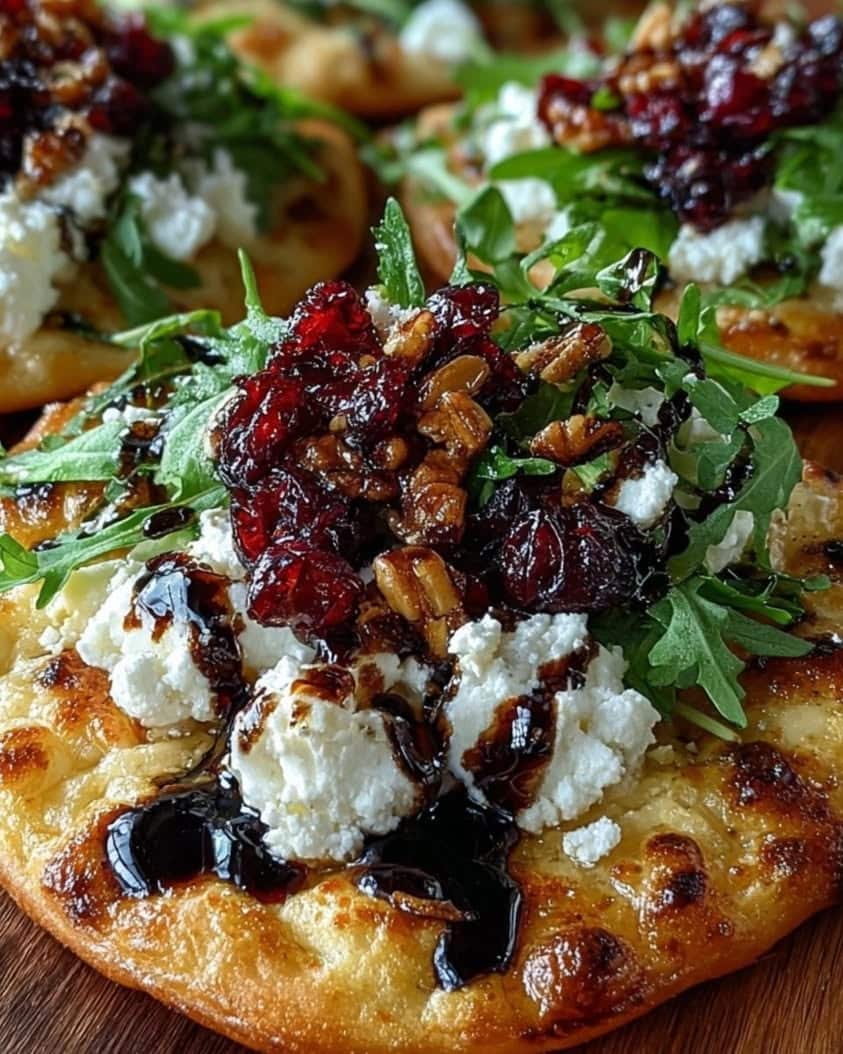
Cranberry Balsamic Flatbread with Goat Cheese & Arugula: A Festive Sweet & Savory Appetizer
Imagine the perfect bite: a crispy, golden flatbread base, slathered with a tangy cranberry and balsamic glaze, dotted with creamy, crumbled goat cheese, and finished with a vibrant pile of peppery arugula. This cranberry balsamic flatbread with goat cheese and arugula is not just a recipe; it is an experience that dances across your palate. Moreover, it masterfully balances sweet, savory, tangy, and fresh flavors in every single slice. Consequently, it has become a go-to appetizer for entertaining, a stunning centerpiece for holiday gatherings, or even a sophisticated weeknight dinner.
The beauty of this cranberry balsamic flatbread lies in its elegant simplicity and incredible speed. From start to finish, you can have this restaurant-worthy dish on your table in under thirty minutes. The process is straightforward, yet the result feels undeniably special and gourmet. Furthermore, the combination of warm, melty cheese, sweet-tart cranberry sauce, and the cool, crisp arugula creates a textural symphony that is utterly irresistible. Ultimately, this recipe proves that impressive food does not require hours in the kitchen.
This dish is a celebration of contrasts. The rich, earthy goat cheese perfectly cuts through the bright acidity of the balsamic reduction. Simultaneously, the slight bitterness of the fresh arugula provides a refreshing counterpoint to the sweet cranberry jam. Each component complements the others, creating a harmonious and complex flavor profile. As a result, this flatbread feels both festive and familiar, making it a crowd-pleaser for any occasion, from a casual girls’ night to an elegant Thanksgiving starter.
Quick Recipe Highlights
- Flavor Profile: This flatbread delivers a sophisticated balance. The sweet and tangy cranberry balsamic glaze pairs beautifully with the creamy, slightly tangy goat cheese. Finally, the peppery arugula adds a fresh, green finish that ties everything together.
- Texture: Expect a wonderful crunch from the baked flatbread crust, contrasted by the soft, spreadable glaze and the creamy crumbles of cheese. The fresh arugula on top adds a delightful, crisp texture that makes each bite interesting.
- Aroma: While baking, your kitchen will fill with the warm, toasty scent of baking dough and melting cheese. The balsamic vinegar reduction adds a sharp, sweet acidity to the air, while the fresh arugula brings a clean, green fragrance.
- Visual Appeal: This dish is a feast for the eyes. The deep ruby red of the cranberry glaze looks stunning against the white goat cheese and the bright green arugula. It is a colorful, festive presentation that looks professional.
- Skill Level Needed: This is a beginner-friendly recipe. Essentially, it involves simple assembly and a short bake time. No advanced knife skills or cooking techniques are required, making it perfect for novice cooks and seasoned chefs alike.
- Special Equipment: You only need a baking sheet and an oven. A small saucepan is helpful for warming the cranberry sauce, but you can even use a microwave. No pizza stone or special tools are necessary for success.
Recipe Overview
- Difficulty Level: We rate this cranberry balsamic flatbread recipe as “Easy.” The steps are minimal: spread, bake, and top. There is no yeast dough to proof or complicated sauces to emulsify. Therefore, it is an accessible recipe for cooks of all confidence levels, promising gourmet results with minimal effort.
- Category: This recipe falls perfectly into the appetizer or snack category. It is ideal for cutting into small pieces and sharing. Alternatively, you can easily scale it up to serve as a light main course, perhaps paired with a simple soup or salad for a complete meal.
- Cuisine: While flatbread has roots in many cultures, this particular combination leans into modern American fusion cuisine. It takes inspiration from Italian crostini, incorporates a classic Thanksgiving cranberry element, and uses a popular cheese like goat cheese for a contemporary, upscale twist.
- Cost: This is a moderately priced appetizer. Pre-made flatbread or naan keeps costs down, and a small log of goat cheese and a bag of fresh cranberries or a jar of sauce are affordable. Arugula is typically inexpensive, especially if bought in a clamshell. Overall, it delivers high perceived value for a reasonable cost.
- Season: This cranberry balsamic flatbread sings during the fall and winter holidays. Cranberries are in season, and the warm, rich flavors suit cooler weather. However, it is truly a year-round winner. You can use quality jarred cranberry sauce any time to bring a taste of the holidays to a summer picnic.
- Occasion: It is incredibly versatile. Serve it as a passed hors d’oeuvre at a cocktail party, as a pre-dinner starter for Thanksgiving or Christmas, or as the star of a casual weekend lunch. Its elegant appearance makes it suitable for formal events, while its easy preparation makes it perfect for relaxed gatherings.
Why You’ll Love This Recipe
First and foremost, the taste and texture appeal of this cranberry balsamic flatbread is off the charts. The flavor journey begins with the sweet-tart pop of the cranberry glaze, moves to the rich, creamy tang of the goat cheese, and finishes with the clean, peppery bite of arugula. Each component is distinct yet harmonious, creating a complex eating experience that feels both indulgent and refreshing. The contrast between the hot, crispy base and the cool, fresh greens is particularly delightful, making it a dish you will crave again and again.
From a practical standpoint, the convenience and preparation benefits are massive. This recipe comes together in about twenty-five minutes with minimal active cooking time. You can use store-bought flatbread or naan as a fantastic shortcut, eliminating the need to make dough from scratch. Additionally, the assembly is simple enough that you can involve kids or guests. While the flatbread bakes, you have time to prepare the arugula topping or tidy up, making it a stress-free option for entertaining.
Nutritionally, this appetizer offers some surprising advantages. Cranberries are packed with antioxidants and vitamin C. Goat cheese is often easier to digest than cow’s milk cheese for some people and provides protein and calcium. Arugula is a nutritional powerhouse, loaded with vitamins A, C, and K, as well as folate and calcium. When you choose whole-grain flatbread, you add fiber to the mix. Consequently, you can feel good about serving a dish that is as wholesome as it is delicious.
The social and entertaining value of this flatbread is immense. It is visually stunning, guaranteed to draw compliments from your guests. Because it is meant to be shared and eaten with hands, it fosters a casual, communal dining atmosphere. You can easily double or triple the recipe to feed a crowd without being chained to the stove. It is a conversation starter, a beautiful centerpiece for your appetizer table, and a surefire way to impress your friends and family with your culinary flair.
Finally, it is remarkably cost-effective and accessible. The ingredients are easy to find at any standard grocery store. You do not need expensive, exotic components. A single flatbread can yield several servings, making it a budget-friendly choice for party food. Furthermore, the recipe is forgiving and adaptable; if you cannot find one ingredient, there are simple substitutions. This accessibility ensures that anyone can create a restaurant-quality dish at home without breaking the bank.
Historical Background and Cultural Significance
The concept of flatbread is one of humanity’s oldest and most universal foods. Virtually every culture has a version: from Italian focaccia and piadina to Indian naan and Middle Eastern lavash. These breads served as edible plates, utensils, and sustenance for millennia. The modern “flatbread pizza” or topped flatbread, however, is a more recent innovation, blending traditional bread-making with contemporary, topping-focused cuisine. Our cranberry balsamic flatbread sits at this intersection, using a ancient form as a canvas for a very modern blend of flavors.
Cranberries hold deep cultural significance in North America, particularly for Native American tribes who used them for food, dye, and medicine. European settlers adopted their use, and cranberry sauce became a staple of the American Thanksgiving table in the 19th century. Incorporating this iconic, tart berry into a savory flatbread is a nod to that tradition, repurposing a holiday classic into a new, shareable format. It represents the evolution of traditional ingredients into modern, versatile applications.
The use of goat cheese, or chèvre, has its roots in ancient pastoral societies across Europe and the Middle East. It is one of the oldest known dairy products. Its recent surge in popularity in American gourmet cooking over the past few decades has made it a staple on charcuterie boards and in salads. Its creamy texture and distinct tang make it a perfect pairing for sweet and tart elements, which is why it has become a go-to cheese for recipes like this one, bridging old-world craftsmanship with new-world flavor combinations.
Ultimately, this recipe has no single origin story; it is a product of culinary fusion. It takes the Italian idea of a crispy, topped bread, combines it with a quintessentially American fruit preparation, and finishes it with a green popular in Mediterranean cuisine. This blending is a hallmark of contemporary global cooking. The cranberry balsamic flatbread is a testament to how food traditions can merge and evolve, creating something new and exciting that still feels comfortingly familiar.
Ingredient Deep Dive
Flatbread or Naan: This is your foundation. Flatbread is a generic term for simple, unleavened breads cooked on a hot surface. Naan, traditionally leavened and cooked in a tandoor, offers a slightly thicker, softer texture. For this recipe, either works beautifully. Look for high-quality, preferably stone-fired or whole-grain versions for the best flavor and sturdiness. You can often find them fresh in the bakery section or packaged. At home, store them in a cool, dry place or freeze them for longer storage. For a substitution, pre-baked pizza crusts or even large flour tortillas can work in a pinch, though cooking times may vary.
Cranberry Sauce: This is the sweet-tart heart of the glaze. You can use whole-berry or jellied sauce from a can, but for superior flavor and texture, consider making a quick homemade version with fresh or frozen cranberries, orange juice, and sugar. The natural pectin in cranberries creates a lovely thick glaze. Culturally, it is a North American icon. Nutritionally, cranberries are celebrated for their proanthocyanidins, which support urinary tract health. Choose a sauce with a high fruit content and lower added sugar if possible. Store opened sauce in the refrigerator.
Balsamic Vinegar: True traditional balsamic vinegar, Aceto Balsamico Tradizionale, is a aged, syrupy, protected product from Italy. For cooking, a good quality “balsamic vinegar of Modena” is perfect. Its complex sweetness and acidity balance the cranberries perfectly. When reduced slightly, it becomes a gorgeous glaze. It contains antioxidants and may aid digestion. A cheaper, overly acidic vinegar can ruin the balance, so invest in a decent mid-range bottle. Store it in a cool, dark place. For a substitution, a mix of red wine vinegar and a touch of honey can approximate the flavor profile.
Goat Cheese (Chèvre): This soft, spreadable cheese is made from goat’s milk. It has a distinctive tangy, earthy flavor that cuts through richness. Historically, goat cheese dates back thousands of years. Many people find it easier to digest than cheese from cow’s milk due to different protein structures. It is a good source of protein, calcium, and healthy fats. For this recipe, a plain, creamy log works best. Look for cheese that is bright white and smells fresh. Crumble it cold for best results. Store it tightly wrapped in the fridge. Feta or a soft ricotta salata can be substituted for a different salty tang.
Fresh Arugula: Also known as rocket, arugula is a leafy green with a distinctive peppery, slightly nutty flavor. It is a staple in Mediterranean cuisine. It is incredibly nutrient-dense, providing vitamins K, A, C, and folate, as well as calcium and potassium. The peppery bite provides a crucial fresh contrast to the rich toppings. Choose bunches with vibrant, perky green leaves and avoid any that are yellowing or wilted. Store it in the refrigerator in a bag with a paper towel to absorb moisture. Baby spinach or mixed greens can be substituted for a milder flavor.
Olive Oil & Honey: Extra virgin olive oil is used to brush the flatbread, promoting a golden, crispy crust and adding a fruity, peppery background note. Honey, often added to the cranberry-balsamic mix, enhances natural sweetness and helps create a glossy glaze. Both ingredients have ancient histories and are valued for their flavor and health properties. Use a good-quality olive oil you enjoy tasting. For the honey, a mild, liquid honey like clover or wildflower works best. Maple syrup can be used as a vegan substitute for honey.
Common Mistakes to Avoid
- Soggy Flatbread: The most common pitfall is ending up with a limp, soggy crust. To avoid this, do not overload the flatbread with too much wet cranberry sauce. Additionally, ensure your oven is fully preheated so the bread starts crisping immediately. Finally, add the fresh arugula only after baking, never before.
- Burnt Edges: Store-bought flatbreads can vary in thickness. If your flatbread is very thin, it may burn before the toppings are warmed through. Consequently, keep a close eye on it during the last few minutes of baking. You can also move it to a lower oven rack if the top is done but the bottom needs more crispness.
- Imbalanced Flavors: Using a cranberry sauce that is too sweet or a balsamic vinegar that is too harsh can throw off the entire dish. Taste your cranberry sauce first. If it is very sweet, you might want to add a little extra balsamic or lemon juice to the mix to balance it.
- Cold Goat Cheese Clumps: If you add large, cold clumps of goat cheese, they may not soften properly in the short baking time. For best results, crumble the cheese into small pieces so it warms through and just begins to melt slightly, creating creamy pockets.
- Wilted, Sad Arugula: Adding the arugula while the flatbread is piping hot will cause it to wilt instantly into a soggy, cooked green. Always let the flatbread cool for 2-3 minutes after baking before scattering the fresh arugula on top. This preserves its crisp texture and vibrant color.
- Skipping the Oil Brush: Brushing the flatbread with olive oil before adding toppings is a critical step. This thin layer helps create a barrier against moisture from the sauce and promotes even browning and a delicious flavor. Do not skip this simple but essential technique.
- Not Reducing the Glaze: If you mix the cranberry sauce and balsamic vinegar but do not warm them together, the flavors will not meld. Gently heating them in a saucepan for a few minutes allows the vinegar to mellow and the mixture to thicken slightly into a proper glaze.
- Overcomplicating the Toppings: The beauty of this recipe is its clean flavor profile. Resist the urge to add too many extra ingredients like raw onions, olives, or multiple cheeses. These can compete with and overwhelm the perfect sweet, savory, and fresh balance you are trying to achieve.
Essential Techniques
Pre-baking the Crust: Briefly baking the oil-brushed flatbread before adding the wet toppings is a crucial technique. This step, sometimes called “par-baking,” creates a preliminary crispness and a moisture barrier. It prevents the cranberry sauce from immediately seeping into the bread and making it soggy. To master it, bake the naked flatbread for just 3-4 minutes until it just starts to puff and become fragrant. The visual cue is a light golden color on the edges. A common pitfall is skipping this step, which leads to a less crispy final product.
Creating the Glaze: Simply mixing cranberry sauce and balsamic vinegar is not enough. Gently warming them together in a small saucepan over low heat is essential. This process allows the vinegar’s acidity to mellow and its sugars to concentrate, and it helps the two ingredients emulsify into a cohesive, spreadable glaze. Stir frequently to prevent sticking or burning. The technique is complete when the mixture is warm, smooth, and slightly thickened. The key is low, gentle heat; boiling it vigorously can cause the sugars to burn or the mixture to become too thick and sticky.
Crumble Distribution: How you apply the goat cheese matters. Using your fingers to crumble it directly from the cold log over the warm glaze ensures you get uneven, interesting pockets of cheese. These varied-sized crumbles will warm and soften differently, creating textural interest. Do not try to spread or mash the cheese evenly. The technique is about scattering for a rustic, appetizing look. If the cheese is too soft to crumble, pop it in the freezer for 10 minutes. The goal is distinct pieces that will melt just slightly in the oven’s heat.
Final Bake & Rest: The second bake is about warming the toppings and finishing the crispness of the crust. Bake just until the cheese is soft and the edges of the flatbread are deep golden brown. Over-baking will harden the cheese and potentially burn the cranberry glaze. Immediately after removing it from the oven, let the flatbread rest on the baking sheet for 2-3 minutes. This rest allows the crust to set and makes it easier to slice. Then, add the arugula. This technique ensures a crisp base that supports the toppings without becoming soggy from the greens’ moisture.
Pro Tips for Perfect Cranberry Balsamic Flatbread
First, for an extra flavor boost, add a pinch of orange zest or a teaspoon of fresh thyme to the cranberry-balsamic glaze as it warms. This adds a subtle, aromatic layer that complements the other ingredients beautifully.
Second, if you have time, make your own quick cranberry sauce. Simmer fresh cranberries with orange juice, a touch of honey, and a pinch of salt until they pop. The flavor is far superior to canned and allows you to control the sweetness.
Third, use a pizza cutter or a large, sharp chef’s knife to slice the finished flatbread. A pizza cutter gives you clean, easy lines and is safer than trying to saw through it with a dull knife.
Fourth, for a beautiful presentation, finish the topped flatbread with a very light drizzle of high-quality extra virgin olive oil or a balsamic glaze reduction over the arugula just before serving. This adds shine and a final punch of flavor.
Fifth, if serving as an appetizer at a party, pre-slice the flatbread into small squares or strips before adding the arugula. This makes it much easier for guests to grab a piece without making a mess.
Sixth, experiment with different nuts for added crunch. After baking, sprinkle the top with a handful of toasted pecans, walnuts, or pine nuts. The nutty flavor pairs exceptionally well with the cranberry and goat cheese.
Seventh, always taste your arugula before adding it. If it is particularly spicy or bitter, you can tame it slightly by giving it a very quick toss with a tiny drop of olive oil and a squeeze of lemon juice before scattering it on the flatbread.
Eighth, for the crispiest crust possible, place your baking sheet in the oven while it preheats. Carefully place the oiled flatbread on the hot sheet to start the cooking process immediately, mimicking the effect of a pizza stone.
Variations and Adaptations
Regional Variations: To give this flatbread an Italian twist, substitute the goat cheese for fresh mozzarella pearls and add a few slices of prosciutto after baking. For a Middle Eastern flair, use a za’atar-spiced olive oil to brush the crust and swap the goat cheese for crumbled feta. A French-inspired version might include caramelized onions beneath the cranberry glaze and use a creamy Brie instead of goat cheese.
Seasonal Adaptations: In the spring, try a version with a strawberry-balsamic reduction and herbed goat cheese. For summer, a peach and basil flatbread with burrata would follow a similar sweet-savory structure. In autumn, roasted butternut squash or pear slices can complement the cranberry beautifully. The basic formula of fruit, cheese, and green is endlessly adaptable to what is fresh and in season.
Dietary Modifications: For a vegan cranberry balsamic flatbread, use a vegan flatbread, omit the honey in the glaze (use maple syrup), and substitute the goat cheese with a vegan cashew-based “cheese” crumble or dollops of vegan ricotta. A nut-free version simply avoids nut-based cheese substitutes and garnishes.
Flavor Variations: Incorporate different herbs and spices. Add a smear of fig jam under the cranberry glaze, or mix a little Dijon mustard into the olive oil brush. For a savory twist, sprinkle the baked flatbread with crispy fried shallots or chopped fresh rosemary. A dash of red pepper flakes in the glaze can add a welcome hint of heat.
Texture Modifications: For added texture, sprinkle the flatbread with chopped toasted walnuts or pecans after baking. You could also add thin slices of crisp apple or pear on top of the arugula for a fresh crunch. Using a seeded or whole-grain flatbread also introduces more varied texture and a nuttier flavor base.
Presentation Alternatives: Instead of one large flatbread, use small, individual naan or pita rounds to create personal-sized appetizers. You can also deconstruct the elements and serve them as a crostini bar: provide toasted baguette slices, bowls of cranberry glaze, crumbled goat cheese, and arugula for guests to assemble themselves.
Serving and Presentation Guide
Plating Techniques: For a family-style presentation, place the whole, uncut flatbread on a large wooden cutting board or a simple, neutral-colored platter. This rustic look invites people to gather and share. If serving as a passed appetizer, slice the flatbread into bite-sized squares or long, thin strips and arrange them neatly on a serving tray, perhaps with a small bowl of extra glaze on the side for dipping.
Garnishing Ideas: Beyond the arugula, a final flourish makes the dish pop. A light drizzle of balsamic reduction (not the same as the mixed glaze) in zig-zags over the top looks professional. A sprinkle of flaky sea salt, such as Maldon, enhances all the flavors. Freshly cracked black pepper over the arugula adds visual specks and spice. A few whole fresh cranberries or pomegranate arils scattered over the top add brilliant color and reinforce the main ingredient.
Traditional Accompaniments: This flatbread stands beautifully on its own as an appetizer. However, in a larger meal context, it pairs wonderfully with a simple, clean soup like a butternut squash or tomato bisque. It also works well as part of a salad course, served alongside a citrusy endive or shaved fennel salad to continue the theme of bright, fresh flavors.
Modern Serving Suggestions: For a trendy grazing table or charcuterie board, include this flatbread as the “centerpiece” item. Surround it with complementary items like marinated olives, cured meats, assorted nuts, and other cheeses. You can also serve it as a sophisticated lunch alongside a glass of wine or sparkling water.
Temperature Considerations: This dish is best served warm, not piping hot. Allowing it to cool for 3-5 minutes after adding the arugula lets the crust firm up and prevents the greens from wilting completely. It should still be warm enough for the cheese to be soft and inviting. It is not meant to be served cold, as the crust will lose its desirable crispness.
Portion Control Tips: As an appetizer, one standard-sized flatbread (about 10-12 inches) can comfortably serve 4-6 people when cut into small pieces. As a light main course for two, one flatbread is perfect when paired with a side salad. For a larger party, plan on one flatbread for every 4-5 guests as part of a wider spread of appetizers.
Wine and Beverage Pairing
Wine Pairings: The sweet-tart cranberry and tangy goat cheese call for wines with good acidity and some fruitiness. A dry Rosé is a fantastic all-around choice, as its berry notes and crisp finish complement both elements. A Pinot Noir, with its light body and red fruit characteristics, pairs beautifully without overwhelming the dish. For white wine lovers, a Riesling (especially off-dry) or a Gewürztraminer mirrors the fruitiness and handles the tang expertly. Avoid heavily oaked wines like big Chardonnays or Cabernets, as they will clash with the dish’s brightness.
Non-Alcoholic Alternatives: Sparkling water with a twist of orange or a few muddled cranberries is a refreshing, celebratory choice. A tart cranberry spritzer made with cranberry juice, soda water, and a squeeze of lime mimics the dish’s flavors. For something warmer, a lightly sweetened hibiscus tea (agua de jamaica) offers a similar tart, fruity profile that pairs wonderfully.
Coffee/Tea Pairings: While not a traditional pairing for this appetizer, if serving it at a brunch or lunch, a medium-roast coffee with low acidity would work. For tea, a fruity herbal infusion like a cranberry-orange or a gentle white tea would not compete with the flatbread’s delicate balance of flavors.
Temperature Considerations: Serve white wines and Rosés well-chilled, between 45-55°F. Red wines like Pinot Noir should be served slightly cooler than room temperature, around 55-60°F, to keep their freshness. Non-alcoholic sparkling drinks should be ice-cold to provide a refreshing contrast to the warm flatbread.
Serving Suggestions: Always offer beverages in clear glassware to showcase their color alongside the vibrant food. Provide enough glasses so guests can easily hold a drink in one hand and a piece of flatbread in the other. For a party, consider creating a signature cocktail or mocktail that incorporates cranberry juice or a balsamic shrub to tie the whole experience together.
Storage and Shelf Life
Storage Methods: This flatbread is best enjoyed immediately. However, if you have leftovers, store them in a single layer in an airtight container in the refrigerator. To prevent sogginess, place a paper towel underneath the flatbread to absorb any moisture. Do not stack the pieces, as the weight will crush the arugula and make the crust soggy.
Temperature Requirements: Always refrigerate leftovers promptly. The dairy and fresh greens make it perishable. It should not be left at room temperature for more than two hours. Store it in the main body of the refrigerator, not in the door, where temperatures fluctuate more.
Container Recommendations: A large, shallow glass or plastic container with a tight-fitting lid is ideal. Alternatively, you can wrap the flatbread tightly in aluminum foil, though this may press down on the toppings. A baking sheet covered with plastic wrap can work for very short-term storage.
Signs of Spoilage: Discard the flatbread if the arugula becomes slimy or develops an off odor. If the goat cheese shows signs of mold (beyond its natural rind) or the cranberry topping smells fermented, it is time to throw it out. Generally, the quality of the texture degrades long before it becomes unsafe to eat.
Reheating Instructions: Reheating is tricky. The oven is your best bet to restore some crispness. Preheat your oven or toaster oven to 375°F. Place the flatbread directly on the oven rack or on a baking sheet for 5-7 minutes until warmed through. The arugula will wilt completely. The microwave is not recommended, as it will turn the crust rubbery and soggy.
Freezing Guidelines: Freezing is not recommended for the assembled flatbread. The arugula will turn to mush upon thawing, and the texture of the bread will suffer greatly. You can, however, freeze individual components like homemade cranberry sauce or unbaked flatbread dough separately for future use.
Make Ahead Strategies
Prep Timeline: You can prepare several components up to two days in advance. Make the cranberry-balsamic glaze and store it in a sealed container in the refrigerator. Crumble the goat cheese and keep it in a separate container. Wash and thoroughly dry the arugula, then store it in a salad spinner or a bag with a paper towel. The flatbread itself can be kept at room temperature in its original packaging.
Storage Between Steps: Keep all prepped ingredients refrigerated until you are ready to assemble. Let the chilled cranberry glaze come to room temperature for about 15 minutes before using, or warm it gently on the stove or in the microwave for a few seconds to make it spreadable again.
Quality Impact Assessment: Prepping the glaze ahead actually allows the flavors to meld and deepen, improving the taste. Pre-crumbled cheese is fine, though it may dry out slightly on the surface. The key is to keep the arugula as fresh and dry as possible; pre-washing it is a great time-saver that does not impact quality if stored properly.
Assembly Tips: When ready to serve, simply follow the recipe steps: brush oil, par-bake, spread the pre-made glaze, sprinkle the pre-crumbled cheese, and finish baking. Then, top with the pre-washed arugula. This strategy turns active cooking time into just 10-15 minutes, making it perfect for stress-free entertaining.
Reheating Guidelines: If you must fully assemble and bake the flatbread ahead of time (minus the arugula), reheat it in a 375°F oven for 5-8 minutes to re-crisp the crust before adding the fresh greens. The cheese will melt further, but the overall quality will be better than serving it at room temperature.
Fresh Element Additions: The arugula is the one component that must always be added fresh, just before serving. This ensures its crisp texture and vibrant color. Any garnishes like a final drizzle of oil or balsamic reduction should also be added at the last moment for the best visual appeal.
Scaling Instructions
Halving the Recipe: Halving this recipe is straightforward. Use half a flatbread (or one small personal naan), and halve all topping quantities. Baking time may be slightly reduced by 1-2 minutes since there is less mass to heat. This is perfect for a quick lunch or dinner for one or two people. Use a toaster oven to save energy.
Doubling or Tripling: To feed a crowd, simply multiply the ingredient quantities by your desired factor. The key is to bake the flatbreads in batches or on multiple oven racks. Rotate the baking sheets halfway through cooking to ensure even browning. You can par-bake multiple crusts at once, but for the final bake with toppings, avoid overcrowding the oven, as this leads to steam and soggy crusts.
Equipment Adjustments: When scaling up, you will need more baking sheets. If using multiple racks, consider using convection bake mode if your oven has it, as it circulates air better for even cooking. Have a large cutting board or several platters ready for the finished products. A large batch of cranberry glaze can be made in a bigger saucepan.
Timing Modifications: While prep time scales linearly, baking time does not double when you bake multiple flatbreads. However, a full oven may take slightly longer to recover heat when you open the door. Add just 1-2 minutes to the baking time per batch and rely on visual cues (golden edges, softened cheese) rather than the timer alone.
Storage Considerations: For a large party, you can stage the process. Have all components prepped and lined up. Bake flatbreads in successive batches, keeping finished ones warm in a 200°F oven on a wire rack (without arugula) for up to 15 minutes. Add the arugula just before serving each batch to keep it fresh.
Nutritional Deep Dive
Macro Breakdown: A serving of this cranberry balsamic flatbread provides a balance of carbohydrates, fats, and protein. The flatbread crust is the primary source of carbohydrates. The goat cheese and olive oil contribute healthy fats and a moderate amount of saturated fat. The goat cheese also provides protein. The cranberries add natural sugars and fiber. Overall, it is a satisfying dish that offers energy from carbs, satiety from fats and protein, and micronutrients from the whole-food ingredients.
Micronutrient Analysis: This dish is rich in several key vitamins and minerals. Arugula is an excellent source of Vitamin K (crucial for blood clotting and bone health), Vitamin A (for vision and immunity), and folate. Cranberries provide
Print
Cranberry Balsamic Flatbread with Goat Cheese & Arugula
Description
A sweet and tangy flatbread topped with creamy goat cheese, peppery arugula, and a balsamic drizzle, perfect for a light lunch or appetizer.
Ingredients
For the Crust:
- 1 pre-made flatbread or pizza crust
- 1/2 cup cranberry sauce (whole berry or jellied)
- 4 oz goat cheese, crumbled
- 1 cup fresh arugula
- 2 tbsp balsamic glaze
- 1 tbsp olive oil
- Salt and black pepper to taste
- Optional: 1/4 cup chopped walnuts for crunch
Instructions
1. Prepare the Crust:
- Preheat oven to 400°F (200°C). Place flatbread on a baking sheet and brush lightly with olive oil.
- Spread cranberry sauce evenly over the flatbread, leaving a small border around the edges.
- Sprinkle crumbled goat cheese on top of the cranberry sauce. Bake for 10-12 minutes, until cheese is slightly melted and edges are golden.
- Remove from oven and let cool for 2-3 minutes. Top with fresh arugula and optional walnuts.
- Drizzle with balsamic glaze, season with salt and pepper, slice, and serve immediately.
Notes
You can customize the seasonings to taste.

I’m Shaykee—born in Morocco, seasoned across continents. From airplane galleys to home kitchens, I share the flavors and stories that shaped my journey.