
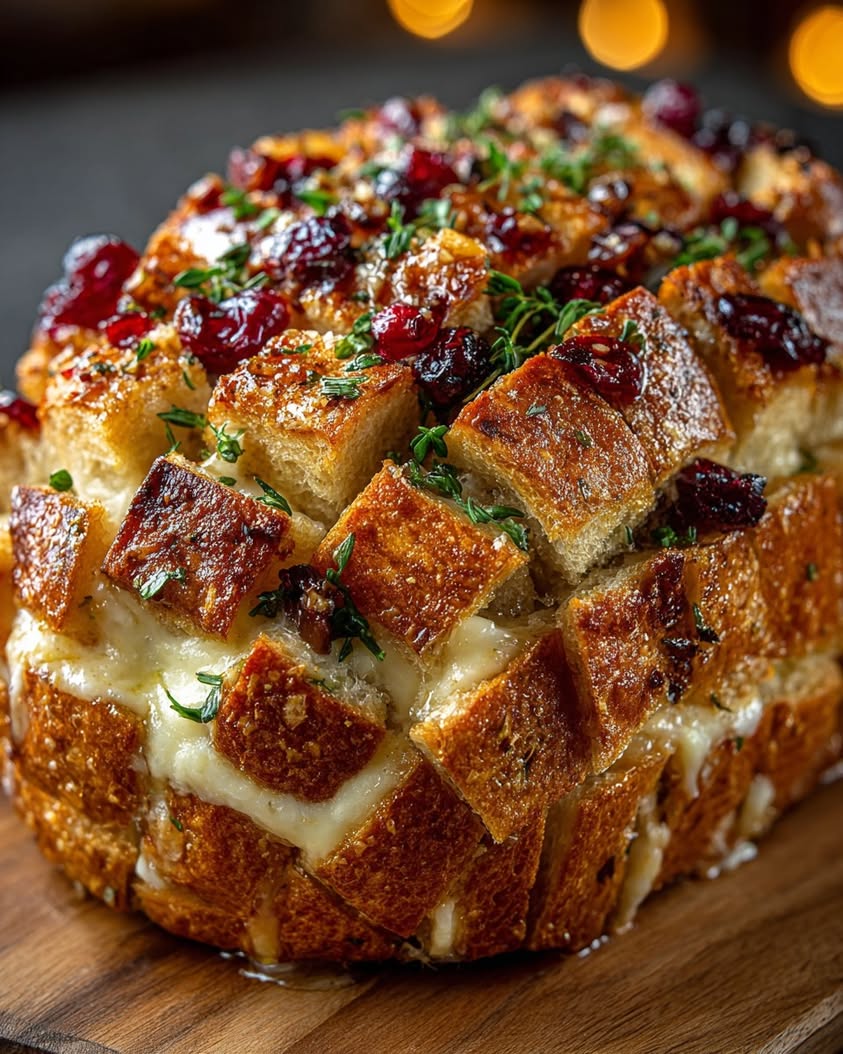
Cranberry Brie Honey Sourdough Pull-Apart Bread: The Ultimate Holiday Appetizer
Imagine pulling apart warm, crusty sourdough bread to reveal pockets of melted, creamy brie cheese, tart cranberries, and a sweet honey glaze. This Cranberry Brie Honey Sourdough Pull-Apart Bread is not just a recipe; it is a centerpiece, a conversation starter, and the star of any holiday table. The combination of flavors and textures creates an unforgettable experience that feels both rustic and elegant. Furthermore, the aroma that fills your kitchen as it bakes is pure holiday magic, promising a dish that tastes as wonderful as it smells.
This stunning appetizer is deceptively simple to make, requiring minimal prep work for a maximum wow factor. Using a round loaf of sourdough as your base, you create a grid of slices that hold delicious fillings. As a result, every single piece is loaded with the perfect balance of cheesy, sweet, and tangy flavors. This Cranberry Brie Honey Sourdough Pull-Apart Bread is the perfect solution for holiday entertaining because it is effortlessly impressive. Your guests will be delighted by the interactive, shareable nature of pulling apart their own piece of warm, cheesy bread.
Ultimately, this recipe transforms a few simple, high-quality ingredients into a culinary masterpiece. The sourdough’s tangy crust provides a sturdy vessel for the rich, melted brie and the bright, jammy cranberries. Meanwhile, the honey drizzle caramelizes slightly in the oven, adding a glossy sweetness that ties everything together. This Cranberry Brie Honey Sourdough Pull-Apart Bread is guaranteed to become a new seasonal tradition for your family and friends.
Quick Recipe Highlights
- Flavor Profile: This bread delivers a perfect harmony of savory, sweet, and tangy notes. The rich, buttery flavor of the brie cheese is beautifully cut by the sharp pop of the cranberries. Finally, a generous drizzle of honey adds a floral sweetness that balances the entire dish.
- Texture: You experience a fantastic contrast of textures in every bite. The crusty, chewy exterior of the sourdough gives way to a soft, pillowy interior. Meanwhile, the melted brie becomes wonderfully gooey, and the cranberries provide a delightful, juicy burst.
- Aroma: As it bakes, the kitchen fills with the warm, yeasty scent of toasted sourdough. This is complemented by the nutty, earthy aroma of melting brie and the sweet, caramelized notes of honey. The overall effect is incredibly inviting and festive.
- Visual Appeal: The presentation is truly stunning, with a golden-brown, rustic loaf sitting proudly on a board. When you pull it apart, the vibrant red cranberries and oozing white cheese create a beautiful, colorful reveal. Consequently, it makes for an impressive centerpiece on any holiday spread.
- Skill Level Needed: This recipe is perfect for cooks of all levels, from beginners to experts. The technique involves simple slicing and stuffing, requiring no advanced baking skills. Therefore, anyone can achieve a beautiful, professional-looking result with minimal effort.
- Special Equipment: You only need a sharp serrated knife for cleanly slicing the bread and a baking sheet lined with parchment paper. A pastry brush is helpful for applying the garlic butter, but a spoon works just as well. No special or expensive equipment is required.
Recipe Overview
- Difficulty Level: We classify this recipe as easy because it uses a pre-baked sourdough loaf, eliminating the need for any complex dough work. The primary skills involved are simple knife work for scoring the bread and basic assembly. Essentially, if you can slice bread and stuff ingredients into the crevices, you can master this dish. The oven does most of the work, melding the flavors together into a cohesive, delicious appetizer.
- Category: This dish falls squarely into the appetizer and snack category, perfect for starting a meal or serving at a party. It also blurs the line into the side dish category, pairing wonderfully with holiday soups and salads. Its shareable, communal nature makes it ideal for grazing tables and festive gatherings.
- Cuisine: While pull-apart bread has modern American roots, the ingredients speak to a French-inspired profile with the brie and sourdough. The use of honey and cranberries also gives it a rustic, hearty feel that fits well with contemporary fusion cuisine. It is a celebratory dish that transcends a single culinary tradition.
- Cost: This is a moderately priced appetizer, with the sourdough boule and the brie cheese being the main investments. Using dried cranberries is an affordable way to incorporate fruit, and honey and butter are typically pantry staples. Overall, you create a dish that looks and tastes luxurious without an exorbitant price tag.
- Season: This recipe is quintessentially a fall and winter holiday dish. The cranberries evoke the flavors of Thanksgiving and Christmas, making it a seasonal favorite. The warm, comforting nature of the baked bread and cheese is perfect for colder weather, though it can be enjoyed year-round.
- Occasion: It is the ultimate party food for holiday gatherings, game day events, or potlucks. It is also a fantastic choice for a special weekend brunch or a cozy family night in. Any event that calls for a warm, comforting, and shareable dish is the right occasion for this bread.
Why You’ll Love This Cranberry Brie Honey Sourdough Pull-Apart Bread
First and foremost, the taste and texture appeal is absolutely irresistible. The initial crunch of the sourdough crust gives way to an incredibly soft, steam-filled interior. As you pull apart a piece, you get long, satisfying strings of melted brie cheese. The tart cranberries cut through the richness, providing a bright, fruity contrast, while the honey adds a final note of floral sweetness that makes every bite complex and delightful. This combination of savory, sweet, and tangy is perfectly balanced and keeps you coming back for more.
From a convenience standpoint, this recipe is a dream for any host. The preparation is remarkably straightforward and takes only about fifteen minutes of active work. You can even assemble the entire loaf a few hours ahead of time and refrigerate it until you are ready to bake. Consequently, you can spend less time in the kitchen and more time with your guests. When your company arrives, you simply pop it in the oven, and within twenty-five minutes, your house smells incredible, and you have a stunning, hot appetizer ready to serve.
While this is an indulgent treat, it does offer some nutritional advantages from its core ingredients. Sourdough bread, thanks to its fermentation process, can be easier to digest for some people compared to regular bread. Cranberries are packed with antioxidants and vitamin C, and honey contains trace enzymes and antioxidants. Brie cheese provides a good source of protein and calcium. When enjoyed in moderation, this dish can be part of a balanced diet, especially during the holiday season.
The social and entertaining value of this pull-apart bread cannot be overstated. It is inherently a communal dish that encourages interaction and sharing. Placing this golden loaf on the table creates an immediate focal point and a fun, engaging activity for your guests. It breaks the ice and gets people talking as they pull apart their own pieces. This interactive element transforms a simple appetizer into a memorable experience, making your gathering feel more special and connected.
Finally, this dish is surprisingly cost-effective and accessible. You only need five main ingredients, most of which are easy to find at any standard grocery store. Compared to many elaborate holiday appetizers, the cost per serving is quite reasonable. Furthermore, because it is so impressive, it gives the perception of a gourmet, restaurant-quality dish made in your own kitchen. You achieve maximum flavor and visual impact with minimal financial investment, making it a smart choice for feeding a crowd.
Historical Background and Cultural Significance
The concept of stuffed or filled bread spans centuries and cultures, from Italian focaccia to Eastern European kulich. However, the modern “pull-apart bread” or “bubble bread” is a distinctly American innovation that gained popularity in the mid-to-late 20th century. It likely evolved from monkey bread, a sweet, sticky pastry made with biscuit dough and baked in a Bundt pan. The genius of this format is its shareable, finger-food nature, which aligns perfectly with the casual, communal dining trends that became popular post-World War II. The pull-apart style made food interactive and fun, moving away from formal, plated courses.
The cultural significance of this specific combination lies in its use of holiday-centric ingredients. Brie cheese, with its French origins, has long been associated with sophistication and celebration on American tables. Cranberries are a native North American fruit that became a staple of Thanksgiving feasts, symbolizing harvest and tradition. Combining these with rustic sourdough, a bread celebrated for its artisanal quality and deep flavor history, creates a dish that feels both classic and contemporary. It represents a fusion of Old World elegance and New World bounty.
The evolution of this recipe is a testament to the creativity of home cooks and food bloggers. While the basic technique of stuffing a loaf of bread is ancient, the specific combination of cranberry, brie, and honey is a relatively new phenomenon. It emerged as part of the foodie culture that celebrated gourmet-ingredient mashups and visually stunning, “Instagrammable” dishes. This particular recipe gained traction because it perfectly captures the spirit of modern holiday entertaining: impressive yet approachable, decadent yet familiar.
Regional variations of this concept are endless, reflecting local tastes and available ingredients. In the American South, you might find a version with pimento cheese and jalapeños. In California, a version with goat cheese and sun-dried tomatoes is popular. The cranberry and brie combination, however, has a particularly strong foothold in the Northeast, where cranberry bogs are common and European culinary influences are strong. This versatility is key to the recipe’s enduring appeal, allowing it to be adapted and personalized while maintaining its core comforting identity.
Ingredient Deep Dive
Sourdough Bread: Sourdough is one of the oldest forms of leavened bread, dating back to ancient Egypt. Its unique tangy flavor comes from a wild yeast and lactobacillus starter, rather than commercial yeast. This long fermentation process not only develops complex flavors but also can pre-digest some of the gluten, making it easier on the stomach for some individuals. From a nutritional standpoint, sourdough often has a lower glycemic index than regular bread and contains beneficial bacteria. When selecting a loaf, look for a sturdy, round boule with a crisp, dark crust; this structure is essential for holding the fillings without collapsing. Avoid bread that is too soft or airy. Store sourdough at room temperature in a paper bag for a day or two, or freeze it for longer storage.
Brie Cheese: Brie is a soft, creamy, surface-ripened cheese that originated in the French region of the same name. It is known as the “Queen of Cheeses” and has been a staple of European royalty and feasts for centuries. The cheese is made from cow’s milk and has a distinctive edible, bloomy white rind. Nutritionally, brie is a good source of protein, calcium, and vitamin B12, though it is also high in fat and calories. For this recipe, choose a ripe but firm brie; it should give slightly when pressed but not be runny. You can use a wedge and slice off the rind, or for a creamier result, include the rind as it is entirely edible and adds flavor. Store brie in the refrigerator in its original wrapping until ready to use.
Cranberries: The American cranberry is one of only three major fruits native to North America, with a history of use by Native Americans for food, dye, and medicine. They are a powerhouse of nutrition, exceptionally high in vitamin C, fiber, and various antioxidants like proanthocyanidins, which are known for supporting urinary tract health. For this recipe, dried cranberries are preferred for their chewy texture and concentrated sweetness, which balances the savory cheese. Look for dried cranberries without added sugar or oil if possible, though sweetened ones work perfectly fine. You can substitute with fresh or frozen cranberries, but chop them coarsely and expect a tarter result. Store dried cranberries in a cool, dark pantry in a sealed container.
Honey: Honey has been used as a sweetener and medicine for thousands of years, with evidence of beekeeping dating back to ancient Egypt and Greece. Its flavor profile varies dramatically based on the flowers foraged by the bees, from light and floral to dark and robust. Honey contains trace amounts of enzymes, amino acids, and antioxidants, and it has natural antimicrobial properties. In this recipe, honey provides a glossy sweetness that caramelizes during baking. Use a good-quality, raw honey for the best flavor, but any variety will work. For a vegan adaptation, maple syrup can be used as a direct substitute. Store honey at room temperature in a sealed container indefinitely; if it crystallizes, gently warm the jar in a water bath.
Butter and Garlic: Butter, churned from cream, has been a dietary staple for centuries, adding richness and flavor to countless dishes. The garlic butter mixture in this recipe seeps into the bread, toasting it from the inside and adding a savory, aromatic base note. Using unsalted butter allows you to control the overall saltiness of the dish. Fresh garlic is highly recommended for its pungent, sharp flavor that mellows beautifully when baked. From a nutritional perspective, butter is a source of fat-soluble vitamins like A and E, while garlic is renowned for its allicin compound, which has various health benefits. For a dairy-free version, a high-quality vegan butter works well.
Common Mistakes to Avoid
- Slicing Through the Bottom Crust: This is the most critical error. If you slice all the way through the bottom of the sourdough loaf, the fillings will leak out during baking, creating a mess and causing the bread to lose its structural integrity. Always use a sharp serrated knife and pay close attention, leaving about a half-inch base intact to form a solid foundation.
- Using Overly Ripe or Cold Brie: If the brie is too ripe and runny, it will melt too quickly and seep out before the bread has a chance to crisp up. Conversely, if it is too cold, it will be difficult to slice and may not melt evenly. Let the brie sit at room temperature for 20-30 minutes before assembling for the perfect, gooey melt.
- Overstuffing the Bread: It is tempting to pack in as much cheese and cranberry as possible, but this can lead to a soggy, heavy final product. The bread needs space for the steam to circulate and crisp up the interior. Be generous but mindful; the ingredients should sit comfortably in the pockets without being forced.
- Neglecting the Garlic Butter Brush: The garlic butter is not just for flavor; it helps the exterior of the bread become golden, crispy, and delicious. Skipping the step of brushing it thoroughly between the slices and over the top will result in a drier, less flavorful crust. Do not be shy with the butter for the best texture.
- Under-baking the Loaf: Removing the bread from the oven too early means the interior cheese may not be fully melted and the bread may be doughy. The loaf should be deeply golden brown on top, and you should see the cheese actively bubbling within the slices. Use the visual cues, not just the timer, to determine doneness.
- Not Letting it Rest Before Serving: Pulling the bread apart the second it comes out of the oven can lead to burns from escaping steam and cheese. Allowing it to rest for 5-10 minutes lets the cheese set slightly, making it easier and safer to pull apart while still being wonderfully warm and gooey.
- Using a Flimsy Bread Loaf: A soft, sandwich-style loaf of bread will not hold up to the stuffing and will turn to mush. The recipe relies on the sturdy, chewy crumb and robust crust of a good sourdough boule to maintain its structure. Do not substitute with a weak bread; the integrity of the loaf is non-negotiable.
- Forgetting to Line the Baking Sheet: Honey and cheese can drip and caramelize on your baking sheet, creating a difficult-to-clean mess. Always use parchment paper or a silicone baking mat. This not only makes cleanup effortless but also prevents the bottom of the bread from over-browning or sticking.
Essential Techniques
Scoring the Bread: The technique of cutting a grid pattern into the sourdough without slicing through the bottom is the foundation of this recipe. This creates the “pockets” that will hold your fillings and allows the bread to expand and crisp up beautifully in the oven. To master it, place the loaf on a stable surface and use a long, sharp serrated knife. Saw gently back and forth, using the curve of the loaf as a guide, and consciously stop about half an inch from the bottom. A common pitfall is rushing and applying too much pressure, which can easily cut through the base. The visual cue for success is a loaf that looks like a checkerboard from above but remains intact at its foundation.
Stuffing the Loaf: This technique involves evenly distributing the brie and cranberries into the crevices you have created. The goal is to get filling into as many nooks as possible without overpacking. Use your fingers to gently pry the slices apart and tuck small pieces of brie and pinches of cranberries deep into the grid. Why is this important? Even distribution ensures that every pulled piece has a perfect balance of flavor and texture. A common mistake is just dropping ingredients on top, which results in some bites being empty. The key is patience and a gentle touch to fill the bread thoroughly while maintaining its structure.
Butter Basting: Thoroughly brushing the melted garlic butter over and into the loaf is a critical step for flavor and texture. This technique ensures the entire surface, including the cut sides of the interior slices, gets coated. The butter will soak into the bread, toasting it from the inside and creating a rich, savory flavor base. Furthermore, it promotes an even, golden-brown crust. Use a pastry brush to get into all the cracks, and do not forget the top and sides. A common pitfall is applying the butter too sparingly. The loaf should look generously glossed before it goes into the oven, which is your visual cue that you have done it correctly.
Pro Tips for Perfect Cranberry Brie Honey Sourdough Pull-Apart Bread
First, warm your brie slightly before slicing it. Cold brie is difficult to cut neatly and can tear. Letting it sit on the counter for 20 minutes firms it up just enough for clean slicing while ensuring it melts perfectly in the oven.
For an extra flavor dimension, toast your sourdough loaf lightly for five minutes before you slice and stuff it. This pre-crisping step helps the interior maintain a pleasant chewiness instead of becoming soggy from the butter and melting cheese.
If you love a savory note, add a tablespoon of finely chopped fresh rosemary or thyme to the garlic butter. The herbal fragrance will infuse the entire loaf as it bakes, complementing the cranberry and brie beautifully and adding a sophisticated touch.
For the ultimate gooey factor, use a mix of brie pieces and shredded mozzarella. The mozzarella provides fantastic stringy pulls, while the brie offers its signature creamy, rich flavor. This combination creates the perfect textural experience for your guests.
Always let the assembled loaf rest for at least 10 minutes after it comes out of the oven. This allows the molten cheese to set slightly, making it easier and safer to pull apart. The bread will still be piping hot, but the cheese will be less likely to burn eager fingers.
If the top of your bread is browning too quickly during baking, tent it loosely with a piece of aluminum foil. This will prevent the crust from burning while allowing the interior to continue cooking and the cheese to melt completely.
For a stunning presentation, serve the bread directly on a wooden cutting board. Drizzle the final layer of honey over the top just before serving, allowing it to cascade down the sides. Garnish with a few extra fresh cranberries and a sprig of rosemary for a professional, festive look.
Variations and Adaptations
Explore regional variations by swapping out the fillings to match different flavor profiles. For a Southern twist, use sharp cheddar cheese and finely diced jalapeños. A Mediterranean version could feature crumbled feta, kalamata olives, and a drizzle of olive oil with oregano. For an Italian-inspired loaf, mix shredded mozzarella, chopped sun-dried tomatoes, and fresh basil. The basic technique remains the same, but the flavor journey can travel across the globe, allowing you to customize the bread for any theme or preference.
Seasonal adaptations are simple and effective. In the spring, try a combination of goat cheese, lemon zest, and fresh dill. During summer, fresh peaches or apricots with prosciutto and burrata cheese make a stunning sweet and savory option. For autumn, apples, sharp white cheddar, and a sprinkle of caramelized onions are a perfect match. This flexibility ensures your pull-apart bread can be a highlight all year round, not just during the winter holidays.
Dietary modifications are straightforward. For a gluten-free version, use a sturdy, round gluten-free sourdough loaf. To make it dairy-free, substitute the brie with a high-quality vegan cream cheese or a melty vegan mozzarella, and use vegan butter. For a nutty flavor and added protein, sprinkle chopped walnuts or pecans in with the cranberries. These adaptations ensure that everyone at your table can enjoy this delightful dish, regardless of dietary restrictions.
Experiment with flavor variations by changing the sweet element. Instead of honey, try a balsamic glaze for a tangy-sweet note, or maple syrup for a deeper, autumnal sweetness. You can also infuse the butter with different flavors, such as truffle oil, smoked paprika, or even a dash of cayenne pepper for heat. Swapping the cranberries for dried cherries, figs, or blueberries will also create a completely new taste experience while maintaining the same wonderful textural contrast.
Serving and Presentation Guide
Plating techniques for this bread are key to its dramatic appeal. Always serve it whole on a large wooden cutting board or a rustic ceramic platter. This provides a stable base for pulling and enhances the artisanal, homemade feel of the dish. Place a small, sharp knife nearby for anyone who wants to cut a specific section, but encourage guests to use their hands for the full interactive experience. The visual impact of the intact, golden loaf is part of the presentation, so carry it to the table before you make the first pull.
Garnishing ideas can elevate the presentation from simple to stunning. Just before serving, drizzle the remaining honey over the top in a zigzag pattern for a glossy finish. Scatter a few extra dried cranberries and some fresh rosemary sprigs around the base of the loaf on the board. For a festive touch during the holidays, add a few fresh cranberries and a dusting of powdered sugar. These small additions add color, texture, and a hint of what is inside, making the dish look professionally styled.
Traditional accompaniments for this rich appetizer include light, acidic elements that can cut through the fat of the cheese. A simple arugula salad with a lemon vinaigrette is a perfect pairing. It also goes wonderfully with a warm, creamy soup like butternut squash or tomato basil; the bread acts as the ultimate dipper. For a charcuterie board spread, this bread can serve as the centerpiece, surrounded by cured meats, olives, and nuts, complementing the other flavors beautifully.
Wine and Beverage Pairing
Selecting the right wine pairings can enhance the flavors of this dish tremendously. A sparkling wine like Champagne or Prosecco is an excellent choice; the bubbles and acidity cut through the richness of the brie and cleanse the palate. A dry or off-dry Riesling works wonderfully, as its slight sweetness complements the honey and cranberry while its acidity balances the cheese. For red wine lovers, a light-bodied Pinot Noir with its red fruit notes pairs beautifully without overpowering the delicate flavors of the bread. The key is to choose wines with good acidity to counterbalance the dish’s decadence.
Non-alcoholic alternatives offer just as much complexity and pairing potential. A sparkling apple cider provides a similar effervescence and fruity sweetness that mirrors the Champagne pairing. For a warmer option, a spiced cranberry tea complements the seasonal ingredients directly. Alternatively, a tart lemonade or a ginger beer can provide a refreshing, zesty contrast to the creamy, rich cheese. These options ensure that all your guests can enjoy a perfectly paired beverage with their pull-apart bread.
Coffee and tea pairings are often overlooked but can be delightful. A medium-roast coffee with low acidity and notes of nut or caramel will complement the toasted sourdough and honey without clashing with the cheese. For tea, an Earl Grey with its bergamot citrus notes can cut through the richness nicely, or a simple peppermint tea offers a refreshing, palate-cleansing finish. Serve these warm beverages alongside the bread for a cozy brunch or a post-dinner treat, making for a comforting and complete experience.
Storage and Shelf Life
Storage methods for leftovers are straightforward but time-sensitive. Once the bread has cooled completely, wrap any remaining portions tightly in aluminum foil or place them in an airtight container. Store it in the refrigerator for up to three days. The bread will lose its crispness and become chewier, and the cheese will solidify. Avoid storing it at room temperature for more than a few hours due to the dairy content. For the best results, plan to consume the bread on the day it is made, as its texture is a key part of its appeal.
Reheating instructions are crucial for restoring some of the bread’s original glory. Do not microwave it, as this will make the bread tough and the cheese rubbery. Instead, preheat your oven to 350°F (175°C). Place the leftover bread on a baking sheet, cover it loosely with foil to prevent over-browning, and warm it for 10-15 minutes, or until the cheese is melted and the bread is heated through. This method will help recrisp the exterior and make the cheese gooey again, though it will not be quite as perfect as the first serving.
Freezing guidelines are not generally recommended for this specific recipe. The high moisture content of the cheese and the bread can lead to a very soggy, mushy texture upon thawing and reheating. The components do not freeze and reheat well together. However, you can freeze the un-baked assembled loaf tightly wrapped in plastic and then foil for up to a month. Bake it directly from frozen, adding 10-15 minutes to the baking time. This is the best strategy for make-ahead preparation if freezing is necessary.
Make Ahead Strategies
Your prep timeline can be spread out to make holiday cooking less stressful. You can slice the sourdough loaf and prepare the garlic butter mixture up to a day in advance. Store the unsliced loaf in a bread bag at room temperature and keep the garlic butter covered in the refrigerator. The brie can be cubed and kept in an airtight container in the fridge. On the day of serving, simply assemble the components, which takes only minutes, and bake. This breaks down the work without compromising the final quality.
For the most efficient strategy, you can fully assemble the entire Cranberry Brie Honey Sourdough Pull-Apart Bread the night before. After stuffing the loaf and brushing it with butter, wrap it tightly in plastic wrap and refrigerate it. The quality impact is minimal; the bread may absorb a little more moisture, potentially making the interior slightly more custardy, which many people enjoy. When you are ready to bake, remove it from the refrigerator while the oven preheats to take the chill off, then bake as directed, possibly adding a few extra minutes to the cooking time.
Assembly tips for make-ahead involve being mindful of moisture. If assembling hours in advance, do not add the final honey drizzle until after the bread is baked and just before serving. The honey can make the bread soggy if it sits for too long. Furthermore, ensure the wrapped loaf is placed on a flat surface in the refrigerator to maintain its shape. These small considerations will help your pre-assembled bread bake up beautifully, giving you a fresh-from-the-oven appetizer with minimal last-minute effort.
Scaling Instructions
Halving the recipe is simple if you are cooking for a smaller group. Use a smaller sourdough boule, about 6 inches in diameter, and simply reduce all other ingredients by half. The baking time may be slightly less, so start checking for doneness around the 20-minute mark. The same assembly techniques apply. This is a perfect solution for a romantic dinner or a small family meal, ensuring you do not have excessive leftovers while still enjoying this delicious treat.
Doubling or tripling the recipe is excellent for a large party. You will need multiple sourdough loaves and should prepare them one at a time to ensure even stuffing. Bake them on separate baking sheets, and if your oven has hot spots, rotate the sheets halfway through the baking time. Consider staggering the baking times by 10 minutes so you can serve one hot loaf while the next one is in the oven, ensuring a continuous supply of warm, cheesy bread for your guests throughout the event.
Equipment adjustments are necessary when scaling up. If you are making multiple loaves, ensure you have enough large baking sheets and oven space. You may need to bake in batches. Timing modifications are also key; the prep time will increase linearly with each additional loaf, but the cook time remains the same per loaf. Plan your schedule accordingly so that all the components are ready for assembly in an efficient assembly-line fashion, making the process smooth and manageable even for a crowd.
Nutritional Deep Dive
A macro breakdown of this dish reflects its indulgent nature. The primary macronutrients are carbohydrates from the sourdough bread and fats from the brie cheese and butter. The cranberries and honey contribute natural sugars. A typical serving provides a substantial amount of energy, making it a satisfying appetizer. The protein content is moderate, primarily from the cheese. While it is not a low-calorie food, it is meant to be a celebratory dish enjoyed in moderation as part of a balanced dietary intake during special occasions.
The micronutrient analysis reveals some beneficial components alongside the indulgence. Cranberries are a significant source of Vitamin C and manganese, as well as unique antioxidants like proanthocyanidins. Brie cheese provides calcium, phosphorus, Vitamin B12, and Vitamin A. The sourdough bread, especially if made from whole grains, can contribute B vitamins and iron. Honey contains small amounts of various minerals and antioxidants. While these nutrients do not offset the high fat and calorie count, they show that the dish is made from whole-food ingredients that offer more than just empty calories.
For dietary considerations, this recipe is vegetarian but not suitable for vegan, gluten-free, or low-carb diets in its standard form. Those monitoring sodium intake should be aware that both the bread and cheese contribute to the overall salt content. For individuals with lactose intolerance, the aging process of brie makes it lower in lactose than fresh cheeses, but it may still cause issues for some. As with any rich food, portion control is the most effective strategy for incorporating this dish into your diet without overindulgence.
Dietary Adaptations
For a gluten-free adaptation, seek out a sturdy, round gluten-free sourdough boule. Many artisanal bakeries and specialty stores now offer excellent gluten-free options that mimic the structure of real sourdough. Be sure to check that all other ingredients, such as the dried cranberries, are certified gluten-free, as cross-contamination can sometimes occur during processing. The assembly and baking instructions remain identical. The result will be a delicious, celiac-friendly version that everyone can enjoy.
A dairy-free version is entirely achievable. Substitute the brie cheese with a high-quality vegan cream cheese or a block of melty vegan mozzarella-style cheese, cut into cubes. Use a plant-based butter for the garlic butter mixture. Be sure to check that your bread is vegan, as some sourdough recipes may include dairy. The final product will have a similar gooey, pull-apart texture and can be just as flavorful, allowing those with dairy allergies or vegans to partake in the festive fun.
For a lower-carb or keto adaptation, the base ingredient presents the biggest challenge. You cannot use traditional sourdough. Instead, create a “loaf” using a fathead dough (made from almond flour, mozzarella, and cream cheese) or another keto-friendly dough recipe. Form it into a round boule, pre-bake it until just set, then score, stuff with the brie and low-sugar cranberries (sweetened with a keto-friendly sweetener), and bake until golden. This requires more effort but allows those on strict low-carb diets to experience a similar flavor profile.
Troubleshooting Guide
If you encounter texture issues like a soggy bottom, the likely cause is under-baking or slicing through the bottom crust, which allows butter and cheese to pool. To fix this, ensure you leave a solid base and bake until the top is deep golden brown. If it is already baked but soggy, you can carefully return it to the oven for a few more minutes, placing it directly on the oven rack to crisp the base. For future attempts, consider toasting the whole loaf for 5 minutes before slicing to create a barrier.
Flavor balance problems often relate to the saltiness or sweetness. If the bread is too bland, you may have used unsalted butter and a mild brie. Next time, use salted butter or add a pinch of salt to the garlic butter. If it is too sweet, you likely overdid the honey. Remember, the honey drizzle at the end is for finishing; you can always add more at the table. To balance an
Print
Cranberry Brie Honey Sourdough Pull-Apart Bread
Description
A warm, gooey, and savory-sweet pull-apart bread filled with melted brie, tart cranberries, and a drizzle of honey, perfect for sharing.
Ingredients
For the Crust:
- 1 large round sourdough bread loaf
- 8 oz brie cheese, rind removed and cubed
- 1/2 cup dried cranberries
- 1/4 cup honey
- 1/4 cup unsalted butter, melted
- 2 tbsp fresh thyme leaves
- 1/2 tsp garlic powder
- Salt and black pepper to taste
Instructions
1. Prepare the Crust:
- Preheat oven to 375°F (190°C). Line a baking sheet with parchment paper.
- Using a sharp knife, cut the sourdough loaf into a crosshatch pattern, being careful not to cut through the bottom crust.
- Gently separate the bread sections and stuff the cubed brie and dried cranberries into the crevices.
- In a small bowl, mix melted butter, honey, thyme, garlic powder, salt, and pepper. Brush this mixture generously over the bread, making sure it seeps into the cuts.
- Wrap the loaf loosely in foil and bake for 20 minutes. Remove foil and bake for another 5-10 minutes until the cheese is melted and bread is golden.
- Drizzle with extra honey if desired, and serve warm.
Notes
You can customize the seasonings to taste.

I’m Shaykee—born in Morocco, seasoned across continents. From airplane galleys to home kitchens, I share the flavors and stories that shaped my journey.