
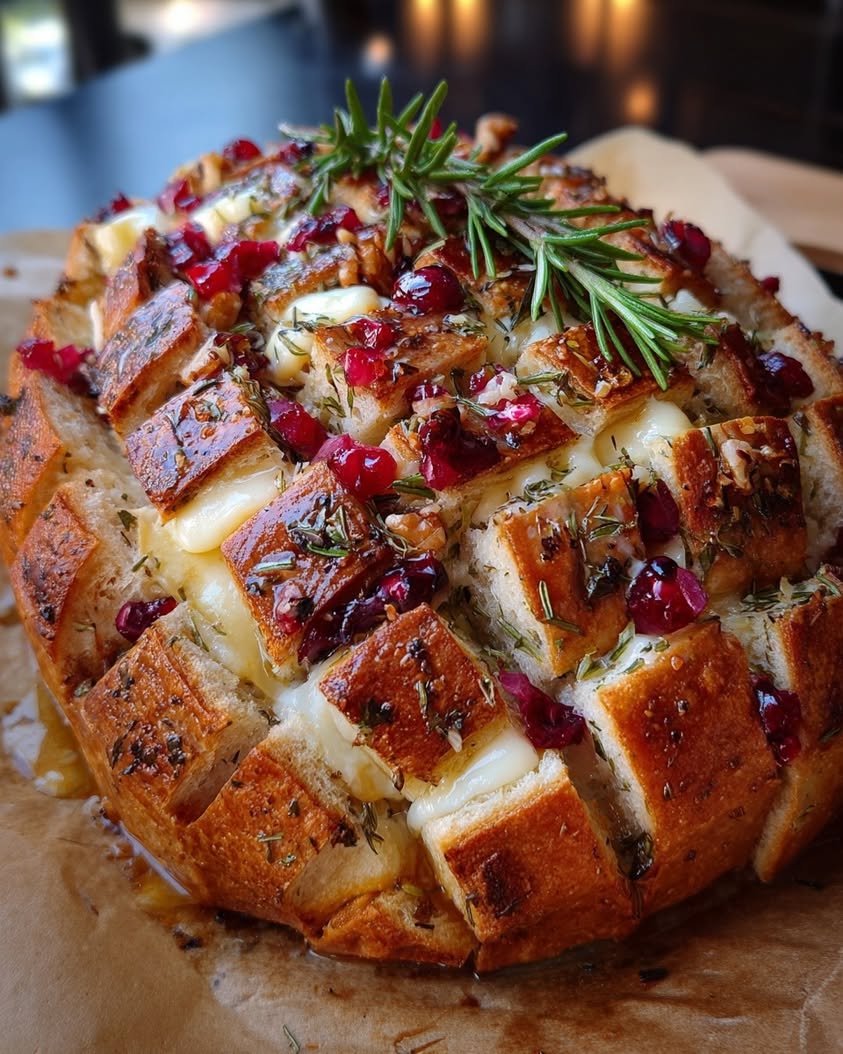
Cranberry Brie Sourdough Pull-Apart Bread: The Ultimate Festive Appetizer
Imagine pulling apart a warm, crusty sourdough loaf to reveal rivers of melted, creamy brie and pockets of sweet-tart cranberry. This cranberry brie sourdough pull-apart bread is not just a recipe; it is a centerpiece, a conversation starter, and the easiest way to impress a crowd. Consequently, it transforms a humble loaf of bread into a stunning, shareable appetizer that feels gourmet with minimal effort. The combination of flavors and textures is simply magical, making it the ultimate festive appetizer for any gathering.
Furthermore, the beauty of this dish lies in its stunning simplicity. You start with a sturdy sourdough boule, then cut a crosshatch pattern and stuff the crevices with rich brie cheese and vibrant cranberry sauce. After a brief bake, the cheese melts into gooey perfection while the cranberries caramelize slightly. The result is a warm, pull-apart masterpiece that is both visually dramatic and incredibly delicious. Ultimately, this cranberry brie sourdough pull-apart bread guarantees empty plates and happy guests every single time.
Additionally, this recipe is incredibly versatile. While perfect for holiday parties, it also shines at game day gatherings, potlucks, or even as a special weekend treat. The sourdough base provides a tangy, chewy contrast to the rich, creamy brie and the bright, fruity cranberries. Moreover, the aroma that fills your kitchen as it bakes is utterly irresistible. This cranberry brie sourdough pull-apart bread is the kind of dish that creates lasting memories around the table.
Quick Recipe Highlights
- Flavor Profile: This dish masterfully balances tangy, creamy, and sweet notes. The sourdough offers a pleasant tang, the brie provides luxurious creaminess, and the cranberries deliver a bright, sweet-tart punch. Every bite is a harmonious blend of savory and fruity flavors.
- Texture: You experience a wonderful contrast of textures. The exterior of the sourdough becomes wonderfully crisp, while the interior stays soft and chewy. Meanwhile, the melted brie is irresistibly gooey, and the cranberries add juicy bursts, creating a truly satisfying mouthfeel.
- Aroma: As it bakes, the kitchen fills with the warm, yeasty scent of toasted sourdough mingled with the nutty, buttery aroma of melting brie. The cranberries release a sweet, fruity fragrance that signals something special is coming out of the oven.
- Visual Appeal: The presentation is stunning. The golden, crosshatched loaf oozes with melted white cheese and vibrant red cranberry filling. It is a rustic yet elegant centerpiece that invites everyone to gather around and pull off a piece.
- Skill Level Needed: This is a beginner-friendly recipe requiring no special culinary skills. Essentially, you need a steady hand for cutting the bread and the patience not to eat it all immediately. It is a fantastic recipe for building confidence in the kitchen.
- Special Equipment: You only need a sharp serrated bread knife for safe, clean cuts and a baking sheet. Parchment paper is highly recommended for easy cleanup, but it is not strictly necessary if you have a good non-stick pan.
Recipe Overview
- Difficulty Level: This recipe is rated easy because it involves assembly rather than complex cooking techniques. There is no dough to make or proof; you are simply stuffing and baking a pre-made loaf. The most challenging part is cutting the bread without slicing through the bottom, which is simple with a little care.
- Category: This dish falls squarely into the appetizer and snack category. It is perfect for parties, gatherings, or as a shared starter before a meal. Additionally, it can serve as a decadent brunch item or a luxurious snack with a bowl of soup.
- Cuisine: While not tied to a single traditional cuisine, it draws inspiration from French bistro fare (with the brie and bread) and American holiday entertaining. It is a modern fusion appetizer designed for casual, shareable dining and festive occasions.
- Cost: This is a moderately priced appetizer. A good sourdough boule and a wedge of brie are the main investments. Cranberry sauce is very affordable, especially if using canned or making your own from fresh or frozen berries. Overall, it delivers high perceived value for a reasonable cost.
- Season: This recipe is especially perfect for fall and winter holidays like Thanksgiving, Christmas, and New Year’s Eve. However, its appeal is year-round. You can easily adapt it with seasonal fruits for spring or summer gatherings.
- Occasion: It is ideal for any social gathering where finger food is appreciated. Think holiday parties, potlucks, game day spreads, book club meetings, or even a cozy movie night. It transforms an ordinary get-together into a special event.
Why You’ll Love This Recipe
First and foremost, the taste and texture are utterly addictive. The combination of warm, tangy sourdough, rich and creamy melted brie, and sweet-tart cranberry is a classic for a reason. Each component complements the others perfectly, creating a flavor profile that is both sophisticated and comforting. Moreover, the act of pulling apart the warm bread and stretching the melted cheese is a fun, interactive eating experience that delights guests of all ages. This cranberry brie sourdough pull-apart bread is a guaranteed crowd-pleaser.
Secondly, the convenience factor is unbeatable. With only 15 minutes of hands-on prep, you can create a show-stopping appetizer that looks like you spent hours in the kitchen. There is no need to make dough from scratch or master complicated techniques. Essentially, you are assembling quality ingredients and letting the oven do the work. This makes it an ideal recipe for busy hosts who want to maximize flavor and impact while minimizing stress and time in the kitchen.
From a nutritional perspective, this appetizer offers more than just empty calories. Sourdough bread, due to its fermentation process, can be easier to digest for some people and has a lower glycemic index than regular white bread. Cranberries are packed with antioxidants and vitamin C. While brie is a rich cheese, it provides protein and calcium. Enjoyed in moderation as part of a shared plate, this cranberry brie sourdough pull-apart bread can be part of a balanced approach to festive eating.
The social and entertaining value of this dish is immense. It naturally encourages sharing and conversation, breaking the ice at any party. Placing a warm, oozing loaf in the center of the table creates an instant focal point. It feels generous and celebratory. Furthermore, it is versatile enough to pair with a variety of drinks, from sparkling wine to craft beer, making it a flexible anchor for your beverage menu.
Finally, it is cost-effective and accessible. Compared to ordering a fancy cheese board or multiple appetizers from a caterer, making this pull-apart bread at home is remarkably affordable. The ingredients are readily available at most grocery stores year-round. You can even use a day-old sourdough loaf on sale. This cranberry brie sourdough pull-apart bread proves that impressive entertaining does not require a lavish budget, just a clever, delicious recipe.
Historical Background and Cultural Significance
The origins of stuffed or pull-apart bread are ancient and widespread, essentially representing a practical and communal way to enjoy baked goods. Many cultures have versions, from Italian focaccia stuffed with herbs to Middle Eastern mana’eesh. The specific combination of cheese and bread is a global comfort food. However, the modern “pull-apart bread” or “cheese bomb” trend, often featuring artisan sourdough, gained massive popularity through social media and food blogs in the 2010s. It taps into the visual appeal of melted cheese and interactive dining.
Culturally, this dish sits at the intersection of several traditions. The use of brie, a French cheese with centuries of history, lends an air of European sophistication. Sourdough bread, with its ancient fermentation methods, represents a return to artisan, slow-food values. Cranberry sauce is deeply ingrained in American holiday culture, particularly Thanksgiving. Consequently, this cranberry brie sourdough pull-apart bread is a fusion dish that feels both timeless and contemporary, blending Old World ingredients with New World entertaining style.
The evolution of this recipe is a testament to modern home cooking trends. It takes the classic baked brie en croute—a brie wheel wrapped in puff pastry—and deconstructs it for easier, more shareable consumption. Using a sourdough loaf as the vessel instead of pastry makes it heartier and adds complex flavor. The crosshatch cutting technique ensures every piece gets ample filling. This evolution reflects a desire for food that is visually stunning for social media, easy to eat standing up, and packed with bold flavor.
Regional variations of this concept are endless. In the American South, you might find a version with pimento cheese and jalapeños. On the West Coast, fig jam and goat cheese are popular fillings. In Australia, a similar dish might feature Vegemite and sharp cheddar. The basic formula—a scored loaf stuffed with deliciousness—is a blank canvas. This particular cranberry brie sourdough pull-apart bread is a classic holiday variation that has become a staple in its own right, celebrated for its perfect balance of festive flavors.
Ingredient Deep Dive
Sourdough Bread: True sourdough is made from a live fermented culture of flour and water, a process dating back thousands of years. This fermentation gives the bread its characteristic tang, chewy crumb, and crisp crust. Nutritionally, the process can help pre-digest some starches and may be easier on the gut for some individuals. When selecting a loaf, choose a round boule with a sturdy, thick crust that can hold the fillings without collapsing. Avoid bread that is too soft or airy. Store sourdough in a paper bag at room temperature for a day or two; for longer storage, freeze it whole. For a substitute, a sturdy country white or peasant bread works, though you will miss the tang.
Brie Cheese: Brie is a soft, creamy, surface-ripened cow’s milk cheese named after the French region from which it originated. Its edible white rind is formed by a specific mold, Penicillium camemberti. The cheese is rich in protein, calcium, and vitamin B12. For baking, choose a ripe but not overripe brie. It should feel soft when gently pressed but still hold its shape. You can use either a wedge or a small wheel, removing the rind if you prefer, though it is edible and adds flavor. Store brie in the refrigerator in its original wrapper or wax paper. As a substitute, Camembert is nearly identical. For a stronger flavor, try a ripe Taleggio.
Cranberry Sauce: Cranberries are one of North America’s native fruits, traditionally used by Indigenous peoples for food and medicine. They are exceptionally high in vitamin C and proanthocyanidins, antioxidants linked to urinary tract health. For this recipe, you can use homemade whole-berry sauce, jellied canned sauce, or even a high-quality cranberry-orange relish. The key is a thick consistency so it does not make the bread soggy. If using canned, opt for whole-berry sauce for better texture. Store opened cranberry sauce in a sealed container in the fridge for up to two weeks. As a substitute, fig jam, cherry preserves, or even a savory onion marmalade work beautifully.
Butter & Herbs: Unsalted butter is used to baste the bread, promoting a golden, flavorful crust. Butter also helps the optional herbs adhere to the loaf. Using unsalted allows you to control the overall saltiness of the dish. Fresh herbs like rosemary or thyme add an aromatic, earthy note that complements the richness of the cheese and the fruitiness of the cranberries. They are optional but highly recommended for an extra layer of flavor. For a substitute, you could use olive oil or garlic-infused oil instead of butter, and dried herbs can stand in for fresh (use about one-third the amount).
Common Mistakes to Avoid
- Cutting Through the Bottom: The most common error is slicing all the way through the loaf, causing the filling to leak out and the structure to collapse. Always use a sharp serrated knife and stop cutting about 1/2 inch from the bottom. Use a gentle sawing motion for control.
- Using Bread That’s Too Fresh or Too Soft: Extremely fresh, soft bread can become mushy when stuffed and baked. Conversely, rock-hard stale bread is difficult to cut. Ideally, use a loaf that is a day old or has a robust, crusty exterior. A sturdy structure is key to holding the fillings.
- Overstuffing the Crevices: While tempting, cramming too much cheese and cranberry into the cuts can prevent even heating and cause a mess in your oven. The filling should sit snugly in the cuts but not be overflowing. Remember, the cheese will expand as it melts.
- Not Using Parchment Paper: Skipping parchment paper is a gamble. Melted cheese and sugary cranberry sauce can drip and caramelize onto your baking sheet, creating a difficult, sticky cleanup. Lining the sheet guarantees easy removal and no scrubbing.
- Under-baking: Removing the bread too early means the cheese in the very center may not be fully melted and gooey. Bake until the top is deeply golden brown and you can see cheese bubbling actively from the center cuts. The visual cues are important.
- Using an Overripe, Runny Brie: If your brie is extremely soft and liquid at room temperature, it will melt too quickly and run out before the bread has a chance to crisp. Choose a brie that is soft but still firm enough to slice or cube neatly.
- Adding Filling to the Top Only: For the best pull-apart experience, you need to get the filling down into the cuts. Use your fingers or a small knife to gently open the cuts and push the cheese and cranberry down into the grid. This ensures every piece is loaded.
- Serving Immediately Without Resting: Pulling the bread from the oven and serving it right away can lead to burned mouths and cheese that is too runny. Let it rest for 5-10 minutes. This allows the cheese to set slightly, making it perfectly dippable instead of lava-hot.
Essential Techniques
Crosshatch Cutting: This technique is crucial for creating the “pull-apart” structure. Using a sharp serrated knife, score the top of the loaf in a diamond pattern, like a tic-tac-toe board. The key is consistent depth—about 3/4 of the way down, but never through the bottom crust. This creates defined sections that will separate easily after baking while keeping the base intact. A common pitfall is uneven cuts, which lead to some pieces being overstuffed and others empty. Take your time and use the crust as a visual guide for spacing.
Stuffing the Bread: Proper stuffing ensures every bite is flavorful. After cutting, gently pry open each diamond-shaped section with your fingers. Alternate placing small cubes of brie and spoonfuls of cranberry sauce into the openings, pushing them down toward the bottom of the cut. The goal is to distribute the fillings evenly throughout the grid, not just on the surface. This technique guarantees that when guests pull a piece, they get a perfect mix of bread, melted cheese, and fruit in each bite.
Butter Basting: Brushing the loaf with melted butter (and herbs) before and during baking serves multiple purposes. First, it promotes an even, deep golden-brown, crispy crust. Second, it adds rich flavor. Third, it helps any added herbs stick to the surface. Use a pastry brush to apply the butter generously, getting it into the cuts if possible. Basting again halfway through baking reinforces the crust development and prevents the top from drying out. The visual cue for success is a shiny, crackly, aromatic crust.
Pro Tips for Perfect Cranberry Brie Sourdough Pull-Apart Bread
For the ultimate flavor, lightly toast the sourdough cubes you remove from the center and serve them on the side for dipping. They make fantastic crunchy croutons.
If your cranberry sauce is very loose, simmer it in a saucepan for a few minutes to reduce and thicken it before using. A thicker sauce prevents sogginess.
Add a sprinkle of flaky sea salt over the loaf after the final butter baste. The salty crunch contrasts beautifully with the sweet cranberries and rich cheese.
For a savory twist, add very thin slices of prosciutto or chopped candied pecans into the cuts along with the cheese and cranberry.
Let the baked bread rest for 5-10 minutes before serving. This allows the molten cheese to settle into a perfect, dippable consistency instead of immediately running out.
Use kitchen shears to cut and serve the bread. They can easily snip through the crispy crust and cheesy connections, making serving neat and simple.
For extra garlic flavor, mix a minced garlic clove into the melted butter before brushing it on the loaf.
If making multiple loaves for a large party, bake them on separate sheets to ensure proper air circulation and even browning.
Variations and Adaptations
Regional Variations: Across different regions, the fillings change to match local tastes. In the South, try a pimento cheese and crispy bacon version. For a Mediterranean twist, use olive tapenade, sun-dried tomatoes, and mozzarella. A French-inspired variation could feature caramelized onions, Gruyère, and a touch of Dijon mustard mixed into the butter baste.
Seasonal Adaptations: Move beyond the holidays by adapting the fillings to the season. In spring, use asparagus tips and lemon-zest ricotta. For summer, try fresh peach slices, basil, and burrata. In autumn, roasted squash, sage, and fontina cheese create a cozy flavor profile.
Dietary Modifications: For a gluten-free version, use a sturdy, pre-made gluten-free sourdough boule or a round gluten-free bread loaf. Ensure all other ingredients, like cranberry sauce, are certified gluten-free. For dairy-free, use a high-quality vegan melty cheese alternative and vegan butter.
Flavor Variations: The flavor combinations are limitless. Consider apple butter and sharp cheddar, jalapeño pepper jelly and Monterey Jack, roasted garlic and herb cream cheese, or even a dessert version with Nutella, mascarpone, and sliced strawberries.
Texture Modifications: Add textural contrast by sprinkling everything bagel seasoning, chopped walnuts, or crispy fried onions on top before baking. You can also mix a tablespoon of cornstarch with the cranberry sauce to create a thicker, jammy texture that holds its shape better.
Presentation Alternatives: Instead of one large loaf, use individual sourdough rolls or a baguette cut into segments. You can also create a “pull-apart ring” by arranging scored sourdough slices in a circle on a round pan, overlapping slightly, and stuffing the gaps.
Serving and Presentation Guide
Plating is simple yet impactful. Transfer the baked loaf directly onto a wooden cutting board or a large, rustic platter. This enhances the homemade, artisanal feel. Place a small bowl of extra warmed cranberry sauce or a drizzle of honey on the side for guests who want an extra sweet touch. Scatter a few fresh cranberries and rosemary sprigs around the board for a festive, colorful garnish.
For traditional accompaniments, offer cornichons, assorted olives, and cured meats like salami or prosciutto to create a mini charcuterie experience around the centerpiece bread. A small bowl of whole-grain mustard or a fruit mostarda also pairs wonderfully. These items complement the rich cheese and tangy bread without competing for attention.
Modern serving suggestions include placing the warm loaf directly on the table family-style and providing small plates, napkins, and cocktail forks for easy grabbing. For a more structured approach, you can pre-pull a few sections to make it less intimidating for guests to dig in. Always have a dedicated knife or kitchen shears nearby for cutting through any stubborn cheesy connections.
Temperature is critical. This dish must be served warm, not piping hot and not at room temperature. The perfect window is 5-10 minutes out of the oven, when the cheese is molten but not scalding, and the bread is still crisp. If it sits too long, the cheese will solidify. To keep it warm during a party, you can return it to a low oven (200°F) for brief 5-minute intervals.
Portion control is naturally built in, as people pull off manageable pieces. However, as a host, plan for about 1/4 to 1/3 of a standard boule per person as an appetizer, assuming other snacks are available. A single 1-pound loaf comfortably serves 4-6 people as part of a spread. For a hungry crowd with fewer other options, consider making two loaves.
Wine and Beverage Pairing
Wine pairings for this rich, tangy, and slightly sweet appetizer should aim for balance. A sparkling wine like Champagne, Prosecco, or Cava is a classic and perfect choice. The bubbles and acidity cut through the creamy brie and cleanse the palate. A dry Rosé, with its berry notes and crisp finish, also complements the cranberries beautifully. For white wine lovers, an off-dry Riesling or a Gewürztraminer mirrors the fruitiness while standing up to the cheese.
Non-alcoholic alternatives can be just as sophisticated. Sparkling apple cider or a cranberry-spiked sparkling water echoes the festive fruit flavors. A tart lemonade or a ginger beer provides a refreshing, zesty contrast to the richness. For a warm option, a mulled cranberry punch or even a chai tea latte can be cozy and complementary during colder months.
Coffee and tea pairings work surprisingly well, especially for a brunch setting. A medium-roast coffee with low acidity won’t clash with the tangy cranberries. A black tea like Earl Grey, with its citrusy bergamot notes, pairs elegantly. For an herbal option, a hibiscus tea (which is naturally tart and cranberry-like) or a peppermint tea can be a refreshing finish.
Temperature considerations are key. Serve sparkling wines and white wines well-chilled, between 40-50°F. Red wines, if chosen, should be served slightly cooler than room temperature, around 55-60°F, to keep them refreshing. Non-alcoholic sparkling drinks should be icy cold. Warm beverages like coffee or tea should be served hot to contrast the warm bread.
For serving, offer a variety of beverages to cater to all guests. Set up a self-serve drink station with bottles in ice buckets and clearly labeled non-alcoholic options. Provide appropriate glassware: flutes for bubbles, wine glasses, and sturdy tumblers for other drinks. This allows guests to mix and match sips with pulls of the delicious cranberry brie sourdough pull-apart bread.
Storage and Shelf Life
Storage methods for leftovers are straightforward but time-sensitive. First, allow any uneaten bread to cool completely to room temperature. Then, wrap the entire loaf or individual portions tightly in aluminum foil. You can also place it in an airtight container. Refrigerate for up to 2 days. Do not store at room temperature, as the dairy and moist fillings can spoil quickly.
Temperature requirements are strict for food safety. The baked bread must be refrigerated within 2 hours of coming out of the oven. The ideal fridge temperature is 40°F or below. When reheating, ensure the internal temperature reaches at least 165°F to kill any potential bacteria and to re-melt the cheese properly.
Container recommendations include heavy-duty foil for wrapping, which helps retain some moisture during reheating. For airtight containers, choose glass or BPA-free plastic. If the bread is very cheesy, you may want to place parchment paper underneath it in the container to prevent sticking.
Signs of spoilage include an off or sour smell (beyond the normal tang of sourdough), visible mold growth (usually fuzzy green, white, or black spots), or an excessively slimy texture on the bread surface. If the cheese develops an ammonia-like odor, it is a sign of advanced aging and the bread should be discarded.
Reheating instructions are crucial for restoring texture. Do not microwave, as it will make the bread rubbery and the cheese greasy. Instead, preheat your oven to 350°F. Wrap the leftover loaf in foil and warm for 10-15 minutes, or until heated through. For a crisper crust, open the foil for the last 3-5 minutes. For single servings, a toaster oven works perfectly.
Freezing guidelines are possible but with caveats. Freeze the fully baked and cooled bread whole or in sections, wrapped tightly in plastic wrap and then foil. It will keep for up to 1 month. Thaw overnight in the refrigerator before reheating using the oven method above. Note that the texture of the bread may be slightly denser after freezing and thawing.
Make Ahead Strategies
Your prep timeline can be stretched to make party day easier. You can cut and stuff the sourdough loaf up to 4 hours in advance. After stuffing, wrap the entire loaf tightly in plastic wrap and refrigerate it. Remove it from the fridge about 30 minutes before you plan to bake to take the chill off. This prevents the cold bread from significantly increasing the baking time.
Storage between steps is simple. If preparing the stuffed loaf a few hours ahead, refrigeration is necessary to keep the dairy safe. Ensure it is well-wrapped to prevent the bread from drying out. You can also prepare the herb butter ahead of time and store it covered at room temperature if using within a few hours, or in the fridge if made a day ahead.
The quality impact of make-ahead prep is minimal. The bread may absorb a tiny amount of moisture from the cranberry sauce, but this often just makes it more tender. The key is not to stuff it so far in advance that the bread becomes soggy. A 4-hour window is the sweet spot for maintaining optimal texture while maximizing your time management.
Assembly tips for make-ahead include being slightly more generous with the butter baste before refrigerating, as the bread will absorb some of it. When you are ready to bake, you may need to add another quick brush of butter. Also, ensure the fillings are pushed well down into the cuts so they don’t dry out on the surface during the fridge rest.
Reheating guidelines do not apply to make-ahead, as you are baking from a cold state. However, if you pre-stuff and refrigerate, you may need to add 3-5 extra minutes to the baking time. Watch for the visual cues—golden brown crust and bubbling cheese—rather than relying solely on the timer.
For the freshest element, consider preparing any extra garnishes ahead. Wash and dry rosemary sprigs, or toast nuts for a topping. Have these ready to add just before serving. You can also warm extra cranberry sauce for dipping on the stovetop while the bread is in the oven, so everything is ready simultaneously.
Scaling Instructions
Halving the recipe is simple if you are cooking for a smaller group. Use a smaller sourdough boule (about 1/2 pound) or cut a standard loaf in half horizontally before scoring. Reduce all other ingredients proportionally. Baking time may decrease by 5-7 minutes, so start checking for doneness early. This is a great option for a romantic appetizer or a small family treat.
Doubling or tripling the recipe is perfect for large parties. Simply multiply the ingredients by the desired number of loaves. The key is to bake the loaves on separate baking sheets, preferably on different oven racks. Rotate the sheets front-to-back and top-to-bottom halfway through baking to ensure even browning. You may need to add a few minutes to the total bake time due to the increased volume in the oven.
Equipment adjustments are necessary when scaling. For multiple loaves, ensure you have enough large baking sheets and parchment paper. If your oven is small, you may need to bake in batches. Keep the prepared, unbaked loaves in the refrigerator while the first batch cooks. A large, sharp knife and a big cutting board will make prepping several loaves more efficient.
Timing modifications are minimal when scaling up. The prep time will increase linearly with the number of loaves. However, the bake time per loaf remains roughly the same if they are baked with proper spacing. The total event time is mostly affected by batch baking. Plan your schedule accordingly, perhaps baking the first loaves just as guests arrive so they are warm and fresh.
Storage considerations change when you have multiple leftover loaves. Cool them completely, wrap individually, and refrigerate or freeze. Label with the date. Reheating multiple loaves is best done in a conventional oven where you can fit them all at once, rather than a toaster oven.
Nutritional Deep Dive
A macro breakdown for a typical serving (1/6 of a loaf) shows a balance of carbohydrates, fat, and protein. The sourdough bread provides complex carbs and a small amount of fiber. The brie cheese contributes a significant amount of fat (mostly saturated) and a good dose of protein. The cranberry sauce adds simple sugars. This makes it an energy-dense food, ideal for an appetizer that is meant to be shared and enjoyed in moderation as part of a festive spread.
The micronutrient analysis reveals some benefits. Cranberries are a notable source of vitamin C, vitamin E, and vitamin K1. They also contain manganese and copper. Brie provides calcium, essential for bone health, and vitamin B12, crucial for nerve function. Sourdough fermentation can increase the availability of certain minerals like magnesium and potassium. However, it is important to view this as an indulgent treat rather than a primary nutrient source.
Health benefits are present but should be considered in context. The antioxidants in cranberries (proanthocyanidins) are linked to urinary tract health and may have anti-inflammatory effects. The fermentation in sourdough may promote gut health for some individuals. The calcium and protein in cheese support muscle and bone function. Enjoying this dish mindfully can be part of a holistic approach to food that values both nutrition and pleasure.
Dietary considerations are important for those with specific needs. This dish contains gluten (from bread), dairy (from cheese and butter), and often added sugars (in cranberry sauce). It is not suitable for people with celiac disease, lactose intolerance, or those on a strict low-sugar diet. However, as discussed in adaptations, modifications can be made to accommodate many of these needs.
Portion analysis is key to enjoyment. A single serving is satisfying due to the rich fat and protein from the cheese, which promotes satiety. This can actually help prevent overeating compared to less satisfying, carb-only snacks. When you pull apart a piece, you are likely getting a balanced bite that tells your brain you are full sooner.
Weight management tips revolve around mindful eating. Serve this as an appetizer before a meal containing lean proteins and vegetables, so you are less likely to overconsume the bread. Be active while socializing, and focus on the experience and conversation, not just the food. Remember, one indulgent appetizer at a party will not derail a healthy lifestyle—balance is everything.
Dietary Adaptations
Gluten-Free: Use a certified gluten-free sourdough-style boule. Many bakeries and stores now offer excellent gluten-free artisan bread. Ensure your cranberry sauce and all other ingredients are gluten-free. The method remains identical. The texture may be slightly different, but the delicious result will be just as shareable and festive.
Dairy-Free: Substitute the brie with a high-quality vegan cheese that melts well, such as those made from cashews or coconut oil. Use vegan butter or olive oil for the baste. Check that your cranberry sauce does not contain butter. The flavor profile will be different but can still be wonderfully rich and tangy.
Vegan: Follow the dairy-free guidelines above. Additionally, ensure your bread is vegan (no honey, milk, or eggs). Most sourdough is naturally vegan, but always check the label. Use a plant-based cheese and butter. You can also add other vegan fillings like marinated artichoke hearts or vegan pesto for complexity.
Low-Carb/Keto: This is a challenging adaptation due to the bread. The closest alternative is to use a low-carb, fathead-style dough formed into a round loaf, or a large, thick low-carb tortilla as a base in a skillet. Fill with brie (which is relatively low in carbs) and sugar-free cranberry sauce made with a keto-friendly sweetener.
Paleo: A strict Paleo adaptation requires omitting grains and dairy. Use a grain
Print
Cranberry Brie Sourdough Pull-Apart Bread
Description
A festive, cheesy pull-apart bread made with sourdough, filled with melted brie and sweet-tart cranberry sauce, perfect for sharing.
Ingredients
For the Crust:
- 1 round sourdough bread loaf (about 1 lb)
- 8 oz brie cheese, rind removed and cubed
- 1/2 cup cranberry sauce (homemade or store-bought)
- 1/4 cup unsalted butter, melted
- 2 cloves garlic, minced
- 2 tbsp fresh parsley, chopped
- Salt and black pepper to taste
Instructions
1. Prepare the Crust:
- Preheat oven to 375°F (190°C). Line a baking sheet with parchment paper.
- Using a sharp knife, cut the sourdough loaf into a crosshatch pattern, slicing almost to the bottom but keeping the base intact.
- Gently separate the cuts and stuff the gaps evenly with brie cubes and dollops of cranberry sauce.
- In a small bowl, mix melted butter, minced garlic, parsley, salt, and pepper. Brush generously over the top and sides of the loaf.
- Wrap the loaf loosely in foil and bake for 20 minutes. Remove foil and bake for another 10 minutes until cheese is melted and bread is golden.
- Let cool for 5 minutes, then serve warm, pulling apart pieces to enjoy.
Notes
You can customize the seasonings to taste.

I’m Shaykee—born in Morocco, seasoned across continents. From airplane galleys to home kitchens, I share the flavors and stories that shaped my journey.