
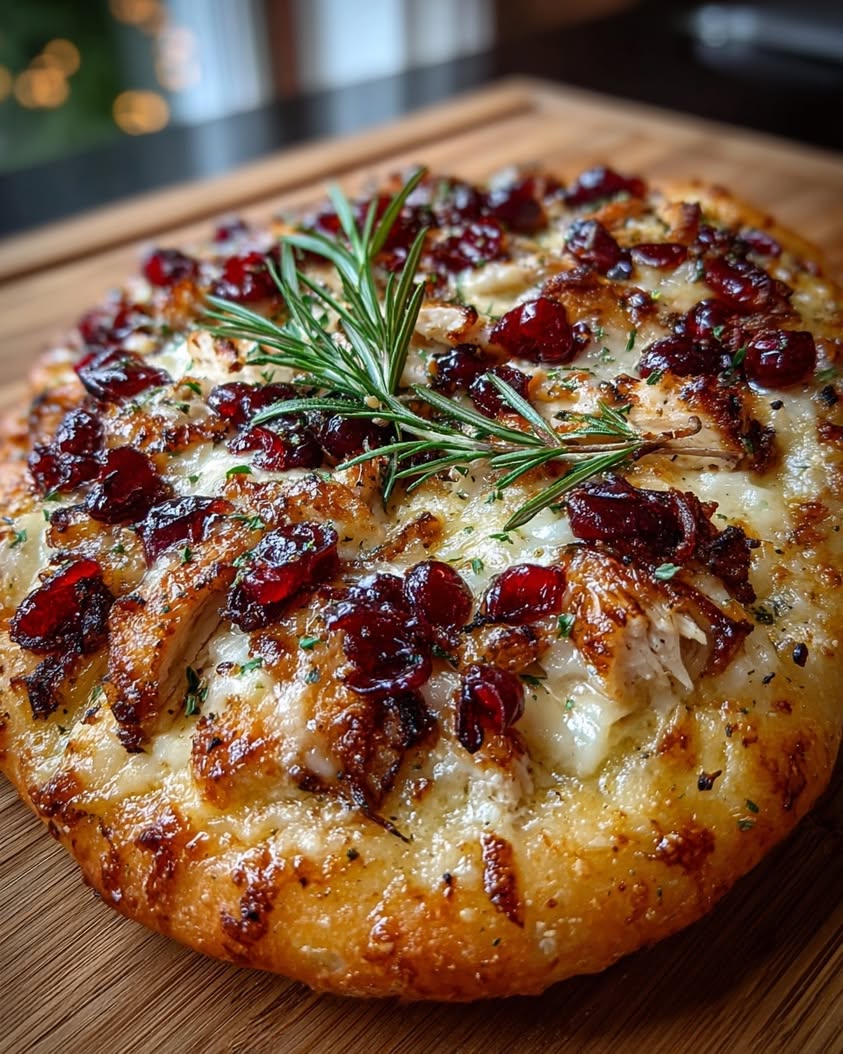
Cranberry Chicken & Brie Pizza: A Gourmet Sweet and Savory Twist
This Cranberry Chicken & Brie Pizza is a stunning gourmet pizza that masterfully blends sweet, tart, and creamy flavors on a crispy crust. Moreover, it transforms simple ingredients into an elegant meal that feels restaurant-worthy. Consequently, this recipe is perfect for anyone seeking an easy gourmet dinner idea that delivers maximum flavor with minimal effort. Ultimately, it’s a creative savory pizza twist that will become a new favorite in your weekly rotation.
Imagine a perfectly baked pizza crust, golden and crisp. Then, picture tender, seasoned chicken mingling with pockets of melted, buttery Brie cheese. Furthermore, the star of the show is a vibrant layer of sweet and tart cranberry sauce, which cuts through the richness beautifully. Finally, a sprinkle of fresh herbs adds the perfect finishing touch. This Cranberry Chicken & Brie Pizza is not just a meal; it’s a delightful flavor experience.
Surprisingly, this impressive dish comes together in about 30 minutes from start to finish. Therefore, it’s ideal for busy weeknights, last-minute entertaining, or a festive holiday appetizer. The combination is sophisticated yet approachable, making it a guaranteed crowd-pleaser. In essence, this recipe proves that gourmet flavor doesn’t require complicated techniques or hard-to-find ingredients.
Quick Recipe Highlights
- Flavor Profile: This pizza offers a spectacular balance. The sweet and tart cranberry sauce provides a bright, fruity base that perfectly complements the rich, creamy Brie and savory, herb-seasoned chicken. Every bite is a harmonious blend of contrasting yet complementary tastes.
- Texture: You get a wonderful contrast in every mouthful. Expect a crispy, chewy pizza crust foundation topped with tender chunks of chicken and luxuriously melted, gooey Brie cheese. The cranberry sauce adds a lovely, jammy texture that ties everything together.
- Aroma: As it bakes, your kitchen will fill with the irresistible scent of baking bread, melting cheese, and the sweet-tart fragrance of cranberries. The fresh rosemary or thyme adds an earthy, herbal note that makes the aroma even more complex and inviting.
- Visual Appeal: This pizza is a feast for the eyes. The deep red cranberry sauce creates a stunning base, dotted with white and golden melted Brie and browned chicken. A final garnish of green herbs makes the colors pop, resulting in a pizza that looks as incredible as it tastes.
- Skill Level Needed: This is a beginner-friendly recipe designed for home cooks of all levels. Essentially, if you can spread sauce on dough and operate an oven, you can make this gourmet pizza. No special skills are required, making it a fantastic introduction to creative flavor pairing.
- Special Equipment: You need only basic kitchen tools: a baking sheet or pizza stone, a mixing bowl for the chicken, and a spoon for spreading. A pizza cutter or sharp knife is helpful for serving. No fancy or expensive equipment is necessary to achieve perfect results.
Recipe Overview
- Difficulty Level: We rate this recipe as “Easy” because it uses pre-cooked chicken and store-bought dough or crust, significantly simplifying the process. The assembly is straightforward—spread, top, and bake. There are no complex techniques, making it accessible for novice cooks and a quick win for experienced ones looking for a flavorful, hassle-free meal.
- Category: This dish beautifully straddles multiple categories. It’s a hearty main course for dinner, an impressive appetizer for parties, and a brilliant brunch option. Furthermore, it fits into the “gourmet homemade” and “quick & easy” categories, proving that fast food can also be sophisticated and delicious.
- Cuisine: While pizza has Italian roots, this particular creation is a modern fusion. It draws inspiration from American flavor combinations often seen in upscale gastropubs and seasonal holiday menus. The use of cranberry and Brie is a classic pairing in contemporary American and French-inspired cuisine, making this a globally influenced, modern dish.
- Cost: This is a cost-effective gourmet meal. Using a store-bought crust and pre-cooked rotisserie chicken keeps costs down. Brie and cranberry sauce are affordable splurges. Overall, you can create this impressive pizza for a fraction of the cost of ordering a similar specialty pie from a restaurant, making it a budget-friendly luxury.
- Season: While fantastic year-round, this pizza truly shines in the fall and winter. Cranberries are a quintessential holiday ingredient, making this perfect for Thanksgiving gatherings, Christmas parties, or cozy winter nights. However, its bright flavor also makes it a refreshing choice for a summer dinner on the patio with a glass of chilled white wine.
- Occasion: This pizza is incredibly versatile for entertaining. It’s elegant enough for a dinner party, casual enough for game day, and festive enough for holiday open houses. You can also slice it into smaller pieces for a passed appetizer or serve it whole as the centerpiece of a family meal. It adapts to any event with ease.
Why You’ll Love This Recipe
First and foremost, you will adore the incredible taste and texture appeal of this Cranberry Chicken & Brie Pizza. Each bite delivers a symphony of flavors: the initial sweetness of the cranberry, followed by the tangy punch, then the rich, buttery creaminess of the Brie, and finally the savory, herby notes from the chicken. The crispy crust provides the perfect vehicle for these luxurious toppings. It’s a satisfying eating experience that feels indulgent yet balanced, never too heavy or too sweet.
Secondly, the convenience and preparation benefits are major wins. This entire meal comes together in 30 minutes, using mostly pantry-staple and pre-prepared ingredients. You can use leftover roast chicken or a store-bought rotisserie chicken to save even more time. The assembly is as simple as spreading and scattering, with no need for a rolling pin or dough-making skills. It’s the ultimate “fast gourmet” solution for nights when you want something special without the lengthy prep and cleanup.
Additionally, this pizza offers some notable nutritional advantages when compared to traditional takeout. By making it at home, you control the quality and quantity of ingredients. You can use a whole-wheat crust for added fiber, opt for a low-sugar cranberry sauce, and load up on lean protein with the chicken. Brie, while rich, provides calcium and protein. It’s a more balanced meal than a standard pepperoni pizza, incorporating fruit, protein, and dairy in one delicious package.
Beyond nutrition, the social and entertaining value of this dish is immense. Presenting a beautifully baked, colorful pizza like this is guaranteed to elicit “oohs” and “aahs” from guests. It’s a conversation starter and a shareable centerpiece that encourages communal dining. Serving a homemade gourmet pizza shows thoughtfulness and care, making your guests feel special. It’s a surefire way to impress at any gathering, from an intimate date night to a large holiday party.
Finally, the cost-effectiveness and accessibility of this recipe make it a keeper. As mentioned, the ingredients are affordable and easy to find at any standard grocery store. You likely have many of the seasonings already in your cupboard. Creating this at home costs significantly less than ordering a comparable specialty pizza from a restaurant or picking up pre-made appetizers from a gourmet shop. It’s a way to enjoy luxurious flavors on a everyday budget, making fine dining accessible in your own kitchen.
Historical Background and Cultural Significance
The origin story of this specific pizza is a modern tale of culinary fusion. While pizza itself hails from Italy, the combination of cranberry and Brie is a distinctly New World pairing that gained popularity in the late 20th century. Often, it appeared first as baked Brie with cranberry sauce—a classic holiday party appetizer. Creative cooks and chefs began deconstructing and reimagining this beloved duo, eventually landing it on a pizza crust alongside savory proteins like chicken. This recipe is a direct descendant of that innovative spirit, transforming a passed appetizer into a hearty, shareable main course.
Regarding cultural importance, the cranberry holds a special place in North American cuisine, particularly in the United States and Canada. It is one of the few fruits native to the continent and has been used by Indigenous peoples for centuries. Its incorporation into modern dishes, especially during Thanksgiving and Christmas, ties this pizza to a deep cultural tradition of harvest celebration. Using it on a pizza is a contemporary way to honor and enjoy a historically significant ingredient, blending old-world cooking methods (pizza) with new-world flavors.
The evolution of the recipe mirrors broader food trends. Gourmet pizza, or “artisanal pizza,” exploded in popularity in the 1990s and 2000s, moving far beyond basic tomato sauce and mozzarella. Chefs began treating the pizza crust as a canvas for bold, global flavor combinations. This Cranberry Chicken & Brie Pizza is a perfect example of that evolution: it’s a non-traditional pizza that prioritizes unique flavor harmony over adherence to classic Italian norms. It represents the democratization of gourmet food, where home cooks can easily replicate trendy restaurant concepts.
Interestingly, regional variations of this concept abound. In the Pacific Northwest, you might find a version with local hazelnuts scattered on top. In the South, a touch of spicy jalapeño could be added to contrast the sweetness. Some versions use a barbecue sauce base instead of straight cranberry, or add caramelized onions for extra depth. The core trio of cranberry, cheese, and chicken is versatile, inviting customization based on local tastes and ingredient availability. This adaptability is a key reason for the recipe’s enduring and growing popularity.
Ingredient Deep Dive
Starting with the star, cranberry sauce provides the foundational sweet and tart flavor. Culturally, cranberries are a symbol of American heritage, famously served at the first Thanksgiving. Nutritionally, they are packed with antioxidants, vitamin C, and fiber, promoting urinary tract health and fighting inflammation. For selection, choose a good-quality whole-berry sauce for texture, or smooth jellied for easy spreading. You can easily make your own by simmering fresh cranberries with orange juice and a sweetener. Store opened sauce in the refrigerator for up to two weeks. For substitution, try fig jam, apricot preserves, or a savory onion jam for a different but equally delicious twist.
Next, Brie cheese brings the essential creamy, rich element. This soft cheese originates from the Île-de-France region of France and is known for its edible, bloomy rind. It’s a good source of protein, calcium, and vitamins A and B12. When selecting Brie for pizza, opt for a wheel that is ripe but not runny—it should give slightly when pressed. You can remove the rind if you prefer, but it is edible and adds flavor. Store Brie in the coldest part of your refrigerator, tightly wrapped. For substitutions, Camembert is the closest match. Alternatively, goat cheese (chèvre) offers a tangier profile, or fresh mozzarella will provide meltiness with a milder flavor.
The chicken acts as the hearty, savory anchor. Using pre-cooked rotisserie chicken is the ultimate time-saver, but any leftover grilled or roasted chicken works perfectly. Chicken is an excellent source of lean protein, essential for muscle repair and keeping you full. For the best flavor, shred or chop the chicken and toss it with olive oil, salt, pepper, and herbs like rosemary or thyme before adding it to the pizza. This simple step seasons the meat throughout. If substituting, consider other cooked proteins like shredded turkey (perfect for leftovers), diced ham, or even seasoned chickpeas for a vegetarian version. Always ensure pre-cooked protein is warmed through in the oven.
Finally, the pizza crust is the crucial canvas. A pre-baked naan, flatbread, or classic pizza dough round offers convenience and consistent results. For a nutritional boost, seek out a whole-grain or cauliflower crust. The crust provides carbohydrates for energy and, if whole grain, added fiber. To elevate a store-bought crust, brush it lightly with olive oil before adding toppings to encourage extra crispiness. You can also use homemade dough if you have the time. For gluten-free adaptations, many excellent pre-made gluten-free crusts are available. The key is to choose a crust that you enjoy and that can support the weight of the toppings without becoming soggy.
Common Mistakes to Avoid
- Soggy Crust: Applying cranberry sauce too thickly is the main culprit. Consequently, use a thin, even layer—just enough to cover the base. Additionally, ensure your chicken is well-drained and not wet. Pre-baking the crust for 3-5 minutes before adding toppings can create a moisture barrier.
- Burnt Cranberry Sauce: Cranberry sauce contains sugar, which can burn quickly at high heat. Therefore, bake your pizza in the middle of the oven, not too close to the top heating element. Keep a close eye on it during the last few minutes of cooking.
- Unevenly Melted Brie: Cutting Brie into chunks that are too large will result in some pieces not melting properly. Instead, slice the Brie into thin pieces or small, half-inch cubes. This ensures every piece becomes deliciously gooey.
- Bland Chicken: Simply scattering plain, unseasoned chicken on the pizza leads to a bland bite. Always toss your pre-cooked chicken with a bit of olive oil, salt, pepper, and herbs before adding it to the pizza. This simple step seasons the protein throughout the dish.
- Overloading the Pizza: While it’s tempting to add more toppings, restraint is key. Overloading can prevent the crust from crisping and lead to a messy, difficult-to-eat slice. Stick to the recommended amounts for the perfect balance of crust to topping.
- Using Cold Toppings: Adding ice-cold chicken or cranberry sauce from the fridge can lower the oven temperature and affect cooking time. Let your toppings sit at room temperature for 10-15 minutes before assembling the pizza for more even baking.
- Skipping the Fresh Herb Finish: The fresh rosemary or thyme added after baking is not just garnish; it provides a crucial bright, aromatic note that cuts through the richness. Do not skip this final, flavorful touch.
- Not Letting it Rest: Cutting into the pizza immediately after pulling it from the oven causes the cheese to slide off and the toppings to scatter. Let it rest on a cutting board for 3-5 minutes to allow the cheese to set slightly for cleaner slices.
Essential Techniques
Creating a Flavor Barrier: Lightly brushing the pizza crust with olive oil before adding the cranberry sauce is a small but vital technique. This thin layer of fat helps prevent the moist cranberry sauce from seeping directly into the dough and making it soggy. It acts as a protective seal. To master it, simply use a pastry brush or the back of a spoon to apply a very light coat. The common pitfall is using too much oil, which can make the crust greasy. The visual cue for success is a crust that shines slightly but does not have pooling oil.
Even Topping Distribution: How you arrange the toppings directly impacts every bite. The goal is to have a bit of chicken, Brie, and cranberry in each mouthful. Technique involves scattering the chicken evenly first, then strategically placing the Brie pieces in the gaps, ensuring they are not all clumped together. This ensures melting cheese in every sector. A common mistake is dumping all the toppings in the center, leaving bare edges. For success, work from the edges inward, leaving a small border for the crust, and visually check for even coverage before baking.
Perfect Baking & Resting: Baking on a preheated surface (like a baking sheet or pizza stone) is crucial for a crisp bottom crust. The sudden heat contact immediately starts cooking the dough from below. Equally important is the resting period after baking. During this time, the molten cheese firms up slightly, and the residual heat finishes cooking the toppings without further risk of burning. The pitfall is impatience. The visual cue for doneness is a golden-brown crust edge and bubbly, melted Brie. The cue for proper resting is when the cheese stops actively sliding when you tilt the pan.
Pro Tips for Perfect Cranberry Chicken & Brie Pizza
Boost Flavor with Aromatics: Sauté a finely chopped shallot or a clove of minced garlic in the olive oil before brushing it on the crust. This infuses the entire base with a subtle, savory depth that complements the sweet and creamy toppings beautifully.
Add a Nutty Crunch: Scatter a handful of chopped pecans or walnuts over the pizza before baking. The nuts will toast in the oven, adding a wonderful textural contrast and a rich, toasty flavor that pairs exceptionally well with cranberry and Brie.
Use a Pizza Stone or Steel: For a truly professional, crisp crust, bake your pizza on a preheated pizza stone or baking steel. Preheat it in the oven for at least 30 minutes before sliding your assembled pizza onto it using a pizza peel.
Finish with a Drizzle: After baking and adding fresh herbs, consider a final drizzle of high-quality balsamic glaze or a touch of honey. This adds another layer of sweetness and acidity that makes the flavors pop even more.
Season in Layers: Don’t rely solely on seasoning the chicken. Lightly sprinkle the assembled pizza with a tiny pinch of flaky sea salt and cracked black pepper just before it goes in the oven. This seasons every component.
Prevent Sticking: Even if using a non-stick pan, always line your baking sheet with parchment paper. This guarantees easy release and makes cleanup an absolute breeze, especially with any sticky cranberry drips.
Customize the Herbs: While rosemary and thyme are classic, experiment with other fresh herbs. Sage is fantastic in the fall, tarragon adds a lovely anise note, or use chives for a milder onion flavor after baking.
Double for a Crowd: This recipe scales perfectly. Make two or three pizzas on separate baking sheets (or bake in batches) to feed a party. Offer a variety, like one classic and one with added jalapeños for heat.
Variations and Adaptations
Regional Variations: Across different areas, this pizza adapts to local tastes. In the South, add candied jalapeños or a drizzle of spicy honey. In the Midwest, incorporate crispy fried onions. A West Coast version might include sliced avocado after baking or a sprinkle of microgreens. These touches root the dish in local flavor profiles while keeping the core trio intact.
Seasonal Adaptations: While perfect for fall and winter, this pizza can shine year-round. In spring, use a lemon-herb marinated chicken and add asparagus tips. For summer, swap cranberry sauce for a fresh peach or mango chutney and use grilled chicken. Seasonal adaptations keep the concept fresh and exciting no matter the month.
Dietary Modifications: For gluten-free needs, use a certified gluten-free pizza crust. To make it dairy-free, substitute the Brie with a high-quality vegan creamy cheese alternative or simply omit it and add more savory elements like mushrooms. For a vegetarian version, replace the chicken with roasted butternut squash cubes or meaty walnuts.
Flavor Variations: Explore different sauce bases. Try a layer of garlic-herb spreadable cheese under the cranberry. Alternatively, mix a tablespoon of Dijon mustard into the cranberry sauce for a tangier kick. For a deeper flavor, use a layer of caramelized onions beneath the chicken and cranberry.
Texture Modifications: Love crunch? Add crispy prosciutto or bacon bits after baking. For extra creaminess, dollop small amounts of ricotta cheese between the Brie pieces. If you prefer a smoother bite, use a jellied cranberry sauce instead of whole-berry, ensuring an even, jammy layer.
Presentation Alternatives: Instead of one large pizza, make individual pizzas on naan or pita breads for a fun, customizable meal. You can also create pizza “slabs” on a large rectangular baking sheet for easy party serving. For appetizers, use mini pre-baked crusts or baguette slices to create elegant, bite-sized crostini versions.
Serving and Presentation Guide
Plating Techniques: For a family-style meal, present the whole pizza on a large wooden cutting board or a decorative pizza stone. Use a sharp pizza cutter or chef’s knife to slice it into wedges or squares directly at the table. This creates an interactive, shareable centerpiece that encourages conversation and communal dining.
Garnishing Ideas: The final garnish elevates the visual appeal and flavor. Beyond chopped fresh rosemary or thyme, consider a scattering of pomegranate arils for a burst of color and juicy crunch. A few arugula leaves dressed lightly in lemon juice add a peppery note and vibrant green contrast. A final dusting of grated Parmesan can add a salty umami boost.
Traditional Accompaniments: This rich pizza pairs wonderfully with simple, clean sides. A crisp green salad with a lemon vinaigrette is the classic choice, as it cuts through the richness. For a heartier meal, serve with a bowl of roasted seasonal vegetables like Brussels sprouts or butternut squash.
Modern Serving Suggestions: For a trendy brunch, top slices with a lightly fried egg. For a party, slice into small squares and serve as a passed appetizer with small napkins. You can also deconstruct it into a salad by placing the toppings over greens and serving the baked crust on the side for dipping.
Temperature Considerations: This pizza is best served warm, when the Brie is still soft and gooey. However, it is also delicious at room temperature, making it excellent for buffets or picnics. Avoid serving it piping hot straight from the oven, as the flavors need a minute to settle and the cheese to set slightly for clean slicing.
Portion Control Tips: A standard 12-inch pizza typically serves 4 as a main course. If serving alongside multiple other dishes or as an appetizer, it can serve 6-8. For individual control, pre-slice the pizza before bringing it to the table to help guests gauge their portions, especially if it’s part of a larger spread.
Wine and Beverage Pairing
Wine Pairings: The sweet-tart cranberry and creamy cheese call for wines with good acidity and some fruitiness. A dry Rosé is a fantastic all-around choice, bridging the fruit and savory notes. A Pinot Noir with its bright red fruit and low tannins complements without overpowering. For white wine lovers, an off-dry Riesling or a Gewürztraminer mirrors the fruitiness and cuts the richness beautifully. Avoid heavily oaked wines like big Cabernets, as they can clash with the cranberry’s brightness.
Non-Alcoholic Alternatives: Sparkling water with a twist of orange or a few muddled cranberries makes a refreshing, celebratory drink. For a more substantial option, a tart cranberry spritzer (cranberry juice mixed with club soda and a splash of lime) echoes the pizza’s flavors. Iced herbal tea, like hibiscus or peppermint, also provides a lovely, cleansing palate contrast.
Coffee/Tea Pairings: While not a typical pairing for pizza, if serving this for a brunch or lunch, consider beverages like a lightly roasted coffee or a black tea with notes of citrus or berry. The key is to avoid overly bitter or smoky profiles that would compete with the pizza’s balanced sweetness and savoriness.
Temperature Considerations: Serve white wines, Rosés, and non-alcoholic spritzers well-chilled. Red wines like Pinot Noir should be served slightly below room temperature, around 55-60°F. Iced beverages should be cold but not diluted; use large ice cubes to prevent watering them down quickly during your meal.
Serving Suggestions: Always offer water alongside any other beverages to cleanse the palate. If hosting a party, consider setting up a small beverage station with a few options—a bottle of Rosé, a pitcher of sparkling cranberry spritzer, and still water—so guests can choose what best suits their taste and the moment.
Storage and Shelf Life
Storage Methods: Allow any leftover pizza to cool completely to room temperature. Do not leave it out for more than two hours. Then, transfer slices to an airtight container, separating layers with parchment paper to prevent sticking. Alternatively, wrap individual slices tightly in plastic wrap or aluminum foil. Store in the refrigerator for best results.
Temperature Requirements: Leftover pizza must be stored in the refrigerator at 40°F or below. It is not safe to store this pizza at room temperature due to the dairy and meat components. For longer storage, freezing is an effective option, though the texture of the Brie may change slightly upon reheating.
Container Recommendations: A shallow, rectangular airtight container is ideal as it prevents the slices from being crushed. If using a container is not possible, wrap each slice individually very tightly in foil, then place all wrapped slices inside a large resealable freezer bag, pressing out excess air.
Signs of Spoilage: Discard the pizza if you notice any off odors, such as a sour or unpleasant smell. Visible mold growth, an excessively slimy texture on the chicken or cheese, or a significant change in color are all clear indicators that the pizza should not be consumed.
Reheating Instructions: To restore crispiness, avoid the microwave. Instead, reheat in a preheated 375°F oven or toaster oven. Place slices directly on the oven rack or on a baking sheet for 5-10 minutes until heated through and the cheese is bubbly again. You can also use a skillet on the stovetop over medium-low heat with a lid to melt the cheese.
Freezing Guidelines: For best quality, freeze within 24 hours. Wrap slices individually in plastic wrap, then in foil. Place all wrapped slices in a heavy-duty freezer bag. Label with the date. Freeze for up to 2 months. Thaw overnight in the refrigerator before reheating using the oven method described above.
Make Ahead Strategies
Prep Timeline: You can prep almost every component 1-2 days in advance. Cook and season the chicken, slice the Brie, and have your cranberry sauce ready. Store each component separately in airtight containers in the refrigerator. The day you plan to serve, simply assemble the pizza on your crust and bake. This turns active cooking time into just 10 minutes of assembly and 15 minutes of baking.
Storage Between Steps: Keep the prepped chicken in one container, the sliced Brie in another (it may stick together, so separate layers with parchment), and the cranberry sauce in its jar or a separate bowl. Keeping them separate is crucial to prevent the Brie from becoming soggy or the chicken from absorbing too much moisture.
Quality Impact Assessment: Prepping ahead has minimal negative impact on this recipe. The chicken may even benefit from marinating in its herbs. The Brie may develop a slightly stronger flavor, which is often desirable. The cranberry sauce is stable. The only element best done fresh is chopping the herbs for garnish to preserve their bright color and volatile oils.
Assembly Tips: When ready to assemble, take the prepped ingredients out of the fridge 10-15 minutes before building the pizza to take the chill off. This helps the pizza bake more evenly. Assemble the pizza just before baking to prevent the crust from getting soggy from the cranberry sauce.
Reheating Guidelines: This strategy is for pre-baking assembly, not for reheating a fully baked pizza. If you must fully bake ahead, let it cool completely, store as directed, and reheat in a 375°F oven until crisp. However, the fresh-baked texture is superior, so partial prep is the recommended make-ahead method.
Fresh Element Additions: Regardless of how much you prep ahead, always add the final fresh herb garnish after the pizza comes out of the oven. This ensures maximum aroma and visual appeal. If using a fresh green like arugula or a drizzle of balsamic glaze, add those after reheating or after the initial bake as well.
Scaling Instructions
Halving the Recipe: To make a smaller pizza for one or two, simply divide all ingredient quantities by two. Use a smaller crust, such as a personal-sized naan or a 6-inch pre-made dough round. Baking time may reduce by 2-4 minutes, so start checking for doneness early. All other techniques remain the same.
Doubling or Tripling: Scaling up is straightforward for a crowd. Multiply all ingredients by your desired factor. You will need multiple baking sheets. Bake pizzas one sheet at a time on the middle oven rack for even cooking, or use two oven racks and rotate the sheets halfway through. Consider staggering assembly so the second pizza doesn’t sit too long before baking.
Equipment Adjustments: When scaling up, ensure you have enough baking sheets and oven space. If using a pizza stone, you can only bake one at a time. For large batches, pre-baked crusts can be a time-saver. You may also need a larger mixing bowl for seasoning a big batch of chicken.
Timing Modifications: While baking time per pizza remains similar, total kitchen time increases with each pizza you add. Factor in extra time for assembly and batch baking. If serving all pizzas at once, you can par-bake them all, then give them a final 2-3 minute reheat together just before serving.
Storage Considerations: If making multiple pizzas ahead, store the unbaked, assembled pizzas on parchment-lined sheets, wrap tightly with plastic, and refrigerate for up to 4 hours before baking. For longer storage, freeze the unbaked pizzas solid on the sheet, then wrap and keep frozen. Bake from frozen, adding 5-7 minutes to the baking time.
Nutritional Deep Dive
Macro Breakdown: A typical slice (1/4 of a 12-inch pizza) provides a balance of macronutrients. The crust contributes complex carbohydrates for energy. The chicken offers high-quality, lean protein essential for satiety and muscle maintenance. The Brie and olive oil provide fats, including some saturated fat from the cheese, which contributes to the feeling of richness and helps absorb fat-soluble vitamins. The cranberry sauce adds simple carbohydrates (sugars).
Micronutrient Analysis: This pizza delivers a variety of vitamins and minerals. Chicken is a source of B vitamins, particularly B6 and niacin. Brie provides calcium for bone health and phosphorus. Cranberries are renowned for their vitamin C and antioxidant content, including proanthocyanidins. The herbs contribute small amounts of vitamin K and various phytonutrients.
Health Benefits: When consumed as part of a balanced diet, this meal offers several benefits. The protein and fat promote fullness, potentially aiding in portion control. The antioxidants in cranberries support immune function and may have anti-inflammatory effects. Using a whole-grain crust increases fiber intake, which is beneficial for digestive health and blood sugar regulation.
Dietary Considerations: For those monitoring specific intake, note that Brie contains lactose and saturated fat. The cranberry sauce can be high in added sugars depending on the brand. The pizza contains gluten unless a gluten-free crust is used. Being aware of these components allows for informed choices and adaptations.
Portion Analysis: One-quarter of the pizza is a satisfying single serving. Pairing it with a large side salad increases volume, fiber, and nutrients without significantly adding calories, creating a more rounded meal. This strategy is excellent for weight management, as it increases satiety through volume and nutrient density.
Weight Management Tips: To make this pizza more weight-conscious, use a thin-crust option, measure the amount of cheese (about 1.5 oz per serving), choose a no-sugar-added cranberry sauce, and load up on the lean chicken. The key is the balance of protein, fiber (from a whole-grain crust and side salad), and controlled portions of richer ingredients.
Dietary Adaptations
Gluten-Free: Use a certified gluten-free pizza crust, available pre-made in most grocery stores. Ensure all other ingredients, like pre-seasoned chicken or cranberry sauce, are verified gluten-free, as cross-contamination or hidden gluten in additives can be an issue. The assembly and baking process remains identical.
Dairy-Free: Omit the Brie. For creaminess, dollop with a vegan cream cheese or spread a thin layer of vegan garlic-herb cheese under the cranberry sauce. Alternatively, use a high-quality vegan mozzarella shreds that melt well. Nutritional yeast sprinkled on top after baking can add a cheesy, umami flavor.
Vegan: Replace the chicken with a plant-based protein like seasoned chickpeas, marinated tempeh cubes, or a commercial vegan chicken alternative. Use the dairy-free cheese suggestions above. Check that your cranberry sauce is made without honey or other animal products. The result is a vibrant, plant-based pizza with similar sweet-savory appeal.
Low-Carb/Keto: Use a keto-friendly pizza crust made from almond flour, coconut flour, or cauliflower. Be mindful of the
Print
Cranberry Chicken & Brie Pizza
Description
A sweet and savory pizza featuring tender chicken, creamy brie, and tart cranberry sauce on a crispy crust.
Ingredients
For the Crust:
- 1 pre-made pizza crust
- 1 cup cooked chicken, shredded
- 4 oz brie cheese, sliced
- 1/2 cup cranberry sauce
- 1/4 cup red onion, thinly sliced
- 1 tbsp olive oil
- 1 tsp dried thyme
- Salt and pepper to taste
Instructions
1. Prepare the Crust:
- Preheat oven to 425°F (220°C). Place pizza crust on a baking sheet.
- Brush the crust with olive oil, then spread cranberry sauce evenly over the surface.
- Top with shredded chicken, sliced brie, and red onion. Sprinkle with thyme, salt, and pepper.
- Bake for 12-15 minutes until crust is golden and cheese is melted. Let cool for 2 minutes before slicing.
Notes
You can customize the seasonings to taste.

I’m Shaykee—born in Morocco, seasoned across continents. From airplane galleys to home kitchens, I share the flavors and stories that shaped my journey.