
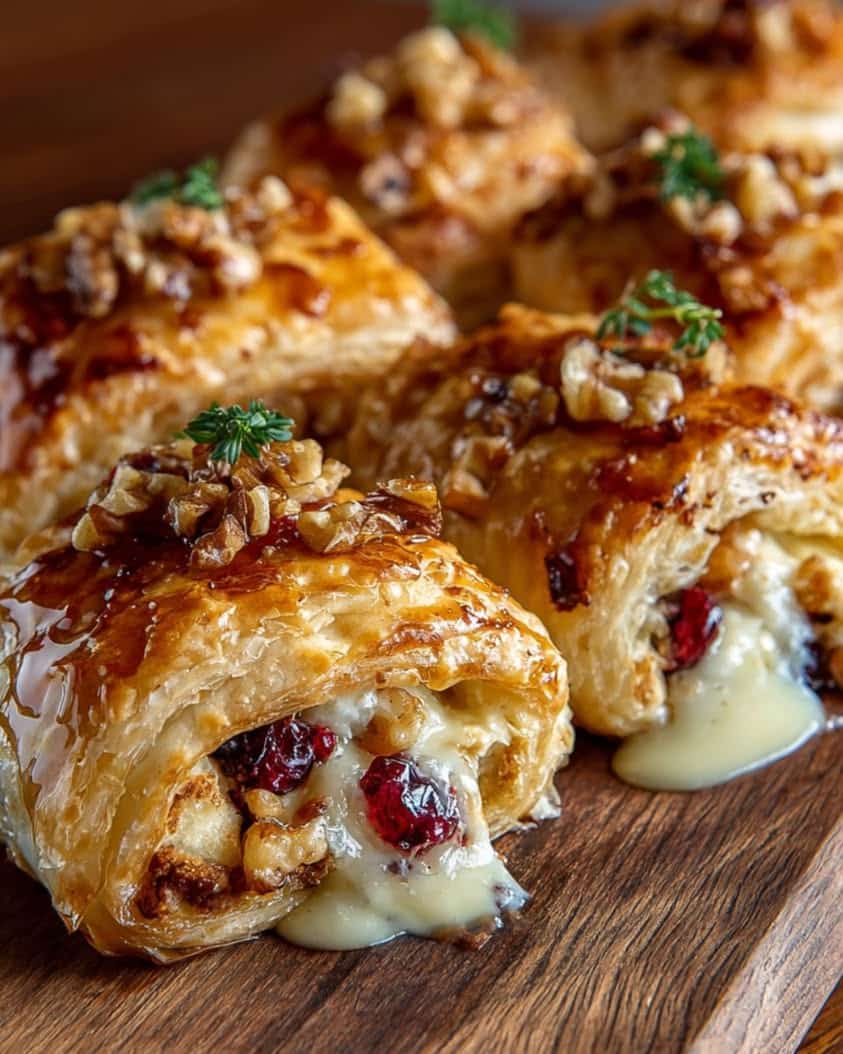
Cranberry and Walnut Baked Brie Rolls: The Ultimate Crowd-Pleasing Appetizer
Imagine pulling a tray of golden, flaky pastries from the oven, their aroma filling your kitchen with the promise of something truly special. These Cranberry and Walnut Baked Brie Rolls are that perfect appetizer, combining creamy, melted Brie cheese with the sweet-tart punch of cranberries and the satisfying crunch of walnuts. Each bite delivers a symphony of textures and flavors that will have your guests reaching for more. Consequently, this dish has become a staple for entertaining, offering an impressive presentation with surprisingly simple preparation.
The beauty of these Cranberry and Walnut Baked Brie Rolls lies in their elegant simplicity. You create a restaurant-quality appetizer using just a handful of ingredients, most of which you might already have in your pantry. Furthermore, the combination of warm, gooey cheese encased in a buttery, crisp pastry is universally appealing. Ultimately, this recipe transforms basic components into a show-stopping centerpiece for your cheese board or holiday table, proving that incredible flavor doesn’t require complicated techniques.
Seasoned cooks and kitchen novices alike will appreciate how these Cranberry and Walnut Baked Brie Rolls come together in about thirty minutes. The process is straightforward, yet the result feels decadent and sophisticated. Moreover, the vibrant red cranberries and golden-brown pastry create a visually stunning dish that photographs beautifully. Whether you’re hosting a formal dinner party or a casual game night, these rolls adapt perfectly to any occasion, making them an incredibly versatile addition to your recipe repertoire.
Quick Recipe Highlights
- Flavor Profile: These Cranberry and Walnut Baked Brie Rolls deliver a perfect balance of rich, creamy Brie, tangy-sweet cranberries, and earthy, nutty walnuts. The buttery pastry adds a savory note that ties all the elements together harmoniously.
- Texture: You experience a delightful contrast between the flaky, crisp pastry exterior and the soft, molten cheese interior. Additionally, the cranberries provide a slight chewiness while the walnuts contribute a satisfying crunch in every bite.
- Aroma: As these Cranberry and Walnut Baked Brie Rolls bake, your kitchen fills with the comforting scent of melted cheese and toasting nuts. The cranberries release a fruity fragrance that complements the savory notes beautifully.
- Visual Appeal: The golden-brown pastry parcels reveal a stunning cross-section of white cheese, red cranberries, and brown walnuts when sliced. Consequently, they make an impressive addition to any platter or cheese board.
- Skill Level Needed: This recipe requires basic kitchen skills like rolling and sealing pastry. Fortunately, even beginner cooks can achieve excellent results by following the straightforward instructions.
- Special Equipment: You need only standard kitchen tools: a baking sheet, parchment paper, a rolling pin, and a sharp knife. No specialized equipment is necessary for these Cranberry and Walnut Baked Brie Rolls.
Recipe Overview
- Difficulty Level: These Cranberry and Walnut Baked Brie Rolls earn their easy rating because they use pre-made puff pastry, eliminating the most challenging step. The filling comes together quickly, and the assembly requires simple folding techniques. Even first-time bakers can confidently create this impressive appetizer without stress.
- Category: This recipe falls squarely into the appetizer and snack category, perfect for parties and gatherings. Additionally, it works beautifully as part of a brunch spread or as an elegant finger food for cocktail parties. The portable nature of these rolls also makes them excellent for potlucks.
- Cuisine: While Brie cheese originates from France, these Cranberry and Walnut Baked Brie Rolls represent modern American entertaining cuisine. They combine European cheese traditions with American convenience products and flavor combinations, creating a fusion that appeals to contemporary palates.
- Cost: Preparing these Cranberry and Walnut Baked Brie Rolls is surprisingly economical considering their impressive presentation. The most significant expense is the Brie cheese, while the other ingredients are relatively inexpensive. You can feed a crowd for a fraction of what similar appetizers would cost at a restaurant.
- Season: Although these rolls work year-round, they particularly shine during fall and winter holidays. The cranberry element makes them perfect for Thanksgiving and Christmas entertaining. Meanwhile, their vibrant colors and warm, comforting nature align perfectly with cooler weather cravings.
- Occasion: These versatile Cranberry and Walnut Baked Brie Rolls suit everything from casual game-day gatherings to elegant holiday parties. They make excellent additions to bridal showers, birthday celebrations, and office potlucks. Essentially, any event that calls for impressive yet easy finger food is the perfect occasion.
Why You’ll Love This Recipe
The taste and texture experience of these Cranberry and Walnut Baked Brie Rolls is truly exceptional. Your first bite delivers the satisfying crunch of the flaky pastry, immediately followed by the luxurious sensation of warm, melted Brie. Meanwhile, the cranberries provide bursts of sweet-tart flavor that cut through the richness of the cheese. Finally, the walnuts contribute an earthy depth and additional textural contrast that makes each mouthful interesting. This combination of creamy, crunchy, chewy, and flaky elements creates a sophisticated flavor profile that feels both comforting and elegant.
From a convenience perspective, these Cranberry and Walnut Baked Brie Rolls offer tremendous benefits for busy hosts. The preparation time is minimal, requiring only about fifteen minutes of active work before they go into the oven. Furthermore, you can assemble them ahead of time and refrigerate until ready to bake, making party planning significantly easier. The ingredients are readily available at most grocery stores, with no hard-to-find components. Essentially, you get maximum impressive factor with minimal effort, which is every entertainer’s dream scenario.
Nutritionally, these Cranberry and Walnut Baked Brie Rolls provide more balance than many appetizers. Walnuts contribute healthy fats, protein, and omega-3 fatty acids, while cranberries offer antioxidants and vitamin C. Although certainly an indulgent treat, the combination of cheese, fruit, and nuts creates a more substantial snack that satisfies more completely than empty-calorie options. Consequently, your guests will feel genuinely nourished rather than just full of processed carbohydrates.
The social and entertaining value of these Cranberry and Walnut Baked Brie Rolls cannot be overstated. They serve as fantastic conversation starters, with guests invariably asking about the recipe. Their finger-food format encourages mingling and casual eating without requiring plates or utensils. Moreover, the beautiful presentation makes them Instagram-worthy, extending their appeal beyond just taste. Whether served as part of a larger spread or as the standalone star, these rolls elevate any gathering and make the host look like a culinary rockstar.
Considering cost-effectiveness and accessibility, these Cranberry and Walnut Baked Brie Rolls deliver exceptional value. Compared to purchasing similar prepared appetizers from specialty stores or caterers, making them at home saves considerable money. The ingredients have good shelf life, meaning you can keep them on hand for impromptu entertaining. Additionally, the recipe is forgiving and adaptable, allowing for substitutions based on what you have available. This flexibility makes it a reliable go-to recipe that won’t break the bank but will always impress.
Historical Background and Cultural Significance
The origin of baked Brie as a concept traces back to French culinary traditions, where baking cheese in pastry has centuries-old roots. Known as “Brie en croûte,” this preparation method likely developed as a way to serve and preserve the famous cheese from the Île-de-France region. The addition of fruits and nuts represents a natural evolution, as these accompaniments have traditionally been served alongside cheese in European cuisine. Meanwhile, the specific combination of cranberries and walnuts reflects North American influences, creating a fusion that honors both Old World and New World culinary traditions.
Culturally, baked Brie holds significance as a celebratory food often associated with gatherings and special occasions. In France, cheese courses are an essential part of formal meals, and Brie frequently features prominently. The adaptation of baking Brie in pastry likely emerged as a way to make the cheese course more substantial and visually appealing for festive events. As this preparation method traveled to North America, it became particularly associated with holiday entertaining, where rich, comforting foods take center stage during colder months.
The evolution of the baked Brie recipe demonstrates how culinary traditions adapt to changing tastes and available ingredients. Traditional French preparations might feature simpler accompaniments like herbs or mushrooms, while American versions often incorporate sweeter elements like fruits and jams. The cranberry and walnut combination specifically gained popularity during the late 20th century as American entertaining styles embraced more dramatic presentation. Using puff pastry instead of traditional pie crust represents another modernization, offering greater flakiness and visual appeal with convenience.
Regional variations of baked Brie reflect local ingredients and culinary preferences. In the American South, you might find versions with pecans and pepper jelly, while Pacific Northwest interpretations could feature local hazelnuts and marionberries. Mediterranean-inspired versions might include sun-dried tomatoes, olives, and herbs. The basic concept of enclosing cheese in pastry with flavorful additions has proven remarkably adaptable across cultures and cuisines. This versatility explains its enduring popularity and continuous evolution as cooks put their personal stamps on the classic preparation.
Ingredient Deep Dive
Brie cheese originates from the Île-de-France region and has been produced since the Middle Ages, earning its AOC (Appellation d’Origine Contrôlée) status in 1980. This soft-ripened cheese features a creamy, edible rind and a buttery interior that becomes luxuriously molten when heated. Nutritionally, Brie provides protein, calcium, and phosphorus, though it’s also high in saturated fat. When selecting Brie for these Cranberry and Walnut Baked Brie Rolls, choose a wheel that feels springy to the touch and has a white, bloomed rind without discoloration. Store Brie in the refrigerator’s cheese drawer and bring to room temperature before using for optimal flavor and texture.
Cranberries, native to North America, have a history dating back to Native American traditions where they were used for food, medicine, and dye. These tart berries grow in bogs primarily in Massachusetts, Wisconsin, New Jersey, Oregon, and Washington. They’re packed with vitamin C, fiber, and unique phytonutrients called proanthocyanidins that support urinary tract health. For these Cranberry and Walnut Baked Brie Rolls, dried cranberries work perfectly, providing concentrated flavor and chewy texture without adding excess moisture. Look for unsweetened or lightly sweetened varieties to balance the other ingredients effectively.
Walnuts rank among the oldest tree foods, with cultivation dating back thousands of years to ancient Persia. California now produces nearly all walnuts commercially grown in the United States. These brain-shaped nuts deliver excellent nutritional value, particularly omega-3 fatty acids, antioxidants, and minerals like manganese and copper. Their slightly bitter, earthy flavor provides perfect contrast to the sweet cranberries and rich cheese in these rolls. For the best texture and flavor, purchase walnut halves and chop them yourself rather than using pre-chopped pieces, which may have lost some freshness.
Puff pastry has origins in multiple European culinary traditions, with both French puff pastry (pâte feuilletée) and Danish pastry (wienerbrød) contributing to its development. This laminated dough creates hundreds of thin layers that separate and rise during baking, resulting in the characteristic flaky texture. While traditional preparation is labor-intensive, excellent quality frozen puff pastry makes these Cranberry and Walnut Baked Brie Rolls accessible to home cooks. Look for brands made with butter rather than hydrogenated oils for superior flavor. Always thaw frozen puff pastry in the refrigerator overnight rather than at room temperature to maintain proper texture.
Common Mistakes to Avoid
- Using puff pastry that’s too warm causes difficult handling and prevents proper rising. Always work with chilled but pliable dough that still feels cool to the touch. If the pastry becomes soft and sticky during assembly, briefly refrigerate it before continuing.
- Overfilling the rolls leads to leakage during baking, creating messy results. Use moderate amounts of each ingredient, ensuring you can properly seal the pastry. Remember that the Brie will expand as it melts, so leave adequate room inside each roll.
- Neglecting to properly seal the edges results in filling escaping during baking. Press the seams firmly together and consider using a fork to crimp them securely. You can also brush the edges lightly with egg wash to help them adhere better.
- Baking at the wrong temperature prevents proper pastry development. Puff pastry requires high initial heat to create steam, which lifts the layers. Starting at a lower temperature produces dense, greasy results rather than light, flaky pastry.
- Using Brie that’s too cold creates temperature discrepancies that affect baking time. While you shouldn’t use warm Brie, extremely cold cheese straight from the refrigerator may not melt properly by the time the pastry browns.
- Skipping the egg wash diminishes visual appeal and texture. The egg wash creates beautiful golden-brown color and adds slight crispness to the exterior. For extra shine, use just the yolk, while the whole egg provides good color with less shine.
- Cutting into the rolls immediately after removing them from the oven causes the cheese to ooze out excessively. Allow them to rest for five minutes, letting the cheese set slightly while the pastry firms up. This brief waiting period significantly improves the eating experience.
- Overbaking creates tough pastry and separated, oily cheese. Watch carefully during the final minutes of baking and remove the rolls as soon as they achieve deep golden-brown color. Remember that residual heat will continue cooking them slightly after removal from the oven.
Essential Techniques
Proper puff pastry handling fundamentally impacts your Cranberry and Walnut Baked Brie Rolls’ success. Puff pastry relies on distinct layers of dough and butter that separate during baking, creating the characteristic flakiness. To achieve this, work quickly with chilled dough, handling it as little as possible to prevent the butter from melting into the flour layers. If the pastry becomes too soft during shaping, return it to the refrigerator for ten minutes before continuing. The visual cue for properly handled pastry is visible layers at the edges when you cut it, indicating the lamination remains intact.
Sealing the pastry parcels securely prevents filling leakage during baking, which is crucial for these Cranberry and Walnut Baked Brie Rolls. After placing your filling in the center of each pastry square, bring opposite corners together and press the seams firmly. Then use the tines of a fork to crimp the edges, creating both a decorative pattern and additional security. For extra insurance, you can brush the edges with egg wash before sealing, which acts as edible glue. The properly sealed rolls should appear neatly enclosed with no visible gaps or openings where filling could escape.
Applying egg wash correctly enhances both appearance and texture of your Cranberry and Walnut Baked Brie Rolls. Egg wash creates beautiful browning through the Maillard reaction while adding slight crispness to the pastry exterior. Use a pastry brush to apply a thin, even layer, being careful not to let it pool in the crevices, which can inhibit rising. For maximum shine, use just the egg yolk thinned with a teaspoon of water or milk. The visual cue for proper application is a uniform glossy coating without drips or thick spots that might create uneven coloring.
Knowing when your Cranberry and Walnut Baked Brie Rolls are perfectly baked requires attention to visual and aromatic cues. The pastry should achieve a deep golden-brown color with visibly puffed layers. Meanwhile, you’ll notice the irresistible aroma of toasted nuts and melted cheese filling your kitchen. Another indicator is slight bubbling around the seams, suggesting the filling is hot and the cheese has properly melted. If the pastry colors too quickly while the filling remains cool, tent loosely with aluminum foil and continue baking until the rolls feel firm to the touch when gently pressed.
Pro Tips for Perfect Cranberry and Walnut Baked Brie Rolls
Chill your assembled rolls for fifteen minutes before baking to ensure maximum puff. This step solidifies the butter in the pastry, creating better separation between layers when they hit the oven’s heat. Consequently, you’ll achieve taller, flakier results with more dramatic presentation.
Create steam in your oven by placing an empty baking pan on the bottom rack while preheating. When you put the rolls in, carefully pour half a cup of hot water into the pan and quickly close the oven door. The steam helps the pastry rise before setting, yielding lighter texture.
Score the tops of your Cranberry and Walnut Baked Brie Rolls lightly with a sharp knife before applying egg wash. These shallow cuts create designated expansion points, preventing random bursting during baking. Additionally, they add decorative appeal and make the rolls easier to split after baking.
Toast your walnuts briefly before incorporating them into the filling. Spread them in a single layer on a baking sheet and toast at 350°F for five to seven minutes until fragrant. This simple step deepens their flavor and improves their crunch factor in the final dish.
Consider adding a pinch of flaky sea salt to the tops of your Cranberry and Walnut Baked Brie Rolls after applying the egg wash. The salt crystals create delightful bursts of flavor that contrast beautifully with the sweet cranberries and rich cheese. They also enhance visual appeal with their sparkling appearance.
If your Brie wheel has an especially thick rind, you might consider trimming it slightly, though this isn’t strictly necessary. The rind becomes tender when baked and adds flavor complexity. However, some people prefer less rind, particularly if using a very mature Brie with stronger-flavored rind.
Variations and Adaptations
Regional variations of these Cranberry and Walnut Baked Brie Rolls allow for creative interpretation based on local ingredients. Southern-inspired versions might feature pecans instead of walnuts and pepper jelly alongside or instead of cranberries. Pacific Northwest adaptations could utilize hazelnuts and Oregon marionberries for a distinct regional twist. Southwestern interpretations might incorporate piñon nuts and dried cherries with a hint of chili powder for subtle heat. These regional variations demonstrate the recipe’s flexibility while maintaining the core concept of baked cheese in pastry.
Seasonal adaptations keep these rolls exciting throughout the year while utilizing peak ingredients. Spring versions might feature asparagus tips and fresh herbs alongside the Brie. Summer adaptations could incorporate sun-dried tomatoes and basil for Mediterranean flair. Autumn variations might include diced apples and cinnamon for cozy flavor notes. Winter versions naturally lean toward the cranberry and walnut combination but could also feature pear and ginger for holiday entertaining. Each seasonal twist maintains the appealing format while reflecting what’s fresh and appropriate for the time of year.
Dietary modifications make these Cranberry and Walnut Baked Brie Rolls accessible to various eating preferences. Gluten-free versions simply require using quality gluten-free puff pastry, now readily available in many grocery stores. Vegan adaptations can utilize plant-based cheese alternatives and vegan puff pastry, though the melting characteristics will differ slightly. For nut allergies, sunflower seeds or pumpkin seeds provide similar crunch without the allergenic concerns. Dairy-free versions might feature dairy-free cheese, though the results will understandably differ from traditional Brie.
Flavor variations allow for endless creativity while maintaining the preparation method. Savory options might include caramelized onions and thyme or mushroom duxelles with rosemary. Sweet interpretations could feature dark chocolate chunks with orange zest or almond paste with raspberries. Spicy versions might incorporate jalapeño slices or chili-infused honey for those who enjoy heat. Herb-forward variations could highlight tarragon, dill, or basil depending on the cheese accompaniments. Each flavor profile creates a distinct experience while utilizing the same reliable technique.
Serving and Presentation Guide
Plating techniques significantly enhance the visual impact of your Cranberry and Walnut Baked Brie Rolls. Arrange them on a wooden cutting board or marble slab for rustic elegance, spacing them evenly to show off their individual beauty. Alternatively, cluster them in the center of a decorative platter surrounded by garnishes for a more abundant presentation. For formal occasions, consider serving each roll individually on small plates with a microgreen garnish and drizzle of reduced balsamic glaze. The presentation should match the event’s formality while highlighting the rolls’ appealing golden-brown color and flaky texture.
Garnishing ideas elevate your Cranberry and Walnut Baked Brie Rolls from delicious to spectacular. Fresh herb sprigs like rosemary or thyme add color and fragrance that complement the ingredients. Edible flowers provide unexpected elegance for special occasions, while pomegranate arils offer jewel-like brightness. A light dusting of powdered sugar creates beautiful contrast for sweeter interpretations, while flaky sea salt enhances savory versions. For additional texture contrast, sprinkle some extra chopped toasted walnuts around the platter. Remember that garnishes should enhance rather than overwhelm the main attraction.
Traditional accompaniments for baked Brie include fruit preserves, fresh fruit slices, and assorted crackers. For these Cranberry and Walnut Baked Brie Rolls, consider serving additional cranberry sauce on the side for those who want extra fruit flavor. A small dish of honey for drizzling allows guests to customize sweetness levels. Cornichons or other pickled vegetables provide acidic contrast that cuts through the richness. Toasted baguette slices or water crackers offer additional vehicles for enjoying any escaped cheese or filling.
Wine and Beverage Pairing
Wine pairings for these Cranberry and Walnut Baked Brie Rolls should balance the richness of the cheese and the sweetness of the cranberries. Sparkling wines like Champagne or Prosecco provide excellent cutting acidity and effervescence that cleanses the palate between bites. Off-dry Rieslings or Gewürztraminers complement the fruit elements while standing up to the cheese’s creaminess. Light-bodied Pinot Noirs with red fruit characteristics harmonize with the cranberries without overwhelming the dish. Ultimately, the best wine pairing depends on whether you’re emphasizing the savory or sweet aspects of the rolls.
Non-alcoholic alternatives can be just as sophisticated as wine pairings for these Cranberry and Walnut Baked Brie Rolls. Sparkling apple cider offers similar effervescence to Champagne with complementary fruit notes. Cranberry-based mocktails enhance the existing flavor profile while providing refreshing contrast. Herbal teas like peppermint or chamomile served iced make unexpected but delightful pairings that cleanse the palate. For richer options, consider a non-alcoholic sparkling grape juice or even a craft ginger beer with its spicy complexity.
Coffee and tea pairings work surprisingly well with these Cranberry and Walnut Baked Brie Rolls, particularly for brunch or afternoon gatherings. Medium-roast coffees with nutty or chocolate notes complement the walnuts and pastry without bitterness. Earl Grey tea’s bergamot flavor provides elegant contrast to the rich cheese, while chai spices harmonize with the warming elements. For after-dinner service, consider serving with a dessert wine alternative like coffee or espresso. The key is matching the beverage’s intensity to the robust flavors in the rolls.
Storage and Shelf Life
Storage methods for leftover Cranberry and Walnut Baked Brie Rolls require attention to maintain quality. Cool completely to room temperature before storing to prevent condensation that would make the pastry soggy. Place in an airtight container with layers separated by parchment paper to prevent sticking. Refrigerate for up to three days, though the pastry will gradually lose its crispness. For longer storage, freezing provides better texture preservation than refrigeration for extended periods.
Reheating instructions are crucial for restoring the appealing texture of leftover Cranberry and Walnut Baked Brie Rolls. Avoid microwaving, which creates tough cheese and soggy pastry. Instead, reheat in a conventional or toaster oven at 350°F for eight to ten minutes until warmed through and crisp. For single servings, an air fryer works excellently, recreating the original texture in about five minutes at 325°F. Always check that the filling is hot before serving, as the cheese should be melted throughout.
Freezing guidelines allow you to prepare these Cranberry and Walnut Baked Brie Rolls ahead for future entertaining. Freeze unbaked assembled rolls on a parchment-lined baking sheet until solid, then transfer to freezer bags. They can be baked directly from frozen, adding five to seven minutes to the original baking time. Already-baked rolls can also be frozen, though the pastry may not be quite as flaky upon reheating. Properly stored, frozen unbaked rolls maintain quality for up to three months, making holiday preparation significantly easier.
Make Ahead Strategies
Prep timeline optimization makes entertaining with these Cranberry and Walnut Baked Brie Rolls significantly less stressful. You can prepare the filling components up to two days in advance, storing chopped walnuts and measured cranberries in separate airtight containers. The Brie can be cubed the day before and refrigerated tightly wrapped. For ultimate convenience, assemble the rolls completely, place them on the baking sheet, cover tightly with plastic wrap, and refrigerate for up to twenty-four hours before baking. This approach spreads the work over multiple days while ensuring fresh-baked results.
Storage between steps requires attention to ingredient temperatures and moisture levels. Keep prepared components refrigerated until assembly time, as cold ingredients are easier to work with and prevent premature pastry softening. If preparing the rolls more than a few hours ahead, consider brushing with egg wash immediately before baking rather than ahead of time, as refrigeration can cause the egg wash to become gummy. For overnight preparation, wait to apply the egg wash until just before the rolls go into the oven for optimal browning and shine.
Quality impact assessment helps determine which make-ahead strategies work best for these Cranberry and Walnut Baked Brie Rolls. Fully assembled and refrigerated rolls baked the next day show minimal quality difference from freshly prepared versions. The pastry may rise slightly less dramatically but remains excellent. Freezing unbaked rolls preserves good quality, though the pastry may not achieve quite the same height as fresh. Already-baked and reheated rolls experience the most significant quality decline, with less flaky pastry and potentially separated cheese. Therefore, baking from fresh or refrigerated assembly yields superior results.
Scaling Instructions
Halving the recipe works perfectly for these Cranberry and Walnut Baked Brie Rolls when serving smaller groups. Use half a sheet of puff pastry (approximately 8 ounces) and proportionally reduce the other ingredients. The baking time may decrease slightly, so begin checking for doneness around the ten-minute mark. For the egg wash, beat one small egg and use half, or simply use a whole egg and discard the remainder. Halving allows you to enjoy these rolls without excessive leftovers while maintaining the same flavor and texture balance.
Doubling or tripling the recipe requires minor adjustments for consistent results. Use multiple baking sheets rather than crowding rolls on one sheet, as proper air circulation ensures even browning. Rotate the sheets halfway through baking if your oven has hot spots. Consider staggering the baking if oven space is limited, as the rolls are best served warm from the oven. When multiplying ingredients, weigh rather than measure for accuracy, particularly with the pastry and cheese. Doubling works excellently for larger gatherings, while tripling may require batch baking for optimal quality.
Equipment adjustments become necessary when significantly scaling this Cranberry and Walnut Baked Brie Rolls recipe. For doubled batches, ensure you have two high-quality baking sheets that won’t warp at high temperatures. If making large quantities for events, consider using a commercial-style convection oven for more even baking. For potlucks or transport, disposable aluminum baking sheets work well, though they may conduct heat differently. When scaling up, having multiple sets of measuring tools prevents cross-contamination of ingredients and streamlines the assembly process.
Nutritional Deep Dive
Macro breakdown of these Cranberry and Walnut Baked Brie Rolls reflects their indulgent nature while offering some nutritional benefits. Each roll provides approximately 15 grams of carbohydrates primarily from the pastry and cranberries, 10 grams of protein mainly from the cheese and walnuts, and 20 grams of fat from the pastry butter, cheese, and nuts. The specific values vary based on ingredient brands and exact measurements, but this general profile places them in the moderate carbohydrate, high-fat category typical of pastry-based appetizers. Despite being calorie-dense, they offer more protein and nutrient variety than many other pastry items.
Micronutrient analysis reveals several valuable nutrients in these Cranberry and Walnut Baked Brie Rolls. Walnuts contribute manganese, copper, and magnesium, while cranberries provide vitamin C and various antioxidants. Brie cheese offers calcium, phosphorus, and vitamin B12, though it’s also high in sodium and saturated fat. The puff pastry contributes primarily empty calories with minimal micronutrients, making the filling ingredients the nutritional stars. While not a health food, these rolls do provide more varied nutrition than many similar appetizers due to their fruit and nut components.
Health benefits derive primarily from the walnut and cranberry components in these Cranberry and Walnut Baked Brie Rolls. Walnuts support heart health through their omega-3 fatty acids and may improve cognitive function due to their antioxidant content. Cranberries offer urinary tract health benefits and contain compounds that may reduce inflammation. The protein from the cheese and nuts provides satiety, potentially preventing overconsumption of less nutritious foods. While certainly an indulgent treat, the inclusion of these functional ingredients adds value beyond mere calories.
Dietary Adaptations
Gluten-free adaptation of these Cranberry and Walnut Baked Brie Rolls simply requires substituting regular puff pastry with a gluten-free version. Several brands now offer excellent gluten-free puff pastry that bakes up flaky and golden. Be aware that gluten-free pastry may be more fragile when working with it, so handle gently and keep well-chilled. The other ingredients are naturally gluten-free, making this an straightforward modification. Always check labels on dried cranberries, as some brands may use wheat-based anti-caking agents.
Dairy-free versions require replacing the Brie cheese with plant-based alternatives. Several companies now produce credible vegan Brie-style cheeses that melt reasonably well. Look for varieties specifically designed for melting rather than fresh eating. Vegan puff pastry is readily available, as many commercial brands use oil rather than butter. The walnuts and cranberries remain the same, creating a similar flavor profile despite the cheese substitution. The results will differ from traditional versions but can still be delicious for those avoiding dairy.
Low-carb and keto adaptations involve significant recipe modification but are possible. Replace the puff pastry with fathead dough or other low-carb pastry alternatives, though the texture will differ substantially. Increase the walnut quantity while decreasing the cranberries, or use lower-carb berries like raspberries instead. Ensure the Brie fits within your daily macros, as it contains some lactose. While the result won’t mimic the original closely, you can create a satisfying baked cheese appetizer that fits low-carb eating patterns.
Troubleshooting Guide
Texture issues commonly involve soggy pastry or tough, dense results. Soggy bottoms typically occur from underbaking or placing rolls on a cool baking sheet. Always preheat your baking sheet in the oven for a few minutes before adding the rolls. Tough pastry often results from overworking the dough or using flour excessively during rolling. If your pastry isn’t rising properly, the butter may have become too warm during handling, causing the layers to merge rather than separate.
Flavor balance problems might include excessive sweetness or overwhelming cheese flavor. If the cranberries make the rolls too sweet, consider using unsweetened dried cranberries or reducing the quantity slightly. Overpowering cheese flavor usually stems from using an extremely mature Brie with strong characteristics. For milder results, choose a younger Brie or combine it with cream cheese to temper the flavor. If the walnuts taste bitter, they may be stale—always taste nuts before using and toast them to enhance their flavor.
Temperature problems can lead to uneven baking or filling leakage. If your rolls brown too quickly while the filling remains cool, your oven temperature may be inaccurate—use an oven thermometer to verify. Filling leakage often occurs when the cheese is too cold, creating temperature differentials that prevent proper sealing. Always use cheese that’s cool but not refrigerator-cold for best results. If your pastry butter melts out during baking rather than creating steam, the oven temperature may be too low, preventing proper puffing before the fat liquefies.
Recipe Success Stories
Community feedback on these Cranberry and Walnut Baked Brie Rolls consistently highlights their impressive presentation relative to their simple preparation. Home cooks frequently report that guests assume they purchased these from a specialty bakery, creating proud moments for the hosts. Many note that the recipe has become their go-to appetizer for potlucks and parties because it travels well and appeals to diverse tastes. Several readers have mentioned that even picky eaters who claim not to like Brie enjoy these rolls, likely because the other ingredients balance the cheese’s distinctive flavor.
Variation successes demonstrate the recipe’s adaptability across different tastes and occasions. One reader created a Thanksgiving version using sweetened dried cherries and pecans that became a new family tradition. Another reported success with a savory adaptation featuring olives and sun-dried tomatoes for a Mediterranean-themed party. Several home cooks have shared their experiences making miniature versions for cocktail parties, using wonton wrappers instead of puff pastry for bite-sized treats. These adaptations show how the basic concept inspires creativity while maintaining the appealing combination of textures and flavors.
Photography tips from successful makers emphasize capturing the cross-section to showcase the melted cheese interior. Natural lighting works best to highlight the golden-brown pastry and vibrant cranberry color. Some suggest sprinkling a few extra cranberries and walnut pieces around the plate for context and visual interest. Several photographers recommend shooting immediately after cutting while the cheese is still visibly molten. Action shots of pulling apart a roll to reveal the stretchy cheese make particularly engaging food photography that captures the appealing texture contrast.
Frequently Asked Questions
Can I use canned cranberry sauce instead of dried cranberries? Yes, though the results will differ significantly. Use about one tablespoon of well-drained whole berry cranberry sauce per roll, and reduce other moist ingredients slightly. The texture will be softer and more uniform, with stronger cranberry flavor throughout. Be aware that additional moisture may affect pastry crispness, so ensure proper sealing to prevent leakage.
What’s the best Brie for this recipe? Choose a ripe but not overripe Brie that feels springy when gently pressed. Avoid wheels with ammonia odors or excessive softness, as they may be past their prime. The rind is edible and becomes tender when baked, so trimming is unnecessary unless you particularly dislike its flavor. Triple cream Brie creates extra richness, while double cream offers slightly better structural integrity.
Can I prepare these completely ahead and freeze before baking? Absolutely. Assemble the rolls completely, place on a parchment-lined baking sheet, and freeze until solid. Transfer to freezer bags for storage up to three months. Bake directly from frozen, adding five to
Print
Cranberry and Walnut Baked Brie Rolls
Description
Flaky crescent rolls stuffed with creamy brie, sweet cranberries, and crunchy walnuts, baked to golden perfection.
Ingredients
For the Crust:
- 1 can (8 oz) refrigerated crescent roll dough
- 4 oz brie cheese, rind removed and cut into small pieces
- 1/4 cup dried cranberries
- 1/4 cup chopped walnuts
- 1 tbsp honey
- 1 egg, beaten (for egg wash)
- 1 tbsp fresh thyme leaves (optional)
Instructions
1. Prepare the Crust:
- Preheat oven to 375°F (190°C) and line a baking sheet with parchment paper.
- Unroll the crescent dough and separate into triangles. Place a few pieces of brie, a sprinkle of cranberries, and walnuts at the wide end of each triangle.
- Drizzle each with a little honey, then roll up from the wide end to the point, sealing edges.
- Place rolls on the baking sheet, brush with beaten egg, and sprinkle with thyme if using.
- Bake for 12-15 minutes until golden brown and puffed. Let cool slightly before serving.
Notes
You can customize the seasonings to taste.

I’m Shaykee—born in Morocco, seasoned across continents. From airplane galleys to home kitchens, I share the flavors and stories that shaped my journey.