
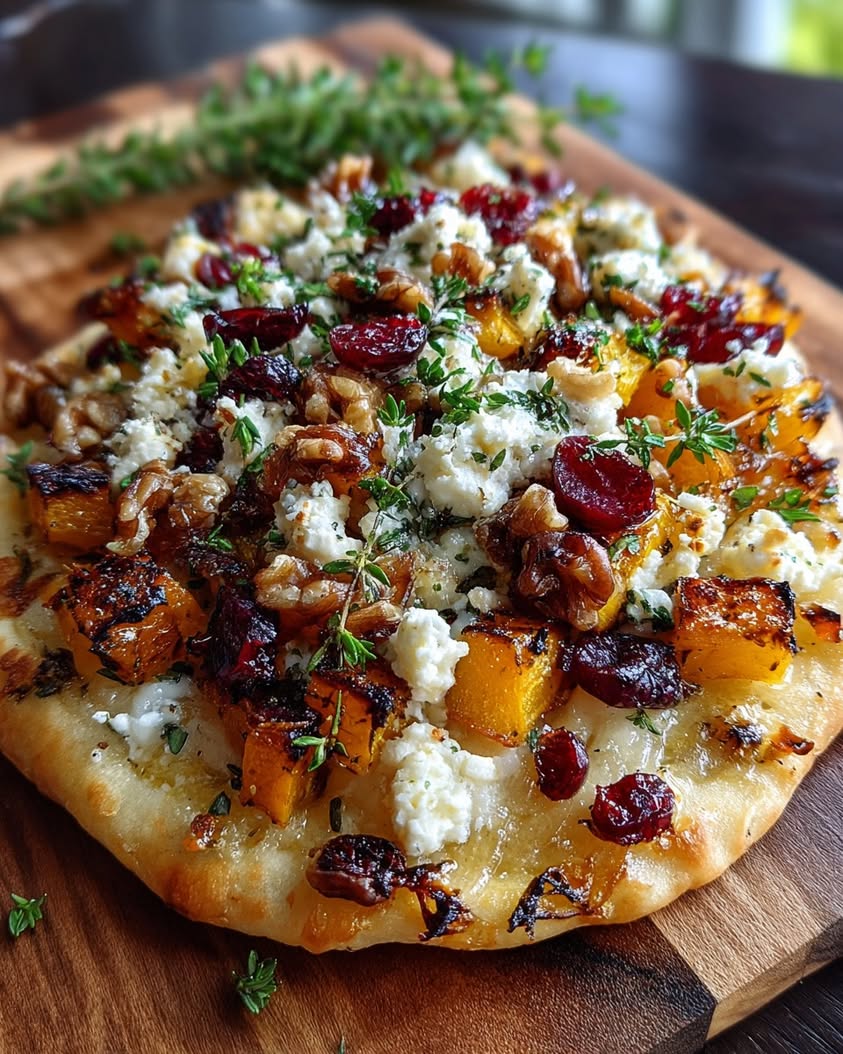
Cranberry, Walnut & Brie Flatbread with Roasted Squash: The Ultimate Fall Appetizer
This Cranberry, Walnut & Brie Flatbread with Roasted Squash recipe is the ultimate easy, elegant fall appetizer. Imagine a crispy, golden flatbread base generously topped with creamy Brie, sweet roasted squash, and tart cranberries. The combination of flavors and textures creates a truly unforgettable culinary experience. Furthermore, this dish perfectly captures the essence of autumn in every single bite.
Consequently, this flatbread is not just delicious but also visually stunning. The vibrant orange squash, deep red cranberries, and creamy white Brie create a beautiful color palette. Additionally, the aromatic rosemary and toasted walnuts add depth and complexity. Ultimately, this recipe will become your go-to impressive dish for any fall gathering.
Surprisingly, this seemingly gourmet appetizer comes together in under forty minutes. Moreover, it uses simple, wholesome ingredients that highlight the best of the season. Therefore, whether you are hosting a holiday party or simply craving a cozy night in, this flatbread delivers maximum flavor with minimal effort. Indeed, it is the perfect balance of sophistication and simplicity.
Quick Recipe Highlights
- Flavor Profile: This flatbread masterfully balances sweet, savory, and tangy notes. The sweet roasted squash contrasts beautifully with the tart cranberries and the rich, creamy Brie. Finally, a drizzle of balsamic glaze ties all the flavors together harmoniously.
- Texture: You will experience a delightful contrast of textures in every bite. The crispy flatbread base provides a sturdy foundation for the soft, melted Brie and tender squash. Meanwhile, the toasted walnuts add a satisfying crunch that completes the dish.
- Aroma: As this flatbread bakes, your kitchen will fill with an incredible fragrance. The sweet, caramelized squash and earthy rosemary create a warm, inviting scent. Additionally, the nutty aroma of toasting walnuts signals that your appetizer is nearly ready.
- Visual Appeal: This dish is a feast for the eyes with its beautiful autumn colors. The vibrant orange squash, jewel-toned cranberries, and golden crust look stunning on any table. Consequently, it is as much a centerpiece as it is a delicious starter.
- Skill Level Needed: This is an beginner-friendly recipe that requires no special culinary skills. Basically, you just need to chop, assemble, and bake. Therefore, even novice cooks can achieve restaurant-quality results with this straightforward guide.
- Special Equipment: You only need a standard baking sheet and a sharp knife. However, a pizza cutter or sharp knife for slicing and a small saucepan for the optional balsamic glaze are helpful. Ultimately, no fancy equipment is necessary for this impressive appetizer.
Recipe Overview
- Difficulty Level: This recipe is exceptionally easy and accessible for cooks of all skill levels. The steps are simple and straightforward, involving basic chopping and assembly. Furthermore, the baking process is forgiving, making it a stress-free cooking experience. Consequently, you can focus on enjoying the process and the delicious results.
- Category: This versatile dish fits perfectly into several meal categories. It works wonderfully as an appetizer, a light lunch, or even a main course when paired with a simple salad. Additionally, it is a fantastic option for brunch or a sophisticated snack.
- Cuisine: This flatbread draws inspiration from modern American and Mediterranean culinary traditions. It uses a flatbread base common in Mediterranean cooking while incorporating classic fall flavors from North American harvests. Ultimately, it is a fusion dish that celebrates seasonal, local ingredients.
- Cost: This is a reasonably priced recipe, especially when you use seasonal squash. Brie and fresh cranberries might be the pricier components, but they are used efficiently. Therefore, you can create a gourmet-tasting dish without a gourmet budget.
- Season: This recipe is perfect for the fall and early winter months. This is when butternut squash and cranberries are at their peak freshness and flavor. Consequently, you will get the best results and most vibrant tastes during this time of year.
- Occasion: This flatbread is ideal for a wide range of events. It is a showstopper for Thanksgiving, Friendsgiving, or holiday parties. Moreover, it is elegant enough for a dinner party yet simple enough for a casual family pizza night.
Why You’ll Love This Recipe
First and foremost, the taste and texture appeal is absolutely incredible. Each component brings something unique to the table, creating a symphony of flavors in your mouth. The creamy Brie melts into a luxurious pool that contrasts with the sweet, caramelized squash and the sharp pop of the cranberries. Meanwhile, the crispy flatbread base and crunchy walnuts provide the perfect textural counterpoint. Ultimately, every single bite is a perfectly balanced experience that will keep you coming back for more.
Another significant advantage is the sheer convenience and preparation benefits. This entire dish comes together in about forty minutes, with most of that time being hands-off baking. You can easily prepare the components ahead of time for even faster assembly when you are ready to eat. Furthermore, it uses minimal dishes, making cleanup an absolute breeze. Therefore, you can spend less time in the kitchen and more time enjoying your company.
From a health perspective, this flatbread offers several notable nutritional advantages. Butternut squash is packed with vitamins A and C, while walnuts provide healthy omega-3 fatty acids and antioxidants. Using a whole-wheat flatbread can also add fiber to the dish. Although Brie is a rich cheese, a little goes a long way in terms of flavor, allowing for a balanced indulgence. Consequently, you can feel good about serving this appetizer to your friends and family.
The social and entertaining value of this dish cannot be overstated. It looks incredibly impressive and gourmet, making your guests feel special. Moreover, it is easy to slice and share, encouraging a communal and interactive dining experience. This flatbread serves as a fantastic conversation starter and sets a warm, welcoming tone for any gathering. Indeed, it is a recipe that is meant to be shared and enjoyed together.
Finally, this recipe is remarkably cost-effective and accessible. You do not need any expensive or hard-to-find ingredients to create this restaurant-quality dish. Most components are pantry staples or readily available at any local grocery store, especially during the fall season. By making this at home, you save a significant amount of money compared to ordering a similar appetizer at a restaurant. Therefore, you can enjoy a luxurious treat without straining your budget.
Historical Background and Cultural Significance
The origin story of flatbread is one of the oldest in culinary history, dating back thousands of years across various cultures. Essentially, flatbreads were among the first breads ever made, serving as a simple, versatile staple for countless civilizations. The concept of topping a flatbread with local ingredients evolved independently in regions from the Mediterranean to Asia. Our modern interpretation, featuring seasonal fall harvests, is a relatively new twist on this ancient food tradition. Consequently, this recipe connects us to a rich, global history of simple, ingredient-driven cooking.
In terms of cultural importance, the individual components of this dish carry their own significance. Brie cheese hails from France and is often associated with celebration and indulgence. Cranberries are a native North American fruit, deeply tied to Thanksgiving and colonial history. Meanwhile, walnuts have been cultivated for millennia and are symbolic of intelligence and wisdom in some cultures. Combining these elements on a flatbread creates a beautiful fusion of Old World and New World culinary traditions.
The evolution of this specific recipe reflects modern dining trends and preferences. Today’s cooks increasingly seek dishes that are both visually appealing and easy to prepare for entertaining. The rise of “flatbread pizzas” on restaurant menus has popularized this format as a sophisticated alternative to traditional pizza. Furthermore, the growing emphasis on seasonal, farm-to-table eating inspires combinations like squash and cranberry. This recipe is a perfect example of how contemporary home cooking blends global influences with local, seasonal produce.
Regional variations of this concept are endless and adaptable to any locale. In the Mediterranean, you might find a flatbread with figs, goat cheese, and honey. A French-inspired version could feature caramelized onions and Gruyère. An Italian variation might use rosemary, potato, and fontina cheese. The basic formula of a crispy base, a soft cheese, a sweet element, and a crunchy nut is incredibly versatile. Therefore, this Cranberry, Walnut & Brie Flatbread serves as a fantastic template for your own culinary creativity.
Ingredient Deep Dive
Butternut Squash is the sweet, hearty foundation of this flatbread. Historically, squash is one of the “Three Sisters” cultivated by Native Americans, alongside corn and beans. It is incredibly nutritious, providing high levels of Vitamin A, Vitamin C, and fiber. When selecting squash, look for one that feels heavy for its size with a firm, unblemished skin. You can store whole squash in a cool, dark place for several months. For a substitution, sweet potato or pumpkin would work beautifully in this recipe.
Brie Cheese is a soft, creamy cheese named after the French region from which it originated. It is known for its edible, bloomy rind and its rich, buttery flavor that becomes wonderfully gooey when heated. From a nutritional standpoint, Brie provides protein and calcium, but it is also high in fat and should be enjoyed in moderation. Always choose a Brie that is ripe but not overly runny at room temperature. If you need a substitute, Camembert or a creamy goat cheese would be excellent alternatives.
Dried Cranberries add a essential tangy and sweet contrast to the rich cheese and squash. Unlike fresh cranberries, the dried version is sweetened, making them pleasantly chewy and palatable. They are a good source of antioxidants and dietary fiber. When purchasing, look for brands without added oils or excessive sugar. For a different flavor profile, you could use dried cherries, chopped dried apricots, or even raisins. Their chewy texture and bright flavor are key to the balance of the dish.
Walnuts contribute a crucial earthy flavor and satisfying crunch. They are one of the oldest tree foods cultivated by humans, with evidence of their consumption dating back thousands of years. Walnuts are renowned for their high content of Alpha-Linolenic Acid, a plant-based Omega-3 fatty acid. Toasting them before use deepens their flavor and makes them extra crispy. For those with allergies, pecans or almonds would be a fine replacement. Always store walnuts in the refrigerator or freezer to prevent their oils from turning rancid.
Common Mistakes to Avoid
- Overloading the Flatbread: Applying too many toppings is a common error. This will make the flatbread soggy and prevent it from crisping properly. Instead, use a light hand to ensure every component cooks evenly and the base stays crisp.
- Using Raw Squash: Do not add raw, cubed squash to the flatbread. It will not have time to cook through and caramelize. Always roast the squash separately first to develop its sweetness and achieve a tender texture.
- Skipping the Walnut Toasting: Using raw walnuts misses an opportunity for deeper flavor. Toasting nuts unlocks their essential oils and maximizes their nutty taste. This simple extra step makes a significant difference in the final dish.
- Thick Squash Cubes: Cutting the squash into chunks that are too large is a problem. They will take too long to roast and might not become tender. Aim for small, bite-sized, uniform pieces for quick and even cooking.
- Neglecting to Preheat the Pan/Baking Sheet: Placing the flatbread on a cold surface hinders crisping. Always preheat your baking sheet or pizza stone in the oven. This technique gives the flatbread a crispier crust from the moment it hits the heat.
- Using Cold Brie: Adding cold, hard Brie straight from the fridge makes it difficult to slice and distribute evenly. Let the Brie sit at room temperature for 15-20 minutes before slicing for easier handling.
- Forgetting to Season the Squash: The squash needs its own seasoning before roasting. Do not rely solely on the saltiness of the cheese. Tossing the squash with salt, pepper, and oil is crucial for a well-seasoned final product.
- Cutting the Flatbread Immediately: Slicing the flatbread the second it comes out of the oven causes the cheese to run everywhere. Allow it to rest for 2-3 minutes first. This brief waiting period allows the cheese to set slightly for cleaner cuts.
Essential Techniques
Roasting the Squash is the most critical technique for unlocking deep, caramelized flavor. This dry-heat cooking method concentrates the squash’s natural sugars, transforming it from starchy to sweet and tender. To master it, ensure your squash cubes are uniform in size for even cooking and toss them thoroughly with oil and seasoning. A common pitfall is crowding the pan, which steams the squash instead of roasting it. You will know it is done when the pieces are fork-tender and have golden-brown edges.
Proper Flatbread Crisping requires managing moisture and high heat. The goal is a crackly-crisp base that can support the toppings without becoming soggy. To achieve this, always preheat your baking surface and avoid overloading with wet ingredients. A common mistake is using a low oven temperature, which results in a soft, undercooked crust. Visual cues for success include a golden-brown color and a firm, audible crunch when you tap the bottom.
Toasting Walnuts is a simple but transformative step that elevates the entire dish. This process enhances the nuts’ aroma and adds a deeper, more complex flavor. To master it, spread the walnuts in a single layer on a dry sheet pan and watch them closely, as they can burn quickly. The most common pitfall is walking away from the oven, leading to scorched, bitter nuts. You will know they are perfectly toasted when they are fragrant and have darkened slightly in color.
Pro Tips for Perfect Cranberry, Walnut & Brie Flatbread
First, use a pizza stone or preheated baking sheet for the crispiest crust. This technique mimics the effect of a professional pizza oven by immediately searing the bottom of the flatbread. Consequently, you will achieve a superior texture that stands up to the toppings.
Secondly, slice the Brie while it is still slightly cold for cleaner cuts. A warm knife can also help you slice through the soft cheese without tearing it. This method allows for even distribution of cheesy goodness across the entire flatbread.
Another great tip is to add a handful of fresh arugula after baking. The peppery greens will wilt slightly from the residual heat, adding a fresh, vibrant element. Furthermore, this introduces a new layer of flavor and color to the finished dish.
For an extra flavor boost, consider tossing the roasted squash with a teaspoon of maple syrup. This step enhances the natural caramelization and complements the tart cranberries perfectly. However, be careful not to make it overly sweet.
If you have time, make a quick balsamic glaze reduction to drizzle over the top. Simply simmer balsamic vinegar until it thickens and becomes syrupy. This addition provides a beautiful tangy-sweet finish that ties all the components together.
Do not be afraid to experiment with different herbs. While rosemary is classic, fresh thyme or sage would also be delightful. Fresh herbs add a burst of aroma and complexity that dried herbs cannot match.
For a party, you can easily make mini flatbreads using naan or pita breads. This creates perfect individual portions that are easy for guests to handle. Moreover, it adds an elegant touch to your presentation.
Finally, always let the flatbread rest for a few minutes before slicing. This allows the molten cheese to set slightly, preventing a messy presentation. Consequently, you will get much cleaner, more attractive slices.
Variations and Adaptations
For regional variations, you can take this flatbread in countless directions. A Provençal version might feature herbes de Provence and goat cheese. An Italian-inspired adaptation could include fresh mozzarella and a drizzle of pesto after baking. A taste of the American South might incorporate pecans and a touch of bourbon in the glaze. Essentially, the template is versatile enough to accommodate any flavor profile you enjoy. Therefore, do not hesitate to use this recipe as a springboard for your own creativity.
Seasonal adaptations are simple and keep the recipe exciting year-round. In the spring, try using asparagus tips and fresh peas with lemon zest. For summer, heirloom tomatoes and fresh basil would be magnificent. A winter variation could feature caramelized onions and roasted mushrooms. The key is to pair a seasonal vegetable with a complementary cheese and fruit or nut. This approach ensures your flatbread is always made with the freshest, most flavorful ingredients available.
Dietary modifications are straightforward for many common needs. For a gluten-free version, simply use your favorite gluten-free flatbread or pizza crust. To make it vegan, substitute the Brie with a vegan cashew cheese or a drizzle of vegan pesto. A lower-carb option can be achieved by using a cauliflower crust. For a nut-free version, replace the walnuts with toasted pumpkin seeds (pepitas). Fortunately, this recipe is highly adaptable without sacrificing its core appeal.
Serving and Presentation Guide
Plating techniques can elevate this flatbread from casual to elegant. Instead of serving it on the baking sheet, transfer it to a large wooden cutting board or a sleek slate platter. Use a sharp pizza wheel or chef’s knife to slice it into uneven, rustic pieces for visual interest. Alternatively, you can cut it into small squares for a cocktail party appetizer. The goal is to create a presentation that looks abundant and inviting.
Garnishing ideas add the final touch of freshness and color. A scattering of microgreens or arugula just after baking adds a vibrant green contrast. A light dusting of flaky sea salt, such as Maldon, enhances all the flavors. Freshly cracked black pepper or a sprinkle of fresh rosemary leaves also adds sophistication. Remember, garnishes should be edible and complement the existing flavors, not overwhelm them.
Traditional accompaniments for a dish like this keep the focus on the flatbread. A simple mixed green salad with a light vinaigrette is a classic pairing. For a heartier meal, a bowl of tomato soup for dipping is wonderfully comforting. If serving as part of a larger appetizer spread, consider other finger foods like olives, marinated vegetables, or charcuterie. The best accompaniments are those that provide a contrasting flavor or texture.
Wine and Beverage Pairing
Wine pairings for this flatbread should complement its sweet and savory profile. A crisp, unoaked Chardonnay or a French White Burgundy has the acidity to cut through the rich Brie. Alternatively, a dry Rosé with its berry notes can beautifully mirror the cranberries. For red wine lovers, a light Pinot Noir with low tannins will not overpower the delicate flavors. The key is to choose a wine that is balanced and not too oaky or tannic.
Non-alcoholic alternatives can be just as sophisticated and thoughtfully paired. A sparkling apple cider echoes the fall theme and provides a sweet-tart counterpoint. For a more complex option, try a ginger beer with its spicy kick that complements the squash and cranberry. Iced herbal tea, such as hibiscus or peppermint, can also be a refreshing choice. Ultimately, the goal is to offer a beverage that cleanses the palate between bites.
Storage and Shelf Life
Storage methods for leftovers are simple but important for maintaining quality. Allow the flatbread to cool completely to room temperature before storing. Then, place slices in an airtight container, separating layers with parchment paper to prevent sticking. You can store it in the refrigerator for up to 2-3 days. However, note that the flatbread will lose its crispness over time.
Reheating instructions are crucial for restoring texture. Never microwave the flatbread, as this will make it rubbery and soggy. Instead, reheat slices in a 375°F oven or a toaster oven for 5-10 minutes until warm and the crust is re-crisped. You can also use an air fryer for a few minutes for a quick and effective reheating method. This approach will bring it closest to its freshly baked state.
Make Ahead Strategies
Prep timeline for entertaining can save you significant stress. You can roast the squash and toast the walnuts up to two days in advance. Store them separately in airtight containers in the refrigerator (squash) and pantry (walnuts). The Brie can be sliced and kept covered in the fridge. On the day of serving, simply assemble and bake. This strategy allows you to enjoy your own party with minimal last-minute work.
Storage between steps is key to maintaining ingredient quality. Let the roasted squash cool completely before refrigerating to prevent condensation and sogginess. The toasted walnuts should be stored at room temperature in a dry place to preserve their crunch. Do not assemble the flatbread more than an hour before baking, or the base will become soggy. Following these guidelines ensures every component is at its best when it hits the oven.
Scaling Instructions
Halving the recipe is simple for a smaller yield. Use one small flatbread and simply reduce all other ingredients by half. The roasting time for the smaller amount of squash may be slightly less, so keep a close eye on it. This is perfect for a cozy dinner for two with minimal leftovers. The baking time for the single flatbread will remain roughly the same.
Doubling or tripling the recipe for a crowd requires minor adjustments. Use multiple baking sheets and rotate them halfway through baking for even cooking. You may need to roast the squash in batches to avoid steaming. Consider making different variations on each flatbread to offer guests a choice. Just ensure your oven has enough space for proper air circulation between the pans.
Nutritional Deep Dive
Macro breakdown of this flatbread reflects its balanced yet indulgent nature. The carbohydrates come primarily from the flatbread and squash, providing energy. The Brie and walnuts contribute significant protein and healthy fats, which promote satiety. While it is not a low-calorie dish, the portions of rich ingredients are controlled. Consequently, it serves as a satisfying appetizer or a light meal when paired with a salad.
Micronutrient analysis reveals a wealth of vitamins and minerals. The butternut squash is an excellent source of Vitamin A, crucial for vision and immune health, and Vitamin C. Walnuts provide important minerals like manganese and copper. The Brie cheese offers calcium for bone health. Using a whole-grain flatbread would further increase the fiber and nutrient content of the dish.
Dietary Adaptations
For a gluten-free version, the adaptation is incredibly simple. Use a certified gluten-free flatbread, pizza crust, or even a pre-baked polenta round as your base. All other ingredients in the recipe are naturally gluten-free. Just be sure to check the labels on any pre-made components like the balsamic glaze to confirm they are gluten-free. This easy swap makes the dish accessible for those with celiac disease or gluten sensitivity.
Creating a vegan adaptation requires replacing the Brie cheese. There are several excellent vegan creamy cheese alternatives available made from cashews or almonds. Alternatively, a thick layer of vegan pesto or a drizzle of tahini sauce can provide richness and flavor. The walnuts and roasted squash provide plenty of substance, so you will not miss the cheese. This version is just as satisfying and full of autumn flavor.
Troubleshooting Guide
If you encounter a soggy flatbread, the most likely cause is excess moisture. This can happen from overloading with toppings or using ingredients that release too much water. To fix it, ensure your squash is properly roasted and not undercooked, and pat the Brie dry if it seems wet. For the future, remember that a lighter hand with toppings and a fully preheated oven are your best defenses against a soggy crust.
If the flavor balance seems off, you can make quick adjustments. If it is too sweet, a sprinkle of flaky sea salt after baking can work wonders. If it is too rich, a drizzle of lemon juice or a handful of bitter greens can provide contrast. If the cranberries are too tart for your taste, try soaking them in warm water for 10 minutes before using to soften their sharpness. Tasting and adjusting as you go is the key to a perfectly balanced dish.
Recipe Success Stories
Community feedback for this recipe has been overwhelmingly positive. Many home cooks report that it has become their signature fall appetizer for holidays and parties. One reader mentioned that her guests always ask for the recipe, and she loves how easy it is to prepare. Another shared that her children, who are typically picky eaters, devour this flatbread and ask for seconds. These stories highlight the recipe’s universal appeal and reliability.
Variation successes from readers showcase the recipe’s versatility. One person tried it with delicata squash and blue cheese for a stronger flavor profile. Another used puff pastry as the base for an extra flaky and decadent treat. A creative cook added thinly sliced apples for an additional layer of sweetness and crunch. These adaptations prove that the core recipe is a fantastic foundation for experimentation.
Frequently Asked Questions
Can I use fresh cranberries instead of dried?
Unfortunately, fresh cranberries are too tart and hard to be used directly in this recipe. They require cooking and sweetening to become palatable. If you want to use fresh, try making a quick compote by simmering them with a little orange juice and maple syrup until they burst, then cool it before spreading on the flatbread. Dried cranberries are recommended for their convenience and perfect chewy texture.
What can I use instead of butternut squash?
Several other squash varieties work wonderfully as a substitute. Acorn squash, delicata squash, or sweet potato are all excellent alternatives. The key is to choose a variety that roasts well and has a naturally sweet flavor. Cut your substitute into similar small, uniform cubes and roast until tender and caramelized. The cooking time may vary slightly depending on the density of the vegetable you choose.
How do I know when the flatbread is done?
The flatbread is ready when the edges are golden brown and crisp, and the Brie is completely melted and bubbly. The bottom should sound hollow when tapped. If the toppings are browning too quickly before the crust is done, you can tent the flatbread loosely with foil. Typically, it takes 10-12 minutes in a hot oven, but always rely on visual cues rather than just the timer.
Can I make this entirely ahead of time?
You can prepare all the components ahead of time, but I do not recommend assembling and baking it in advance. The roasted squash, toasted walnuts, and sliced Brie can be prepared 1-2 days ahead. Store them properly and then assemble the flatbread just before you are ready to bake it. This ensures the base stays crisp and the flavors remain fresh and vibrant.
Is there a way to make this lower in calories?
Yes, you can make a few simple adjustments for a lighter version. Use a low-calorie flatbread or tortilla as the base, and reduce the amount of Brie by half, supplementing with part-skim mozzarella. You can also use an oil spray instead of brushing with olive oil and increase the proportion of squash and cranberries. These modifications will lighten the dish while preserving its essential character.
My flatbread burned on the bottom. What happened?
A burned bottom usually means the oven temperature was too high, or the rack was positioned too low. Oven temperatures can vary, so an oven thermometer is a helpful tool. Next time, try baking on a higher rack or lowering the temperature by 25 degrees Fahrenheit. Using a light-colored baking sheet instead of a dark one can also prevent over-browning.
Additional Resources
Related recipes that complement this flatbread beautifully include a simple Arugula Salad with Lemon Vinaigrette or a creamy Butternut Squash Soup. If you enjoy the flavor profile, you might also love a Brie and Cranberry Grilled Cheese or a savory Butternut Squash and Sage Risotto. These dishes all share the warm, comforting flavors of fall and can be mixed and matched for a complete seasonal menu.
For more technique guides, consider exploring our articles on “How to Perfectly Roast Any Vegetable” or “The Ultimate Guide to Cheese Pairing.” Learning how to select and store seasonal produce will also make you a more confident cook. Understanding these fundamental skills will not only improve this recipe but also enhance your overall culinary repertoire. We have a wealth of information to help you succeed in the kitchen.
PrintCranberry, Walnut & Brie Flatbread with Roasted Squash
Description
A festive and savory flatbread topped with creamy brie, sweet-tart cranberries, crunchy walnuts, and tender roasted squash.
Ingredients
For the Crust:
- 1 medium butternut squash, peeled and cubed
- 2 tbsp olive oil
- 1 tsp dried thyme
- Salt and black pepper to taste
- 1 pre-made flatbread or pizza crust
- 4 oz brie cheese, sliced
- 1/4 cup dried cranberries
- 1/4 cup chopped walnuts
- 2 tbsp honey
- Fresh arugula for garnish (optional)
Instructions
1. Prepare the Crust:
- Preheat oven to 400°F (200°C). Toss cubed squash with olive oil, thyme, salt, and pepper. Spread on a baking sheet and roast for 20-25 minutes, until tender.
- Place flatbread on a baking sheet. Arrange roasted squash, brie slices, cranberries, and walnuts evenly over the top.
- Bake for 8-10 minutes, until the crust is golden and the cheese is melted.
- Drizzle with honey and garnish with fresh arugula if desired. Slice and serve warm.
Notes
You can customize the seasonings to taste.

I’m Shaykee—born in Morocco, seasoned across continents. From airplane galleys to home kitchens, I share the flavors and stories that shaped my journey.