
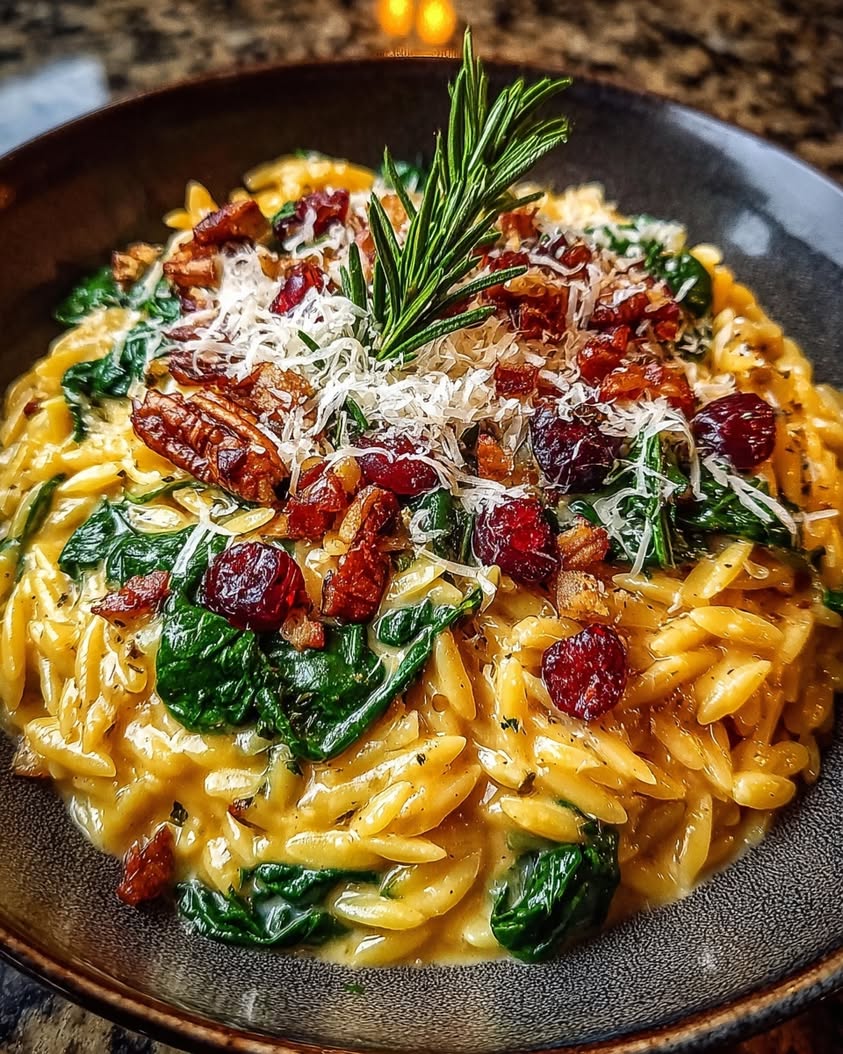
Creamy Cranberry and Spinach Orzo: A Festive One-Pot Vegetarian Wonder
Imagine a dish that perfectly captures the cozy essence of a holiday gathering yet is simple enough for a busy weeknight. This creamy cranberry and spinach orzo is exactly that kind of culinary magic. It combines tender orzo pasta with a luxuriously creamy sauce, vibrant pops of tart dried cranberries, and fresh spinach for a complete, satisfying meal. Ultimately, this one-pot wonder delivers restaurant-quality flavor with minimal cleanup, making it a true kitchen hero.
The beauty of this recipe lies in its harmonious balance. For instance, the rich, savory creaminess from the vegetable broth and Parmesan cheese beautifully offsets the bright, tangy sweetness of the cranberries. Meanwhile, the fresh spinach adds a lovely color contrast and a boost of nutrients. Every bite is a delightful textural journey, from the al dente pasta to the wilted greens and chewy fruit. Consequently, this dish feels indulgent and wholesome all at once.
Furthermore, this creamy cranberry and spinach orzo is incredibly versatile. It shines as a stunning vegetarian main course but also works wonderfully as a festive side dish alongside roasted chicken or turkey. Whether you are hosting a dinner party or simply need a quick family meal, this recipe promises to impress. Its vibrant colors and complex flavors belie the straightforward process, proving that fantastic food does not have to be complicated.
Quick Recipe Highlights
- Flavor Profile: This dish masterfully balances savory, creamy, and tangy notes. The rich Parmesan and garlic base is perfectly cut by the tart-sweet burst of cranberries, creating a sophisticated and comforting taste.
- Texture: Enjoy a delightful mix of creamy, chewy, and tender elements. The orzo cooks to a perfect al dente bite, suspended in a velvety sauce, while the cranberries add pleasant chew and the spinach wilts into silky ribbons.
- Aroma: As it cooks, your kitchen will fill with the irresistible scent of sautéed garlic and onion, followed by the savory aroma of simmering broth and Parmesan, finished with a fresh, green note from the spinach.
- Visual Appeal: This dish is a feast for the eyes with its striking color palette. The creamy white orzo is studded with ruby-red cranberries and emerald-green spinach, making it as beautiful on the plate as it is delicious.
- Skill Level Needed: This is a beginner-friendly recipe designed for success. If you can sauté vegetables and boil pasta, you can absolutely master this one-pot creamy cranberry and spinach orzo with confidence.
- Special Equipment: You only need one large skillet or saucepan with a lid. A standard 10 to 12-inch skillet or a 3 to 4-quart Dutch oven is perfect for ensuring everything cooks evenly and the sauce reduces properly.
Recipe Overview
- Difficulty Level: We rate this creamy cranberry and spinach orzo as “Easy” because it uses straightforward techniques like sautéing and simmering. Moreover, it is a forgiving one-pot meal where precise timing is less critical than in baking, for example. The steps are sequential and simple to follow, making it ideal for novice cooks seeking an impressive result.
- Category: This recipe fits perfectly into several categories. Primarily, it is a hearty vegetarian main dish. Simultaneously, it can serve as a elegant side dish or a potluck contribution. Its all-in-one nature also qualifies it as a fantastic comfort food and a quick dinner solution.
- Cuisine: While orzo is a pasta shape of Italian origin, this preparation is a modern fusion. It draws inspiration from American comfort food and incorporates ingredients popular in contemporary vegetarian cuisine. The use of cranberries adds a distinctly North American, festive twist to the dish.
- Cost: This is a very cost-effective meal. Pantry staples like garlic, onion, and broth form the base. Orzo and dried cranberries are inexpensive, and a small amount of Parmesan and cream cheese delivers maximum flavor impact. Fresh spinach is the only fresh produce needed, keeping the grocery bill low.
- Season: This creamy cranberry and spinach orzo is truly a year-round champion. However, its festive colors and flavors make it particularly popular during the fall and winter holidays. Conversely, its bright, tangy notes also feel refreshing in the spring and summer, especially with a squeeze of lemon.
- Occasion: It is incredibly versatile for any occasion. Serve it for a cozy family weeknight dinner, a casual weekend lunch, or as the star of a holiday feast. It is also an excellent choice for potlucks and dinner parties because it travels well and appeals to a wide audience.
Why You’ll Love This Recipe
First and foremost, the taste and texture of this creamy cranberry and spinach orzo are utterly captivating. Each forkful delivers a complex symphony of flavors. The initial savory, garlicky creaminess gives way to a surprising and delightful tang from the cranberries. Meanwhile, the spinach provides a mild, earthy balance. Texturally, the dish is equally engaging, with the tender pasta, velvety sauce, and little bursts of chewy fruit creating a satisfying mouthfeel that keeps you coming back for more.
From a practical standpoint, the convenience of this recipe is a major win. As a true one-pot meal, it minimizes both active cooking time and cleanup. You will sauté, simmer, and finish the entire dish in a single skillet. This streamlined process means you can have a gourmet-tasting dinner on the table in about thirty minutes. Furthermore, the ingredient list is simple and accessible, with no obscure or hard-to-find items required.
Nutritionally, this dish offers several advantages. Spinach is a powerhouse of vitamins A, C, and K, as well as iron and fiber. Using vegetable broth keeps it vegetarian, and you can control the sodium level by choosing a low-sodium variety. Orzo provides carbohydrates for energy, and the Parmesan cheese adds protein and calcium. By incorporating the cranberries and spinach, you are boosting the antioxidant and nutrient profile of a simple pasta dish significantly.
For social and entertaining purposes, this creamy cranberry and spinach orzo is a superstar. Its stunning visual presentation makes it look like you spent hours in the kitchen. It is a crowd-pleaser that comfortably serves a group and can be easily doubled for a larger party. Because it is a standalone vegetarian main, it simplifies menu planning when hosting guests with dietary preferences. Everyone will be asking for the recipe.
Finally, its cost-effectiveness and accessibility cannot be overstated. You can create a restaurant-quality meal for a fraction of the price of dining out. The ingredients are budget-friendly and available at any standard grocery store. This recipe demonstrates how a few simple, inexpensive components can be transformed into something truly special and delicious, making elegant eating achievable on any budget.
Historical Background and Cultural Significance
The story of this dish begins with its core component: orzo. Orzo, meaning “barley” in Italian, is a rice-shaped pasta that has been a staple in Mediterranean and Middle Eastern cuisines for centuries. Traditionally, it was used in soups, pilafs, and baked dishes. The concept of cooking orzo in a one-pot method, toasting it first like risotto rice, is a more modern technique that maximizes flavor absorption and creates a creamy texture without excessive starch wash-off.
Culturally, the inclusion of cranberries signals a North American influence. Native Americans used cranberries for food, dye, and medicine long before European settlers arrived. The tart berry became a staple of Thanksgiving and Christmas feasts, often in the form of sauces and relishes. Incorporating dried cranberries into a savory pasta dish is a contemporary innovation, blending Old World pasta traditions with New World ingredients to create a uniquely fusion cuisine.
The evolution of this recipe reflects broader food trends. The move towards one-pot meals speaks to our modern desire for efficiency and minimal cleanup. The rise of vegetarian and flexitarian eating has inspired cooks to create hearty, satisfying meatless mains. This creamy cranberry and spinach orzo sits at the intersection of these trends. It takes a classic comfort food format—creamy pasta—and updates it with vibrant, nutrient-dense additions for today’s palate.
Regional variations of this concept are endless. In Greece, one might find a similar dish with orzo, spinach, and lemon (hortopita-inspired flavors). In the American South, a cook might add toasted pecans for crunch. Some Italian versions could use radicchio instead of spinach for bitterness. The beauty of the formula is its adaptability. The basic template of creamy orzo welcomes regional ingredients, allowing the dish to take on local character while maintaining its comforting, cohesive essence.
Ingredient Deep Dive
Orzo is the foundation of this dish. This small, rice-shaped pasta is made from semolina flour, the same durum wheat used for high-quality dried pasta. Its unique shape allows it to cook quickly and absorb flavors beautifully, while also releasing starch to help thicken the cooking liquid into a sauce. When selecting orzo, look for a reputable Italian brand for the best texture and flavor. Store it in a cool, dry pantry. For a gluten-free version, rice-shaped gluten-free pasta or even actual arborio rice can be used, though cooking times will vary.
Dried cranberries provide the essential sweet-tart counterpoint. Most commercial dried cranberries are sweetened with sugar or fruit juice to balance their intense natural acidity. They are a concentrated source of antioxidants and fiber. For this recipe, standard sweetened dried cranberries work perfectly. If you prefer less sugar, seek out unsweetened or fruit-juice-sweetened varieties. For storage, keep them sealed in a cool, dark place. As a substitution, dried cherries or chopped dried apricots offer a similar chewy texture and fruity flavor, though the taste profile will shift.
Fresh spinach is the nutrient-packed green element. It wilts dramatically when heated, integrating seamlessly into the creamy sauce while adding vital vitamins and minerals. For the best texture and flavor, use fresh, crisp spinach leaves, either baby spinach or mature leaves with stems removed. Avoid pre-wilted or slimy spinach. You can substitute other hearty greens like kale (add it earlier to cook) or Swiss chard. Spinach should be stored loosely wrapped in a paper towel in the refrigerator’s crisper drawer and used within a few days for peak freshness.
Vegetable broth forms the liquid base for cooking the orzo and creating the sauce. It infuses the entire dish with savory depth. Using a high-quality, low-sodium broth is recommended, as it allows you to control the final salt level. Homemade broth is ideal, but a good store-bought brand works perfectly. As an alternative, chicken broth can be used for non-vegetarian versions. Always taste the broth before using it; if it is bland, consider adding a bay leaf or a pinch of herbs to the simmering pot to boost its flavor.
Parmesan cheese is the primary source of umami and creaminess. Authentic Parmigiano-Reggiano, aged for at least 24 months, has a complex, nutty flavor that elevates the entire dish. It is worth seeking out a block and grating it yourself, as pre-grated cheese often contains anti-caking agents that can make sauces grainy. For storage, wrap the block tightly in parchment paper and then foil. For a dairy-free version, nutritional yeast can provide a cheesy flavor, while a vegan Parmesan alternative or a tablespoon of white miso paste can add savory depth.
Common Mistakes to Avoid
- Overcooking the Orzo: Orzo continues to cook and absorb liquid even off the heat. Therefore, aim for an al dente texture while it is still in the pot. It should have a slight bite. If you cook it until completely soft in the pan, it will become mushy by the time you serve it.
- Using Pre-Grated Parmesan: Pre-grated cheese contains cellulose to prevent clumping. This additive can prevent the cheese from melting smoothly into the sauce, resulting in a grainy or slightly gritty texture. For a perfectly creamy sauce, always grate your Parmesan fresh from a block.
- Not Toasting the Orzo: Skipping the step of toasting the dry orzo in the pan with the aromatics is a missed opportunity. This quick toast deepens the pasta’s nutty flavor and helps it better absorb the broth later. Do not rush this step; cook until it is lightly golden and fragrant.
- Adding Spinach Too Early: If you add the spinach at the beginning of the simmer, it will overcook, lose its vibrant color, and become slimy. Always stir in the fresh spinach at the very end, allowing the residual heat to wilt it perfectly while retaining its nutrients and bright green hue.
- Insufficient Liquid: The orzo needs enough liquid to cook through and create a sauce. If you do not add the full amount of broth, the pasta will be undercooked and the dish will be too dry. Conversely, if there is too much liquid, the sauce will be watery. Follow the measurements closely.
- Neglecting to Season in Layers: Seasoning only at the end results in a flat-tasting dish. Instead, season each layer: salt the onions as they sauté, taste the broth, and season again after adding the cheese. This builds a deep, well-rounded flavor profile throughout the creamy cranberry and spinach orzo.
- Using a Pan That is Too Small: A crowded pan will not allow the orzo to toast evenly, and the ingredients will steam instead of sauté. Use a large, wide skillet or Dutch oven to give everything plenty of room. This ensures proper evaporation and sauce reduction for the ideal consistency.
- Stirring Infrequently While Simmering: Unlike risotto, you do not need to stir constantly, but you should stir occasionally to prevent the orzo from sticking to the bottom of the pan. This also helps the starch release evenly for a uniformly creamy sauce.
Essential Techniques
Sautéing Aromatics is the critical first step for building flavor. You will cook diced onion and minced garlic in olive oil until softened and fragrant. This process, called sweating, gently coaxes out their natural sugars and essential oils without browning them aggressively. The goal is a translucent, sweet base for your sauce. A common pitfall is rushing this step over too high heat, which can burn the garlic and make it bitter. Success is visible when the onions are soft and the garlic smells sweet, not sharp.
Toasting the Orzo is a simple technique with significant impact. After adding the dry orzo to the pan with the aromatics, you will cook it for a minute or two, stirring constantly. This toasts the exterior of the pasta, creating a deeper, nuttier flavor profile. More importantly, it helps seal the starch on the surface slightly, which leads to a creamier final texture as it cooks in the broth. The visual cue for success is a light golden color on some of the orzo grains and a warm, toasted aroma.
The One-Pot Simmer is the heart of the method. You will add the broth all at once, bring it to a boil, then reduce to a simmer and cover the pan. This allows the orzo to cook evenly and absorb the flavorful liquid. The lid traps steam, ensuring the pasta cooks through. The key is maintaining a gentle simmer—a rapid boil can break down the orzo too quickly. You will know it is working when most of the liquid is absorbed and the orzo is tender but still firm to the bite.
Finishing with Cheese and Spinach is about finesse. Once the orzo is cooked, you remove the pan from heat. Then, you stir in the cream cheese and Parmesan. The residual heat is sufficient to melt them into a smooth, cohesive sauce without the risk of the cheese breaking or becoming oily. Finally, you fold in the fresh spinach. The latent heat in the pasta and sauce will wilt the leaves perfectly in about a minute, preserving their color and delicate texture. This off-heat technique ensures a velvety sauce and vibrant greens.
Pro Tips for Perfect Creamy Cranberry and Spinach Orzo
Use the best Parmesan you can find. A high-quality, aged Parmigiano-Reggiano has a superior flavor and melts more smoothly than generic grated cheese. The difference in taste and sauce texture is immediately noticeable and well worth the small investment.
Reserve a little pasta water. If your sauce seems too thick after adding the cheese, stir in a tablespoon or two of the hot starchy pasta water. This magic liquid helps loosen the sauce to a silky consistency and helps bind the cheese to the orzo.
Toast the orzo until fragrant. Do not just warm it; cook it until you can smell a distinct nutty aroma. This deeper toast adds a layer of flavor that makes the final dish taste more complex and well-developed.
Let the dish rest before serving. After adding the final ingredients, cover the pan and let it sit off the heat for 2-3 minutes. This allows the flavors to meld together and the sauce to thicken slightly to the perfect coating consistency.
Add a splash of acid at the end. A small squeeze of fresh lemon juice or a teaspoon of white wine vinegar stirred in with the spinach can brighten all the flavors and cut through the richness, making the dish taste even more balanced and fresh.
Customize your add-ins. While cranberries and spinach are classic, feel free to add toasted pine nuts or walnuts for crunch, or a pinch of red pepper flakes with the garlic for a subtle heat. Make the recipe your own.
Variations and Adaptations
For regional variations, consider a Mediterranean twist by adding kalamata olives, sun-dried tomatoes, and feta cheese instead of Parmesan. A French-inspired version could use herbes de Provence and a splash of white wine. An American autumn variation might include roasted butternut squash cubes and sage, transforming the dish into a hearty fall celebration.
Seasonal adaptations are simple and effective. In spring, use fresh peas and asparagus tips. For summer, incorporate fresh basil and cherry tomatoes. In the heart of winter, swap spinach for heartier kale or roasted Brussels sprout leaves. The cranberries provide a year-round festive note, but you can adjust the supporting green vegetable to match what is fresh and local.
Dietary modifications are straightforward. For a vegan creamy cranberry and spinach orzo, use vegan butter or oil, omit the Parmesan, and use a vegan cream cheese alternative. Nutritional yeast can add a cheesy flavor. For a gluten-free version, use certified gluten-free orzo or a rice-shaped gluten-free pasta. Be sure to use a gluten-free vegetable broth as well.
Flavor variations can take this dish in new directions. Add cooked, shredded chicken or Italian sausage for a meaty version. Incorporate different cheeses like creamy goat cheese or sharp white cheddar. For an herbal note, stir in fresh dill, parsley, or thyme at the end. A teaspoon of lemon zest can add incredible brightness alongside the cranberries.
Texture modifications are easy to achieve. For extra creaminess, stir in a quarter cup of heavy cream or mascarpone with the cheese. For more chew, add toasted slivered almonds or chopped walnuts. To make it heartier, mix in a can of drained and rinsed white beans or chickpeas with the spinach.
Presentation alternatives can elevate the dish for guests. Serve it in a hollowed-out roasted acorn squash or pumpkin for a stunning edible bowl. For individual portions, bake the finished orzo in ramekins with a breadcrumb topping until golden. Garnish with extra grated Parmesan, a drizzle of high-quality olive oil, or fresh microgreens for a restaurant-worthy finish.
Serving and Presentation Guide
Plating techniques matter for visual appeal. For a casual family meal, serve the creamy cranberry and spinach orzo directly from the skillet at the table. For a more formal presentation, use a large, shallow serving bowl. Spoon the orzo into the center and gently mound it. Avoid overfilling the bowl; leave a clean rim for an elegant look. Using a contrasting colored bowl, like white or dark slate, makes the vibrant colors of the dish truly pop.
Garnishing adds the final professional touch. A simple sprinkle of freshly grated Parmesan cheese is classic. For color and freshness, add a scattering of chopped fresh parsley, chives, or basil leaves. A few extra whole dried cranberries on top highlight the key ingredient. For texture contrast, a light sprinkle of toasted pine nuts, pumpkin seeds, or breadcrumbs adds visual interest and a delightful crunch.
Traditional accompaniments for a pasta-based main are simple. A crisp green salad with a light vinaigrette balances the richness of the creamy orzo. For a heartier meal, serve it alongside roasted vegetables like broccoli or carrots. Garlic bread or a crusty baguette is perfect for soaking up any remaining sauce on the plate. These sides complement without competing with the main dish’s flavors.
Modern serving suggestions embrace its versatility. Serve it in smaller portions as a sophisticated side to grilled salmon or roasted chicken. Pack it cold for a unique and satisfying next-day lunch. You can even serve it as a warm dip with crostini for a party appetizer. Its all-in-one nature makes it adaptable to many dining scenarios beyond the standard dinner plate.
Temperature considerations are key. This dish is best served immediately while it is still warm and the sauce is at its creamiest. However, it also holds well for a short time. If you need to keep it warm before serving, place it in a covered dish in a warm oven (around 200°F) for up to 20 minutes. Add a splash of broth or water when reheating to refresh the sauce consistency.
Portion control is easy with this satisfying dish. As a main course, plan for about 1 to 1.5 cups per person. As a side dish, a half-cup to one-cup portion is sufficient. Remember, the orzo and cheese are filling. It is better to start with a modest portion and allow for seconds than to overload the plate initially. Leftovers reheat beautifully for another meal.
Wine and Beverage Pairing
Wine pairings should complement the dish’s creamy texture and tangy fruit notes. A crisp, acidic white wine like Sauvignon Blanc or Pinot Grigio cuts through the richness beautifully. For a more robust option, a light-bodied red with low tannins, such as Pinot Noir or Beaujolais, works surprisingly well with the earthy spinach and savory cheese. The key is to avoid heavily oaked or high-tannin wines that could clash with the cranberries’ acidity.
Non-alcoholic alternatives offer delightful pairing options. Sparkling water with a twist of lemon or lime cleanses the palate between bites. For a more flavorful pairing, try a tart cranberry spritzer made with unsweetened cranberry juice and club soda. An herbal iced tea, like mint or lemon verbena, provides a refreshing counterpoint to the creamy pasta. Even a simple glass of cold apple cider can echo the autumnal notes in the dish.
Coffee and tea pairings are excellent if serving this as a brunch or lunch item. A medium-roast coffee with low acidity will not compete with the dish’s flavors. For tea, consider a black tea like Earl Grey, whose citrusy bergamot notes can complement the cranberries, or a gentle green tea for a clean, palate-cleansing effect after the meal. Avoid overly bitter or smoky varieties that might overwhelm the delicate balance of the orzo.
Temperature considerations for beverages are straightforward. White wines and non-alcoholic spritzers should be served well-chilled. Light red wines are best served slightly cooler than room temperature. Water and tea can be served according to preference, but having a cool beverage available helps balance the warm, comforting nature of the pasta dish. Always offer water alongside any other beverage to keep palates refreshed.
Serving suggestions for a complete experience involve timing. Pour white wines or spritzers just before serving to ensure they are cold. Open red wines about 15 minutes before the meal to allow them to breathe slightly. For non-alcoholic options, consider serving them in elegant glassware to make the meal feel special. Ultimately, the best pairing is one that you and your guests enjoy, so do not be afraid to experiment with your favorite drinks.
Storage and Shelf Life
Storage methods are simple but important for food safety. Allow the creamy cranberry and spinach orzo to cool completely to room temperature before storing. Do not leave it out for more than two hours. Transfer the cooled pasta to an airtight container. Glass containers are ideal as they do not absorb odors and allow you to see the contents. You can also use high-quality plastic or stainless steel containers with tight-fitting lids.
Temperature requirements are strict for longevity. The stored orzo must be placed in the refrigerator promptly. The ideal refrigerator temperature is 40°F or below. Store the container on a shelf, not in the door, where temperatures fluctuate more. Properly stored, the dish will keep for 3 to 4 days. The spinach will soften further, and the pasta will continue to absorb moisture, so the texture will change slightly upon reheating.
Signs of spoilage are easy to identify. Discard the orzo if you notice an off or sour smell, which indicates bacterial growth. Visible mold, of course, means it must be thrown away. If the texture becomes excessively slimy or the color turns unusually dull or dark, it is best to err on the side of caution and not consume it. When in doubt, remember the old adage: when in doubt, throw it out.
Reheating instructions are key to restoring the dish’s creamy texture. The best method is on the stovetop. Place the desired portion in a skillet or saucepan over medium-low heat. Add a splash of vegetable broth, milk, or water to loosen the sauce. Stir frequently until heated through. You can also reheat it in the microwave in a microwave-safe dish, covered, stirring every 30 seconds and adding liquid as needed. Avoid high heat, which can cause the cheese to separate and become oily.
Freezing guidelines come with a caveat. You can freeze this dish, but be aware that the texture of the dairy and pasta may change upon thawing. The sauce might separate slightly, and the orzo can become softer. To freeze, cool completely, portion into freezer-safe bags or containers, and remove as much air as possible. It will keep for up to 2 months. Thaw overnight in the refrigerator before reheating gently on the stovetop with added liquid.
Make Ahead Strategies
A prep timeline can turn this quick meal into an instant dinner. The day before, you can dice the onion, mince the garlic, and grate the Parmesan cheese. Store each in separate airtight containers in the refrigerator. You can also measure out the orzo and dried cranberries. This “mise en place” reduces your active cooking time to just about 15 minutes, making a weeknight feast effortlessly achievable.
Storage between steps for partial prep is effective. If you cook the orzo fully a few hours ahead, stop before adding the cheese and spinach. Cool the cooked orzo mixture and refrigerate it. When ready to serve, reheat it gently on the stovetop, then proceed with stirring in the cheeses and fresh spinach off the heat. This preserves the vibrant green color and fresh texture of the spinach, which does not hold up well to being reheated.
Quality impact assessment is important for planning. The dish is truly best served immediately after cooking. However, making the components ahead has minimal negative impact. Pre-chopped onions and garlic are fine. The key is to add the final fresh elements—the cheese and spinach—at the last moment to ensure optimal creaminess and color. The flavor of the base actually improves slightly after resting, so partial make-ahead can enhance the taste.
Assembly tips for a dinner party reduce stress. You can complete the entire recipe up to the point of adding the spinach about 30 minutes before guests arrive. Keep the pot covered in a warm place. Just before serving, reheat it gently if needed, then remove from heat and stir in the spinach and an extra splash of broth to refresh the sauce. This allows you to be present with your guests instead of stuck in the kitchen.
Reheating guidelines for make-ahead portions are gentle. Always use low to medium heat and add liquid. The starches in the pasta continue to absorb moisture, so the sauce will thicken upon standing. Adding broth, water, or a bit of milk while reheating returns it to a silky, creamy consistency. Stir constantly to prevent sticking and ensure even heating throughout the pasta.
Fresh element additions are the final touch. If you make the base ahead, have your grated cheese and washed spinach ready to go. Consider garnishes like extra cranberries, nuts, or herbs pre-measured in small bowls. This “just-in-time” assembly guarantees that the finished creamy cranberry and spinach orzo has the perfect texture, vibrant appearance, and fresh flavor that makes it so special.
Scaling Instructions
Halving the recipe is simple for smaller households. Precisely divide all ingredient quantities in half. Use a medium-sized skillet (8-10 inches) instead of a large one to maintain the proper depth of ingredients for even cooking. The cooking times will be slightly shorter, so start checking the orzo for doneness around the 12-minute mark. The sauce may also thicken more quickly, so have a little extra broth on hand to adjust consistency if needed.
Doubling or tripling the recipe for a crowd requires minor adjustments. Double or triple all ingredients uniformly. You will need a very large pot or Dutch oven, or you may need to cook in batches if your cookware is not big enough. The simmering time may increase by a few minutes because of the larger volume. Stir more frequently to ensure even heat distribution and to prevent the bottom from scorching. Taste and adjust seasoning at the end, as larger batches sometimes need a bit more salt.
Equipment adjustments are crucial when scaling. The size of your pan directly affects cooking efficiency. For a single batch, a 10-12 inch skillet is perfect. For a double batch, a 5-quart Dutch oven or a large sauté pan is necessary. If tripling, consider using a stockpot. The goal is to have enough surface area for the orzo to toast and for liquid to evaporate properly, but not so much space that the sauce reduces too quickly.
Timing modifications are minimal but important. When increasing the recipe size, the initial sauté and toasting steps will take slightly longer because you are working with more food. The simmering time may extend by 2-5 minutes for a double batch as the larger volume of liquid takes longer to absorb. Always rely on the visual and textural cues—tender orzo and absorbed liquid—rather than strictly on the clock.
Storage considerations for scaled recipes are practical. If you make a large batch, plan to store leftovers promptly in multiple smaller containers. This allows them to cool faster and makes reheating individual portions easier. Remember that a large pot of hot pasta will take much longer to cool to room temperature, so spread it out in a shallow pan or divide it into containers before refrigerating to ensure it cools safely within the two-hour window.
Nutritional Deep Dive
A macro breakdown reveals a balanced profile. A serving provides a good source of complex carbohydrates from the orzo for sustained energy. The Parmesan and cream cheese contribute protein and fat, which promote satiety. The spinach adds minimal calories but significant volume and fiber. The dried cranberries contribute simple sugars and fiber. Overall, it is a satisfying meal that provides energy, building blocks for the body, and essential fatty acids.
The micronutrient analysis is impressive thanks to the spinach. Spinach is loaded with vitamin K for bone health, vitamin A for vision and immunity, and folate for cell function. It also provides iron and magnesium. The garlic and onions offer antioxidants and compounds that support cardiovascular health. Using a fortified vegetable broth can add additional B vitamins. The cranberries contribute vitamin C and various phytonutrients known for their antioxidant properties.
Health benefits extend beyond basic nutrition. The combination of fiber from the vegetables and whole grain orzo (if used) supports digestive health. The calcium from the cheese promotes bone strength. The antioxidants in the spinach, garlic, and cranberries help combat oxidative stress in the body. This dish is also inherently vegetarian, which aligns with dietary patterns associated with lower risks of certain chronic diseases when part of a balanced diet.
Dietary considerations are manageable. For those monitoring sodium, use low-sodium broth and limit added salt. For carbohydrate-conscious diets, portion control is key, or consider using a smaller amount of orzo and adding more spinach. The dish contains dairy, so it is not suitable for those with lactose intolerance or a dairy allergy without modification. It is naturally vegetarian and can be made vegan with simple swaps.
Portion analysis helps with mindful eating. One serving, approximately 1.5 cups, is a satisfying main course. Visually, it should fill a standard dinner plate without overflowing. Because the dish is rich and flavorful, it is easy to feel satisfied without needing an excessively large portion. Paying attention to your hunger cues and eating slowly can help you enjoy the meal fully without overindulging.
Weight management tips focus on balance. This dish is calorie-dense due to the pasta and cheese, so pair it with a large side salad filled with non-starchy vegetables to increase volume without adding many calories. You can also reduce the amount of cheese slightly or use a lighter cream cheese alternative. Most importantly, enjoy it as part of an overall varied diet that includes plenty of fruits, vegetables, lean proteins, and physical activity.
Dietary Adaptations
For a gluten-free version, the only critical swap is the orzo. Use a certified gluten-free orzo pasta, which is often made from a blend of rice and corn flours. Alternatively, you can use a small gluten-free pasta shape like ditalini or even substitute with arborio rice, cooking it using a risotto method. Ensure your vegetable broth is certified gluten-free, as some brands may contain gluten-derived additives.
A dairy-free adaptation creates a vegan creamy cranberry and spinach orzo. Replace the butter with olive oil. Omit the Parmesan and cream cheese. For creaminess, use a quarter cup of raw cashews blended with a half cup of broth until smooth, or stir in a vegan cream cheese alternative. For a cheesy flavor, add two tablespoons of nutritional yeast. The result will be slightly different but still rich and delicious.
A vegan version follows the dairy-free guidelines above. Additionally
Print
Creamy Cranberry and Spinach Orzo
Description
A comforting one-pot dish with tender orzo, sweet dried cranberries, fresh spinach, and a rich, creamy Parmesan sauce.
Ingredients
For the Crust:
- 1 cup uncooked orzo pasta
- 2 tablespoons olive oil
- 1 small onion, finely chopped
- 2 cloves garlic, minced
- 2 cups fresh spinach, roughly chopped
- 1/2 cup dried cranberries
- 2 cups vegetable broth
- 1/2 cup heavy cream
- 1/2 cup grated Parmesan cheese
- Salt and black pepper to taste
- 1/4 teaspoon red pepper flakes (optional)
Instructions
1. Prepare the Crust:
- Heat olive oil in a large skillet over medium heat. Add onion and cook until softened, about 3-4 minutes.
- Stir in garlic and cook for 30 seconds until fragrant. Add orzo and toast for 1-2 minutes, stirring frequently.
- Pour in vegetable broth and bring to a simmer. Cook for 8-10 minutes, stirring occasionally, until orzo is tender and liquid is mostly absorbed.
- Reduce heat to low. Stir in heavy cream, Parmesan cheese, dried cranberries, and spinach. Cook until spinach wilts and sauce thickens, about 3-4 minutes.
- Season with salt, black pepper, and red pepper flakes if using. Serve warm.
Notes
You can customize the seasonings to taste.

I’m Shaykee—born in Morocco, seasoned across continents. From airplane galleys to home kitchens, I share the flavors and stories that shaped my journey.