
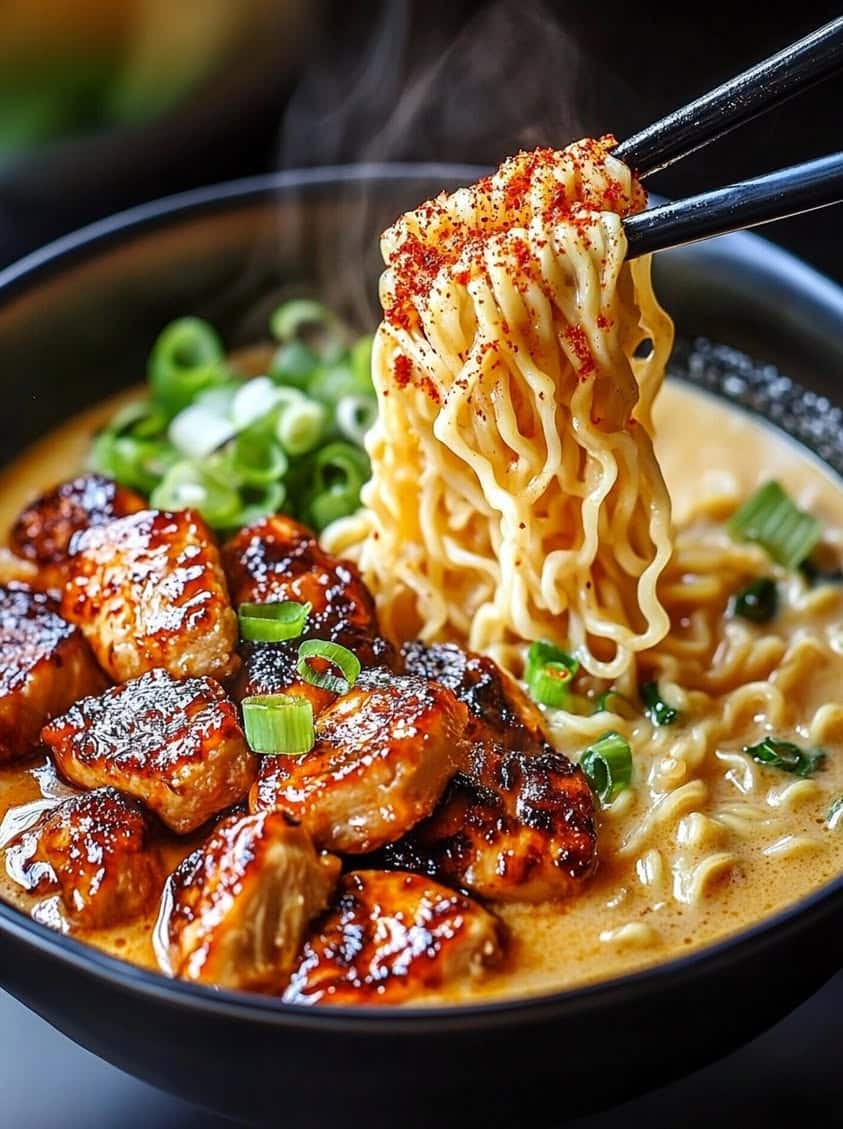
Creamy Fiery Garlic Chicken Ramen with Charred Glazed Chicken: A Spicy, Savory Comfort Food Upgrade
Imagine a bowl of ramen that delivers a perfect storm of flavor and comfort. This creamy fiery garlic chicken ramen with charred glazed chicken is exactly that. It starts with a rich, velvety broth infused with a serious kick of garlic and chili. Then, it gets topped with succulent chicken pieces that have been caramelized in a sweet and savory glaze. Ultimately, this dish transforms your weeknight dinner into a restaurant-worthy experience without the fuss.
This recipe masterfully balances heat, creaminess, and umami. The fiery element comes from a blend of gochujang and fresh garlic, which creates a deep, complex spice. Meanwhile, the creaminess from the coconut milk tames the heat just enough, making every spoonful addictive. Additionally, the charred glazed chicken adds a smoky sweetness that contrasts beautifully with the spicy broth. Consequently, each component works in harmony to create a truly unforgettable meal.
Furthermore, this creamy fiery garlic chicken ramen is designed for the modern home cook. It uses accessible ingredients and straightforward techniques to achieve incredible depth of flavor. Whether you are craving something spicy or simply need a hearty, satisfying dish, this ramen delivers. It is a guaranteed crowd-pleaser that will have everyone asking for seconds.
Quick Recipe Highlights
- Flavor Profile: This dish offers a bold symphony of tastes. The initial hit is a fiery garlic punch, quickly mellowed by a luxurious, creamy broth. Finally, the sweet and smoky char from the glazed chicken brings a delightful finish.
- Texture: You will experience a wonderful contrast in every bite. The broth is silky and smooth, while the ramen noodles provide a satisfying chew. Moreover, the charred chicken offers a slightly crispy exterior with a tender, juicy interior.
- Aroma: As it cooks, your kitchen will fill with an irresistible scent. First, you will smell the sizzling garlic and ginger. Then, the sweet glaze caramelizing on the chicken adds a smoky, almost candied note to the air.
- Visual Appeal: This bowl is a feast for the eyes. The creamy orange-red broth cradles the noodles, topped with glossy, dark-amber chicken and vibrant green scallions. A perfectly soft-boiled egg adds a final touch of elegance.
- Skill Level Needed: This is an intermediate-friendly recipe. It requires multitasking, like managing the chicken glaze while building the broth. However, with clear instructions, even confident beginners can achieve excellent results.
- Special Equipment: You need a large pot for the broth and a large skillet or grill pan for the chicken. A good chef’s knife for mincing garlic and ginger is also essential for building the foundational flavors.
Recipe Overview
- Difficulty Level: We rate this recipe as medium difficulty. The process involves coordinating two main components simultaneously: the charred glazed chicken and the creamy broth. You need to pay attention to timing to prevent the garlic from burning and to achieve the perfect caramelization on the chicken. However, the steps are logical and sequential, making it very manageable for a cook with some experience.
- Category: This dish falls squarely into the comfort food category, but with a gourmet twist. It is a hearty main course, perfect for dinner. Additionally, it can be considered a fusion dish, blending elements from different culinary traditions into one cohesive bowl.
- Cuisine: This is a creative Asian fusion recipe. It draws inspiration from Japanese ramen, particularly in the use of a rich, savory broth and wheat noodles. Meanwhile, the fiery garlic and gochujang paste introduce Korean flavors. The creamy coconut milk base adds a subtle Southeast Asian or modern twist.
- Cost: The cost is moderate and highly efficient. Chicken thighs are an affordable protein choice. Ingredients like coconut milk, gochujang, and ramen noodles are pantry staples for many, or they are a worthwhile one-time investment. Overall, you can create four restaurant-quality portions for a fraction of the price of eating out.
- Season: This creamy fiery garlic chicken ramen is fantastic year-round. It provides warming comfort during the colder fall and winter months. Conversely, the spicy kick can also be refreshing and appetite-stimulating in the summer, especially when enjoyed with a cold beverage.
- Occasion: It is ideal for a cozy weekend dinner, a casual date night at home, or when you want to impress guests with your cooking skills. Furthermore, it makes for a spectacular solo treat when you are craving something special and indulgent.
Why You’ll Love This Recipe
First and foremost, the taste and texture of this creamy fiery garlic chicken ramen are utterly captivating. The initial sensation is a warm, building heat from the garlic and gochujang, which is immediately soothed by the lush, creamy coconut milk broth. Then, you bite into the charred glazed chicken, which offers a burst of sweet, smoky, and savory flavors. The ramen noodles soak up all this incredible broth, ensuring that every single component delivers maximum flavor. Ultimately, it is a complex, restaurant-quality dish that satisfies on every level.
From a convenience standpoint, this recipe is a game-changer for weeknight dinners. It comes together in about forty minutes, which is impressive for a dish with such deep flavor. The prep work is straightforward, mostly involving chopping and mincing. Moreover, the cooking process is active and engaging but not overly complicated. You will have a stunning, hearty meal on the table in less time than it takes for delivery to arrive, making it a perfect solution for busy evenings.
Nutritionally, this bowl offers a good balance. Chicken thighs provide high-quality protein and essential B vitamins. Garlic and ginger are renowned for their anti-inflammatory and immune-boosting properties. Coconut milk adds healthy fats that help your body absorb the fat-soluble vitamins from the other ingredients. By using a controlled amount of glaze and broth, you can enjoy a rich, decadent-tasting meal that is still wholesome and satisfying.
For social and entertaining value, this creamy fiery garlic chicken ramen is a true showstopper. Presenting individual bowls with beautifully arranged toppings creates an immediate “wow” factor. It is interactive and personal, allowing guests to customize their spice level with extra chili oil or toppings. Serving this dish signals that you have put thought and care into the meal, making any dinner feel like a special occasion. It is a fantastic way to gather friends and family around the table for a memorable experience.
Finally, this recipe is remarkably cost-effective and accessible. It transforms inexpensive ingredients like chicken thighs, noodles, and basic aromatics into something extraordinary. Many of the sauce components, like soy sauce and sesame oil, are versatile pantry staples you will use again. Therefore, you get incredible flavor and visual appeal without needing to purchase expensive or hard-to-find specialty items. This approach makes gourmet-style cooking achievable for any home chef on a budget.
Historical Background and Cultural Significance
The story of ramen begins in China, with noodles being introduced to Japan in the late 19th or early 20th century. The Japanese adaptation, however, is what created the global phenomenon we know today. Initially sold by street vendors, ramen evolved into a national obsession, with regional styles developing based on local broths, noodles, and toppings. This creamy fiery garlic chicken ramen is a modern, fusion interpretation that reflects today’s global pantry, borrowing flavors from across Asia and beyond to create something new and exciting.
In Japan, ramen holds significant cultural importance as a fast, affordable, and deeply satisfying meal. It is a dish of the people, enjoyed by students, salarymen, and families alike. Each region boasts its own signature style, from the miso ramen of Hokkaido to the tonkotsu ramen of Kyushu. This diversity showcases the Japanese culinary principle of perfecting a simple concept. Our recipe honors this spirit of adaptation and personalization, encouraging cooks to make the bowl their own.
The evolution of this specific recipe mirrors broader food trends. The incorporation of gochujang, a fermented Korean chili paste, speaks to the growing popularity and accessibility of Korean flavors worldwide. Similarly, using coconut milk for creaminess is a nod to both Thai influences and the demand for dairy-free alternatives. This fusion approach is not about authenticity to one culture but about creating a delicious synthesis that respects its ingredients’ origins while forging a new path.
Regional variations of ramen are endless, and this recipe invites its own adaptations. In Korea, a similar creamy, spicy soup might be made with udon noodles. In Thailand, the broth might feature lemongrass and lime leaves. Our version sits comfortably within this global conversation. You could easily adapt it by using different noodles, adjusting the level of heat, or swapping the protein. This flexibility is the true beauty of ramen, making it a canvas for culinary creativity across cultures.
Ingredient Deep Dive
Chicken thighs are the ideal choice for this creamy fiery garlic chicken ramen. Culturally, dark meat chicken is prized in many Asian cuisines for its richer flavor and juiciness, which stands up well to bold sauces and longer cooking. Nutritionally, thighs offer more iron and zinc than breast meat. When selecting them, look for pieces with a good balance of meat and a thin layer of fat. For storage, keep them refrigerated and use within two days, or freeze for longer. If you must substitute, chicken breasts will work, but be vigilant to avoid overcooking.
Gochujang, the Korean fermented chili paste, is the soul of the “fiery” element. Its history dates back centuries in Korean cuisine, valued for its deep, sweet, spicy, and umami-rich flavor profile. Nutritionally, the fermentation process may promote gut health. For the best results, seek out authentic Korean brands in a tub or squeeze bottle. It lasts for months in the refrigerator. A potential substitution in a pinch is a mix of miso paste, chili powder, and a touch of sugar, though the unique fermented flavor will be different.
Fresh garlic and ginger are non-negotiable aromatics. Garlic has been used medicinally and culinarily for thousands of years across countless cultures. Ginger, originating in Southeast Asia, is celebrated for its digestive properties. Both provide immense health benefits, including anti-inflammatory compounds. Select firm, heavy heads of garlic and ginger roots with smooth, taut skin. Store them in a cool, dry place. There is no true substitute for fresh garlic and ginger here; powdered versions lack the necessary pungent, bright flavor that forms the broth’s foundation.
Full-fat coconut milk provides the luxurious “creamy” texture. While not traditional in Japanese ramen, it is a staple in Southeast Asian curries and soups. It adds rich, healthy fats and a subtle sweetness that balances the heat. Shake the can well before opening. For the creamiest result, do not use “lite” coconut milk. It can be stored in the pantry until opened, then refrigerated. For a dairy-based alternative, heavy cream can be used, but the flavor profile will shift significantly, losing the tropical nuance.
Ramen noodles are the hearty backbone of the dish. While instant ramen noodles are convenient, using fresh or dried ramen noodles from an Asian market will dramatically improve texture and authenticity. They are made from wheat flour, water, salt, and an alkaline agent called kansui, which gives them their distinctive springy chew. Cook them separately according to package directions to avoid clouding your beautiful broth. As a substitution, udon or soba noodles work, though the eating experience will change.
Common Mistakes to Avoid
- Burning the Garlic and Ginger: This is the most critical error. Garlic burns in seconds and turns bitter, ruining the entire broth base. Always cook them over medium-low heat just until fragrant, which takes only about 30 to 60 seconds. Have your next liquid ingredient ready to pour in and stop the cooking process immediately.
- Overcrowding the Chicken Pan: If you put all the chicken in the pan at once, it will steam instead of sear. You will miss out on the essential caramelized, charred flavor. Cook the chicken in batches if necessary to ensure each piece has contact with the hot surface for proper browning.
- Using “Lite” Coconut Milk: Lite coconut milk has more water and less coconut cream. Using it will result in a thin, watery broth that lacks the luxurious, creamy body the recipe promises. Always opt for full-fat canned coconut milk for the right texture and richness.
- Overcooking the Ramen Noodles: Noodles cooked directly in the broth will continue to absorb liquid and become mushy. Always cook your noodles separately according to package directions, then rinse briefly to stop the cooking. Add them to the bowl just before serving to maintain perfect texture.
- Neglecting to Deglaze the Chicken Pan: After cooking the chicken, those browned bits stuck to the pan are pure flavor. Failing to scrape them up with a little broth or water means leaving the best part behind. This fond is essential for building a deep, complex sauce for the chicken.
- Skipping the Taste Test Before Serving: Spice levels in gochujang and chili garlic sauce can vary by brand. Not tasting and adjusting the broth at the end is a missed opportunity. You may need an extra pinch of salt, a squeeze of lime for acidity, or a drizzle of honey to perfect the balance.
- Adding the Glaze Too Early: If you add the sweet glaze to the chicken at the beginning of cooking, the sugars will burn before the chicken is cooked through. Instead, cook the chicken most of the way through first, then add the glaze in the last few minutes to let it caramelize without burning.
- Using Pre-Minced Jarred Garlic: The flavor of fresh minced garlic is vastly superior to the often-harsh, preserved taste of jarred garlic. Taking the extra minute to mince fresh cloves makes a monumental difference in the vibrancy and authenticity of the fiery garlic flavor.
Essential Techniques
The first essential technique is building a flavor base by sautéing aromatics. This process, often called “sweating,” involves cooking minced garlic and ginger in oil over gentle heat. The goal is to release their volatile oils and mellow their raw bite without browning them. This step creates the foundational layer of flavor for your entire broth. A common pitfall is using heat that is too high, which causes immediate burning. The visual cue for success is a powerfully fragrant aroma and the garlic turning just translucent, not golden brown.
Mastering the char on the glazed chicken is another crucial skill. This involves two stages: first, achieving a good sear on the chicken to develop flavor and texture, and second, applying and caramelizing the glaze. The importance lies in creating a sweet, smoky, slightly crispy contrast to the tender meat. To master it, ensure your pan is properly preheated and pat the chicken dry before adding it. A common mistake is moving the chicken too soon; let it develop a crust. The visual cue is a deep golden-brown sear that releases easily from the pan.
Creating an emulsified, creamy broth is the final key technique. After sautéing the aromatics and tomato paste, you will gradually whisk in the coconut milk and chicken broth. The importance is to create a smooth, unified sauce without separation. Constant whisking as you add the liquids helps incorporate the fat and solids evenly. A common pitfall is dumping everything in at once, which can lead to a broken or grainy texture. The visual cue for success is a homogenous, velvety broth that coats the back of a spoon.
Pro Tips for Perfect Creamy Fiery Garlic Chicken Ramen
For the most intense garlic flavor, use a microplane to grate the garlic directly into the hot oil. This creates a fine paste that disperses evenly throughout the broth, maximizing its impact in every spoonful.
Marinate your chicken thighs for 30 minutes in a tablespoon of soy sauce and a teaspoon of cornstarch before cooking. This simple step adds an extra layer of savory flavor and helps create a delicate crust on the chicken.
To achieve restaurant-style ramen eggs, soft-boil eggs for exactly 6.5 minutes, then immediately transfer them to an ice bath. Peel them carefully and marinate them in a mix of soy sauce, mirin, and water for a few hours or overnight.
If your broth is too spicy, balance it with a teaspoon of brown sugar or honey. Conversely, if you want more heat, add a drizzle of chili oil or a pinch of crushed red pepper flakes at the end.
Prepare all your toppings (scallions, cilantro, sesame seeds) before you start cooking. This “mise en place” makes the final assembly quick and stress-free, ensuring your noodles and broth are served piping hot.
For a deeper, more savory broth, use homemade chicken stock if you have it. The gelatin in homemade stock gives the broth a richer mouthfeel that complements the coconut cream beautifully.
Toast your sesame seeds in a dry pan for a minute until fragrant before sprinkling them on top. This small step unlocks their nutty oil and adds a significant flavor and aroma boost.
Serve the ramen in pre-warmed bowls. Simply fill your serving bowls with hot water while you finish the dish, then dump it out and dry them quickly. This keeps the ramen hot from the first bite to the last.
Variations and Adaptations
For regional variations, you can take this creamy fiery garlic chicken ramen in numerous directions. A Thai-inspired version might include lemongrass, galangal, and a big squeeze of lime juice at the end. A Japanese curry ramen twist could involve adding a tablespoon of Japanese curry roux to the broth. For a Korean vibe, add kimchi and its juice to the broth and top with a slice of American cheese for a classic “army stew” fusion.
Seasonal adaptations are easy and fun. In spring, add fresh snap peas and asparagus tips as toppings. For summer, use lighter coconut milk and top with fresh corn and cherry tomatoes. In fall, incorporate roasted sweet potato or squash into the broth for sweetness. During winter, add extra chili for warmth and top with hearty greens like bok choy.
Dietary modifications are straightforward. For a gluten-free version, use tamari instead of soy sauce and ensure your ramen noodles are certified gluten-free. To make it dairy-free, it already is, as coconut milk is used. For a vegan adaptation, replace the chicken with pan-fried tofu or king oyster mushrooms and use vegetable broth. The charred glaze works wonderfully on crispy tofu slabs.
Flavor variations can cater to different palates. For a richer, earthier taste, add a teaspoon of miso paste to the broth. For a tangier profile, stir in a tablespoon of rice vinegar at the end. If you prefer a nuttier flavor, use a tablespoon of smooth peanut butter or tahini to enrich the broth. For a smoky note, add a pinch of smoked paprika to the chicken glaze.
Texture modifications can change the eating experience. For a thicker, stew-like consistency, let the broth simmer and reduce for longer. For a lighter soup, use a bit more chicken broth. If you prefer a different noodle, swap ramen for chewy udon, delicate somen, or even zucchini noodles for a low-carb option. Adding crunchy toppings like bean sprouts or fried shallots at the end provides a contrasting crunch.
Presentation alternatives can elevate the dish visually. Serve the ramen in a traditional Japanese ramen bowl for authenticity. For a deconstructed version, present the broth, noodles, chicken, and toppings separately and let guests assemble their own bowls. For a fun, casual approach, serve it family-style in a large pot at the center of the table with all toppings on the side.
Serving and Presentation Guide
Plating this creamy fiery garlic chicken ramen is an art that enhances the experience. Start by placing a neat nest of cooked noodles in the bottom of a deep, wide bowl. Carefully ladle the hot, creamy broth around the noodles, ensuring they are mostly submerged but still visible. Artfully arrange the slices of charred glazed chicken on one side of the bowl, leaning against the noodle mound. This creates height and visual interest.
Garnishing is where you add color, freshness, and texture. Place a halved soft-boiled egg with its vibrant yolk facing up. Scatter finely sliced scallions (both green and white parts) and fresh cilantro leaves over the surface. A sprinkle of toasted sesame seeds adds a final touch. For a dramatic flair, add a thin slice of fresh red chili or a small mound of beni shoga (pickled ginger).
Traditional accompaniments are minimal but impactful. A small dish of chili oil or rayu allows guests to adjust their own heat level. A side of simple pickled vegetables, like cucumber or radish, provides a crisp, acidic counterpoint to the rich broth. In a more casual setting, a simple green salad with a ginger-sesame dressing complements the meal perfectly.
Modern serving suggestions can make the meal interactive. Set up a “ramen bar” with small bowls of additional toppings: corn, bamboo shoots, nori strips, bean sprouts, and extra garlic chips. This is especially fun for gatherings. For an elegant dinner party, serve the ramen as a substantial main course after a light starter like a miso soup or sunomono salad.
Temperature considerations are paramount. Every component must be served piping hot, except for the fresh toppings. Warm your bowls, have your broth at a gentle simmer, and cook your noodles at the last possible moment. The hot broth will slightly warm the cold toppings when added, creating a perfect temperature balance. Never let the assembled bowl sit for long before serving, as the noodles will continue to soften.
Portion control is naturally built into the recipe, which yields four generous servings. For a lighter meal, you can stretch it to five or six servings by adding extra noodles and a bit more broth. When serving family-style, provide a large ladle for the broth and tongs for the noodles to help guests serve themselves appropriately. Remember, the dish is rich, so a single bowl is typically very satisfying.
Wine and Beverage Pairing
Selecting the right wine for this creamy fiery garlic chicken ramen requires consideration of its bold flavors. A slightly sweet, aromatic white wine like an off-dry Riesling or Gewürztraminer is an excellent choice. Their natural sweetness and floral notes can stand up to the spice and complement the dish’s sweetness. Alternatively, a fruity, low-tannin red like a Beaujolais or a chilled Lambrusco can work surprisingly well, as their bright acidity and berry flavors cut through the richness without clashing with the garlic and spice.
For non-alcoholic alternatives, consider drinks that cool and refresh the palate. A sparkling ginger beer provides a spicy-sweet echo of the ginger in the dish. Iced jasmine or green tea offers a clean, slightly bitter contrast that resets your taste buds between bites. A classic lemonade, or better yet, a Korean-style honey citron tea (yuja cha) served cold, provides sweetness and citrus to balance the heat and creaminess perfectly.
If you prefer coffee or tea after the meal, opt for lighter roasts and varieties. A delicate green tea, such as sencha, helps cleanse the palate with its vegetal notes. For coffee, a bright, acidic pour-over or a cold brew can be refreshing without overwhelming your senses after a flavorful meal. Avoid heavy, bitter dark roasts that might compete with the lingering spices.
Temperature is a key factor in beverage pairing. Icy cold drinks are generally the best match for spicy food, as the cold sensation provides immediate relief from the heat. Ensure your beers are well-chilled, your white wines are properly refrigerated, and your non-alcoholic options are served over ice. This contrast between the hot ramen and the cold drink is part of the enjoyable experience.
General serving suggestions include offering a variety of options to suit different preferences. Place a bottle of chilled Riesling, a six-pack of Asian lager, and a pitcher of iced citrus tea on the table. Encourage guests to take small sips of water between bites of ramen to fully appreciate the layered flavors without the spice becoming overwhelming. The goal is to choose beverages that complement and refresh, not overpower, the star of the show: the ramen itself.
Storage and Shelf Life
Proper storage is essential for maintaining the quality and safety of your creamy fiery garlic chicken ramen. The key is to store the components separately whenever possible. Place the cooled broth in an airtight container and refrigerate it for up to 3 days. Store any leftover cooked noodles in a separate container with a tiny bit of oil to prevent sticking; they will keep for 2 days. The charred glazed chicken can be refrigerated in its own container for up to 3 days as well.
Temperature requirements are strict for food safety. All cooked components must be cooled to room temperature within two hours of cooking before being refrigerated. Do not leave the assembled ramen sitting out. The broth and chicken should be stored at or below 40°F (4°C). When reheating, bring the broth to a full, rolling boil to ensure it is safe to eat and to re-emulsify the creamy texture.
Container recommendations include glass or BPA-free plastic containers with tight-fitting lids. For the broth, a mason jar or a dedicated soup container works well. Avoid storing the acidic, spicy broth in reactive metal containers. If you must store a fully assembled bowl (though not ideal), use a very large container to minimize compression of the noodles, which will continue to absorb broth and become very soft.
Signs of spoilage are important to recognize. If the broth develops an off or sour smell, visible mold, or an unusual texture, discard it immediately. The chicken should be reheated until steaming hot throughout. If the noodles become slimy or discolored, they have gone bad. When in doubt, it is always safer to throw it out, especially with dairy-like coconut products.
Reheating instructions are simple but crucial. Gently reheat the broth in a saucepan over medium heat, stirring occasionally. If it has separated, a quick whisk will bring it back together. Reheat the chicken in a skillet with a splash of water or broth to prevent drying out, or microwave it covered. Re-cook the noodles by dipping them in boiling water for just 10-15 seconds to refresh them, then assemble your bowl fresh.
Freezing guidelines apply best to the broth alone. The creamy broth can be frozen for up to 2 months. However, note that the coconut milk may separate slightly upon thawing; a vigorous whisk or blend after reheating will fix this. Do not freeze the cooked noodles, as they will become mushy and disintegrate upon reheating. The cooked chicken can be frozen but may lose some texture. Thaw all components in the refrigerator before reheating.
Make Ahead Strategies
A smart prep timeline can turn this dish into a 15-minute weeknight meal. Two days ahead, you can make the flavorful glaze for the chicken and store it in the refrigerator. The day before, marinate the chicken thighs in the soy sauce and cornstarch mixture. You can also fully prepare the soft-boiled eggs and marinate them. Chop all your vegetables (scallions, cilantro) and store them in separate containers in the fridge. This front-loaded work makes the final cooking process incredibly fast and smooth.
Storage between steps is straightforward with proper planning. Keep the prepared glaze in a sealed jar. Store the marinating chicken in a zip-top bag or container on the bottom shelf of your fridge to prevent cross-contamination. Keep your pre-chopped veggies in containers lined with a paper towel to absorb excess moisture and maintain crispness. Having everything organized and ready is the secret to stress-free cooking.
The quality impact of make-ahead steps is generally positive. Marinating the chicken only improves its flavor and tenderness. Making the glaze ahead allows the flavors to meld. The marinated eggs become more flavorful over time. The only component that does not hold well pre-cooked is the ramen noodles, which should always be cooked fresh. The broth can be made a day ahead, but its texture is best when freshly emulsified.
Assembly tips for a make-ahead meal are key. When ready to serve, start by reheating your broth. While it heats, quickly sear your pre-marinated chicken and brush with the pre-made glaze. Cook a fresh batch of noodles. Then, assemble each bowl in the standard order: noodles, hot broth, sliced chicken, and finally, all your fresh, cold toppings. This method ensures every element is at its ideal temperature and texture.
Reheating guidelines for pre-made components are simple. Gently warm the broth on the stovetop, whisking to recombine. Reheat the chicken in a skillet to restore its charred exterior, adding a splash of the glaze at the end to refresh the shine. Do not microwave the chicken if you want to preserve its texture. The goal is to make the final dish taste as fresh as if you had made it all at once.
Fresh element additions are what bring the make-ahead dish to life. Even if you prepped everything else, always add the fresh scallions, cilantro, and sesame seeds at the very last moment. If you made eggs ahead, take them out of the marinade and slice them just before serving. This final touch of fresh, vibrant ingredients makes the bowl look and taste freshly made.
Scaling Instructions
Halving the recipe for one or two people is simple. Use a kitchen scale for the most accurate halving of ingredients like chicken, coconut milk, and broth. The cooking times for the chicken and broth will remain roughly the same, as they depend more on heat transfer than volume. You may need to use a smaller skillet for the chicken to maintain proper contact with the pan. Be mindful that aromatics like garlic and ginger are potent, so you might only reduce them by a third rather than half, according to your taste.
Doubling or tripling the recipe for a crowd requires some adjustments. Use a large Dutch oven or stockpot for the broth to ensure even heating. Cook the chicken in multiple batches to avoid steaming; you can keep cooked batches warm on a sheet pan in a low oven (200°F). You may need to increase the simmering time for the broth slightly to allow the flavors to develop fully with the larger volume. Have a large pot of boiling water ready to cook multiple batches of noodles just before serving.
Equipment adjustments are necessary when scaling. For a double batch, your standard large skillet might not hold all the chicken at once without overcrowding. Plan to use two skillets or cook in sequential batches. For the broth, ensure your pot has enough headspace to prevent boiling over when you add the liquids. When tripling, consider using two pots for the broth to manage the volume more easily and maintain control over the seasoning.
Timing modifications are minimal when scaling up or down. The active cooking time for steps like sautéing garlic or reducing the glaze remains constant. However, the time it takes for a larger volume of broth to come to a simmer will increase. Start the broth earlier if you are cooking for a crowd. When halving, the process will feel quicker simply because there is less food to manage, but the fundamental clock for each step does not change dramatically.
Storage considerations become more important with larger batches. If you have a lot of leftovers, dividing them into meal-sized portions before refrigerating or freezing is wise. This makes reheating easier and safer. Label containers with the date. Remember that a large pot of hot broth will take longer to cool to a safe refrigeration temperature; consider dividing it into several shallow containers to speed up the cooling process and prevent bacterial growth.
Nutritional Deep Dive
A macro breakdown of this creamy fiery garlic chicken ramen reveals a balanced meal. One serving provides a substantial amount of high-quality protein from the chicken thighs, essential for muscle repair and satiety. The carbohydrates come primarily from the ramen noodles, offering energy. The healthy fats from the coconut milk and the chicken skin contribute to a feeling of fullness and aid in the absorption of fat-soluble vitamins. This combination makes for a satisfying meal that fuels your body effectively.
The micronutrient analysis is impressive. Garlic and ginger are powerhouses of antioxidants and anti-inflammatory compounds like allicin and gingerol. Coconut milk provides minerals like manganese and copper. Chicken thighs offer iron, zinc, and B vitamins, particularly B12 and niacin. The scallions and cilantro add vitamins A, C, and K. Together, these ingredients create a nutrient-dense bowl that supports immune function, energy metabolism, and overall cellular health.
Specific health benefits are linked to the key ingredients. The capsaicin in the gochujang and chili garlic sauce may boost metabolism and provide pain relief. The compounds in garlic support cardiovascular health. The medium-chain triglycerides (MCTs) in coconut milk are easily used for energy by the body. The protein aids in tissue building and repair. Therefore, this dish is not just comforting but can be part of an overall healthy diet when enjoyed in moderation.
Dietary considerations are important for individuals with specific needs. The dish is naturally dairy-free and can be made gluten-free with simple swaps. It is not suitable for a strict keto or very low-carb diet due to the noodles and the sugar in the glaze. For those watching sodium intake, use low-sodium soy sauce and broth. The dish contains common allergens like wheat (in noodles) and soy, so substitutions would be necessary for those with allergies.
Portion analysis shows that one serving as described is generous and complete. It is designed to be a standalone meal. If you are managing your weight, you could slightly reduce the portion of noodles and increase the volume of broth and chicken to lower the overall carbohydrate count while maintaining protein and satisfaction. Adding extra non-starchy vegetable toppings like bok choy or mushrooms can also increase volume and nutrients without adding many calories.
Weight management tips include being mindful of the glaze and the coconut milk, which are the most calorie-dense components. You can lightly brush the chicken with glaze instead of drowning it. Using “light” coconut milk is not recommended for flavor, but you could use half full-fat coconut milk and half broth. Listening to your body’s fullness cues is key; the rich broth is very satisfying, so you may find yourself naturally eating slower and feeling full before the bowl is empty.
Dietary Adaptations
For a gluten-free version of this creamy fiery garlic chicken ramen, two simple swaps are needed. First, replace standard soy sauce with
Print
Creamy Fiery Garlic Chicken Ramen with Charred Glazed Chicken
Description
A bold and comforting ramen dish featuring tender charred chicken glazed in a sweet-spicy sauce, served over noodles in a creamy, garlicky broth with a fiery kick.
Ingredients
For the Crust:
- 2 boneless, skinless chicken breasts
- 4 packs instant ramen noodles (seasoning packets discarded)
- 4 cups chicken broth
- 1 cup heavy cream
- 6 cloves garlic, minced
- 2 tbsp gochujang (Korean chili paste)
- 2 tbsp soy sauce
- 1 tbsp honey
- 1 tbsp sesame oil
- 1 tbsp vegetable oil
- 2 green onions, sliced
- 1 tsp red pepper flakes
- Salt and black pepper to taste
- Toasted sesame seeds for garnish
Instructions
1. Prepare the Crust:
- Season chicken breasts with salt and pepper. In a small bowl, mix gochujang, soy sauce, honey, and sesame oil to make the glaze.
- Heat vegetable oil in a skillet over medium-high heat. Cook chicken for 5-6 minutes per side until cooked through. Brush with glaze during the last 2 minutes, allowing it to char slightly. Remove, let rest, then slice.
- In the same skillet, add garlic and red pepper flakes, sauté for 1 minute until fragrant. Pour in chicken broth and bring to a simmer.
- Add ramen noodles to the broth and cook according to package directions until tender, about 3-4 minutes.
- Stir in heavy cream and simmer for 2-3 minutes until slightly thickened. Season with salt and pepper if needed.
- Divide noodles and broth into bowls. Top with sliced glazed chicken, green onions, and sesame seeds. Serve hot.
Notes
You can customize the seasonings to taste.

I’m Shaykee—born in Morocco, seasoned across continents. From airplane galleys to home kitchens, I share the flavors and stories that shaped my journey.