
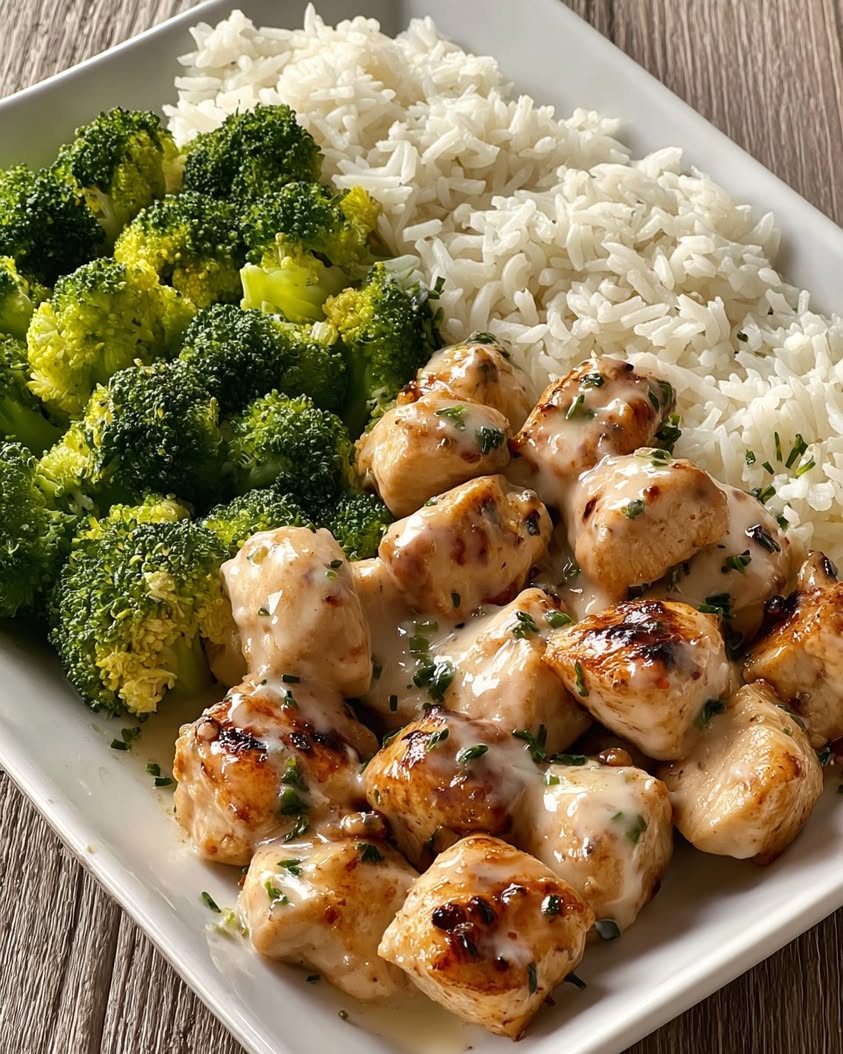
Creamy Garlic Chicken Bites with Fluffy Rice & Roasted Broccoli: A Quick, One-Pan Dinner That’s High-Protein and Family-Friendly
Imagine a dinner that hits every note on your wishlist. Firstly, it is incredibly delicious with tender chicken in a rich, savory sauce. Secondly, it is surprisingly simple to prepare, even on the busiest weeknight. This recipe for creamy garlic chicken bites served with fluffy rice and roasted broccoli delivers exactly that perfect combination. Consequently, it will quickly become a staple in your weekly meal rotation.
The magic of this dish lies in its beautiful harmony. For instance, you get golden, bite-sized chicken pieces seared to perfection. Then, they simmer in a luscious, creamy garlic sauce that is packed with flavor. Meanwhile, broccoli roasts in the oven, becoming crispy and caramelized. Finally, everything comes together over a bed of steaming, fluffy rice. Ultimately, you achieve a complete, satisfying, and nutritious meal with minimal fuss.
Furthermore, this recipe is a fantastic solution for anyone seeking a high-protein, family-friendly dinner. The chicken provides lean protein to keep you full, while the broccoli adds fiber and essential vitamins. Moreover, the creamy sauce is decadent without being overly heavy. This balanced approach makes the meal both comforting and wholesome. Therefore, it pleases both adults and kids alike, solving the eternal “what’s for dinner” dilemma with ease.
Quick Recipe Highlights
- Flavor Profile: This dish features a deeply savory and aromatic base from the garlic and onion, balanced by the richness of cream and Parmesan. The chicken bites absorb all these flavors, resulting in a taste that is both comforting and sophisticated. A hint of herbs adds a final layer of freshness.
- Texture: You will experience a wonderful contrast of textures. The chicken bites are tender and juicy on the inside with a slight sear on the outside. Meanwhile, the roasted broccoli offers a satisfying crunch. Finally, the fluffy rice and velvety sauce bring everything together in a creamy, cohesive bite.
- Aroma: As this cooks, your kitchen will fill with the irresistible scent of sautéing garlic and onion, which is the foundation of great flavor. Subsequently, the aroma of roasting broccoli and browning chicken creates a mouthwatering anticipation. The final scent of fresh herbs ties the aromatic profile together beautifully.
- Visual Appeal: This plate is a feast for the eyes with its vibrant green broccoli, golden-brown chicken, and creamy white sauce draped over white rice. The colors pop against each other, making the dish look restaurant-worthy. A sprinkle of fresh parsley or extra Parmesan adds a professional finishing touch.
- Skill Level Needed: This is a beginner-friendly recipe designed for home cooks of all levels. The techniques involved, such as chopping, sautéing, and roasting, are fundamental. With clear instructions, even a novice can achieve impressive, delicious results on their first try.
- Special Equipment: You only need basic kitchen tools: a good skillet, a baking sheet, and a pot for rice. A sharp knife for chopping and a cutting board are essential. No fancy gadgets are required, making this recipe accessible to everyone.
Recipe Overview
- Difficulty Level: We classify this recipe as “Easy” because it uses straightforward, common techniques. You simply chop ingredients, sauté aromatics, brown chicken, and roast vegetables. The steps are sequential and logical, with minimal multitasking required. Consequently, it is very hard to mess up, ensuring success for cooks at any level.
- Category: This dish fits perfectly into the “Main Course” and “Weeknight Dinner” categories. It is a complete meal with protein, vegetables, and starch all in one. Additionally, it is ideal for “Meal Prep” as the components reheat wonderfully. It is also a great “Family Meal” that appeals to a wide range of tastes.
- Cuisine: While not claiming authenticity to one region, this recipe draws inspiration from American comfort food and Italian-inspired creamy sauces. The use of garlic, Parmesan, and cream is reminiscent of Italian-American cuisine. However, the preparation method and inclusion of roasted broccoli give it a modern, healthy twist suitable for contemporary home cooking.
- Cost: This is a very cost-effective meal. Chicken breast, rice, and broccoli are all affordable, pantry-staple ingredients. The cream, cheese, and aromatics are also typically low-cost. Overall, you can feed a family of four a restaurant-quality meal for a fraction of the price of eating out or ordering takeout.
- Season: This recipe is truly versatile across all seasons. It is hearty enough for fall and winter, yet the bright green broccoli and creamy sauce feel fresh in spring and summer. Because it uses readily available ingredients year-round, you can enjoy it anytime you crave a comforting, balanced dinner.
- Occasion: It is perfect for casual weeknight family dinners, effortless entertaining, or even a cozy date night at home. The presentation is elegant enough for guests, yet the preparation is simple enough for a regular Tuesday. It is also an excellent choice for weekly meal prep for lunches.
Why You’ll Love This Recipe
First and foremost, the taste and texture appeal is undeniable. Each component is cooked to highlight its best qualities. The chicken becomes incredibly tender and flavorful from its quick sear and simmer in the sauce. Simultaneously, the broccoli roasts to bring out its natural sweetness and achieve a perfect crisp-tender bite. The creamy garlic sauce, rich with Parmesan, coats every element luxuriously. Consequently, every forkful delivers a harmonious blend of savory, creamy, and slightly crunchy textures that is deeply satisfying.
Secondly, the convenience and preparation benefits are a major win. This recipe is designed for efficiency. For example, you can prep the broccoli and get it roasting while you cook the chicken and rice. The sauce comes together in the same pan used for the chicken, meaning fewer dishes to wash. The entire meal is ready in under 45 minutes, with most of that time being hands-off. Therefore, you can have a impressive, home-cooked dinner on the table with minimal stress and cleanup.
Furthermore, the nutritional advantages make this a meal you can feel good about serving. Chicken breast is a fantastic source of lean protein, essential for muscle repair and keeping you full. Broccoli is packed with vitamins C and K, fiber, and antioxidants. Using a moderate amount of cream and real Parmesan creates richness without overdoing it. Paired with fiber-rich rice, this meal provides balanced macros. Ultimately, it proves that comfort food can also be nourishing.
Additionally, the social and entertaining value of this dish is high. It is a crowd-pleaser that looks far more elaborate than it actually is. Serving a beautiful platter of creamy garlic chicken bites with vibrant broccoli and rice impresses guests. Moreover, it is easy to double or triple for a larger group. The familiar, comforting flavors are universally loved, making it a safe and delicious choice for any gathering, from family dinners to casual parties.
Finally, the cost-effectiveness and accessibility are key. This recipe relies on inexpensive, easy-to-find ingredients available at any grocery store. You do not need any special equipment or hard-to-source items. By cooking this at home, you save significant money compared to ordering similar meals from restaurants. It also helps reduce food waste, as you can easily use up leftover rice or adjust vegetable quantities. In short, it delivers maximum flavor and satisfaction for a minimal investment.
Historical Background and Cultural Significance
The concept of cooking chicken in a creamy, garlicky sauce has roots in several culinary traditions, though this specific recipe is a modern creation. Italian cuisine, particularly from the northern regions, famously uses cream, butter, and cheese in sauces like Alfredo. French cooking also celebrates pan sauces made with cream, known as “à la crème.” This recipe borrows these foundational European techniques. However, it simplifies them for the contemporary American home kitchen, focusing on speed and accessibility without sacrificing core flavors.
Culturally, this dish represents the evolution of the “one-pan dinner” trend in home cooking. Over the past few decades, as home cooks became busier, the demand for streamlined, efficient recipes grew. The goal became achieving complex flavors with fewer steps and less cleanup. This creamy garlic chicken recipe is a direct response to that need. It combines protein, vegetable, and starch components in a cohesive way. Consequently, it reflects a cultural shift towards practical, health-conscious, and time-sensitive meal preparation.
The evolution of this recipe also ties into the popularity of “bowl” meals and deconstructed dishes. Presenting a meal with distinct components—creamy chicken, fluffy rice, roasted veg—allows for customization. Individuals can mix and match bites according to their preference. This modular approach caters to modern eating habits where balance and visual appeal are prized. It takes inspiration from global grain bowls but grounds itself in familiar, comforting Western flavors that families know and love.
Regarding regional variations, the basic formula is highly adaptable. In the American South, one might add a dash of Cajun seasoning to the chicken. In the Midwest, a can of cream of mushroom soup might be a shortcut for the sauce. A healthier West Coast variation could use Greek yogurt instead of cream. The broccoli could be swapped for seasonal green beans, asparagus, or zucchini. This flexibility is key to the recipe’s enduring appeal. It provides a reliable framework that cooks can personalize based on their pantry, diet, or regional produce.
Ingredient Deep Dive
Chicken Breast: As a lean, versatile protein, chicken breast is a global staple. Its relatively neutral flavor makes it a perfect canvas for the bold garlic and cream sauce. Nutritionally, it is high in protein and low in fat, supporting muscle health and satiety. For best results, select plump, evenly-sized breasts. To ensure tenderness, do not overcook them. Pat them dry before cutting to promote a good sear. If you prefer, boneless, skinless chicken thighs can be substituted for a richer, more forgiving cut.
Fresh Garlic: Garlic is one of the world’s oldest cultivated plants, valued for both culinary and medicinal properties. Its pungent, aromatic flavor forms the soul of this dish’s sauce. Allicin, the compound released when garlic is crushed, provides health benefits including antioxidant properties. Always choose firm, heavy heads with tight, papery skin. Avoid any with green sprouts or a soft feel. For the deepest flavor, mince it finely and sauté it gently until fragrant but not browned. In a pinch, jarred minced garlic can work, though fresh is superior.
Heavy Cream or Half-and-Half: Dairy cream has been used for centuries to add richness and body to sauces. It creates the luxurious, velvety texture that defines this recipe. Heavy cream will yield a thicker sauce, while half-and-half creates a slightly lighter version. For storage, always keep dairy cold and check the expiration date. If you need a dairy-free alternative, full-fat coconut cream can provide similar richness, though it will impart a subtle coconut flavor. Alternatively, a roux made with butter and flour can thicken chicken broth for a creamy effect.
Parmesan Cheese: Originating in Italy, Parmigiano-Reggiano is a hard, aged cheese known for its complex, nutty, and salty flavor. It melts beautifully into the sauce, adding depth and umami. It is also a good source of calcium and protein. For the best flavor, buy a block and grate it yourself; pre-grated cheese often contains anti-caking agents that hinder melting. Store leftover Parmesan tightly wrapped in the refrigerator. If substituting, Pecorino Romano offers a sharper, saltier profile, while a good quality Asiago can also work.
Fresh Broccoli: This cruciferous vegetable is native to the Mediterranean and has been cultivated for over 2000 years. It roasts beautifully, caramelizing at the edges while staying tender-crisp. It is incredibly nutrient-dense, offering vitamins C and K, folate, and fiber. Choose heads with tight, dark green florets and firm stalks. Avoid any with yellowing or limp stems. For roasting, cut into even-sized florets to ensure uniform cooking. Other sturdy vegetables like cauliflower, Brussels sprouts, or carrots can be roasted in its place for variation.
Common Mistakes to Avoid
- Crowding the Pan with Chicken: Adding all the chicken bites at once will steam them instead of searing them. This prevents the development of a golden-brown crust, which is crucial for flavor. Instead, cook in batches if necessary, ensuring each piece has contact with the hot surface.
- Burning the Garlic: Garlic burns easily and becomes bitter, which can ruin the entire sauce. Always sauté minced garlic over medium or medium-low heat just until it becomes fragrant, which takes only about 30-60 seconds. Have your next liquid ingredient (like broth or cream) ready to add and stop the cooking process.
- Overcooking the Chicken Breast: Chicken breast becomes dry and tough when cooked too long. Since the bites are small, they cook quickly. Sear them just until no longer pink on the outside, then let them finish cooking gently in the sauce. They will continue to cook from residual heat.
- Using Pre-Grated Parmesan from a Canister: These products often contain cellulose, which prevents clumping but also prevents smooth melting. Your sauce may end up grainy. For a silky, integrated sauce, always grate a block of real Parmesan cheese yourself just before using it.
- Neglecting to Season in Layers: Seasoning only at the end results in a bland dish. Instead, season the chicken before searing, season the aromatics as they cook, and taste and adjust the sauce at the end. This builds a deep, well-rounded flavor profile throughout the dish.
- Roasting Broccoli on a Cold Pan: For crispy broccoli, the baking sheet and oven must be preheated. Placing florets on a cold pan will cause them to steam and become soggy. Lining the pan with parchment can also trap steam; for maximum crispness, place broccoli directly on the hot sheet.
- Not Letting the Sauce Simmer and Thicken: After adding the cream, the sauce needs a few minutes of gentle simmering to reduce slightly and coat the back of a spoon. Rushing this step means your sauce will be too thin and runny, failing to cling to the chicken and rice properly.
- Forgetting to Rest the Meat: Immediately cutting into the chicken after cooking lets all the juices run out. Let the cooked chicken bites rest for a few minutes off the heat, perhaps while you plate the rice and broccoli. This allows the juices to redistribute, ensuring every bite is moist.
Essential Techniques
Searing Chicken Bites: This technique is crucial for developing flavor through the Maillard reaction, which creates complex, savory notes and an appealing color. To master it, ensure your pan is hot before adding the oil, and pat the chicken pieces completely dry. Do not move them immediately; let them develop a crust for a minute or two before turning. A common pitfall is moving the chicken too often. Success is visually clear when the chicken has a uniform golden-brown sear on multiple sides.
Building a Pan Sauce: This method maximizes flavor by using the fond—the browned bits left in the pan after searing. After removing the chicken, sauté your aromatics (onion, garlic) in the same pan. Then, deglaze with a bit of broth or wine, scraping up all the flavorful bits. Finally, incorporate the cream and let it simmer to thicken. The key is to not rush the reduction. The sauce is ready when it coats the back of a spoon and has deepened in color slightly.
Roasting Vegetables: Roasting transforms broccoli by caramelizing its natural sugars, creating a sweet, nutty flavor and crisp-tender texture. The essential technique is high heat and even spacing. Toss the florets with oil, salt, and pepper until evenly coated. Spread them in a single layer on a preheated baking sheet with space between each piece. This allows hot air to circulate, promoting browning instead of steaming. The visual cue for success is crispy, browned edges and a bright green color.
Cooking Fluffy Rice: The goal is separate, tender grains, not a sticky clump. The key technique is the absorption method with precise water-to-rice ratios and undisturbed cooking. Rinse your rice first to remove excess starch. Use a tight-fitting lid and bring to a boil, then immediately reduce to the lowest simmer. Do not lift the lid during cooking. Let it steam off the heat for 5-10 minutes after the timer goes off, then fluff with a fork. Perfect rice is tender, with each grain distinct.
Pro Tips for Perfect Creamy Garlic Chicken Bites
For an extra flavor boost, marinate your chicken bites for 15-30 minutes in a mixture of olive oil, a squeeze of lemon juice, salt, pepper, and a pinch of dried Italian herbs before cooking. This simple step adds another layer of seasoning directly into the meat.
If your sauce seems too thin after simmering, create a quick slurry by mixing a teaspoon of cornstarch with a tablespoon of cold water. Whisk this into the simmering sauce and cook for one more minute until thickened to your liking.
To save time on busy nights, prep your broccoli and chicken the night before. Store them separately in airtight containers in the fridge. When ready to cook, simply proceed with the recipe, shaving precious minutes off your prep time.
For a more complex sauce, deglaze the pan with a splash of dry white wine or chicken broth after sautéing the garlic. Let it reduce by half before adding the cream. This adds a wonderful depth of flavor that elevates the entire dish.
Always taste your sauce for seasoning at the very end, just before serving. The saltiness of Parmesan can vary, so you may need to adjust with a final pinch of salt or a crack of black pepper to make all the flavors pop.
If you prefer a lighter sauce, substitute half-and-half or even whole milk for the heavy cream. To ensure it still thickens nicely, let it simmer a bit longer, or use the cornstarch slurry trick mentioned above.
For the crispiest broccoli, preheat your baking sheet in the oven for 5-10 minutes before adding the oiled florets. The instant sizzle when they hit the hot pan jumpstarts the crisping process.
Grate a little extra Parmesan over each plated serving just before eating. The fresh cheese adds a burst of salty, nutty flavor and a slight texture contrast to the creamy sauce.
Variations and Adaptations
For regional variations, consider adding a Cajun or blackening spice rub to the chicken before searing for a Southern twist. A Mediterranean version could include sun-dried tomatoes, spinach, and kalamata olives stirred into the sauce. An Asian-inspired adaptation might use a coconut milk base with ginger, soy sauce, and a finish of lime juice and cilantro, served over jasmine rice.
Seasonal adaptations are easy with this framework. In spring, swap broccoli for asparagus spears or fresh peas. Summer calls for zucchini or yellow squash. In fall, try roasted Brussels sprouts or cubed butternut squash. Winter is perfect with hearty kale or roasted root vegetables like carrots and parsnips mixed in.
Dietary modifications are straightforward. For gluten-free, ensure your broth is certified GF. For dairy-free, use full-fat coconut cream and a nutritional yeast or vegan Parmesan alternative. To make it keto or low-carb, serve the creamy garlic chicken and broccoli over cauliflower rice instead of regular rice, and be mindful of the carb content in onions.
Flavor variations can keep the recipe exciting. Add mushrooms to the pan when sautéing the onion for an earthy note. Stir in a spoonful of Dijon mustard or a dash of hot sauce to the cream for tang or heat. Fresh herbs like thyme, rosemary, or tarragon can be added with the garlic for a different aromatic profile.
Texture modifications can cater to personal preference. For a chunkier sauce, add diced tomatoes or artichoke hearts at the end. For an ultra-smooth sauce, use an immersion blender briefly on the sauce before adding the chicken back in. To add crunch, top the finished dish with toasted pine nuts or slivered almonds.
Presentation alternatives include serving the components in a large, shallow bowl for a rustic feel, or plating individually for a more formal dinner. You can also mix everything together in one big skillet for a family-style “chicken and rice skillet” presentation. For meal prep, layer the rice, broccoli, and chicken with sauce in divided containers.
Serving and Presentation Guide
Plating techniques matter for visual appeal. Start by placing a scoop of fluffy rice slightly off-center in a shallow bowl or on a plate. Arrange a portion of the roasted broccoli alongside the rice, letting the vibrant green show. Spoon the creamy garlic chicken bites and sauce over the rice, allowing some to pool around the edges. This method showcases each component beautifully.
Garnishing adds the final professional touch. A sprinkle of freshly chopped parsley or chives provides color and freshness. A light dusting of paprika or red pepper flakes adds a pop of color and a hint of warmth. A final grate of Parmesan cheese over the top reinforces the cheesy, savory notes. A lemon wedge on the side allows guests to add a bright, acidic spark if desired.
Traditional accompaniments are simple, as the meal is complete. A light, crisp green salad with a vinaigrette dressing balances the richness of the creamy sauce. A crusty baguette or garlic bread is perfect for sopping up any extra sauce left on the plate. For a more substantial spread, consider starting with a simple soup like tomato basil.
Modern serving suggestions embrace flexibility. Serve the components in separate bowls and let everyone build their own plate, which is great for families with different preferences. For a casual gathering, serve the entire recipe family-style from a large skillet or platter in the center of the table. This encourages sharing and conversation.
Temperature considerations are key for the best experience. Serve the dish immediately after preparing it. The chicken and sauce should be piping hot, the rice steaming, and the broccoli warm with a slight residual crispness. If you must hold components, keep the rice covered and the chicken in the sauce on very low heat. Re-crisp the broccoli in a hot oven for a minute if it softens.
Portion control tips help balance the meal. A good guideline is one cup of cooked rice, one to one and a half cups of broccoli, and a portion of chicken roughly the size of your palm per serving. The sauce should coat the chicken and rice lightly, not drown them. This balance ensures you enjoy all elements without overindulging in any single one.
Wine and Beverage Pairing
Wine pairings should complement the creamy, garlicky, and savory notes of the dish. A crisp, unoaked Chardonnay works wonderfully, as its acidity cuts through the richness of the sauce. Alternatively, a Pinot Gris or Sauvignon Blanc with bright citrus notes provides a refreshing contrast. For red wine lovers, a light-bodied Pinot Noir with low tannins will not overpower the chicken and complements the earthy garlic and Parmesan flavors beautifully.
Non-alcoholic alternatives can be just as sophisticated. Sparkling water with a twist of lemon or lime cleanses the palate between bites. For a more flavorful option, try a chilled ginger beer, which offers a spicy kick that contrasts the creaminess. An herbal iced tea, like mint or lemon verbena, provides a refreshing and aromatic companion to the meal without added sweetness.
While not a classic pairing, certain coffees or teas can work if serving this as a hearty brunch or lunch. A medium-roast coffee with low acidity would not clash with the savory flavors. A cup of genmaicha (brown rice green tea) offers a toasty, nutty note that echoes the flavors of the roasted broccoli and seared chicken, creating a unique and pleasant combination.
Temperature considerations for beverages are straightforward. White wines and non-alcoholic sparklers should be served well-chilled. Red wine should be served slightly below room temperature. Iced beverages should be cold but not watered down; use large ice cubes. The goal is to have a drink that refreshes and resets your palate for the next delicious bite of the creamy, rich main course.
Serving suggestions include offering a choice of beverages to guests. Place a chilled bottle of white wine and a pitcher of infused water on the table. For a casual family meal, simple glasses of milk can also pair surprisingly well, especially for children, as the fat content complements the creamy sauce. Ultimately, the best pairing is what you and your guests enjoy most.
Storage and Shelf Life
Proper storage methods are essential for food safety and quality. Allow the dish to cool completely before storing, but do not leave it at room temperature for more than two hours. Store the creamy garlic chicken, rice, and broccoli in separate airtight containers. This prevents the broccoli from becoming soggy and the rice from absorbing all the sauce and becoming mushy. Glass containers are ideal as they do not retain odors.
Temperature requirements are non-negotiable. All components must be refrigerated at 40°F (4°C) or below. The creamy chicken and sauce are dairy-based and highly perishable. Never leave the finished meal out for extended periods. If you are packing it for lunch, use an insulated lunch bag with a cold pack to keep it at a safe temperature until you are ready to eat.
Container recommendations focus on preventing moisture loss and odor transfer. Use shallow containers to allow for rapid, even cooling. For the sauce-heavy chicken, a container with a tight-sealing lid is crucial. For the broccoli, a container lined with a paper towel can help absorb excess moisture and maintain crispness. Clearly label containers with the date they were prepared.
Signs of spoilage include an off or sour smell, a significant change in texture (like slimy chicken or curdled sauce), or visible mold. If the broccoli becomes unpleasantly mushy or develops a foul odor, discard it. When in doubt, follow the golden rule: if you are unsure, it is safer to throw it out. Do not taste-test questionable food.
Reheating instructions are key to restoring quality. For the chicken and sauce, reheat gently in a skillet over medium-low heat, adding a splash of broth or water to loosen the sauce. Alternatively, microwave in 30-second intervals, stirring in between. Reheat rice with a sprinkle of water to steam it back to life. To re-crisp broccoli, use a toaster oven or air fryer for a few minutes instead of the microwave, which will make it soft.
Freezing guidelines apply best to the creamy garlic chicken component. Freeze it in a single layer in a sealed bag or container for up to 2 months. Note that the dairy-based sauce may separate slightly upon thawing, but vigorous stirring during reheating can help re-emulsify it. Rice and broccoli do not freeze well as they become mushy and lose texture upon thawing and reheating.
Make Ahead Strategies
A practical prep timeline can turn this into a 15-minute weeknight meal. The day before, chop the broccoli and chicken. Store them separately in the fridge. You can also mince the garlic and onion and store them together in a small container. Measure out your dry spices and grate your Parmesan cheese. Having all components prepped and ready means you can simply cook and assemble on a busy evening.
Storage between steps is simple with proper planning. Keep pre-chopped vegetables in airtight containers or resealable bags in the crisper drawer. Store raw, seasoned chicken in a sealed container on the bottom shelf of the fridge to prevent cross-contamination. Keep pre-measured dairy ingredients in the fridge until the moment you need them. This organized approach streamlines the cooking process.
Assessing the quality impact of make-ahead steps is important. Pre-chopping onions and garlic may slightly diminish their pungency, but the flavor difference is minimal for a cooked sauce. Pre-cutting chicken is fine, but ensure it is well-wrapped to prevent drying out. Do not cook the entire dish a day ahead, as the broccoli will lose its crispness and the sauce may thicken excessively upon reheating.
Assembly tips for make-ahead involve a staggered approach. On cooking day, start roasting the pre-chopped broccoli. While it roasts, cook the rice. Finally, cook the chicken and sauce using your pre-prepped ingredients. This efficient workflow means all components finish at roughly the same time with minimal active effort, leveraging your earlier prep work for maximum ease.
Reheating guidelines for partially prepped meals differ from leftovers. If you pre-cooked the chicken and sauce, reheat them together gently in a pan. Add any fresh herbs after reheating to preserve their flavor and color. For the best texture, always cook the broccoli fresh on the day of serving, as roasted vegetables do not hold their ideal texture when reheated from a fully cooked state.
Fresh element additions are the final touch. Even with extensive prep, always plan to add a final garnish of fresh herbs, a squeeze of lemon, or a fresh grate of Parmesan just before serving. These last-minute additions provide a burst of freshness and brightness that makes the dish taste newly made, elevating it beyond a simple reheated meal.
Scaling Instructions
Halving the recipe is straightforward for smaller households. Simply divide all ingredient quantities by two. Use a medium skillet instead of a large one. The cook times will remain roughly the same, but keep a closer eye on the smaller batch of chicken to avoid overcooking. You may need to slightly reduce the simmering time for the sauce as there is less volume to reduce.
Doubling or tripling the recipe for a crowd requires some adjustments. Use the largest skillet you have, or cook the chicken in multiple batches to avoid overcrowding. You may need to use two baking sheets for the broccoli, rotating them in the oven halfway through for even roasting. Consider using a larger pot or a rice cooker for the increased rice quantity. The sauce may take a few extra minutes to thicken when made in a larger volume.
Equipment adjustments are necessary when scaling. For a doubled recipe, ensure your largest skillet can hold all the sauce ingredients without bubbling over. If roasting double the broccoli, use two oven racks and switch the baking sheets top-to-bottom midway. For rice, a Dutch oven can accommodate a larger batch better than a standard saucepan. Having the right tools prevents spills and ensures even cooking.
Timing modifications are minimal but important. When cooking multiple batches of chicken, the total active cook time will increase. Plan for this extra time. The broccoli roasting time may increase slightly if the pans are very crowded, as steam will be released. Start the rice earlier, as a larger pot of water takes longer to come to a boil. Good planning ensures all components are ready together.
Storage considerations for scaled recipes are crucial. If you have significant leftovers from a large batch, cool and portion them immediately. Store in meal-sized containers for easy grab-and-go lunches. Label everything clearly with the date. Remember that a large pot of rice cools slower; spread it out on a baking sheet to cool quickly before refrigerating to prevent bacterial growth.
Nutritional Deep Dive
The macro breakdown of this meal is well-balanced. A typical serving provides a substantial amount of high-quality protein from the chicken, which supports muscle maintenance and satiety. The carbohydrates come primarily from the rice and broccoli, offering energy and fiber. The fats are largely from the cream and Parmesan, contributing to the creamy texture and helping absorb fat-soluble vitamins from the broccoli. This balance makes it a satisfying meal that fuels the body effectively.
A micronutrient analysis reveals a wealth of vitamins and minerals. Broccoli is a superstar, providing a full day’s worth of vitamin C and K, along with folate and potassium. Chicken breast offers B vitamins, particularly B6 and niacin, which are vital for energy metabolism. Parmesan cheese adds calcium and phosphorus for bone health. Garlic contributes manganese and vitamin B6, along with beneficial compounds like allicin. Together, they create a nutrient-dense plate.
The health benefits are significant. The lean protein aids in weight management by promoting fullness. The fiber from broccoli and rice supports digestive health. The antioxidants in broccoli and garlic have anti-inflammatory properties. The calcium from dairy supports bone density. Choosing brown rice over white would further increase the fiber and mineral content. This dish demonstrates that a comforting, flavorful meal can also be a cornerstone of a healthy diet.
Dietary considerations are easily addressed. For those monitoring sodium, use low-sodium broth and be mindful of added salt, as Parmesan is naturally salty. For heart health, using half-and-half instead of heavy cream reduces saturated fat. To increase fiber, choose brown rice or quinoa. The recipe is naturally gluten-free if using certified GF broth. Its modular nature allows individuals to adjust portions of rice, sauce, or broccoli to meet specific dietary goals.
Portion analysis helps with mindful eating. A balanced plate consists of roughly ¼ protein (chicken), ¼ starch (rice), and ½ vegetables (broccoli), with the sauce used as a condiment. This visual guide ensures you get a variety of nutrients without overconsuming any single group. Using a smaller plate can also help with portion control while still making the meal feel abundant and satisfying.
Weight management tips include being mindful of sauce quantity. You can lightly drizzle the sauce rather than smothering the dish. Increasing the portion of broccoli and slightly decreasing the rice portion lowers the overall calorie density of the meal. Using cooking spray instead of oil for the broccoli roasting can save a few calories without sacrificing crispness. These small tweaks make the dish adaptable for various health and wellness goals.
Dietary Adaptations
For a gluten-free version, this recipe is naturally compliant if you ensure your chicken broth is certified gluten-free. Many broths contain hidden gluten, so always check the label. All other core ingredients—chicken, cream, cheese, broccoli, rice—are inherently gluten-free. Serve with your favorite GF grain, and you have a safe, delicious meal for those with celiac disease or gluten sensitivity.
A dairy-free adaptation replaces the heavy cream and Parmesan. Use full-fat coconut cream for a rich, luxurious sauce base. For the cheesy flavor, stir in a tablespoon of nutritional yeast or use a store-bought vegan Parmesan alternative. Be aware that coconut cream will impart a subtle coconut flavor, which pairs surprisingly well with garlic. For a nuttier flavor, a cashew cream sauce is another excellent dairy-free option.
Creating a vegan version requires more significant changes. Replace the chicken with hearty plant-based protein like chickpeas, seitan chunks, or extra-firm tofu
Print
Creamy Garlic Chicken Bites with Fluffy Rice and Roasted Broccoli
Description
Tender chicken bites in a rich, creamy garlic sauce, served alongside fluffy white rice and crispy roasted broccoli for a comforting and balanced meal.
Ingredients
For the Crust:
- 1 lb boneless, skinless chicken breasts, cut into bite-sized pieces
- 2 cups broccoli florets
- 1 cup long-grain white rice
- 3 cloves garlic, minced
- 1 cup heavy cream
- 1/2 cup chicken broth
- 2 tbsp olive oil
- 1 tbsp butter
- 1 tsp paprika
- Salt and black pepper to taste
- Fresh parsley, chopped (for garnish)
Instructions
1. Prepare the Crust:
- Preheat oven to 400°F (200°C). Toss broccoli florets with 1 tbsp olive oil, salt, and pepper. Spread on a baking sheet and roast for 20-25 minutes until tender and slightly charred.
- Cook rice according to package instructions until fluffy. Set aside and keep warm.
- Heat remaining olive oil and butter in a large skillet over medium-high heat. Season chicken with paprika, salt, and pepper. Cook chicken bites for 5-7 minutes until browned and cooked through. Remove from skillet and set aside.
- In the same skillet, add minced garlic and sauté for 1 minute until fragrant. Pour in chicken broth and heavy cream, stirring to combine. Simmer for 5 minutes until sauce thickens slightly.
- Return chicken bites to the skillet, stirring to coat in the creamy garlic sauce. Simmer for 2-3 minutes until heated through.
- Serve chicken and sauce over fluffy rice with roasted broccoli on the side. Garnish with fresh parsley.
Notes
You can customize the seasonings to taste.

I’m Shaykee—born in Morocco, seasoned across continents. From airplane galleys to home kitchens, I share the flavors and stories that shaped my journey.