
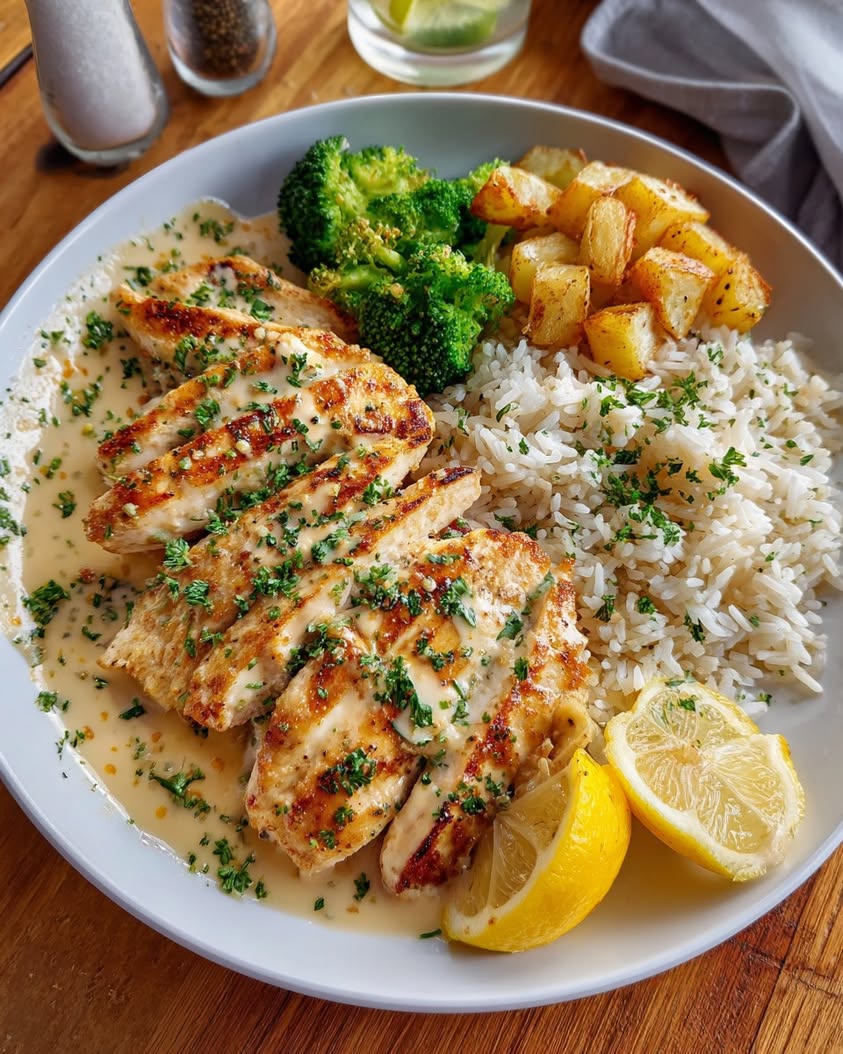
Creamy Lemon Garlic Chicken Bowl with Rice & Veggies: A 30-Minute Flavor Explosion
Imagine a dinner that delivers restaurant-quality flavor without the fuss. This creamy lemon garlic chicken bowl with rice and veggies is exactly that. It’s a complete, satisfying meal that comes together in one pan. Consequently, you get minimal cleanup and maximum taste. The tender chicken simmers in a luscious, bright sauce. Meanwhile, the fluffy rice soaks up every drop. Finally, crisp-tender vegetables add a perfect pop of color and nutrition. Honestly, this recipe is a weeknight hero.
The magic lies in the balance. Firstly, the garlic provides a savory, aromatic base. Secondly, the fresh lemon juice and zest cut through the richness with a sunny acidity. Thirdly, the cream creates a velvety, luxurious texture that coats everything beautifully. This dish is a masterclass in simple ingredients creating complex flavor. Moreover, it’s incredibly versatile. You can easily swap the veggies based on what’s in your fridge. Ultimately, you have a healthy, delicious dinner on the table in half an hour.
Furthermore, this meal feels special enough for company. However, it’s straightforward enough for a busy Tuesday. The aroma of lemon and garlic sautéing will draw everyone to the kitchen. Additionally, the vibrant presentation in a bowl is naturally appealing. Each component complements the others perfectly. In short, this creamy lemon garlic chicken recipe checks every box for a modern home cook. It’s fast, flavorful, nutritious, and utterly comforting.
Quick Recipe Highlights
- Flavor Profile: This dish features a beautiful harmony of savory, bright, and rich notes. The pungent garlic mellows as it cooks, providing depth. Simultaneously, the fresh lemon adds a zesty, tangy punch that lifts the entire dish. The creamy sauce brings it all together with a smooth, luxurious finish.
- Texture: You’ll enjoy a wonderful contrast of textures in every bite. The chicken becomes juicy and tender from its quick sear and simmer. The vegetables retain a slight crunch for freshness. Meanwhile, the rice provides a soft, fluffy base that absorbs the silky sauce perfectly.
- Aroma: The cooking process releases an incredible fragrance. Initially, you’ll smell the earthy, pungent scent of garlic hitting the hot pan. Subsequently, the bright, citrusy notes of lemon zest and juice join in. Finally, the savory aroma of cooking chicken and herbs completes the inviting scent profile.
- Visual Appeal: This bowl is a feast for the eyes with its vibrant color palette. The golden-brown chicken rests on a bed of white rice. Green broccoli florets and red bell pepper strips add bright pops of color. A pale yellow, creamy sauce blankets everything, making the dish look restaurant-quality.
- Skill Level Needed: This is a beginner-friendly recipe designed for success. You only need basic skills like chopping, sautéing, and simmering. There are no complicated techniques or specialty tools required. Essentially, if you can use a skillet and a spoon, you can master this meal.
- Special Equipment: You need only standard kitchen equipment. A large skillet or sauté pan with high sides is essential for making the sauce. Besides that, you’ll need a cutting board, a chef’s knife, a citrus zester, and a wooden spoon. A pot for cooking rice completes the simple setup.
Recipe Overview
- Difficulty Level: We rate this recipe as “Easy” for several clear reasons. The steps are sequential and simple, with no advanced culinary techniques. The ingredient list is short and composed of common pantry staples. Furthermore, the margin for error is small, as the cooking process is forgiving. Even a novice cook can achieve impressive results on the first try.
- Category: This dish falls squarely into the main course category for lunch or dinner. It’s a complete, balanced meal featuring protein, carbohydrates, and vegetables. It’s also excellent for meal prep, as the components hold up well in the refrigerator. Additionally, it fits into the “quick and easy dinner” and “one-pan meal” categories perfectly.
- Cuisine: While not tied to one specific tradition, it draws inspiration from modern American and Italian-inspired cooking. The use of garlic, lemon, and cream is reminiscent of Italian pasta sauces. However, the bowl format and quick-cooking method are hallmarks of contemporary, health-conscious American cuisine. It’s a delicious fusion of comforting flavors and convenient preparation.
- Cost: This is a remarkably cost-effective meal to prepare at home. Chicken thighs or breasts are an affordable protein source, especially when bought in bulk. The vegetables and aromatics like garlic and lemon are inexpensive staples. Compared to ordering a similar bowl from a restaurant or delivery service, you save a significant amount of money while controlling quality.
- Season: This recipe shines brightest in the spring and summer months. The bright lemon flavor pairs wonderfully with the season’s fresh produce. However, it’s truly a year-round dish because it uses commonly available vegetables. In winter, it brings a much-needed burst of sunny flavor to the table. Ultimately, its versatility makes it suitable for any season.
- Occasion: It’s perfect for casual weeknight family dinners due to its speed and simplicity. Yet, it’s elegant enough for a relaxed dinner party with friends. It also excels as a meal prep option for busy workweeks or healthy lunches. Essentially, it’s a versatile recipe that adapts to nearly any dining occasion.
Why You’ll Love This Recipe
First and foremost, the taste and texture are utterly irresistible. The combination of savory garlic and tangy lemon is a classic for good reason. It’s bright yet comforting, rich yet not heavy. Each component plays a specific role. The creamy sauce coats the tender chicken and fluffy rice, ensuring every bite is moist and flavorful. The vegetables add a necessary fresh crunch that balances the dish. Consequently, you get a complex, restaurant-quality flavor profile from simple, wholesome ingredients. It’s the kind of meal that makes you look forward to dinner all day.
From a convenience standpoint, this recipe is a true winner. The total time from start to finish is only thirty minutes. That’s often faster than waiting for delivery. Moreover, you only dirty one main pan for the chicken and sauce, which means cleanup is a breeze. The process is straightforward. You sear, you simmer, you combine. There’s no fussy technique or hours of simmering required. Therefore, it’s the ideal solution for those evenings when you’re short on time but still want a homemade, nutritious meal. It turns a potentially stressful dinner hour into a simple, enjoyable cooking session.
Nutritionally, this bowl offers a fantastic balance. Chicken provides lean protein to keep you full and support muscle maintenance. The broccoli and bell peppers deliver a powerful dose of vitamins C and K, fiber, and antioxidants. Using whole-grain rice instead of white adds even more fiber and nutrients. You control the amount of cream and butter, allowing you to adjust the richness to your dietary preferences. As a result, you have a meal that fuels your body without sacrificing an ounce of flavor. It’s a guilt-free pleasure that truly satisfies.
This dish also holds significant social and entertaining value. It’s visually impressive when served in individual bowls, making it feel special. The recipe scales up easily to feed a crowd without multiplying the work. Guests will be impressed that you made such a flavorful, creamy sauce from scratch. Furthermore, it’s generally a crowd-pleaser, appealing to both adults and children with its familiar yet elevated flavors. Serving this at a casual gathering shows thoughtfulness and care, proving that a delicious meal doesn’t require slaving in the kitchen all day.
Finally, its cost-effectiveness and accessibility are major benefits. As mentioned, the ingredients are affordable and easy to find at any standard grocery store. You likely have many of them in your pantry already. By cooking this at home, you avoid the markup of restaurant meals and takeout. Additionally, the recipe is highly adaptable. If broccoli is expensive, use zucchini or green beans. If you have chicken breasts instead of thighs, they work perfectly. This flexibility means you can always make a version of this dish, making it a reliable staple in your cooking repertoire.
Historical Background and Cultural Significance
The concept of combining lemon, garlic, and chicken has deep roots across multiple culinary traditions. In many Mediterranean cultures, these three ingredients form a foundational flavor trio. For instance, Italian cooking often uses lemon and garlic to flavor poultry and fish in dishes like “pollo al limone.” Similarly, Greek cuisine features similar combinations, frequently with the addition of oregano. The method of creating a pan sauce from the browned bits left after searing meat is a classic French technique known as “deglazing.” This recipe, therefore, is a modern fusion of these timeless culinary principles, adapted for speed and served in a contemporary bowl format.
Culturally, the bowl meal has surged in popularity in recent decades, particularly in Western health-focused and fast-casual dining. It represents a shift towards balanced, visually compartmentalized eating. The “Buddha bowl” or “grain bowl” concept emphasizes whole foods, variety, and portion control. Our creamy lemon garlic chicken bowl fits neatly into this trend by offering protein, grain, and vegetables in one convenient vessel. It takes a classic flavor combination and presents it in a modern, Instagram-worthy way that appeals to today’s eater who values both nutrition and aesthetics.
The evolution of this specific recipe is a story of home cook innovation. As lives have gotten busier, the demand for “one-pan” or “30-minute meals” has exploded. Cooks began adapting longer, more complex recipes for the weeknight. The creamy lemon garlic sauce, which might have traditionally simmered for longer or been part of a pasta dish, was simplified. By using quick-cooking chicken cutlets and pre-cut veggies, the entire meal comes together in the time it takes to cook rice. This evolution speaks to the dynamic nature of home cooking, where tradition constantly meets convenience to create new family favorites.
Regional variations of this concept are endless. In the American South, you might find a version with a cream gravy base served over biscuits. In Asia, a similar stir-fry might use soy sauce and ginger alongside the lemon, served over noodles. The Italian version would likely use white wine in the deglazing step and might include capers or artichokes. Our version is intentionally streamlined and adaptable, serving as a template. This allows cooks around the world to incorporate local ingredients and preferences, making the recipe a global citizen in the world of easy dinners.
Ingredient Deep Dive
Chicken Thighs or Breasts: Chicken is one of the world’s most universal proteins, cultivated for thousands of years. Boneless, skinless thighs are recommended for their juiciness and flavor, as they have a slightly higher fat content than breasts. They are an excellent source of lean protein, B vitamins (especially Niacin and B6), and selenium. When selecting, look for plump, pink flesh with no gray tinge or off odors. For storage, keep in the coldest part of your refrigerator and use within 1-2 days of purchase, or freeze immediately. You can substitute with chicken breasts, turkey cutlets, or even firm tofu for a vegetarian option. Just adjust cooking times accordingly.
Fresh Lemon: The lemon originated in Asia and was highly prized in ancient Rome. Both the zest and juice are crucial here. The zest contains potent aromatic oils, while the juice provides acidity. Lemons are famous for their high vitamin C content and antioxidants like flavonoids. Choose lemons that are heavy for their size with bright, smooth skin, indicating juiciness. Store at room temperature for a week or in the fridge for longer. In a pinch, you can use about 3 tablespoons of bottled lemon juice, but you’ll miss the vibrant flavor of the fresh zest. For a different twist, try lime or a combination of lemon and orange zest.
Garlic: Garlic has a storied history, used since the time of the Egyptian pyramids for both culinary and medicinal purposes. When sautéed, it loses its sharp bite and develops a sweet, nutty, savory depth that forms the sauce’s flavor foundation. It contains allicin, a compound with noted health benefits. Select firm, plump heads with tight, papery skin. Avoid heads with green sprouts or soft cloves. Store in a cool, dark, dry place with good air circulation. Do not refrigerate whole heads. If you’re out of fresh garlic, about 1/8 teaspoon of garlic powder can substitute for one clove, but fresh is vastly superior for this recipe.
Heavy Cream or Half-and-Half: Cream is the product of separating the fatty layer from milk. Its use in sauces dates back centuries in European cooking. It provides the luxurious, velvety mouthfeel and helps emulsify the sauce, binding the lemon juice and fats. It adds richness and calories, so you can choose based on your preference. For a lighter version, half-and-half works, though the sauce will be slightly less thick. For storage, always keep dairy refrigerated and check the expiration date. For a dairy-free alternative, full-fat coconut cream can provide a similar richness, though it will impart a coconut flavor. Cashew cream is another excellent neutral-tasting option.
Chicken Broth: Using broth to deglaze the pan is a key technique. It lifts the flavorful browned bits (fond) from the chicken, incorporating that deep flavor into the sauce. Opt for a low-sodium broth to control the salt level in your dish. It adds moisture and savory depth without overpowering the lemon and garlic. Store unopened boxes in your pantry; once opened, refrigerate and use within a week. You can substitute with vegetable broth or even water with an extra pinch of salt. For more intensity, use a splash of white wine in place of some of the broth.
Common Mistakes to Avoid
- Overcrowding the Pan: Adding too much chicken to the skillet at once is a critical error. The pieces will steam instead of sear, resulting in pale, rubbery meat without the flavorful brown crust. Always cook in batches if necessary to ensure each piece has contact with the hot surface.
- Burning the Garlic: Garlic burns incredibly quickly and becomes bitter. Always add it after the chicken is removed and the heat is moderate. Cook it just until fragrant, which usually takes only 30-60 seconds. Stir it constantly to prevent it from sitting in one hot spot.
- Using Bottled Lemon Juice Exclusively: While bottled juice works in a pinch, it lacks the bright, fresh flavor of real lemon. More importantly, you miss the aromatic lemon zest, which is essential for the full citrus profile. Always use a fresh lemon if possible.
- Adding Cold Cream to a Hot Pan Too Quickly: If you pour cold cream directly into a very hot pan, it can sometimes separate or curdle. To prevent this, let the broth simmer first to slightly reduce, then lower the heat before stirring in the cream.
- Overcooking the Chicken: Since the chicken continues to cook when added back to the simmering sauce, it’s easy to overcook it. Remove it from the initial sear just before it’s fully cooked through. A digital thermometer is helpful; aim for 160°F before resting.
- Neglecting to Deglaze the Pan Properly: After searing the chicken, those browned bits on the bottom of the pan are flavor gold. Use your broth or wine and a wooden spoon to scrape them all up thoroughly. This step builds the foundation of your sauce.
- Underseasoning the Dish: This sauce needs adequate seasoning to balance the cream and lemon. Season the chicken well with salt and pepper before searing. Then, always taste the sauce at the end and adjust with more salt, pepper, or even a pinch of red pepper flakes.
- Overcooking the Vegetables: The broccoli and peppers should be crisp-tender, not mushy. They cook quickly in the sauce. Add them just for the last few minutes of simmering to retain their color, texture, and nutritional value.
- Skipping the Resting Time for the Chicken: Letting the seared chicken rest for a few minutes before slicing allows the juices to redistribute. If you slice it immediately, all those flavorful juices will run out onto your cutting board.
- Using Pre-Minced Garlic in a Jar: The flavor of pre-minced garlic stored in water or oil is inferior to fresh. It often has a harsh, tinny taste. Taking one minute to mince a fresh clove makes a monumental difference in the final flavor of your creamy lemon garlic sauce.
Essential Techniques
Patting the Chicken Dry: This simple step is non-negotiable for a proper sear. Moisture on the surface of the chicken creates steam, which prevents the Maillard reaction—the chemical process that creates browning and deep flavor. Use paper towels to thoroughly pat the chicken pieces dry on all sides. Furthermore, ensure your chicken is close to room temperature before cooking; cold chicken straight from the fridge will lower the pan’s temperature too much. The visual cue for success is a dry, matte surface on the meat before it ever touches the oil.
Searing for Flavor (The Maillard Reaction): Searing is not just about color; it’s about building complex flavor compounds. Heat your oil until it shimmers but doesn’t smoke. Then, add the dried chicken in a single layer without touching. Resist the urge to move it for at least 2-3 minutes. You want to hear a steady sizzle. When the chicken releases easily from the pan, it’s ready to flip. A perfect sear results in a deep golden-brown crust. The common pitfall is flipping too early, which tears the meat and leaves it stuck to the pan.
Deglazing the Pan: After removing the chicken, you’ll see browned, stuck-on bits in the pan. This “fond” is packed with savory flavor. Deglazing is the process of adding a liquid (broth) to the hot pan and using a wooden spoon to scrape all those bits loose. The liquid dissolves the fond, creating an instant, flavorful base for your sauce. Do this over medium heat and scrape thoroughly across the entire bottom of the pan. The success cue is a liquid that turns a rich, brown color and no visible bits remain stuck.
Building and Reducing a Pan Sauce: After deglazing, you add aromatics (garlic), then liquid (broth, cream). Simmering this mixture allows it to reduce—meaning water evaporates, concentrating the flavors and thickening the sauce slightly. A good simmer means small bubbles breaking the surface consistently. Stir occasionally to prevent scorching. The sauce is ready when it coats the back of a spoon. If you draw a line through it with your finger, the line should hold. This indicates proper body for clinging to the chicken and rice.
Pro Tips for Perfect Creamy Lemon Garlic Chicken Bowl
First, use a microplane zester for your lemon. It creates super-fine zest with no bitter white pith, distributing the potent lemon oil evenly throughout the sauce.
Second, let your cream sit out for 10-15 minutes before using. Adding cream that is closer to room temperature to the hot pan reduces the risk of curdling.
Third, finish the sauce with a small pat of cold butter off the heat. This French technique, called “monter au beurre,” gives the sauce an extra layer of gloss and silky richness.
Fourth, cook your rice in broth instead of water. It infuses the grains with savory flavor from the inside out, making the entire bowl more cohesive.
Fifth, add a pinch of sugar to the sauce if your lemon is very tart. This isn’t to make it sweet, but to perfectly balance the acidity, rounding out the flavor profile.
Sixth, garnish with fresh herbs just before serving. A sprinkle of chopped fresh parsley, thyme, or chives adds a final burst of color and fresh flavor that elevates the dish.
Seventh, if your sauce seems too thin, create a quick slurry. Mix a teaspoon of cornstarch with a tablespoon of cold water and stir it into the simmering sauce for a minute until thickened.
Eighth, for maximum flavor, marinate the chicken in a little lemon juice, olive oil, and garlic for 30 minutes before cooking. This adds another dimension of citrus and herbaceousness to the meat itself.
Variations and Adaptations
For regional variations, consider an Italian-inspired twist by adding a handful of sun-dried tomatoes and a spoonful of capers to the sauce. A Greek version could include Kalamata olives and a sprinkle of dried oregano. For an Asian fusion, substitute soy sauce for some of the salt, add a teaspoon of grated ginger with the garlic, and garnish with sesame seeds and sliced green onion.
Seasonal adaptations are easy. In spring, use asparagus and fresh peas. Summer calls for zucchini and cherry tomatoes. Fall is perfect for mushrooms and spinach. In winter, hearty kale or Brussels sprout halves work beautifully. The recipe template remains the same; you simply swap the vegetable component based on what’s fresh and available.
Dietary modifications are straightforward. For gluten-free, ensure your broth is certified GF. For dairy-free, use full-fat coconut cream. For a vegan version, use crispy chickpeas or sautéed mushrooms as the protein and vegetable broth. For low-carb or keto, serve the chicken and sauce over cauliflower rice or a bed of zucchini noodles instead of regular rice.
Flavor variations can keep this recipe exciting. Add a teaspoon of Dijon mustard for tang, a dash of smoked paprika for depth, or a sprinkle of red pepper flakes for heat. For an herby version, stir in a tablespoon of pesto at the end. For a richer taste, use a splash of dry white wine to deglaze the pan before adding the broth.
Texture modifications can cater to personal preference. For a chunkier vegetable component, cut them into larger pieces. For a smoother sauce, you can puree it briefly with an immersion blender before adding the chicken back. For extra crunch, top the finished bowl with toasted pine nuts or slivered almonds.
Presentation alternatives include serving the components deconstructed for picky eaters, stuffing the mixture into a warm pita or wrap, or piling it onto a baked sweet potato instead of rice. For a more formal plate, fan the sliced chicken over the rice and drizzle the sauce around it artistically.
Serving and Presentation Guide
Start with a warm, shallow bowl to keep the meal hot. Place a fluffy mound of rice slightly off-center. Then, artfully arrange the sliced creamy lemon garlic chicken over and around the rice. Spoon the vegetables and plenty of the luxurious sauce over the top, allowing it to pool around the rice. The goal is to show all the colorful components rather than hiding them under the chicken.
Garnishing is the final touch that makes the dish pop. A sprinkle of fresh chopped parsley or basil adds green. A few thin slices of fresh lemon on the side or a twist of zest on top reinforces the citrus theme. A light grating of Parmesan cheese adds a salty, umami note, though it’s optional. A drizzle of high-quality extra virgin olive oil just before serving adds sheen and fruitiness.
Traditional accompaniments are simple. A crisp green salad with a light vinaigrette balances the richness of the creamy sauce. A slice of crusty bread is perfect for sopping up any remaining sauce on the plate. For a more substantial meal, start with a simple soup like minestrone or a tomato basil.
Modern serving suggestions might include setting up a “bowl bar” for a crowd. Offer separate containers of the chicken in sauce, rice, various roasted veggies, and toppings like fresh herbs, cheeses, and nuts. This allows guests to build their own perfect bowl, catering to all preferences and dietary needs.
Temperature is crucial. Serve the bowls immediately after assembling. The rice should be hot, the chicken and sauce piping hot, and the vegetables warm but still vibrant. If the components sit too long, the rice can become gummy and the vegetables can overcook from residual heat.
Portion control is built into the bowl format. A standard serving is about 4-6 ounces of chicken, 3/4 cup of cooked rice, and 1 cup of vegetables with sauce. Using a consistent-sized bowl helps visually manage portions. For a lighter meal, increase the vegetable ratio and slightly decrease the rice and sauce.
Wine and Beverage Pairing
For wine pairings, you want something that complements the citrus and cream without overpowering it. A crisp, unoaked Chardonnay is a classic choice. Its acidity matches the lemon, and its body can stand up to the creamy sauce. A Sauvignon Blanc, particularly from New Zealand, with its grapefruit and grassy notes, also pairs beautifully. If you prefer red, opt for a light-bodied, low-tannin Pinot Noir served slightly chilled. Its red fruit flavors won’t clash with the dish’s brightness.
Non-alcoholic alternatives are plentiful. Sparkling water with a wedge of lemon or lime keeps the palate refreshed. A tart lemonade or limeade mirrors the dish’s citrus notes. For something warmer, a mild green tea or herbal tea like lemon verbena or chamomile can be soothing and complementary. Iced tea, either plain or with a hint of peach, is another excellent choice.
Coffee and tea pairings are less traditional but can work after the meal. A light roast coffee with citrusy notes would be a better follow-up than a dark, bitter roast. For tea, an Earl Grey with its bergamot citrus oil would elegantly echo the lemon flavor from dinner. Serve these beverages after a short pause to cleanse the palate.
Temperature considerations are key. White wines and non-alcoholic sparklers should be served well-chilled, around 45-50°F. Red wine, if chosen, should be at a cool room temperature, around 60-65°F. Iced beverages should be cold but not diluted; use large ice cubes to prevent watering them down too quickly as you eat.
Serving suggestions include offering a choice to guests. Have both a white wine and a sparkling water option available. Always serve wine in appropriate glassware to enhance the aroma and experience. For non-alcoholic drinks, consider a nice pitcher with fresh citrus slices and herbs as a visually appealing centerpiece on the table.
Storage and Shelf Life
For storage, cool the components completely before combining them in an airtight container. You can store the creamy lemon garlic chicken with sauce and vegetables together. However, store the rice separately to prevent it from becoming soggy. This separation maintains the best texture for leftovers. Use glass or BPA-free plastic containers with tight-fitting lids.
Refrigerate the meal promptly, within two hours of cooking. The complete dish will keep safely in the refrigerator for 3-4 days. The acid from the lemon juice may cause the broccoli to discolor slightly over time, but it will still be safe to eat. Always use your nose and eyes; if anything smells sour or looks moldy, discard it.
Signs of spoilage include an off or sour smell, a significant change in texture (like slimy chicken or mushy vegetables), or visible mold. Dairy-based sauces can sometimes separate when reheated, which is a texture issue, not necessarily a safety one. However, if the sauce has developed bubbles or an alcoholic smell, it has likely spoiled.
Reheating instructions are important for quality. Gently reheat the chicken and sauce in a skillet over medium-low heat, adding a splash of broth or water to loosen it. Microwave reheating is quicker but can make the chicken rubbery. Reheat in a microwave-safe dish, covered, at 50% power in 1-minute intervals, stirring in between. Reheat the rice separately with a sprinkle of water to steam it back to life.
Freezing is possible but with caveats. The creamy sauce may separate or become grainy upon thawing due to the dairy. If you plan to freeze, consider making the dish without the cream, freezing it, and then adding fresh cream when you reheat. Freeze in airtight containers for up to 2 months. Thaw overnight in the refrigerator before reheating gently on the stove.
Make Ahead Strategies
You can prep this meal in stages to save time on a busy night. The day before, chop all your vegetables (broccoli, bell pepper) and store them in a sealed bag or container in the fridge. You can also mince the garlic and zest the lemon, storing them separately in small containers. Cook the rice ahead of time and store it chilled; it reheats beautifully.
For the chicken, you can even sear it a day in advance. Cook it just until golden but not fully cooked through. Let it cool, slice it, and refrigerate. When ready to serve, you’ll just need to make the sauce and warm the chicken through in it, which cuts the active cooking time in half.
Assessing quality impact, pre-chopped vegetables may lose a tiny amount of crispness but are perfectly fine. Pre-cooked rice is ideal for meal prep. Pre-seared chicken retains its flavor well. The key is to add fresh lemon juice at the very end of cooking, even if you pre-zested the lemon, to preserve that bright, fresh acidity.
Assembly for meal prep is simple. Portion the cooled rice into meal prep containers. Top with the sliced chicken and vegetables, then spoon the sauce over everything. Seal and refrigerate. To serve, reheat thoroughly. The sauce will soak into the rice a bit, but the flavors will meld wonderfully.
Reheating guidelines for make-ahead meals: For the best texture, reheat in a skillet. If using a microwave, add a tablespoon of water to the container, cover loosely, and heat on medium power, stirring halfway through. The goal is to heat it evenly without overcooking the chicken.
For fresh element additions, always have a fresh lemon on hand to squeeze over the reheated bowl. Also, keep some fresh herbs like parsley to sprinkle on top after reheating. This restores the vibrant, just-cooked quality that can be lost during storage and reheating.
Scaling Instructions
Halving the recipe is simple for smaller households. Use a smaller skillet to maintain the proper depth for searing. Reduce all ingredients by half precisely. The cooking times will remain roughly the same, though you may need slightly less time to reduce the smaller quantity of sauce. This is a great way to test the recipe or make a quick dinner for two.
Doubling or tripling for a crowd requires some adjustments. Use the largest skillet or Dutch oven you have, or cook the chicken in multiple batches to avoid steaming. You may need to deglaze with a bit more broth to capture all the fond from the larger batch of chicken. The sauce will take longer to reduce and thicken, so be patient and simmer until it reaches the desired consistency.
Equipment adjustments are necessary when scaling. For large batches, a wide, heavy-bottomed pot or a large electric skillet can be more manageable than a standard frying pan. Ensure you have a large enough vessel to simmer all the sauce and chicken together at the end without overflowing.
Timing modifications are minimal when scaling up. The vegetable cooking time in the sauce remains the same. The main increase in time will be for searing multiple batches of chicken and for the larger volume of sauce to reduce. Plan for an extra 10-15 minutes of active time when doubling the recipe.
Storage considerations for scaled recipes: If making a large batch for leftovers, store components separately as advised earlier. This is especially important for big batches of rice, which can clump together. Portion the meal into individual servings before refrigerating for easy grab-and-go lunches throughout the week.
Nutritional Deep Dive
This bowl provides a balanced macronutrient profile. A typical serving offers approximately 35-40 grams of high-quality protein from the chicken, essential for muscle repair and satiety. The rice contributes complex carbohydrates for sustained energy, roughly 45-50 grams per serving. The fats, primarily from the cream and cooking oil, add richness and aid in the absorption of fat-soluble vitamins from the vegetables, totaling about 20-25 grams. The exact numbers vary based on specific cuts of chicken and the type of cream used.
Micronutrient analysis reveals a wealth of vitamins and minerals. Broccoli and bell peppers are powerhouses of Vitamin C, Vitamin K, and folate. Garlic provides manganese and Vitamin B6. Lemon juice adds a boost of Vitamin C. Chicken is an excellent source of selenium, phosphorus, and B vitamins like Niacin. Using brown rice instead of white increases the fiber, magnesium, and B-vitamin content significantly.
The health benefits are substantial. The lean protein supports metabolism and muscle health. The vegetables provide antioxidants that combat inflammation. The garlic may offer cardiovascular benefits. The dish is filling and satisfying, which can help prevent overeating and support weight management goals. It’s a complete meal that nourishes the body with whole foods.
Dietary considerations are easily addressed. For those watching sodium, use low-sodium broth and limit added salt. For calorie-conscious individuals, using half-and-half instead of heavy cream and increasing the vegetable portion reduces calories without sacrificing volume. The dish is naturally gluten-free if using certified GF broth. It can be adapted for many other dietary frameworks with simple swaps.
Portion analysis shows that a standard bowl as described provides a satisfying meal for most adults. The combination of protein, fiber (from veggies and brown rice), and healthy fats promotes long-lasting fullness. This can help regulate blood sugar levels and prevent the energy crashes associated with carbohydrate-heavy, low-protein meals.
For weight management, this recipe is an excellent tool. It’s nutrient-dense rather than calorie-dense. To make it even more weight-loss friendly, focus on portion control for the rice and sauce, load up on the non-starchy vegetables, and use a lighter cream alternative. The high protein content is key for preserving lean muscle mass while in a calorie deficit.
Dietary Adaptations
Gluten-Free: This recipe is naturally gluten-free as written. The only potential hidden source of gluten is in the chicken broth. Many broths contain gluten-based additives or are processed in facilities with wheat. Therefore, always choose a broth that is certified gluten-free. All other ingredients—chicken, lemon, garlic, vegetables, cream, rice—are inherently gluten-free.
I’m Shaykee—born in Morocco, seasoned across continents. From airplane galleys to home kitchens, I share the flavors and stories that shaped my journey.