
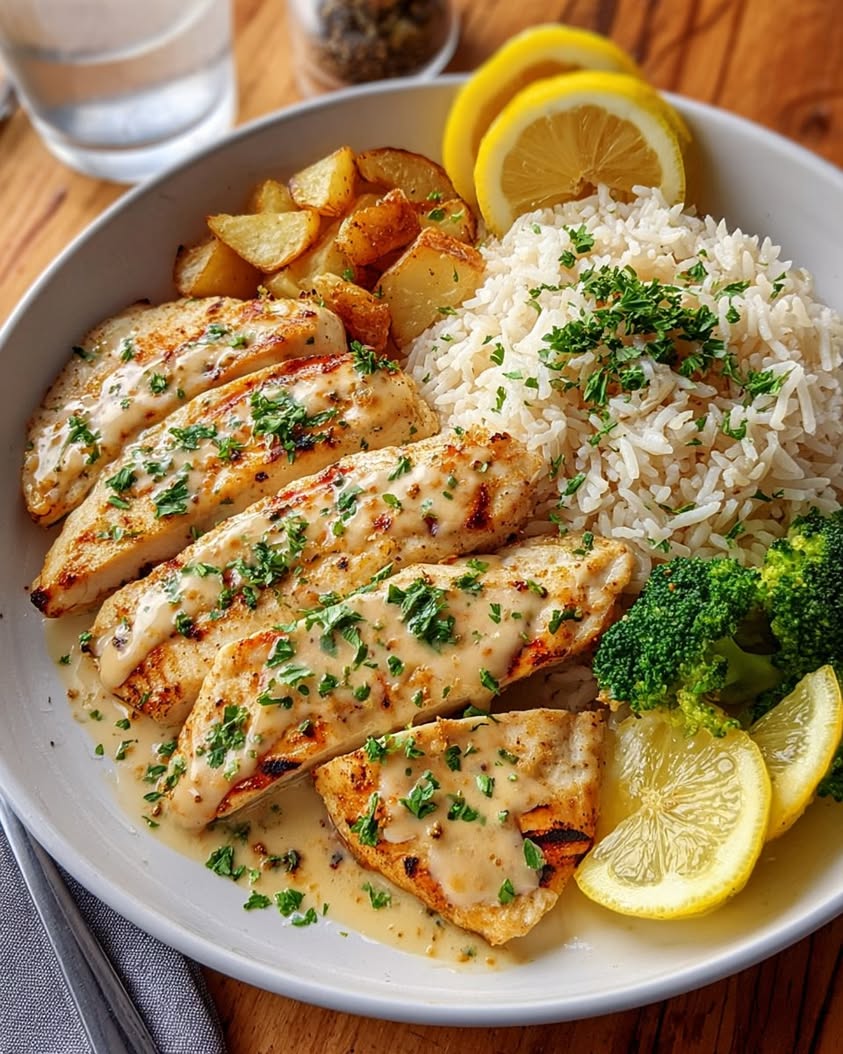
Creamy Lemon Herb Chicken with Rice & Roasted Potatoes: A Bright, Comforting One-Pan Meal Ready in Under 30 Minutes!
Imagine a dinner that delivers a complete, satisfying meal with minimal cleanup. This creamy lemon herb chicken with rice and roasted potatoes is precisely that kind of magic. The dish brings together tender, pan-seared chicken bathed in a luscious, bright lemon sauce, served alongside fluffy rice and crispy, golden potatoes. Ultimately, it is a symphony of textures and flavors designed to please the whole family without keeping you in the kitchen all night.
The beauty of this recipe lies in its harmonious balance. For instance, the zesty lemon and aromatic herbs cut through the richness of the creamy sauce, creating a light yet comforting profile. Meanwhile, the roasted potatoes provide a delightful crunch that contrasts beautifully with the soft rice and succulent chicken. Consequently, every bite is an experience, making it a standout meal that feels both special and utterly approachable for any weeknight.
Furthermore, this creamy lemon herb chicken with fluffy rice and crispy roasted potatoes is incredibly versatile. You can easily adapt the herbs based on what is fresh in your garden or adjust the lemon level to your personal taste. It is a forgiving recipe that encourages culinary creativity while guaranteeing delicious results. Therefore, whether you are cooking for a busy family dinner or a casual gathering with friends, this dish promises to be a crowd-pleaser that earns a permanent spot in your recipe rotation.
Quick Recipe Highlights
- Flavor Profile: This dish masterfully balances tangy, bright lemon with the savory depth of garlic and herbs. The creamy sauce adds a luxurious richness that ties all the elements together without being overly heavy. As a result, each component sings with a clear, delicious note that complements the others perfectly.
- Texture: You will enjoy a wonderful contrast of textures in every bite. The chicken is juicy and tender, the rice is light and fluffy, and the roasted potatoes offer a satisfying, crispy exterior with a soft, pillowy interior. This combination ensures the meal is never monotonous and always exciting to eat.
- Aroma: While cooking, your kitchen will fill with the irresistible scent of garlic and herbs sizzling in the pan, followed by the bright, fresh aroma of lemon zest and juice. The roasting potatoes add a comforting, earthy note that makes the entire house smell like a home-cooked masterpiece.
- Visual Appeal: The presentation is vibrant and inviting. Golden-brown chicken rests in a pale yellow, creamy sauce, surrounded by white, fluffy rice and speckled with the deep gold and brown of crispy roasted potatoes. A final sprinkle of fresh green herbs provides a beautiful pop of color that makes the dish look as good as it tastes.
- Skill Level Needed: This is a beginner-friendly recipe that uses fundamental cooking techniques like pan-searing, simmering, and roasting. If you can handle a skillet and an oven, you can absolutely create this impressive meal. The steps are straightforward and clearly outlined for success.
- Special Equipment: You only need basic kitchen tools: a large oven-safe skillet or sauté pan, a baking sheet for the potatoes, and a pot for the rice. A microplane or zester for the lemon is helpful but not strictly required. No fancy gadgets are necessary.
Recipe Overview
- Difficulty Level: We classify this creamy lemon herb chicken as an easy recipe. The techniques involved, such as searing chicken and making a simple pan sauce, are foundational skills. Additionally, the rice and potatoes cook simultaneously with minimal hands-on time. Consequently, even novice cooks can achieve restaurant-quality results with confidence and ease.
- Category: This recipe falls squarely into the main course category, providing a complete protein and starch component in one cohesive dish. It is perfect for a hearty family dinner, a comforting weekend meal, or even a casual yet impressive dish for entertaining guests. It truly covers all the bases for a satisfying supper.
- Cuisine: While not tied to one specific tradition, the dish draws inspiration from American comfort food and Mediterranean flavors. The use of lemon, garlic, and herbs is classic in many coastal European cuisines. Meanwhile, the creamy pan sauce and roasted potato side are beloved staples in American home cooking, creating a delicious fusion.
- Cost: This is a very cost-effective meal. Chicken thighs or breasts, rice, and potatoes are all affordable, pantry-friendly staples. The fresh herbs and lemon are the only items you might need to purchase specifically, and they are inexpensive. Overall, you can feed a family of four a gourmet-tasting meal for a fraction of the cost of takeout.
- Season: This creamy lemon herb chicken is fantastic year-round but feels particularly refreshing in the spring and summer when lemons are at their peak and fresh herbs are abundant. Conversely, the comforting, creamy elements make it equally welcome during the cooler fall and winter months, offering a bright spot of citrusy sunshine.
- Occasion: It is ideal for busy weeknights when you need something delicious and fast. Simultaneously, it is elegant enough for a casual weekend dinner party or a relaxed Sunday family supper. The all-in-one nature of the meal makes it a fantastic choice for any occasion that calls for minimal fuss and maximum flavor.
Why You’ll Love This Recipe
First and foremost, the taste and texture appeal is undeniable. The creamy lemon herb chicken delivers a perfect harmony of flavors. The bright acidity of the lemon cuts through the rich, velvety sauce, while the herbs add layers of aromatic complexity. Paired with the neutral fluffiness of the rice and the savory crunch of the potatoes, every forkful is a balanced and delightful experience. This combination ensures that your palate never gets bored, making it a meal you will crave again and again.
Next, consider the sheer convenience and preparation benefits. This recipe is designed for efficiency. You can have the potatoes roasting and the rice cooking while you focus on the chicken and sauce. Essentially, you are orchestrating a simple kitchen symphony where everything finishes at the same time. The cleanup is minimal, especially if you use a single oven-safe skillet for the chicken and sauce. Therefore, you get a complete, impressive dinner on the table with less stress and fewer dishes to wash afterward.
From a nutritional standpoint, this meal offers substantial advantages. Chicken provides high-quality protein essential for muscle repair and satiety. Potatoes are a great source of potassium and vitamin C, especially when you leave the skin on. Using a moderate amount of cream or a lighter alternative like half-and-half keeps the sauce luxurious without excessive calories. You are serving a balanced plate with protein, carbohydrates, and vegetables all in one go, which is a win for any health-conscious cook.
The social and entertaining value of this dish is also high. It looks beautiful when plated, giving the impression of a meal that took much longer to prepare. The familiar yet elevated flavors are universally appealing, making it a safe bet for guests with varying tastes. You can easily double the recipe to feed a crowd without significantly increasing your active kitchen time. Consequently, it allows you to spend more time with your guests and less time stuck in the kitchen.
Finally, the cost-effectiveness and accessibility are major selling points. The ingredients are humble, easy to find at any grocery store, and budget-friendly. You likely have many of them in your pantry already. This recipe proves that you do not need expensive, exotic ingredients to create a meal that feels special and tastes incredible. It is an accessible gateway to feeling like a accomplished home cook, building confidence with every successful, delicious batch.
Historical Background and Cultural Significance
The concept of cooking chicken with lemon and herbs has deep roots across multiple cultures, particularly around the Mediterranean basin. For centuries, cooks in regions like Greece, Italy, and Southern France have utilized the bright, preserving qualities of citrus to enhance poultry and seafood. The combination is timeless because it is both practical and delicious. Lemon’s acidity tenderizes the meat and adds a burst of flavor that complements the natural savoriness of chicken, while local herbs like oregano, thyme, and rosemary provide aromatic depth that defines regional cuisines.
Culturally, dishes featuring lemon and herbs often symbolize freshness, vitality, and the bounty of the sun-drenched coast. In many Mediterranean households, such meals are central to family gatherings and festive occasions, representing hospitality and care. The addition of a creamy sauce, however, introduces a more decadent, Northern European or American comfort food influence. This fusion creates a modern dish that bridges culinary traditions, appealing to a global palate that appreciates both bright, clean flavors and indulgent, creamy textures.
The evolution of this specific recipe is a testament to modern home cooking trends. The desire for complete, one-pan or streamlined meals has grown significantly with busier lifestyles. Combining the protein, starch, and vegetable elements into a single cohesive recipe is a relatively contemporary innovation. It takes the classic principles of flavor pairing—like lemon with chicken and herbs with potatoes—and optimizes them for efficiency. Thus, this creamy lemon herb chicken with rice and potatoes is less about strict tradition and more about intelligent, flavorful convenience for today’s cook.
Regional variations of this core idea are endless. In Greece, you might find a similar dish baked with potatoes and oregano, often without the cream. In France, a “poulet au citron” might feature a sauce of white wine, lemon, and herbs. The American version often embraces the creamy element for added comfort. This recipe sits happily in the middle, borrowing the best from each tradition to create something universally loved. It is a beautiful example of how food evolves, adapting old-world wisdom to new-world needs and tastes.
Ingredient Deep Dive
Chicken thighs or breasts are the star protein. Thighs are more forgiving and flavorful due to their higher fat content, staying juicy even if slightly overcooked. Breasts offer a leaner option but require more careful timing. Nutritionally, chicken is an excellent source of complete protein, B vitamins, and selenium. For the best results, choose organic or air-chilled chicken if possible, as it often has better texture and flavor. Pat the chicken completely dry before seasoning to ensure a perfect, golden sear that locks in juices.
Fresh lemons are non-negotiable for the vibrant flavor. You will use both the zest and the juice. The zest contains potent aromatic oils that provide intense lemon fragrance without the sharp acidity of the juice. The juice, meanwhile, adds the necessary tang to balance the cream. Lemons are rich in vitamin C and antioxidants. Always choose firm, heavy lemons with bright, unblemished skin. For maximum juice, roll them firmly on the counter before cutting and juicing. Store lemons at room temperature for short-term use or in the refrigerator for longer storage.
Heavy cream or half-and-half forms the base of the luxurious sauce. Heavy cream will yield a richer, thicker sauce, while half-and-half creates a lighter version that still feels indulgent. The fat in the cream emulsifies with the lemon juice and pan drippings, creating a smooth, cohesive sauce that clings to the chicken and rice. For a dairy-free alternative, full-fat coconut milk can work, though it will impart a subtle coconut flavor. Always add cream to the pan off the direct heat or at a very low simmer to prevent curdling.
Fresh herbs like parsley, thyme, and dill are essential for the “herb” component. Fresh parsley adds a clean, grassy note and vibrant color. Thyme contributes a subtle, earthy warmth that pairs perfectly with lemon and chicken. Dill offers a unique, slightly anise-like flavor that brightens the entire dish. Dried herbs can be used in a pinch, but use only one-third the amount, as they are more concentrated. Fresh herbs are best stored with their stems in a glass of water in the refrigerator, loosely covered with a plastic bag.
Yukon Gold or Russet potatoes are ideal for roasting. Yukon Golds have a naturally buttery flavor and creamy interior that makes them exceptionally delicious. Russets develop a wonderfully crispy skin and fluffy inside. Leaving the skin on adds texture, nutrients, and fiber. Potatoes are a great source of potassium, vitamin C, and complex carbohydrates that provide sustained energy. Cut them into uniform pieces to ensure even cooking. Tossing them in oil and seasoning before roasting is crucial for achieving that desirable golden, crispy exterior.
Common Mistakes to Avoid
- Not Drying the Chicken: Failing to pat the chicken completely dry with paper towels before seasoning will prevent a proper sear. Moisture on the surface creates steam, which inhibits the Maillard reaction responsible for that beautiful, flavorful brown crust. Always take this simple step for a perfect golden exterior.
- Crowding the Pan: Adding too many chicken pieces to the skillet at once will cause them to steam rather than sear. The temperature of the pan drops, and moisture cannot evaporate quickly enough. Cook in batches if necessary to ensure each piece has ample space for proper browning and caramelization.
- Overcooking the Chicken Breast: If using chicken breasts, they cook faster than thighs and can quickly become dry and tough. Use a meat thermometer and remove them from the pan when they reach an internal temperature of 165°F. Let them rest before slicing to allow the juices to redistribute.
- Adding Lemon Juice to a Scorching Hot Pan: When deglazing the pan to make the sauce, if the pan is too hot, the lemon juice can evaporate instantly and turn bitter. Let the pan cool slightly off the heat for a moment before adding the juice to scrape up the flavorful browned bits properly.
- Curdling the Cream Sauce: Adding cold cream to a very hot pan or bringing the sauce to a rolling boil after adding the cream can cause it to separate and curdle. Always reduce the heat to low or take the pan off the burner before stirring in the cream, and then warm it gently.
- Underseasoning the Potatoes and Rice: Potatoes and rice need ample seasoning throughout the cooking process, not just at the end. Season the water for the rice generously with salt. Toss the potato cubes with oil, salt, and pepper before roasting. This builds layers of flavor from the inside out.
- Cutting Potatoes Unevenly: If your potato pieces are different sizes, they will cook unevenly. Smaller pieces will burn while larger ones remain hard. Take the time to cut them into uniform 1-inch cubes for consistent roasting and perfect texture in every bite.
- Skipping the Fresh Herb Garnish: While it may seem like a minor finishing touch, the fresh herbs added at the end provide a crucial burst of color, fresh aroma, and bright flavor that cuts through the richness of the sauce. Do not omit this final, impactful step.
Essential Techniques
Pan Searing for Flavor: Searing the chicken is the first and most critical step for building deep flavor. The technique involves cooking the chicken over medium-high heat to create a caramelized, brown crust through the Maillard reaction. This reaction generates hundreds of new flavor compounds that form the foundation of your sauce. To master it, ensure your pan is properly preheated and your chicken is dry. Do not move the chicken for the first few minutes to allow a crust to form. The visual cue for success is a golden-brown, easily releasable surface that does not stick to the pan.
Deglazing to Create Sauce: After removing the chicken, you will see browned bits stuck to the bottom of the pan. These bits, called “fond,” are packed with flavor. Deglazing is the process of adding a liquid—in this case, lemon juice and broth—to the hot pan and using a wooden spoon to scrape those bits loose. This technique dissolves the fond into the liquid, creating an instant flavor base for your sauce. The key is to do this over medium heat, ensuring you scrape thoroughly. The pan is ready when the fond is dissolved and the liquid has reduced slightly.
Building a Cream Pan Sauce: A pan sauce is a quick, flavorful sauce made in the same pan used to cook the protein. After deglazing, you will whisk in cream and herbs to create a rich, cohesive sauce. The technique requires gentle heat to prevent the cream from breaking. Always add the cream off direct heat and whisk constantly as it incorporates. The sauce should thicken slightly as it simmers and coats the back of a spoon. If it becomes too thick, you can thin it with a splash of broth. The result should be smooth, glossy, and luxurious.
Roasting for Crispy Potatoes: Roasting transforms humble potatoes into a crispy, golden side dish. The technique relies on high, dry heat. Tossing the potatoes in oil ensures even cooking and promotes browning, while spreading them in a single layer with space between each piece allows hot air to circulate, enabling crispiness instead of steaming. Do not overcrowd the baking sheet. The visual cue for perfectly roasted potatoes is a deep golden-brown color on the edges and a fork-tender interior. Shaking the pan halfway through cooking helps expose all sides to the heat.
Pro Tips for Perfect Creamy Lemon Herb Chicken
First, for the crispiest potatoes, parboil the cubed potatoes in salted water for 5-7 minutes before roasting. This step partially cooks the interior and roughens the edges, which leads to an incredibly crispy and fluffy final result. Drain them well and let them steam dry for a minute before tossing with oil.
Second, use a combination of lemon zest and juice. The zest contains fragrant oils that provide a powerful lemon aroma without extra acidity. Add the zest to the sauce at the very end, off the heat, to preserve its bright flavor and vibrant color.
Third, let your chicken rest after searing and before adding it back to the sauce. A brief 5-minute rest allows the juices to redistribute throughout the meat. Consequently, when you slice it or return it to the pan, those flavorful juices stay in the chicken instead of running out onto the plate.
Fourth, if your sauce seems too thin after adding the cream, let it simmer gently for a few more minutes to reduce and thicken. Conversely, if it becomes too thick, simply whisk in a tablespoon or two of additional chicken broth until you reach the desired consistency.
Fifth, toast your rice in a bit of oil or butter before adding the cooking water. This simple step coats each grain in fat, which helps them cook up separate and fluffy rather than clumpy. It also adds a subtle, nutty depth of flavor to the rice.
Sixth, use an instant-read thermometer for the chicken. This is the most reliable way to achieve perfect doneness without guesswork. Remove chicken breasts at 165°F and thighs at 175°F for optimal tenderness and food safety.
Seventh, reserve some fresh, chopped herbs to sprinkle over the finished dish just before serving. This adds a final layer of fresh flavor and a beautiful visual contrast that makes the meal look professionally plated.
Eighth, warm your serving plates. This is a small trick that makes a big difference, especially for a creamy sauce. A warm plate will keep the sauce fluid and the entire meal at the ideal eating temperature for longer.
Variations and Adaptations
Regional Variations: To lean into Mediterranean flavors, add kalamata olives and sun-dried tomatoes to the sauce, and use oregano as the primary herb. For a French twist, deglaze the pan with a splash of dry white wine before adding the lemon juice and finish the sauce with a tablespoon of Dijon mustard and tarragon.
Seasonal Adaptations: In spring, incorporate fresh asparagus spears or peas into the dish during the last few minutes of cooking. For summer, use fresh basil and cherry tomatoes. In fall, add roasted Brussels sprouts or cubed butternut squash alongside the potatoes. Winter calls for heartier greens like kale stirred into the sauce at the end.
Dietary Modifications: For a gluten-free version, ensure your chicken broth is certified gluten-free. To make it dairy-free, substitute the heavy cream with full-fat canned coconut milk and use a dollop of dairy-free butter alternative. For a lower-carb option, serve the chicken and sauce over cauliflower rice and replace the potatoes with roasted radishes or turnips.
Flavor Variations: Add a teaspoon of capers to the sauce for a briny, salty punch. Incorporate a pinch of red pepper flakes with the garlic for a subtle heat. Swap the lemon for orange or Meyer lemon for a sweeter, more complex citrus note. A tablespoon of whole-grain mustard whisked into the cream adds wonderful depth.
Texture Modifications: For extra crispy chicken, dredge the seasoned pieces in a light coating of flour before searing. This will create an even thicker crust that holds up well in the sauce. For creamier potatoes, skip roasting and instead simmer cubed potatoes directly in the sauce until tender.
Presentation Alternatives: Instead of serving components separately, create a bowl by placing a scoop of rice at the bottom, topping with sliced chicken, spooning the sauce over everything, and garnishing with potatoes and herbs. For a family-style presentation, arrange everything on a large, beautiful platter for guests to serve themselves.
Serving and Presentation Guide
Plating Techniques: For individual plates, start with a bed of fluffy white rice slightly off-center. Place a piece of creamy lemon herb chicken partially over the rice. Spoon a generous amount of sauce over the chicken, allowing some to pool around the rice. Artfully scatter the crispy roasted potatoes around the perimeter of the plate, creating height and texture contrast.
Garnishing Ideas: The classic garnish is a generous sprinkle of freshly chopped parsley, dill, or chives. For extra color and flavor, add thin slices of lemon or a twist of lemon zest on top. A final crack of black pepper or a light drizzle of high-quality olive oil just before serving adds a professional touch.
Traditional Accompaniments: While this is a complete meal, a simple side salad with a light vinaigrette perfectly complements the richness of the dish. Steamed green beans, broccoli, or a simple arugula salad with shaved Parmesan are excellent choices that add a fresh, green element to the plate.
Modern Serving Suggestions: Serve the components in separate bowls for a casual, family-style meal where everyone can build their own plate. Alternatively, for a more deconstructed presentation, serve the creamy lemon herb chicken sliced on a board with the sauce in a small pitcher, rice in a bowl, and potatoes in a basket, allowing for interactive dining.
Temperature Considerations: This dish is best served immediately while the chicken is juicy, the sauce is warm and fluid, and the potatoes are at their peak crispiness. If you must hold components, keep the sauce warm on a very low heat, the potatoes in a warm oven (spread out to prevent sogginess), and the chicken tented with foil.
Portion Control Tips: A standard serving is one piece of chicken (about 6 ounces), ¾ cup of cooked rice, and 1 cup of roasted potato cubes. For heartier appetites, increase the potato portion. For lighter meals, focus on extra vegetables and a slightly smaller portion of rice and potatoes. The sauce is rich, so a little goes a long way.
Wine and Beverage Pairing
Wine Pairings: A crisp, unoaked white wine is the ideal companion for creamy lemon herb chicken. A Sauvignon Blanc, with its high acidity and notes of citrus and grass, will cut through the richness of the sauce and mirror the lemon flavors. A Pinot Grigio or a dry Riesling are also excellent choices. If you prefer red, opt for a light-bodied, low-tannin red like a Pinot Noir, served slightly chilled.
Non-Alcoholic Alternatives: Sparkling water with a squeeze of lemon or lime is a refreshing and simple pairing. For something more special, try a homemade lemonade or a ginger beer. An herbal iced tea, such as mint or verbena, complements the herbal notes in the dish beautifully without competing with the flavors.
Coffee/Tea Pairings: After the meal, a cup of herbal tea is a lovely finish. Lemon verbena or chamomile tea echoes the citrus and soothing qualities of the dinner. For coffee lovers, a medium-roast coffee with low acidity would be a better choice than a dark, bitter roast, which could clash with the bright lemon notes.
Temperature Considerations: White wines should be served well-chilled, between 45-50°F. Red wine, if using Pinot Noir, can be served slightly cooler than room temperature, around 55°F. Non-alcoholic sparkling drinks are best served very cold to provide a refreshing contrast to the warm, creamy meal.
Serving Suggestions: Always serve wine in appropriate glassware to enhance the aroma and taste. For water or iced tea, use tall glasses with plenty of ice. Encourage guests to take a sip of their beverage between bites to cleanse the palate, especially given the rich and flavorful nature of the creamy lemon herb chicken sauce.
Storage and Shelf Life
Storage Methods: Store all components separately for best results. Place the creamy lemon herb chicken and sauce in an airtight container. Store the rice in its own container, and keep the roasted potatoes separate. This prevents the potatoes from becoming soggy and the rice from absorbing all the sauce and becoming mushy.
Temperature Requirements: All leftovers must be refrigerated within two hours of cooking. Transfer them to the refrigerator promptly, as the creamy sauce is a perishable item. Do not leave the finished dish at room temperature for an extended period, as this can allow harmful bacteria to grow.
Container Recommendations: Use shallow, airtight containers rather than deep ones. Shallow containers allow the food to cool more quickly and evenly, which is critical for food safety. Glass containers are ideal because they do not absorb odors and allow you to see the contents easily.
Signs of Spoilage: Discard leftovers if you notice an off or sour smell, especially from the creamy sauce. Visible mold, significant discoloration, or a slimy texture on the chicken or potatoes are clear indicators that the food has spoiled and should not be consumed.
Reheating Instructions: Reheat the chicken and sauce gently in a skillet over low heat, adding a splash of broth or water to loosen the sauce if it has thickened. Microwave reheating can cause the sauce to separate; if you must use one, do so at 50% power in short intervals, stirring frequently. Re-crisp potatoes in an air fryer or a 400°F oven for 5-10 minutes.
Freezing Guidelines: Freezing is not recommended for the complete dish due to the dairy-based sauce and potatoes, which can separate and become grainy or watery upon thawing. The cooked, un-sauced chicken can be frozen for up to 3 months. Thaw in the refrigerator before reheating and making a fresh batch of sauce.
Make Ahead Strategies
Prep Timeline: You can prep several components 1-2 days in advance. Cube the potatoes and store them submerged in cold water in the refrigerator to prevent browning. Trim and season the chicken, then keep it covered on a plate in the fridge. Measure out your dry herbs, broth, and cream. Chop the fresh herbs, but store them separately in a damp paper towel inside a bag.
Storage Between Steps: Keep prepped ingredients in clearly labeled containers in the refrigerator. The seasoned chicken should be on the bottom shelf to prevent cross-contamination. The potato water should be changed daily if storing for more than a day. This organized approach makes the actual cooking day fast and efficient.
Quality Impact Assessment: Prepping the potatoes in water can actually improve their texture for roasting, as it removes excess starch. Pre-seasoning the chicken allows the salt to penetrate, resulting in more flavorful and tender meat. However, fresh herbs should always be added at the end for maximum vibrancy, so keep those separate.
Assembly Tips: On cooking day, drain and thoroughly dry the potatoes before tossing with oil and roasting. Pat the chicken dry again if any moisture has accumulated. Have all your pre-measured ingredients lined up next to the stove. This “mise en place” turns the cooking process into a smooth, enjoyable assembly rather than a frantic search for ingredients.
Reheating Guidelines: If you fully cook the dish ahead, follow the gentle reheating instructions in the storage section. For best results, consider cooking the chicken and sauce and roasting the potatoes, but storing them separately. Reheat the chicken in the sauce on the stove, and re-crisp the potatoes in the oven just before serving.
Fresh Element Additions: No matter how much you prep ahead, always plan to add a final garnish of freshly chopped herbs just before serving. If using lemon zest, add that at the end as well. These fresh elements are non-negotiable for restoring the bright, lively flavors that define creamy lemon herb chicken.
Scaling Instructions
Halving the Recipe: To serve two, simply divide all ingredient quantities by two. Use a medium skillet for the chicken to maintain proper searing surface contact. A quarter-sheet pan is perfect for the smaller batch of potatoes. Cooking times may be slightly shorter, so start checking for doneness a few minutes earlier than the original recipe suggests.
Doubling or Tripling: For a crowd, multiply the ingredients consistently. The key challenge is searing the chicken; you must do this in batches to avoid overcrowding. Use multiple baking sheets for the potatoes, and rotate them in the oven halfway through cooking. You may need to prepare the rice in batches or use a larger pot. Consider making the sauce in a separate saucepan after all the chicken is seared.
Equipment Adjustments: Scaling up requires larger or additional equipment. Have two large skillets ready for batch-searing chicken, or sear all the chicken first and keep it warm in a low oven. Use multiple oven racks and baking sheets for potatoes. A large Dutch oven can be useful for making a big batch of sauce.
Timing Modifications: When doubling, the active prep time will increase slightly due to batch cooking. However, the oven time for potatoes and the simmering time for the sauce will remain roughly the same. Plan your start time so the chicken is seared last, ensuring it is hot and fresh when the sauce is ready.
Storage Considerations: Leftovers from a scaled-up batch are great for meal prep. Store individual portions in containers as described in the storage section. Remember that a larger volume of food will take longer to cool in the refrigerator, so divide it into several shallow containers instead of one deep one to cool it safely and quickly.
Nutritional Deep Dive
Macro Breakdown: A typical serving provides a balanced mix of macronutrients. The chicken offers high-quality protein crucial for satiety and muscle maintenance. The potatoes and rice supply complex carbohydrates, which are the body’s primary energy source. The cream in the sauce contributes healthy fats necessary for nutrient absorption and hormone function. Together, they create a meal that provides sustained energy and fullness.
Micronutrient Analysis: This dish is a good source of several vitamins and minerals. Chicken provides B vitamins, particularly B6 and niacin, which support metabolism. Potatoes are rich in potassium and vitamin C, especially with the skin on. Lemon juice adds a boost of vitamin C and antioxidants. Herbs like parsley contribute vitamin K and various phytonutrients with anti-inflammatory properties.
Health Benefits: The combination of lean protein and complex carbs can help stabilize blood sugar levels. The herbs and lemon provide antioxidants that combat oxidative stress. Using olive oil for cooking adds heart-healthy monounsaturated fats. This meal supports overall wellness by combining nutrient-dense ingredients in a delicious, home-cooked format that avoids processed additives.
Dietary Considerations: For those monitoring sodium, you can control the salt level by using low-sodium broth and seasoning to taste. The dish contains dairy, so it is not suitable for those with lactose intolerance without modification. It is naturally gluten-free if you ensure your broth is certified GF. The recipe is adaptable to various dietary needs with simple substitutions.
Portion Analysis: A standard portion as outlined provides a satisfying meal. For weight management, you can adjust the ratios: increase the chicken and vegetable portions slightly while moderately reducing the rice and potato serving. The creamy sauce is calorie-dense, so be mindful of the amount you spoon over your plate. Using a measuring cup for rice and potatoes can help with portion awareness.
Weight Management Tips: To make this dish more weight-conscious, use half-and-half instead of heavy cream, or a mixture of broth and a touch of cream. Increase the volume of non-starchy vegetables by adding spinach or zucchini to the sauce. Ensure your plate is half filled with vegetables, a quarter with protein, and a quarter with starch for a balanced, calorie-controlled approach.
Dietary Adaptations
Gluten-Free: This recipe is naturally gluten-free as written. The only potential hidden source of gluten is in the chicken broth. Always check the label to ensure you are using a certified gluten-free broth. All other ingredients—chicken, lemon, cream, herbs, rice, potatoes—are inherently gluten-free.
Dairy-Free: Replace the heavy cream with full-fat canned coconut milk for a rich, dairy-free alternative. The coconut flavor pairs surprisingly well with lemon and herbs. Alternatively, you can use a plain, unsweetened dairy-free creamer designed for cooking. Use olive oil or a dairy-free butter alternative for searing the chicken and roasting the potatoes.
Vegan: For a vegan version, substitute the chicken with thick slices of pan-seared cauliflower steaks or crispy chickpeas. Use vegetable broth and full-fat coconut milk for the sauce. Nutritional yeast can be added to the sauce for a cheesy, umami depth. Serve over rice with roasted potatoes for a completely plant-based, comforting meal.
PrintCreamy Lemon Herb Chicken with Rice & Roasted Potatoes
Description
A comforting one-pan meal featuring tender chicken in a zesty lemon herb cream sauce, served with fluffy rice and crispy roasted potatoes.
Ingredients
For the Crust:
- 4 boneless, skinless chicken breasts
- 1 lb baby potatoes, halved
- 1 cup long-grain white rice
- 2 cups chicken broth
- 1 cup heavy cream
- 2 lemons (juice and zest)
- 3 cloves garlic, minced
- 2 tbsp fresh parsley, chopped
- 1 tbsp fresh thyme leaves
- 2 tbsp olive oil
- Salt and black pepper to taste
Instructions
1. Prepare the Crust:
- Preheat oven to 400°F (200°C). Toss halved potatoes with 1 tbsp olive oil, salt, and pepper, then spread on a baking sheet. Roast for 25-30 minutes until golden and tender.
- Season chicken breasts with salt and pepper. In a large skillet, heat 1 tbsp olive oil over medium-high heat. Sear chicken for 5-6 minutes per side until browned and cooked through. Remove and set aside.
- In the same skillet, add garlic and cook for 1 minute until fragrant. Stir in rice, chicken broth, lemon juice, and zest. Bring to a boil, then reduce heat, cover, and simmer for 15-18 minutes until rice is cooked.
- Return chicken to the skillet. Pour in heavy cream and add thyme. Simmer for 5 minutes until sauce thickens. Stir in parsley and adjust seasoning. Serve chicken and rice with roasted potatoes on the side.
Notes
You can customize the seasonings to taste.

I’m Shaykee—born in Morocco, seasoned across continents. From airplane galleys to home kitchens, I share the flavors and stories that shaped my journey.