
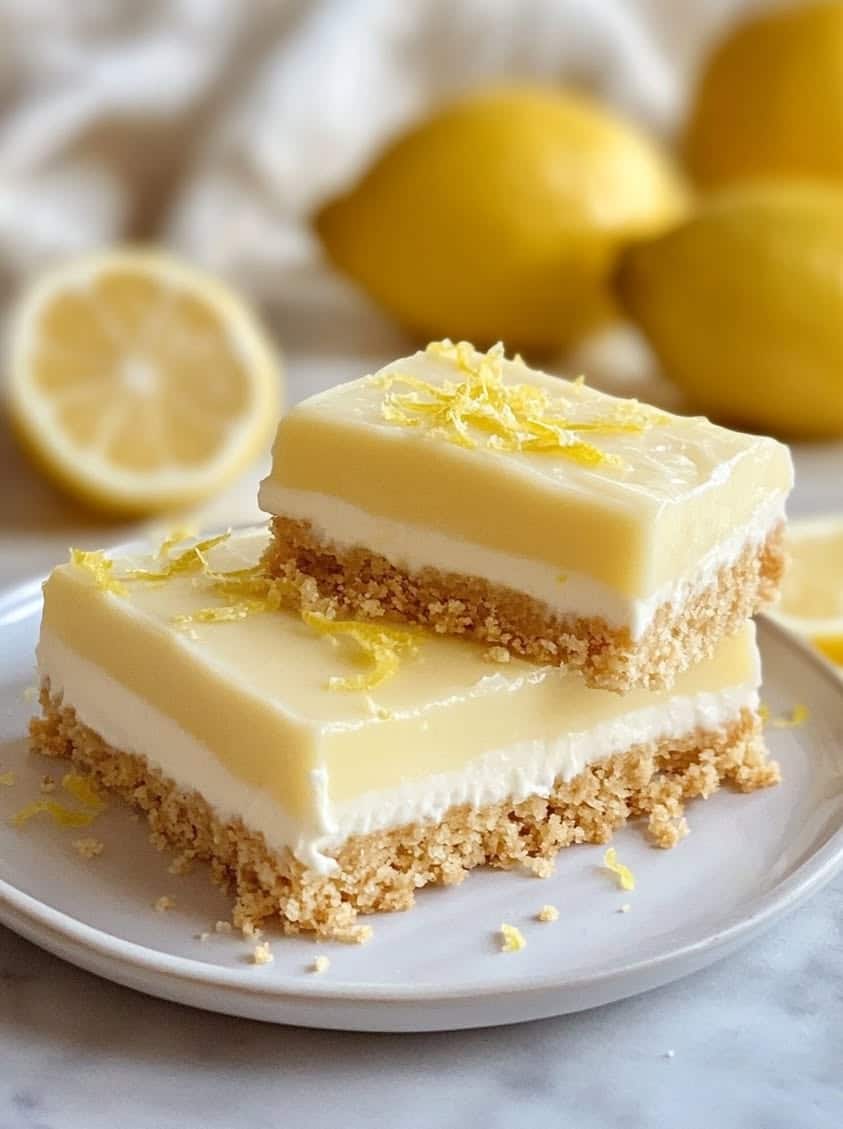
Cool, Creamy Lemon Slices with a Buttery Biscuit Base: An Easy, No-Bake Dessert That’s Perfectly Sweet, Tangy, and Refreshing!
Imagine a dessert that perfectly balances sweet and tart flavors with an irresistible contrast of textures. These cool, creamy lemon slices with a buttery biscuit base deliver exactly that experience in every single bite. Moreover, this delightful treat requires absolutely no baking, making it a lifesaver for hot summer days or last-minute gatherings. Consequently, you get a dessert that looks impressively elegant yet comes together with minimal effort and maximum flavor impact.
The magic of this recipe lies in its beautiful simplicity. Firstly, a crunchy, salty-sweet base made from crushed biscuits and melted butter provides a sturdy foundation. Secondly, a luxuriously smooth and tangy lemon filling, set with just a bit of gelatin, creates a cloud-like layer that melts on your tongue. Ultimately, the final result is a refreshing, make-ahead dessert that will have everyone asking for the recipe. This cool, creamy lemon slices with a buttery biscuit base recipe is a true crowd-pleaser.
Furthermore, the visual appeal of these lemon slices is undeniable. When you cut into the pan, you reveal clean layers of golden crust and vibrant yellow filling. Additionally, a dusting of powdered sugar or a garnish of lemon zest adds a professional finish. Therefore, this dessert is perfect for everything from a casual family BBQ to a more formal afternoon tea. In essence, it’s a versatile recipe that belongs in every home cook’s repertoire.
Quick Recipe Highlights
- Flavor Profile: These cool, creamy lemon slices offer a masterful balance. The filling is brilliantly tangy and bright, thanks to fresh lemon juice and zest. Meanwhile, the buttery biscuit base provides a rich, caramel-like sweetness that perfectly counters the citrus zing.
- Texture: The texture contrast is a key feature. You get a firm, crumbly, and satisfying bite from the biscuit base. Subsequently, it gives way to an incredibly smooth, creamy, and almost mousse-like lemon layer that simply dissolves on the palate.
- Aroma: The aroma is instantly uplifting and summery. As soon as you zest the lemons, the kitchen fills with their bright, citrusy essential oils. Furthermore, the scent of the crushed biscuits and butter adds a warm, comforting note that promises a delicious treat.
- Visual Appeal: This dessert is a showstopper on any table. The stark contrast between the pale yellow creamy layer and the darker golden biscuit base is visually striking. Additionally, when sliced neatly, each piece looks like it came from a professional bakery.
- Skill Level Needed: This is a fantastic beginner-friendly recipe. Importantly, it requires no special pastry skills, no oven work, and no complex techniques. Basically, if you can melt butter, squeeze lemons, and whisk, you can absolutely master this dessert.
- Special Equipment: You need very little special equipment. A food processor or zip-top bag and rolling pin will crush the biscuits efficiently. Also, a standard 8×8 inch baking pan, lined with parchment paper, is essential for easy removal and clean slices.
Recipe Overview
- Difficulty Level: We rate this recipe as easy for several compelling reasons. Primarily, there is no baking involved, eliminating concerns about oven temperatures or doneness. Instead, the recipe relies on simple techniques like mixing, pressing, and chilling. Consequently, even novice cooks can achieve perfect results on their first attempt.
- Category: This dessert falls squarely into the category of no-bake sweets and refrigerator cakes. It is an ideal treat for hot weather when you want to avoid turning on the oven. Moreover, it fits beautifully into menus for picnics, potlucks, and make-ahead entertaining due to its portability and stability.
- Cuisine: While similar concepts exist worldwide, this version of cool, creamy lemon slices draws inspiration from classic American no-bake desserts and British lemon cheesecake slices. It utilizes common pantry ingredients like sweet biscuits and canned condensed milk, making it accessible and familiar. Ultimately, it’s a modern, simplified take on beloved creamy lemon treats.
- Cost: This is an incredibly budget-friendly dessert. The main ingredients—simple biscuits, butter, lemons, sweetened condensed milk, and cream—are all inexpensive and easy to find. Therefore, you can create a stunning dessert that serves a crowd for a fraction of the cost of a store-bought cake or pastries.
- Season: This recipe shines brightest in the spring and summer seasons. The bright, citrusy flavor is inherently refreshing and cooling. Furthermore, its no-bake nature makes it the perfect dessert to prepare during heatwaves when a heavy, warm dessert is less appealing.
- Occasion: These lemon slices are versatile for any occasion. They are casual enough for a weeknight family dessert yet elegant enough for a baby shower, bridal luncheon, or holiday party. Importantly, because they are made ahead, they reduce stress on the day of your event.
Why You’ll Love This Recipe
Firstly, the taste and texture appeal is immediate and universal. The combination of the rich, buttery base with the explosively tangy and creamy lemon topping is simply addictive. Each bite delivers a perfect harmony of sweet and sour, crunchy and smooth. Consequently, this dessert satisfies multiple cravings at once, making it a guaranteed hit with both adults and children. The refreshing lemon flavor cleanses the palate, leaving you wanting just one more slice.
Secondly, the convenience factor cannot be overstated. Since this is a no-bake recipe, you avoid heating up your kitchen and dealing with finicky baking times. The active preparation time is under 30 minutes; after that, the refrigerator does all the work. This makes it an ideal project for busy days or when you need a last-minute impressive dessert. Moreover, the clean-up is relatively simple, often involving just one bowl and a food processor.
Thirdly, while this is a treat, it offers some nutritional advantages over heavily baked or frosted desserts. Lemons are a good source of vitamin C and antioxidants. Using real lemon juice and zest provides natural flavor without artificial additives. You control the sweetness, and the portion size is naturally defined by the slices, helping with mindful eating. It’s a dessert that feels slightly lighter and more refreshing than many alternatives.
Fourthly, the social and entertaining value is high. A tray of these beautifully sliced lemon bars looks professional and thoughtful. They are easy to serve on a platter and eat with fingers, making them perfect for buffets or stand-up parties. The bright, cheerful color and familiar yet sophisticated flavor spark conversation and compliments. Essentially, this recipe builds your reputation as a host who serves delicious, beautiful food without apparent stress.
Finally, the cost-effectiveness and accessibility seal the deal. You likely have most ingredients in your pantry already, or they are a quick, inexpensive trip to the grocery store away. Compared to ordering a specialty dessert, making these lemon slices at home saves significant money. Furthermore, the recipe is highly adaptable to different biscuit brands or citrus fruits, making it accessible regardless of your location or budget.
Historical Background and Cultural Significance
The concept of a layered, set dessert with a biscuit base and a creamy, citrus topping has roots in several culinary traditions. Notably, refrigerator cakes and icebox pies became immensely popular in the United States in the mid-20th century. This trend coincided with the widespread adoption of home refrigerators and the marketing of convenience products like sweetened condensed milk and gelatin. These cool, creamy lemon slices are a direct descendant of that era, celebrating the joy of easy, make-ahead desserts.
Culturally, lemon desserts often symbolize freshness, cleanliness, and brightness. In many European traditions, a slice of lemon tart or cake concludes a rich meal as a palate cleanser. The no-bake version democratized this experience, allowing home cooks without pastry expertise to achieve a similar refreshing finish. Consequently, recipes like this one became staples in community cookbooks and family recipe cards, passed down as a reliable favorite for potlucks and family reunions.
The evolution of this specific recipe is a story of simplification and adaptation. Early versions might have involved cooking a lemon curd on the stovetop or using a more complex cheese filling. The modern iteration, using sweetened condensed milk for instant sweetness and body, represents a brilliant shortcut. This innovation created a foolproof filling that sets reliably without curdling, ensuring perfect results every time. Therefore, the recipe we know today is a testament to culinary ingenuity.
Regional variations of this concept abound. In Australia and New Zealand, a similar dessert is often called a “lemon slice” or “lemon cheesecake slice,” sometimes incorporating desiccated coconut into the base. In the UK, a “lemon fridge cake” might use digestive biscuits and include whipped cream. Across the American South, a “lemon icebox pie” with a similar filling in a graham cracker crust is a classic. Each variation tweaks the ratio of tang to sweet or the texture of the base, reflecting local tastes and ingredient availability.
Ingredient Deep Dive
Starting with the base, plain sweet biscuits or digestive biscuits are the foundation. These biscuits originated in the United Kingdom as a digestive aid but are now beloved worldwide for their slightly sweet, wheaty flavor and perfect crumb structure. Nutritionally, they provide carbohydrates for energy and a small amount of fiber. For the best results, choose a plain, semi-sweet variety. Store them in a cool, dry place. As a substitution, graham crackers are an excellent and common alternative, offering a slightly different, honeyed flavor profile.
Unsalted butter binds the biscuit crumbs. Butter has been a treasured cooking fat for centuries, prized for its rich flavor and ability to carry other tastes. It contains vitamins A and E. Using unsalted butter allows you to control the overall saltiness of the base. For selection, choose a high-quality butter for the best flavor. It should be stored refrigerated. If you only have salted butter, simply omit any added salt from the recipe. For a dairy-free version, a plant-based butter substitute that is good for baking will work.
The star of the show is, of course, fresh lemons. Lemons have a storied history, likely originating in Asia and spreading via trade routes to the Mediterranean and beyond. They are packed with vitamin C and flavonoids. For this recipe, you need both the zest and the juice. Always choose lemons that are heavy for their size with bright, smooth skin, as they will be juicier. Roll them on the counter before cutting to maximize juice yield. Store lemons at room temperature for short-term use or in the fridge for longer storage. Bottled lemon juice can be a last-resort substitute but will lack the vibrant flavor and aroma of fresh.
Sweetened condensed milk is the secret to the creamy, stable filling. This product was invented in the 19th century as a way to preserve milk without refrigeration. It is milk that has had about 60% of its water removed and is heavily sweetened with sugar. It provides a rich, caramelized sweetness and a thick, smooth body. There is no direct substitute that replicates its unique properties, though some recipes use a combination of cream cheese and powdered sugar. Once opened, transfer unused condensed milk to a sealed container and refrigerate for up to two weeks.
Heavy cream or whipping cream adds lightness and volume to the filling. Cream has been separated from milk for millennia, valued for its luxurious fat content. When whipped, it incorporates air, giving the lemon layer a mousse-like texture. For success, ensure your cream is very cold before whipping. Check the label to confirm it has a fat content of at least 35%. Store it in the coldest part of your refrigerator. For a lighter version, you can use full-fat coconut cream, though it will impart a slight coconut flavor.
Common Mistakes to Avoid
- Not crushing the biscuits finely enough. If the biscuit crumbs are too coarse, the base will be crumbly and difficult to slice neatly. Always process or crush them until they resemble coarse sand for a base that holds together firmly.
- Using warm butter. If the melted butter is too hot when mixed with the crumbs, it can make the base greasy. Allow the melted butter to cool slightly before combining it with the biscuit crumbs to achieve the perfect sandy texture.
- Insufficiently pressing the base. A loosely packed base will fall apart when you try to slice the dessert. Use the bottom of a flat glass or measuring cup to press the crumbs very firmly and evenly into the pan. This creates a solid foundation.
- Not properly lining the pan. Skipping the parchment paper liner is a recipe for disaster. You will struggle to remove the slices intact. Always line your pan with parchment paper, leaving an overhang on two sides to act as handles for easy lifting.
- Adding lemon juice to warm cream mixture. If your condensed milk or gelatin mixture is still warm when you add the lemon juice, it can cause the dairy to curdle or the gelatin to clump. Ensure all components are at room temperature or cool before combining.
- Under-whipping the cream. If the cream is only softly whipped, the filling may not set firmly enough and could be too dense. Whip the cream to firm peaks so it holds its structure when folded into the lemon mixture, creating a light and airy texture.
- Not allowing enough chilling time. Impatience is the enemy of no-bake desserts. If you try to slice it before it’s fully set, the layers will separate and the filling will be runny. Chill for the full four hours, or preferably overnight, for perfect, clean slices.
- Using bottled lemon juice exclusively. While convenient, bottled juice lacks the fresh, bright flavor and aromatic oils of real lemons. Always use fresh lemon juice and zest for the best, most vibrant taste in your cool, creamy lemon slices.
Essential Techniques
Creating the perfect biscuit base requires the technique of pressing. This step is crucial because it compacts the buttery crumbs into a solid, even layer that will cut cleanly. To master it, first ensure your crumb mixture has a texture like wet sand. Then, use a flat-bottomed object like a glass or measuring cup to press down firmly and evenly across the entire pan. A common pitfall is pressing only the center, leaving the edges loose. The visual cue for success is a base that looks smooth, flat, and holds together when you gently touch the edge.
Zesting lemons is a simple but vital technique for maximizing flavor. The zest contains the essential oils where the true lemon aroma resides. Use a fine microplane grater and gently rub the lemon against it, rotating the fruit. Importantly, avoid grating the bitter white pith beneath the yellow skin. The goal is to collect fluffy, bright yellow zest. If you see white specks, you’ve gone too deep. This technique instantly elevates the flavor of your filling from simply tart to complex and fragrant.
Folding is the technique used to combine the whipped cream with the lemon mixture without deflating it. This preserves the air bubbles that give the filling its light texture. To fold, use a large rubber spatula to cut down through the center of the bowl, scrape along the bottom, and bring the mixture up and over the top. Gently rotate the bowl as you go. The common mistake is stirring or beating, which will knock out the air and result in a dense filling. You know you’re done when no streaks of white cream remain.
Pro Tips for Perfect Cool, Creamy Lemon Slices
For an extra-stable base, bake it briefly. Although this is a no-bake recipe, you can place the pressed biscuit base in a preheated 350°F (180°C) oven for 8-10 minutes. This toasts the crumbs and sets the butter, creating a base that is even more crisp and resistant to sogginess. Let it cool completely before adding the filling.
Bloom your gelatin properly. If using gelatin to ensure a firm set, always sprinkle the powder over a small amount of cold water or lemon juice in a wide bowl. Let it sit for 5-10 minutes until it becomes a spongy solid. Then, gently melt it over a double boiler or in the microwave for very short bursts. This prevents clumps in your filling.
Use room temperature lemons. Lemons at room temperature yield significantly more juice than cold ones. To get the most juice from each lemon, roll them firmly on the countertop with the palm of your hand before cutting and squeezing. This breaks down the internal membranes.
Chill your tools. For the best whipped cream, place your mixing bowl and beaters or whisk attachment in the freezer for 15-20 minutes before you begin. The cold environment helps the cream whip faster and increases volume, leading to a lighter filling.
Score before slicing. For picture-perfect slices, use a thin, sharp knife. Before making the full cut, lightly score the top of the set dessert where you want to slice. Then, wipe the knife clean between each cut. This prevents the creamy layer from smearing and ensures clean edges.
Garnish strategically. Add garnishes like lemon zest, thin lemon slices, or a dusting of powdered sugar just before serving. If added too early, the zest can dry out and the powdered sugar can dissolve into the moist surface. A last-minute garnish looks freshest and most appealing.
Variations and Adaptations
For regional variations, consider incorporating local ingredients. In a tropical adaptation, add a layer of passionfruit pulp to the filling or use a ginger nut biscuit for the base. A Mediterranean twist could include a tablespoon of finely chopped rosemary in the biscuit base or a drizzle of honey over the top. These small changes can transport the familiar flavor profile to a new culinary landscape while keeping the essential structure intact.
Seasonal adaptations are easy and fun. In the fall, add a teaspoon of ground ginger or cinnamon to the biscuit base for warmth. For a winter holiday version, fold a handful of finely chopped cranberries into the lemon filling for a festive red speckle. In spring, garnish with edible flowers like violets or pansies. These adaptations keep the recipe feeling fresh and appropriate all year round.
Dietary modifications are straightforward. For a gluten-free version, use certified gluten-free biscuits or graham crackers. To make it dairy-free, substitute the butter in the base with coconut oil and use full-fat coconut milk instead of whipping cream. For a vegan adaptation, use plant-based butter, coconut condensed milk, and coconut cream, and agar-agar instead of gelatin. Each substitution will alter the flavor slightly but result in a delicious dessert everyone can enjoy.
Flavor variations let you customize the citrus profile. Try using limes for a key lime pie slice, or a mix of lemon and orange for a creamsicle effect. For a more sophisticated adult version, add a tablespoon of limoncello or a teaspoon of culinary lavender to the filling. You can also swirl in a couple of tablespoons of raspberry or blueberry puree before chilling for a marbled, berry-lemon creation.
Serving and Presentation Guide
Plating techniques can elevate these simple slices. For individual servings, place each slice on a small, chilled dessert plate. Alternatively, for a buffet, arrange the slices on a large platter in a sunburst pattern. Use a cake lifter or offset spatula for transferring slices without damaging them. The clean lines of the dessert look best against a plain, contrasting plate color, like white or slate gray, which makes the yellow filling pop.
Garnishing adds the final professional touch. A light dusting of powdered sugar using a fine-mesh sieve is classic. Fresh lemon zest sprinkled over the top adds color and intensifies the aroma. For special occasions, a small dollop of softly whipped cream and a thin twist of lemon peel on the side looks elegant. A few fresh blueberries or raspberries scattered around the plate provide a beautiful color contrast and hint at the flavor within.
Traditional accompaniments are simple. A cup of strong coffee or English breakfast tea is a perfect pairing, as the bitterness balances the sweetness. For a summer party, serve alongside a glass of iced tea or a crisp sparkling wine. The dessert is rich enough to stand alone, so you rarely need additional sauces or sides. Its self-contained nature is part of its charm and ease of serving.
Wine and Beverage Pairing
Choosing the right wine pairing enhances the dessert experience. A late-harvest Riesling or a Moscato d’Asti is an excellent choice. These wines have a natural sweetness and bright acidity that mirror and complement the lemon’s tang without overpowering it. The slight effervescence of a Moscato also helps cleanse the palate. Avoid very dry wines, as the dessert’s sweetness will make them taste unpleasantly tart or bitter.
Non-alcoholic alternatives are just as important. Sparkling water with a squeeze of lemon or lime keeps the theme going and is refreshing. Iced herbal teas, like mint or chamomile, offer a soothing contrast. For a creamy pairing, a cold glass of homemade lemonade or an Italian soda provides a sweet and fizzy counterpoint. The goal is to choose a drink that refreshes the palate between bites of the rich, creamy dessert.
If coffee or tea is preferred, opt for lighter roasts and varieties. A bright, citrusy Ethiopian coffee or a floral green tea can highlight the lemon notes in the dessert. Avoid very dark, bitter coffees or heavily tannic black teas, as they can clash with the dessert’s delicate sweetness. Serving these beverages slightly cooler than usual can also be more refreshing when enjoying this cool treat.
Storage and Shelf Life
Proper storage is key to maintaining texture and flavor. Keep the lemon slices covered in the refrigerator at all times. Once set and sliced, store them in an airtight container with layers separated by parchment paper to prevent sticking. They will keep well for up to 4-5 days. The base may soften slightly over time but will remain delicious. Do not leave the dessert at room temperature for more than two hours to prevent spoilage.
Freezing is possible but with caveats. You can freeze the entire unsliced dessert or individual slices. Wrap the pan or slices tightly in plastic wrap, then in aluminum foil. Freeze for up to one month. However, note that the texture of the creamy filling may change slightly upon thawing, becoming a bit grainier. The base may also become softer. Thaw overnight in the refrigerator before serving. It’s best enjoyed fresh but frozen in a pinch.
Make Ahead Strategies
The entire beauty of this recipe is its make-ahead nature. You can prepare the dessert fully up to two days before you need to serve it. Simply follow the recipe, cover the pan tightly with plastic wrap once set, and refrigerate. In fact, an overnight chill often yields the cleanest slices as the flavors meld and the texture firms perfectly. This timeline makes it an ideal dessert for entertaining, as all the work is done in advance.
For component prep, you can crush the biscuits and melt the butter a day ahead, storing them separately at room temperature. You can also zest and juice the lemons, storing the juice in an airtight container in the fridge and the zest wrapped in a paper towel in a bag. This prep cuts your active time on the day of assembly to just minutes. Just ensure all components are at the correct temperature (cooled butter, room temp juice) when you’re ready to mix.
Scaling Instructions
Halving the recipe is simple for a smaller household. Use an 8×4 inch loaf pan. Precisely halve all the ingredient quantities. The preparation steps remain identical. The chilling time may be slightly less due to the thinner layer, but still aim for at least 3 hours to ensure it’s fully set. This is a great way to test the recipe or make a smaller batch for fewer people.
Doubling or tripling the recipe for a crowd is easy. Double or triple all ingredients. Use a 9×13 inch pan for a double batch. You may need to mix the base in two batches if your food processor is small. For the filling, ensure your mixing bowl is large enough to fold the whipped cream comfortably. The chilling time will remain similar, as the depth of the dessert in the pan doesn’t change dramatically. Allow extra time for the larger volume of filling to firm up completely.
Nutritional Deep Dive
This dessert is an indulgence, and understanding its nutritional profile helps with mindful enjoyment. A typical slice provides a balance of carbohydrates from the biscuits and sugar, fats from the butter and cream, and a small amount of protein from the dairy. The fresh lemon juice contributes vitamin C and antioxidants. It is energy-dense, so portion control is wise. View it as a treat that offers sensory pleasure and a moment of enjoyment rather than a health food.
For those monitoring specific intakes, the recipe is high in sugar and saturated fat. However, you can make modifications to adjust this. Using a reduced-fat sweetened condensed milk and a light whipping cream can lower the fat content slightly. Remember, fat contributes to the luxurious mouthfeel, so reducing it too much will impact texture. The best approach is to enjoy a reasonable slice as part of an overall balanced diet.
Dietary Adaptations
For a gluten-free adaptation, simply replace the standard biscuits with a certified gluten-free variety. Many brands make excellent gluten-free graham-style crackers or digestive biscuits. Ensure all other ingredients, like condensed milk, are verified gluten-free. The method remains exactly the same. This simple swap makes the dessert safe for those with celiac disease or gluten sensitivity without compromising on taste or texture.
Creating a vegan version requires a few more substitutions but is entirely possible. Use plant-based butter for the base. For the filling, seek out canned coconut condensed milk (or make your own) and use full-fat coconut cream, chilled and whipped. Replace the gelatin with agar-agar, following package instructions for setting a creamy dessert. The result will have a slight coconut flavor that pairs wonderfully with lemon, creating a tropical vegan treat.
Troubleshooting Guide
If your base is too crumbly, the issue is likely insufficient butter or inadequate pressing. Next time, ensure your crumb mixture looks like wet sand before pressing. Use the bottom of a glass to apply even, firm pressure. If it’s already made, you can often press it back together in the pan. For immediate service, spoon the dessert into glasses as a deconstructed parfait, which is just as delicious.
If the filling didn’t set properly, it could be due to under-whipped cream, not enough chilling time, or an issue with gelatin (if used). First, return it to the fridge for several more hours or overnight. If it’s still soupy, you can scoop it into individual cups and enjoy it as a lemon mousse. For future attempts, ensure cream is whipped to stiff peaks and chill for the full, recommended time without disturbance.
If the lemon flavor is too weak, you likely needed more zest or juicier lemons. You can boost the flavor of a finished dessert by serving it with a tart lemon curd on the side. For next time, always zest the lemons before juicing, and taste the filling before adding the whipped cream. You can add more zest or a touch more juice if it’s not tangy enough.
Recipe Success Stories
Community feedback on this recipe consistently highlights its reliability and crowd-pleasing nature. Many home cooks report that it has become their go-to dessert for summer parties, with guests often requesting to take leftovers home. Others love how child-friendly the process is, allowing kids to help crush biscuits and zest lemons. The common thread in success stories is the delight in creating something that looks and tastes professional with minimal stress.
Readers have shared wonderful variations. One baker added a layer of fresh raspberries on top of the base before adding the lemon filling. Another infused the cream with a vanilla bean for an extra layer of flavor. A creative cook used ginger snap biscuits for the base for a lemon-ginger combination. These adaptations show the recipe’s fantastic flexibility and inspire others to make it their own.
Frequently Asked Questions
Can I use bottled lemon juice? While you can use bottled juice in an absolute pinch, fresh lemon juice is highly recommended. Bottled juice lacks the bright, vibrant flavor and aromatic complexity of freshly squeezed lemons, which is central to this dessert’s appeal.
Do I have to use gelatin? Not necessarily. The combination of condensed milk, lemon juice, and whipped cream will set somewhat in the fridge due to the acidity thickening the dairy. However, gelatin guarantees clean, firm slices that hold their shape perfectly, especially in warm weather.
What can I use instead of digestive biscuits? Graham crackers are the most common and excellent substitute. You could also use vanilla wafers, shortbread cookies, or even animal crackers. Just avoid cookies with strong flavors like chocolate or heavy spices unless you want that flavor in your base.
Can I make this without condensed milk? It’s challenging, as condensed milk provides sweetness, body, and a unique texture. Substitutes like a homemade custard or cream cheese mixture would work but change the recipe into a different dessert with more steps.
Why did my filling separate? Separation usually occurs if the lemon juice was added while the condensed milk or other dairy was too warm, or if the components were mixed too vigorously. Always ensure ingredients are at a similar, cool temperature and fold gently.
How do I get really clean slices? Use a very sharp, thin-bladed knife. Dip it in hot water and wipe it dry before each cut. Some people also find that lightly greasing the knife with a neutral oil helps it glide through the creamy layer without dragging.
Can I freeze lemon slices? Yes, you can freeze them for up to a month. Wrap tightly to prevent freezer burn. The texture may change slightly upon thawing, with the filling becoming a bit less smooth, but they will still taste delicious.
Is this the same as lemon bars? No, traditional lemon bars have a shortbread crust and a baked, curd-like filling. This recipe is a no-bake dessert with a biscuit base and a creamy, mousse-like filling. Both are delicious but different in texture and preparation.
My base is too hard. What happened? This typically means you used too much butter. The butter should just moisten the crumbs to hold them together; it shouldn’t pool. Next time, add the melted butter gradually until the mixture reaches the “wet sand” consistency.
Can I add food coloring? You can add a drop or two of yellow food coloring if you want a more vibrant yellow hue, especially if your lemons aren’t very colorful. However, the natural color from the egg yolks in condensed milk and lemon zest is usually sufficient.
Additional Resources
If you loved these cool, creamy lemon slices, explore other no-bake desserts on the blog. A no-bake strawberry cheesecake or a chocolate peanut butter fridge cake uses similar techniques for different flavor profiles. Mastering this recipe gives you the confidence to tackle a whole world of easy, chilled desserts perfect for any season or occasion.
For technique guides, look for articles on how to zest citrus perfectly, how to whip cream to the right consistency, and how to line a baking pan with parchment paper. These fundamental skills will serve you well in countless recipes beyond this one, making you a more confident and efficient baker in your own kitchen.
PrintCool, Creamy Lemon Slices with a Buttery Biscuit Base
Description
A refreshing no-bake dessert with a crunchy biscuit base and a tangy, creamy lemon topping, perfect for summer or any occasion.
Ingredients
For the Crust:
- 200g digestive biscuits, crushed
- 100g unsalted butter, melted
- 400g cream cheese, softened
- 200ml double cream
- 150g caster sugar
- Zest and juice of 2 lemons
- 1 tsp vanilla extract
- 2 tbsp powdered gelatin, dissolved in 4 tbsp hot water
Instructions
1. Prepare the Crust:
- Mix crushed biscuits with melted butter and press firmly into a lined 20cm square tin. Chill for 15 minutes.
- In a large bowl, beat cream cheese, sugar, lemon zest, and vanilla until smooth. Gradually add lemon juice and dissolved gelatin, mixing well.
- Whip double cream to soft peaks, then fold into the cream cheese mixture until combined. Pour over the biscuit base and smooth the top.
- Refrigerate for at least 4 hours or overnight until set. Slice into squares and serve chilled.
Notes
You can customize the seasonings to taste.

I’m Shaykee—born in Morocco, seasoned across continents. From airplane galleys to home kitchens, I share the flavors and stories that shaped my journey.