
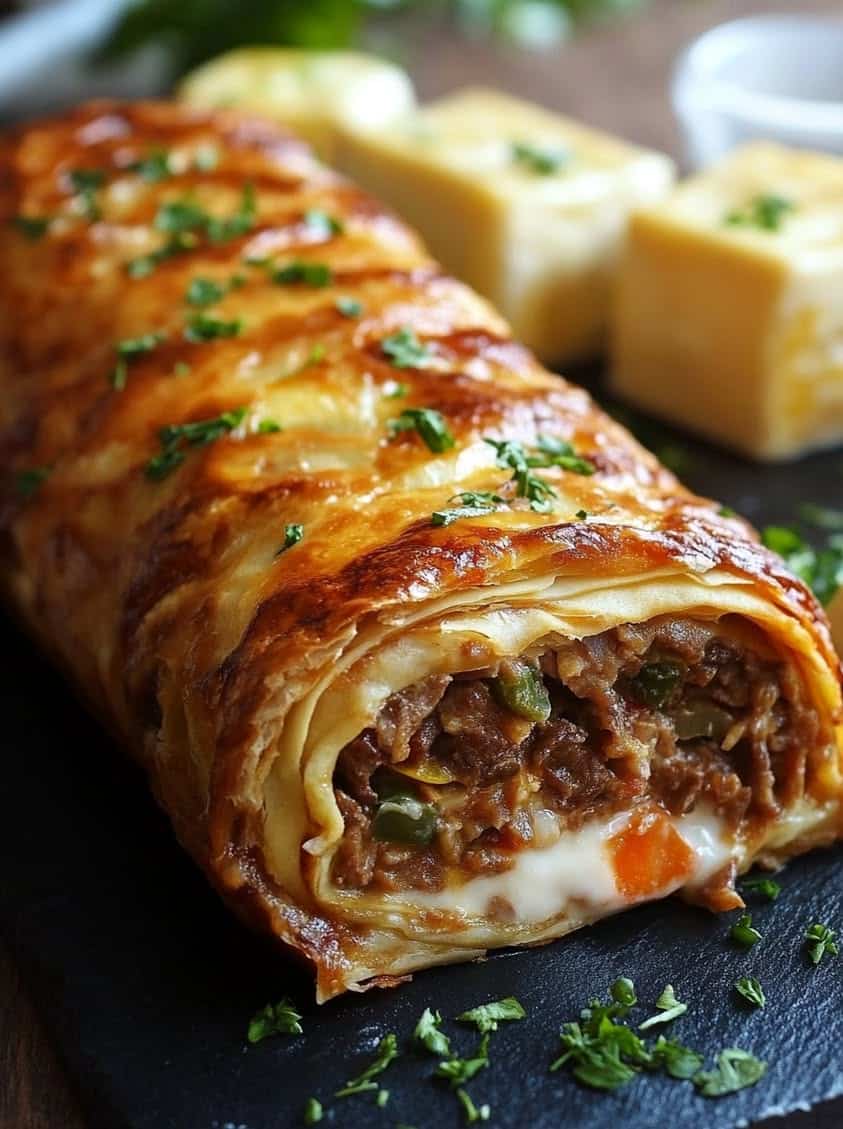
Crispy, Flaky Puff Pastry Roll Stuffed with Juicy Seasoned Beef and Melted Cheese: The Ultimate Savory, Easy Comfort Food!
Imagine pulling a golden, flaky masterpiece from your oven. The aroma of savory beef and melted cheese fills your kitchen. Consequently, you know you are about to experience the ultimate comfort food. This crispy, flaky puff pastry roll stuffed with juicy seasoned beef and melted cheese is a guaranteed crowd-pleaser. It combines the buttery, delicate layers of puff pastry with a hearty, flavorful filling. Ultimately, it creates a dish that feels both elegant and deeply satisfying.
Furthermore, this recipe is deceptively simple. It uses store-bought puff pastry as a brilliant shortcut. Therefore, you can focus on crafting a delicious, well-seasoned beef filling. The result is a stunning centerpiece for any meal. It is perfect for a cozy family dinner, a game day spread, or even a potluck. Moreover, the visual appeal is incredible. The pastry bakes into a beautiful, golden spiral that reveals its cheesy, beefy heart when sliced.
Additionally, the magic lies in the contrast of textures and flavors. Each bite delivers a symphony of sensations. You get the shattering crispness of the pastry exterior. Then, you encounter the tender, juicy beef filling. Finally, you experience the gooey, melted cheese that binds everything together. This crispy, flaky puff pastry roll stuffed with juicy seasoned beef and melted cheese is more than just a meal. It is a culinary experience that delivers maximum flavor with minimal fuss.
Quick Recipe Highlights
- Flavor Profile: This dish features a deeply savory and well-rounded taste. The ground beef is seasoned with classic aromatics like onion and garlic, enhanced with Worcestershire sauce for umami depth. Meanwhile, the melted cheese adds a creamy, rich counterpoint that balances the savory notes perfectly.
- Texture: The texture is a delightful play of contrasts. Expect a shatteringly crisp and impossibly flaky pastry shell that gives way to a moist, tender, and juicy beef filling. The melted cheese provides a luscious, stringy quality that makes every bite incredibly satisfying.
- Aroma: As it bakes, the kitchen fills with an irresistible fragrance. You will smell the buttery notes of the puff pastry toasting, combined with the savory scent of roasting beef and onions. Ultimately, the warm, comforting aroma of melted cheese ties it all together, promising a delicious meal.
- Visual Appeal: The baked roll is a true showstopper with a beautiful golden-brown, spiraled exterior. When sliced, it reveals a stunning cross-section of the layered pastry and the hearty, cheesy beef filling inside. Consequently, it looks impressive on any table with minimal effort required for presentation.
- Skill Level Needed: This recipe is ideal for beginner to intermediate home cooks. It utilizes the convenience of pre-made puff pastry, so no advanced dough skills are required. However, mastering a tight roll and a proper egg wash will elevate the final result from good to great.
- Special Equipment: You need only basic kitchen tools. A large skillet for the filling, a rolling pin to slightly flatten the pastry, and a baking sheet lined with parchment paper are essential. Additionally, a sharp knife for scoring and a pastry brush for the egg wash are very helpful.
Recipe Overview
- Difficulty Level: We rate this recipe as “Easy” for several compelling reasons. First, the use of store-bought puff pastry eliminates the most technically challenging component. The filling involves straightforward sautéing techniques familiar to most cooks. Therefore, the primary skill is assembly, which is simple and guided.
- Category: This dish wonderfully straddles multiple meal categories. It is a superb main course for dinner, served with a simple salad. Alternatively, it is a fantastic appetizer or party food when sliced into smaller pieces. Moreover, it makes for a indulgent brunch or lunch option, proving its incredible versatility.
- Cuisine: While not tied to one specific tradition, this recipe draws inspiration from global comfort food concepts. It echoes the savory meat-filled pastries found in many cultures, from British sausage rolls to Middle Eastern meat pies. Ultimately, it is a modern, accessible fusion that celebrates universal flavors.
- Cost: This is a very cost-effective dish to prepare. Ground beef is an affordable protein, and the other filling ingredients are pantry staples. Store-bought puff pastry is a reasonable splurge for the incredible texture it provides. Overall, you create a restaurant-quality presentation for a fraction of the price.
- Season: This crispy, flaky puff pastry roll is truly a year-round favorite. It provides warmth and comfort during the fall and winter months. Conversely, it is also excellent in spring and summer when served at room temperature as part of a picnic or casual outdoor gathering.
- Occasion: Its versatility makes it perfect for countless events. It is an easy weeknight dinner solution that feels special. For entertaining, it impresses guests at holiday parties, game day feasts, or potlucks. Furthermore, it is a fantastic dish for meal prepping, as leftovers reheat beautifully.
Why You’ll Love This Recipe
First and foremost, the taste and texture are utterly irresistible. This crispy, flaky puff pastry roll stuffed with juicy seasoned beef and melted cheese delivers a perfect bite every single time. The pastry bakes into hundreds of delicate, buttery layers that shatter upon impact. Then, your teeth sink into the savory, well-seasoned beef filling that remains remarkably moist. The melted cheese acts as both a flavor enhancer and a textural glue, creating a luscious, stringy pull that is deeply satisfying. Every element complements the others, resulting in a harmonious and crave-worthy dish that appeals to both kids and adults.
Secondly, the convenience factor cannot be overstated. By starting with quality store-bought puff pastry, you bypass hours of labor-intensive dough work. The filling comes together in one pan in about fifteen minutes. Consequently, the assembly process is simple, fun, and almost foolproof. You simply roll, fill, and shape. This makes the recipe accessible even on busy weeknights when you want a meal that feels homemade and special without spending all evening in the kitchen. It is the ideal solution for defeating dinner fatigue with a guaranteed winner.
Furthermore, while this is certainly a comforting indulgence, it offers some nutritional advantages when approached thoughtfully. You control the quality and leanness of the ground beef, opting for a 90/10 blend to reduce excess fat. The filling can be packed with finely diced vegetables like bell peppers or mushrooms to boost fiber and vitamins. Using a sharp cheddar provides a lot of flavor, so you may use less. Served alongside a large, fresh green salad, this dish becomes a balanced meal that satisfies hearty appetites without complete nutritional compromise.
Moreover, the social and entertaining value of this dish is exceptionally high. Its stunning visual presentation makes it a natural centerpiece. When you bring this golden, spiraled roll to the table and slice into it, revealing the cheesy beef interior, you will undoubtedly receive compliments. It is shareable, easy to serve, and universally loved. For parties, you can prepare two rolls or slice one into bite-sized pieces for easy grazing. It fosters a sense of warmth and hospitality, making any meal feel like a celebratory occasion.
Finally, this recipe is remarkably cost-effective and accessible. The ingredients are common and affordable, found in any standard grocery store. There is no need for special equipment or exotic spices. This accessibility means you can whip it up on a whim without a special shopping trip. Compared to ordering takeout or buying pre-made frozen appetizers, making this crispy, flaky puff pastry roll at home saves money and yields a far superior product in both flavor and quality. It is a smart, delicious choice for any budget.
Historical Background and Cultural Significance
The concept of wrapping seasoned meat in dough is an ancient and nearly universal culinary practice. Every culture has its version, from Cornish pasties and Spanish empanadas to Indian samosas and Chinese bao. This crispy, flaky puff pastry roll is a modern descendant of this global tradition. Specifically, it draws a direct line from European meat pies and sausage rolls, which were designed as portable, hearty meals for workers. The innovation here lies in the use of laminated puff pastry, a French technique, which elevates the textural experience to new, delicate heights.
Puff pastry itself has a rich history, often credited to French pastry chef Claude Lorrain in the 17th century. The technique of layering butter and dough to create hundreds of flaky strata was a landmark in pastry arts. Originally used for sweet applications, its potential for savory dishes was quickly realized. Combining this sophisticated pastry with a humble, savory ground meat filling represents a beautiful fusion of haute cuisine and peasant food. It democratizes a luxurious texture, making it achievable in home kitchens worldwide.
The evolution of this specific recipe is tied to the availability of convenience foods in the 20th century. The commercialization of frozen puff pastry was a game-changer for home cooks. Suddenly, creating impressively flaky dishes without days of labor became possible. This accessibility allowed recipes like our cheesy beef pastry roll to flourish. Cooks began experimenting with familiar, comforting fillings, leading to the creation of this family-friendly staple. It is a testament to how food traditions adapt and evolve with technology and changing lifestyles.
Regional variations of this concept are endless, which speaks to its fundamental appeal. In the United Kingdom, the sausage roll is a national treasure, often enjoyed cold. In Latin America, beef-filled pastries might include olives, hard-boiled eggs, and raisins. Middle Eastern versions, like sfiha, often feature spiced lamb. Our version, with its focus on juicy beef and melted cheese, leans into American comfort food sensibilities. It is a versatile template that welcomes interpretation, allowing cooks to incorporate local flavors and personal preferences, ensuring the tradition continues to evolve.
Ingredient Deep Dive
Puff Pastry: This is the star that provides the iconic crispy, flaky texture. Puff pastry is a laminated dough, meaning thin layers of butter are folded between layers of dough. During baking, the water in the butter turns to steam, pushing the layers apart and creating the signature rise. For best results, always use all-butter puff pastry if available, as it offers superior flavor. Keep it cold until the moment you need to roll it; warm pastry becomes sticky and difficult to handle. Thaw it overnight in the refrigerator, not on the counter. If you cannot find it, a decent substitute for a different texture is crescent roll dough, though the result will be softer and bread-like.
Ground Beef: The foundation of our savory filling. We recommend an 85% to 90% lean blend; too lean can be dry, while too fatty can make the filling greasy and leak through the pastry. The beef brings protein, iron, and B vitamins to the dish. For the best flavor, take time to properly brown the beef, breaking it into small crumbles to maximize surface area for caramelization. This creates fond (the browned bits) in the pan, which adds deep flavor. For a twist, you can substitute ground turkey, chicken, lamb, or a plant-based ground meat alternative. Just adjust seasoning to complement the protein.
Yellow Onion & Garlic: This aromatic duo is non-negotiable for building a flavorful base. Onions, when sautéed until soft and translucent, lose their sharpness and develop a sweet, savory depth. Garlic adds its pungent, aromatic character that is essential to savory cooking. They both contain antioxidants and prebiotic fibers. Chop them finely so they integrate seamlessly into the filling. For a time-saver, you can use frozen diced onions and jarred minced garlic, though fresh will always provide the brightest flavor. Shallots can be a elegant substitute for onion.
Worcestershire Sauce: This is the secret umami booster. A fermented condiment made from vinegar, molasses, anchovies, and spices, it adds a complex savory depth that enhances the meaty flavor of the beef without being identifiable. It provides acidity, sweetness, and saltiness all at once. For a gluten-free version, ensure you use a certified brand like Lea & Perrins. As a substitute, you can use a splash of soy sauce mixed with a pinch of sugar, or a teaspoon of tomato paste for richness.
Cheddar Cheese: The glue that holds the filling together and provides creamy, tangy richness. When melted, cheddar’s fat and protein help bind the beef crumbles. We recommend sharp or extra-sharp cheddar for a more pronounced flavor that stands up to the beef. Pre-shredded cheese contains anti-caking agents that can make melting less smooth, so shredding a block yourself is always preferable. For variations, try Monterey Jack for milder meltability, pepper jack for spice, or even Gruyère for a nutty sophistication.
Common Mistakes to Avoid
- Using Warm Puff Pastry: This is the most critical error. If your pastry is warm, it will stick to the parchment, tear easily, and fail to create distinct, flaky layers. Always work with cold, just-thawed pastry. If it becomes soft during assembly, pop the rolled log back in the fridge for 10 minutes before baking.
- Overfilling the Pastry: It is tempting to pack in as much filling as possible. However, an overstuffed roll is difficult to seal and will likely burst open during baking, leaking juices and making a mess. Use the recommended amount and spread it evenly, leaving a clear border for sealing.
- Not Cooling the Filling: Adding hot beef filling directly onto the pastry is a disaster. The heat will melt the butter in the pastry, causing it to become soggy and preventing a proper rise. Always cool the filling to at least room temperature before assembly. You can spread it on a plate to speed up the process.
- Skipping the Egg Wash: The egg wash (beaten egg with a little water) is not just for color. It acts as a glue to seal the edges of the pastry and gives the exterior a beautiful, professional-looking golden brown sheen. Without it, the pastry can look pale and the seam may open.
- Forgetting to Score the Top: Making shallow cuts on the top of the roll before baking serves two purposes. Firstly, it creates a beautiful decorative pattern. More importantly, it provides a controlled path for steam to escape, preventing the pastry from bursting open unpredictably in the oven.
- Underseasoning the Beef: Puff pastry is relatively bland, so the filling must carry the flavor. Do not be shy with salt, pepper, and your chosen seasonings. Taste the cooled filling before assembling and adjust. Remember, the cheese adds saltiness, so balance accordingly.
- Baking on the Wrong Rack: Placing the baking sheet too high or too low can lead to uneven cooking. The bottom may burn before the top browns, or vice versa. For the best result, bake in the center of the oven to ensure even heat circulation around the pastry roll.
- Not Letting it Rest: Slicing the roll immediately after baking is a common mistake. The filling will be scalding hot and can ooze out. Let it rest on the pan for at least 10-15 minutes. This allows the filling to set slightly, making for cleaner, more attractive slices.
Essential Techniques
Properly Browning the Beef: This technique is fundamental for building flavor, not just cooking the meat. Do not simply gray the beef. Use medium-high heat and avoid overcrowding the pan. Let the beef sit undisturbed for a minute to develop a sear before breaking it up. This Maillard reaction creates complex, savory compounds (fond) on the bottom of the pan. Deglazing with a splash of water or Worcestershire sauce and scraping up these bits incorporates that deep flavor back into the filling. The visual cue for success is beef with small, crispy, browned edges mixed throughout, not a uniform, soft gray mass.
Cooling the Filling Completely: This step is crucial for pastry integrity. A hot filling will begin to melt the butter layers in the cold puff pastry on contact. This melted butter will then leak out during baking, resulting in a soggy bottom and poor rise. It also makes the pastry sticky and hard to roll. Spread the cooked filling on a large plate or baking sheet to maximize surface area. You can even place it in the refrigerator for 20-30 minutes to speed up the process. The filling should feel cool or just slightly warm to the touch before you spread it on the pastry.
Creating a Tight Roll: A loose roll will have gaps between the pastry and filling, leading to potential collapse or uneven slices. Start rolling firmly from the long edge closest to you, using the parchment paper to help guide it. Tuck the filling in as you go. Once rolled, gently press along the seam to seal. Then, carefully transfer the roll so the seam side is down on the baking sheet. This weight helps seal it further. The final log should be compact and uniform in thickness from end to end for even cooking.
Applying the Egg Wash: An egg wash is a simple mixture of one beaten egg with a tablespoon of water or milk. The water thins it for easy application. Using a soft-bristled pastry brush, apply a thin, even coat over the entire surface of the pastry roll. Avoid letting pools of egg wash collect in the scored crevices, as this can cause uneven browning. The egg proteins promote browning and create a glossy finish, while the fat in the yolk adds richness. For a deeper golden color, use just the yolk. For a lighter shine, use just the egg white.
Pro Tips for Perfect Crispy, Flaky Puff Pastry Roll
For the ultimate flaky layers, place your baking sheet in the freezer for 5 minutes while the oven preheats. A cold start on a hot pan promotes a better initial oven spring. Additionally, always use parchment paper, not foil or a bare pan, to prevent sticking and ensure easy cleanup.
Enhance your filling flavor by adding a teaspoon of tomato paste to the beef while it browns. Let it cook for a minute until it darkens slightly; this deepens the overall savoriness of the dish. A pinch of smoked paprika can also add a wonderful, subtle background note.
To prevent a soggy bottom, you can perform a “blind bake” boost. Sprinkle a very light dusting of breadcrumbs or grated Parmesan cheese over the pastry rectangle before adding the cooled filling. This creates a minor barrier that absorbs excess moisture during baking.
For a stunning presentation, use different scoring patterns. A simple diagonal slash is classic, but you can create a crisscross pattern or even small leaf shapes. Just ensure your cuts are shallow, only going through the top layer of pastry to reveal the color beneath.
If your roll cracks slightly during baking, do not panic. This is often just the pastry expanding naturally. As long as the filling is not leaking out significantly, it will still taste delicious. Simply present it with the crack side down or cover it with a garnish.
Let the baked roll rest on the baking sheet for the full 10-15 minutes. This is not optional downtime; it is when the filling reabsorbs its juices and sets. Slicing too soon will cause a flood of liquid on your cutting board and messy, falling-apart slices.
For an extra flavor boost, brush the hot, baked pastry roll very lightly with a mixture of melted butter and a tiny bit of minced garlic or chopped fresh herbs immediately after it comes out of the oven. This adds an incredible finishing aroma and taste.
Variations and Adaptations
Regional variations are easy to implement. For a British-inspired twist, use seasoned sausage meat instead of plain ground beef. For a Mediterranean flair, add chopped sun-dried tomatoes, kalamata olives, and feta cheese to the filling, using oregano as the primary herb. A Tex-Mex version is fantastic with taco seasoning, black beans, corn, and pepper jack cheese, served with salsa and sour cream for dipping.
Seasonal adaptations keep this recipe fresh year-round. In spring, add blanched asparagus tips and fresh herbs like chives and dill to a lighter chicken filling. For summer, a filling of grilled zucchini, roasted red peppers, and goat cheese makes a wonderful vegetarian option. In fall, incorporate sautéed mushrooms, wilted spinach, and a touch of nutmeg for a cozy feel.
Dietary modifications are straightforward. For a gluten-free version, use a certified gluten-free puff pastry brand. For dairy-free, omit the cheese or use a vegan melty cheese alternative, and ensure your Worcestershire sauce is anchovy-free or use a substitute. A keto adaptation is trickier due to the pastry, but you could wrap the filling in thinly sliced deli meat or use a fathead dough base for a different experience.
Flavor variations are endless. Swap the ground beef for Italian sausage and add mozzarella and marinara for a “pizza roll.” Use ground chicken with pesto and mozzarella for a brighter taste. For an Asian-inspired version, use ground pork seasoned with ginger, soy sauce, and scallions, and add a bit of hoisin sauce. The cheese can be omitted or replaced with a sprinkle of sesame seeds.
Texture modifications can cater to different preferences. For a chunkier filling, use ground beef with a coarser grind or even small-diced steak. Add chopped water chestnuts for a surprising crunch. For a smoother, more pâté-like filling, pulse the cooked beef mixture a few times in a food processor before cooling and assembling.
Presentation alternatives can change the entire dynamic. Instead of one large log, divide the pastry and filling to make two smaller rolls. Or, cut the pastry into squares to create individual hand pies or turnovers. For a braided look, place the filling down the center of the pastry, cut diagonal strips along the sides, and fold them over in a crisscross pattern.
Serving and Presentation Guide
Plating techniques can elevate this homey dish. Transfer the whole baked roll to a long, wooden cutting board or a sleek rectangular platter. Use a sharp serrated knife to slice it into portions, wiping the blade clean between cuts for neat slices. Arrange the slices slightly fanned out or stacked for height. Place a small bowl of dipping sauce or a garnish pile in the center for visual interest.
Garnishing ideas are simple but effective. A sprinkle of flaky sea salt and freshly cracked black pepper over the hot pastry adds texture and flavor. Fresh, soft herbs like chopped parsley, chives, or dill provide a vibrant color contrast against the golden brown pastry. A light dusting of paprika or a drizzle of high-quality olive oil just before serving also enhances the presentation.
Traditional accompaniments keep the meal balanced. A simple mixed green salad with a bright vinaigrette cuts through the richness perfectly. For a heartier meal, serve with roasted vegetables like broccoli, carrots, or Brussels sprouts. Creamy mashed potatoes or a crisp potato salad are also classic, comforting pairings that complement the savory beef and cheese.
Modern serving suggestions offer fun twists. Slice the roll into one-inch pieces and serve them as appetizers on a platter with toothpicks. Offer an array of dipping sauces such as garlic aioli, spicy ketchup, horseradish cream, or a tangy barbecue sauce. For a brunch spread, pair it with a fruit salad and mimosas.
Temperature considerations are key. This dish is best served warm, when the cheese is still soft and the pastry is at its crispiest. However, it is also delicious at room temperature, making it excellent for picnics or buffets. If you must reheat, use an oven or toaster oven to recrisp the pastry; the microwave will make it soggy.
Portion control tips are helpful given its richness. A standard roll typically yields six generous servings as a main course. As an appetizer, it can serve 10-12 people when sliced thinly. If serving with multiple hearty sides, consider smaller slices. Remember, it is quite filling, so guests may not need as large a piece as you think.
Wine and Beverage Pairing
Wine pairings should complement the savory, rich flavors without overpowering them. A medium-bodied red wine with good acidity is ideal. A Zinfandel with its jammy fruit and peppery notes stands up beautifully to the seasoned beef. A Spanish Garnacha or a French Côtes du Rhône blend offers earthy notes that harmonize with the dish. If you prefer white wine, opt for a fuller-bodied Chardonnay with a touch of oak, which can match the richness of the butter and cheese.
Non-alcoholic alternatives are just as important. A sparkling water with a squeeze of lemon or lime cleanses the palate between bites. For a more crafted option, a tomato-based beverage like a Virgin Mary (non-alcoholic Bloody Mary) mirrors the savory notes. Iced tea, either sweet or unsweetened, is a classic pairing that works well, especially with a hint of lemon.
Coffee and tea pairings can work wonderfully, particularly for a brunch or lunch serving. A dark roast coffee with low acidity can complement the beef’s savoriness. For tea, a robust black tea like English Breakfast or Earl Grey holds its own against the rich flavors. Avoid delicate green or herbal teas, as they will be overwhelmed.
Temperature considerations for beverages are straightforward. Serve red wines slightly below room temperature, around 60-65°F. White wines and sparkling waters should be well-chilled. Iced tea and non-alcoholic cocktails are best served cold with plenty of ice. The contrast between a cool drink and the warm, savory pastry is part of the enjoyment.
Serving suggestions include setting up a small beverage station if you are entertaining. Offer a red wine and a non-alcoholic sparkling option in nice carafes or dispensers. Provide slices of citrus and fresh herbs for guests to customize their drinks. This thoughtful touch makes the meal feel more special and accommodating for all.
Storage and Shelf Life
Storage methods are simple but crucial for maintaining quality. Allow any leftovers to cool completely to room temperature. Do not leave the roll out for more than two hours. Once cool, wrap the whole roll or individual slices tightly in plastic wrap, then place in an airtight container or resealable bag. This double layer prevents the pastry from absorbing refrigerator odors and drying out.
Temperature requirements are standard for cooked foods. Store the wrapped pastry roll in the refrigerator. The ideal fridge temperature is at or below 40°F (4°C). At this temperature, your leftover crispy, flaky puff pastry roll will be safe to eat for 3-4 days. Never store it at room temperature once it has cooled, as the moist filling is a potential breeding ground for bacteria.
Container recommendations focus on preventing sogginess. A shallow, rectangular container is best so the pastry is not crushed. You can place a paper towel at the bottom of the container to absorb any minor condensation that forms. For individual slices, separate them with parchment paper before stacking to prevent them from sticking together.
Signs of spoilage are important to recognize. Discard the pastry if you notice any off odors, such as sourness or rancidity. Visible mold growth, of course, means it must be thrown away. If the pastry has become unpleasantly soggy and cannot be revived by reheating, the texture is compromised, though it may still be safe if recently stored.
Reheating instructions are key to restoring texture. The oven or toaster oven is the only recommended method. Preheat to 350°F (175°C). Place slices on a baking sheet and heat for 8-12 minutes, until warmed through and the pastry is re-crisped. Avoid the microwave, as it will steam the pastry, making it rubbery and soggy.
Freezing guidelines allow for longer storage. Wrap the cooled, unbaked roll tightly in plastic wrap, then in foil. Or, slice the baked and cooled roll, wrap slices individually, and place in a freezer bag. Freeze for up to 2 months. Thaw overnight in the refrigerator before baking (if unbaked) or reheating in the oven (if baked). Note that previously frozen and thawed puff pastry may not rise quite as high.
Make Ahead Strategies
Prep timeline can be spread over two days for maximum convenience. Day 1: Cook the beef filling completely and let it cool. Store it covered in the refrigerator. Also, move the puff pastry from the freezer to the fridge to thaw slowly. Day 2: Assemble the roll with the cold filling, apply egg wash, score, and bake. This split approach makes dinner preparation on the second day take only 20 minutes of active time.
Storage between steps is safe and effective. The cooled filling can be stored in an airtight container in the refrigerator for up to 2 days before using. This can actually improve the flavor as the seasonings meld. The thawed puff pastry sheet can be kept in its original packaging in the fridge for 1-2 days. Do not refreeze it once thawed.
Quality impact assessment is positive. Making the filling ahead does not harm the final product; it enhances it. Assembling the entire roll ahead of baking is also possible. You can wrap the unbaked, assembled log tightly in plastic and refrigerate for up to 24 hours. You may need to add a few extra minutes to the baking time if it goes into the oven very cold.
Assembly tips for make-ahead involve managing moisture. If you assemble the roll ahead of time, do not apply the egg wash until just before you are ready to bake. The egg wash can make the pastry soggy if it sits for hours. Keep the unbaked roll on the parchment-lined sheet in the fridge, loosely covered with plastic wrap.
Reheating guidelines for a fully baked make-ahead dish are specific. If you bake the roll completely, cool it, and refrigerate it, reheat it in a 325°F (160°C) oven for 15-20 minutes until hot throughout. This will restore some crispness, though it will not be quite as flaky as fresh-from-the-oven.
Fresh element additions can be incorporated last minute. If you want to add a pop of freshness to your make-ahead meal, prepare a simple herb garnish or a quick side salad while the stored roll reheats. This balances the rich, savory flavors and adds a vibrant, just-made feel to the plate.
Scaling Instructions
Halving the recipe is simple for smaller households. Use one sheet of puff pastry and simply divide all filling ingredient quantities in half. The cooking time for the filling will be slightly shorter. The bake time for a smaller, shorter roll may reduce by 5-8 minutes; watch for golden brown color as your guide. All other techniques remain identical.
Doubling or tripling for a crowd is very manageable. You will need multiple baking sheets. Cook the beef filling in batches to avoid steaming; do not overcrowd the pan. It is easier to assemble each roll separately on its own piece of parchment paper. Stagger the baking sheets on different oven racks and rotate them front-to-back and top-to-bottom halfway through baking to ensure even browning.
Equipment adjustments are necessary when scaling up. Ensure you have a large enough skillet or use a Dutch oven to brown larger quantities of beef. You will need multiple rolling pins or space to roll out several pastry sheets. Most home ovens can fit two baking sheets at once, but give them space for air circulation. If tripling, you may need to bake in consecutive batches.
Timing modifications are minimal for scaling. The prep time for the filling will increase linearly as you cook in batches. The assembly time will also increase as you make more rolls. The baking time, however, remains roughly the same per roll, though a slightly fuller oven may require an extra minute or two. Always rely on visual cues—a deep golden brown color—over strict timer settings.
Storage considerations change with volume. If making multiple rolls ahead, wrap and store them unbaked on their parchment-lined sheets, stacked with a layer of parchment between them, in the fridge. For leftover baked rolls, cool completely and store in separate containers to prevent crushing. Reheating multiple slices is best done on a large baking sheet in a single layer.
Nutritional Deep Dive
Macro breakdown for one serving (assuming six servings from the recipe) provides a general picture. You can expect a balance of protein from the beef and cheese, carbohydrates primarily from the pastry, and a significant amount of fat from the pastry’s butter, the beef, and the cheese. It is an energy-dense meal. Using leaner beef (90/10) and a reduced-fat cheese can lower the saturated fat content somewhat, but this remains a hearty, indulgent dish best enjoyed in moderation as part of a balanced diet.
Micronutrient analysis reveals some benefits alongside the indulgence. The beef is an excellent source of heme iron, which is easily absorbed by the body, and provides significant amounts of Vitamin B12 and zinc, crucial for energy metabolism and immune function. The onions and garlic contribute antioxidants like quercetin. The cheese adds calcium and more B vitamins. While not a “health food,” the dish does deliver important nutrients.
Health benefits are tied to its satisfying nature. The combination of protein, fat, and carbs can provide sustained energy. The iron content is beneficial, especially for individuals with higher needs. Furthermore, the pleasure of eating a delicious, comforting meal has psychological benefits, reducing stress and promoting a sense of well-being. Enjoying foods you love mindfully is an important part of a healthy relationship with food.
Dietary considerations are important for specific plans. This dish is not suitable for gluten-free diets unless special pastry is used. It contains dairy and is not vegan. It is high in sodium due to seasoning, cheese, and Worcestershire sauce, so those on sodium-restricted
Print
Crispy Beef and Cheese Puff Pastry Roll
Description
A savory, golden-brown puff pastry roll filled with seasoned ground beef, melted cheese, and herbs, baked until flaky and delicious.
Ingredients
For the Crust:
- 1 sheet frozen puff pastry, thawed
- 1 lb ground beef
- 1 small onion, finely chopped
- 2 cloves garlic, minced
- 1 cup shredded cheddar cheese
- 1/2 cup shredded mozzarella cheese
- 1 tsp paprika
- 1 tsp dried oregano
- Salt and black pepper to taste
- 1 egg, beaten (for egg wash)
Instructions
1. Prepare the Crust:
- Preheat oven to 400°F (200°C). Line a baking sheet with parchment paper.
- In a skillet over medium heat, cook ground beef, onion, and garlic until beef is browned and onion is soft. Drain excess fat. Stir in paprika, oregano, salt, and pepper. Let cool slightly.
- Roll out puff pastry sheet on a lightly floured surface into a rectangle. Spread beef mixture evenly over pastry, leaving a 1-inch border. Sprinkle cheddar and mozzarella cheese on top.
- Starting from one long side, tightly roll pastry into a log. Seal edges with a bit of water. Place seam-side down on baking sheet.
- Brush pastry roll with beaten egg. Bake for 25-30 minutes until golden brown and crispy. Let cool for 5 minutes before slicing.
Notes
You can customize the seasonings to taste.

I’m Shaykee—born in Morocco, seasoned across continents. From airplane galleys to home kitchens, I share the flavors and stories that shaped my journey.