
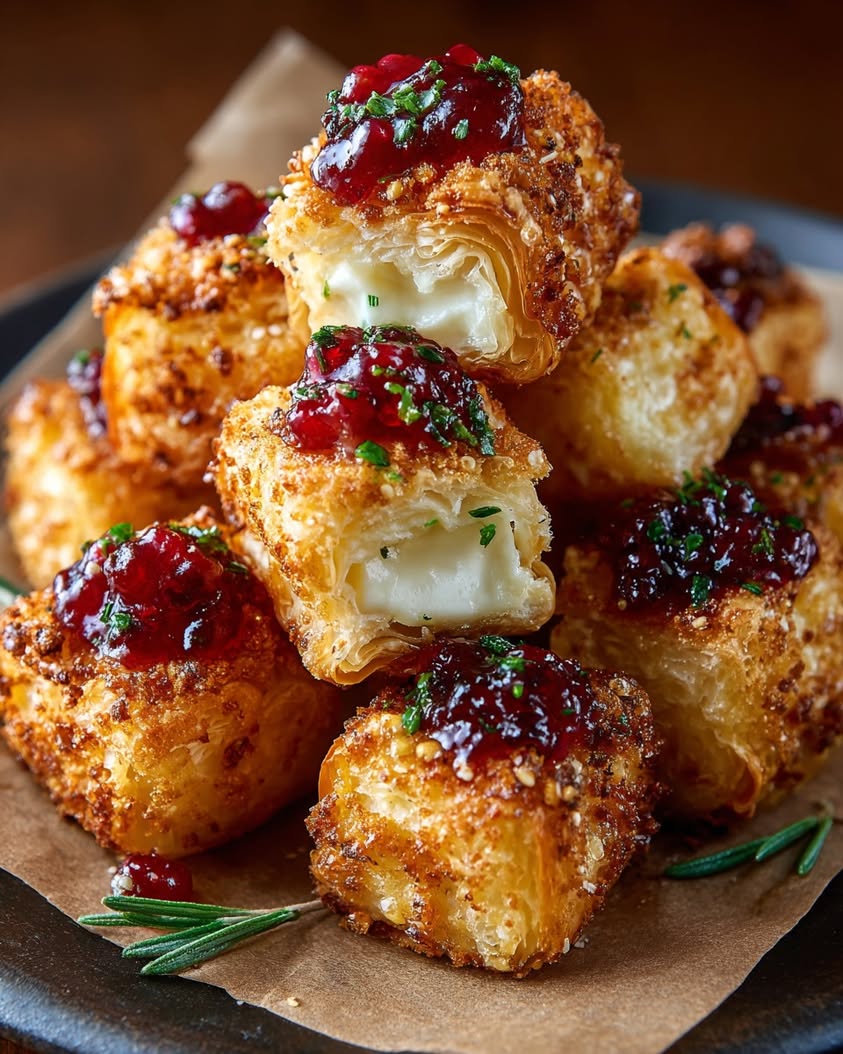
Crispy Christmas Brie Bites with Cranberry-Orange Glaze: The Ultimate Festive Appetizer
Imagine the scene: a festive platter arrives, brimming with golden, crispy Christmas Brie Bites, each one drizzled with a shimmering cranberry-orange glaze. The aroma alone, a heady mix of warm, melted cheese and bright citrus, signals the start of holiday celebrations. These crispy, gooey brie bites with a sweet-tart cranberry-orange glaze are not just an appetizer; they are a culinary event. They capture the essence of the season in a single, irresistible bite that guests will remember long after the party ends.
Furthermore, this recipe masterfully balances contrasting textures and flavors. You get the satisfying crunch of a buttery, golden phyllo or puff pastry shell giving way to an impossibly creamy, molten brie center. Then, the crowning glory: a vibrant, sticky glaze that cuts through the richness with its perfect harmony of tart cranberry and sunny orange. Ultimately, these crispy Christmas Brie Bites are the perfect festive appetizer that’s ready in minutes, making your holiday hosting both impressive and surprisingly stress-free.
Consequently, whether you’re hosting a large Christmas party or an intimate family gathering, this dish delivers on every front. It’s visually stunning, incredibly delicious, and deceptively simple to prepare. The combination of warm cheese and festive fruit is a classic for a reason, and this recipe elevates that pairing into a handheld masterpiece. Let’s dive into how you can create these show-stopping crispy, gooey brie bites with a sweet-tart cranberry-orange glaze for your next holiday event.
Quick Recipe Highlights
- Flavor Profile: These bites offer a sophisticated flavor journey. Initially, you taste the rich, buttery pastry and the earthy, creamy brie. Then, the cranberry-orange glaze introduces a brilliant sweet-tart pop, with orange zest adding a fragrant citrus note that brightens the entire experience.
- Texture: The texture contrast is absolutely key. A shatteringly crisp exterior shell protects a luxuriously gooey, melted cheese center. The glaze adds a slight sticky quality, creating a perfect mouthfeel that is both exciting and deeply satisfying.
- Aroma: As they bake, the kitchen fills with the comforting scent of baking pastry and warming cheese. The glaze, simmering with cranberries and orange, adds a layer of festive, fruity perfume that is unmistakably holiday.
- Visual Appeal: These bites are a feast for the eyes. The golden-brown pastry cups look elegant, while the deep red, glossy glaze draped over the white cheese creates a stunning red-and-white color scheme that is perfectly festive for Christmas.
- Skill Level Needed: This is an accessible recipe for most home cooks. The process involves simple assembly rather than complex techniques. However, handling delicate pastry requires a gentle touch to prevent tearing.
- Special Equipment: A mini muffin tin is essential for forming the perfect bite-sized cups. Otherwise, you only need basic kitchen tools: a saucepan for the glaze, a brush for butter, and a sharp knife for cutting the cheese and pastry.
Recipe Overview
- Difficulty Level: We classify these Crispy Christmas Brie Bites as “Easy.” The steps are straightforward: cutting, assembling, baking, and glazing. There’s no intricate dough-making or advanced chef skills required. The primary challenge is working quickly with phyllo dough if using, as it dries out. Otherwise, using pre-rolled puff pastry simplifies the process immensely.
- Category: This recipe falls squarely into the appetizer or hors d’oeuvre category. It’s designed for finger food at parties, holiday gatherings, or as a pre-dinner treat. The bite-sized format makes it ideal for grazing and socializing.
- Cuisine: While brie is famously French and phyllo has Middle Eastern and Mediterranean roots, this dish is a modern fusion creation popular in contemporary American holiday entertaining. It combines classic European cheese with a very North American cranberry sauce, resulting in a globally-inspired festive bite.
- Cost: This is a moderately priced appetizer. Brie cheese and prepared pastry are the main costs. Using frozen puff pastry and fresh cranberries in season keeps it affordable. Compared to store-bought gourmet appetizers, making these crispy, gooey brie bites at home offers significant value.
- Season: This recipe is quintessentially a winter holiday dish, perfect for Christmas and Thanksgiving. Cranberries are at their peak in late fall, and the warm, rich flavors are ideal for cold weather. However, you can adapt it year-round using different jams or fruits.
- Occasion: These bites are perfect for any festive occasion: Christmas Eve parties, Thanksgiving appetizers, New Year’s Eve celebrations, potlucks, or even a fancy holiday brunch. They elevate the mood and feel special without requiring a full day in the kitchen.
Why You’ll Love This Recipe
First and foremost, the taste and texture appeal is undeniable. The magic of a crispy Christmas Brie Bite lies in its perfect contrast. Your teeth break through a delicate, flaky crust into a river of warm, luxurious brie. Immediately after, the sweet-tart cranberry-orange glaze hits your palate, balancing the cheese’s richness with fruity acidity. This symphony of flavors—salty, creamy, sweet, and tart—is incredibly addictive. Moreover, the use of high-quality brie ensures a complex, slightly nutty flavor that elevates the entire bite beyond a simple cheese pastry.
Secondly, the convenience and preparation benefits are a huge win for busy hosts. These crispy, gooey brie bites with a sweet-tart cranberry-orange glaze come together in about 30 minutes from start to finish. You can prepare the glaze ahead of time and store it in the fridge. Similarly, you can assemble the pastry cups in the muffin tin and refrigerate them for a few hours before baking. This make-ahead flexibility is a game-changer for party planning, allowing you to pop them in the oven just before guests arrive for a spectacular hot appetizer.
Additionally, while this is indulgent holiday food, it offers some nutritional advantages. Cranberries are packed with antioxidants and vitamin C. Using a whole-grain puff pastry or adding chopped nuts to the filling can increase fiber content. Brie provides a good source of protein and calcium. Of course, enjoying these in moderation as part of a festive spread is key. The small, portion-controlled bite size naturally helps with this, allowing everyone to savor the flavor without overindulging.
Furthermore, the social and entertaining value of this dish is immense. A platter of these beautiful, glazed bites becomes an instant conversation starter. They are easy to eat with one hand, requiring no plates or forks, which encourages mingling. The familiar yet elevated flavors appeal to a wide range of palates, from adventurous foodies to picky eaters. Serving a hot, homemade appetizer makes guests feel welcomed and cared for, setting a warm and generous tone for your entire event.
Finally, the cost-effectiveness and accessibility are major perks. Creating these impressive crispy Christmas Brie Bites at home costs a fraction of what you’d pay for similar gourmet appetizers at a store or restaurant. The ingredients are readily available in most supermarkets year-round. You can easily double or triple the recipe for a crowd without much extra effort. This accessibility means you can create a luxurious holiday experience without a luxurious budget, making festive entertaining more achievable and enjoyable for everyone.
Historical Background and Cultural Significance
The origin story of baked brie as a concept stretches back to French culinary traditions. Brie de Meaux, the king of cheeses, has been celebrated for centuries. Historically, baked cheese dishes were peasant food—a way to soften aged cheese and make it more palatable. The concept of enclosing cheese in pastry also has ancient roots, seen in dishes like Welsh rarebit or Italian focaccia di Recco. However, the modern “brie en croûte” became a popular dinner party staple in America during the 1970s and 80s, symbolizing effortless elegance.
Regarding cultural importance, cranberry sauce is deeply ingrained in North American holiday culture, especially Thanksgiving. Native Americans used cranberries for food, medicine, and dye long before European settlers arrived. The combination of cranberry and orange became a classic relish or sauce pairing in the 20th century. Merging this iconic American holiday condiment with a classic French cheese preparation represents a beautiful fusion of culinary traditions. It speaks to modern holiday tables that often blend heritage and innovation.
The evolution of the recipe from a whole baked wheel to a bite-sized appetizer reflects broader dining trends. As entertaining became more casual and focused on finger foods, the single-serving portion gained popularity. The addition of a cranberry-orange glaze, rather than just serving jam on the side, adds a layer of visual polish and concentrated flavor. This evolution shows how home cooks and chefs continuously adapt classic ideas to fit contemporary tastes and lifestyles, prioritizing shareability and visual impact.
For regional variations, the basic formula is wonderfully adaptable. In the Pacific Northwest, you might find a version with a hazelnut crust or a blackberry-port glaze. In the South, a pecan-studded pastry with a bourbon-spiked cranberry sauce could be popular. Some versions use fig jam or apricot preserves instead of cranberry. Others incorporate herbs like rosemary or thyme into the pastry for a savory note. This adaptability is a testament to the recipe’s solid foundation; it provides a perfect canvas for local ingredients and personal creativity, making it a truly versatile festive appetizer.
Ingredient Deep Dive
Starting with Brie cheese, this iconic French cheese hails from the Île-de-France region. Its creamy texture and edible white rind are the results of a specific mold culture. Nutritionally, brie is a good source of protein, calcium, and vitamins B12 and B2. When selecting brie for your crispy Christmas Brie Bites, choose a wheel that feels slightly soft at room temperature and has a fresh, mild smell. Avoid any with an ammonia odor. You can store it in the coldest part of your fridge, well-wrapped, for 1-2 weeks. For a stronger flavor, try a triple-creme brie. For a milder bite, remove the rind before cubing, although it’s perfectly edible and helps the cheese hold its shape.
Next, cranberries are one of North America’s few native fruits. They were used by Indigenous peoples for food, dye, and medicine long before the first Thanksgiving. They are famously high in vitamin C and proanthocyanidins, which support urinary tract health. Select firm, plump berries that are deep red in color; avoid any that are shriveled or brown. Fresh cranberries freeze beautifully for up to a year. For the glaze, you can substitute with high-quality whole-berry cranberry sauce in a pinch, though the flavor of a fresh reduction is superior. Dried cranberries can be rehydrated in orange juice for a similar effect.
Considering the pastry, you typically choose between phyllo dough and puff pastry. Phyllo dough originated in the Ottoman Empire and creates an incredibly delicate, shatteringly crisp shell. It’s lower in fat than puff pastry but requires a gentle touch and constant covering with a damp towel to prevent drying. Puff pastry, with its hundreds of buttery layers, offers a richer, flakier texture and is more forgiving to work with. For ease, pre-rolled, frozen puff pastry sheets are an excellent choice. Always thaw them slowly in the refrigerator overnight. For a gluten-free version, several brands offer gluten-free puff pastry, or you can use gluten-free phyllo.
Finally, the orange component brings essential brightness. Use fresh orange juice and zest for the best flavor. The zest contains aromatic oils that carry the true essence of the orange, far more potent than juice alone. Oranges are an excellent source of vitamin C and folate. Choose heavy, firm fruits with smooth skin for the most juice. When zesting, avoid the bitter white pith beneath the colorful zest. For a twist, you could use a clementine, tangerine, or even a blood orange for a more complex, rosy-hued glaze. The citrus is non-negotiable; it lifts the entire dish and balances the richness perfectly.
Common Mistakes to Avoid
- Overfilling the Pastry Cups: Adding too much brie is a common error. The cheese expands dramatically as it melts. Consequently, overfilled cups will leak cheese everywhere, creating a mess in your muffin tin and deflating your beautiful bites. A small, half-inch cube is perfectly sufficient.
- Using Cold Brie Straight from the Fridge: Cubing cold, hard brie is difficult and can tear the pastry. More importantly, it won’t melt properly in the short baking time. Always let your brie sit at room temperature for 15-20 minutes before cubing to ensure it becomes perfectly gooey.
- Not Greasing the Muffin Tin Thoroughly: Even with buttery pastry, a well-greased tin is crucial. Otherwise, those gorgeous, crispy Christmas Brie Bites will stick and break when you try to remove them. Use butter or non-stick spray in every cup crevice for easy release.
- Overworking Phyllo Dough: If using phyllo, work quickly and keep the sheets you aren’t using covered with plastic wrap and a damp towel. Exposed phyllo dries out in seconds, becoming brittle and impossible to shape. Handle it gently to maintain those delicate layers.
- Overcooking the Glaze: Simmer the cranberry-orange glaze just until the berries pop and the sauce thickens slightly. Overcooking will make it too thick and jam-like, causing it to clump instead of draping beautifully over the warm cheese. It will continue to thicken as it cools.
- Skipping the Butter Brush Between Layers: When using phyllo, brushing each layer with melted butter is what creates separation and that signature flaky, crispy texture. Skipping this step or being too sparing will result in a tough, chewy pastry instead of a light, crispy shell.
- Adding the Glaze Too Early: The glaze should be spooned over the bites immediately after they come out of the oven. Applying it before baking will make the pastry soggy. Applying it after the bites have cooled will prevent it from adhering nicely to the warm cheese.
- Not Letting Them Rest: It’s tempting to eat them straight from the oven. However, allowing your crispy, gooey brie bites to rest for 5 minutes lets the cheese set slightly, preventing molten cheese burns and making them easier to handle. The flavor also has a moment to meld.
Essential Techniques
Mastering the pastry cup formation is your first essential technique. Whether using puff pastry or phyllo, the goal is a sturdy, cup-shaped vessel. For puff pastry, roll it slightly thinner if needed, then use a round cutter or glass to cut consistent circles. Gently press each circle into a greased mini muffin cup, ensuring it goes all the way to the bottom and up the sides. For phyllo, layer 2-3 butter-brushed sheets, cut them into squares, and gently press them into the cups, letting the edges ruffle naturally. The key is creating enough of a “well” to hold the cheese without being so thin it tears. A well-formed cup ensures a perfect cheese-to-pastry ratio in every bite.
Next, preparing the cranberry-orange glaze requires a simple reduction technique. Combine cranberries, orange juice, zest, and sugar in a saucepan. Bring to a simmer over medium heat. As the cranberries heat, they will begin to pop and release their pectin, which naturally thickens the sauce. Stir occasionally to prevent sticking. Once most berries have burst and the sauce has thickened to a syrup-like consistency that coats the back of a spoon, remove it from the heat. For a smoother glaze, you can press it through a fine-mesh sieve, but leaving the whole berries adds lovely texture and visual appeal. This technique concentrates the flavors, creating that essential sweet-tart counterpoint to the rich cheese.
Finally, the baking technique is crucial for texture contrast. A hot oven, typically between 375°F and 400°F, is necessary. The high heat causes the water in the pastry to turn to steam rapidly, creating lift and that desired flaky, crispy texture. It also melts the brie quickly without overcooking it. Watch for visual cues: the pastry should turn a deep, golden brown, and you might see the brie just starting to bubble at the edges. Under-baking yields pale, soggy pastry. Over-baking can cause the cheese to separate or the pastry to burn. Finding that perfect golden moment is the secret to achieving the ideal crispy, gooey brie bites with a sweet-tart cranberry-orange glaze.
Pro Tips for Perfect Crispy Christmas Brie Bites
First, for an extra flavor boost, add a tiny pinch of finely chopped fresh rosemary or thyme to the pastry cup before adding the brie. The herbal note complements both the cheese and the cranberry beautifully. Secondly, if using phyllo, a light sprinkle of very finely chopped pecans or walnuts between the layers adds a wonderful nutty crunch and helps absorb any excess butter. Thirdly, to guarantee your brie cubes melt evenly, make sure they are all roughly the same size. A half-inch cube is the ideal measurement. Fourthly, let your baked bites cool in the muffin tin for just 2-3 minutes before transferring them to a wire rack. This sets the pastry but prevents sticking.
Furthermore, for a glossy, professional-looking glaze, add a teaspoon of honey or maple syrup at the end of cooking. This enhances shine without making it overly sweet. Additionally, if your cranberry glaze is too tart after cooking, balance it with a tiny pinch of salt. Salt is a flavor enhancer that can round out sharp acidity perfectly. Moreover, serve these bites on a platter lined with fresh rosemary sprigs or edible greens for a stunning, festive presentation that smells amazing. Finally, always do a test batch with one or two bites first to check your oven’s hot spots and perfect the timing before committing the whole tray.
Variations and Adaptations
For regional variations, consider local ingredients. In the South, add a teaspoon of bourbon to the cranberry glaze and use a pecan meal sprinkled in the pastry cup. A Pacific Northwest version could use a marionberry or blackberry reduction instead of cranberry. For a Mediterranean twist, substitute the cranberry glaze with a fig and honey compote and add a sliver of prosciutto to the cup before the cheese. These adaptations honor local flavors while keeping the spirit of the recipe intact.
Considering seasonal adaptations, this recipe is not just for winter. For a spring version, use a strawberry-rhubarb compote and lemon zest. In summer, a peach and basil jam would be delightful. For autumn, a pear-ginger glaze with a hint of cinnamon complements brie wonderfully. The core technique remains the same; you simply swap the fruit component to match what’s fresh and abundant, making these crispy bites a year-round appetizer option for any occasion.
Exploring dietary modifications is straightforward. For a gluten-free version, use certified gluten-free puff pastry or phyllo dough. To make it dairy-free, seek out a high-quality vegan brie alternative made from cashews or coconut oil; many melt surprisingly well. For a nut-free version, ensure your pastry is made in a nut-free facility and skip any nut additions. A lower-sugar option involves using a sugar substitute in the glaze and ensuring your cranberry sauce is unsweetened. The recipe is wonderfully flexible to accommodate various needs.
Serving and Presentation Guide
Plating techniques can elevate these bites from simple to spectacular. Arrange them on a large, elegant platter or a rustic wooden board. Avoid crowding them; give each crispy Christmas Brie Bite a little space to shine. Place a small bowl of extra cranberry-orange glaze in the center for dipping, garnished with an orange twist. For a tiered effect, use a cake stand with varying levels. This not only looks impressive but also makes it easier for guests to grab one without knocking others over.
Garnishing ideas are endless. Just before serving, add a final flourish. A tiny sprinkle of flaky sea salt over the glazed bites enhances all the flavors. Fresh microgreens, like pea shoots or parsley, add a pop of green. A light dusting of powdered sugar (sparingly) can look like snow for a Christmas theme. For a more savory note, drape a single, thin slice of candied walnut or a small piece of crispy pancetta on top of each warm bite. These small touches show care and attention to detail.
Regarding traditional accompaniments, these bites are rich, so pair them with light, crisp elements. A simple arugula salad with a lemon vinaigrette served on the side cuts through the richness. For other items on a holiday grazing board, include fresh fruit like grapes and apple slices, assorted olives, and some cured meats. The sweet, salty, and fresh elements create a balanced tasting experience. They are the star, so let complementary items play a supporting role without competing.
Wine and Beverage Pairing
Choosing wine pairings is a joy with this dish. The richness of the brie and the tart-sweet glaze call for wines with good acidity. A sparkling wine like Champagne, Prosecco, or Cava is a classic and celebratory choice; the bubbles cut through the fat beautifully. A dry Riesling or a Gewürztraminer with their slight sweetness and floral notes complement the cranberry and orange perfectly. For red wine lovers, a light-bodied, low-tannin Pinot Noir won’t overpower the delicate cheese. Serve sparkling wines well-chilled, and reds slightly below room temperature.
For non-alcoholic alternatives, think about beverages that offer refreshment and balance. A sparkling apple cider or a non-alcoholic sparkling wine provides the same celebratory effervescence. A tart cranberry spritzer made with club soda, a splash of cranberry juice, and a squeeze of lime is thematically perfect. Iced herbal teas, like hibiscus or mint, work well. Even a simple glass of chilled club water with a twist of orange peel can cleanse the palate between bites. The goal is to offer a drink that refreshes the palate from the rich, creamy cheese.
Coffee and tea pairings can work wonderfully, especially for a holiday brunch or late-evening gathering. A medium-roast coffee with low acidity won’t clash with the tart cranberry. A black tea like Earl Grey, which contains bergamot orange oil, echoes the citrus notes in the glaze beautifully. For an after-dinner serving, a cup of spicy chai tea complements the warm, festive spices you might add to the pastry. Serve coffee hot and fresh, and offer tea with lemon or honey on the side so guests can customize to their taste alongside their crispy, gooey brie bites.
Storage and Shelf Life
Storage methods for leftovers are important, though these are best served fresh. If you have leftovers, let them cool completely to room temperature. Then, store them in a single layer in an airtight container in the refrigerator. Place parchment paper between layers if you must stack them. The refrigerator’s cold, dry environment is best for food safety, but it will cause the pastry to lose its crispness. They are safe to eat for up to 2 days when stored this way.
Regarding reheating instructions, to restore some of the original texture, avoid the microwave. Instead, reheat them in a preheated 350°F oven or toaster oven for 5-8 minutes until warmed through. This will help re-crisp the pastry slightly. The cheese may not return to its perfectly molten state, but the flavor will still be excellent. You can also re-crisp them in an air fryer at 350°F for 3-4 minutes. Do not reheat with the glaze on, as it can burn; add fresh glaze after warming.
Freezing guidelines are possible for unbaked assembled bites. Assemble the pastry cups with the brie cubes in the muffin tin, then freeze the entire tin until solid. Once frozen, pop the bites out and transfer them to a freezer-safe bag or container, separating layers with parchment. They can be frozen for up to 2 months. Bake directly from frozen, adding a few extra minutes to the baking time. Do not freeze the glaze or baked bites, as the texture of the pastry and cheese will suffer greatly upon thawing.
Make Ahead Strategies
Creating a prep timeline reduces day-of stress. You can make the cranberry-orange glaze up to 5 days in advance. Simply store it in an airtight container in the refrigerator. The flavors often improve as they meld. You can also cube the brie a day ahead, store it in a container in the fridge, and let it come to room temperature before assembling. The pastry cups themselves can be assembled in the muffin tin, covered tightly with plastic wrap, and refrigerated for up to 12 hours before baking. This staged approach turns active cooking time into mere minutes before your party.
Considering storage between steps, keep components separate until the final bake. The glaze stays in the fridge. The assembled-but-unbaked cups stay covered in the fridge. The cheese should be cold when you assemble to prevent it from starting to melt or sweat. This separation maintains quality. When ready, simply take the tray from the fridge, place it in a preheated oven, and bake. The cold start might add a minute or two to the bake time, but it ensures everything heats through evenly for that perfect gooey center.
For assembly tips when making ahead, if refrigerating assembled cups, consider brushing the top edges of the pastry with an extra thin layer of butter or egg wash just before baking. This helps them brown beautifully even after a chill. Also, if your fridge has strong odors, make sure the tray is very well covered to prevent the pastry from absorbing them. When you’re ready to bake, have your glaze gently warmed on the stove or at room temperature so it flows easily over the hot bites the moment they emerge from the oven, locking in that perfect finish.
Scaling Instructions
Halving the recipe is simple for smaller gatherings. Simply divide all ingredient quantities by two. You’ll still need a mini muffin tin, but you may only fill 12 cups. The bake time may decrease slightly, so start checking for doneness around the 10-minute mark. The glaze will also cook faster in a smaller saucepan. This is a great way to test the recipe or make a treat for a small family dinner without having excessive leftovers.
Doubling or tripling the recipe for a crowd requires some planning. You can double the ingredients without issue, but you will need multiple muffin tins or to work in batches. Oven space and heat circulation are key; bake one tray at a time on the middle rack for even cooking. For the glaze, use a wider, heavy-bottomed pot to allow for faster evaporation when making a larger quantity. Consider enlisting a helper for assembly to speed up the process. Scaling up works perfectly because the recipe’s steps remain consistent.
Regarding equipment adjustments, if you only have a standard muffin tin, you can still make larger bites. Use a larger round cutter for the pastry and a slightly bigger cube of brie. The baking time will increase to 18-22 minutes. You’ll get fewer bites, but they will be more substantial. If you don’t have a round cutter, a sharp knife and a steady hand to cut squares will work just fine. The recipe is forgiving, so use what you have available to create your version of these crispy, gooey brie bites with a sweet-tart cranberry-orange glaze.
Nutritional Deep Dive
A macro breakdown for one Crispy Christmas Brie Bite shows it’s an indulgent treat. You can expect a balance of carbohydrates from the pastry and glaze, a moderate amount of protein and fat from the cheese, and a small amount of fiber from the cranberries. The exact numbers depend on your specific ingredients, like the type of pastry used or the amount of sugar in the glaze. Generally, each bite is a concentrated source of energy, perfect for a party setting where people are sampling many different foods.
The micronutrient analysis reveals some benefits amidst the indulgence. Cranberries provide vitamin C, vitamin E, and vitamin K. The orange zest and juice add more vitamin C and folate. Brie cheese contributes calcium, phosphorus, vitamin B12, and vitamin A. Using whole-grain pastry would add manganese and selenium. While not a health food, these bites do offer more nutritional complexity than many other fried or heavily processed party appetizers, thanks to the whole fruit and quality cheese.
For dietary considerations, those with lactose intolerance may tolerate brie better than other cheeses, as it is lower in lactose. However, caution is advised. The pastry contains gluten unless specifically labeled otherwise. The dish is vegetarian. For specific health plans, it’s important to note the sodium content from the cheese and the saturated fat. Enjoying one or two as part of a varied plate is the best approach. Their small size is actually a built-in portion control mechanism, helping you savor the flavor without overdoing it.
Dietary Adaptations
Creating a gluten-free version is very achievable. Several national brands now sell frozen gluten-free puff pastry sheets. Alternatively, you can find gluten-free phyllo dough. Follow the same assembly and baking instructions. Be sure to check that all other ingredients, like the sugar in the glaze, are certified gluten-free, as cross-contamination can occur. The result will be just as delicious and crispy, allowing everyone to enjoy this perfect festive appetizer.
For a dairy-free or vegan adaptation, the challenge is the brie. Fortunately, the market for artisan vegan cheeses has exploded. Look for a high-quality vegan brie-style cheese made from cashews or coconut oil that is designed to melt. Follow the same cubing and baking process. Use a vegan butter alternative for brushing phyllo layers. Check that your puff pastry is made with vegetable shortening instead of butter. The cranberry-orange glaze is naturally vegan. With these swaps, you can create an inclusive dish that captures the same spirit.
Adapting for a keto or low-carb diet requires more significant changes. Replace the traditional pastry with a fat-based crust, such as one made from almond flour, melted mozzarella, and cream cheese (a “fathead” dough). For the glaze, use a sugar-free sweetener like erythritol or allulose and simmer it with cranberries (in moderation, as they contain carbs) and orange extract instead of juice. The brie itself is keto-friendly. This version will have a different texture but can satisfy the craving for those on strict carbohydrate restrictions during the holidays.
Troubleshooting Guide
If you encounter soggy pastry, the likely culprit is under-baking or a leak of cheese or glaze moisture. Ensure your oven is fully preheated. Use an oven thermometer to verify accuracy. Make sure your brie cubes aren’t too large, as excess cheese releases more water. If using frozen berries in the glaze, thaw and drain them first to avoid extra liquid. Finally, always bake on the middle rack for even air circulation, and don’t overcrowd the oven with multiple trays, which traps steam.
When dealing with flavor balance issues, remember you can adjust after baking. If the glaze is too tart, stir in a teaspoon of honey or maple syrup to warm glaze. If the overall bite is too sweet, a tiny sprinkle of flaky sea salt on top after glazing can work wonders. If the cheese flavor is too mild, try a more aged brie next time or add a whisper of grated Parmesan to the pastry cup before the brie. Taste and adjust the glaze before you apply it; it’s much easier to fix then.
For cheese that doesn’t melt properly, check your brie temperature and bake time. Cheese straight from the fridge won’t melt in time. Let it warm slightly. Also, ensure your oven temperature is correct; an oven that runs cool won’t generate enough heat. If the cheese is leaking out and not staying creamy, you may have overfilled the cup or used a brie that is too runny at room temperature. A firmer, younger brie might hold its shape better while still becoming delightfully gooey inside its crispy Christmas Brie Bite shell.
Frequently Asked Questions
Can I use a different cheese besides brie? Absolutely. Camembert is the closest substitute, with a similar texture and flavor. For a sharper taste, try a small cube of Havarti or Fontina. Blue cheese can be used for a bold twist, but use less as it’s potent. The key is choosing a cheese that melts well and has a creamy consistency.
Can I make these without a mini muffin tin? Yes, though the shape will differ. You can create free-form cups on a baking sheet by molding phyllo over the back of a muffin tin. Alternatively, bake them as flat tartlets on a sheet pan, but the cheese may spread more. A muffin tin is ideal for the classic cup shape.
My phyllo dough tore. What should I do? Don’t worry. Phyllo is forgiving in layers. If one sheet tears, simply place another buttered sheet on top. The layers will fuse during baking. The most important thing is to have 2-3 total layers for structure, even if they are patched together. The final product will still be flaky and delicious.
Can I use canned cranberry sauce? You can, but the texture and flavor will be different. Use whole-berry cranberry sauce. You may want to simmer it with a little orange zest and juice to brighten it up. Avoid the jellied kind, as it won’t provide the same rustic, glossy appeal or texture for your glaze.
How do I keep them warm for a party? Bake them in batches if possible. If you must hold them, place them on a wire rack on a baking sheet in a 200°F oven for no more than 20 minutes. Do not cover them, or the steam will make the pastry soggy. Add the glaze right before serving.
Are these suitable for vegetarians? Yes, this recipe is vegetarian as written. However, always check your specific puff pastry ingredients, as some brands may use animal
Print
Crispy Christmas Brie Bites with Cranberry-Orange Glaze
Description
Festive, bite-sized appetizers featuring creamy brie wrapped in flaky puff pastry, baked until golden, and drizzled with a sweet-tart cranberry-orange glaze. Perfect for holiday gatherings.
Ingredients
For the Crust:
- 1 sheet puff pastry, thawed
- 8 oz brie cheese, rind removed, cut into 1-inch cubes
- 1/2 cup cranberry sauce (whole berry or jellied)
- 2 tbsp orange juice
- 1 tsp orange zest
- 1 tbsp honey
- 1 egg, beaten (for egg wash)
- Fresh thyme or rosemary sprigs for garnish (optional)
Instructions
1. Prepare the Crust:
- Preheat oven to 400°F (200°C). Line a baking sheet with parchment paper.
- Roll out puff pastry slightly and cut into 2-inch squares. Place a brie cube in the center of each square, fold corners over, and pinch to seal. Place seam-side down on baking sheet.
- Brush each bite with beaten egg wash. Bake for 15-18 minutes until puffed and golden brown.
- While baking, make glaze: In a small saucepan, combine cranberry sauce, orange juice, orange zest, and honey. Heat over medium, stirring until smooth and slightly thickened, about 5 minutes.
- Remove bites from oven, let cool slightly, then drizzle with cranberry-orange glaze. Garnish with fresh herbs if desired. Serve warm.
Notes
You can customize the seasonings to taste.

I’m Shaykee—born in Morocco, seasoned across continents. From airplane galleys to home kitchens, I share the flavors and stories that shaped my journey.