
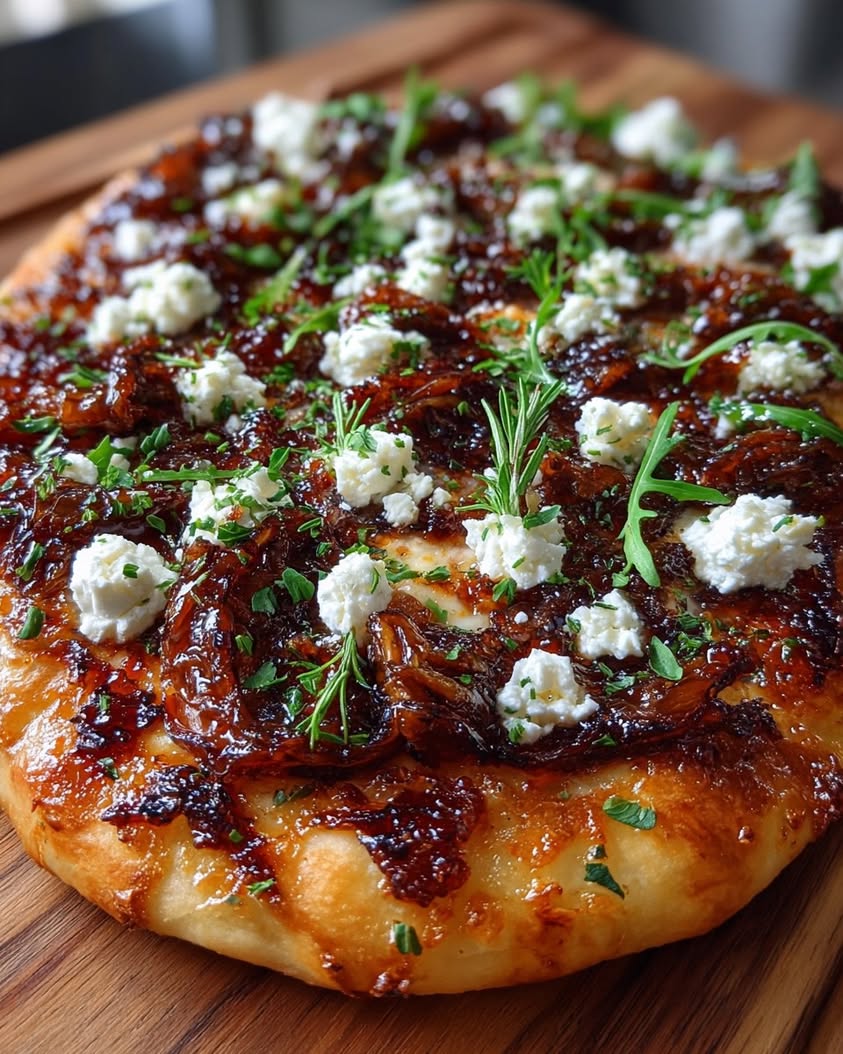
Crispy Fig Jam Pizza with Goat Cheese, Mozzarella & Rosemary: A Sweet and Savory Masterpiece
This crispy fig jam pizza with goat cheese and mozzarella is a gourmet treat that will redefine your pizza expectations. Imagine a perfectly golden, thin crust swirled with sweet fig jam, then topped with creamy goat cheese, melted mozzarella, and aromatic fresh rosemary. The result is a symphony of flavors and textures that is both sophisticated and incredibly easy to make at home. This recipe is perfect for anyone looking to elevate their pizza game beyond the traditional tomato sauce and pepperoni.
Furthermore, this sweet and savory pizza creation is a fantastic way to impress guests at your next dinner party or to simply treat yourself to a restaurant-quality meal. The combination of ingredients may sound unusual, but they work together in perfect harmony. Each bite offers a delightful contrast between the crispy crust, the sweet and sticky fig jam, the tangy goat cheese, and the earthy, pine-like fragrance of rosemary. It is a truly unforgettable culinary experience.
Moreover, this recipe is incredibly versatile and forgiving. You can use store-bought pizza dough or your favorite homemade version. Similarly, the fig jam can be swapped for other fruit preserves if desired. The key is balancing the sweet and savory elements to create a complex flavor profile. This crispy fig jam pizza is not just a meal; it is a conversation starter and a testament to the creative possibilities of simple, high-quality ingredients.
Quick Recipe Highlights
- Flavor Profile: This pizza masterfully blends sweet and savory notes. The rich, honeyed sweetness of the fig jam contrasts beautifully with the tangy, creamy goat cheese. Meanwhile, the mild, milky mozzarella provides a perfect backdrop, and the rosemary adds a subtle, aromatic earthiness that ties everything together.
- Texture: The foundation is a delightfully crispy pizza crust that provides a satisfying crunch. On top, you will find the gooey, melted mozzarella and the soft, crumbly goat cheese. The fig jam adds a sticky, jammy texture that creates a luxurious mouthfeel with every single bite.
- Aroma: As this pizza bakes, your kitchen will fill with an incredible fragrance. The scent of baking dough and melting cheese is punctuated by the warm, woody, and slightly minty aroma of fresh rosemary. It is a truly inviting and comforting smell that promises a delicious meal.
- Visual Appeal: This pizza is a feast for the eyes. The golden-brown crust is stunning, especially when topped with the deep purple hue of the fig jam. The white and creamy cheeses create a beautiful color contrast, and the green flecks of rosemary add a fresh, elegant finish.
- Skill Level Needed: This is an exceptionally beginner-friendly recipe. If you can spread jam and sprinkle cheese, you can make this gourmet pizza. There are no complicated techniques required, making it an ideal project for novice cooks or a quick, impressive meal for experienced chefs.
- Special Equipment: You only need a standard baking sheet or a pizza stone and a rolling pin. A pizza cutter is helpful for serving but not essential. Otherwise, no special tools are required, which makes this recipe highly accessible for any home cook.
Recipe Overview
- Difficulty Level: This recipe is classified as easy because it involves minimal hands-on preparation and uses straightforward techniques. The most complex step is simply assembling the toppings. Consequently, even someone with very little cooking experience can achieve fantastic, professional-looking results without any stress or special training.
- Category: This dish falls into several categories, including main course, appetizer, and party food. It is a versatile recipe that can be the star of a casual weeknight dinner or an elegant component of a larger gathering. Additionally, it makes for a unique and delicious brunch option.
- Cuisine: While pizza has its roots in Italian cuisine, this particular recipe is a modern fusion creation. It draws inspiration from Mediterranean flavors, particularly the use of fig jam and goat cheese. The overall profile is contemporary American gourmet, focusing on bold, complementary flavor pairings.
- Cost: The cost is moderately affordable, depending on your ingredient choices. Using a pre-made pizza dough keeps costs down. The fig jam and goat cheese are the primary investments, but a little goes a long way. Overall, it is far more economical than ordering a similar gourmet pizza from a restaurant.
- Season: This pizza is wonderful year-round but feels particularly special in the late summer and early fall. This season is when fresh figs are at their peak, inspiring the use of fig jam. The warm, comforting flavors also make it a cozy choice for cooler weather.
- Occasion: It is perfect for a variety of occasions. Serve it as a sophisticated main course for a date night at home. Alternatively, cut it into small squares for a stunning appetizer at a party. It is also an excellent choice for a fun and different family pizza night.
Why You’ll Love This Crispy Fig Jam Pizza
You will adore this crispy fig jam pizza first and foremost for its incredible taste and texture. The combination is a true revelation for your palate. The initial sweetness of the fig jam is immediately balanced by the tangy, creamy goat cheese. Then, the melted mozzarella adds a familiar, comforting richness, and the rosemary provides a sophisticated, aromatic finish that makes each bite complex and exciting. The contrast between the crispy crust and the soft, melty toppings is utterly irresistible.
Another significant reason to love this recipe is its sheer convenience. From start to finish, you can have a gourmet-quality pizza on the table in about twenty-five minutes. This makes it a fantastic solution for busy weeknights when you want something special without a lot of effort. Furthermore, the preparation is incredibly simple, involving no rising time for the dough if you use a pre-made base. It is a nearly foolproof path to an impressive meal.
From a nutritional standpoint, this pizza offers some distinct advantages over traditional versions. Fig jam provides natural sweetness and contains fiber and minerals like potassium and calcium. Goat cheese is often easier to digest than cow’s milk cheese for some people and is a good source of protein. By controlling the ingredients at home, you can also manage the amount of salt and oil, creating a healthier alternative to takeout.
The social and entertaining value of this dish cannot be overstated. This crispy fig jam pizza is a guaranteed conversation starter. Its unique appearance and flavor profile will impress your guests and showcase your culinary creativity. It looks and tastes like something from a high-end restaurant, allowing you to host with confidence and style. Whether served as a main course or an appetizer, it elevates any gathering.
Finally, this recipe is wonderfully cost-effective and accessible. The ingredients are easy to find at most well-stocked supermarkets. While gourmet in outcome, the components are not overly expensive, especially when you consider the cost of a similar pizza at a restaurant. Making it at home allows you to enjoy a luxurious dining experience for a fraction of the price, making it a smart and delicious choice for any budget.
Historical Background and Cultural Significance
The story of pizza begins in Naples, Italy, as a simple, flatbread-based food for the working class. However, the concept of sweet and savory combinations on bread has much older and more diverse roots. For instance, ancient Romans often enjoyed dishes that mixed fruits, honey, and cheeses on their breads. The modern gourmet pizza, which often breaks from traditional Italian guidelines, is largely an American innovation that celebrates global fusion and ingredient experimentation.
Fig jam and cheese pairings have a significant cultural history, particularly in Mediterranean and Middle Eastern cuisines. Cheese boards featuring figs, dates, and honey are a classic offering. This pizza cleverly translates that beloved flavor combination onto a pizza crust, creating a bridge between a traditional appetizer and a modern main course. It represents a contemporary culinary trend that prioritizes bold, complementary flavors over strict regional authenticity.
The evolution of this specific recipe is a testament to the creativity of modern home cooks and chefs. As artisanal ingredients like high-quality fig jam and specialty cheeses became more widely available, people began experimenting with them on pizza. The result is a dish that feels both new and familiar. It takes the universal comfort of pizza and elevates it with sophisticated, restaurant-inspired toppings that are surprisingly easy to execute in a home kitchen.
Regional variations of this concept are endless. In different parts of the world, you might find similar pizzas using local ingredients. For example, a Spanish version might use membrillo (quince paste) and Manchego cheese. A Southern U.S. variation could feature peach chutney and pimento cheese. This adaptability is a key part of the recipe’s appeal, demonstrating how a basic concept can be tailored to reflect local tastes and ingredient availability.
Ingredient Deep Dive
Fig Jam is the sweet heart of this pizza. Figs are one of the oldest cultivated fruits, with a history stretching back to ancient times in the Middle East and Mediterranean. The jam is made by cooking down figs with sugar and sometimes lemon juice or spices, resulting in a thick, spreadable condiment. Nutritionally, fig jam provides natural sugars for energy, along with dietary fiber, calcium, and potassium. When selecting fig jam, look for one with a high fruit content and no artificial flavors. It can be stored in the pantry until opened, after which it should be refrigerated. For a substitution, you can use apricot preserves, peach jam, or even a high-quality balsamic onion marmalade for a different sweet-savory angle.
Goat Cheese, or chèvre, brings a tangy, creamy element that cuts through the sweetness of the jam. Its history dates back thousands of years, likely originating in the Mediterranean region. Goat cheese is known for being easier to digest for some people who are sensitive to cow’s milk due to its different protein structure and fat molecules. It is a good source of protein, calcium, and healthy fats. When buying goat cheese, you can choose from a soft, spreadable log or a crumbled variety; both work well. Store it tightly wrapped in the refrigerator. If you need a substitute, blue cheese or feta cheese can provide a similar tangy punch, though the flavor will be stronger.
Fresh Mozzarella Cheese provides the essential melty, stretchy quality that defines a great pizza. Unlike its low-moisture, shredded cousin, fresh mozzarella is stored in water and has a soft, milky flavor. It originated in Italy and is a key component of Neapolitan-style pizzas like the Margherita. This cheese is a good source of protein and calcium. For the best results, buy a ball of fresh mozzarella and tear or slice it yourself, as pre-shredded cheese contains anti-caking agents that can hinder melting. If unavailable, low-moisture mozzarella is a fine substitute. Always store fresh mozzarella in its water in the refrigerator and use it within a few days of opening.
Fresh Rosemary is the aromatic powerhouse that ties the whole dish together. This woody herb is native to the Mediterranean region and has been used for centuries in cooking and medicine for its distinctive piney fragrance. Rosemary contains antioxidants and anti-inflammatory compounds. When selecting rosemary, look for sprigs that are vibrant green and not dried out or woody. To store it, wrap the sprigs in a damp paper towel and place them in a plastic bag in the refrigerator. If you do not have fresh rosemary, you can use about one-third the amount of dried rosemary, though the flavor will be less vibrant. Thyme or a small amount of oregano can also work in a pinch.
Common Mistakes to Avoid
- Using a Thick, Soggy Crust: A common error is not rolling the pizza dough thin enough. A thick crust will not get properly crispy and will remain doughy in the middle, especially under the weight of the wet toppings. Always aim for a thin, even base to ensure that desirable crispy texture.
- Overloading with Toppings: It is tempting to add more of everything, but overloading the pizza will make it soggy. Too much fig jam can make the crust steam and become soft, and too much cheese can create a greasy, heavy result. Practice restraint for the best texture and flavor balance.
- Skipping the Pre-Bake: For an extra crispy crust, many recipes recommend pre-baking the dough for a few minutes before adding toppings. Skipping this step can result in a undercooked base if the toppings are added from the start. This is a crucial step for achieving a professional-quality crust.
- Using Dried Rosemary Instead of Fresh: While dried rosemary can be used in a pinch, its flavor is much more potent and woody. It can become unpleasantly sharp and tough when baked. Fresh rosemary provides a subtler, more aromatic flavor and a better texture that complements the other ingredients perfectly.
- Not Spreading the Fig Jam Evenly: Globs of thick jam in one area and none in another will lead to an unevenly sweet pizza. Take the time to spread the jam in a thin, even layer, leaving a small border for the crust. This ensures every bite has the perfect amount of sweetness.
- Baking at Too Low a Temperature: Pizza needs a very hot oven to cook quickly and crisp up. If your oven is not hot enough, the crust will be pale and soft instead of golden and crispy. Always preheat your oven fully, and consider using a pizza stone for an even hotter cooking surface.
- Cutting the Pizza Immediately: As soon as the pizza comes out of the oven, the cheese is molten and unstable. Cutting into it right away can cause all the cheese to slide off in one sheet. Let it rest for 3-5 minutes on a cutting board to allow the cheeses to set slightly.
- Ignoring the Crust Border: The exposed crust can become dry and bland if not treated. A simple brush of olive oil before baking, or a sprinkle of flaky sea salt and cracked black pepper after baking, can transform the crust into a delicious part of the eating experience.
Essential Techniques
Rolling the Dough Thinly is the most critical technique for a crispy base. Start with dough that is at room temperature, as cold dough will be difficult to stretch and will shrink back. Lightly flour your work surface and rolling pin to prevent sticking. Roll from the center outward, turning the dough periodically to maintain an even circle or rectangle. The goal is a thickness of about 1/8 to 1/4 inch. If the dough springs back, let it rest for five minutes before continuing. A properly rolled crust will bake up crisp and sturdy enough to hold the toppings without becoming soggy.
Pre-Baking the Crust, also known as par-baking, is a pro-move for guaranteed crispiness. After rolling out the dough, transfer it to your prepared baking sheet. Prick the entire surface with a fork to prevent large air bubbles from forming. Bake it in a preheated oven for 5-7 minutes, just until it is set and starting to look dry but not browned. This step creates a barrier that prevents the fig jam from seeping into the dough and making it soft. It also ensures the base is fully cooked through by the time the toppings are heated and the cheese is melted.
Balancing Sweet and Savory Flavors is the artistic heart of this recipe. The technique lies in the application and proportion of ingredients. Spread the fig jam in a thin, even layer; it should be a glaze, not a thick paste. Crumble the goat cheese evenly so that its tangy pockets contrast with the sweet jam in every bite. The fresh mozzarella provides a neutral, creamy base that binds the flavors. Finally, the rosemary should be sprinkled, not dumped, to provide aromatic highlights without overpowering the dish. Taste your fig jam beforehand; if it is very sweet, you might use a slightly lighter hand.
Pro Tips for Perfect Crispy Fig Jam Pizza
For an extra flavor boost, lightly brush the naked crust border with a high-quality olive oil before baking. This simple step promotes browning and adds a rich, fruity flavor to the crust that complements the toppings beautifully.
If you have a pizza stone, use it. Preheat the stone in the oven for at least 30 minutes before baking. The intense, direct heat from the stone will create a spectacularly crispy and bubbly crust that is difficult to achieve on a regular baking sheet.
Consider adding a layer of fresh arugula after the pizza comes out of the oven. The peppery, fresh greens wilting slightly from the heat provide a wonderful contrast in flavor and texture to the rich, sweet, and savory components of the pizza.
For a touch of luxury and a burst of salty flavor, drape a few slices of prosciutto over the hot pizza right after it comes out of the oven. The heat will gently warm the prosciutto, making it melt-in-your-mouth tender.
A drizzle of aged balsamic glaze or a reduction over the finished pizza is a game-changer. The acidic sweetness of the balsamic cuts through the richness of the cheese and enhances the flavor of the fig jam, adding another layer of complexity.
Let your baked pizza rest on a wire cooling rack for a few minutes before slicing. This allows air to circulate underneath the crust, preventing steam from making the bottom soggy and ensuring it stays perfectly crisp.
If using fresh mozzarella, always tear it instead of slicing it with a knife. The craggy edges will melt and brown more attractively than uniform slices, creating a more rustic and appealing visual texture.
Variations and Adaptations
For regional variations, consider the flavors of different cuisines. A French-inspired version could use Brie cheese instead of goat cheese and top with caramelized onions. A Middle Eastern twist might involve swapping the fig jam for date syrup and adding crumbled halloumi and a sprinkle of za’atar alongside the rosemary. The basic framework of sweet jam, creamy cheese, and aromatic herbs is incredibly adaptable to global pantries.
Seasonal adaptations are easy and rewarding. In the spring, try using a rhubarb-ginger jam with goat cheese and fresh thyme. During summer, a peach and basil pizza would be fantastic. For a winter holiday version, a cranberry-orange chutney with brie and rosemary feels festive and warm. Using jams and preserves that reflect the season’s bounty keeps the recipe feeling fresh and exciting all year long.
Dietary modifications are straightforward. For a gluten-free pizza, use your favorite gluten-free pizza dough mix or pre-made crust. To make it vegan, use a plant-based cheese that melts well and ensure your fig jam is made without honey. A nut-free version is naturally achieved, but for added protein, you could sprinkle on some shelled pumpkin seeds after baking. The recipe is highly forgiving of these changes.
Flavor variations can take this pizza in many directions. Add a sprinkle of crispy, crumbled bacon or pancetta for a smoky, salty element. For a nutty crunch, scatter toasted walnuts or pecans over the pizza before serving. A spicy kick can be introduced with a drizzle of hot honey or a sprinkle of red pepper flakes. Feel free to experiment with different herb combinations, such as sage or marjoram, in place of rosemary.
Serving and Presentation Guide
Plating this pizza is key to its visual impact. Always use a sharp pizza cutter or a large chef’s knife to create clean slices. For a main course, larger slices are appropriate. For an appetizer or party food, cut the pizza into small squares or narrow strips. Present the pizza on a large, clean wooden cutting board or a simple, solid-colored platter to let the beautiful colors of the toppings stand out without visual competition.
Garnishing adds the final touch of elegance. A light scattering of fresh, whole rosemary leaves or microgreens just before serving adds a pop of color and freshness. A final drizzle of extra virgin olive oil or balsamic glaze in a zigzag pattern across the sliced pizza looks professional. A light dusting of flaky sea salt, such as Maldon, on the crust border enhances both flavor and texture, providing a delightful crunch.
Consider traditional and modern accompaniments. A simple side salad with a sharp vinaigrette, like an arugula salad with lemon, is the perfect counterpart to the rich pizza. For a heartier meal, serve it with a bowl of tomato soup for dipping. For a party, it pairs wonderfully with other Mediterranean-inspired appetizers, such as olives, marinated artichoke hearts, and cured meats. The goal is to choose sides that complement without overpowering the star of the show.
Wine and Beverage Pairing
Selecting the right wine can elevate your crispy fig jam pizza experience. The sweet and savory profile pairs beautifully with off-dry white wines. A German Riesling or a Gewürztraminer from Alsace has enough residual sweetness to harmonize with the fig jam, while their acidity cuts through the richness of the cheese. For red wine lovers, a light-bodied, low-tannin red like a Pinot Noir or a Gamay (Beaujolais) works wonderfully. Their fruity notes echo the jam without clashing, and they will not overwhelm the delicate flavors of the pizza.
For non-alcoholic alternatives, consider sophisticated options that mirror the complexity of the dish. A sparkling apple cider provides sweetness and effervescence. Iced herbal tea, such as peach or mint, can be very refreshing. Another excellent choice is a homemade rosemary-lemonade, which directly complements the herbal notes on the pizza. Sparkling water with a twist of orange or a dash of bitters also makes a simple yet effective palate cleanser between bites.
If you prefer coffee or tea with your meal, opt for options that complement the dessert-like qualities of the pizza. A medium-roast coffee with low acidity would pair nicely, as would a chai tea latte. The spices in chai, such as cinnamon and cardamom, harmonize beautifully with the sweet fig and aromatic rosemary. Serve these beverages hot to contrast the warm pizza, enhancing the overall cozy and satisfying experience.
Storage and Shelf Life
Proper storage is essential for maintaining quality. Allow any leftover pizza to cool completely to room temperature. Do not leave it out for more than two hours. Once cool, place the slices in a single layer in an airtight container. You can separate layers with parchment paper to prevent sticking. Store the container in the refrigerator for up to 3 days. The crust will soften in the fridge, but it can be revived upon reheating.
Reheating instructions are crucial for restoring the crispy texture. Avoid the microwave, as it will make the crust rubbery and soggy. Instead, preheat your oven or toaster oven to 375°F (190°C). Place the pizza slices directly on the oven rack or on a baking sheet for 5-10 minutes, until the cheese is bubbly and the crust is crisp. For a quick fix, a skillet on the stovetop over medium heat works well; cover it for a minute to melt the cheese, then uncover to re-crisp the bottom.
Freezing is possible but will affect the texture of the fresh mozzarella, making it a bit grainy upon thawing. If you must freeze, do so before baking for best results. Assemble the pizza on a parchment-lined sheet, freeze until solid, then wrap tightly in plastic wrap and foil. Bake from frozen, adding a few extra minutes to the cooking time. It is not recommended to freeze leftover baked pizza due to significant quality loss in the crust and cheeses.
Make Ahead Strategies
You can significantly streamline your cooking process with smart make-ahead steps. The pizza dough can be prepared days in advance. After the first rise, punch it down, place it in an oiled bowl, cover tightly, and refrigerate for up to 3 days. Alternatively, you can freeze the dough ball for up to 3 months. Thaw it overnight in the refrigerator before using. This allows the flavors to develop even more, resulting in a tastier crust.
For assembly-line efficiency, pre-prep all your toppings. Crumble the goat cheese and store it in a container in the fridge. Slice or tear the fresh mozzarella and pat it dry with paper towels to remove excess moisture, then store it separately. Strip the rosemary leaves from their stems. Having everything measured and ready to go turns the final assembly into a quick, five-minute task, which is perfect for entertaining or busy nights.
You can fully assemble the pizza hours before baking, but with one caveat: hold the fig jam. Spread the jam on the par-baked crust just before it goes into the oven. If the jam sits on the dough for too long, the moisture will begin to soak in and create a soggy base. You can par-bake the crusts ahead of time, let them cool, and store them at room temperature for a few hours before final topping and baking.
Scaling Instructions
Halving this recipe is simple if you are cooking for one or two. Use half a pound of pizza dough and scale down all the toppings proportionally. A half-recipe can be baked on a smaller baking sheet or a quarter sheet pan. The cooking time may be slightly less, so start checking for doneness around the 10-minute mark. This is a great way to enjoy a fresh, personal-sized pizza without having excessive leftovers.
Doubling or tripling the recipe is perfect for parties. You will need multiple baking sheets and oven space. If your oven has hot spots, rotate the baking sheets halfway through the cooking time for even browning. You can also bake the pizzas in succession, keeping the finished ones warm in a 200°F (95°C) oven while the others cook. For large batches, consider using pre-baked flatbreads as the base to speed up the process even further.
When scaling up, pay attention to your equipment. A standard home oven can typically accommodate two half-sheet pans at a time. Do not crowd the oven racks, as this will impede air circulation and lead to uneven cooking. If you are making more than two pizzas, plan for a staggered baking schedule. The great news is that this pizza is delicious at room temperature, so it is perfectly suited for a buffet-style serving situation.
Nutritional Deep Dive
This crispy fig jam pizza offers a diverse nutritional profile. The pizza dough provides complex carbohydrates for sustained energy. The fig jam contributes natural sugars and a small amount of dietary fiber, which aids digestion. Goat cheese and mozzarella are excellent sources of protein and calcium, essential for muscle repair and bone health. The olive oil used contains heart-healthy monounsaturated fats. Rosemary is not just for flavor; it contains antioxidants like rosmarinic acid, which have anti-inflammatory properties.
From a macronutrient perspective, a single serving provides a balance of carbs, fats, and protein. The exact breakdown depends on your specific dough and cheese choices, but it is generally a satisfying meal. For a more balanced plate, consider pairing a slice with a large green salad. This adds volume, fiber, and a wide range of vitamins and minerals, creating a more rounded meal that will keep you full and energized for longer.
For those monitoring their intake, there are easy adjustments. To reduce calories and carbohydrates, you can use a low-carb tortilla or a cauliflower crust as the base. Use a light hand with the cheese and opt for a reduced-sugar fig jam. Remember, this is a treat meant to be enjoyed for its unique flavor combination. Portion control is the simplest strategy; one or two slices as part of a meal with vegetables is a perfectly reasonable approach.
Dietary Adaptations
For a gluten-free version, use a certified gluten-free pizza dough mix or a pre-made gluten-free crust. Many excellent store-bought options are available. Be sure to check that your fig jam is also certified gluten-free, as thickeners can sometimes be a source of hidden gluten. The topping ingredients are naturally gluten-free, so this is an easy and successful adaptation.
Creating a dairy-free or vegan pizza is entirely possible. Substitute the goat cheese and mozzarella with your favorite plant-based alternatives. Look for a vegan cheese that melts well, such as those made from cashews or coconut oil. Many brands now offer credible mozzarella-style shreds and even vegan feta or goat cheese-style crumbles. Ensure your fig jam is made without honey to keep it fully vegan.
For a lower-carb or keto adaptation, the base is the main challenge. Use a pre-made keto-friendly pizza crust, or make one from almond flour or cauliflower. Be very sparing with the fig jam, as it is high in sugar. Alternatively, you can create a “jam” by mashing a few fresh berries with a low-carb sweetener. The cheeses and rosemary are perfectly suited for a low-carb lifestyle.
Troubleshooting Guide
If your crust is soggy, the most likely culprit is excess moisture. Next time, ensure you pre-bake the crust to create a barrier. Also, pat the fresh mozzarella dry with paper towels before using it to remove excess water. Make sure you are spreading the fig jam in a thin, even layer rather than a thick one. Finally, always bake the pizza on the lowest oven rack to ensure the bottom gets direct, intense heat.
If the flavor balance seems off, it is usually an issue of proportion. If it is too sweet, you used too much fig jam or the jam itself was very sugary. Next time, use less jam and consider adding a sprinkle of flaky sea salt after baking to counter the sweetness. If it is too savory or tangy, you may have overdone the goat cheese. Remember, it is a supporting player, not the main event. Taste your ingredients as you go to understand their intensity.
If the cheese is browning too quickly before the crust is done, your oven temperature may be too high, or the pizza may be too close to the top heating element. Tent the pizza loosely with aluminum foil to prevent the cheese from burning, and continue baking until the crust is golden and crispy. Using a pizza stone on a lower rack can also help distribute heat more evenly and prevent this issue.
Recipe Success Stories
We have received wonderful feedback from our community of home cooks who have tried this recipe. One reader, Sarah from Colorado, shared that she made this for a book club and it was the hit of the night. She added a handful of arugula after baking and said the peppery greens took it to another level. Her guests were so impressed they assumed it was from a specialty pizzeria, proving how achievable restaurant-quality results are at home.
Another success story comes from Mark, who adapted the recipe for his vegan daughter. He used a store-bought vegan mozzarella and a cashew-based “goat cheese” alternative. He reported that the flavor profile was so successful that his non-vegan family members preferred it over a traditional cheese pizza. This highlights the recipe’s fantastic adaptability for various dietary needs without sacrificing the core sweet and savory experience that makes it so special.
Frequently Asked Questions
Can I use a different type of jam? Absolutely. While fig jam is ideal, apricot preserves, peach jam, or even a savory onion marmalade work very well. The key is to choose a jam with a flavor that can balance the tanginess of the goat cheese. Avoid overly sweet or single-note jams like strawberry, as they might not provide the same complexity.
Do I have to use fresh mozzarella? Fresh mozzarella is recommended for its superior melt and mild flavor, but low-moisture, whole-milk mozzarella (the kind you typically shred) is a perfectly acceptable substitute. It will result in a slightly chewier, more uniform melt. Avoid pre-shredded cheese if possible, as the anti-caking agents can make it less melty.
Can I make this on the grill? Yes, this pizza is excellent cooked on a grill for a smoky flavor. Preheat the grill to medium-high heat. Roll out the dough and place it directly on the grates. Grill for 2-3 minutes until grill marks appear and the bottom is set. Flip it over, quickly add your toppings to the cooked side, then close the lid and grill for another 3-5 minutes until the bottom is crisp and the cheese is melted.
My dough keeps shrinking back when I roll it. Why? This is almost always because the gluten in the dough is too tight. The solution is to let the dough rest. After you take it out of the fridge, let it come to room temperature for about 30-60 minutes. If it still springs back, roll it partway, then let it sit for 5-10 minutes before continuing. The gluten will relax, making it much easier to shape.
Is there a way to make this recipe even quicker? For the fastest version, use a pre-baked pizza crust or a flatbread from the store. Simply spread the fig jam, add the cheeses and rosemary, and bake just until the cheese is melted and bubbly. This cuts the total time down to about 10 minutes and requires no dough rolling whatsoever.
Can I add meat to this pizza? Certainly. Prosciutto, cooked and crumbled bacon, or even thinly sliced ham are fantastic additions. For the best texture and to prevent burning, add delicate meats like prosciutto after the pizza comes out of the oven. They will warm through from the residual heat. Heartier, cooked meats like bacon can be added before baking.
What can I use if I don’t like goat cheese? The tangy flavor of goat cheese is a key component, but if it is not to your taste, you can substitute it with blue cheese for a stronger punch or with feta cheese for a saltier tang. For a milder flavor, you could simply use more fresh mozzarella and add a sprinkle of grated Parmesan for depth.
How do I get my crust extra crispy? Beyond pre-baking, using a pizza stone or steel is the best method. These tools absorb and radiate intense heat, mimicking a professional pizza oven. Also, ensure your oven is fully preheated. Baking the pizza on the lowest rack position places the crust closest to the heat source, promoting a crispier bottom.
Can I use dried rosemary? You can, but use it sparingly.
Print
Crispy Fig Jam Pizza with Goat Cheese, Mozzarella & Rosemary
Description
A sweet and savory pizza featuring a crispy crust topped with rich fig jam, creamy goat cheese, melted mozzarella, and aromatic fresh rosemary.
Ingredients
For the Crust:
- 1 pound pizza dough
- 1/2 cup fig jam
- 4 ounces goat cheese, crumbled
- 1 cup shredded mozzarella cheese
- 1 tablespoon fresh rosemary, chopped
- 1 tablespoon olive oil
- Salt and black pepper to taste
Instructions
1. Prepare the Crust:
- Preheat oven to 475°F (245°C). Roll out pizza dough on a floured surface to desired thickness.
- Brush dough with olive oil and spread fig jam evenly over the surface, leaving a small border for the crust.
- Sprinkle mozzarella cheese over the jam, then dot with crumbled goat cheese.
- Season with salt, pepper, and chopped rosemary.
- Bake for 12-15 minutes, or until crust is golden and cheese is bubbly and lightly browned.
- Let cool for a few minutes before slicing and serving.
Notes
You can customize the seasonings to taste.

I’m Shaykee—born in Morocco, seasoned across continents. From airplane galleys to home kitchens, I share the flavors and stories that shaped my journey.