
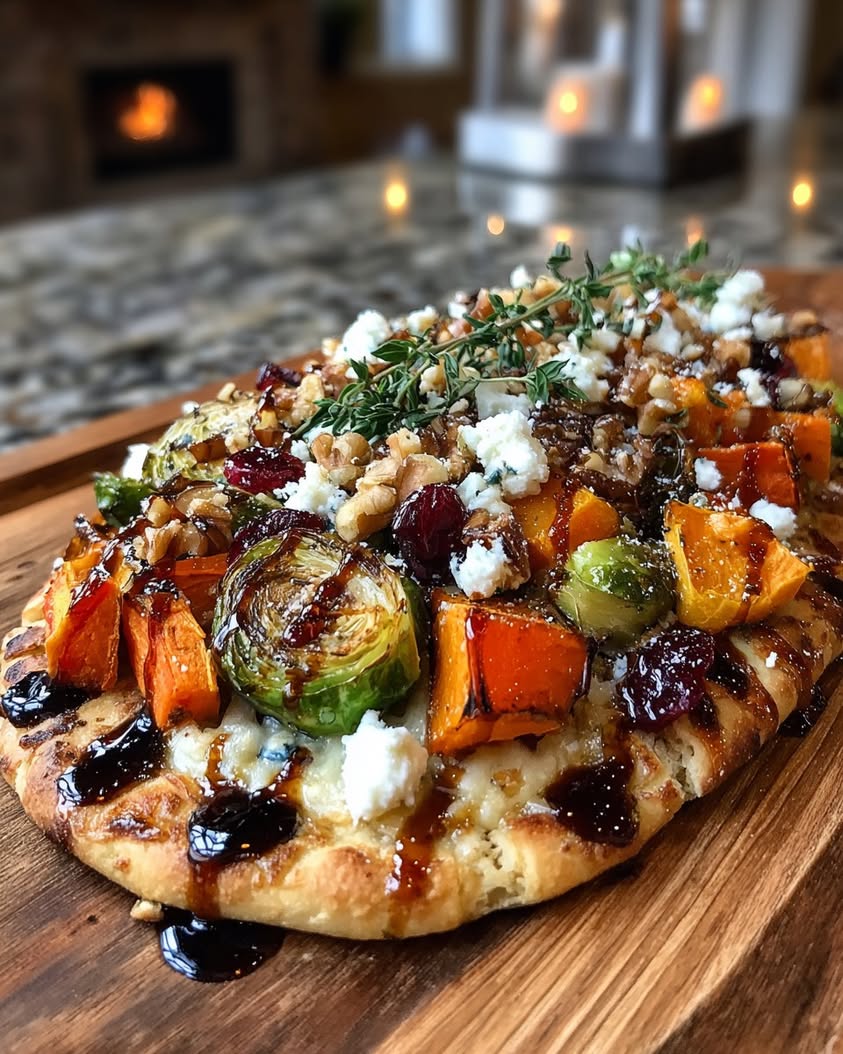
Crispy Flatbread with Caramelized Butternut Squash, Carrots, Brussels Sprouts, and Sweet Potato, Cranberries & Toasted Walnuts: A Savory-Sweet Fall Harvest Feast
This stunning crispy flatbread with caramelized butternut squash, carrots, Brussels sprouts, and sweet potato, cranberries & toasted walnuts captures the very essence of autumn on a single, beautiful canvas. Imagine a perfectly crisp, golden base generously topped with a vibrant medley of sweet, roasted root vegetables and pops of tart cranberry. Furthermore, each bite delivers an incredible symphony of textures and flavors that will make this recipe an instant classic in your home kitchen.
Consequently, this dish serves as the ultimate centerpiece for any fall gathering, from a cozy family dinner to an impressive Thanksgiving appetizer. The combination of savory roasted vegetables with sweet dried cranberries and crunchy walnuts creates a sophisticated flavor profile that feels both rustic and elegant. Ultimately, this crispy flatbread recipe celebrates the best of the harvest season in every delicious slice.
Additionally, the visual appeal of this dish is truly remarkable. The deep orange of the squash and sweet potato, the vibrant green of Brussels sprouts, and the ruby red cranberries create a stunning color contrast that is as beautiful as it is delicious. This crispy flatbread with caramelized butternut squash, carrots, Brussels sprouts, and sweet potato, cranberries & toasted walnuts is guaranteed to become your new favorite fall entertaining showstopper.
Quick Recipe Highlights
- Flavor Profile: This crispy flatbread recipe masterfully balances sweet caramelized vegetables with savory herbs and tangy cranberries. The natural sweetness of roasted butternut squash and sweet potato beautifully contrasts with the earthy Brussels sprouts and bright, tart cranberry accents.
- Texture: Experience an incredible textural journey from the crackling crisp flatbread base to the tender roasted vegetables and crunchy toasted walnuts. Each component contributes distinct mouthfeel that keeps every bite interesting and satisfying.
- Aroma: Your kitchen will fill with the warm, comforting scents of roasting root vegetables, toasted nuts, and aromatic herbs. The fragrance of caramelizing squash and sweet potato combined with toasting flatbread creates an unforgettable autumn atmosphere.
- Visual Appeal: This dish presents a stunning harvest color palette with vibrant orange, deep green, and ruby red accents against the golden brown flatbread. The artistic arrangement of vegetables and garnishes makes it almost too beautiful to eat.
- Skill Level Needed: While this recipe involves multiple components, clear instructions make it accessible for confident home cooks. Basic knife skills and understanding of roasting techniques are beneficial but not overly advanced.
- Special Equipment: You will need a reliable baking sheet, parchment paper, and a good chef’s knife for vegetable preparation. A pizza stone can enhance crispiness but is not essential for success.
Recipe Overview
- Difficulty Level: This crispy flatbread recipe falls into the intermediate category because it requires coordinating multiple cooking techniques simultaneously. You will need to manage vegetable roasting, flatbread preparation, and assembly timing. However, with proper organization, even relatively inexperienced cooks can achieve excellent results.
- Category: This versatile dish works beautifully as an appetizer, light main course, or substantial side dish. It fits perfectly into vegetarian menus, holiday feasts, and weeknight dinners when you want something special without excessive effort.
- Cuisine: While flatbread has roots in many culinary traditions, this particular preparation draws inspiration from modern American farm-to-table cuisine. The focus on seasonal vegetables and creative combinations reflects contemporary cooking trends that celebrate local produce.
- Cost: This recipe uses affordable seasonal vegetables and pantry staples, making it budget-friendly for most home cooks. Butternut squash, carrots, and sweet potatoes offer excellent value during autumn months, while the other ingredients remain reasonably priced year-round.
- Season: Autumn is the perfect season for this dish when root vegetables reach their peak sweetness and flavor. The warming, comforting qualities of the roasted vegetables make it ideal for cooler weather, though it can be enjoyed anytime with proper ingredient sourcing.
- Occasion: This crispy flatbread shines at holiday gatherings, especially Thanksgiving, as well as casual dinner parties and family meals. Its impressive presentation and crowd-pleasing flavors make it suitable for both formal and informal occasions.
Why You’ll Love This Recipe
First and foremost, the taste experience of this crispy flatbread is truly extraordinary. The combination of sweet caramelized vegetables, savory herbs, tart cranberries, and crunchy walnuts creates layers of flavor that dance on your palate. Each component complements the others perfectly, resulting in a harmonious balance that will have everyone asking for seconds. The crispy flatbread base provides a sturdy yet delicate foundation that enhances rather than overwhelms the beautiful toppings.
Convenience is another significant advantage of this recipe. While the final result looks impressive and tastes complex, the preparation is straightforward and manageable. You can roast the vegetables ahead of time and simply assemble before serving. Additionally, the recipe uses common ingredients that are easy to find during autumn months. This makes it an excellent choice for busy cooks who want to create something special without spending hours in the kitchen.
Nutritionally, this dish delivers substantial benefits alongside incredible flavor. The colorful array of vegetables provides a wide spectrum of vitamins, minerals, and antioxidants. Butternut squash and sweet potatoes are rich in vitamin A, while Brussels sprouts offer vitamin C and fiber. The walnuts contribute healthy fats and protein, making this a well-rounded meal that satisfies both your taste buds and your body’s needs.
From a social perspective, this crispy flatbread serves as a fantastic conversation starter at any gathering. Its beautiful presentation immediately draws attention and admiration. Moreover, it accommodates various dietary preferences since it’s naturally vegetarian and can be adapted for vegan diets with simple modifications. Serving this dish makes entertaining easier because it appeals to diverse tastes while feeling special and celebratory.
Finally, this recipe represents excellent value and accessibility. The ingredients are affordable, especially during peak harvest season, and the yield is generous enough to feed a small crowd. Unlike many restaurant-quality dishes, this one doesn’t require expensive specialty ingredients or equipment. This accessibility means you can enjoy gourmet-quality food at home without the restaurant price tag, making it perfect for regular rotation in your meal planning.
Historical Background and Cultural Significance
Flatbread represents one of humanity’s oldest prepared foods, with evidence of its existence dating back thousands of years across numerous cultures. The basic concept of flattened dough cooked on hot surfaces developed independently in regions worldwide, from Indian naan and Middle Eastern lavash to Italian focaccia and Mexican tortillas. This particular crispy flatbread recipe represents a modern interpretation that celebrates seasonal, local ingredients while honoring this ancient culinary tradition.
Culturally, flatbread holds significant importance in many societies as a staple food and symbol of hospitality. In numerous traditions, breaking bread together signifies friendship, community, and shared experience. This crispy flatbread with autumn vegetables continues this tradition by creating a centerpiece for gathering and sharing. The communal nature of flatbread makes it perfect for social dining, where people can tear off pieces and enjoy together.
The evolution of flatbread recipes reflects changing agricultural practices and culinary trends. Historically, flatbreads were simple vehicles for other foods, but contemporary versions often feature elaborate toppings that transform them into complete meals. This recipe exemplifies modern cooking’s emphasis on vegetable-forward dishes that highlight seasonal produce. The combination of roasted root vegetables with sweet and savory elements represents current culinary preferences for complex flavor profiles and textural contrasts.
Regional variations of vegetable-topped flatbread appear throughout culinary history. Mediterranean countries have long featured flatbreads with local vegetables, while Middle Eastern cuisine includes numerous flatbread variations with seasonal toppings. This particular recipe draws inspiration from these traditions while incorporating distinctly American autumn ingredients like cranberries and sweet potatoes. The result is a culturally hybrid dish that respects traditional flatbread making while embracing contemporary flavor combinations and presentation styles.
Ingredient Deep Dive
Butternut squash serves as the foundation of this dish’s flavor profile. This winter squash originated in the Americas and has become a staple in autumn cooking worldwide. Nutritionally, it’s rich in vitamin A, vitamin C, and fiber while providing natural sweetness that intensifies during roasting. Select squash that feels heavy for its size with firm, unblemished skin. Store whole squash in a cool, dark place for up to three months. For substitutions, consider acorn squash or pumpkin, though roasting times may vary slightly.
Brussels sprouts contribute earthy flavors and beautiful green color to the composition. These miniature cabbages have been cultivated in Europe for centuries and gained popularity in American cuisine relatively recently. They’re packed with vitamins K and C, along with antioxidants and fiber. Choose firm, bright green sprouts without yellowing leaves. Store them unwashed in the refrigerator for up to a week. If Brussels sprouts aren’t available, broccolini or kale make excellent substitutes that provide similar nutritional benefits and complementary flavors.
Sweet potatoes bring vibrant color and natural sweetness to balance the savory elements. Native to Central and South America, sweet potatoes have been cultivated for thousands of years and now feature prominently in global cuisines. They’re exceptionally rich in beta-carotene, vitamin C, and potassium. Look for firm potatoes with smooth skin and consistent coloring. Store in a cool, dark place but not refrigerated. Regular potatoes can substitute in a pinch, though the flavor profile will be less sweet and more starchy.
Dried cranberries provide crucial tartness that cuts through the richness of the roasted vegetables. Cranberries are one of North America’s native fruits, traditionally used by Indigenous peoples for food and medicine. They offer antioxidants and vitamin C, though drying reduces some nutritional content. Select unsweetened or lightly sweetened varieties to control the dish’s sugar content. Store in airtight containers in a cool, dark place. Dried cherries or currants make good substitutes if cranberries aren’t available, though the flavor will be slightly different.
Walnuts contribute essential crunch and nutty flavor to complete the textural experience. Walnuts have been consumed since ancient times and are valued for their brain-healthy omega-3 fatty acids. They also provide protein, antioxidants, and various minerals. Choose walnuts that feel heavy for their size without visible damage or rancidity. Store in the refrigerator or freezer to prevent the oils from spoiling. Pecans or almonds can substitute successfully, though each will impart its distinct flavor character to the final dish.
Common Mistakes to Avoid
- Overcrowding the baking sheet when roasting vegetables prevents proper caramelization. The vegetables will steam rather than roast, resulting in soft, bland flavors instead of sweet, concentrated ones. Always use multiple baking sheets or roast in batches if necessary to ensure adequate space between pieces.
- Underseasoning the vegetables before roasting diminishes the final flavor impact. Vegetables need generous seasoning with salt and pepper to enhance their natural sweetness and depth. Don’t be shy with seasonings, as some will be lost during the cooking process.
- Using soggy flatbread base ruins the textural contrast essential to this dish. Ensure your flatbread is properly pre-baked or purchased from a quality source with a crisp texture. A soft, doughy base cannot support the weight of the toppings and becomes unpleasantly soggy.
- Neglecting to toast the walnuts misses an opportunity for flavor development. Raw walnuts taste bitter and lack the aromatic depth of properly toasted nuts. Always toast nuts briefly to release their oils and enhance their nutty character.
- Adding cranberries too early in the cooking process causes them to burn and become unpleasantly bitter. The dried fruit should be added toward the end of cooking or even after removing from the oven to preserve their bright flavor and chewy texture.
- Cutting vegetables unevenly leads to inconsistent cooking where some pieces burn while others remain undercooked. Take time to cut all vegetables to similar sizes for even roasting and perfect texture throughout the dish.
- Skipping the resting time before slicing causes the toppings to slide off and makes messy portions. Let the assembled flatbread rest for a few minutes after baking to allow the ingredients to set slightly for cleaner slicing.
- Using low-quality olive oil impacts both flavor and cooking performance. Extra virgin olive oil has a lower smoke point and can burn during high-temperature roasting. Choose a good quality regular olive oil or avocado oil for roasting vegetables.
Essential Techniques
Proper vegetable roasting requires understanding the relationship between temperature, time, and surface area. High heat around 400-425°F is essential for achieving caramelization rather than steaming. The Maillard reaction that creates those delicious browned flavors occurs best at these temperatures. Cut vegetables to uniform sizes to ensure even cooking, and don’t overcrowd the pan. The vegetables should have space between them to allow moisture to evaporate rather than accumulate. Properly roasted vegetables will have golden brown edges and tender interiors with concentrated sweetness.
Mastering flatbread crispiness involves managing moisture content and heat distribution. Whether using store-bought or homemade flatbread, pre-baking is often necessary to achieve the desired texture. Bake the base alone for a few minutes until lightly golden before adding toppings. This creates a barrier that prevents sogginess from the vegetable moisture. For extra crispiness, place the flatbread directly on the oven rack for the final few minutes of cooking. The direct heat will create a cracker-like texture that stands up to substantial toppings.
Toasting nuts properly enhances their flavor and texture dramatically. Spread nuts in a single layer on a dry baking sheet and toast at 350°F for 5-10 minutes, watching carefully as they burn quickly. The nuts are done when they become fragrant and slightly darkened. Alternatively, toast in a dry skillet over medium heat, shaking frequently. Properly toasted walnuts will have a deeper color, crisp texture, and rich, nutty aroma. Always cool toasted nuts before using to allow them to crisp up completely.
Balancing flavors in vegetable dishes requires attention to the five basic tastes: sweet, sour, salty, bitter, and umami. The roasted vegetables provide sweetness, the cranberries contribute sourness, salt comes from seasoning, slight bitterness from the Brussels sprouts, and umami from the roasted characteristics. Taste as you go and adjust seasonings accordingly. If the dish tastes flat, it often needs more salt or acid. A final drizzle of high-quality olive oil or a squeeze of lemon juice can brighten all the flavors just before serving.
Pro Tips for Perfect Crispy Flatbread
Par-cook harder vegetables like carrots and squash before combining with quicker-cooking items like Brussels sprouts. This ensures everything finishes roasting at the same time with perfect texture. Simply give the denser vegetables a 5-10 minute head start in the oven before adding the others.
Use a pizza stone or baking steel if available for the crispiest flatbread base. Preheat the stone in the oven for at least 30 minutes before baking. The thermal mass provides intense, even heat that creates professional-quality crispiness impossible to achieve with regular baking sheets.
Brush the flatbread with olive oil and pre-bake before adding toppings. This creates a protective barrier that prevents sogginess from the vegetable moisture. Bake for 3-5 minutes until lightly golden, then add your toppings and return to the oven.
Consider adding a thin layer of soft cheese beneath the vegetables if not making vegan version. Goat cheese, ricotta, or fresh mozzarella provide creaminess that complements the roasted vegetables. Spread thinly to avoid weighing down the crispy base.
Finish with fresh herbs after baking rather than before. Delicate herbs like parsley, basil, or chives lose their vibrancy when heated. Sprinkle them over the finished flatbread just before serving for maximum flavor and visual appeal.
Let the roasted vegetables cool slightly before assembling the flatbread. Hot vegetables straight from the oven can make the flatbread base soggy. Spread them on a plate for 5-10 minutes to release steam before arranging on your pre-baked flatbread.
Use a sharp, heavy knife or pizza cutter for clean slices. Press straight down rather than dragging the knife through the toppings. This prevents the ingredients from shifting and maintains the beautiful presentation of each slice.
Variations and Adaptations
Regional variations can transform this dish to reflect different culinary traditions. For Mediterranean inspiration, substitute the vegetables with roasted peppers, artichokes, and kalamata olives, adding feta cheese and oregano. Asian-inspired versions might feature roasted shiitake mushrooms, bok choy, and scallions with a sesame-ginger glaze. Mexican adaptation could include roasted corn, poblanos, and black beans with cotija cheese and cilantro. Each variation maintains the crispy flatbread concept while exploring global flavor profiles that keep the recipe exciting throughout different seasons.
Seasonal adaptations allow you to enjoy this concept year-round with appropriate produce. Spring versions might feature asparagus, peas, and radishes with lemon zest and fresh herbs. Summer adaptations could include zucchini, eggplant, and cherry tomatoes with basil pesto. Winter variations might highlight roasted parsnips, turnips, and kale with rosemary and garlic. The basic technique remains consistent while the vegetable selection changes to showcase what’s freshest and most flavorful each season.
Dietary modifications make this recipe accessible to various eating preferences. For vegan versions, omit any cheese and ensure the flatbread contains no dairy or honey. Gluten-free adaptations simply require using a gluten-free flatbread or crust. Lower-carb options might use a cauliflower crust or simply serve the vegetable mixture as a salad topped with toasted walnuts and cranberries. Protein additions like grilled chicken, shrimp, or chickpeas can transform it into a more substantial main course while maintaining the essential flavor profile.
Flavor variations can dramatically change the character of the dish. For deeper umami notes, add roasted mushrooms or a drizzle of balsamic glaze. Spicy versions might include chili flakes, harissa, or pickled jalapeños. Herb-focused adaptations could highlight different combinations like thyme and sage for autumn or basil and mint for summer. Sweet and savory experimentation might incorporate maple-roasted vegetables or fruit elements like sliced pears or apples. Each variation maintains the fundamental appeal while offering new taste experiences.
Serving and Presentation Guide
Plating techniques significantly impact the visual appeal and dining experience. For individual servings, cut the flatbread into wedges and arrange slightly overlapping on a large platter. Garnish the spaces between with fresh herb sprigs and additional toasted walnuts. For family-style presentation, place the whole flatbread on a wooden cutting board or large pizza stone, allowing guests to serve themselves. Use a pizza wheel for clean cuts and transfer slices with a wide spatula to maintain structural integrity.
Garnishing adds the final touches that elevate the dish from homemade to restaurant-quality. Fresh herb sprigs like rosemary, thyme, or parsley provide color and fragrance. Microgreens or arugula add delicate texture and peppery flavor. Additional toasted walnuts or pumpkin seeds contribute visual interest and crunch. A drizzle of high-quality olive oil or balsamic reduction in artistic patterns creates professional presentation. Edible flowers make stunning garnishes for special occasions, though they should complement rather than overwhelm the existing flavors.
Traditional accompaniments balance the flavors and complete the meal. A simple green salad with vinaigrette provides freshness that contrasts the rich, roasted vegetables. Soup pairings like butternut squash bisque or tomato soup create comforting combination meals. For heartier appetites, serve with roasted chicken or grilled sausages. Lighter options might include marinated bean salads or grilled vegetables. Consider the occasion and your guests’ preferences when selecting accompaniments to create a harmonious menu.
Modern serving suggestions reflect contemporary dining trends and practical considerations. For cocktail parties, cut the flatbread into small squares for easy one-bite portions. Brunch versions might include a softly poached egg on top for added richness. Deconstructed presentations arrange the vegetable mixture in bowls with flatbread wedges on the side for dipping or stacking. Family-style meals might feature multiple small flatbreads with different topping combinations for variety and interactive dining.
Wine and Beverage Pairing
Wine pairings should complement the sweet and savory elements of this dish. Off-dry white wines like Riesling or Gewürztraminer work beautifully as their slight sweetness mirrors the caramelized vegetables while balancing the tart cranberries. Medium-bodied reds with low tannins such as Pinot Noir or Grenache provide enough structure without overwhelming the vegetable flavors. Rosé offers versatility with its fruit notes and refreshing acidity that cuts through the richness. For special occasions, sparkling wines like Prosecco or Cava cleanse the palate between bites and celebrate the festive nature of the dish.
Non-alcoholic alternatives provide sophisticated options for all guests. Sparkling apple cider mirrors the autumn theme while providing sweetness and effervescence. Herbal teas like peppermint or chamomile offer calming complements to the hearty vegetables. Craft sodas with natural flavors like ginger or blood orange provide complexity without alcohol. For creamy options, butternut squash soup shooters make unexpected but harmonious pairings. Always consider offering multiple non-alcoholic choices to accommodate different preferences and ensure all guests feel equally celebrated.
Coffee and tea pairings work surprisingly well with this savory dish, particularly for brunch or lunch servings. Lightly roasted coffee with bright acidity complements the sweet vegetables without overwhelming them. Chai tea’s warm spices echo the autumn flavors in the flatbread. Green tea provides cleansing astringency that refreshes the palate between bites. For evening servings, decaffeinated options ensure everyone can enjoy pairings regardless of the time. The key is matching the intensity of the beverage to the robust flavors of the dish.
Storage and Shelf Life
Proper storage methods preserve quality and ensure food safety. Store leftover flatbread in an airtight container in the refrigerator for up to 3 days. Place parchment paper between layers if stacking multiple pieces to prevent sticking. For longer storage, freeze individual slices on a baking sheet before transferring to freezer bags. Frozen flatbread maintains reasonable quality for up to 2 months, though the texture will soften slightly upon thawing.
Reheating instructions are crucial for restoring texture and flavor. For single servings, use a toaster oven or conventional oven at 375°F for 5-8 minutes until crispy. Microwave reheating produces soggy results and should be avoided. For multiple servings, arrange on a baking sheet in a single layer and heat at 375°F for 8-10 minutes. Check frequently to prevent burning, as reheating time varies based on thickness and topping quantity.
Freezing guidelines help preserve the dish for future enjoyment. Freeze the flatbread after baking but before adding fresh garnishes. Cool completely, then wrap tightly in plastic wrap followed by aluminum foil. Label with the date and contents for easy identification. To serve, reheat directly from frozen in a 375°F oven for 10-15 minutes until heated through and crispy. Add fresh herbs or additional toppings after reheating to restore brightness.
Make Ahead Strategies
Prep timeline organization reduces stress and improves results. Two days ahead, wash and chop vegetables, storing them in airtight containers in the refrigerator. Toast walnuts and store at room temperature. One day ahead, prepare any sauces or dressings and refrigerate. Measure dry ingredients and seasonings. On serving day, roast vegetables in the morning and store at room temperature for up to 4 hours. Assemble and bake the flatbread just before serving for optimal texture and flavor.
Storage between steps maintains quality and food safety. Roasted vegetables can be refrigerated for up to 3 days but should be brought to room temperature before assembling the flatbread. Toasted nuts maintain best texture at room temperature in airtight containers. Pre-made flatbread dough can be refrigerated for 2 days or frozen for longer storage. Assembled but unbaked flatbread can be refrigerated for up to 2 hours before baking, though the base may soften slightly.
Fresh element additions restore vibrancy to make-ahead components. Always add delicate herbs, fresh greens, or last-minute garnishes after reheating or just before serving. A final drizzle of high-quality olive oil or squeeze of citrus juice brightens flavors that may have muted during storage. Consider reserving a small portion of each vegetable topping to sprinkle fresh over the reheated flatbread for visual appeal and textural contrast.
Scaling Instructions
Halving the recipe works well for smaller households or fewer guests. Use a standard baking sheet and reduce roasting time slightly since the vegetables will have more space. For the flatbread, either use a smaller pre-made base or divide dough accordingly. Adjust seasonings carefully, tasting as you go, as spice measurements don’t always scale linearly. Storage considerations remain similar, though smaller quantities may be consumed more quickly, maintaining better texture.
Doubling or tripling requires practical adjustments for successful execution. Use multiple baking sheets and rotate them halfway through roasting for even cooking. Consider roasting vegetables in batches to prevent steaming. For large quantities, assemble flatbreads sequentially rather than all at once to maintain crispiness. Increase oven temperature slightly to compensate for the additional moisture released by larger vegetable quantities. Timing may need extension, but watch carefully to prevent burning.
Equipment adjustments become necessary when scaling recipes significantly. For large batches, commercial baking sheets or multiple home ovens may be required. Pizza stones or steels become particularly valuable for maintaining crispiness with multiple flatbreads. Consider using convection oven settings if available for better air circulation. For very large gatherings, cooking components in stages throughout the day ensures everything comes together smoothly at serving time.
Nutritional Deep Dive
Macro breakdown reveals a well-balanced nutritional profile. Complex carbohydrates from the vegetables and flatbread provide sustained energy release. Healthy fats from olive oil and walnuts support nutrient absorption and satiety. Plant-based proteins from the vegetables and nuts contribute to muscle maintenance and repair. The fiber content promotes digestive health and helps regulate blood sugar levels. This balance makes the dish satisfying without being overly heavy, suitable for various dietary needs and preferences.
Micronutrient analysis shows exceptional vitamin and mineral density. The orange vegetables provide abundant vitamin A for vision and immune health. Brussels sprouts contribute significant vitamin C and K, supporting collagen production and bone health. Walnuts offer omega-3 fatty acids for brain function and anti-inflammatory benefits. The diverse vegetable selection ensures a broad spectrum of phytonutrients with antioxidant and anti-inflammatory properties. Using whole food ingredients maximizes nutrient retention compared to processed alternatives.
Health benefits extend beyond basic nutrition to overall wellness promotion. The high fiber content supports digestive health and cholesterol management. Antioxidant compounds help combat oxidative stress and may reduce chronic disease risk. Anti-inflammatory components can help manage conditions like arthritis. The satisfaction factor promotes mindful eating and may prevent overconsumption of less nutritious foods. Including this dish in a balanced diet contributes to long-term health maintenance and disease prevention.
Dietary Adaptations
Gluten-free adaptation simply requires using a gluten-free flatbread or crust. Many excellent pre-made options are available, or you can make your own using gluten-free flour blends. Ensure all other ingredients, particularly sauces or seasonings, are certified gluten-free. The vegetable preparation remains identical, making this one of the simplest modifications. Texture may vary slightly with different flour blends, but the fundamental flavor profile remains intact.
Vegan adaptation involves omitting any animal products while maintaining flavor complexity. Skip cheese toppings or use vegan alternatives like nut-based cheeses. Ensure the flatbread contains no dairy or honey. For added richness without dairy, consider a drizzle of tahini sauce or avocado cream. Nutritional yeast can provide cheesy flavor without animal products. These simple swaps create a completely plant-based version that retains all the original appeal.
Lower-carb options accommodate various dietary approaches while preserving flavor. Use a cauliflower crust or low-carb flatbread alternative. Increase the proportion of above-ground vegetables like Brussels sprouts while reducing root vegetables. The cranberries can be replaced with lower-sugar berries like raspberries. These modifications significantly reduce carbohydrate content while maintaining the dish’s essential character and satisfaction factor.
Troubleshooting Guide
Soggy flatbread base typically results from excess moisture or inadequate pre-baking. Solutions include roasting vegetables until properly caramelized with minimal residual moisture, pre-baking the crust until golden, and assembling just before serving. If making ahead, consider storing components separately and assembling before serving. For extra protection, brush the flatbread with olive oil before adding toppings to create a moisture barrier.
Burnt vegetable edges while interiors remain undercooked indicate improper cutting or oven temperature. Ensure vegetables are cut uniformly, typically ½-inch to ¾-inch pieces. Check oven temperature with a thermometer for accuracy. Rotate baking sheets halfway through cooking for even browning. Consider par-cooking denser vegetables before adding quicker-cooking items to the same pan.
Bland flavors suggest inadequate seasoning or improper roasting techniques. Vegetables need generous salt before roasting to enhance natural sweetness. Ensure your oven reaches proper temperature for caramelization rather than steaming. Freshly ground black pepper and quality olive oil make significant flavor differences. A final sprinkle of flaky sea salt before serving can brighten all the components.
Recipe Success Stories
Community feedback highlights this recipe’s versatility and crowd-pleasing appeal. Many home cooks report receiving compliments from guests who assume the dish came from a professional kitchen. Families appreciate that even vegetable-resistant members enjoy the combination of flavors and textures. The beautiful presentation consistently impresses at potlucks and gatherings, with requests for the recipe following every appearance.
Variation successes demonstrate the recipe’s adaptability to different tastes and ingredient availability. Cooks have successfully substituted seasonal vegetables based on what was freshest at their markets. Some added protein like grilled chicken or chickpeas for heartier meals. Others created holiday versions with festive shapes and garnishes. These adaptations prove the fundamental technique works across numerous interpretations while maintaining quality results.
Photography tips from successful makers emphasize natural lighting and compositional techniques. Shooting from above captures the beautiful vegetable arrangement effectively. Side angles highlight the crispy flatbread texture. Garnishing with fresh herbs just before photographing adds color and vitality. Many cooks find the dish so visually appealing that it becomes one of their most-shared food images on social media platforms.
Frequently Asked Questions
Can I use frozen vegetables instead of fresh? While fresh vegetables provide superior texture and flavor, frozen can work in a pinch. Thaw completely and pat dry thoroughly to remove excess moisture. Expect slightly softer texture and less caramelization, but the dish will still be enjoyable. Particularly for butternut squash, frozen cubed varieties can save significant prep time.
What’s the best way to reheat leftovers? Always use an oven or toaster oven at 375°F for 5-10 minutes until crispy. Microwave reheating will make the flatbread soggy. For single servings, the air fryer works excellently at 350°F for 3-4 minutes. The texture won’t be quite as perfect as freshly made but remains very good.
Can I make this recipe vegan? Absolutely. Simply ensure your flatbread contains no dairy or honey, and omit any cheese toppings. For added richness, consider a drizzle of tahini sauce or vegan pesto. Nutritional yeast can provide cheesy flavor without animal products. The fundamental recipe is easily adapted for vegan diets.
How far in advance can I prepare the components? Vegetables can be roasted 2-3 days ahead and refrigerated. Bring to room temperature before assembling. Walnuts can be toasted several days ahead and stored at room temperature. The flatbread can be assembled up to 2 hours before baking if refrigerated. For best results, bake just before serving.
What if I don’t have all the vegetables listed? The recipe is very adaptable. Use what you have available, aiming for a mix of colors, textures, and flavors. Root vegetables like parsnips, potatoes, or beets work well. Broccoli, cauliflower, or peppers make good substitutes. Maintain similar cutting sizes and adjust roasting times as needed.
Can I use different nuts? Certainly. Pecans, almonds, or pine nuts all work beautifully. Adjust toasting times accordingly since different nuts have different oil contents and densities. Always toast nuts before using to enhance their flavor and ensure crisp texture in the final dish.
How do I prevent the flatbread from getting soggy? Several strategies help: pre-bake the crust until lightly golden, ensure vegetables are properly roasted with minimal moisture, don’t overload with toppings, assemble just before baking, and let cool slightly before slicing. Using a pizza stone or baking steel also significantly improves crispiness.
Can I use pizza dough instead of flatbread? Yes, though the character will be different. Roll pizza dough very thin for a crisper result. Pre-bake for 5-7 minutes before adding toppings. The thicker crust will be more bread-like than cracker-like, but still delicious. Adjust baking time accordingly based on thickness.
What’s the best way to cut butternut squash? Use a sharp chef’s knife and stable cutting board. First, slice off the stem end and base. Cut the squash in half where the narrow neck meets the bulbous bottom. Peel each section, then cut into halves lengthwise. Scoop seeds from the bottom section, then cube all pieces uniformly.
Can I add protein to this dish? Certainly. Grilled chicken, shrimp, chickpeas, or white beans all complement the flavors well. Add cooked protein when assembling the flatbread. If using raw protein like shrimp, consider cooking it separately rather than on the flatbread to ensure proper doness without overcooking vegetables.
Additional Resources
Related recipes that complement this dish include autumn salads, roasted vegetable soups, and other flatbread variations. Consider a shaved Brussels sprout salad with apples and walnuts as a refreshing starter. Butternut squash soup makes an excellent first course before the flatbread. For dessert, apple crisp or pumpkin bread continue the seasonal theme. These combinations create cohesive menus that celebrate autumn flavors while providing variety in textures and cooking methods.
Technique guides for vegetable preparation can significantly improve your results. Proper knife skills ensure even cooking and beautiful presentation. Understanding roasting principles helps achieve perfect caramelization. Dough handling techniques benefit homemade flatbread attempts. Sauce and dressing preparation skills enhance your overall culinary repertoire. Mastering these fundamental techniques translates to improvement across all your cooking, not just this specific recipe.
Seasonal cooking resources help you make the most of available produce throughout the year. Farmers market guides explain what’s in peak season during different months. Preservation techniques like freezing or canning extend seasonal enjoyment. Recipe collections organized by ingredient help use abundant produce creatively. Understanding seasonal patterns makes meal planning more efficient, economical, and delicious while supporting local agriculture when possible.
PrintCrispy Flatbread with Caramelized Butternut Squash, Carrots, Brussels Sprouts, and Sweet Potato, Cranberries & Toasted Walnuts
Description
A hearty and colorful flatbread topped with roasted seasonal vegetables, sweet cranberries, and crunchy walnuts for a perfect balance of flavors and textures.
Ingredients
For the Crust:
- 1 large flatbread or pizza crust
- 1 cup butternut squash, cubed
- 1 large carrot, sliced
- 1 cup Brussels sprouts, halved
- 1 small sweet potato, cubed
- 1/4 cup dried cranberries
- 1/4 cup walnuts, toasted
- 2 tbsp olive oil
- 1 tsp maple syrup
- 1/2 tsp smoked paprika
- Salt and black pepper to taste
- 1/2 cup shredded mozzarella cheese (optional)
- Fresh thyme for garnish
Instructions
1. Prepare the Crust:
- Preheat oven to 400°F (200°C). Toss butternut squash, carrots, Brussels sprouts, and sweet potato with olive oil, maple syrup, smoked paprika, salt, and pepper. Spread on a baking sheet and roast for 20-25 minutes until tender and caramelized.
- Place flatbread on a baking sheet. If using cheese, sprinkle evenly over the flatbread. Top with the roasted vegetable mixture and dried cranberries.
- Bake for 8-10 minutes until the flatbread is crispy and edges are golden. Remove from oven, sprinkle with toasted walnuts and fresh thyme. Slice and serve warm.
Notes
You can customize the seasonings to taste.

I’m Shaykee—born in Morocco, seasoned across continents. From airplane galleys to home kitchens, I share the flavors and stories that shaped my journey.