
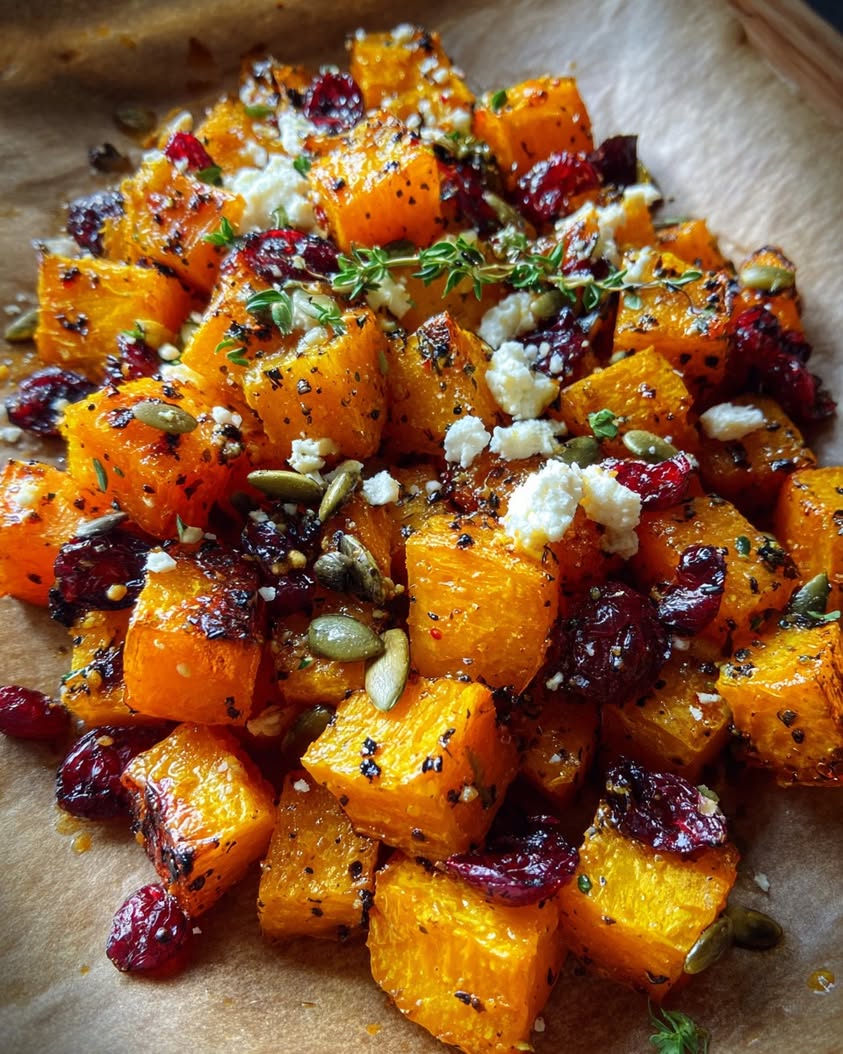
Crispy Honey-Roasted Butternut with Cranberries, Feta & Pumpkin Seeds: The Ultimate Sweet and Savory Side Dish
This crispy honey-roasted butternut squash recipe delivers an unforgettable explosion of flavors and textures in every single bite. Imagine sweet, caramelized squash cubes paired with tart, chewy cranberries, creamy, salty feta cheese, and nutty, crunchy pumpkin seeds. Consequently, this dish becomes an instant crowd-pleaser that transforms simple ingredients into a spectacular culinary experience. Furthermore, it works perfectly as a stunning holiday side dish or a vibrant weeknight vegetable option that will have everyone asking for seconds.
The magic of this recipe lies in its beautiful balance. The natural sweetness of the butternut squash intensifies and caramelizes in the oven, especially when coated with a glossy honey glaze. Meanwhile, the cranberries burst with a tangy punch that cuts through the richness, creating a complex flavor profile. Additionally, the final sprinkle of feta and pumpkin seeds adds both a creamy and a crunchy element, ensuring that each mouthful is a delightful surprise. Ultimately, this dish is a celebration of autumn produce at its absolute finest.
Preparation is surprisingly straightforward, requiring minimal hands-on time for a truly impressive result. This crispy honey-roasted butternut squash is not just a side dish; it is a vibrant centerpiece that brings warmth and color to any table. Whether you are hosting a festive Thanksgiving dinner or simply elevating a family meal, this recipe guarantees compliments. Moreover, its versatility allows it to pair beautifully with a wide range of main courses, from roasted turkey to a simple grilled chicken.
Quick Recipe Highlights
- Flavor Profile: This dish masterfully combines sweet, savory, tangy, and salty notes. The honey brings a warm, floral sweetness that caramelizes the squash, while the feta cheese provides a sharp, briny counterpoint. Simultaneously, the cranberries introduce a bright, acidic tang that ties all the elements together harmoniously.
- Texture: You will experience a wonderful contrast of textures in every forkful. The exterior of the squash becomes delightfully crispy and caramelized, while the interior stays tender and soft. Furthermore, the chewy dried cranberries and the irresistibly crunchy pumpkin seeds add layers of complexity that make the dish incredibly satisfying to eat.
- Aroma: As it roasts, your kitchen will fill with an inviting, warm fragrance. The scent of sweet honey and earthy squash mingles with the herbal notes of thyme and a hint of savory garlic. This aromatic blend is the very essence of comfort food and holiday cooking, promising a delicious meal to come.
- Visual Appeal: This dish is a feast for the eyes, boasting a stunning color palette. The vibrant orange squash, deep red cranberries, white feta crumbles, and green pumpkin seeds create a visually striking presentation. Consequently, it looks beautiful on any dinner table, making it perfect for special occasions and holiday feasts.
- Skill Level Needed: This is an beginner-friendly recipe that requires only basic kitchen skills. The most challenging part is safely peeling and cubing the butternut squash. Otherwise, the process involves simple tossing and roasting, making it an excellent recipe for novice cooks or anyone seeking a stress-free, impressive dish.
- Special Equipment: You need only standard kitchen tools. A good chef’s knife and a sturdy cutting board are essential for prepping the squash. Additionally, a large baking sheet is necessary to ensure the squash roasts instead of steaming. Ultimately, no specialized equipment is required for this accessible recipe.
Recipe Overview
- Difficulty Level: This recipe is confidently rated as easy because it involves fundamental techniques like chopping, tossing, and roasting. The process is straightforward with minimal steps, and most of the cook time is hands-off. However, safely handling a whole butternut squash requires a bit of care, which is the only minor challenge for a complete kitchen beginner.
- Category: This versatile dish fits perfectly into several categories. It is primarily a side dish, ideal for holidays and weeknights alike. Moreover, it can serve as a hearty vegetarian main course when served over a bed of greens or grains like quinoa. It also works wonderfully as part of a meal prep routine or a colorful potluck contribution.
- Cuisine: While not tied to one specific tradition, this dish draws inspiration from modern American and Mediterranean cuisines. The use of honey and squash has roots in autumnal American cooking, while the combination with feta cheese is a classic Mediterranean flavor profile. The result is a fusion dish that feels both familiar and excitingly new.
- Cost: This is a very cost-effective recipe, especially during the fall and winter months when butternut squash is in season. The main ingredient, squash, is inexpensive and yields a large amount. Furthermore, the other components like dried cranberries, feta, and pumpkin seeds are typically affordable and used in small quantities, making this a budget-friendly gourmet side.
- Season: This recipe is a quintessential autumn and winter dish. Butternut squash is at its peak sweetness during these cooler months. Additionally, the warm, hearty flavors are perfectly suited for holiday tables from Thanksgiving through Christmas. Nevertheless, it can be enjoyed year-round as a bright and flavorful side.
- Occasion: It is exceptionally versatile for various events. It is a star side dish for Thanksgiving, Christmas, and other festive holiday meals. Simultaneously, it is elegant enough for dinner parties yet simple enough for a casual family dinner. It also makes a fantastic addition to a potluck or brunch spread.
Why You’ll Love This Crispy Honey-Roasted Butternut
First and foremost, the taste and texture appeal is absolutely undeniable. The combination of sweet, savory, creamy, and crunchy elements creates a symphony in your mouth. Each component complements the others perfectly; the crispy, honey-glazed squash, the tangy pop of cranberry, the salty creaminess of feta, and the nutty crunch of pumpkin seeds. This complex layering of flavors and textures ensures that every single bite is interesting and deeply satisfying, far beyond a standard roasted vegetable.
From a convenience standpoint, this recipe is a dream come true for busy home cooks. The active prep time is remarkably short, involving mostly simple chopping and tossing. Once the dish is in the oven, you have over thirty minutes of hands-off time to prepare the rest of your meal or simply relax. Furthermore, the ingredients are common and easy to find in any well-stocked supermarket, eliminating the stress of hunting for obscure items. This simplicity makes it a reliable go-to recipe for both hectic weeknights and planned special occasions.
Nutritionally, this crispy honey-roasted butternut squash is a powerhouse. Butternut squash is loaded with Vitamin A, Vitamin C, and fiber, supporting immune health and digestion. Pumpkin seeds add a boost of healthy fats, magnesium, and zinc. Meanwhile, cranberries are famous for their antioxidants. Consequently, you are serving a side dish that is not only delicious but also genuinely good for you. It is a fantastic way to incorporate more vibrant, nutrient-dense vegetables into your diet in a way that everyone will enjoy.
For social and entertaining value, this dish is a guaranteed winner. Its stunning visual presentation, with vibrant orange, red, and white hues, makes it a beautiful centerpiece on any holiday table. It consistently receives rave reviews from guests for its gourmet flavor profile. Moreover, it is naturally vegetarian, making it an inclusive option that can cater to various dietary preferences at a gathering. Serving this dish shows thoughtfulness and culinary skill, instantly elevating the entire meal experience for your family and friends.
Finally, its cost-effectiveness and accessibility are major benefits. Butternut squash is an inexpensive vegetable that provides a large yield, making this a budget-friendly way to feed a crowd. The other ingredients are also pantry staples or affordable additions. You do not need any special or expensive equipment to achieve perfect results—a simple baking sheet is sufficient. This accessibility means that anyone, regardless of their cooking budget or kitchen setup, can create a restaurant-quality side dish that tastes and looks like a million bucks.
Historical Background and Cultural Significance
The story of this dish begins with its central ingredient: the butternut squash. Originally cultivated by indigenous peoples in the Americas, squash has been a dietary staple for thousands of years. Early varieties were quite different from the sweet, smooth butternut we know today. Through centuries of selective cultivation, farmers developed the butternut squash, prized for its sweet, nutty flavor and relatively easy-to-peel skin. Consequently, this vegetable became a fall and winter favorite across North America, symbolizing harvest and abundance long before it became a trendy menu item.
Culturally, roasted squash dishes hold a significant place in American holiday traditions, particularly Thanksgiving. The practice of sweetening vegetables with honey or maple syrup has roots in early American cooking, where these natural sweeteners were more common than refined sugar. Adding cheese and nuts to vegetables is a technique often seen in Mediterranean cuisine. Therefore, this recipe represents a beautiful fusion of culinary traditions. It combines the Native American heritage of squash, the colonial use of honey, and Mediterranean influences into a single, modern dish that feels both timeless and contemporary.
The evolution of this specific recipe is a testament to modern food trends favoring bold flavor combinations and textural contrasts. Over the past few decades, there has been a significant shift away from overly simple, boiled vegetable sides. Instead, home cooks and chefs alike began exploring ways to make vegetables the star of the meal through roasting, which concentrates flavors and creates appealing crispy edges. The addition of sweet, tangy, and creamy elements transforms the humble squash into a complex and exciting dish. This evolution reflects a broader culinary movement towards vegetable-centric cooking that does not sacrifice flavor or satisfaction.
Regional variations of this concept abound, showcasing its incredible adaptability. In the American South, you might find a similar dish featuring pecans instead of pumpkin seeds and a splash of bourbon in the glaze. Conversely, a New England version could include maple syrup and dried apples. In a more Mediterranean-inspired take, cooks might use goat cheese instead of feta and add fresh oregano. These regional twists demonstrate how a core concept can be tailored to local tastes and available ingredients, ensuring the recipe for crispy honey-roasted butternut squash remains a dynamic and ever-evolving classic.
Ingredient Deep Dive
Butternut Squash: This winter squash is the undeniable star of the dish. Historically, it descends from crops cultivated by Native Americans, making it a truly New World ingredient. Nutritionally, it is a powerhouse, exceptionally rich in Vitamin A (as beta-carotene), Vitamin C, potassium, and fiber, which promotes eye health, immune function, and digestion. When selecting a squash, look for one that feels heavy for its size with a firm, matte skin and no soft spots. Store it in a cool, dark place; once cut, wrap it tightly and refrigerate for up to five days. For a substitution, sweet potatoes or acorn squash work beautifully, though roasting times may vary slightly.
Honey: Used as a natural sweetener for millennia, honey carries cultural significance across countless civilizations, from ancient Egypt to Greece. In this recipe, it not only sweetens but also helps create that essential crispy, caramelized exterior on the squash. It offers trace amounts of antioxidants and can be easier to digest than refined sugar. Always choose raw, local honey for the best flavor and potential health benefits. Store it in a cool, dark pantry where it will virtually never spoil. If you need a substitute, pure maple syrup is an excellent vegan alternative that provides a similar depth of flavor and caramelization effect.
Dried Cranberries: These chewy, tart jewels are a distinctly American ingredient, originating from the cranberry bogs of New England. They provide a necessary acidic counterpoint to the sweet squash and rich feta. They are a good source of Vitamin C and unique phytonutrients that support urinary tract health. For the best result, avoid cranberries sweetened with high fructose corn syrup; instead, look for those sweetened with apple juice or simply unsweetened. You can store them in your pantry for many months. As an alternative, dried cherries or chopped dried apricots would offer a similar sweet-tart flavor and chewy texture.
Feta Cheese: Hailing from Greece, feta cheese is a brined curd cheese traditionally made from sheep’s or goat’s milk. Its salty, tangy profile is crucial for balancing the sweetness in this dish. Nutritionally, feta is lower in fat than many hard cheeses and is a good source of calcium and protein. For the best flavor and texture, opt for a block of feta packed in brine rather than pre-crumbled varieties, which often contain anti-caking agents. Keep it submerged in its brine in the refrigerator. If you need a substitute, fresh goat cheese (chèvre) or ricotta salata would provide a similar tangy, creamy element.
Pumpkin Seeds (Pepitas): These green seeds are a staple in Mexican and Native American cuisines. They add a essential crunchy texture and a nutty flavor that grounds the entire dish. They are a nutritional powerhouse, packed with magnesium, zinc, healthy fats, and antioxidants. You can purchase them raw or roasted and salted; for this recipe, raw or lightly salted are best. Store them in an airtight container in a cool, dark place to prevent the oils from going rancid. As a crunchy topping alternative, sunflower seeds, chopped walnuts, or pecans would be delicious and provide a similar textural contrast.
Common Mistakes to Avoid
- Overcrowding the Pan: This is the most common error that prevents crispy results. If the squash cubes are too close together, they will steam instead of roast. Always use a large enough baking sheet and spread the squash in a single, uncrowded layer. Consequently, the hot air can circulate properly, ensuring each piece caramelizes beautifully.
- Uneven Cubing: Cutting the squash into different sizes leads to uneven cooking. Some pieces will burn while others remain hard. Take the time to cube the squash into consistently sized, one-inch pieces. This ensures that everything cooks at the same rate and achieves that perfect tender-inside, crispy-outside texture simultaneously.
- Skipping the Oil Toss: Do not just drizzle oil over the squash on the pan. You must toss the cubed squash thoroughly with the oil and honey in a bowl first. This step is critical to ensure every single surface is lightly coated, which is what promotes even browning and crisping during the roasting process.
- Using Old, Dull Spices: Dried herbs and spices lose their potency over time. If your dried thyme is more than a year old, it will contribute little flavor. For the best results, always use fresh, aromatic dried spices. Taste your dried thyme before using; it should smell fragrant and earthy.
- Adding the Toppings Too Early: If you add the feta and pumpkin seeds before roasting, they will burn. The feta will melt into an unappealing mess, and the pumpkin seeds will become bitter. Always add these delicate toppings after the squash has finished roasting, using the residual heat to warm them through perfectly.
- Neglecting to Season Adequately: Do not be shy with salt and pepper. Seasoning is what makes the natural flavors of the squash, honey, and cranberries pop. Season the squash before it goes into the oven, and always taste and adjust the seasoning once more after adding the final toppings before serving.
- Under-roasting the Squash: Removing the squash from the oven before it is properly caramelized is a missed opportunity for flavor. You are looking for deep golden brown edges and a tender, easily pierced interior. That caramelization is where the deep, sweet, and complex flavors develop, so be patient.
- Using a Wet Squash: If you wash the squash and do not dry it thoroughly, the excess water will hinder crisping. After peeling and cubing, pat the squash cubes dry with a clean kitchen towel or paper towels. This removes surface moisture and helps the oil and honey adhere directly to the squash surface.
Essential Techniques
Proper Roasting: Roasting is the fundamental technique that transforms hard, raw squash into a sweet, tender, and crispy delight. The high, dry heat of the oven caramelizes the natural sugars in the squash and honey, creating a deep, complex flavor and a desirable browned exterior. To master it, always preheat your oven fully and use a large, rimmed baking sheet to allow for maximum air circulation. A common pitfall is roasting at too low a temperature, which steams the vegetables instead of roasting them. You will know it is working when you see the edges of the squash turning a deep, appetizing golden brown and hear a faint sizzle from the pan.
Balancing Flavors: This recipe is a masterclass in balancing the five basic tastes: sweet, salty, sour, bitter, and umami. The technique involves consciously layering these elements to create a harmonious whole. The sweet squash and honey are balanced by the salty feta and the sour cranberries. The nutty, slightly bitter pumpkin seeds add a final grounding element. The key to mastering this is to taste at the end and adjust. If it is too sweet, add a pinch more salt or a squeeze of lemon juice. If it is too salty, a drizzle more honey can bring it back into balance. Visual cues for success include seeing all the colorful components evenly distributed, promising a perfect mix of flavors in every bite.
Knife Skills for Squash: Safely and efficiently breaking down a whole butternut squash is a crucial technique for this recipe. A whole squash can be daunting, but the right method makes it simple and safe. First, use a sharp, sturdy chef’s knife. Carefully slice off the top and bottom to create stable flat surfaces. Then, stand the squash on one flat end and peel it from top to bottom with a sharp vegetable peeler. Finally, slice it in half lengthwise, scoop out the seeds, and then cut it into planks before dicing into uniform cubes. The common pitfall is using a dull knife, which can slip. Success is achieved when you have a pile of evenly sized, one-inch cubes ready for roasting.
Pro Tips for Perfect Crispy Honey-Roasted Butternut
First, for maximum crispiness, preheat your baking sheet in the oven. Place the empty sheet in the oven as it preheats. Carefully remove it and quickly add the oiled squash. The hot pan will give the squash an immediate sear, kickstarting the caramelization process and preventing sticking.
Secondly, do not discard the squash seeds. After scooping them out, rinse them thoroughly to remove the stringy pulp, pat them dry, toss them with a little oil and salt, and roast them on a separate pan. You will have a delicious, homemade crunchy garnish that adds zero food waste.
For a more complex flavor, consider infusing your oil. Gently warm the olive oil with the garlic and thyme for a few minutes before tossing it with the squash. This simple step deeply embeds the aromatic flavors into the dish, creating a more profound and nuanced taste profile.
Always let the roasted squash rest for a few minutes after adding the toppings. This allows the feta to soften slightly from the heat and the cranberries to plump up a bit. It also gives the flavors a moment to meld together, resulting in a more cohesive and integrated final dish.
If you desire extra caramelization, switch your oven to broil for the final one to two minutes of cooking. Watch it like a hawk during this time! The high heat will blister and darken the edges of the squash quickly, adding an incredible depth of flavor and extra crispiness.
For the best texture contrast, add the pumpkin seeds just before serving. If they sit on the warm squash for too long, they can lose their crunch. By adding them at the very end, you ensure they remain perfectly crisp and provide that satisfying nutty pop in every bite.
Variations and Adaptations
Regional variations can take this dish on a world tour of flavors. For a Southern U.S. twist, substitute pecans for the pumpkin seeds and add a tablespoon of bourbon to the honey glaze. A Mediterranean version could feature crumbled goat cheese, kalamata olives, and a sprinkle of fresh oregano. For a Nordic feel, use maple syrup instead of honey, add toasted walnuts, and serve with a dollop of sour cream. These adaptations show how the core recipe is a fantastic template for exploring different culinary heritages while maintaining the same satisfying textural contrast.
Seasonal adaptations keep this dish exciting all year round. In the spring, try it with cubed sweet potatoes and fresh peas. A summer variation could feature zucchini and yellow squash with fresh basil and toasted pine nuts. During the heart of winter, incorporate roasted parsnips or carrots and use dried apples instead of cranberries. Each season offers unique produce that can be seamlessly integrated into the roasting method, ensuring your crispy honey-roasted vegetable dish never becomes boring and always tastes of the moment.
Dietary modifications are straightforward and highly effective. For a vegan version, replace the honey with maple syrup and use a plant-based feta alternative or simply omit the cheese. A nut-free version is easily achieved by using sunflower seeds instead of pumpkin seeds. For a lower-carb option, reduce the amount of honey by half and increase the portion of pumpkin seeds and feta for satiety. The recipe’s flexibility means that almost any dietary need can be accommodated without sacrificing the overall appeal and deliciousness of the final dish.
Flavor variations allow you to customize the profile to your personal taste. For a spicy kick, add a pinch of cayenne pepper or red pepper flakes to the oil mixture before tossing with the squash. An herbaceous version could use fresh rosemary or sage instead of thyme. For a smoky note, use smoked sea salt or a tiny bit of smoked paprika. Experimenting with these small additions can completely transform the character of the dish, making it a versatile recipe you can return to again and again with new twists.
Serving and Presentation Guide
Plating techniques can elevate this dish from a simple side to a stunning centerpiece. For a family-style presentation, transfer the finished dish to a warm, shallow serving platter rather than bringing the baking sheet to the table. Drizzle a little extra honey over the top and garnish with a few fresh thyme sprigs for a professional touch. For individual portions, use a ring mold to create a neat, tall stack in the center of each plate, surrounded by a main protein like roasted chicken or pork. The visual height and structure make the presentation feel intentional and elegant.
Garnishing ideas are key to maximizing visual appeal. Beyond the fresh thyme, consider adding a final flourish of microgreens or arugula for a pop of green color and a peppery flavor. A light dusting of sumac or smoked paprika over the white feta adds beautiful color contrast and an extra layer of flavor. For a festive holiday meal, pomegranate arils scattered over the top provide jewel-like red bursts that are both beautiful and delicious. These small additions require minimal effort but dramatically enhance the overall dining experience.
Traditional accompaniments for this dish are hearty autumnal mains. It pairs wonderfully with a classic roasted turkey, a honey-glazed ham, or a standing rib roast. For a vegetarian feast, it can be the star side alongside a wild mushroom risotto or a lentil loaf. Considering its sweet and savory profile, it also complements pork dishes like roasted pork tenderloin or chops exceptionally well. The key is to pair it with a main that is not overly sweet itself, allowing the complex flavors of the squash to shine without creating a cloying meal.
Wine and Beverage Pairing
Wine pairings for this dish should complement its sweet and savory nature without overpowering it. A slightly off-dry Riesling is an excellent choice; its natural acidity cuts through the richness, and its hint of sweetness mirrors the honey in the dish. Alternatively, a crisp Sauvignon Blanc with its herbal and citrus notes can highlight the thyme and balance the squash’s sweetness. For red wine lovers, a light-bodied Pinot Noir with its red fruit flavors and low tannins works surprisingly well, as it will not clash with the sweetness. The goal is to choose a wine that acts as a refreshing counterpoint to the dish’s complex flavors.
Non-alcoholic alternatives can be just as sophisticated. A sparkling apple cider provides effervescence and autumnal fruit flavors that pair beautifully. For a warmer option, a ginger-lemon tea offers a spicy, bright contrast that cleanses the palate between bites. Another fantastic option is a homemade rosemary-lemon spritzer, made with club soda, a rosemary simple syrup, and a squeeze of fresh lemon juice. These beverages provide complexity and refreshment that enhance the meal without the need for alcohol, making them inclusive for all guests.
Storage and Shelf Life
Proper storage methods are essential for maintaining quality and safety. Allow the dish to cool completely to room temperature before storing, but do not leave it out for more than two hours. Transfer the leftovers to an airtight container. Glass containers are ideal as they do not absorb odors. Store the dish in the main body of the refrigerator, not in the door, where the temperature is most consistent. Properly stored, your crispy honey-roasted butternut will keep for up to 3-4 days. The texture of the squash will soften, but the flavors will continue to meld and develop.
Recognizing signs of spoilage is crucial for food safety. Before consuming leftovers, always inspect and smell the dish. Discard it if you notice any signs of mold, an off or sour smell, or if the squash has become excessively slimy or mushy. The feta may release more liquid over time, which is normal, but if the liquid appears cloudy or has an unpleasant odor, it is best to err on the side of caution and dispose of the entire portion.
Reheating instructions are key to restoring some of the original texture. The oven is the best method for reheating. Spread the leftovers in a single layer on a baking sheet and warm at 350°F (175°C) for about 10-15 minutes, or until heated through. This will help re-crisp the edges of the squash. Avoid using the microwave, as it will make the squash soft and steamy. Unfortunately, the pumpkin seeds will not regain their crunch, so you may want to sprinkle a few fresh ones on top after reheating.
Make Ahead Strategies
A strategic prep timeline can make holiday cooking seamless. You can peel and cube the butternut squash up to two days in advance. Store the raw cubes in an airtight container or a zip-top bag in the refrigerator. This is the most time-consuming part of the recipe, so completing it ahead of time is a massive time-saver on the day you plan to serve. You can also measure out your other dry ingredients—the cranberries, pumpkin seeds, and feta—and keep them ready in separate containers. This “mise en place” approach turns the final assembly into a quick and stress-free process.
Understanding the quality impact of each make-ahead step is important. Pre-cutting the squash will not negatively affect the final dish at all. However, do not toss it with the oil and honey until you are ready to roast. The oil can cause the squash to oxidize and become soggy if left for too long. The toppings should always be added fresh after roasting for the best texture. The feta will weep and become crumbly if crumbled too far in advance, and the pumpkin seeds will lose their crunch if mixed in early. By planning which steps can be done ahead, you maximize efficiency without compromising on the quality of your crispy honey-roasted butternut.
Scaling Instructions
Halving the recipe is straightforward for smaller households. Simply divide all the ingredient quantities by two. Use a standard-sized baking sheet anyway to ensure the squash has plenty of room to roast and crisp up, rather than steaming in a crowded smaller pan. The roasting time may be slightly shorter, perhaps by 5-7 minutes, so start checking for doneness around the 25-minute mark. This scaling is perfect for creating a side dish for two or three people with minimal leftovers.
Doubling or tripling the recipe for a crowd requires some adjustments. Double or triple all ingredients proportionally. The key here is to use multiple baking sheets and rotate them halfway through the cooking time. Do not attempt to pile all the squash onto one giant pan; the resulting steam will prevent crisping. If your oven has hot spots, switching the position of the pans from top to bottom rack ensures even cooking. The total cooking time might need to be extended by 5-10 minutes due to the increased volume of food in the oven. This method allows you to confidently serve a large gathering without compromising the signature crispy texture.
Nutritional Deep Dive
The macro breakdown of this dish is well-balanced, providing a good mix of complex carbohydrates, healthy fats, and a moderate amount of protein. The butternut squash is the primary source of carbohydrates, offering slow-digesting, fiber-rich carbs that provide sustained energy. The olive oil and pumpkin seeds contribute healthy monounsaturated and polyunsaturated fats, which are beneficial for heart health and satiety. The feta cheese provides a boost of protein and fat. This combination makes the dish not only flavorful but also nutritionally satisfying, helping to keep you full and energized.
A micronutrient analysis reveals an impressive profile. Butternut squash is exceptionally high in Vitamin A (as beta-carotene), which is crucial for vision, immune function, and skin health. It also provides a significant amount of Vitamin C and potassium. Pumpkin seeds are a rich source of magnesium, zinc, and iron—minerals that support everything from nerve function to immune health. The cranberries add a dose of antioxidants and Vitamin C. Together, these ingredients create a side dish that is a genuine powerhouse of essential vitamins and minerals, contributing positively to your overall dietary wellness.
Dietary Adaptations
For a gluten-free adaptation, this recipe is naturally and inherently gluten-free. None of the core ingredients—butternut squash, honey, olive oil, cranberries, feta, or pumpkin seeds—contain gluten. However, it is always important to check the labels on pre-packaged ingredients like dried cranberries, as some brands may use facilities that process wheat. As long as you use certified gluten-free products, this dish is a safe and delicious option for anyone with celiac disease or gluten sensitivity.
A vegan version is easily achievable with a couple of simple swaps. Replace the honey with an equal amount of maple syrup or agave nectar to maintain the sweetness and caramelization. For the feta cheese, use a high-quality plant-based feta alternative made from tofu, almonds, or coconut. Many brands now offer convincing substitutes that provide the salty, tangy flavor and crumbly texture. With these changes, you can create a fully plant-based dish that retains all the complex flavors and textural contrasts of the original recipe, making it inclusive for vegan diets.
Troubleshooting Guide
If your squash is soggy instead of crispy, the most likely culprit is overcrowding the pan. When the squash cubes are too close together, they release steam that gets trapped, effectively steaming each other instead of roasting. The solution for next time is to always use a large enough baking sheet and spread the squash in a single, uncrowded layer. If you are faced with a batch of soggy squash, you can try spreading it back out on a pan and putting it under the broiler for a few minutes to evaporate the moisture and crisp up the edges, but watch it carefully to prevent burning.
If the flavor is flat or one-dimensional, it often comes down to insufficient seasoning or a lack of acid. The salt is crucial for making all the individual flavors pop. First, taste and add more salt if needed. If it is still lacking, a squeeze of fresh lemon juice can work wonders to brighten the entire dish and balance the sweetness. Another common issue is using old, stale dried herbs. If your thyme has been in the pantry for over a year, it will have lost most of its aromatic potency. Freshly purchased, fragrant dried herbs or even fresh thyme can make a world of difference in the final flavor profile.
Frequently Asked Questions
Can I use pre-cubed butternut squash from the store? Yes, pre-cubed squash is a fantastic time-saver and works well in this recipe. The trade-off is that it is often more expensive per pound, and the pieces can sometimes be uneven or dried out. If you use pre-cubed, check it a few minutes early, as it can sometimes cook faster than freshly cut squash. It is a perfectly acceptable shortcut for a busy weeknight.
Can I make this recipe vegan? Absolutely. To make a vegan version, simply substitute the honey with maple syrup or agave nectar. Then, replace the feta cheese with a plant-based feta alternative or omit it entirely. The dish will still be delicious with the sweet squash, tangy cranberries, and crunchy pumpkin seeds. You might add a pinch more salt to compensate for the saltiness normally provided by the feta.
What can I use instead of dried cranberries? Dried cherries are the closest substitute, offering a similar sweet-tart profile. Chopped dried apricots would provide a sweeter, less tangy alternative. For a more savory twist, you could use chopped sun-dried tomatoes. Raisins or golden raisins would also work, though they are much sweeter and lack the tangy counterpoint that cranberries provide.
Why is my squash not getting crispy? The most common reason is overcrowding the baking sheet. The squash needs space for moisture to evaporate; if the pan is too crowded, the squash will steam. Other reasons include not using enough oil, the oven temperature being too low, or the squash cubes being too large. Ensure you are using a large pan, a hot oven (400°F/200°C), and evenly sized, one-inch cubes.
Can I use frozen butternut squash? It is not recommended. Frozen squash has a very high water content and will release a lot of liquid as it thaws and cooks, resulting in a mushy, steamed texture rather than the desired crispy, caramelized edges. For the best results, always use fresh, whole butternut squash that you cube yourself.
How do I know when the squash is done roasting? The squash is perfectly
Print
Crispy Honey-Roasted Butternut with Cranberries, Feta & Pumpkin Seeds
Description
A vibrant and satisfying salad featuring sweet honey-roasted butternut squash, tart cranberries, creamy feta, and crunchy pumpkin seeds.
Ingredients
For the Crust:
- 1 medium butternut squash, peeled and cubed
- 2 tablespoons olive oil
- 2 tablespoons honey
- 1/2 teaspoon smoked paprika
- Salt and black pepper to taste
- 1/2 cup dried cranberries
- 1/2 cup crumbled feta cheese
- 1/4 cup pumpkin seeds
- 2 cups mixed greens
Instructions
1. Prepare the Crust:
- Preheat oven to 400°F (200°C). Toss butternut squash cubes with olive oil, honey, smoked paprika, salt, and pepper.
- Spread the squash in a single layer on a baking sheet. Roast for 25-30 minutes, until tender and crispy at the edges.
- Let the squash cool slightly, then combine with mixed greens, cranberries, feta, and pumpkin seeds in a large bowl.
- Toss gently to combine, adjust seasoning if needed, and serve immediately.
Notes
You can customize the seasonings to taste.

I’m Shaykee—born in Morocco, seasoned across continents. From airplane galleys to home kitchens, I share the flavors and stories that shaped my journey.