
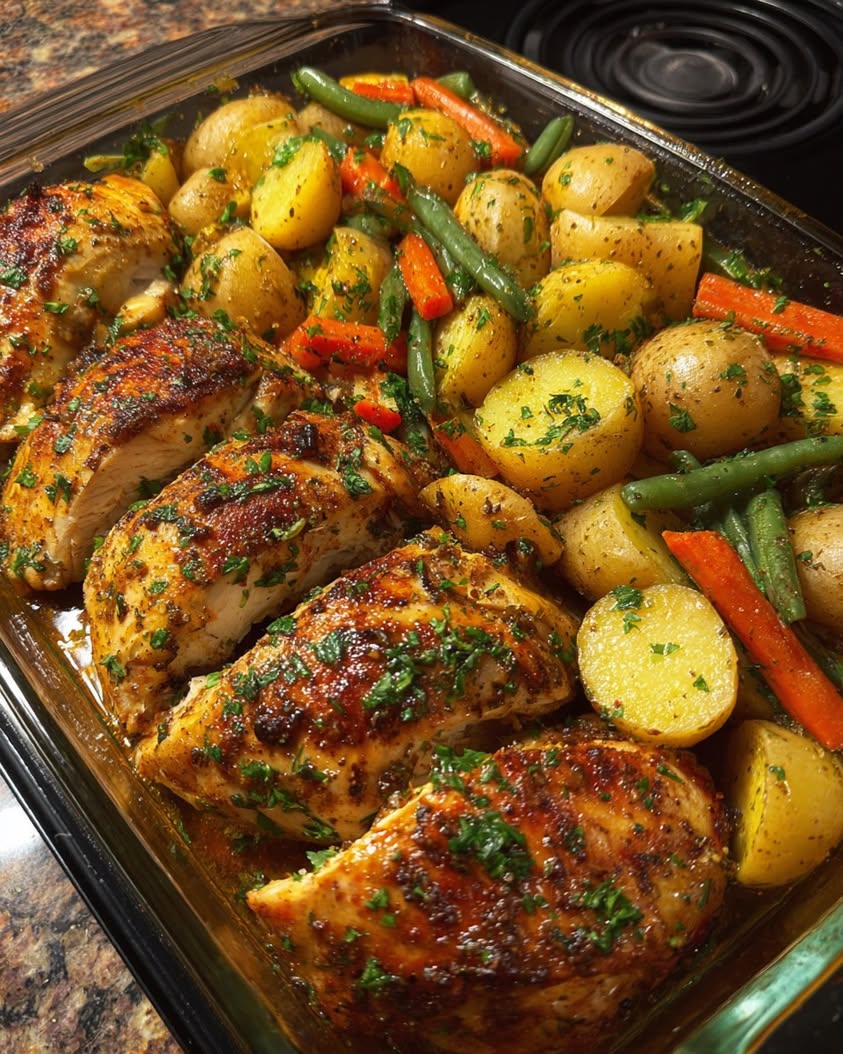
Easy Herb-Roasted Chicken Breast with Potatoes, Carrots & Green Beans: A Complete, Easy One-Pan Dinner Ready in Under an Hour!
Imagine a dinner that fills your kitchen with the warm, comforting aroma of garlic and herbs, delivers a perfectly juicy protein, and roasts colorful vegetables to caramelized perfection. Moreover, this entire meal comes together on a single sheet pan. This easy herb-roasted chicken breast with potatoes, carrots, and green beans is that dream meal made real. It is the ultimate solution for busy weeknights when you crave something wholesome and delicious without a sink full of dishes.
This recipe is a masterclass in simplicity and flavor. Fundamentally, it relies on high-heat roasting, a technique that transforms basic ingredients into something extraordinary. The chicken breasts stay moist and tender, the potatoes become crispy on the outside and fluffy within, and the carrots sweeten beautifully. Meanwhile, the green beans add a vibrant, fresh crunch. Consequently, you get a balanced, satisfying plate with minimal effort, making it a reliable staple for any home cook.
Quick Recipe Highlights
- Flavor Profile: This dish features savory, garlicky, and herbaceous notes from the rosemary and thyme, balanced by the natural sweetness of roasted carrots and onions. The olive oil and seasoning blend create a simple yet deeply satisfying taste that appeals to all ages.
- Texture: You will experience a wonderful contrast: juicy and tender chicken breast, crispy-edged and soft-centered potatoes, sweet and slightly chewy carrots, and fresh, snappy green beans. Every bite offers a delightful mix of mouthfeels.
- Aroma: As it roasts, the kitchen fills with the unmistakable, cozy scent of roasting garlic and earthy herbs. This aromatic promise is a key part of the meal’s comfort food appeal.
- Visual Appeal: The final plate is a feast for the eyes with golden-brown chicken, vibrant orange carrots, deep green beans, and rustic potatoes. It’s a colorful, inviting presentation that looks far more impressive than the effort required.
- Skill Level Needed: This is a beginner-friendly recipe. The steps involve basic chopping, simple seasoning, and oven monitoring. No advanced techniques are required, making it perfect for novice cooks or anyone needing a stress-free dinner.
- Special Equipment: You only need a large sheet pan or roasting dish and basic kitchen tools like a knife, cutting board, and mixing bowls. A good pair of tongs is helpful for turning the vegetables.
Recipe Overview
- Difficulty Level: We rate this recipe as “Easy” because it involves straightforward techniques like chopping vegetables and mixing a simple seasoning paste. There is no complicated searing or braising. The oven does most of the work, and the timing is forgiving. Even a first-time cook can achieve excellent results by following the clear steps.
- Category: This dish falls squarely into the main course category for dinner. It is a complete protein-and-vegetable meal. Additionally, it can be considered a healthy recipe and a fantastic meal prep option for weekly lunches.
- Cuisine: While roasted meats and vegetables are universal, this recipe draws inspiration from rustic American and Mediterranean home cooking. The use of olive oil, garlic, and hardy herbs like rosemary and thyme gives it a familiar, comforting profile common in Western culinary traditions.
- Cost: This is a very cost-effective meal. Chicken breast, potatoes, and carrots are budget-friendly staples. Green beans and fresh herbs may vary in price seasonally but remain affordable. Overall, you can feed a family of four a restaurant-quality meal for a fraction of the cost of dining out.
- Season: This recipe is truly versatile year-round. However, it shines in the fall and winter when root vegetables are at their peak and hearty, oven-warmed meals are most desired. It also works beautifully in spring and summer, especially if you use fresh garden herbs and green beans.
- Occasion: Perfect for casual weeknight family dinners, effortless meal prep for busy professionals, or even a simple but impressive dish for casual weekend entertaining. It’s a universally appealing option that requires little last-minute fuss.
Why You’ll Love This Recipe
First and foremost, the taste and texture combination is utterly satisfying. The chicken, marinated in a paste of olive oil, garlic, and fresh herbs, roasts to succulent perfection. Simultaneously, the potatoes soak up the flavorful drippings and become irresistibly crispy. The carrots caramelize, concentrating their sweetness, and the green beans retain a pleasant bite. Consequently, every forkful delivers a harmonious blend of savory, sweet, and herbal notes that please even picky eaters.
From a convenience standpoint, this recipe is a game-changer. Since everything cooks together on one pan, your cleanup is incredibly minimal. You simply prep the ingredients, toss them with seasonings, and let the oven work its magic. This makes it an ideal solution for those hectic evenings when time and energy are in short supply. Furthermore, the active prep time is only about 15 minutes, leaving you free to attend to other tasks while dinner cooks itself.
Nutritionally, this meal is a well-rounded powerhouse. Chicken breast provides lean protein essential for muscle repair and satiety. Potatoes offer complex carbohydrates and potassium, while carrots are loaded with beta-carotene for eye health. Green beans contribute fiber, vitamins C and K. Cooked with heart-healthy olive oil, this dish supports balanced eating without sacrificing flavor. It’s a meal you can feel good about serving regularly.
For social and entertaining value, this one-pan wonder is a host’s best friend. It scales up easily to feed a crowd without multiplying your workload. You can prep the vegetables and seasoning paste ahead of time, then simply assemble and roast before guests arrive. The stunning, colorful presentation looks like you spent hours in the kitchen, yet you will have plenty of time to enjoy your company. It’s a stress-free way to deliver a comforting, crowd-pleasing feast.
Finally, its cost-effectiveness and accessibility cannot be overstated. The ingredients are humble, easy to find at any grocery store, and often already in your pantry. You do not need expensive cuts of meat or exotic produce. This recipe demonstrates how to elevate everyday items into something special, making gourmet-quality home cooking accessible to everyone on any budget. It’s a testament to the magic of simple, good food.
Historical Background and Cultural Significance
The concept of roasting meat with root vegetables over a fire is ancient, spanning countless cultures. Essentially, this method of cooking was born from practicality, using available heat to transform raw ingredients into nourishing food. In Europe, particularly in rural France and Italy, similar dishes of poultry roasted with garden herbs and seasonal vegetables form the backbone of family-style “peasant” cuisine. These meals were designed to be hearty, resourceful, and cooked in a single vessel, often a large pot or pan in a hearth oven.
Culturally, a roasted chicken dinner holds a place of comfort and celebration in many households, especially in North America. It symbolizes home, family, and abundance. The addition of potatoes and carrots, New World vegetables that became European staples, tells a story of culinary globalization. This particular combination has evolved into a classic Sunday dinner or weeknight staple, representing a fusion of Old World techniques with New World ingredients.
The evolution of this recipe in modern times is directly tied to the popularity of the sheet pan dinner. As home cooks sought faster, easier methods to get dinner on the table, the technique of roasting an entire protein and vegetable medley on one pan surged in popularity. It is a perfect reflection of contemporary cooking values: efficiency, minimal cleanup, and health-consciousness, all while maintaining a commitment to real, whole foods and robust flavor.
Regional variations are endless. In the American South, you might find a similar dish seasoned with paprika and smoked garlic. A Provençal version would use herbes de Provence and perhaps include olives and tomatoes. In other words, the basic template is a global canvas. This adaptability is why the easy herb-roasted chicken breast with potatoes, carrots, and green beans remains a perennial favorite; it is a concept that welcomes personal and regional interpretation.
Ingredient Deep Dive
Chicken Breast: Boneless, skinless chicken breast is a lean, versatile protein beloved in American kitchens. Culturally, its popularity soared in the late 20th century with increased focus on low-fat diets. Nutritionally, it is an excellent source of high-quality protein, niacin, vitamin B6, and selenium. For best results, select plump, evenly-sized breasts to ensure uniform cooking. Pat them thoroughly dry before seasoning; this is crucial for achieving a good sear and preventing steaming. Store raw chicken in the coldest part of your refrigerator and use within 1-2 days, or freeze for longer storage. For substitution, boneless chicken thighs offer more fat and flavor, while turkey cutlets or pork tenderloin medallions can also work with adjusted cooking times.
Potatoes: Yukon Gold potatoes are the ideal choice here. Historically, potatoes originated in the Andes and transformed European agriculture and cuisine after their introduction. Yukon Golds, a modern cultivar, are known for their buttery flavor and creamy texture. They are rich in vitamin C, potassium, and vitamin B6. Their thin skin does not require peeling, adding fiber. Choose firm potatoes without sprouts or green tinges. Store them in a cool, dark, well-ventilated place—not the refrigerator. For variations, baby red potatoes or fingerlings are excellent substitutes. Avoid starchy russets, as they can become too mealy.
Carrots: Carrots have a long history, originally cultivated for their aromatic leaves and seeds rather than their roots. The orange carrot we know today was developed in the Netherlands. They are powerhouse vegetables, loaded with beta-carotene (which converts to vitamin A), fiber, and antioxidants. Select firm, smooth carrots with vibrant color. If using bagged “baby” carrots, note they are often whittled-down larger carrots and can be drier; whole carrots often have better flavor. Store them in the refrigerator’s crisper drawer. Parsnips or sweet potato chunks make wonderful seasonal substitutes, offering similar roasting qualities with different flavor profiles.
Green Beans: Also known as string beans, these are the unripe fruit of the common bean plant. They are a global vegetable, enjoyed from Asia to the Americas. Green beans are low in calories but high in vitamins C, K, and folate, as well as fiber. Look for crisp, brightly colored beans that snap when bent. Avoid limp or blemished pods. Store them unwashed in a plastic bag in the refrigerator. For this recipe, you can substitute with asparagus spears, broccoli florets, or halved Brussels sprouts, adjusting their placement in the pan based on cooking time.
Fresh Herbs (Rosemary & Thyme): Rosemary and thyme are classic Mediterranean herbs with ancient histories tied to medicine, ritual, and cuisine. Rosemary is known for its piney, robust flavor, while thyme is more subtle and earthy. Nutritionally, they provide antioxidants and anti-inflammatory compounds. Fresh herbs are superior for this recipe, offering vibrant aroma. Choose bunches with perky, green leaves, not wilted or blackened. Store them like flowers: stems in a glass of water in the fridge, loosely covered with a bag. If you must substitute with dried, use one-third the amount, but the flavor will be less bright.
Common Mistakes to Avoid
- Crowding the Pan: Overfilling the sheet pan is a major error. If the vegetables are piled on top of each other, they will steam instead of roast. Consequently, you will miss out on the desirable caramelization and crispy edges. Always use a large enough pan and spread ingredients in a single layer.
- Not Drying the Chicken and Vegetables: Moisture is the enemy of browning. If you skip patting the chicken dry or add wet vegetables to the pan, they will release too much water. This creates a steaming environment, preventing proper roasting and resulting in soggy, pale food.
- Underseasoning: This is a simple dish where seasoning is paramount. Do not be shy with salt and pepper. Season the chicken generously and toss the vegetables thoroughly with the oil and herbs. Remember, seasoning should happen in layers for the best flavor penetration.
- Using Unevenly Cut Vegetables: Cutting potatoes and carrots into vastly different sizes guarantees uneven cooking. Smaller pieces will burn before larger ones are tender. Aim for uniform, bite-sized chunks to ensure everything finishes roasting at the same time.
- Adding Delicate Vegetables Too Early: Green beans cook much faster than potatoes and carrots. If you add them at the beginning, they will become shriveled and overcooked. Always add quicker-cooking veggies partway through the roasting process.
- Not Preheating the Oven: A properly hot oven is non-negotiable for achieving a good sear and immediate roasting. Starting in a cold oven will cause the chicken and vegetables to stew in their juices. Always allow your oven to fully preheat before adding the pan.
- Skipping the Resting Time for Chicken: Cutting into the chicken breast immediately after pulling it from the oven causes the precious juices to run out onto the cutting board, leaving the meat dry. Let it rest for 5-10 minutes to allow the fibers to reabsorb the juices.
- Using a Dark Pan Without Adjusting: Dark-colored sheet pans absorb more heat and can cause the bottom of the food to brown too quickly or even burn. If using a dark pan, consider reducing the oven temperature by 25°F and keeping a closer eye on the vegetables.
Essential Techniques
Patting Dry: This simple step is critical for achieving golden-brown, crispy surfaces. Moisture on the surface of the chicken or vegetables must evaporate before browning can begin. By patting them thoroughly dry with paper towels, you remove this barrier. This allows the Maillard reaction—the chemical process that creates complex flavor and color—to occur quickly and efficiently once the food hits the hot pan and oven.
Creating a Flavor Paste: Mixing the minced garlic, herbs, salt, pepper, and olive oil into a coarse paste serves two key purposes. First, it helps the seasonings adhere evenly to the surface of the chicken, creating a flavorful crust. Second, the oil in the paste conducts heat efficiently and helps prevent the delicate garlic and herbs from burning too quickly. Rubbing this paste under the skin if using skin-on chicken, or simply all over the surface, ensures maximum flavor in every bite.
High-Heat Roasting: Roasting at a high temperature (400-425°F) is the engine of this recipe. This heat quickly sears the exterior of the chicken, locking in juices. It also rapidly evaporates surface moisture on the vegetables, allowing them to caramelize instead of steam. The goal is to create a contrast between a flavorful, slightly crisp exterior and a tender, moist interior. A properly preheated oven is essential for this technique to work correctly.
Staggered Vegetable Addition: Understanding that different vegetables have different cooking times is key to a perfect one-pan meal. Dense root vegetables like potatoes and carrots need a long, hot roast to become tender and sweet. More delicate vegetables like green beans would turn to mush under the same treatment. Adding them halfway through the cook time ensures every component reaches ideal doneness simultaneously, preserving texture and color.
Pro Tips for Perfect Easy Herb-Roasted Chicken Breast
For supremely juicy chicken, consider brining the breasts for 30 minutes in a solution of 4 cups water and 1/4 cup salt before patting dry and seasoning. This simple step seasons the meat from the inside out and helps it retain moisture during the high-heat roast.
To prevent the garlic in the herb paste from burning and turning bitter, ensure it is finely minced and thoroughly mixed into the oil. The oil coating helps protect it. Alternatively, you can add sliced garlic cloves to the vegetable mix halfway through roasting for a sweeter, milder flavor.
If your chicken breasts are very thick or uneven, use a meat mallet or rolling pin to gently pound them to an even thickness of about 1 inch. This guarantees they will cook through at the same rate as the vegetables, preventing dry edges and an undercooked center.
Give the vegetables a good toss or turn with a spatula about halfway through their cooking time, before adding the green beans. This exposes new surfaces to the hot pan and oven air, promoting even browning and preventing sticking.
Invest in an instant-read thermometer. It is the only foolproof way to know your chicken is perfectly cooked. Remove the breasts from the oven when they reach 160-162°F at the thickest part; the residual heat will carry them to the safe temperature of 165°F as they rest.
For extra-crispy potatoes, parboil the potato chunks in salted water for 5-7 minutes before draining and roughing them up in the colander. This creates a starchy surface that becomes incredibly crispy when roasted with oil.
After removing the pan from the oven, squeeze fresh lemon juice over everything. The bright acidity cuts through the richness of the oil and chicken, balancing the flavors and making the dish taste fresher and more vibrant.
Let the chicken rest on a separate cutting board, not on the sheet pan with the hot vegetables. This stops the carryover cooking from the hot pan from overcooking the chicken while it rests.
Variations and Adaptations
For regional variations, explore different herb and spice blends. A Spanish version could use smoked paprika, saffron threads, and chorizo slices tossed with the potatoes. An Italian-inspired take might feature oregano, basil, sun-dried tomatoes, and a drizzle of balsamic glaze after roasting. An American barbecue twist could use a dry rub on the chicken and add sweet potato wedges to the vegetable mix.
Seasonal adaptations are simple and rewarding. In spring, use new potatoes, baby carrots, and asparagus. Summer calls for zucchini, bell peppers, and cherry tomatoes added in the last 15 minutes. Fall is perfect for swapping in cubed butternut squash, parsnips, and red onion. In winter, hearty roots like turnips and rutabaga hold up beautifully to the long roast.
Dietary modifications are straightforward. For a gluten-free meal, this recipe is naturally compliant—just ensure your seasonings are gluten-free. To make it dairy-free, it already is; no changes needed. For a lower-carb or keto approach, replace the potatoes with more low-starch vegetables like cauliflower florets, broccoli, or radishes. Increase the fat by using more olive oil or adding avocado slices after cooking.
Flavor variations can keep this recipe exciting. Try a mustard-herb paste by adding 2 tablespoons of Dijon mustard to the seasoning mix. For an Asian flair, use a paste of ginger, sesame oil, soy sauce, and a touch of honey, and substitute the vegetables with broccoli and shiitake mushrooms. A lemon-herb version with lemon zest in the paste and lemon slices roasted alongside the chicken is always refreshing.
Texture modifications can cater to preferences. For softer vegetables, cover the pan with foil for the first 20 minutes of roasting, then uncover to brown. For maximum crispiness on everything, use a wire rack set inside the sheet pan to elevate the chicken and allow air to circulate all around the vegetables underneath.
Presentation alternatives include slicing the rested chicken and fanning it over a bed of the roasted vegetables on a large platter. For individual servings, use smaller, personal-sized cast iron skillets or ceramic baking dishes. You can also chop everything and toss it together in a large bowl for a rustic, family-style “hash” presentation.
Serving and Presentation Guide
Plating techniques matter for turning a simple meal into an occasion. For a restaurant-style look, place a small mound of the roasted vegetable medley in the center of a warm plate. Slice the rested chicken breast on a bias and fan the slices over or alongside the vegetables. Drizzle any accumulated juices from the cutting board over the top for added flavor and gloss.
Garnishing ideas are simple but effective. A final sprinkle of flaky sea salt and freshly cracked black pepper enhances flavor and texture. Fresh herb sprigs like rosemary or thyme add color and reinforce the aromatic profile. A light dusting of finely grated lemon zest or a sprinkle of chopped fresh parsley brightens the entire dish visually and on the palate.
Traditional accompaniments for a roasted chicken dinner are often simple. A crusty baguette or dinner rolls are perfect for sopping up the delicious juices and olive oil left on the plate. A light, crisp green salad with a vinaigrette dressing provides a fresh contrast to the warm, roasted flavors. Applesauce or a tangy chutney can also be a delightful side.
Modern serving suggestions might include a dollop of garlic-herb aioli or tzatziki sauce for dipping. Serving it over a bed of creamy polenta, couscous, or quinoa can stretch the meal and add another textural element. For a deconstructed approach, serve the components in separate bowls and let everyone build their own plate.
Temperature considerations are key. Serve this dish immediately after the chicken has rested. The vegetables are best hot from the oven when they are at their crispiest. Warm your serving platters or plates in the oven (turned off) for a few minutes before plating to keep everything hot longer at the table.
Portion control is built-in with this recipe. One chicken breast and a quarter of the vegetable mix is a balanced serving. For heartier appetites, you can increase the vegetable portion or serve with a side of grains. For lighter eaters or children, a half breast with vegetables may be sufficient. The clear division of components makes it easy to adjust.
Wine and Beverage Pairing
Wine pairings for this herbaceous dish should complement its savory and earthy notes without overpowering it. A medium-bodied white wine like an Oregon Pinot Gris or a French Chardonnay (unoaked or lightly oaked) works beautifully. Their crisp acidity cuts through the richness, while their stone fruit flavors harmonize with the sweet carrots. For red wine lovers, a lighter red like a Pinot Noir or a Grenache is ideal. Their bright red fruit and subtle earthiness echo the roasted vegetables and herbs without clashing with the white meat chicken.
Non-alcoholic alternatives can be just as thoughtful. A sparkling water with a squeeze of lemon or lime provides cleansing bubbles. For something more complex, try a chilled herbal iced tea, such as rosemary-lemon or peach-thyme, which mirrors the dish’s herbal profile. A tart cherry juice spritzer (juice mixed with club soda) offers a sweet-tart contrast that pairs surprisingly well with the savory chicken and potatoes.
While not traditional dinner beverages, coffee and tea can be lovely after the meal. A medium-roast coffee with low acidity would complement the caramelized notes of the vegetables. For tea, an earthy Pu-erh or a smoky Lapsang Souchong could be an intriguing pairing, though they are more suited to a post-dinner moment rather than during the meal itself.
Temperature considerations are standard: serve white wines and non-alcoholic spritzers well-chilled, around 45-50°F. Red wines should be served slightly cool, at a “cellar temperature” of 55-60°F, which allows their aromas to shine without the alcohol feeling too warm. Iced beverages should be cold but not diluted; use large ice cubes to minimize melting.
Serving suggestions include pouring wine into appropriate glassware to enhance the experience. Always offer water alongside any other beverage. If serving non-alcoholic options, present them in a carafe or nice pitcher with garnishes like citrus slices or herb sprigs to make them feel special and integrated into the meal.
Storage and Shelf Life
Proper storage methods are essential for food safety and quality. Allow the leftover chicken and vegetables to cool completely at room temperature for no more than two hours. Then, transfer them to separate airtight containers. Storing them together is fine, but the vegetables may become soggier from the chicken’s moisture. Glass containers are excellent as they don’t retain odors. Refrigerate promptly.
Temperature requirements are strict for safety. Your refrigerator must be at or below 40°F. Store leftovers on a shelf, not in the door where the temperature fluctuates. Consume refrigerated leftovers within 3-4 days. The quality of the green beans and the crispness of the potatoes will decline after the first day, but the dish will remain safe to eat within this window.
Container recommendations include shallow containers to allow the food to cool quickly and evenly. If using plastic, ensure it is BPA-free and designated for food storage. For partial portions, smaller individual containers are perfect for grab-and-go lunches. Always label containers with the date so you can track freshness.
Signs of spoilage include an off or sour smell, a slimy texture on the chicken or vegetables, or any visible mold. If the food has been left out for over two hours, it should be discarded. When in doubt, throw it out. Food safety is paramount with poultry.
Reheating instructions are best done in the oven or toaster oven to restore texture. Preheat to 350°F. Spread the chicken and vegetables on a baking sheet, sprinkle with a teaspoon of water to create steam, and cover loosely with foil. Heat for 10-15 minutes, or until warmed through. The microwave is faster but will make the vegetables and chicken rubbery and soggy; use it only if necessary, at a reduced power setting.
Freezing guidelines: You can freeze the cooked chicken and vegetables for up to 2-3 months. However, note that the texture of the potatoes and green beans will suffer significantly, becoming mushy and watery upon thawing. The chicken will freeze better. For best results, freeze in a single layer on a parchment-lined sheet, then transfer the frozen pieces to a freezer bag. Thaw in the refrigerator overnight before reheating.
Make Ahead Strategies
A prep timeline can turn this easy dinner into a no-brainer. The day before, or in the morning, chop all the potatoes and carrots. Store them submerged in cold water in the refrigerator to prevent browning; drain and pat very dry before using. Trim the green beans. Mix the herb-garlic-oil paste and store it in a small container. Pat the chicken dry, season lightly with salt, and store on a plate covered in the fridge. This advance work reduces your active prep to just 5 minutes of assembly.
Storage between steps is simple. Keep the pre-cut vegetables in water or in a sealed bag with a dry paper towel to absorb moisture. The seasoning paste can sit at room temperature for an hour or in the fridge overnight. The salted chicken can rest on a plate in the fridge, which actually helps season it more deeply. Bring everything to room temperature for about 20 minutes before roasting for more even cooking.
Quality impact assessment is positive for most make-ahead steps. Pre-chopping vegetables has no negative effect if they are stored properly in water. The herb paste may darken slightly but the flavor will remain. Salting the chicken ahead improves its juiciness and flavor. The only step not to do ahead is tossing the vegetables with oil and salt, as this can draw out moisture and make them steam.
Assembly tips for the day of are streamlined. Drain and thoroughly dry the potatoes and carrots. Toss them with oil, salt, and pepper on the sheet pan. Rub the chicken with the pre-made paste. Roast as directed, adding the pre-trimmed green beans at the appropriate time. This system makes weeknight execution nearly effortless.
Reheating guidelines for a fully made-ahead dish are the same as for leftovers. The oven method is preferred to maintain texture. If you’ve fully cooked and refrigerated the entire meal, reheat covered at 350°F until hot. For the best quality, consider making the components ahead but assembling and roasting fresh.
Fresh element additions can revive a make-ahead meal. If you’ve cooked the entire dish ahead, add a fresh garnish after reheating. A squeeze of lemon juice, a drizzle of extra virgin olive oil, or a sprinkle of freshly chopped herbs just before serving makes the dish taste freshly made and bright.
Scaling Instructions
Halving the recipe is straightforward for smaller households. Use two chicken breasts and simply reduce all vegetable quantities by half. Use a standard quarter sheet pan or a smaller baking dish to maintain the proper single-layer spacing. Cooking times may be slightly reduced by 5-10 minutes; start checking for doneness early with a thermometer. All other steps and temperatures remain the same.
Doubling or tripling the recipe for a crowd requires planning. You will need multiple sheet pans. Do not stack two pans on one oven rack, as this blocks airflow. Instead, use two racks and rotate the pans top-to-bottom and front-to-back halfway through cooking. You may need to extend the total cooking time by 5-10 minutes. Ensure your oven is fully preheated, as opening it to add multiple pans can cause a significant temperature drop.
Equipment adjustments are necessary when scaling. For a double batch, two large sheet pans are ideal. If you only have one very large pan, like a half-sheet pan, you can try to fit everything, but watch for crowding. You may need to roast in batches for the best results. Having a second instant-read thermometer is helpful when checking multiple chicken breasts quickly.
Timing modifications are minimal but important. When doubling, the volume of cold food going into the oven is greater, which can lower the oven temperature temporarily. The cooking time might increase slightly. Rely on visual cues (browning vegetables) and the meat thermometer (165°F internal temp for chicken) rather than a strict timer. Stagger adding the green beans based on when the potatoes and carrots are halfway tender, not strictly by the clock.
Storage considerations for scaled-up recipes mean you’ll likely have more leftovers. Plan your storage container space ahead of time. If meal prepping, portion the scaled-up batch directly into individual lunch containers once cooled. This makes grabbing a healthy lunch as easy as possible throughout the week.
Nutritional Deep Dive
A macro breakdown for one serving (1 chicken breast + ¼ of vegetables) is approximately: 350-400 calories, 35g of protein, 30g of carbohydrates (from potatoes and carrots), and 12g of fat (primarily from olive oil). This balance provides sustained energy from complex carbs, muscle-building and satiating protein, and healthy fats for nutrient absorption and flavor. It’s a macro profile supportive of active lifestyles and weight management goals.
The micronutrient analysis is impressive. Chicken breast provides selenium and B vitamins. Carrots deliver a massive dose of vitamin A (as beta-carotene). Potatoes offer more potassium than a banana. Green beans contribute vitamin K, important for bone health, and vitamin C. The olive oil and herbs add antioxidants. Together, this meal covers a wide spectrum of essential vitamins and minerals in a whole-food format.
Health benefits are numerous. The high protein and fiber content promote fullness, aiding in portion control. The antioxidants from the colorful vegetables and herbs combat oxidative stress. The monounsaturated fats from olive oil support heart health. The lack of processed ingredients and added sugars makes this an anti-inflammatory meal that supports overall wellness and stable blood sugar levels.
Dietary considerations are mostly positive. This dish is naturally gluten-free and dairy-free. It is suitable for diabetic diets when portion-controlled due to the fiber and protein moderating the carb impact. For low-sodium diets, you can reduce or omit the added salt and rely on the herbs and garlic for flavor. Always check individual ingredient labels if following a strict medical diet.
Portion analysis shows this recipe creates a balanced plate according to many healthy eating models: half the plate is non-starchy vegetables (carrots, green beans), a quarter is lean protein (chicken), and a quarter is starchy vegetables (potatoes). This visual guide makes it easy to understand the nutritional balance without complex calculations.
Weight management tips include being mindful of the amount of olive oil used; measure it with a spoon instead of pouring freely. You can increase the ratio of green beans and carrots to potatoes for a lower-calorie, higher-fiber plate. Removing the skin from the chicken breast before eating, if you used skin-on, reduces fat and calories significantly. This meal is inherently supportive of healthy weight goals due to its high satiety factor.
Dietary Adaptations
Gluten-Free: This recipe is naturally gluten-free as written. The primary concern is cross-contamination or hidden gluten in pre-mixed seasonings. To ensure compliance, use pure herbs and spices, not blends that may contain anti-caking agents with gluten. Double-check that your chicken broth or stock, if used in a variation, is certified gluten-free. This adaptation requires no ingredient swaps.
Dairy-Free: The standard recipe contains no dairy products. The richness comes solely from olive oil. It is perfectly suited for a dairy-free or lactose-intolerant diet. No substitutions are necessary, making it an excellent safe choice for gatherings where dietary restrictions are present.
Vegan/Vegetarian: For a plant-based version, replace the chicken breast with a hearty protein like extra-firm tofu, pressed and cubed, or large portobello mushroom caps. Marinate them in the same herb-garlic paste. Increase the quantity and variety of vegetables, perhaps adding chickpeas tossed in oil and spices to the pan for plant-based protein. The roasting times will differ; tofu and mushrooms cook faster than chicken.
Low-Carb/Keto: Omit the potatoes entirely. Replace them with low-starch vegetables like cauliflower florets, halved Brussels sprouts, or zucchini wedges. Increase the amount of carrots slightly if they fit your carb allowance, or use more green beans and add broccoli. Ensure you use enough high-quality olive oil or avocado oil to meet fat macros. The chicken breast is an excellent lean protein for keto when paired with higher-fat sides.
Paleo: This recipe is nearly Paleo-compliant. Simply ensure you use a high-quality olive oil or avocado oil. Omit any black pepper if following a strict AIP (Autoimmune Protocol) version initially. The dish focuses on whole, unprocessed foods—meat and vegetables—which is the cornerstone of the Paleo diet. Sweet potatoes can be
Print
Easy Herb-Roasted Chicken Breast with Potatoes, Carrots & Green Beans
Description
A simple, one-pan meal featuring tender chicken breasts and hearty vegetables, all roasted together with aromatic herbs for a flavorful and fuss-free dinner.
Ingredients
For the Crust:
- 4 boneless, skinless chicken breasts
- 1 pound baby potatoes, halved
- 3 large carrots, peeled and cut into 1-inch pieces
- 8 ounces fresh green beans, trimmed
- 3 tablespoons olive oil
- 2 teaspoons dried rosemary
- 2 teaspoons dried thyme
- 1 teaspoon garlic powder
- 1 teaspoon onion powder
- Salt and black pepper to taste
- 1 lemon, sliced (optional)
Instructions
1. Prepare the Crust:
- Preheat oven to 400°F (200°C). Line a large baking sheet with parchment paper or foil.
- In a large bowl, toss the potatoes, carrots, and green beans with 2 tablespoons olive oil, 1 teaspoon rosemary, 1 teaspoon thyme, garlic powder, onion powder, salt, and pepper until evenly coated. Spread vegetables in a single layer on the baking sheet.
- Rub chicken breasts with remaining 1 tablespoon olive oil, remaining rosemary and thyme, salt, and pepper. Place chicken among the vegetables on the baking sheet. Arrange lemon slices on top if using.
- Roast for 25-30 minutes, or until chicken is cooked through (internal temperature 165°F) and vegetables are tender and lightly browned. Serve immediately.
Notes
You can customize the seasonings to taste.

I’m Shaykee—born in Morocco, seasoned across continents. From airplane galleys to home kitchens, I share the flavors and stories that shaped my journey.