
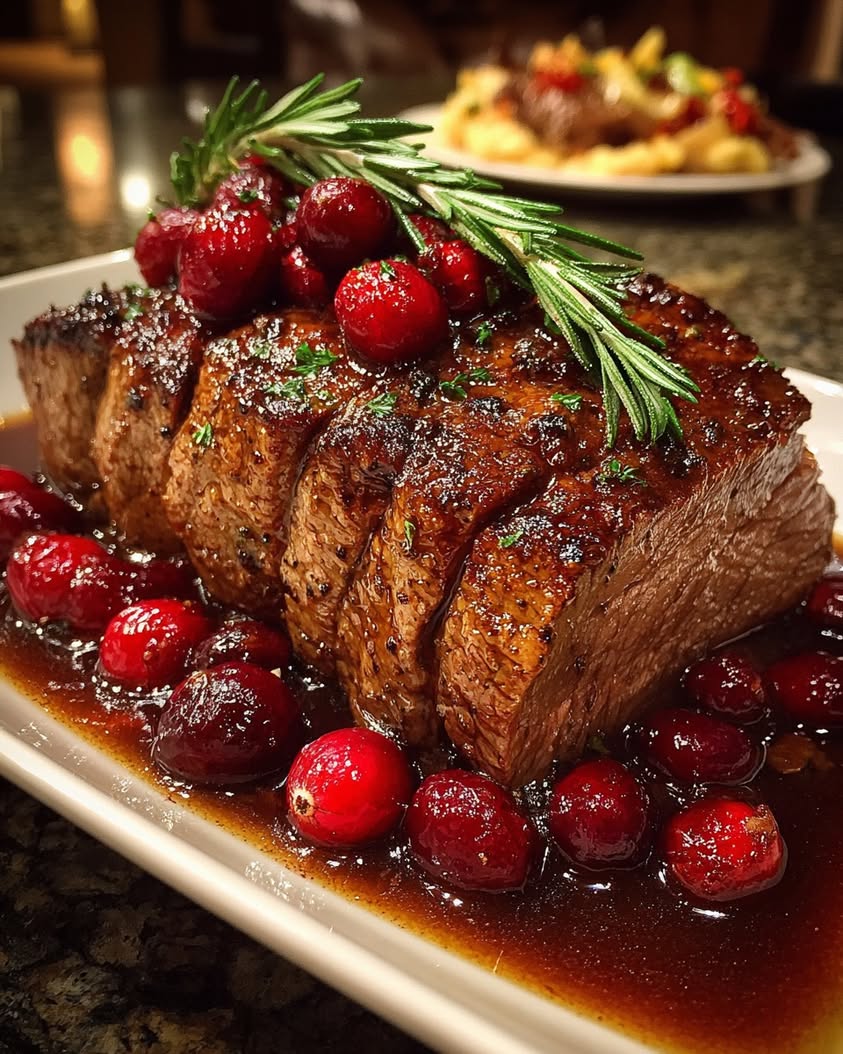
Elegant Cranberry Balsamic Roast Beef: A Festive Holiday Masterpiece
Imagine presenting a stunning roast beef at your holiday table that perfectly balances savory richness with a touch of sweet sophistication. This elegant cranberry balsamic roast beef recipe transforms a classic cut into an extraordinary centerpiece. The deep, savory notes of the beef meld beautifully with the tangy-sweet cranberry balsamic glaze, creating a symphony of flavors that will impress your guests. Furthermore, the aroma that fills your kitchen as it roasts is nothing short of magical, promising a memorable dining experience.
This recipe stands out because it combines simplicity with gourmet results. While it looks and tastes like it came from a professional kitchen, the steps are straightforward and achievable for any home cook. The cranberry balsamic sauce not only adds incredible flavor but also creates a beautiful, glossy finish on the roast. Consequently, you get a dish that is as visually stunning as it is delicious. This is the perfect solution for anyone wanting to elevate their holiday meals without spending hours in the kitchen.
What makes this cranberry balsamic roast beef truly special is its versatility. It works wonderfully for Christmas dinner, Thanksgiving, or any special occasion where you want to serve something exceptional. The combination of ingredients creates a complex flavor profile that feels both traditional and excitingly new. Moreover, the leftovers are fantastic, making it a practical choice for holiday entertaining. This recipe will quickly become your go-to for creating unforgettable holiday memories around the dinner table.
Quick Recipe Highlights
- Flavor Profile: This dish features a beautiful balance between the savory, umami-rich roast beef and the sweet-tart cranberry balsamic glaze. The balsamic vinegar adds depth and acidity, while the cranberries provide a festive fruitiness that complements the beef perfectly.
- Texture: You will enjoy a tender, juicy interior with a beautifully caramelized exterior crust. The glaze creates a slight stickiness on the outside that contrasts wonderfully with the melt-in-your-mouth beef slices.
- Aroma: As it roasts, your kitchen will fill with the warm, inviting scents of roasting beef combined with the sweet tang of reducing balsamic and cranberries. The herbal notes from rosemary and thyme add an earthy complexity to the fragrance.
- Visual Appeal: The deep ruby-red glaze against the perfectly browned beef creates a stunning presentation. When sliced, the pink interior provides a beautiful contrast that makes this dish look truly professional and holiday-ready.
- Skill Level Needed: This recipe requires basic roasting knowledge and attention to temperature control. While not difficult, achieving the perfect doneness demands some kitchen experience, particularly with meat thermometers and timing.
- Special Equipment: You will need a roasting pan with a rack, a reliable meat thermometer, and a saucepan for reducing the glaze. These tools ensure even cooking and proper glaze consistency for the best results.
Recipe Overview
- Difficulty Level: This cranberry balsamic roast beef recipe falls into the intermediate category because it requires precise temperature monitoring and timing. While the steps are simple, achieving perfect doneness demands attention to detail. The glaze reduction also needs careful watching to prevent burning. However, with proper preparation, even relatively inexperienced cooks can achieve excellent results.
- Category: This dish serves as a magnificent main course for holiday dinners and special occasions. It fits perfectly into festive menus alongside traditional sides like roasted vegetables, mashed potatoes, and seasonal salads. The recipe creates a complete protein centerpiece that anchors your entire meal beautifully.
- Cuisine: This recipe draws inspiration from modern American holiday cooking with influences from Italian culinary traditions through the use of balsamic vinegar. The combination of cranberries with roast beef reflects contemporary fusion cuisine that celebrates seasonal ingredients while honoring classic roasting techniques.
- Cost: Preparing this elegant cranberry balsamic roast beef represents a moderate investment, with the beef tenderloin or rib roast being the most significant expense. The cranberry and balsamic elements are relatively affordable, making the overall cost reasonable for a special occasion centerpiece. The impressive results far outweigh the financial investment.
- Season: This recipe shines during the fall and winter months when cranberries are in season and holiday gatherings are frequent. The warm, comforting nature of roast beef makes it ideal for colder weather, while the cranberry addition provides a festive touch that perfectly captures the spirit of the holiday season.
- Occasion: This dish excels at Christmas dinners, Thanksgiving feasts, New Year’s celebrations, and other special family gatherings. It brings an air of sophistication to any table while remaining comforting and familiar. The impressive presentation makes it perfect for entertaining guests during important occasions.
Why You’ll Love This Recipe
The taste and texture experience of this cranberry balsamic roast beef is truly exceptional. Each bite delivers multiple layers of flavor, beginning with the savory richness of perfectly cooked beef followed by the sweet and tangy notes of the cranberry balsamic glaze. The texture combination is equally remarkable, featuring a tender, juicy interior contrasted by a slightly sticky, caramelized exterior. This complexity makes every mouthful interesting and satisfying. The flavors continue to develop even after cooking, making leftovers particularly delicious.
From a convenience perspective, this recipe offers numerous advantages for holiday cooking. The preparation time is surprisingly short, requiring only about fifteen minutes of active work before the roast goes into the oven. Meanwhile, the cooking process is largely hands-off, allowing you to focus on other menu items or spend time with guests. Additionally, the recipe scales beautifully for larger gatherings without significantly increasing your workload. The make-ahead potential of both the glaze and the fully cooked roast makes holiday meal planning significantly less stressful.
Nutritionally, this cranberry balsamic roast beef provides substantial benefits alongside its incredible flavor. Beef serves as an excellent source of high-quality protein, iron, and B vitamins essential for energy production. Cranberries contribute antioxidants and vitamin C, while the balsamic vinegar offers potential digestive benefits. When prepared properly, the dish contains minimal added sugars and relies on natural fruit sweetness. This nutritional profile makes it a satisfying centerpiece that fuels your body while delighting your taste buds.
The social and entertaining value of this dish cannot be overstated. Presenting a beautifully glazed roast beef at your holiday table creates an immediate impression of care and culinary skill. The dramatic presentation sparks conversation and makes guests feel truly special. Furthermore, the familiar yet elevated flavors appeal to diverse palates, ensuring everyone at your table will enjoy this centerpiece. The recipe reliably produces impressive results that will have your guests requesting the recipe for their own holiday celebrations.
Considering cost-effectiveness, this cranberry balsamic roast beef delivers exceptional value for special occasion dining. While quality beef represents an investment, it far surpasses restaurant pricing for similar quality. The additional ingredients are inexpensive pantry staples that transform the humble roast into something extraordinary. Moreover, the recipe yields generous portions that can stretch across multiple meals, making it economically sensible for holiday entertaining. The impressive results make it worth every penny while remaining accessible to most home cooks.
Historical Background and Cultural Significance
The tradition of serving roast beef as a celebratory centerpiece dates back centuries in Western culinary history. In Great Britain, roast beef became synonymous with Sunday dinners and special occasions, eventually earning the nickname “The Roast Beef of Old England.” This tradition crossed the Atlantic with European settlers, who adapted it using New World ingredients. The combination with cranberries represents a particularly American innovation, drawing on native fruits that early settlers adopted from Indigenous culinary traditions. This historical blending of Old World and New World ingredients created the foundation for modern holiday cooking.
Culturally, roast beef maintains significant importance as a symbol of abundance and celebration across many societies. In American culture, it often appears at holiday tables as a luxurious alternative to turkey or ham. The addition of cranberries connects directly to Thanksgiving traditions, while the balsamic vinegar incorporation reflects more recent culinary trends toward global flavor fusion. This recipe therefore represents both tradition and innovation, honoring historical foodways while embracing contemporary taste preferences. The result is a dish that feels both comforting and excitingly new.
The evolution of this specific recipe reflects broader trends in modern home cooking. As home cooks became more adventurous and ingredient availability expanded, traditional recipes began incorporating global flavors. Balsamic vinegar, once a specialty ingredient, found its way into mainstream American kitchens, bringing its complex sweetness and acidity to familiar dishes. Simultaneously, the move toward balancing rich proteins with fruit-based sauces gained popularity, leading to creations like this cranberry balsamic glaze. This evolution demonstrates how culinary traditions continuously adapt while maintaining their core appeal.
Regional variations of fruit-glazed roast meats appear across numerous culinary traditions. In French cuisine, fruit-based gastriques often accompany duck and other rich meats. British cooking traditionally pairs roast beef with horseradish rather than fruit elements. Italian cooking frequently uses balsamic reductions with various proteins. This cranberry balsamic roast beef recipe therefore represents a fusion of these diverse approaches, creating something uniquely suited to contemporary American holiday tables. The result honors multiple culinary traditions while establishing its own distinctive identity.
Ingredient Deep Dive
Beef tenderloin or rib roast forms the foundation of this magnificent dish. These premium cuts come from the least-exercised muscles of the animal, resulting in exceptional tenderness. Historically, these cuts were reserved for royalty and special occasions due to their superior quality. Nutritionally, beef provides complete protein, iron, zinc, and B vitamins essential for energy metabolism. When selecting your roast, look for even marbling and a bright red color with firm, white fat. Store beef in the coldest part of your refrigerator and use within three days of purchase, or freeze for longer storage. For substitutions, prime rib offers similar quality, while sirloin provides a more economical alternative.
Fresh cranberries bring vibrant color and tangy flavor to the glaze. Native to North America, cranberries have been part of Indigenous cuisine for centuries and were introduced to European settlers as both food and medicine. These ruby-red berries are packed with vitamin C, fiber, and unique antioxidants called proanthocyanidins that support urinary tract health. Select cranberries that are firm, shiny, and bright red, avoiding any soft or discolored berries. Store fresh cranberries in the refrigerator for up to a month or freeze them for year-round availability. If fresh cranberries are unavailable, frozen work perfectly, while dried cranberries can be reconstituted in warm water.
Balsamic vinegar contributes complex sweetness and acidity that balances the rich beef and tart cranberries. Authentic traditional balsamic vinegar comes from Modena, Italy, where it undergoes years of aging in wooden barrels. While you needn’t use expensive traditional balsamic for cooking, select a quality product that lists grape must as the first ingredient. Balsamic vinegar contains antioxidants and may offer digestive benefits. Store it in a cool, dark place away from direct sunlight. For substitutions, red wine vinegar with a teaspoon of honey provides a reasonable alternative, though the flavor profile will differ slightly.
Fresh rosemary and thyme introduce aromatic complexity that complements both the beef and the fruit elements. These Mediterranean herbs have been cultivated for thousands of years for both culinary and medicinal purposes. Rosemary contains compounds that may improve memory and concentration, while thyme offers antimicrobial properties. Select herbs with vibrant color and firm leaves, avoiding any that look wilted or brown. Store fresh herbs in the refrigerator with stems in water. If substituting dried herbs, use one-third the amount called for fresh. Other herb combinations like sage and oregano can work well for variation.
Common Mistakes to Avoid
- Starting with cold beef straight from the refrigerator will result in uneven cooking. Always bring your roast to room temperature for at least thirty minutes before cooking to ensure even doneness from edge to center.
- Overcooking the beef represents the most common error that ruins an otherwise perfect roast. Use a reliable meat thermometer and remove the roast from the oven when it reaches five degrees below your target temperature, as carryover cooking will continue.
- Not letting the roast rest after cooking causes the precious juices to run out when sliced. Always tent your roast with foil and let it rest for at least fifteen minutes to allow the juices to redistribute throughout the meat.
- Rushing the glaze reduction results in a thin sauce that won’t properly adhere to the roast. Simmer the cranberry balsamic mixture patiently until it thickens to a syrup consistency that will coat the back of a spoon.
- Slicing the roast too thinly or too thickly affects both presentation and eating experience. Aim for half-inch slices that are substantial enough to hold the glaze but thin enough to be tender.
- Using inferior balsamic vinegar dramatically impacts the final flavor. Avoid products with caramel color or excessive sweeteners, as they can create an overly sweet or artificial-tasting glaze.
- Neglecting to pat the beef dry before seasoning prevents proper browning. Always dry the surface thoroughly with paper towels to ensure a beautiful crust forms during roasting.
- Applying the glaze too early in the cooking process causes burning. Brush on the cranberry balsamic mixture during the final twenty minutes of cooking to caramelize without charring.
Essential Techniques
Proper meat temperature monitoring is crucial for perfect doneness. Using a digital meat thermometer eliminates guesswork and ensures your roast reaches the ideal internal temperature. Insert the probe into the thickest part of the meat, avoiding fat or bone, which can give false readings. Remember that temperature will continue rising five to ten degrees after removal from the oven due to carryover cooking. Consequently, you should remove the roast when it reads five degrees below your target temperature. Visual cues like color and firmness are unreliable indicators, making a thermometer your most valuable tool for this recipe.
Reducing the cranberry balsamic glaze requires patience and attention. The mixture must simmer slowly to allow natural pectin from the cranberries to thicken the sauce while the sugars caramelize. Stir frequently to prevent sticking and scorching on the bottom of the pan. The finished glaze should coat the back of a spoon and leave a clear trail when you run your finger through it. If the glaze becomes too thick, simply whisk in a tablespoon of warm water to adjust consistency. Proper reduction creates a glossy, viscous sauce that clings beautifully to the sliced roast beef.
Resting the meat after roasting is non-negotiable for juicy results. During cooking, the muscle fibers contract and push juices toward the center of the roast. Resting allows these fibers to relax and reabsorb the distributed juices throughout the meat. Tent the roast loosely with foil to keep it warm without continuing the cooking process. The resting period also gives you time to make final preparations for serving. Slicing immediately after cooking will cause precious juices to pool on the cutting board rather than remaining in the meat where they belong.
Pro Tips for Perfect Elegant Cranberry Balsamic Roast Beef
Create an herb paste by finely chopping fresh rosemary and thyme with coarse salt. Rubbing this mixture over the entire surface of the beef before roasting enhances flavor penetration and creates a delicious crust. The salt in the paste also helps draw moisture to the surface for better browning.
Roast your beef on a rack placed in a roasting pan to ensure even heat circulation. This technique allows hot air to reach all surfaces of the meat, preventing the bottom from steaming in accumulated juices. The elevated position also promotes better browning and caramelization on all sides.
Strain the cranberry balsamic glaze after reducing for a perfectly smooth presentation. Press the mixture through a fine-mesh strainer to remove cranberry skins and any herb fragments. This extra step creates a professional-looking glaze that coats the beef evenly without any textural distractions.
Add a splash of port wine or red wine to the cranberry balsamic mixture for additional complexity. The alcohol will cook off during reduction, leaving behind nuanced flavors that complement both the fruit and the beef. This small addition elevates the glaze from great to extraordinary.
Brush the roast with the glaze in multiple thin layers rather than one thick application. Allow each layer to set for a few minutes before adding the next. This technique builds up a beautiful, glossy coating that won’t drip off during slicing.
Save some glaze to serve alongside the sliced beef at the table. This allows guests to add extra sauce according to their preference. Gently warm the reserved glaze before serving to maintain its ideal pouring consistency.
Variations and Adaptations
Regional variations can transform this recipe to suit different culinary traditions. For a French-inspired version, replace the cranberries with red currants and add a tablespoon of Dijon mustard to the glaze. Southern adaptation might include bourbon instead of balsamic vinegar and pecans sprinkled over the glazed roast during the final minutes of cooking. Mediterranean variation could feature olives and oranges in place of cranberries, with rosemary remaining as the primary herb. These regional twists maintain the elegant presentation while offering entirely new flavor experiences that might better suit your menu or personal preferences.
Seasonal adaptations allow you to enjoy this recipe throughout the year with appropriate ingredient substitutions. During spring, fresh cherries make an excellent alternative to cranberries, paired with a lighter white balsamic vinegar. Summer versions might feature peaches or nectarines with basil instead of rosemary. Autumn adaptations could include figs and pomegranate molasses for deeper, richer flavors. These seasonal variations keep the concept fresh and exciting while taking advantage of peak produce availability. The basic technique remains unchanged, making adaptation straightforward once you understand the flavor balance principles.
Dietary modifications make this elegant dish accessible to various eating preferences. For a gluten-free version, ensure your balsamic vinegar doesn’t contain caramel color derived from wheat. Low-carb adaptations might use sugar-free cranberry sauce or reduce the honey in the glaze, increasing the balsamic vinegar proportion instead. Paleo-friendly versions require omitting the honey or substituting with date paste. For reduced sodium needs, decrease or eliminate the salt in the herb rub, relying on the natural flavors of the herbs and the glaze for seasoning. These modifications maintain the dish’s essential character while accommodating specific dietary requirements.
Serving and Presentation Guide
Plating techniques significantly enhance the visual impact of your cranberry balsamic roast beef. Slice the roast evenly against the grain to ensure tenderness, arranging the slices slightly overlapping on a warm platter. Drizzle additional warmed glaze over the arranged slices just before serving to create a glossy, professional appearance. Consider placing the slices at a slight angle rather than straight across the platter for dynamic visual interest. The presentation should highlight the beautiful pink interior contrasted with the dark, shiny glaze for maximum visual appeal.
Garnishing ideas should complement rather than compete with the main attraction. Fresh rosemary sprigs and whole cranberries scattered around the platter reinforce the key flavors in an aesthetically pleasing way. Microgreens or watercress add a fresh, green element that contrasts beautifully with the rich colors of the meat and glaze. For special occasions, edible flowers like nasturtiums or pansies introduce elegant color without affecting the flavor profile. Remember that garnishes should be edible and enhance the overall dining experience rather than merely decorating the plate.
Traditional accompaniments balance the rich flavors of the roast beef. Creamy mashed potatoes or potato gratin provide a neutral base that absorbs the delicious glaze. Roasted root vegetables like carrots, parsnips, and Brussels sprouts complement the sweet and savory notes of the dish. Yorkshire pudding or popovers honor the roast beef tradition while offering a delightful textural contrast. A simple green salad with a sharp vinaigrette cuts through the richness and cleanses the palate between bites. These classic pairings create a well-rounded meal that satisfies multiple taste preferences.
Wine and Beverage Pairing
Wine pairings should complement both the rich beef and the sweet-tart cranberry balsamic glaze. Medium-bodied red wines with good acidity work beautifully, such as Pinot Noir, which offers red fruit notes that echo the cranberries without overwhelming the palate. Syrah or Shiraz provides peppery notes that complement the herbal elements in the rub. For those who prefer white wine, a full-bodied Chardonnay with minimal oak influence can stand up to the robust flavors. The key is selecting wines with enough structure to complement the beef but sufficient brightness to balance the sweetness of the glaze.
Non-alcoholic alternatives can be equally sophisticated and thoughtfully paired. Sparkling cranberry juice mixed with a splash of lime and rosemary sprigs mirrors the festive elements of the dish. Ginger beer provides spicy warmth that cleanses the palate between rich bites. For a more elegant option, create a virgin spritzer with white grape juice, soda water, and fresh thyme. Iced hibiscus tea offers tartness that complements the cranberry elements while providing beautiful color. These creative non-alcoholic options ensure all guests can enjoy perfectly paired beverages with their meal.
Coffee and tea pairings work surprisingly well with the savory-sweet profile of this dish. After the meal, a medium-roast coffee with low acidity complements the richness without bitterness. Earl Grey tea’s bergamot notes provide a fragrant finish that cleanses the palate beautifully. For something more unusual, try a smoky Lapsang Souchong tea whose campfire notes echo the roasted elements of the dish. Chai tea’s warm spices complement the herbal notes in the beef rub. These hot beverages provide a comforting conclusion to the dining experience while extending the flavor journey.
Storage and Shelf Life
Storage methods for leftover cranberry balsamic roast beef maintain quality and safety. Cool the meat completely before refrigerating, but don’t leave it at room temperature for more than two hours. Store the sliced beef in an airtight container separate from any remaining glaze. The glaze should be stored in its own container to prevent the meat from becoming soggy. Properly stored, the cooked beef will maintain good quality for three to four days in the refrigerator. For longer storage, freezing is effective, though texture may change slightly upon thawing.
Reheating instructions are crucial for preserving the quality of leftovers. Gently warm sliced beef in a covered oven-safe dish with a small amount of beef broth or water at 325°F until just heated through. Avoid microwaving, which can make the meat tough and rubbery. Reheat the glaze separately in a small saucepan over low heat, adding a teaspoon of water if it has thickened too much. Combine the warmed beef and glaze just before serving. Proper reheating techniques ensure leftovers taste nearly as delicious as the freshly prepared dish.
Freezing guidelines help extend the enjoyment of your elegant roast beef. Wrap sliced beef tightly in plastic wrap, then in aluminum foil or place in freezer bags, removing as much air as possible. The glaze freezes well in airtight containers, leaving some headspace for expansion. Frozen beef maintains best quality for two to three months. Thaw overnight in the refrigerator before reheating. While freezing may slightly alter texture, the flavor remains excellent, making this a practical option for enjoying your special meal over time.
Make Ahead Strategies
Prep timeline for stress-free holiday cooking begins several days in advance. You can prepare the cranberry balsamic glaze up to three days ahead and store it refrigerated in an airtight container. The herb rub can be mixed and refrigerated separately a day in advance. On cooking day, simply bring the glaze to room temperature and gently reheat it before brushing on the roast. This advance preparation significantly reduces last-minute tasks, allowing you to focus on perfecting the roast itself and enjoying time with guests.
Storage between steps maintains ingredient quality and food safety. The prepared glaze will thicken when refrigerated, so you may need to thin it with a teaspoon of warm water before using. Store the herb rub covered in the refrigerator to preserve the freshness of the chopped herbs. The beef itself should remain in its original packaging until preparation time, then brought to room temperature before seasoning and roasting. Proper staging of preparation steps ensures all components come together seamlessly when it’s time to cook.
Assembly tips for make-ahead success focus on timing and temperature management. If preparing the entire roast ahead, cook it until slightly underdone since reheating will continue the cooking process. Cool completely before slicing and refrigerating in a single layer. When ready to serve, arrange the slices in a baking dish, brush with warmed glaze, and cover with foil. Reheat at 325°F until warmed through, then uncover and brush with additional glaze for freshness. This method preserves both texture and flavor while minimizing day-of cooking stress.
Scaling Instructions
Halving the recipe works beautifully for smaller gatherings without compromising results. Use a two to three-pound beef tenderloin instead of the larger roast and reduce all other ingredients by half. Cooking time will decrease significantly, so rely on your meat thermometer rather than timing. The glaze reduction will happen more quickly due to the smaller volume, so watch it carefully to prevent over-thickening. This scaling option makes the recipe accessible for intimate dinners or smaller families who still want a special holiday centerpiece.
Doubling or tripling the recipe requires some adjustments for consistent results. When cooking multiple roasts, ensure they aren’t crowded in the oven—use multiple racks and rotate the pans halfway through cooking. You may need to extend the cooking time slightly, but continue to rely on internal temperature rather than strict timing. For the glaze, make multiple batches rather than one enormous batch to ensure proper reduction and consistency. Serving multiple smaller roasts often works better than one gigantic piece of meat for both cooking and presentation purposes.
Equipment adjustments become necessary when scaling the recipe significantly. For larger quantities, ensure your roasting pan can accommodate the size of your roast with adequate air circulation. You may need a larger saucepan for making increased glaze quantities. If cooking multiple roasts, invest in additional reliable meat thermometers to monitor each piece simultaneously. For serving, consider arranging sliced beef from multiple roasts on a single large platter for dramatic presentation. These practical considerations ensure success regardless of the number of guests you’re serving.
Nutritional Deep Dive
Macro breakdown of this cranberry balsamic roast beef provides valuable information for dietary planning. A three-ounce serving of lean beef tenderloin contains approximately 170 calories, 25 grams of protein, 7 grams of fat, and zero carbohydrates. The cranberry balsamic glaze adds minimal calories—approximately 30 per tablespoon—primarily from natural fruit sugars and the honey. The overall dish is high in quality protein, moderate in fat, and relatively low in carbohydrates, making it suitable for various eating patterns. The protein content promotes satiety and supports muscle maintenance, while the moderate fat content provides sustained energy.
Micronutrient analysis reveals significant nutritional benefits beyond basic macronutrients. Beef serves as an excellent source of heme iron, which is more readily absorbed than plant-based iron sources. It also provides substantial amounts of zinc, selenium, and B vitamins, particularly B12, which supports nerve function and red blood cell formation. Cranberries contribute vitamin C, vitamin E, vitamin K, and manganese. The combination creates a nutrient-dense dish that supports immune function, energy production, and overall health. These micronutrients work synergistically to provide comprehensive nutritional benefits.
Health benefits extend beyond basic nutrition when consuming this thoughtfully prepared dish. The lean protein supports muscle health and promotes feelings of fullness, which can aid weight management. The antioxidants in cranberries help combat oxidative stress and inflammation in the body. The herbs contain various phytochemicals with potential health-promoting properties. When enjoyed as part of a balanced meal with vegetables and whole grains, this cranberry balsamic roast beef contributes to overall dietary quality and wellness. The dish demonstrates that special occasion food can be both delicious and nutritious.
Dietary Adaptations
Gluten-free adaptation requires minimal changes since the core ingredients are naturally gluten-free. Ensure your balsamic vinegar doesn’t contain caramel color derived from wheat, as some inexpensive brands might. Similarly, verify that any prepared beef broth used in the recipe is certified gluten-free. With these simple checks, the recipe easily accommodates gluten-free needs without compromising flavor or presentation. The adaptation is so seamless that gluten-free and gluten-eating guests can enjoy the identical dish without any special designation.
Dairy-free adaptation is inherent to this recipe, as it contains no dairy products in its standard form. The rich, satisfying nature of the dish means no one will miss dairy elements. The glaze provides sufficient moisture and richness without requiring butter or cream. This makes the recipe ideal for mixed groups where dairy restrictions are present. For those who can tolerate dairy, offering compound butter on the side allows customization without affecting the core recipe’s accessibility.
Low-carb and keto adaptations involve simple modifications to the glaze preparation. Replace the honey with a keto-friendly sweetener like erythritol or monk fruit that measures similarly to sugar. Ensure the cranberries are used sparingly, as they contain natural sugars, or consider using a sugar-free cranberry juice reduction instead of whole berries. These modifications create a dish that fits within strict carbohydrate limits while maintaining the essential flavor profile. The beautiful presentation remains intact, making it suitable for special occasions even within restrictive eating patterns.
Troubleshooting Guide
Texture issues often arise from improper cooking or slicing techniques. If your roast turns out tough, it was likely overcooked or sliced with the grain rather than against it. For future attempts, use a meat thermometer religiously and study the direction of the muscle fibers before slicing. If the glaze becomes too thick, whisk in warm water one teaspoon at a time until it reaches the desired consistency. If the exterior is overbrowned before the interior reaches temperature, tent the roast with foil to prevent further browning while the inside finishes cooking.
Flavor balance problems can usually be corrected with simple adjustments. If the glaze is too tart, add a teaspoon of honey or maple syrup to sweeten it slightly. If it’s too sweet, a splash of balsamic vinegar or lemon juice will restore balance. If the beef itself lacks flavor, ensure you’re using adequate salt in the initial seasoning and allowing the meat to come to room temperature before cooking. These adjustments can often be made even after cooking to improve the final result before serving.
Temperature problems typically stem from equipment issues or timing errors. If your roast cooks unevenly, your oven temperature may be inaccurate—use an oven thermometer to verify. If the exterior is done but the interior is undercooked, your roast may have been too cold when it went into the oven. If the meat continues cooking beyond your target temperature during resting, factor in that carryover cooking for future attempts by removing it from the oven earlier. Understanding these common temperature issues helps prevent them in subsequent preparations.
Recipe Success Stories
Community feedback consistently highlights the impressive results home cooks achieve with this recipe. Many report that their families now request this cranberry balsamic roast beef for every special occasion, having replaced traditional holiday proteins. Several cooks have shared that the recipe gave them confidence to attempt more complex dishes, expanding their culinary skills. The consistent praise focuses on the perfect balance of flavors and the professional presentation that belies the straightforward preparation. These success stories demonstrate the recipe’s reliability across various kitchen skill levels.
Variation successes showcase the recipe’s adaptability to different tastes and ingredient availability. One cook substituted pomegranate molasses for the balsamic vinegar with excellent results, creating a Middle Eastern-inspired version. Another used frozen mixed berries when cranberries were unavailable, reporting beautiful color and flavor. Several vegetarian adaptations have emerged using the same glaze technique on roasted cauliflower steaks or large portobello mushrooms. These creative variations prove the recipe’s core concept is sound enough to withstand significant modification while still delivering outstanding results.
Reader suggestions have contributed valuable improvements to the original method. Multiple cooks recommended adding orange zest to the glaze for brighter citrus notes, which has now become a standard option. Others suggested scoring the fat cap on the roast before applying the herb rub for better flavor penetration. The recommendation to strain the glaze for a smoother consistency came from reader feedback and significantly enhanced the professional appearance. These community contributions demonstrate how recipes evolve and improve through shared experience and collective kitchen wisdom.
Frequently Asked Questions
Can I use frozen cranberries instead of fresh? Yes, frozen cranberries work perfectly in this recipe. There’s no need to thaw them before using—simply add directly to the saucepan when making the glaze. Frozen berries may release slightly more liquid, so you might need to extend the reduction time by a few minutes to achieve the proper consistency.
What cut of beef works best for this recipe? Beef tenderloin or rib roast are ideal for this preparation due to their tenderness and even shape. Tenderloin offers lean, buttery texture, while rib roast provides richer flavor from more marbling. Both cuts present beautifully and slice elegantly for serving. Choose based on your preference for leanness versus richness.
Can I make this recipe ahead of time? Absolutely. You can prepare the glaze up to three days in advance and store it refrigerated. The fully cooked roast can be refrigerated for two days before slicing and serving. Gently reheat sliced beef in a 325°F oven with a splash of broth to maintain moisture.
What internal temperature should I aim for? For medium-rare, remove the roast at 125-130°F. For medium, 135-140°F. Remember the temperature will rise 5-10 degrees during resting. Use a reliable meat thermometer for accuracy, as visual cues are unreliable for determining doneness in roast beef.
Can I use balsamic glaze instead of reducing vinegar? While you can use prepared balsamic glaze, the flavor won’t be as vibrant as reducing it yourself with the cranberries. If using prepared glaze, thin it slightly with water and warm it with the cranberries to allow the flavors to meld properly.
What can I substitute for fresh herbs? Dried herbs can substitute at one-third the quantity of fresh. The flavor will be more concentrated but less bright. For the best results, if using dried herbs, add them to the glaze rather than the rub to prevent bitterness from prolonged cooking.
How do I prevent the glaze from burning? Apply the glaze during the final 20 minutes of cooking and watch carefully. If your oven runs hot, you may need to reduce the temperature slightly during glazing. The sugar content in the glaze can burn quickly, so monitor closely during this final stage.
Can I use this glaze on other meats? Definitely. This cranberry balsamic glaze works beautifully on pork tenderloin, roasted chicken, or even duck. Adjust cooking times according to the protein you choose. The sweet-tart profile complements many different meats beyond beef.
What should I do with leftover glaze? Leftover glaze makes an excellent condiment for sandwiches, a topping for baked brie, or a sauce for meatballs. Store it in an airtight container in the refrigerator for up to two weeks. Gently reheat before using for optimal consistency.
Why did my glaze turn out too thin?

I’m Shaykee—born in Morocco, seasoned across continents. From airplane galleys to home kitchens, I share the flavors and stories that shaped my journey.