
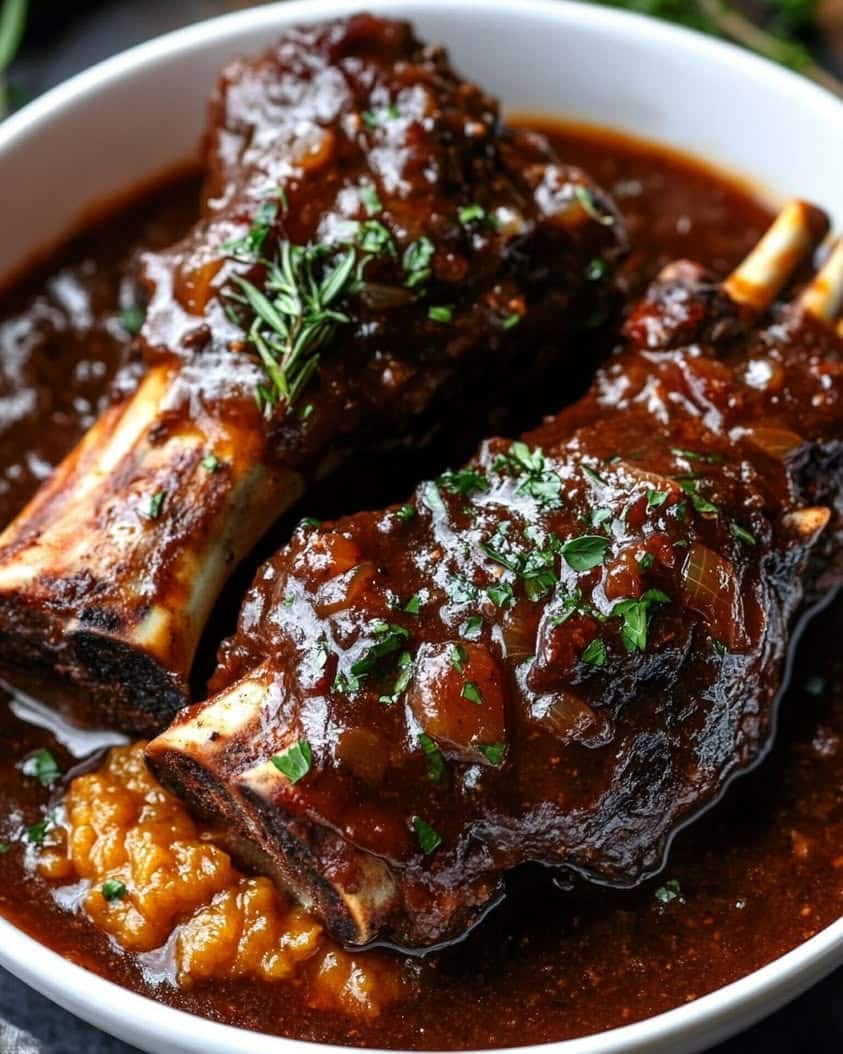
Fall-Apart Red Wine Lamb Shanks with Roasted Garlic Pumpkin Purée & Crispy Sage Crumbs: The Ultimate Cozy, Elegant Dinner
Imagine a dinner that fills your home with the most incredible, soul-warming aroma. Picture tender, fall-apart lamb shanks braised in red wine, served alongside a silky pumpkin purée and finished with crispy sage crumbs. This recipe is that perfect meal, transforming simple ingredients into a restaurant-worthy feast. It is the ultimate cozy, elegant dinner, ideal for impressing guests or treating your family to something truly special on a chilly evening. The process is a labor of love, but the result is pure, unadulterated comfort on a plate.
Furthermore, this dish masterfully balances rich, savory, and sweet flavors. The lamb shanks become incredibly tender after a long, slow braise in a bath of red wine and aromatics. Meanwhile, the roasted garlic pumpkin purée adds a velvety, slightly sweet counterpoint that cuts through the richness. Finally, the crispy sage crumbs provide a delightful textural contrast and a burst of herbal fragrance. Each component complements the others, creating a harmonious and deeply satisfying gourmet dinner experience that feels both rustic and refined.
Quick Recipe Highlights
- Flavor Profile: This dish delivers a complex symphony of tastes. The lamb shanks braised in red wine offer deep, savory, and umami-rich notes, while the pumpkin purée brings a natural, caramelized sweetness. The crispy sage adds an earthy, aromatic finish that ties everything together beautifully.
- Texture: You will experience a wonderful contrast in every bite. The lamb is so tender it falls off the bone, and the pumpkin purée is luxuriously smooth and creamy. In contrast, the crispy sage crumbs provide a satisfying, delicate crunch that elevates the entire dish.
- Aroma: As this meal cooks, your kitchen will smell incredible. Key aromatic notes include the savory scent of searing lamb, the rich fragrance of red wine reducing, the sweet smell of roasting pumpkin and garlic, and the final punch of fried sage.
- Visual Appeal: The presentation is stunning, with deep brown lamb shanks resting on a vibrant orange pool of purée. The crispy sage crumbs add a sprinkle of green and golden-brown texture, making the plate look as good as it tastes.
- Skill Level Needed: This recipe requires basic searing and braising techniques, but it is not overly complicated. Importantly, patience is the most crucial skill, as the slow braise is what develops the incredible flavor and texture.
- Special Equipment: You will need a large, heavy-bottomed Dutch oven or oven-safe pot with a lid for braising. Additionally, a baking sheet for roasting the pumpkin and a food processor or blender for the purée are essential for the best results.
Recipe Overview
- Difficulty Level: We rate this recipe as moderate. While the techniques are fundamental, the recipe involves multiple components and a long cooking time that requires planning. However, each step is straightforward, and the hands-on active time is relatively low, making it accessible for confident home cooks.
- Category: This dish falls squarely into the category of a special occasion main course or a luxurious Sunday supper. It is a hearty, protein-centric meal that serves as the undeniable star of the dinner table, perfect for a cozy night in or a festive gathering.
- Cuisine: The recipe draws inspiration from classic French braising techniques, evident in the red wine braise and mirepoix base. However, the use of pumpkin and sage introduces autumnal, rustic elements that feel right at home in modern American comfort food cuisine.
- Cost: This is a moderately priced gourmet dinner. Lamb shanks are a relatively affordable cut, especially when compared to other premium meats. The other ingredients, like red wine, pumpkin, and fresh herbs, are seasonal and budget-friendly, offering excellent value for such an impressive dish.
- Season: This recipe shines in the fall and winter months. The hearty, warming nature of braised lamb and the seasonal availability of pumpkins and sage make it the perfect culinary celebration of cooler weather and cozy evenings.
- Occasion: It is ideal for holiday dinners, anniversary meals, or any time you want to create a memorable dining experience at home. Conversely, it also makes a fantastic project for a relaxing weekend when you have time to enjoy the cooking process.
Why You’ll Love This Recipe
First and foremost, the taste and texture appeal of these fall-apart lamb shanks is simply unmatched. The slow braise in red wine breaks down the tough connective tissue, resulting in meat that is impossibly tender and infused with deep, complex flavors. Paired with the sweet, creamy pumpkin purée, each forkful is a perfect balance. The crispy sage crumbs are the final masterstroke, adding a necessary crunch and aromatic lift that prevents the dish from feeling too heavy or one-dimensional. Ultimately, it is a meal that satisfies on every sensory level.
Additionally, the convenience and preparation benefits are significant despite the long cook time. Once you sear the lamb and build the braising liquid, the oven does most of the work for you. This hands-off time allows you to prepare the pumpkin purée, set the table, or simply relax. Moreover, the recipe is incredibly forgiving; the braising process is very difficult to mess up, as the low, slow heat ensures tender results every time. Therefore, it is a fantastic choice for cooks who want an impressive outcome without constant kitchen supervision.
From a nutritional standpoint, this gourmet dinner offers several advantages. Lamb is an excellent source of high-quality protein, iron, and B vitamins, which are essential for energy. Pumpkin is packed with vitamin A, fiber, and antioxidants. Using the whole shank, including the bone, can also contribute minerals to the braising liquid. While it is a rich dish, the portions are naturally satisfying, helping with portion control. You can feel good about serving a meal that is both indulgent and nourishing.
Furthermore, the social and entertaining value of this meal is exceptionally high. Presenting a platter of these beautiful lamb shanks creates a dramatic, celebratory centerpiece for your table. The process of sharing a slowly cooked, lovingly prepared meal fosters connection and conversation. It signals to your guests that they are worth the extra effort, making any dinner feel like a special event. This recipe turns an ordinary evening into a memorable culinary experience that people will talk about long after the plates are cleared.
Finally, the cost-effectiveness and accessibility of the ingredients make this an achievable gourmet dinner. Lamb shanks are often one of the more economical cuts of lamb. A bottle of affordable, drinkable red wine is perfect for the braise. Seasonal pumpkins and common pantry aromatics round out the list. Consequently, you can create a restaurant-quality dish for a fraction of the price of dining out. This recipe proves that luxurious, fall-apart lamb shanks braised in red wine do not require a luxury budget, just a little time and care.
Historical Background and Cultural Significance
The tradition of braising tough cuts of meat, like lamb shanks, is ancient and global, born from necessity and ingenuity. Before modern butchery, utilizing every part of the animal was crucial. Slow-cooking methods in liquid transformed inexpensive, sinewy cuts into tender, flavorful meals. This practice is foundational to countless culinary traditions, from French daubes and navarins to Moroccan tagines. The specific concept of lamb shanks braised in red wine finds its roots in European peasant cooking, where wine was often used as a preserving and flavoring agent for meats. Over time, these humble dishes were refined and embraced by haute cuisine, becoming symbols of rustic elegance.
In many cultures, lamb itself holds deep cultural and symbolic importance. It is a centerpiece for religious festivals like Easter and Eid al-Adha, representing sacrifice, celebration, and community. The slow preparation of a dish like this mirrors the value placed on taking time to honor guests and mark significant occasions. Using a whole shank, with the bone-in, is also culturally significant in many traditions; the bone marrow contributes richness to the sauce, and presenting the intact shank is a sign of abundance and generosity. Therefore, this recipe connects to a long history of celebratory, communal dining.
The evolution of this recipe showcases the fusion of Old World technique with New World ingredients. The braising method is classically French, but the incorporation of pumpkin—a native North American squash—adds a distinctly modern and seasonal twist. Historically, European braises might have used root vegetables like turnips or parsnips. The addition of roasted garlic and crispy sage further reflects contemporary tastes that prioritize layered flavors and textural contrast. This evolution demonstrates how classic recipes are not static but adapt to incorporate available ingredients and current culinary trends, keeping them relevant and exciting.
Regional variations of braised lamb shanks are fascinating to explore. In Italy, osso buco traditionally uses veal shanks but the principle is similar, often finished with gremolata. Greek arni krasato braises lamb in red wine with cinnamon and cloves. In the Middle East, spices like cumin, coriander, and preserved lemon might flavor the braise. The pumpkin purée accompaniment in this recipe could be replaced with polenta in Italy, mashed potatoes in Ireland, or couscous in North Africa. Understanding these variations highlights the universal appeal of the slow-cooked, fall-apart lamb shank and encourages home cooks to experiment with their own flavor profiles while respecting the core braising technique.
Ingredient Deep Dive
Lamb Shanks: Lamb shanks are a cut from the lower leg of the animal, rich in collagen and connective tissue. This is precisely what makes them ideal for braising; the long, slow cook time breaks down that collagen into gelatin, resulting in incredibly tender, fall-off-the-bone meat and a luxuriously thick sauce. Nutritionally, they are a great source of protein, zinc, iron, and B12. When selecting lamb shanks, look for ones that are a pinkish-red color with firm, white fat. They are often sold “frenched,” with the top part of the meat cleaned off the bone for a nicer presentation. For the best flavor and texture, do not skip the crucial step of searing them well before braising.
Red Wine: The red wine in this braise is not just a liquid; it is a fundamental flavor builder. As it reduces, its acidity helps tenderize the meat, while its fruit, tannin, and oak notes create a complex, deep sauce base. You do not need an expensive bottle, but you should use a wine you would enjoy drinking. A dry, medium-bodied wine like Cabernet Sauvignon, Merlot, or Syrah works perfectly. The alcohol cooks off during the long braise, leaving behind only its rich essence. If you prefer not to cook with alcohol, a combination of good beef broth and a tablespoon of red wine vinegar or pomegranate molasses can provide a similar depth of flavor, though the character will be different.
Pumpkin (Sugar Pumpkin): For the purée, a sugar pumpkin (also called a pie pumpkin) is essential. These are smaller, sweeter, and less watery than large carving pumpkins, yielding a denser, more flavorful purée. They are packed with beta-carotene, which your body converts to vitamin A, crucial for eye health and immunity. When selecting one, choose a pumpkin that feels heavy for its size with a firm, unblemished rind. To roast, simply cut it in half, scoop out the seeds, and roast cut-side down until very tender. You can substitute with other orange-fleshed squash like butternut or kabocha, which will offer a similarly sweet, velvety result.
Fresh Sage: Sage is an aromatic herb with a slightly peppery, earthy, and pine-like flavor. When fried until crispy, it transforms into a delicate, fragrant garnish that adds both texture and a powerful aromatic punch to the dish. Sage has a long history of use in European and North American cooking, particularly with rich meats and squash. It contains antioxidants and compounds with anti-inflammatory properties. For the crispy crumbs, you will fry the leaves briefly in oil until they crisp up, then use the same flavored oil to toast the panko breadcrumbs. Always use fresh sage for this application, as dried sage will not provide the same texture or vibrant flavor.
Common Mistakes to Avoid
- Not Searing the Lamb Shanks Properly: Searing is non-negotiable. It creates a flavorful fond (the browned bits) on the bottom of the pot and gives the meat a beautiful color. If you skip this step or crowd the pot, the lamb will steam instead of sear, resulting in pale, less flavorful meat and sauce. Always pat the shanks dry and sear in batches if necessary.
- Using the Wrong Cut of Lamb: Lamb shanks are specifically chosen for their high collagen content. Substituting with a leaner cut like lamb chops or loin will result in dry, tough meat after long cooking. The shank’s structure is designed to become tender through braising.
- Choosing the Wrong Pumpkin: A large, watery carving pumpkin will make a bland, thin purée. Always opt for a small sugar pumpkin or pie pumpkin for the best sweetness and texture. Butternut squash is a reliable and widely available alternative.
- Adding Cold Liquid to Hot Pot: After searing the meat and vegetables, always deglaze with room temperature or warm wine/stock. Adding cold liquid can shock the pot and make the fond stick stubbornly to the bottom, losing all that built-up flavor.
- Braising at Too High a Temperature: A gentle simmer in the oven is the goal. If the braising liquid is boiling rapidly, the meat will become tough and stringy. The collagen needs time to melt gently. Keep the oven temperature low and steady, around 325°F (160°C).
- Overcooking the Pumpkin Purée: When roasting the pumpkin for the purée, roast it until it is completely tender and caramelized at the edges. However, when blending, be careful not to over-process it, as this can make it gluey. Blend just until smooth.
- Skipping the Resting Period: After removing the lamb shanks from the oven, let them rest in the braising liquid for 15-20 minutes before serving. This allows the juices to redistribute throughout the meat, ensuring it stays moist and tender when you cut into it.
- Forgetting to Season in Layers: Season the lamb shanks before searing. Season the vegetables as they sauté. Taste and season the braising liquid before it goes in the oven. Finally, season the finished pumpkin purée. Building seasoning in layers creates a perfectly balanced final dish.
Essential Techniques
Searing for Flavor: Searing is the first and most critical technique for building a deep flavor foundation. Pat the lamb shanks completely dry with paper towels; moisture is the enemy of a good sear. Heat your Dutch oven with oil until it shimmers. Then, add the shanks and do not move them for a few minutes, allowing a proper crust to form. A common pitfall is crowding the pot, which lowers the temperature and causes steaming. Sear in batches if needed. The visual cue for success is a deep, golden-brown crust on all sides of the meat and a layer of fond on the pot’s bottom.
The Low-and-Slow Braise: Braising is a combination cooking method: first searing, then simmering in liquid in a covered pot. The low oven temperature, around 325°F (160°C), is essential. This gentle heat slowly melts the collagen in the lamb shanks into gelatin without boiling the meat into toughness. The liquid should just barely simmer; you might see occasional small bubbles break the surface. A common mistake is peeking too often, which releases heat and steam. Trust the process. The success cue is meat that pulls away from the bone easily and is tender enough to cut with a spoon.
Reducing the Braising Liquid: After removing the cooked lamb, you are left with a flavorful but often thin liquid. Reducing this sauce concentrates its flavors and thickens it to a luxurious consistency. Simply return the pot to the stovetop and simmer the liquid uncovered. As it reduces, the water evaporates, leaving the concentrated essence of wine, meat, and vegetables behind. Stir occasionally and watch it carefully toward the end, as it can thicken quickly. The sauce is ready when it coats the back of a spoon and has a rich, glossy appearance. This step transforms good braising liquid into a magnificent sauce.
Roasting for Concentrated Flavor: Roasting the pumpkin and garlic, rather than boiling them, is key for the purée. Roasting caramelizes the natural sugars in the pumpkin, developing a deeper, sweeter flavor. It also softens the garlic, mellowing its sharp bite into a sweet, nutty paste. The technique is simple: cut the pumpkin, scoop the seeds, drizzle with oil, and roast cut-side down until completely tender. The visual cue is a pumpkin shell that has collapsed slightly and flesh that is easily pierced with a fork. This deep, caramelized flavor is what separates a great purée from a bland one.
Pro Tips for Perfect Fall-Apart Red Wine Lamb Shanks
First, for the deepest flavor, season your lamb shanks generously with salt and pepper the night before and let them rest uncovered in the refrigerator. This dry-brine helps season the meat throughout and promotes better browning during searing.
Second, when building your braise, take the time to sauté the onions, carrots, and celery until they are soft and just beginning to caramelize. This “sweating” process builds a more complex flavor base than simply adding them raw to the liquid.
Third, after adding the wine and broth, use a wooden spoon to scrape up all the browned fond from the bottom of the pot. This deglazing step is where you capture all the flavor from the searing process into your sauce.
Fourth, if your braising liquid seems too thin after reducing, you can create a quick slurry with a teaspoon of cornstarch and a tablespoon of cold water. Whisk this into the simmering sauce for an instant, glossy thickness.
Fifth, for an ultra-smooth pumpkin purée, pass it through a fine-mesh sieve after blending. This extra step removes any stringy fibers, ensuring a silky, restaurant-quality texture.
Sixth, make the crispy sage crumbs just before serving. They lose their delightful crunch if they sit for too long, especially if covered or refrigerated.
Seventh, let the braised lamb shanks rest in the warm liquid for at least 15 minutes after removing them from the oven. This allows the muscle fibers to relax and reabsorb juices, guaranteeing moist meat.
Finally, serve on warm plates. A cold plate will cause the rich sauce and purée to congeal quickly, diminishing the luxurious mouthfeel of the dish.
Variations and Adaptations
For regional variations, consider taking this recipe on a global tour. For a Greek-inspired version, add a cinnamon stick, a few cloves, and a strip of orange zest to the braise, and finish with a sprinkle of crumbled feta. For a Moroccan twist, incorporate spices like cumin, coriander, paprika, and a pinch of saffron, and serve the lamb over couscous with dried apricots. An Italian-style adaptation might include rosemary and a splash of balsamic vinegar in the braise, with the lamb served over creamy polenta instead of pumpkin purée.
Seasonal adaptations are easy and rewarding. In spring, substitute the pumpkin purée with a fresh pea and mint purée or creamy mashed potatoes with spring herbs. During summer, a lighter accompaniment like a white bean purée or grilled eggplant would work well. In the heart of winter, swap the pumpkin for parsnip or celery root purée for an earthier flavor profile. The braising technique remains constant, allowing the sides to celebrate the best produce of each season.
Dietary modifications can make this gourmet dinner accessible to more people. For a gluten-free version, ensure your broth is certified gluten-free and use gluten-free panko breadcrumbs or crushed gluten-free crackers for the sage crumbs. To make it dairy-free, simply omit the butter from the pumpkin purée; a splash of olive oil or a bit of coconut milk can provide richness instead. For a lower-carb or keto adaptation, replace the pumpkin purée with mashed cauliflower and omit the panko crumbs, using only the fried sage leaves as garnish.
Flavor variations can personalize the dish to your taste. Instead of red wine, try using a dark beer or porter for a malty, deep braise. For a brighter note, substitute half the red wine with a rich beef broth and add a tablespoon of tomato paste. Herb variations are also welcome; thyme or rosemary can stand in for or join the sage in the braise and the crispy garnish. Experimenting with these elements allows you to make the recipe your own while maintaining its soul-warming core.
Serving and Presentation Guide
Plating techniques can elevate this home-cooked meal to restaurant style. Start by spooning a generous pool of the warm pumpkin purée onto the center of each warm dinner plate. Use the back of the spoon to swipe it into an elegant, off-center circle. Next, carefully place one fall-apart lamb shank on top of the purée, leaning it against the pool for height. Spoon the rich, reduced red wine sauce over and around the lamb, allowing some to mingle with the purée. Finally, sprinkle the crispy sage crumbs generously over the top, letting some fall onto the plate for visual interest.
Garnishing ideas extend beyond the sage crumbs. A final flourish of flaky sea salt over the lamb adds texture and enhances flavor. A few whole, perfectly fried sage leaves placed on top makes a beautiful garnish. For a pop of color and freshness, a tiny scatter of finely chopped fresh parsley or microgreens provides a lovely contrast to the rich, earthy tones of the dish. If you have them, edible flowers like nasturtiums add a stunning, gourmet touch for a special occasion.
Traditional accompaniments for such a rich braise often include something to soak up the incredible sauce. Creamy mashed potatoes, soft polenta, or a crusty baguette are all classic and delicious choices. For a vegetable side, consider something simple and green to balance the meal, such as sautéed spinach, green beans almondine, or a crisp salad with a sharp vinaigrette. These sides provide textural contrast and freshness without competing with the main event.
Modern serving suggestions might lean towards family-style presentation for a more relaxed, convivial feel. Place all the fall-apart lamb shanks on a large, rustic platter. Pour the sauce over them and scatter the sage crumbs on top. Serve the silky pumpkin purée in a beautiful bowl alongside. This allows guests to serve themselves and creates an inviting, abundant centerpiece on the table. It is a wonderful approach for holiday gatherings or dinner parties.
Wine and Beverage Pairing
Wine pairings for this dish should complement its rich, savory, and slightly sweet profile. A medium to full-bodied red wine with good acidity is ideal to cut through the richness of the lamb and fat. A classic Northern Rhône Syrah, with its peppery notes, pairs beautifully. A Cabernet Sauvignon from Bordeaux or California offers structure and dark fruit flavors that mirror the reduced red wine sauce. Alternatively, a Grenache-based blend from the Southern Rhône or Spain provides ripe fruit and spice that harmonizes with the dish’s complexity. The general rule is to drink the same style of wine you used in the braise.
Non-alcoholic alternatives can be just as thoughtful. A rich, savory drinking vinegar shrub mixed with sparkling water offers acidity and complexity. A tart cherry or pomegranate juice spritzer can mimic the fruit notes of red wine. For a warmer option, a mushroom or roasted vegetable broth-based “tea” can complement the umami flavors. The key is to choose a beverage with some acidity or bitterness to balance the meal’s richness, avoiding overly sweet drinks that would clash.
Coffee and tea pairings are excellent for a post-dinner course or if serving the meal later in the evening. A dark roast coffee with low acidity and notes of chocolate or nut would complement the caramelized flavors in the lamb and pumpkin. For tea, consider a smoky Lapsang Souchong, which can echo the savory notes, or a lightly sweetened chai tea whose spices like cinnamon and cardamom align with the dish’s warm, autumnal character.
Temperature considerations are crucial for all beverages. Red wine should be served slightly below room temperature, around 60-65°F (15-18°C). Chilling it too much will mute its flavors and accentuate tannins. Non-alcoholic spritzers should be well-chilled and refreshing. Coffee and tea, of course, should be served hot. Ensuring each drink is at its ideal serving temperature maximizes its ability to pair successfully with the layered flavors of your gourmet dinner.
Storage and Shelf Life
Storage methods for leftovers are straightforward but important for food safety and quality. First, separate the lamb shanks, pumpkin purée, and any remaining sage crumbs into different airtight containers. This prevents the crispy crumbs from becoming soggy and allows you to reheat each component properly. The braised lamb and its sauce can be stored together. All components should be cooled to room temperature before sealing and refrigerating; however, do not leave them out for more than two hours to prevent bacterial growth.
Temperature requirements are non-negotiable. Refrigerate all leftovers promptly at 40°F (4°C) or below. The braised lamb and sauce will keep well for 3 to 4 days. The pumpkin purée is best used within 3 days. The crispy sage crumbs will lose their crunch in the fridge but can be stored at room temperature in a paper towel-lined container for 1 day. For longer storage, freezing is an excellent option for the lamb and purée.
Container recommendations include glass containers with tight-fitting lids, which are best for reheating and do not retain odors. For the lamb and sauce, a container where they can lay in a single layer is ideal. For freezing, use heavy-duty freezer bags, pressing out all the air, or freezer-safe containers, leaving a half-inch of headspace for expansion. Clearly label everything with the date so you can use the oldest items first.
Signs of spoilage to watch for include an off or sour smell, a slimy texture on the meat or purée, or mold growth. If the sauce has developed bubbles or looks fizzy, it has likely fermented and should be discarded. When in doubt, throw it out. Food safety is paramount, especially with meat-based dishes that have been previously cooked and stored.
Make Ahead Strategies
A prep timeline can turn this impressive dinner into a manageable event. You can break the work over two days. On Day 1, complete all the prep: sear the lamb shanks and build the braise up to the point of adding the liquid. Let it cool, then cover and refrigerate the entire pot. Also, roast the pumpkin and garlic, make the purée, and store it separately. On Day 2, simply place the cold pot in a cold oven, set it to 325°F (160°C), and let it come to temperature together. Braise for the usual time (it may need a few extra minutes). Reheat the purée gently on the stovetop with a splash of broth or water to loosen it.
Storage between steps is simple with proper planning. The seared lamb and vegetables can be refrigerated in the braising pot overnight. The pumpkin purée will keep for 2-3 days in the fridge. The crispy sage crumbs, however, should be made fresh on serving day, as they do not store well. This division of labor means your active cooking time on the day of your dinner is minimal, allowing you to focus on your guests.
Quality impact assessment shows that make-ahead strategies often improve braised dishes. Allowing the flavors to meld overnight in the refrigerator often deepens the taste of the sauce. The key is gentle, slow reheating to bring everything back to serving temperature without overcooking the meat. The pumpkin purée may thicken in the fridge; simply whisk in a little warm broth, water, or cream when reheating to restore its silky consistency.
Assembly tips for a make-ahead meal are crucial. About 30 minutes before serving, remove the lamb from the oven. Transfer the shanks to a platter and tent loosely with foil. Reduce the sauce on the stovetop if needed. Gently reheat the pumpkin purée in a saucepan. Finally, fry the sage and make the crispy crumbs. This final 30-minute flurry of activity brings all the components together at their peak, ensuring a hot, fresh-tasting, and perfectly textured meal for your table.
Scaling Instructions
Halving the recipe is simple for a smaller dinner. Use two lamb shanks and halve all other ingredients precisely. Use a smaller Dutch oven to ensure the braising liquid still comes about halfway up the sides of the meat. The cooking time may be slightly reduced by 15-30 minutes; start checking for tenderness at the 2.5-hour mark. The pumpkin purée can be halved easily, but consider roasting a whole small pumpkin anyway and using half for the purée; the other half can be roasted for salads or soups later in the week.
Doubling or tripling the recipe for a crowd requires some adjustments. You will likely need to sear the lamb shanks in more batches to avoid crowding. Use the largest Dutch oven or oven-safe pot you have, or divide the braise between two pots. Ensure the liquid still reaches about halfway up the meat in each vessel. The oven time may increase slightly due to the greater volume, so add an extra 15-30 minutes and check for doneness. For the pumpkin purée, you may need to roast pumpkins in multiple batches or use a mix of pumpkin and butternut squash to manage volume.
Equipment adjustments are necessary when scaling. For a doubled recipe, if your pot is too full, the braise will not reduce properly and the meat may steam. Using two pots is a better solution. You may also need an additional baking sheet for roasting more pumpkin. For a halved recipe, a 3-4 quart Dutch oven is perfect. Always match your pan size to the volume of food for the most consistent results.
Timing modifications are minimal but important. While active prep time scales linearly, oven braising time does not double when you double the recipe. The increased mass may require 25-50% more time, but the low, slow heat is forgiving. The best approach is to use the original time as a guide, then check for doneness (meat pulling from the bone) and continue cooking in 15-minute increments until perfect.
Nutritional Deep Dive
A macro breakdown for one serving (one lamb shank with purée and sauce) is substantial. It provides a high amount of protein from the lamb, essential for muscle repair and satiety. The fat content is moderate to high, coming from the lamb and cooking oils, which carry flavor and provide energy. Carbohydrates are present primarily from the pumpkin and a small amount from the vegetables in the braise and the panko crumbs. This balance makes it a fulfilling meal that provides sustained energy. It is not a low-calorie dish, but it is nutrient-dense, meaning you get a high amount of vitamins and minerals per calorie.
The micronutrient analysis is impressive. Lamb is an excellent source of heme iron, which is highly absorbable and crucial for oxygen transport in the blood, as well as zinc for immune function and B12 for nerve health. Pumpkin is loaded with beta-carotene (vitamin A), vital for vision and skin health, and provides vitamin C, potassium, and fiber. The vegetables in the braise contribute additional vitamins and antioxidants. Together, they create a meal that supports overall health, particularly immune and metabolic function.
Health benefits extend beyond basic nutrition. The collagen from the braised lamb bones and connective tissue can support joint and gut health. The antioxidants in the red wine (from the braising liquid) and pumpkin help combat oxidative stress. The high protein and fat content promote strong feelings of fullness, which can aid in portion control and prevent overeating later. While rich, this is a whole-food-based meal free from processed ingredients, aligning with a healthy, balanced diet when enjoyed in moderation.
Dietary considerations are important for specific needs. For those on a low-carb or keto diet, the pumpkin purée is the main source of carbs and can be portioned accordingly or substituted. The dish is naturally gluten-free if using gluten-free broth and crumbs. It is also dairy-free if you omit butter from the purée. For those managing sodium intake, be mindful of the salt content in store-bought broth and adjust seasoning at the end. As always, individual dietary needs should guide any modifications to the recipe.
Dietary Adaptations
For a gluten-free version, this recipe adapts easily. Ensure the beef or chicken broth you use is certified gluten-free, as many contain hidden gluten. For the crispy sage crumbs, substitute the panko breadcrumbs with an equal amount of gluten-free panko, crushed gluten-free crackers, or even finely ground nuts like almonds or pecans toasted in the sage oil. All other core ingredients—lamb, wine, pumpkin, herbs—are naturally gluten-free. This simple swap allows anyone with celiac disease or gluten sensitivity to enjoy this gourmet dinner without compromise.
A dairy-free adaptation is equally straightforward. The only dairy in the standard recipe is the optional butter in the pumpkin purée. Simply omit the butter and use a high-quality extra-virgin olive oil to blend the roasted pumpkin and garlic. The oil will still provide richness and help create a smooth, emulsified purée. For an even creamier result without dairy, you could blend in a tablespoon of full-fat coconut milk or a splash of unsweetened almond milk. The lamb braise and crispy crumbs contain no dairy, making this an easy modification.
Creating a vegan version of this centerpiece dish is a significant challenge but possible with a creative
Print
Fall-Apart Red Wine Lamb Shanks with Roasted Garlic Pumpkin Purée & Crispy Sage Crumbs
Description
Tender lamb shanks braised in a rich red wine sauce, served over a creamy roasted garlic pumpkin purée and topped with crispy sage breadcrumbs for a cozy, elegant fall dish.
Ingredients
For the Crust:
- 4 lamb shanks (about 1 lb each)
- 2 tbsp olive oil
- 1 large onion, chopped
- 2 carrots, chopped
- 2 celery stalks, chopped
- 4 garlic cloves, minced
- 2 cups dry red wine (like Cabernet Sauvignon)
- 4 cups beef broth
- 2 tbsp tomato paste
- 4 sprigs fresh rosemary
- 2 bay leaves
- 1 small sugar pumpkin (about 2 lbs), peeled and cubed
- 1 head garlic, top trimmed
- 1/2 cup heavy cream
- 1 cup panko breadcrumbs
- 1/4 cup fresh sage leaves, chopped
- Salt and black pepper to taste
Instructions
1. Prepare the Crust:
- Preheat oven to 325°F (165°C). Season lamb shanks with salt and pepper. In a large Dutch oven, heat olive oil over medium-high heat and sear shanks until browned on all sides, about 8 minutes. Remove and set aside.
- In the same pot, add onion, carrots, and celery; cook until softened, about 5 minutes. Stir in minced garlic and tomato paste, cook for 1 minute. Pour in red wine, scraping up browned bits, and simmer for 5 minutes. Add beef broth, rosemary, and bay leaves.
- Return lamb shanks to the pot, cover, and transfer to the oven. Braise for 2.5–3 hours until meat is fall-apart tender. Meanwhile, toss pumpkin cubes and whole garlic head with oil, roast on a baking sheet at 400°F (200°C) for 30 minutes until soft.
- Squeeze roasted garlic from cloves into a blender with roasted pumpkin and heavy cream; blend until smooth. Season with salt and pepper. For the crumbs, toast panko and sage in a skillet with oil until crispy, about 5 minutes.
- Remove lamb from pot, skim fat from sauce, and simmer on stove until slightly thickened. Serve lamb over pumpkin purée, topped with sauce and sage crumbs.
Notes
You can customize the seasonings to taste.

I’m Shaykee—born in Morocco, seasoned across continents. From airplane galleys to home kitchens, I share the flavors and stories that shaped my journey.