
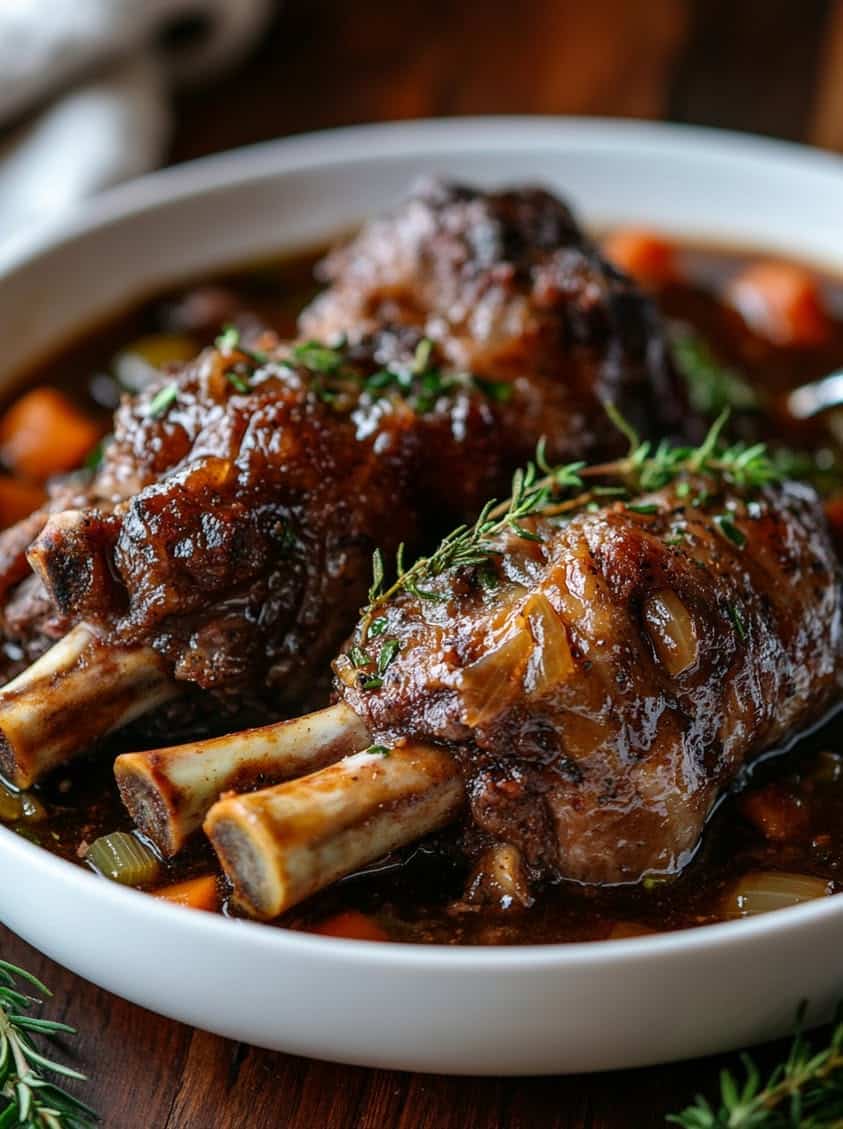
Fall-Apart Slow-Cooked Lamb Shanks in Rich Red Wine Gravy: The Ultimate Comforting, Elegant Dinner
Imagine a dish where the meat surrenders to the fork with the gentlest nudge, releasing its rich, savory essence into a glossy, deeply flavorful sauce. This recipe for fall-apart slow-cooked lamb shanks in rich red wine gravy delivers exactly that experience. Moreover, it transforms a humble, economical cut of meat into a centerpiece worthy of a special celebration. The process is a beautiful alchemy of patience and simple technique, resulting in a meal that feels both rustic and incredibly refined.
The magic lies in the slow, gentle braise. First, you sear the lamb shanks to create a gorgeous, caramelized crust packed with flavor. Then, you simmer them for hours in a bath of robust red wine, aromatic vegetables, and herbs. Consequently, the connective tissue melts away, leaving behind only tender, succulent meat. Meanwhile, the liquid reduces and concentrates into a luxurious, velvety gravy that clings to every bite. Ultimately, this dish is the epitome of comfort food with an elegant twist.
Perfect for a cozy Sunday supper or an impressive dinner party, these lamb shanks promise to wow anyone at your table. The aroma alone, as it fills your kitchen, is a prelude to the incredible meal to come. Let’s dive into how to create this masterpiece of slow-cooked perfection.
Quick Recipe Highlights
- Flavor Profile: This dish boasts a complex, savory-sweet symphony. You get the deep, gamey richness of lamb, beautifully balanced by the fruity acidity of red wine and the earthy sweetness of carrots and onions. Additionally, herbs like rosemary and thyme add aromatic, piney notes that cut through the richness perfectly.
- Texture: The star of the show is the incredibly tender, fall-off-the-bone lamb. The meat fibers separate effortlessly. Meanwhile, the gravy is luxuriously thick and glossy, coating each strand of meat and any accompanying side dish like mashed potatoes or polenta.
- Aroma: As the shanks braise, your kitchen will fill with an intoxicating scent. Initially, you’ll smell the savory sear of the meat. Then, the fragrance of sautéed garlic and onions takes over. Finally, the herbal notes from the rosemary and the deep, winey scent of the reducing braising liquid create an unforgettable olfactory experience.
- Visual Appeal: Served on a platter or individual plates, the dish is a feast for the eyes. The dark, mahogany-colored lamb shanks glisten with the rich red wine gravy. Vibrant green herbs sprinkled on top provide a beautiful color contrast, making the dish look as impressive as it tastes.
- Skill Level Needed: This recipe is ideal for a confident home cook. While the techniques are straightforward—searing, sautéing, and braising—they require attention to detail. Patience is the most crucial skill, as the long, slow cook cannot be rushed for the best results.
- Special Equipment: A large, heavy-bottomed Dutch oven or oven-safe pot with a tight-fitting lid is essential for even heat distribution. Alternatively, you can use a slow cooker after the initial searing and sautéing steps. You’ll also need reliable kitchen tongs for handling the shanks.
Recipe Overview
- Difficulty Level: We rate this recipe as intermediate. The steps themselves are simple, but success hinges on proper technique. Searing the meat correctly to develop flavor, building a flavorful base with the vegetables, and managing the long braising time all require a bit of kitchen confidence. However, the process is largely hands-off once the pot goes into the oven, making it very manageable.
- Category: This is a quintessential main course or entrée. It’s a hearty, protein-focused dish that serves as the star of the meal. Consequently, it pairs beautifully with a variety of sides to create a complete, satisfying dinner.
- Cuisine: The dish draws heavily from classic French braising techniques, known as “daube” or “navarin.” It also shares similarities with rustic Mediterranean and Middle Eastern preparations where lamb is slow-cooked with wine and aromatics. Therefore, it’s a versatile recipe with broad culinary roots.
- Cost: Lamb shanks are a relatively economical cut, especially compared to lamb chops or rack of lamb. The other ingredients—red wine, root vegetables, broth—are pantry staples for many. Overall, you can create this elegant, restaurant-quality meal for a fraction of the dine-out cost.
- Season: This is the ultimate cold-weather comfort food. It’s perfect for autumn and winter when you crave hearty, warming meals. That said, its elegance makes it suitable for a special spring Easter dinner or a cool summer evening as well.
- Occasion: Serve it for a festive holiday meal, an intimate dinner party to impress guests, or a comforting weekend family dinner. It’s a versatile dish that elevates any gathering, from casual to formal.
Why You’ll Love This Recipe
First and foremost, the taste and texture are utterly divine. The lamb becomes so tender it practically dissolves on your tongue, while the rich red wine gravy delivers layers of deep, savory flavor. Every bite is a harmonious blend of meaty richness, herbal brightness, and a subtle sweetness from the carrots and wine. Furthermore, the dish feels incredibly luxurious and special, making any meal an occasion. It’s the kind of food that creates lasting memories around the dinner table.
From a convenience standpoint, this recipe is a winner. After the initial prep work, the oven does most of the heavy lifting. This means you can relax, entertain guests, or prepare sides while your main course cooks to perfection. Additionally, it’s an excellent make-ahead dish. In fact, the flavors often improve after a day in the refrigerator, making it perfect for stress-free entertaining. You simply reheat and serve.
Nutritionally, lamb shanks offer a great source of high-quality protein, iron, zinc, and B vitamins. The slow cooking process also helps render out some of the fat, which you can easily skim off the gravy before serving. By using a good amount of vegetables in the braise, you’re incorporating extra nutrients and fiber into the meal seamlessly. It’s a wholesome, satisfying dish that fuels your body.
For social gatherings, this dish is a showstopper. It presents beautifully on a platter and serves family-style, encouraging sharing and conversation. Guests are always impressed by a home-cooked meal that features such tender, flavorful meat. It demonstrates care and skill, making everyone feel welcomed and valued. It’s a guaranteed conversation starter and a surefire way to make your dinner party memorable.
Finally, it’s remarkably cost-effective. As mentioned, lamb shanks are an affordable cut. You transform them into something extraordinary with just a few additional ingredients. Compared to ordering a similar dish at a restaurant, you save a significant amount of money while often achieving better quality and flavor. This recipe proves that elegant, comforting food doesn’t have to break the bank.
Historical Background and Cultural Significance
The practice of braising tough cuts of meat like lamb shanks is ancient and global. Essentially, it was a practical solution for making the most of every part of the animal. Every culture with a history of sheep herding developed its own version of slow-cooked lamb. In France, dishes like “Navarin d’Agneau” (a spring lamb stew) and “Daube” (a wine-braised meat dish from Provence) are celebrated classics. These methods tenderized the meat and created rich, communal meals from inexpensive ingredients.
In Mediterranean and Middle Eastern cuisines, lamb holds significant cultural and ceremonial importance. For example, slow-cooked lamb often features in festive celebrations and religious holidays. The method of cooking meat slowly with local wines, herbs, and spices was a way to infuse maximum flavor and celebrate the bounty of the region. Consequently, this recipe connects you to a long, rich tradition of resourceful and flavorful cooking practiced around the world.
The specific combination of lamb and red wine has particularly strong roots in European peasant cooking. Wine was not only a cooking liquid but also a preserving agent and flavor enhancer. Cooks would use robust, local red wines to add depth and acidity to the braise, which helped balance the richness of the meat. Over time, this humble technique was refined in professional kitchens, becoming a staple of classic French cuisine and fine dining menus everywhere.
Today, the dish represents the beautiful evolution of rustic cooking into a modern comfort food staple. It bridges the gap between simple, home-style meals and sophisticated culinary artistry. By cooking this recipe, you participate in a timeless culinary tradition that values patience, technique, and the transformative power of slow, gentle heat. It’s a dish that tells a story of resourcefulness, celebration, and the universal love of deeply flavorful food.
Ingredient Deep Dive
Lamb Shanks: The shank is a cut from the lower leg of the lamb, a muscle that works hard. This results in abundant connective tissue (collagen), which, when slow-cooked, melts into gelatin. This process creates incredible tenderness and body in the gravy. Look for shanks that are well-trimmed but still have a good layer of exterior fat for flavor. They are a fantastic source of protein, iron, and zinc. For the best flavor, choose grass-fed lamb if available. Store them in the coldest part of your refrigerator and use within 2-3 days of purchase, or freeze for longer storage.
Red Wine: The wine is not just a liquid; it’s a key flavor builder. It contributes acidity to balance the fat, fruitiness for complexity, and tannins for structure. Use a wine you would enjoy drinking—a dry, medium-bodied red like Cabernet Sauvignon, Merlot, or Syrah works perfectly. Avoid “cooking wine” as it contains added salt and preservatives. The alcohol cooks off during the long braise, leaving behind only its rich essence. If you prefer not to use alcohol, substitute with a mix of beef broth and a tablespoon of red wine vinegar or pomegranate molasses for acidity.
Mirepoix (Carrots, Onion, Celery): This classic French aromatic vegetable base is the foundation of flavor. The onions provide sweetness and depth, the carrots add earthy sweetness and color, and the celery offers a subtle, savory bitterness. Together, they create a complex flavor backdrop that supports the meat and wine. Always chop them uniformly for even cooking. For a deeper flavor, you can roast the vegetables before adding them to the pot. They also contribute vitamins, fiber, and antioxidants to the dish.
Tomato Paste: This ingredient is a powerhouse for building “umami,” the savory fifth taste. By sautéing the tomato paste until it darkens slightly, you caramelize its sugars and deepen its flavor dramatically. This step, known as “cooking out the tin taste,” adds a rich, concentrated tomato essence that thickens the gravy and adds another layer of complexity. Look for tomato paste in a tube so you can use a small amount and store the rest easily.
Fresh Herbs (Rosemary & Thyme): Rosemary and thyme are classic partners for lamb. Their robust, piney, and slightly floral aromas cut through the meat’s richness and perfume the entire dish. Using fresh herbs is highly recommended for the brightest flavor. Tie them in a bundle with kitchen twine (a bouquet garni) for easy removal before serving. You can also add a bay leaf to the bundle for an extra layer of earthy aroma.
Common Mistakes to Avoid
- Not Searing the Meat Properly: Skipping or rushing the sear is a major error. A proper, dark-brown sear on all sides creates the Maillard reaction, which develops hundreds of complex flavor compounds. This step is non-negotiable for a deeply flavorful gravy and meat.
- Using the Wrong Wine: Never cook with a wine you wouldn’t drink. “Cooking wine” is often salty and low-quality, which will negatively impact your dish. Similarly, avoid very sweet or oaky wines, as they can make the gravy cloying or bitter.
- Overcrowding the Pot When Searing: If you put all the shanks in at once, they will steam instead of sear. Cook them in batches to ensure each one gets direct contact with the hot surface and develops that crucial crust.
- Not Sautéing the Tomato Paste: Adding tomato paste directly to the liquid without cooking it first leaves a raw, tinny flavor. Take the minute to cook it with the vegetables until it darkens; this unlocks its full savory potential.
- Adding Cold Liquid to a Hot Pot: When deglazing with wine or adding broth, ensure the liquids are at least at room temperature. Adding very cold liquid can shock the pot and make the meat tough. It can also slow down the cooking process.
- Peeking During the Braise: Every time you lift the lid, you release valuable heat and steam, significantly lowering the oven temperature. Trust the process and resist the urge to check until the minimum cook time has passed.
- Underseasoning: Braising requires generous seasoning at every stage. Season the meat before searing, season the vegetables as they cook, and always taste and adjust the gravy at the end. Remember, the liquid reduces, concentrating the salt.
- Skipping the Resting Period: Letting the shanks rest in the gravy for 10-15 minutes after cooking allows the juices to redistribute throughout the meat. Cutting into them immediately will cause those precious juices to run out, leaving the meat drier.
- Not Skimming the Fat: After cooking, a layer of fat will rise to the surface of the gravy. While some fat is good for flavor, too much can make the dish greasy. Use a spoon or a fat separator to skim off the excess before serving.
- Overthickening the Gravy: If your gravy is too thin after reducing, thicken it gently with a cornstarch or flour slurry. However, add it gradually. The natural gelatin from the lamb will also thicken the sauce as it cools, so aim for a slightly thinner consistency than you think you need.
Essential Techniques
Searing for Flavor: Searing is the first and most critical technique. Pat the lamb shanks completely dry with paper towels. Moisture is the enemy of browning. Heat your oil until it shimmers in the hot pot. Then, add the shanks in a single layer, not touching. Let them develop a deep brown crust before turning. This process, the Maillard reaction, creates the foundational flavor for the entire dish. The goal is a dark, caramelized exterior, not just a gray surface.
Building a Flavor Base (Sofrito/Mirepoix): After removing the meat, you cook the chopped vegetables in the same pot. This step serves two purposes. First, it softens the vegetables, releasing their natural sugars. Second, it deglazes the pot, loosening all the flavorful browned bits (fond) stuck to the bottom. Cook them until they are soft and the onions are translucent. This sweet, savory base is what your gravy will be built upon.
Deglazing with Wine: Once the vegetables are soft, you add the red wine. Pour it in and use a wooden spoon to vigorously scrape up any remaining fond from the bottom of the pot. This incorporates all those concentrated meaty flavors into the liquid. Let the wine simmer and reduce by about half. This cooks off the raw alcohol taste and concentrates the wine’s fruity, acidic character, which will balance the dish.
The Low and Slow Braise: Braising is a combination cooking method: you start with dry heat (searing) and finish with moist heat (simmering in liquid). The key is a low, steady oven temperature, typically around 325°F (160°C). This gentle heat slowly breaks down the tough collagen in the meat into gelatin without causing the muscle fibers to seize and toughen. The liquid should just barely simmer, not boil vigorously. A tight-fitting lid is essential to trap steam and maintain a consistent temperature.
Pro Tips for Perfect Fall-Apart Lamb Shanks
Dry the Meat Thoroughly: Always pat lamb shanks completely dry with paper towels before seasoning and searing. Any surface moisture will create steam, preventing the beautiful, flavorful crust you want from forming.
Season Generously and Early: Season the shanks liberally with salt and pepper at least 15 minutes before searing, if possible. This allows the seasoning to penetrate the meat, enhancing its flavor from the inside out.
Use a Heavy Pot: A Dutch oven or heavy-bottomed, oven-safe pot is non-negotiable. It distributes heat evenly, preventing hot spots that could burn your fond or cause the liquid to reduce too quickly.
Don’t Rush the Sear: Give the shanks time to develop a proper crust. Wait until they release easily from the pot before turning. If they stick, they aren’t ready. A good sear takes patience.
Let the Wine Reduce: After deglazing, allow the wine to simmer actively until it reduces by about half. This step is crucial for concentrating flavor and removing any harsh alcohol taste from the final dish.
Braise with the Lid Ajar (Optional): For a slightly thicker gravy, try braising with the lid slightly askew for the last 30-45 minutes. This allows for more evaporation and concentration of the sauce.
Rest Before Serving: Once cooked, let the shanks rest in the gravy, off the heat and with the lid on, for 10-15 minutes. This allows the tense muscle fibers to relax and reabsorb juices, guaranteeing maximum tenderness.
Skim, Then Serve: After resting, use a large spoon or a fat separator to skim the excess fat from the surface of the gravy. This leaves you with a rich, glossy sauce that isn’t greasy.
Variations and Adaptations
Regional Variations: Explore global flavors by changing the braising liquid and aromatics. For a Greek twist, use oregano, lemon zest, and a splash of ouzo with the wine. For a Moroccan tagine-inspired version, add warm spices like cumin, coriander, cinnamon, and apricots. An Italian adaptation might include canned tomatoes, rosemary, and a splash of balsamic vinegar.
Seasonal Adaptations: In spring, add fresh peas and asparagus to the pot during the last 15 minutes of cooking. For a heartier winter meal, incorporate chunks of parsnip, turnip, or sweet potato along with the carrots. You can also use a dark beer or stout instead of red wine for a deeper, maltier flavor in colder months.
Dietary Modifications: For a gluten-free version, simply ensure your broth is certified gluten-free and thicken the gravy with cornstarch if needed. To make it dairy-free, use olive oil for searing instead of butter. For a lower-carb option, serve the shanks and gravy over cauliflower mash or roasted vegetables instead of potatoes or polenta.
Flavor Variations: Add a tablespoon of anchovy paste or a few mashed anchovy fillets when cooking the vegetables for an incredible umami boost (they will dissolve and not taste fishy). A spoonful of Dijon mustard or a dash of Worcestershire sauce stirred into the finished gravy can add wonderful complexity. For a brighter note, finish the dish with a sprinkle of gremolata (lemon zest, garlic, and parsley) just before serving.
Texture Modifications: If you prefer a super-smooth gravy, you can carefully remove the shanks and herbs, then blend the vegetables and braising liquid with an immersion blender before returning the meat to the pot. For a chunkier, more rustic texture, leave the vegetables as they are.
Presentation Alternatives: Instead of serving the shanks whole, you can remove the meat from the bone after cooking, shred it lightly, and mix it back into the gravy. Serve this luxurious ragù over pasta, creamy polenta, or even inside a savory pie crust for a pot pie variation.
Serving and Presentation Guide
Plating Techniques: For a family-style presentation, arrange the lamb shanks in the center of a large, shallow platter. Spoon the gravy and vegetables all around them. For individual plates, place a portion of your chosen base (e.g., mashed potatoes) in the center, lean a shank against it, and spoon gravy over the top, allowing some to pool around the plate.
Garnishing Ideas: Fresh herbs are the simplest and most effective garnish. Chopped fresh parsley, rosemary, or thyme add color and a burst of fresh aroma. For texture and color, a sprinkle of pomegranate arils or finely chopped toasted nuts (like pistachios or walnuts) works beautifully. A final drizzle of high-quality extra virgin olive oil just before serving adds shine and richness.
Traditional Accompaniments: Creamy mashed potatoes are the classic partner, perfect for soaking up every drop of the rich red wine gravy. Creamy polenta or soft, buttery grits are excellent alternatives. For something lighter, try a bed of couscous, orzo, or crusty bread to mop up the sauce.
Modern Serving Suggestions: Pair the lamb shanks with roasted root vegetables like carrots, parsnips, and fennel for a complete, rustic meal. A simple arugula salad with a lemon vinaigrette served on the side provides a refreshing, peppery contrast to the rich meat. For a low-carb option, serve over a purée of cauliflower or celery root.
Temperature Considerations: Serve the dish piping hot. Warm your serving platter or individual plates before plating to keep everything at the ideal temperature longer. The gravy will naturally thicken as it cools, so prompt serving is best.
Portion Control Tips: One lamb shank per person is a standard and generous serving. However, if the shanks are particularly large or you have many hearty sides, one shank can sometimes serve two. Consider your guests’ appetites and the rest of your menu when planning.
Wine and Beverage Pairing
Wine Pairings: The robust flavors of the dish call for an equally bold wine. A classic pairing is a Syrah/Shiraz from the Rhône Valley or Australia, whose peppery, dark fruit notes complement the lamb beautifully. A Cabernet Sauvignon with its structure and tannins can stand up to the rich gravy. Alternatively, an aged Rioja or a Châteauneuf-du-Pape, with their earthy, herbal characteristics, are sublime matches. The general rule is to match the weight and intensity of the food with the wine.
Non-Alcoholic Alternatives: For a sophisticated non-alcoholic pairing, try a tart cherry juice or a pomegranate-based drink, which mirror the fruity acidity of the red wine. Sparkling water with a twist of orange or a dash of bitters can cleanse the palate. A rich, savory mushroom or roasted vegetable broth served warm in a cup can also be a comforting and complementary beverage.
Coffee/Tea Pairings: After the meal, a strong, black espresso can be a perfect digestif, cutting through the richness. For tea, consider a smoky Lapsang Souchong, whose intense flavor profile can hold its own, or a soothing cup of peppermint tea to aid digestion.
Temperature Considerations: Serve red wine at a cool room temperature, around 60-65°F (15-18°C). This allows its aromas and flavors to express themselves fully without the alcohol becoming too prominent. For non-alcoholic options, serve them chilled or at room temperature based on the drink.
Serving Suggestions: Always offer water on the table alongside any other beverages. Water is essential for cleansing the palate between bites of this rich dish. If serving wine, consider decanting it an hour before the meal to allow it to breathe and open up, which will enhance its pairing with the food.
Storage and Shelf Life
Storage Methods: Allow the lamb shanks and gravy to cool completely to room temperature before storing. Do not leave them out for more than two hours. Transfer the meat and gravy to an airtight container. You can store them together, with the gravy covering the meat to prevent drying out.
Temperature Requirements: Refrigerate the stored lamb shanks promptly. They will keep safely in the refrigerator for 3 to 4 days. For longer storage, freezing is highly effective due to the high-fat content and protective gravy.
Container Recommendations: Use glass or BPA-free plastic containers with tight-fitting lids. For freezing, consider using heavy-duty freezer bags laid flat to save space, or freezer-safe containers. Leave about half an inch of headspace to allow for expansion.
Signs of Spoilage: Before consuming leftovers, check for any off odors, such as a sour or unpleasant smell. Look for signs of mold, which may appear as fuzzy spots. If the gravy has separated in an unusual way or the texture seems slimy, it’s best to discard it.
Reheating Instructions: The best way to reheat is gently on the stovetop. Place the shanks and gravy in a saucepan, add a splash of water or broth to loosen the sauce, and heat over low heat, covered, until warmed through. You can also reheat in a covered dish in the oven at 300°F (150°C) for 20-30 minutes. Avoid the microwave, as it can make the meat rubbery.
Freezing Guidelines: This dish freezes exceptionally well for up to 3 months. Package it in portion-sized containers for easy thawing. Thaw overnight in the refrigerator before reheating using the methods described above. The texture and flavor remain excellent after freezing.
Make Ahead Strategies
Prep Timeline: You can complete the entire recipe up to 3 days in advance. Simply cook the lamb shanks as directed, let them cool in the gravy, and store them in the refrigerator. The flavors will meld and deepen, often improving the dish. Reheat gently before serving.
Storage Between Steps: If you want to break up the work, you can sear the lamb shanks and prepare the vegetable base (through deglazing with wine) a day ahead. Store the seared shanks and the cooked vegetable/wine mixture separately in the refrigerator. The next day, combine them, add the broth, and proceed with the braising step.
Quality Impact Assessment: Making this dish ahead has a positive impact on quality. The resting time allows the meat to fully absorb the flavors of the gravy. Any fat will solidify on the surface, making it very easy to remove before reheating, resulting in a less greasy, more refined sauce.
Assembly Tips: When reheating a fully made-ahead dish, add a small amount of extra broth or water to the pot, as the sauce will have thickened significantly in the fridge. Cover the pot tightly to prevent moisture loss and reheat on a low, gentle heat to avoid overcooking the already-tender meat.
Reheating Guidelines: For best results, reheat on the stovetop over low heat, stirring the gravy occasionally, until the lamb is heated through. You can also reheat in a 300°F (150°C) oven, covered, for 25-35 minutes. Always ensure the internal temperature of the meat reaches 165°F (74°C) for food safety.
Fresh Element Additions: If making ahead, add any fresh herb garnishes just before serving after reheating. This ensures they retain their vibrant color and fresh aroma. You can also stir in a final pat of butter or a drizzle of olive oil into the gravy after reheating to restore its glossy sheen.
Scaling Instructions
Halving the Recipe: Halving the recipe is straightforward. Use two lamb shanks and halve all other ingredients. Use a medium-sized pot instead of a large Dutch oven. The cooking time may be slightly reduced, so start checking for tenderness around the 2.5-hour mark. The key is to ensure the braising liquid still comes about halfway up the sides of the meat.
Doubling or Tripling: You can easily double or triple this recipe for a crowd. Use a very large, heavy pot or divide the ingredients between two pots. Brown the shanks in batches to avoid overcrowding. The oven braising time will remain roughly the same, as the shanks will cook in a single layer. Just ensure your oven can accommodate the larger pot(s).
Equipment Adjustments: When scaling up, your pot size is critical. The shanks should fit in a single, snug layer without being piled on top of each other. If you don’t have a pot large enough, braise in multiple pots or use a large roasting pan covered tightly with foil. A roasting pan offers more surface area for a larger batch.
Timing Modifications: The active prep time will increase when browning more shanks in batches. However, the passive braising time in the oven should not change significantly if the shanks are in a single layer. Always rely on the “fork-tender” test rather than a strict timer.
Storage Considerations: Scaling up means more leftovers. Plan your storage containers in advance. Consider freezing portions in meal-sized containers for easy future dinners. Label and date everything clearly.
Nutritional Deep Dive
Macro Breakdown: A serving of lamb shank with gravy is an excellent source of high-quality protein, essential for muscle repair and satiety. It contains a moderate amount of fat, some of which is saturated, but also includes monounsaturated fats. The carbohydrates are minimal, coming primarily from the vegetables and wine used in the braise. This makes it a suitable main course for various dietary approaches, especially when paired with low-carb sides.
Micronutrient Analysis: Lamb is particularly rich in heme iron, which is highly absorbable and crucial for oxygen transport in the blood. It’s also an excellent source of zinc, which supports immune function, and vitamin B12, essential for nerve health and energy production. The vegetables contribute vitamins A (from carrots), C, and K, as well as various antioxidants.
Health Benefits: The collagen and gelatin released from the bones and connective tissue during braising are beneficial for joint and gut health. The iron content helps prevent anemia, while the zinc supports a robust immune system. The dish, when prepared with a balanced amount of fat and served with vegetable-rich sides, can be part of a nutritious, whole-foods-based diet.
Dietary Considerations: This dish is naturally gluten-free if you use a gluten-free broth and thicken with cornstarch if needed. It is also dairy-free if you use oil instead of butter. It is not suitable for vegetarians or vegans. For those on a low-sodium diet, you can control the salt by using low-sodium broth and seasoning carefully.
Portion Analysis: One lamb shank with a generous portion of gravy is a satisfying and substantial meal. The high protein and fat content promote fullness, which can aid in portion control and prevent overeating. Pairing it with a large side of non-starchy vegetables (like green beans or a salad) creates a very balanced plate.
Weight Management Tips: To make this dish more weight-conscious, be diligent about skimming excess fat from the gravy before serving. Focus on portion size—one shank is ample. Serve it with a large volume of low-calorie, high-fiber vegetables instead of, or in addition to, starchy sides like mashed potatoes. The protein will help keep you full for hours.
Dietary Adaptations
Gluten-Free: This recipe is naturally gluten-free. Simply ensure that the beef or chicken broth you use is certified gluten-free, as some brands contain hidden gluten. If you need to thicken the gravy further, use a cornstarch slurry (mix 1 tbsp cornstarch with 1 tbsp cold water) instead of flour.
Dairy-Free: The recipe is easily made dairy-free by using olive oil or avocado oil for searing the lamb and sautéing the vegetables instead of butter. Check that your broth is also dairy-free (most are). All other ingredients are naturally free of dairy.
Vegan/Vegetarian: A direct vegan substitute is challenging due to the central role of lamb. However, you can apply the braising technique to hearty vegetables. Try using large, meaty king oyster mushrooms or whole portobello caps. Sear them, then braise in the same red wine and vegetable broth mixture with herbs. The result is a deeply flavorful, umami-rich vegan stew.
Low-Carb/Keto: This dish is excellent for low-carb and keto diets. The lamb and gravy are very low in carbohydrates. Serve it over cauliflower mash, mashed turnips, or alongside sautéed greens instead of potatoes or polenta. Be sure to use a dry red wine with minimal residual sugar.
Paleo: To make this Paleo-friendly, use ghee or avocado oil for searing. Ensure your broth is compliant (no additives, sugar, or soy). Omit the tomato paste if following a strict nightshade-free protocol, or use a splash of balsamic vinegar for acidity instead. Serve with vegetable-based sides.
Low-FODMAP: For a Low
Print
Fall-Apart Slow-Cooked Lamb Shanks in Rich Red Wine Gravy
Description
Tender lamb shanks braised slowly in a savory red wine gravy until the meat falls off the bone, perfect for a cozy dinner.
Ingredients
For the Crust:
- 4 lamb shanks
- 2 tablespoons olive oil
- 1 large onion, chopped
- 3 carrots, chopped
- 4 cloves garlic, minced
- 2 cups red wine (such as Cabernet Sauvignon)
- 2 cups beef broth
- 1 can (14 oz) crushed tomatoes
- 2 sprigs fresh rosemary
- 2 sprigs fresh thyme
- Salt and black pepper to taste
- 2 tablespoons all-purpose flour (optional, for thickening)
Instructions
1. Prepare the Crust:
- Season lamb shanks generously with salt and pepper. Heat olive oil in a large skillet over medium-high heat and sear shanks on all sides until browned, about 3-4 minutes per side. Transfer to a slow cooker.
- In the same skillet, add onion, carrots, and garlic. Sauté until softened, about 5 minutes. Pour in red wine to deglaze, scraping up browned bits. Simmer for 2 minutes, then transfer mixture to the slow cooker.
- Add beef broth, crushed tomatoes, rosemary, and thyme to the slow cooker. Cover and cook on low for 8 hours, until lamb is tender and falling apart.
- If desired, mix flour with a little water to form a paste and stir into the gravy during the last 30 minutes of cooking to thicken. Serve lamb shanks hot with gravy spooned over.
Notes
You can customize the seasonings to taste.

I’m Shaykee—born in Morocco, seasoned across continents. From airplane galleys to home kitchens, I share the flavors and stories that shaped my journey.