
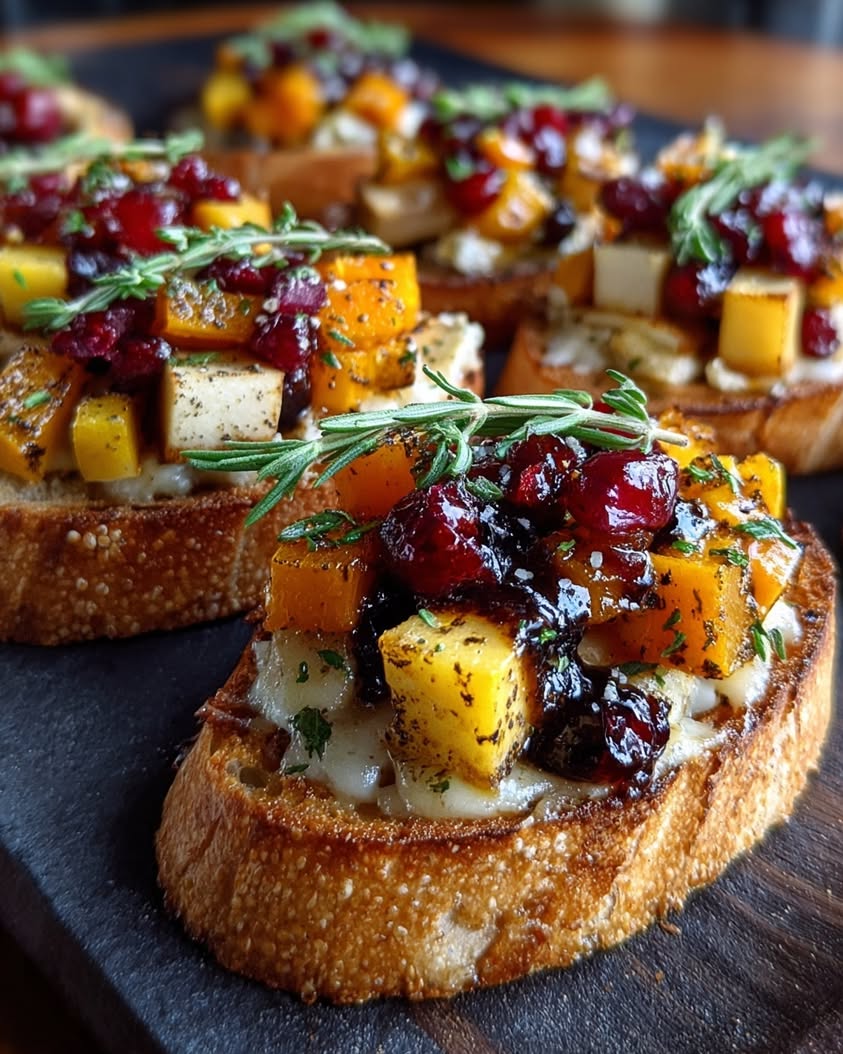
Fall Harvest Crostini with Roasted Squash, Pear, Brie & Cranberry Glaze: The Ultimate Elegant Appetizer
This stunning Fall Harvest Crostini recipe perfectly captures the essence of autumn on a single, elegant bite. Imagine creamy brie, sweet roasted squash and pear, and a tangy cranberry glaze all piled onto a crispy, golden slice of bread. Consequently, this appetizer becomes an instant conversation starter at any gathering. Moreover, it beautifully balances sweet, savory, and tangy notes for a truly sophisticated flavor profile.
Creating this impressive dish is surprisingly straightforward, making it ideal for both weeknight treats and holiday entertaining. The process involves roasting the squash to caramelized perfection, slicing the pear for a fresh crunch, and whipping up a simple yet vibrant cranberry glaze. Ultimately, the assembly is a fun and creative process that allows you to build a visually spectacular platter. This Fall Harvest Crostini is guaranteed to be the star of your appetizer spread.
Furthermore, the versatility of this recipe allows for numerous adaptations to suit different dietary needs and flavor preferences. Whether you are hosting a large Thanksgiving dinner or an intimate Friendsgiving, this appetizer fits the bill perfectly. The combination of warm, roasted squash with cool, crisp pear and rich brie creates a textural symphony in every bite. Indeed, this is the ultimate elegant and easy fall appetizer you have been searching for.
Quick Recipe Highlights
- Flavor Profile: This Fall Harvest Crostini offers a harmonious blend of sweet from the roasted squash and pear, rich and creamy from the brie, and a sharp, tangy counterpoint from the cranberry glaze. Additionally, a hint of fresh thyme ties all the earthy, autumnal flavors together beautifully.
- Texture: You will experience a fantastic textural contrast with the crispy, toasted crostini base, the soft and melting brie, the tender roasted squash, and the juicy, firm bite of fresh pear. Ultimately, each component contributes to a satisfying and complex mouthfeel.
- Aroma: As this cooks, your kitchen will fill with the warm, comforting scent of roasting squash and thyme, followed by the nutty aroma of toasting bread and the sweet, tart fragrance of the simmering cranberry glaze. Consequently, the aroma alone will build anticipation for this delicious fall appetizer.
- Visual Appeal: The presentation is a feast for the eyes with vibrant orange squash, deep red cranberry glaze, creamy white brie, and green fresh thyme sprigs. Moreover, the colorful layers on the golden brown crostini create a stunning, rustic-chic look perfect for holiday entertaining.
- Skill Level Needed: This is an accessible recipe for cooks of all levels, from beginners to experts. Basically, the techniques involve simple roasting, reducing a glaze, and assembling components. Therefore, you can create a gourmet-looking dish without advanced culinary skills.
- Special Equipment: You only need a standard baking sheet, a small saucepan, and a sharp knife. However, a mandoline can help achieve uniformly thin pear slices, but it is not at all necessary for success.
Recipe Overview
- Difficulty Level: We classify this Fall Harvest Crostini recipe as easy because it breaks down into simple, manageable steps. You roast the squash, make the glaze, and assemble—all straightforward tasks. Furthermore, most components can be prepared in advance, reducing last-minute stress. Therefore, even novice cooks can achieve spectacular results with this guide.
- Category: This dish falls squarely into the appetizer or hors d’oeuvre category. It is perfect for starting a meal or serving as part of a cocktail party spread. Additionally, its elegant presentation makes it suitable for canapés at more formal events. Ultimately, it is a versatile starter for any autumn occasion.
- Cuisine: This recipe draws inspiration from modern American seasonal cooking, celebrating native fall produce like squash and cranberries. Meanwhile, it incorporates European influences with the use of crostini and brie cheese. Consequently, it represents a fusion approach that highlights the best of autumn’s bounty in a globally-inspired format.
- Cost: The cost for this Fall Harvest Crostini is moderate, largely dependent on the price of the brie cheese. Seasonal squash and cranberries are typically affordable in the autumn months. Furthermore, a single baguette goes a long way, making the base very economical. Overall, you create a luxurious-tasting appetizer without a luxurious price tag.
- Season: This recipe is quintessentially autumnal, best made from late September through December. This is when butternut squash is at its peak sweetness and cranberries are freshly harvested. Moreover, the warm, spiced flavors perfectly complement crisp fall weather and holiday festivities. Therefore, it is a seasonal specialty to enjoy during its prime time.
- Occasion: This crostini is ideal for holiday entertaining, including Thanksgiving, Friendsgiving, and Christmas parties. It also works wonderfully for fall bridal showers, birthday gatherings, or even a fancy football watch party. Essentially, any event that calls for an impressive, crowd-pleasing appetizer is the right occasion for this dish.
Why You’ll Love This Fall Harvest Crostini
First and foremost, the taste and texture appeal of this Fall Harvest Crostini is absolutely undeniable. You get the creamy, decadent melt of the brie cheese against the sweet, caramelized notes of the roasted squash. Then, the fresh, crisp pear cuts through the richness, while the tangy cranberry glaze provides a bright, acidic pop. Ultimately, every single bite delivers a complex and satisfying symphony of autumn flavors that will have your guests reaching for more.
Secondly, the convenience and preparation benefits are a major reason to love this recipe. You can roast the squash and prepare the cranberry glaze hours ahead of time, if not the day before. Consequently, when your guests arrive, you simply need to toast the bread, warm the components, and assemble. This make-ahead flexibility makes it a stress-free choice for busy hosts during the hectic holiday entertaining season.
From a nutritional standpoint, this Fall Harvest Crostini offers several advantages. Butternut squash is packed with Vitamin A and fiber, while fresh pear adds Vitamin C and additional dietary fiber. Using a whole-grain baguette can further boost the fiber content. Although brie is a rich cheese, a little goes a long way in terms of flavor, allowing you to enjoy its creaminess in moderation. Therefore, you are serving a appetizer that is as wholesome as it is delicious.
The social and entertaining value of this dish is incredibly high. Its beautiful, colorful presentation immediately elevates any table setting and acts as a natural centerpiece. Moreover, because they are finger food, these crostini encourage mingling and conversation. They are the perfect elegant bite to enjoy with a glass of wine or champagne, making any gathering feel more special and celebratory.
Finally, this Fall Harvest Crostini is remarkably cost-effective and accessible. The primary ingredients are simple, seasonal, and not overly expensive. You do not need any special or hard-to-find items. Furthermore, the recipe is easily scalable, allowing you to feed a small family or a large party without complication. For all these reasons, this recipe is a guaranteed winner in your fall appetizer rotation.
Historical Background and Cultural Significance
The concept of crostini, meaning “little toasts” in Italian, has humble origins as a way to utilize stale bread. Traditionally, Italians would toast or grill day-old bread and rub it with garlic before topping it with whatever was seasonally available. This Fall Harvest Crostini recipe is a modern, seasonal twist on that classic frugal and resourceful approach. Consequently, it connects a timeless culinary tradition with the vibrant flavors of an American autumn.
Culturally, this dish celebrates the North American harvest season, specifically incorporating iconic ingredients like cranberries and squash. Native Americans cultivated and used both these ingredients for centuries before the arrival of European settlers. The inclusion of brie, a French cheese, and the Italian crostini base demonstrates how modern American cuisine often fuses Old World techniques with New World ingredients. Therefore, this appetizer tells a story of cultural exchange and seasonal celebration.
The evolution of this recipe follows broader food trends emphasizing seasonal, farm-to-table eating. Appetizers have moved beyond simple dips and chips to become curated, gourmet experiences that set the tone for a meal. This Fall Harvest Crostini fits perfectly into this trend, offering a sophisticated starter that highlights the best produce of the season. Its popularity at Thanksgiving and Friendsgiving gatherings has cemented its status as a modern holiday classic.
Regional variations of this concept are plentiful, showcasing local ingredients. In the Pacific Northwest, you might find a version with smoked salmon and apple. In the South, a pecan and pimento cheese variation could be popular. The basic formula of crispy bread, a creamy element, a sweet fruit, and a tangy sauce is incredibly adaptable. This particular version with squash, pear, brie, and cranberry has become a staple for holiday entertaining across the United States.
Ingredient Deep Dive
Butternut Squash: This winter squash is native to the Americas and has been a staple food for thousands of years. It is incredibly rich in Vitamin A, providing well over 100% of your daily needs in a single serving, and is also a good source of Vitamin C, fiber, and potassium. Select a squash that feels heavy for its size with a firm, matte skin and no soft spots. Store it in a cool, dark place for up to a month, or peel, cube, and freeze it for longer storage. As a substitution, sweet potato or acorn squash would work beautifully in this Fall Harvest Crostini recipe.
Brie Cheese: Hailing from the Île-de-France region, Brie is known as the “Queen of Cheeses” and has a history dating back to the 8th century. It provides a good source of protein and calcium, along with beneficial fats that contribute to its luxurious mouthfeel. Choose a brie that is just ripe—it should feel springy to the touch and not have an ammonia smell. Keep it refrigerated and bring it to room temperature before serving for optimal creaminess. For a different flavor, Camembert or a creamy goat cheese are excellent substitutes in this appetizer.
Fresh Pear: Pears have been cultivated for over 4,000 years and were beloved by ancient Greeks and Romans. They are an excellent source of dietary fiber and Vitamin C, and their high water content provides a refreshing juiciness. Look for pears that are firm with a slight give at the stem and a fragrant smell. Ripen them at room temperature and then refrigerate to slow further ripening. If you cannot find pears, a crisp, sweet apple like Honeycrisp or Fuji would be a fantastic alternative for your crostini.
Cranberries: These tart, red berries are one of only three fruits native to North America and have been used by Native Americans for food, medicine, and dye for centuries. They are packed with antioxidants and Vitamin C and are renowned for supporting urinary tract health. Purchase fresh cranberries that are firm, shiny, and bright red; discard any that are soft or discolored. They freeze beautifully for up to a year without any prep. If using dried cranberries for the glaze, rehydrate them in warm water or orange juice first.
Baguette: The classic French baguette, with its crisp crust and airy interior, was officially defined by law in 1920. It provides the perfect sturdy, neutral base to hold the hearty toppings. From a nutritional standpoint, it is primarily a source of carbohydrates for energy. For a whole-grain option, seek out a whole-wheat baguette. To keep it fresh, store it in a paper bag at room temperature for a day or two; refresh it in the oven before serving. A gluten-free baguette can be used to easily adapt this recipe.
Common Mistakes to Avoid
- Using Soggy Bread: Toasting the bread inadequately is a common error. Your crostini base must be crispy enough to support the toppings without becoming soggy. Therefore, ensure you toast or bake the slices until they are golden brown and firm throughout.
- Overcrowding the Baking Sheet: When roasting the squash, avoid crowding the pieces on the pan. Overcrowding causes the squash to steam instead of roast, preventing proper caramelization. Instead, use two pans or roast in batches to achieve those delicious, caramelized edges.
- Overcooking the Cranberry Glaze: Simmer the glaze just until the cranberries pop and the sauce thickens slightly. Overcooking can make it too thick and jam-like, making it difficult to drizzle. Remember, it will continue to thicken as it cools.
- Spreading Cold Brie: Using brie straight from the refrigerator is a mistake. Cold brie is firm and difficult to spread, and its flavor is muted. Always allow the brie to come to room temperature for at least 30 minutes before assembling your crostini.
- Slicing the Pear Too Early: Preparing the pear long before assembly leads to oxidation and browning. For the freshest look and crispest texture, slice the pear just before you are ready to assemble the finished appetizers.
- Neglecting Seasoning: Do not forget to season the roasted squash with salt and pepper. Even sweet, caramelized vegetables need a base layer of seasoning to make the flavors pop. This simple step elevates the entire dish.
- Assembling Too Far in Advance: While components can be prepped ahead, fully assembled crostini will become soggy if left sitting. For the best texture, assemble them no more than 30 minutes before serving.
- Using a Dull Knife: Butternut squash is notoriously hard to cut. Using a dull knife is dangerous and makes the task frustrating. Ensure you have a sharp, sturdy chef’s knife for safety and ease.
Essential Techniques
Roasting Squash: Roasting is crucial for developing the squash’s natural sugars, resulting in a deep, caramelized sweetness. To master it, cut the squash into uniform, half-inch cubes so they cook evenly. Toss them thoroughly with oil and seasonings to coat every surface. The common pitfall is under-oiling, which leads to drying instead of roasting. You will know it is perfectly roasted when the edges are browned and the cubes are tender enough to be easily pierced with a fork.
Creating a Fruit Glaze: A glaze adds a glossy, professional finish and a concentrated burst of flavor. The key is to simmer the cranberries with a sweetener and liquid just until they burst and the liquid reduces to a syrupy consistency. Stir occasionally to prevent scorching at the bottom of the pan. A common mistake is rushing this process over too high heat. The visual cue for success is when the back of a spoon is coated with the glaze and the cranberries have broken down completely.
Toasting Crostini: Properly toasting the bread provides a sturdy foundation that resists sogginess. Brush both sides with olive oil and bake or toast until golden brown and crisp throughout. Do not merely toast one side; ensuring both sides are crisp creates a moisture barrier. The pitfall is under-toasting, which results in a soft, chewy base that falls apart under the weight of the toppings. Success is achieved when the crostini feels firm and makes a light tapping sound when knocked on the counter.
Pro Tips for Perfect Fall Harvest Crostini
For an extra flavor dimension, toss your cubed squash with a tablespoon of maple syrup along with the olive oil before roasting. This enhances the caramelization and deepens the autumnal sweetness that pairs so well with the brie and cranberry.
Add a teaspoon of fresh orange zest or a splash of orange juice to your cranberry glaze. The citrus brightens the tartness of the berries and adds a wonderful aromatic complexity that elevates the entire dish.
When spreading the brie, if you find the rind too firm, you can carefully slice it off the top of the wedge before letting it come to room temperature. However, the rind is entirely edible and adds a lovely earthy flavor.
For a beautiful glossy finish and added flavor, lightly brush the assembled crostini with a tiny bit of the warm cranberry glaze before adding the final drizzle. This little step makes the colors pop and ensures every bite is infused with the tangy glaze.
If your cranberry glaze becomes too thick upon cooling, gently reheat it with a teaspoon of warm water to return it to a drizzling consistency. Conversely, if it is too thin, a brief additional simmer will help it reduce and thicken.
Use a microplane or the fine side of a box grater to grate a small amount of fresh nutmeg over the roasted squash when it comes out of the oven. This warming spice is a classic pairing with squash and adds a subtle, sophisticated depth.
Variations and Adaptations
For regional variations, consider incorporating local flavors. A Southern twist might include candied pecans and a bourbon-infused cranberry glaze. A coastal version could feature a sprinkle of Old Bay seasoning on the squash or a crab salad topping alongside the brie. These adaptations allow you to personalize the Fall Harvest Crostini to reflect your local cuisine and available ingredients, making the recipe uniquely yours.
Seasonal adaptations are straightforward. In winter, use roasted sweet potato and a pomegranate molasses glaze. For a spring version, substitute roasted asparagus and a lemon-herb ricotta. Summer could inspire a version with grilled zucchini, herbed goat cheese, and a tomato-basil relish. This flexibility ensures that the crostini concept can be enjoyed year-round with the best produce each season has to offer.
Dietary modifications are easily implemented. For a gluten-free Fall Harvest Crostini, use your favorite gluten-free baguette. To make it vegan, substitute the brie with a high-quality vegan cream cheese or a cashew-based spread and use a maple syrup-sweetened glaze without honey. A nut-free version is naturally achieved by simply avoiding nut-based garnishes. These simple swaps ensure everyone can enjoy this delicious appetizer.
Flavor variations can keep this recipe exciting. Try using a smoked gouda or blue cheese instead of brie for a stronger flavor profile. Incorporate different herbs like sage or rosemary in place of thyme. A drizzle of balsamic reduction alongside or in place of the cranberry glaze offers a different kind of tangy sweetness. Experimenting with these elements allows you to tailor the crostini to your exact taste preferences.
Serving and Presentation Guide
Plating techniques can transform your appetizer spread. Arrange the Fall Harvest Crostini on a large wooden board or a sleek slate platter for a rustic-chic look. Overlap them slightly in a circular pattern or line them up in rows, but ensure each one is visible. Placing a small bowl of extra cranberry glaze in the center of the platter for dipping adds an interactive element. The goal is to create a presentation that looks abundant and inviting.
Garnishing is the final touch that adds professionalism. Beyond the thyme sprigs, consider a light dusting of finely chopped fresh parsley or chives for a color contrast. A few scattered pomegranate arils or dried cranberries around the platter enhance the festive feel. For a touch of elegance, a very light flake of sea salt sprinkled over the top just before serving can heighten all the flavors.
For traditional accompaniments, serve these crostini as part of a larger charcuterie or cheese board. They pair wonderfully with other fall-themed bites like spiced nuts, fig jam, and slices of prosciutto. A simple arugula salad with a lemon vinaigrette on the side can balance the richness of the brie. This approach turns the crostini into the centerpiece of a complete appetizer experience.
Wine and Beverage Pairing
Selecting the right wine can elevate your Fall Harvest Crostini experience. A crisp, off-dry white wine like a Riesling or Vouvray is a perfect match. The slight sweetness complements the roasted squash and pear, while the acidity cuts through the richness of the brie. Alternatively, a light-bodied Pinot Noir with its red fruit notes pairs beautifully with the earthy squash and tangy cranberry. Ultimately, these wines create a harmonious balance with the appetizer’s complex flavors.
For non-alcoholic alternatives, consider a sparkling apple cider. Its effervescence and autumnal flavor profile mirror the festive nature of the dish. Another excellent option is a cranberry spritzer made with chilled cranberry juice and club soda, which echoes the glaze’s flavor. A warm mug of spiced apple tea also makes a wonderfully cozy pairing, especially for a casual gathering. These beverages ensure all guests have a delightful drink to enjoy.
If you prefer beer, a Belgian Saison or a Witbier are fantastic choices. Their citrusy and spicy yeast notes contrast nicely with the creamy brie and sweet squash without overpowering the delicate flavors. A malty Amber Ale can also stand up to the robust fall ingredients. The carbonation in beer helps cleanse the palate between bites, making each taste of the crostini feel fresh and new.
Storage and Shelf Life
Storing assembled Fall Harvest Crostini is not recommended, as the bread will become soggy. Instead, store all the components separately in airtight containers in the refrigerator. The roasted squash and cranberry glaze will keep for up to 3-4 days. The toasted baguette slices can be stored at room temperature in a paper bag for one day to maintain crispness. This component-based storage is the key to preserving quality.
For reheating, gently warm the roasted squash in a microwave or a 300°F oven until just heated through. Reheat the cranberry glaze in a small saucepan over low heat, adding a teaspoon of water if it has thickened too much. The crostini can be briefly re-crisped in a 350°F oven for a few minutes if they have softened. Always assemble with room-temperature brie and fresh pear just before serving.
Freezing is possible for some components with careful planning. The roasted squash freezes very well; spread it on a parchment-lined sheet to freeze solid before transferring to a freezer bag. The cranberry glaze can also be frozen. However, do not freeze the assembled crostini or the fresh pear. The brie can be frozen, but its texture may become crumbly upon thawing, so it is not ideal.
Make Ahead Strategies
A strategic prep timeline makes hosting effortless. Up to two days ahead, you can roast the squash and prepare the cranberry glaze, storing both in the refrigerator. The day of your event, slice the baguette and leave it uncovered on the counter. Then, one to two hours before guests arrive, toast the crostini and let it cool. Finally, take the brie out to soften about 30-60 minutes before assembly. This timeline distributes the work efficiently.
Storing components between steps is straightforward. Keep the cooled roasted squash and cranberry glaze in separate airtight containers in the fridge. Store the unt
Print
Fall Harvest Crostini with Roasted Squash, Pear, Brie & Cranberry Glaze
Description
A festive and elegant appetizer featuring creamy roasted squash, sweet pear, melted brie, and a tangy cranberry glaze on crispy crostini.
Ingredients
For the Crust:
- 1 small butternut squash, peeled and cubed
- 2 ripe pears, thinly sliced
- 1 baguette, sliced into 1/2-inch rounds
- 8 oz brie cheese, sliced
- 1/2 cup cranberry sauce
- 2 tbsp olive oil
- 1 tbsp honey
- 1 tsp fresh thyme leaves
- Salt and black pepper to taste
- 1 tbsp balsamic glaze for drizzling
Instructions
1. Prepare the Crust:
- Preheat oven to 400°F (200°C). Toss butternut squash cubes with olive oil, salt, and pepper. Roast for 20-25 minutes until tender and lightly browned.
- Arrange baguette slices on a baking sheet. Brush lightly with olive oil and toast in the oven for 5-7 minutes until crisp and golden.
- Top each crostini with a slice of brie, a few pieces of roasted squash, and a thin slice of pear. Return to the oven for 3-4 minutes until brie is melted.
- Warm cranberry sauce with honey in a small saucepan over low heat, stirring until smooth. Drizzle over crostini.
- Garnish with fresh thyme leaves and a drizzle of balsamic glaze. Serve immediately.
Notes
You can customize the seasonings to taste.

I’m Shaykee—born in Morocco, seasoned across continents. From airplane galleys to home kitchens, I share the flavors and stories that shaped my journey.