
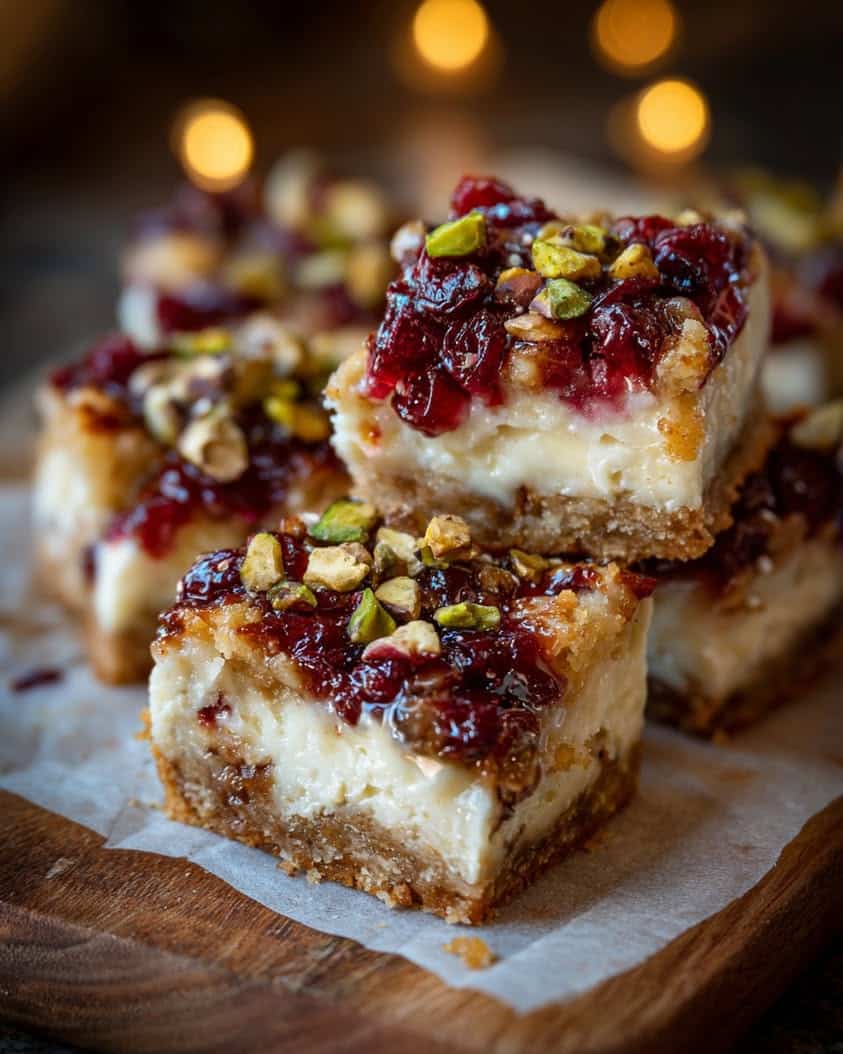
Festive Cranberry Pistachio Brie Bars with Maple Cookie Crust: The Ultimate Holiday Appetizer
Imagine the perfect holiday party appetizer. It is elegant, easy to eat, and bursts with seasonal flavor. These Festive Cranberry Pistachio Brie Bars with Maple Cookie Crust deliver exactly that experience. They combine creamy, melted Brie with tart cranberries and crunchy pistachios, all resting on a sweet and savory maple-infused cookie crust. This recipe transforms classic baked Brie into a portable, shareable bar that is perfect for any gathering.
The magic of these bars lies in their incredible balance. Each bite offers a symphony of textures and tastes. You get the buttery crunch of the crust, the luxurious gooeyness of the Brie, the bright pop of cranberry, and the satisfying salty crunch of pistachios. Moreover, they look stunning on a holiday platter with their vibrant red and green colors. Consequently, they are guaranteed to be the star of your appetizer spread.
Creating these Festive Cranberry Pistachio Brie Bars is surprisingly straightforward. You do not need any special pastry skills. Essentially, you press a simple crust into a pan, layer on the ingredients, and bake. The result is a professional-looking treat that tastes like you spent hours in the kitchen. Ultimately, this recipe is a foolproof way to impress your guests with minimal effort.
Quick Recipe Highlights
- Flavor Profile: These bars masterfully balance sweet, savory, tangy, and salty notes. The maple cookie crust provides a sweet foundation, while the creamy Brie offers a rich, buttery flavor. Simultaneously, the cranberry sauce adds a necessary tartness, and the pistachios contribute a delightful salty crunch.
- Texture: Expect a wonderful contrast in every mouthful. The crust is firm and crumbly, providing a solid base. The Brie layer becomes wonderfully soft and spreadable when baked. Furthermore, the cranberries offer a juicy burst, and the chopped pistachios add the final element of satisfying crunch.
- Aroma: As these bars bake, your kitchen will fill with an irresistible fragrance. The scent of melting cheese and toasting nuts blends with the sweet aroma of maple and the festive, tart scent of cranberries. It is the quintessential smell of holiday entertaining.
- Visual Appeal: These bars are a feast for the eyes. The golden-brown crust, the creamy white Brie, the vibrant red cranberry layer, and the green pistachio topping create a stunning red, white, and green color scheme that is perfect for Christmas parties and other winter celebrations.
- Skill Level Needed: This is an accessible recipe for cooks of all levels. The steps are simple and require no advanced techniques like making pastry dough or tempering chocolate. If you can use a food processor or a pastry cutter and spread layers in a pan, you can absolutely make these impressive bars.
- Special Equipment: You will need a standard 8×8 inch baking pan and either a food processor or a pastry cutter to make the crust. Parchment paper is highly recommended for easy removal and clean slicing. Otherwise, only basic kitchen tools like a mixing bowl, spatula, and knife are required.
Recipe Overview
- Difficulty Level: We classify this recipe as easy for several reasons. First, the crust comes together quickly in a food processor. Second, the assembly is just layering—no intricate rolling or folding. Finally, the baking time is forgiving. Even novice bakers can achieve a beautiful, delicious result with this straightforward method.
- Category: These bars perfectly straddle multiple categories. They are primarily a holiday appetizer or party snack. However, they could also serve as a decadent dessert option or a special addition to a brunch buffet. Their versatility makes them a valuable recipe for any entertainer.
- Cuisine: This dish is a modern fusion with roots in French and American culinary traditions. Brie cheese originates from France, while the concept of a bar cookie or square is deeply embedded in North American home baking. The use of maple syrup and cranberries further anchors it as a celebratory New World creation.
- Cost: This is a moderately priced appetizer that delivers high perceived value. Brie cheese is the most significant cost, but a little goes a long way. Using store-bought cranberry sauce keeps costs down, while homemade crust ingredients are pantry staples. Overall, it is a cost-effective way to feed a crowd with something special.
- Season: This recipe is ideal for the fall and winter holiday season. Cranberries are at their peak, and the warm, rich flavors complement cooler weather. The festive colors make it a natural fit for Thanksgiving, Christmas, New Year’s Eve, and holiday potlucks.
- Occasion: These bars are designed for entertaining. They are perfect for cocktail parties, open houses, holiday gatherings, and family get-togethers. Because they are easy to eat with fingers, they work well in stand-up social situations. They also make a wonderful edible gift when packaged beautifully.
Why You’ll Love This Recipe
You will adore these Festive Cranberry Pistachio Brie Bars first and foremost for their incredible taste and texture. The combination is simply addictive. The gooey, melted Brie paired with the tart cranberry creates a classic flavor duo that is universally loved. Adding the maple cookie crust and salty pistachios elevates it to something extraordinary. Every component complements the others, resulting in a harmonious bite that is both sophisticated and comforting. It is the kind of appetizer that guests will remember and request year after year.
Furthermore, the convenience factor is a major win. Unlike a traditional baked Brie in puff pastry, which can be messy to serve, these are pre-portioned into neat bars. This makes them incredibly easy for guests to pick up and enjoy without needing a plate or knife. The make-ahead potential is another huge benefit. You can assemble the bars hours in advance and simply pop them in the oven when needed. This frees you up to enjoy your own party instead of being stuck in the kitchen.
From a nutritional perspective, these bars offer more than just empty calories. Cranberries are packed with antioxidants and vitamin C. Pistachios provide healthy fats, protein, and fiber. While Brie is a rich cheese, it also offers calcium and protein. When enjoyed in moderation as part of a balanced spread, these bars provide a satisfying mix of macronutrients. Choosing a whole-grain cookie for the crust can also add a fiber boost.
The social and entertaining value of this dish cannot be overstated. Food that is beautiful, delicious, and easy to eat is the holy grail of hosting. These bars check all those boxes. They serve as a fantastic conversation starter and immediately signal to your guests that you have put thought and care into the menu. Their festive appearance adds to the decor and holiday spirit, making your table look abundant and inviting.
Finally, this recipe is cost-effective and accessible. You likely have many of the crust ingredients in your pantry already. The filling requires only three key components. Compared to purchasing a similar gourmet appetizer from a specialty store, making these at home saves a significant amount of money. Additionally, the recipe is easy to scale up or down depending on your guest count. This flexibility makes it a reliable staple for any size gathering.
Historical Background and Cultural Significance
The story of these bars begins with the timeless appeal of baked Brie. Brie cheese itself has a history dating back to the 8th century in the French region of Île-de-France. It was famously declared the “King of Cheeses” at the Congress of Vienna in 1815. The practice of baking Brie whole, often wrapped in pastry, became a popular party trick in American entertaining during the 1970s and 80s. It represented a touch of European elegance that was easy for home cooks to achieve. Our recipe deconstructs this classic, transforming it into a more shareable, portable form.
Cranberries and maple syrup root this dish firmly in North American tradition. Native Americans used cranberries for food, medicine, and dye long before European settlers arrived. They also pioneered the harvesting of maple sap and its reduction into syrup. Combining these indigenous ingredients with a French cheese illustrates the beautiful fusion that defines modern American cuisine. The recipe celebrates seasonal, local produce during the harvest and holiday time, connecting us to traditional cycles of feasting.
The evolution from a whole baked wheel to a bar format reflects broader trends in food culture. Appetizers have shifted towards finger foods that facilitate mingling. The “bar” or “square” format is a cornerstone of American potluck and bake-sale culture, prized for its ease of serving and transport. This recipe cleverly merges the gourmet appeal of baked Brie with the practical, communal nature of bar cookies. It is a perfect example of how recipes adapt to fit contemporary lifestyles and entertaining needs.
Regional variations of this concept abound. In the Pacific Northwest, one might find a version with hazelnuts instead of pistachios. In New England, a dash of cinnamon might be added to the crust to complement the maple. Some cooks incorporate orange zest into the cranberry layer for a citrusy note. The basic framework is wonderfully adaptable. This flexibility allows the recipe to take on local character while maintaining its core identity as a festive, cheesy, sweet-and-savory treat perfect for sharing.
Ingredient Deep Dive
Let us start with Brie cheese. Originating from France, Brie is a soft, cow’s-milk cheese known for its edible, bloomy rind. When baked, it transforms into a luxuriously creamy and spreadable consistency. Nutritionally, it provides a good source of calcium, protein, and vitamin B12. For this recipe, choose a ripe Brie that feels soft to the touch. You can use the rind—it becomes pleasantly soft when baked and helps contain the cheese. If you prefer a stronger flavor, opt for a double-cream Brie. Store Brie in the refrigerator in its original wrapping until ready to use.
Cranberry sauce is the vibrant, tangy heart of the topping. You can use high-quality store-bought sauce or make your own simply by simmering fresh cranberries with sugar and a little water or orange juice. Homemade sauce allows you to control the sweetness and add flavorings like orange zest or a pinch of cinnamon. Cranberries are renowned for their high antioxidant content and role in promoting urinary tract health. Look for a sauce that is thick, not runny, to prevent the bars from becoming soggy. Any leftover sauce can be refrigerated for other uses.
The maple cookie crust forms the essential base. Shortbread cookies or simple butter cookies work best, as they provide a sturdy, crumbly texture. The maple flavor comes from pure maple syrup, a natural sweetener rich in minerals like manganese and zinc. Avoid pancake syrup, which is primarily corn syrup and artificial flavor. The butter binds the crust and contributes to its rich, melt-in-your-mouth quality. For a nuttier flavor, you could brown the butter first. This crust can be adapted to be gluten-free by using gluten-free cookies.
Finally, pistachios provide the crucial crunch and a pop of color. Pistachios are one of the oldest flowering nut trees and were a prized food in the ancient Persian empire. They are a nutritional powerhouse, offering healthy fats, fiber, protein, and various vitamins and minerals. For the best flavor and texture, use unsalted, shelled pistachios and chop them coarsely. Toasting them lightly before sprinkling over the bars will intensify their flavor. For those with allergies, chopped pecans or walnuts make a fine substitute, though the festive green color will be lost.
Common Mistakes to Avoid
- Using a Runny Cranberry Sauce: This is the most common pitfall. A sauce that is too thin will seep into the crust, making it soggy instead of crisp. Always opt for a thick, jellied cranberry sauce. If using homemade, cook it until it is very thick and has reduced significantly.
- Not Lining the Pan with Parchment Paper: Skipping this step makes it nearly impossible to remove the bars cleanly for slicing. Always line your baking pan with parchment paper, leaving an overhang on two sides. This creates a sling that allows you to lift the entire block out effortlessly.
- Overprocessing the Crust: When making the cookie crust in a food processor, pulse just until the mixture resembles coarse sand. Over-processing can lead to a crust that is too dense and hard after baking. You want a texture that will hold together when pressed but still be tender.
- Slicing the Bars While Still Hot: The Brie layer needs time to set. If you try to cut the bars immediately after baking, the cheese will ooze out messily. Allow the pan to cool on a wire rack for at least 30 minutes. For the cleanest cuts, chill the entire block in the refrigerator for an hour before slicing.
- Using Cold Brie Straight from the Fridge: Very cold Brie is difficult to slice thinly and evenly. Let the Brie sit at room temperature for 15-20 minutes before you attempt to slice it. This will give you cleaner cuts and more consistent layers.
- Spreading the Cranberry Sauce Too Thickly: A little cranberry goes a long way. A thick layer can overwhelm the other flavors and make the bars too sweet. Use just enough to create a distinct, even layer over the Brie. About half a cup to three-quarters of a cup is typically sufficient.
- Forgetting to Press the Crust Firmly: A loosely pressed crust will crumble when you try to pick up a bar. Use the bottom of a measuring cup or a glass to press the crust mixture very firmly and evenly into the pan. This compaction is key to a solid base.
- Overbaking the Bars: The goal is to melt the Brie and set the crust, not to brown the top excessively. The bars are done when the crust edges are golden and the Brie is visibly melted and bubbly around the edges. Overbaking can cause the cheese to separate and become greasy.
Essential Techniques
Creating the perfect crumb crust is a foundational skill for many desserts and bars. The technique involves pulsing dry cookies with butter and a binder—here, maple syrup—until the mixture resembles wet sand. The key is to pulse, not run, the food processor. This prevents the cookies from turning into a paste. You want a variety of small crumbs that will pack down tightly. When you press the mixture into the pan, use firm, even pressure with a flat-bottomed object. A properly made and pressed crust will hold its shape when cut and provide a satisfying textural contrast to the soft toppings.
Slicing Brie thinly and evenly is crucial for proper melting and layering. First, ensure your knife is sharp. A dull knife will tear the cheese and make a mess. If the Brie is very cold, let it warm slightly at room temperature. You can also lightly coat your knife with cooking spray or oil to prevent sticking. Aim for slices that are about 1/4-inch thick. They should be thin enough to melt uniformly but thick enough to create a distinct, creamy layer. Arrange the slices in a single layer, slightly overlapping, to cover the crust completely.
Layering is the simple yet critical assembly technique. After the crust is baked and cooled slightly, you add the Brie, then the cranberry sauce, and finally the pistachios. The order matters. The Brie needs direct contact with the warm crust to melt properly. The cranberry sauce sits on top of the Brie. Spreading it gently with an offset spatula or the back of a spoon ensures an even distribution without disturbing the cheese layer underneath. Finally, the pistachios are sprinkled on top just before the final bake so they toast lightly but do not burn.
Pro Tips for Perfect Festive Cranberry Pistachio Brie Bars
For an extra-flavorful crust, toast the cookie crumbs in a dry skillet for a few minutes before mixing them with the butter and maple syrup. This deepens their flavor and can help remove any residual moisture.
If your cranberry sauce is too sweet, balance it by adding a small pinch of flaky sea salt to the top of the bars along with the pistachios. The salty contrast will elevate all the other flavors.
For a stunning presentation, reserve a tablespoon of the chopped pistachios and a few whole cranberries from your sauce (if using homemade) to garnish the serving platter after slicing.
To ensure clean cuts, wipe your knife clean with a damp cloth between each slice. This prevents cheese and cranberry from smearing and keeps the layers looking distinct.
If you are making these for a large party, consider baking them in a 9×13 inch pan. Simply increase all crust ingredients by half and use one and a half times the amount of Brie and toppings.
For a more complex flavor profile, add a quarter teaspoon of freshly grated nutmeg or a pinch of black pepper to the cookie crust mixture before pressing it into the pan.
Let the baked bars cool until just warm, not hot, before transferring them to the refrigerator to chill. A sudden temperature change can cause the crust to contract and crack.
Variations and Adaptations
Regional variations can personalize this recipe. In the South, substitute pecans for pistachios and add a teaspoon of bourbon to the cranberry sauce. For a Mediterranean twist, use fig jam instead of cranberry sauce and top with chopped rosemary and walnuts. A Pacific Northwest version might feature hazelnuts and a blackberry compote. These adaptations show how the basic formula of a crust, soft cheese, fruit, and nut is endlessly versatile across different culinary traditions.
Seasonal adaptations are easy and encouraged. In the spring, try a version with a lemon shortbread crust, herbed goat cheese, and a strawberry-rhubarb compote. For summer, a graham cracker crust with creamy Havarti, fresh peach slices, and toasted almonds would be delightful. Autumn begs for a ginger snap crust, Camembert, spiced pear chutney, and candied walnuts. This flexibility allows you to enjoy the concept of cheese bars year-round.
Dietary modifications are straightforward. For a gluten-free version, use certified gluten-free shortbread cookies for the crust. To make it nut-free, omit the pistachios and use toasted pumpkin seeds (pepitas) for crunch. For a dairy-free adaptation, seek out a high-quality vegan soft cheese alternative that melts well. While the flavor profile will change, the structure and appeal of the bars will remain intact.
Flavor variations can cater to different palates. For a sweeter bar, drizzle the top with a little extra maple syrup after baking. For a savory-forward version, mix a tablespoon of chopped fresh thyme into the crust and use a sharp white cheddar instead of Brie. You could also incorporate a layer of prosciutto or thinly sliced salami between the crust and the cheese for a salty, meaty element.
Serving and Presentation Guide
Plating techniques can elevate these bars from simple to spectacular. After chilling and slicing, arrange them on a large wooden cutting board or a sleek marble slab. Space them slightly apart so guests can easily pick one up. For a more formal presentation, place each bar on a small individual appetizer plate with a microgreen garnish. The contrast between the rustic bar and elegant plating creates visual interest.
Garnishing adds the final professional touch. A light dusting of powdered sugar just before serving looks beautiful against the red cranberry and green pistachios. Fresh rosemary sprigs or thyme tucked around the platter add color and fragrance. If you used whole cranberries in your sauce, scatter a few around the base of the bars. A small bowl of extra cranberry sauce or maple syrup for drizzling can be offered on the side for those who want an extra flavor boost.
Traditional accompaniments include other finger foods that complement the rich, sweet-savory profile. A bowl of mixed olives, a selection of cured meats, and crisp raw vegetables like endive spears or cucumber rounds provide balance. For beverage pairings, see the dedicated section below. In terms of temperature, these bars are best served at room temperature. This allows the Brie to be spreadable but not runny. Remove them from the refrigerator 20-30 minutes before your guests arrive.
Wine and Beverage Pairing
Wine pairings for these bars should consider the sweet, savory, and creamy elements. A sparkling wine like Champagne or Prosecco is a classic and foolproof choice. The bubbles cut through the richness of the cheese and cleanse the palate. A slightly sweet white wine, such as a Riesling or Gewürztraminer, complements the tart cranberry beautifully. For red wine lovers, a light-bodied, low-tannin Pinot Noir will not overpower the delicate Brie. The key is to avoid heavily oaked or high-tannin wines that could clash with the cheese’s fat and the fruit’s acidity.
Non-alcoholic alternatives are just as important. Sparkling apple cider or a cranberry-spiked sparkling water mirrors the effervescence of Champagne. A warm mulled cider with cinnamon and orange would be a cozy, festive pairing. For a more sophisticated option, a non-alcoholic French 75 mocktail made with seedlip, lemon juice, and tonic water provides a complex, herbal note that works well with the appetizer.
Coffee and tea pairings work wonderfully, especially if serving these bars at a brunch or afternoon gathering. A medium-roast coffee with low acidity will not compete with the flavors. A black tea like Earl Grey, with its citrusy bergamot notes, complements the cranberry. For an herbal option, a rooibos tea has a natural sweetness that pairs nicely. Serve beverages at their ideal temperatures—hot coffee and tea, chilled sparkling drinks—to provide a pleasing contrast to the room-temperature bars.
Storage and Shelf Life
Storage methods are crucial for maintaining quality. Once completely cooled, cover the pan tightly with plastic wrap or transfer sliced bars to an airtight container. They must be refrigerated due to the dairy content. Properly stored, Festive Cranberry Pistachio Brie Bars will keep for up to 3 days in the refrigerator. The crust will soften slightly over time but will still be enjoyable.
Freezing guidelines are helpful for advanced preparation. It is best to freeze the bars before baking. Assemble the crust, Brie, and cranberry layers in the pan, but do not add the pistachios. Wrap the entire pan tightly in a double layer of plastic wrap and then aluminum foil. Freeze for up to 1 month. When ready to bake, do not thaw. Sprinkle with pistachios and bake directly from frozen, adding 5-10 minutes to the baking time. Baked bars can also be frozen, though the texture of the Brie may change slightly upon thawing.
Signs of spoilage are important to recognize. Discard the bars if you notice any off odors, such as a sour or ammonia-like smell. Visible mold growth, of course, means they should be thrown away. If the Brie layer has separated and become excessively oily or grainy, the texture has degraded and they are past their prime. Always use your best judgment and when in doubt, throw it out.
Make Ahead Strategies
A prep timeline reduces day-of stress. You can prepare the cookie crust up to 2 days in advance. Press it into the parchment-lined pan, cover tightly, and store at room temperature. The cranberry sauce, if homemade, can be made up to a week ahead and refrigerated. The Brie can be sliced the day before and kept wrapped in the fridge. On the day of your event, simply assemble the layers, add the pistachios, and bake. This staged approach makes the process feel effortless.
Storage between steps is simple. For the pre-made crust, ensure it is covered well to prevent it from absorbing any odors from the refrigerator if you choose to chill it. The cranberry sauce should always be stored in a sealed container in the fridge. Keep the sliced Brie in a single layer on a plate covered with plastic wrap. Bringing all components to a similar cool temperature before assembly helps ensure even baking.
Quality impact assessment is key when making ahead. The crust may soften very slightly if stored assembled with the cold Brie for more than an hour before baking, but this is minimal. The flavor actually improves as the components meld. The one element to always add fresh is the pistachio topping, to preserve their crunch and color. Following these guidelines guarantees your make-ahead bars will taste just-baked.
Scaling Instructions
Halving the recipe is perfect for smaller gatherings. Use a 9×5 inch loaf pan lined with parchment. Halve all ingredients precisely. The bake time may be slightly reduced by 3-5 minutes, so watch for the visual cues of a golden crust and bubbling cheese at the edges. This smaller batch is ideal for a cozy dinner for four to six people.
Doubling or tripling the recipe for a crowd is easy. Double all ingredients and bake in a 9×13 inch pan for a double batch, or a large half-sheet pan (18×13 inches) for a triple batch. The key adjustment is the baking time. A larger, thicker pan may require an additional 5-10 minutes. Conversely, a thinner layer in a very large sheet pan may bake faster. Always rely on the visual indicators rather than the timer alone.
Equipment adjustments may be necessary when scaling. A very large batch may exceed the capacity of a standard food processor for the crust. Work in batches to pulse the cookies and butter, then mix them together in a large bowl. For a doubled recipe in a 9×13 pan, you will need a larger offset spatula for spreading the cranberry sauce evenly. Ensure your oven racks are positioned to allow for proper heat circulation around the larger pan.
Nutritional Deep Dive
A macro breakdown for one bar reveals a balance of fats, carbohydrates, and protein. The primary sources of fat are the butter in the crust and the Brie cheese, providing satiety and flavor. Carbohydrates come from the cookie crust, maple syrup, and cranberry sauce, offering quick energy. Protein is supplied by the cheese and, to a lesser extent, the pistachios. While this is a rich appetizer, the portion size as a bar helps with natural portion control.
Micronutrient analysis shows several beneficial compounds. Cranberries contribute vitamin C and antioxidants like proanthocyanidins. Pistachios offer B vitamins, potassium, and lutein for eye health. Brie provides calcium and phosphorus for bone health, along with vitamin B12. Using whole-grain cookies or adding a tablespoon of ground flax to the crust can boost the fiber and omega-3 content. As with any treat, the nutritional value is best considered in the context of your overall diet.
Dietary Adaptations
For a gluten-free adaptation, use certified gluten-free shortbread or butter cookies to make the crust. Ensure all other ingredients, like the cranberry sauce, are verified gluten-free. The method remains identical. The bars will be safe for those with celiac disease or gluten sensitivity.
A dairy-free version requires a plant-based cheese that melts well. Look for a vegan soft “Brie-style” cheese made from cashews or coconut oil. The flavor will be different but can still be delicious. Use a vegan butter substitute in the crust. Be sure to check that the cookies used in the crust are also dairy-free if needed.
For a vegan adaptation, combine the dairy-free modifications above. Use a plant-based Brie and butter. Ensure the maple syrup is vegan (it almost always is) and that the cookies contain no animal products. The pistachios are naturally vegan. This adaptation allows everyone to enjoy the festive concept.
Troubleshooting Guide
If your crust is too crumbly and falls apart, it likely was not pressed firmly enough into the pan or needed a bit more binder. Next time, press more firmly with a flat-bottomed cup. As a fix for already-baked bars, you can serve them with a spoon as a delicious crumble-style dessert. They will still taste wonderful.
If the Brie did not melt evenly, the slices may have been too thick or too cold when they went into the oven. Ensure Brie is at a cool room temperature and sliced thinly. For future batches, you can also cut the Brie into small cubes and scatter them evenly over the crust for more consistent melting.
If the bars are too difficult to slice cleanly, they probably needed more chilling time. Place the entire pan back in the refrigerator for another 30 minutes. Use a sharp knife dipped in hot water and wiped dry between each cut. For immediate serving, you can also present them as a dip with crackers, scooping out the delicious layers.
Recipe Success Stories
Community feedback on this recipe consistently highlights its crowd-pleasing nature. Many home cooks report that it has become their mandatory contribution to holiday potlucks. One reader shared that she now makes a double batch every Christmas Eve—one for her family to enjoy that night and one to bring to her in-laws’ dinner the next day. The portability and make-ahead aspect are repeatedly praised.
Variation successes from readers are inspiring. A common adaptation is using different jams—apricot, fig, and raspberry are all popular. Some have added a layer of caramelized onions beneath the Brie for a deeper savory note. Others have mixed the chopped pistachios right into the crust for extra nutty flavor. These innovations show how a solid recipe can become a personal canvas.
Photography tips from successful makers include using natural light to capture the gooey cheese pull. Slicing one bar and placing it slightly separate from the rest on the platter creates an inviting, dynamic shot. A sprinkle of powdered sugar or a fresh herb garnish right before photographing makes the colors pop. Many find that the bars’ natural beauty makes them one of the easiest dishes to photograph for holiday blogs and social media.
Frequently Asked Questions
Can I use a different type of cheese? Yes, Camembert is the closest substitute for Brie. For a stronger flavor, a soft goat cheese (chèvre) would work, but it will be tangier and less creamy when baked.
Can I make these without a food processor? Absolutely. Place the cookies in a zip-top bag and crush them with a rolling pin until fine crumbs form. Then, mix the crumbs with melted butter and maple syrup in a bowl.
Do I have to use the Brie rind? The rind is edible and becomes soft when baked. It helps contain the melted cheese. However, if you prefer, you can carefully slice it off before layering.
My cranberry sauce is very tart. Is that okay? A tart sauce provides a lovely contrast to the rich cheese and sweet crust. If it is too tart for your taste, you can stir a tablespoon of honey or maple syrup into it before spreading.
Can I use fresh cranberries instead of sauce? Fresh cranberries will not break down properly in the short baking time and will be too tart and firm. You must cook them into a sauce or compote first.
How do I reheat leftover bars? Warm them in a 300°F oven for 5-8 minutes until the cheese is just soft again. Avoid the microwave, as it will make the crust soggy.
Can I use frozen cranberry sauce? Yes, but thaw it completely in the refrigerator first and stir it well to ensure it has a spreadable consistency.
What can I use instead of pistachios? Chopped walnuts, pecans, almonds, or even toasted pumpkin seeds (pepitas) make excellent substitutes.
Are these bars served warm or cold? They are best served at room temperature. This allows the flavors to shine and the Brie to be spreadable but not messy.
Can I assemble and refrigerate before baking? Yes, you can assemble the crust, Brie, and cranberry layers, cover tightly, and refrigerate for up to 4 hours. Add the pistachios just before baking.
Additional Resources
Related recipes that complement these bars include other easy holiday appetizers like spiced nuts, stuffed mushrooms, or a simple cheese board. If you love the sweet-savory combination, you might enjoy a recipe for pear and gorgonzola tartlets or prosciutto-wrapped dates. These can all be part of a stunning holiday spread.
Technique guides that are useful include mastering a perfect shortbread crust, learning how to slice soft cheeses cleanly, and understanding the stages of cooking cranberry sauce. These fundamental skills will serve you well in many other baking and cooking projects beyond this specific recipe.
For ingredient information, consider exploring the differences between various soft-ripened cheeses or learning about the health benefits of different nuts. Understanding your ingredients leads to more confident substitutions and better overall results in the kitchen.
PrintFestive Cranberry Pistachio Brie Bars with Maple Cookie Crust
Description
A sweet and savory holiday treat featuring a buttery maple cookie crust, creamy baked brie, and a topping of tart cranberries and crunchy pistachios.
Ingredients
For the Crust:
- 1 1/2 cups crushed maple shortbread cookies
- 1/4 cup melted unsalted butter
- 8 oz wheel of brie cheese, rind removed and cubed
- 1/2 cup dried cranberries
- 1/4 cup shelled pistachios, roughly chopped
- 2 tbsp maple syrup
- 1 tsp fresh thyme leaves (optional)
Instructions
1. Prepare the Crust:
- Preheat oven to 350°F (175°C). Line an 8×8 inch baking pan with parchment paper.
- In a bowl, mix crushed maple cookies with melted butter until combined. Press firmly into the bottom of the pan to form an even crust.
- Scatter cubed brie evenly over the crust. Top with dried cranberries and chopped pistachios.
- Drizzle maple syrup over the top. Bake for 20-25 minutes, until brie is melted and bubbly.
- Remove from oven and let cool for 10 minutes. Sprinkle with fresh thyme if using. Cut into bars and serve warm or at room temperature.
Notes
You can customize the seasonings to taste.

I’m Shaykee—born in Morocco, seasoned across continents. From airplane galleys to home kitchens, I share the flavors and stories that shaped my journey.