
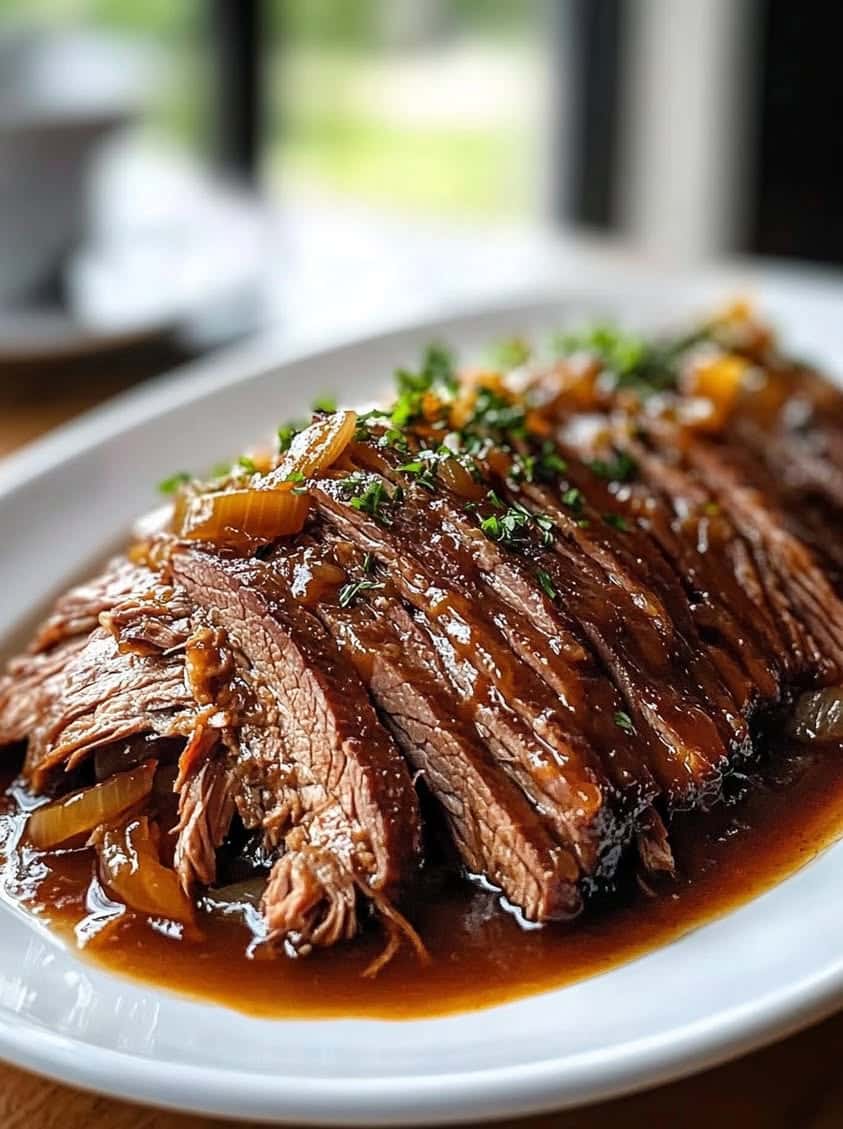
Fork-Tender Slow-Cooked Beef Brisket with Savory Pan Juices: The Ultimate Comfort Food
Imagine coming home to the rich, welcoming aroma of a perfectly cooked beef brisket that has been simmering all day. This fork-tender slow-cooked beef brisket recipe delivers exactly that experience, transforming a humble cut of meat into a spectacular centerpiece for any meal. The process is remarkably simple, relying on patient, low heat to break down tough connective tissues, resulting in meat so tender it practically melts on your tongue. Furthermore, the savory pan juices created during cooking become a luxurious, flavor-packed sauce that elevates every single bite.
This dish is the very definition of comfort food, offering deep, satisfying flavors that appeal to everyone at the table. Whether you are planning a cozy family Sunday dinner or need an impressive yet easy recipe for entertaining a crowd, this beef brisket never fails to please. The hands-on time is minimal; your oven or slow cooker does the heavy lifting. Consequently, you are free to focus on side dishes or simply relax, knowing a phenomenal meal is developing with very little effort on your part.
The beauty of this recipe lies in its simplicity and incredible results. You start with a well-seasoned brisket, add a few aromatic vegetables, and let time and gentle heat work their magic. The final product is a show-stopping main course that boasts a beautiful bark, incredibly moist interior, and those unforgettable savory pan juices. Ultimately, this recipe proves that the most memorable meals do not require complicated techniques, just quality ingredients and a bit of patience.
Quick Recipe Highlights
- Flavor Profile: This beef brisket delivers a deeply savory and umami-rich taste, perfectly balanced with the sweetness of onions and carrots and the earthy notes of garlic and herbs. The savory pan juices concentrate all these flavors into a luxurious, spoonable sauce.
- Texture: The long, slow cooking process renders the brisket incredibly fork-tender, with meat that pulls apart effortlessly. Meanwhile, the exterior develops a slightly caramelized texture that contrasts beautifully with the succulent, moist interior.
- Aroma: As it cooks, your kitchen will fill with an irresistible scent of roasting beef, savory herbs, and sweet vegetables. This mouthwatering aroma is a classic hallmark of great comfort food and builds incredible anticipation for the meal.
- Visual Appeal: The finished brisket presents a magnificent, glossy mahogany crust. When sliced or pulled, it reveals beautifully moist, pink-tinged meat, all generously napped in those rich, dark savory pan juices for a stunning plate presentation.
- Skill Level Needed: This is an easy recipe ideal for cooks of all levels. The technique is straightforward, requiring basic searing and then passive cooking. Success depends more on timing and patience than on advanced culinary skills.
- Special Equipment: A large Dutch oven or heavy roasting pan with a lid is essential. Alternatively, a standard 6-quart or larger slow cooker works perfectly for this set-it-and-forget-it method, making it incredibly convenient.
Recipe Overview
- Difficulty Level: We rate this recipe as easy because it involves fundamental techniques like searing and braising. While the total cook time is long, the active preparation time is short, about 20 minutes. The process is forgiving, and the slow, moist heat environment virtually guarantees a tender result, making it perfect for beginners and busy cooks alike.
- Category: This dish firmly belongs in the hearty main course category, ideal for a satisfying dinner. It also falls under the umbrella of classic comfort food and is a stellar example of a make-ahead meal, as its flavor often improves the next day.
- Cuisine: While brisket is central to many global cuisines, this preparation leans into a classic American-style pot roast or braise. It draws inspiration from traditional Jewish brisket and Southern barbecue traditions, focusing on low-and-slow cooking to achieve tenderness without smoke.
- Cost: Brisket is a moderately priced cut, offering excellent value for feeding a crowd. This recipe uses affordable, pantry-staple vegetables and seasonings. Overall, it provides a cost-effective way to serve a luxurious-tasting meal, with a total cost often under $4 per serving.
- Season: This is a quintessential cooler-weather dish, perfect for fall and winter. Its hearty, warming nature makes it ideal for holidays and cozy nights in. That said, it is also fantastic for summer gatherings when cooked in a slow cooker to avoid heating the kitchen.
- Occasion: This fork-tender brisket is incredibly versatile for occasions. It is perfect for a stress-free Sunday dinner, a festive holiday centerpiece like Passover or Christmas, a potluck contribution, or any casual gathering where you want to serve impressive, crowd-pleasing comfort food.
Why You’ll Love This Recipe
First and foremost, the taste and texture of this beef brisket are utterly irresistible. The meat becomes so fork-tender that it shreds with the gentle pressure of a fork, delivering an incredibly satisfying mouthfeel. Each bite is infused with deep, savory flavor from the long braise, and the reduced pan juices create a sauce that is rich, glossy, and packed with umami. This combination of tender meat and flavorful sauce is the hallmark of exceptional comfort food, guaranteed to elicit compliments from everyone at your table.
Additionally, the convenience factor of this recipe is a major win. After a quick sear and minimal vegetable chopping, the oven or slow cooker takes over. This hands-off approach means you can prepare side dishes, spend time with guests, or simply relax. The recipe is also very forgiving; a slightly longer cook time will only make the meat more tender. Consequently, it removes the stress often associated with cooking a large piece of meat for a special occasion, making it a reliable go-to recipe.
From a nutritional perspective, beef brisket provides a high-quality source of protein, iron, zinc, and B vitamins. When prepared with a mirepoix of carrots, onions, and celery, the dish incorporates vegetables directly into the cooking process, adding fiber and nutrients to the meal. Using the natural juices as a sauce instead of a heavy gravy also keeps the dish flavorful without unnecessary added fats or thickeners, aligning with a balanced approach to hearty eating.
Moreover, this dish holds tremendous social and entertaining value. A whole brisket is made for sharing, naturally encouraging a communal dining experience. It is a spectacular centerpiece that looks impressive and feeds a crowd with ease. The aroma alone creates a warm, inviting atmosphere. Serving this fork-tender brisket signals to family and friends that you have prepared something special with care, making any meal feel like a celebration.
Finally, this recipe is remarkably cost-effective and accessible. Brisket is an economical cut compared to other beef roasts, especially when considering the yield. The other ingredients are simple pantry staples. By mastering this slow-cooking method, you transform an affordable cut into a restaurant-quality meal at a fraction of the cost. The process requires no special skills or exotic ingredients, making gourmet-level comfort food accessible to any home cook on any budget.
Historical Background and Cultural Significance
The story of beef brisket is deeply woven into the fabric of many cultures, particularly as a cut that required ingenuity to transform into something tender and delicious. Historically, brisket comes from the breast or lower chest of the cow, a muscle that works hard, making it tough and fibrous. Consequently, cultures around the world developed slow, moist-cooking methods like braising and smoking to break down the connective tissue. This practical approach to a less-expensive cut laid the foundation for its status as a beloved comfort food across continents.
In Jewish cuisine, brisket holds a place of honor, especially during holidays like Passover and Rosh Hashanah. The tradition of braising brisket for hours with onions and garlic likely originated in Eastern Europe, where tougher cuts of meat were common and slow cooking was essential. This method ensured a tender, flavorful dish that could feed a large family for a festive occasion. The savory pan juices, often slightly sweetened with carrots or a touch of tomato, became a cherished part of the meal, symbolizing nourishment and tradition.
Simultaneously, in the American South and Southwest, brisket found its destiny in the world of barbecue. Pioneered by German and Czech immigrants in Texas, the practice of smoking brisket over low, indirect heat for half a day or more created a different kind of masterpiece—one with a smoky bark and a tender, pink interior. While our recipe uses an oven braise, it shares the core philosophy of “low and slow” cooking that defines the barbecue tradition, aiming for that same ultimate goal of fork-tender meat.
The evolution of the home-cooked brisket recipe accelerated with the invention of the modern electric slow cooker in the 1970s. This appliance democratized the long braising process, allowing home cooks to achieve fall-apart tender beef brisket with even greater convenience. Today, the recipe exists in countless variations, from the classic onion-soup-mix version to more chef-driven interpretations with red wine and fresh herbs. Each iteration continues the tradition of transforming a humble cut into a celebrated centerpiece, proving its enduring appeal as the ultimate comfort food.
Ingredient Deep Dive
Beef Brisket (4-5 pounds): The star of the show, brisket is a cut rich in flavor and collagen. When cooked slowly, this collagen melts into gelatin, creating that signature fork-tender texture and enriching the savory pan juices. Look for a piece with good marbling (thin streaks of fat within the meat), as this intramuscular fat will baste the meat from the inside during cooking. A layer of external fat, about 1/4-inch thick, is also desirable for flavor and moisture. If your butcher hasn’t trimmed it, you can easily trim excess hard fat yourself. For best results, choose a “flat cut” brisket for more uniform slices or a “point cut” for more marbling and richer flavor.
Yellow Onions (2 large) and Garlic (6 cloves): These alliums form the aromatic foundation of the dish. Onions caramelize during the long cook, contributing a subtle sweetness that balances the savory beef. Garlic adds its pungent, earthy depth. Historically, onions and garlic were staples in peasant cooking across Europe, used to add immense flavor to modest ingredients. Nutritionally, they provide antioxidants and prebiotic fibers. Choose firm, heavy onions with dry, papery skins. Store them in a cool, dark, well-ventilated place. There are no true substitutes for their foundational flavor, though shallots can work in a pinch for the onions.
Carrots (4) and Celery (4 stalks): Along with the onion, these vegetables create a classic mirepoix, the flavor base for countless braises and stews. Carrots lend a touch of natural sweetness and beta-carotene, while celery provides an herbal, slightly bitter note that rounds out the flavor profile. As they cook, they soften and release their sugars and flavors directly into the cooking liquid, which later becomes your sauce. Select firm carrots without cracks and crisp celery stalks with fresh leaves. You can substitute parsnips for carrots for a more peppery sweetness, or add a chopped fennel bulb for a licorice note.
Beef Broth (3 cups): The braising liquid is crucial for creating the moist cooking environment and the final savory pan juices. A good-quality, low-sodium beef broth provides a rich, meaty backbone. Using a low-sodium version allows you to control the final salt level of the sauce. For a deeper flavor, you can substitute with a combination of broth and red wine, or even a dark beer. In a pinch, you can use water combined with an extra tablespoon of tomato paste and a bay leaf. The key is to have enough liquid to come about halfway up the side of the brisket in the pot.
Tomato Paste (2 tablespoons) and Worcestershire Sauce (1 tablespoon): These are the secret weapons for building deep, complex umami flavor. Tomato paste, when cooked for a minute after searing the meat, loses its raw acidity and develops a rich, concentrated sweetness. Worcestershire sauce is a fermented condiment packed with anchovies, molasses, tamarind, and vinegar, adding layers of savory, sweet, and sour notes that enhance the meatiness of the broth. Together, they create a profoundly flavorful base for the sauce. Store an open tube of tomato paste in the fridge for future use. For a gluten-free version, ensure your Worcestershire sauce is certified GF, or use coconut aminos as a substitute.
Common Mistakes to Avoid
- Skipping the Sear: Do not rush or skip searing the brisket. This step creates a flavorful brown crust via the Maillard reaction, which adds immense depth to both the meat and the final sauce. Without it, the brisket can taste boiled and one-dimensional.
- Using a Pot That’s Too Small: Crowding the brisket in a small pot prevents proper heat circulation and can lead to steaming instead of braising. Ensure your Dutch oven or slow cooker insert is large enough to comfortably fit the brisket with some space around the sides for the vegetables and liquid.
- Not Trimming Excess Fat: While some fat is essential for flavor and moisture, a very thick, hard fat cap will not fully render and can leave the sauce greasy. Trim the external fat layer to about 1/4-inch thickness before seasoning and searing.
- Underseasoning the Meat: Brisket is a large, thick cut, so seasoning generously with salt and pepper is non-negotiable. The seasoning needs to penetrate the surface to flavor the meat throughout. Be liberal and season on all sides.
- Adding Cold Liquid to a Hot Pot: After searing the meat and vegetables, deglaze with a bit of warm or room-temperature broth. Adding a large amount of cold liquid can shock the hot pot, potentially causing it to warp (if enameled cast iron) and slowing down the cooking process.
- Lifting the Lid Too Often: Once the brisket is braising in the oven or slow cooker, resist the urge to peek. Every time you lift the lid, you release valuable heat and steam, which can significantly increase the total cooking time needed to achieve fork-tender results.
- Not Letting it Rest Before Slicing: Cutting into the brisket immediately after cooking will cause all the precious juices to run out onto the cutting board, leaving the meat dry. Always let it rest, tented with foil, for at least 20-30 minutes. This allows the juices to redistribute throughout the meat.
- Throwing Away the Cooking Liquid: The vegetables and liquid left in the pot are flavor gold. Always strain the liquid, skim the fat, and reduce it slightly on the stovetop to create the essential, flavorful savory pan juices for serving.
Essential Techniques
Patting the Meat Dry and Seasoning: This initial step is critical for a successful sear. Using paper towels, thoroughly pat the entire surface of the brisket dry. Moisture is the enemy of browning; it creates steam that prevents the meat from achieving a proper crust. Once dry, season all sides liberally with kosher salt and freshly ground black pepper. The salt will begin to draw out some moisture, but the hot pan will quickly seal the surface. This technique ensures maximum flavor development from the very start of the cooking process.
Searing to Develop Flavor: Searing is not just for looks; it triggers the Maillard reaction, a complex chemical process that creates hundreds of new flavor compounds. Heat your pot with oil until it shimmers. Carefully add the brisket, fat-side down first. Do not move it for a full 4-5 minutes to allow a deep brown crust to form. Then, sear all other sides. A proper sear should leave fond—those delicious browned bits—stuck to the bottom of the pot. These bits are the foundation for your sauce.
Low and Slow Braising: This is the heart of the recipe. Braising involves cooking food partially submerged in liquid at a low temperature for a long time. For brisket, a steady oven temperature between 300°F and 325°F is ideal. This gentle heat slowly melts the tough collagen into gelatin without causing the muscle fibers to tighten and squeeze out moisture. The liquid creates a humid environment that prevents the meat from drying out. The visual cue for success is meat that yields easily when pierced with a fork, indicating it is truly fork-tender.
Resting and Slicing Against the Grain: Resting is non-negotiable for juicy results. After cooking, the meat’s internal juices are agitated and concentrated in the center. Resting allows these juices to redistribute evenly. While it rests, prepare your sauce. When slicing, always identify the direction of the muscle fibers (the “grain”) and cut perpendicularly across them. Slicing against the grain shortens the long, tough muscle fibers, making each piece much more tender and easier to chew.
Pro Tips for Perfect Fork-Tender Slow-Cooked Beef Brisket
First, for the deepest flavor, season your brisket the night before. Wrap it loosely in parchment paper and refrigerate. This dry-brine allows the salt to penetrate deeper into the meat, seasoning it throughout and helping it retain moisture during cooking.
Second, use a digital probe thermometer to eliminate guesswork. Insert the probe into the thickest part of the brisket and set the alarm for 200-205°F. This is the ideal temperature range where collagen fully breaks down into gelatin, guaranteeing a fork-tender texture.
Third, elevate the brisket slightly in the pot. Place a rack or a layer of thick onion slices underneath the meat. This prevents the bottom from stewing directly in the liquid and promotes more even cooking and caramelization on all sides.
Fourth, if time allows, cook the brisket a day ahead. After cooking and resting, slice the meat and store it in the refrigerator submerged in its defatted cooking liquid. Reheating it gently the next day not only is easier but also significantly improves the flavor and tenderness.
Fifth, for a glossy, restaurant-quality sauce, after skimming the fat, bring the strained juices to a simmer. Create a slurry with one tablespoon of cornstarch and two tablespoons of cold water, then whisk it into the simmering liquid until it thickens slightly.
Sixth, if using a slow cooker, still sear the brisket in a skillet first. That fond (browned bits) is packed with flavor. Deglaze the skillet with a bit of the broth, scraping up all the bits, and pour this liquid into the slow cooker with the brisket.
Variations and Adaptations
Regional Variations: Explore global flavors by changing your braising liquid and aromatics. For a Texas-style twist, use a broth infused with chipotle peppers and a touch of coffee. For a French-inspired pot-au-feu, use white wine and add leeks, turnips, and a bouquet garni of thyme, parsley, and bay leaf. An Asian-inspired version could use soy sauce, ginger, star anise, and Shaoxing wine in the braising liquid.
Seasonal Adaptations: In spring, add fresh peas and asparagus to the pot during the last 30 minutes of cooking. For summer, keep it light by serving the brisket chilled, sliced thinly over a salad with a vinaigrette made from the reduced juices. In fall, incorporate mushrooms and a splash of bourbon into the braise for a deeper, earthier profile.
Dietary Modifications: For a gluten-free version, ensure your Worcestershire sauce and broth are certified gluten-free. For a Whole30 or paleo adaptation, omit the Worcestershire sauce or use a compliant brand like Coconut Secret Aminos, and use arrowroot powder instead of cornstarch for thickening the sauce.
Flavor Variations: Add a tablespoon of smoked paprika to the dry rub for a subtle smoky note without a grill. Incorporate a few sprigs of fresh rosemary or a couple of sprigs of fresh thyme for an herbal brightness. A tablespoon of brown sugar or a drizzle of molasses in the braising liquid can enhance the caramelization and balance acidity.
Texture Modifications: For “burnt ends,” after the initial braise, cut the point muscle (the fattier end) into cubes. Toss them in barbecue sauce and roast on a sheet pan at 400°F for 20-30 minutes until caramelized and sticky. For a more shreddable texture, suitable for sandwiches or tacos, simply cook the brisket until it reaches 205°F and use two forks to pull it apart.
Presentation Alternatives: Instead of slicing, present the whole brisket on a large platter and let guests serve themselves. For individual servings, slice the brisket and plate it over a pool of creamy mashed potatoes or soft polenta, then spoon the savory pan juices over the top. Garnish with fresh chopped parsley or chives for a pop of color.
Serving and Presentation Guide
Plating Techniques: For a family-style presentation, slice the brisket against the grain into 1/4-inch thick slices. Arrange the slices slightly overlapping on a large, warm platter. Pour a portion of the warm savory pan juices over the meat to keep it moist and glossy. Place the remaining sauce in a gravy boat on the side. This method showcases the beautiful interior of the meat and makes serving easy.
Garnishing Ideas: A simple garnish adds freshness and visual appeal. Sprinkle the plated brisket with finely chopped fresh flat-leaf parsley or chives. For a touch of brightness, add a few microgreens or a sprinkle of flaky sea salt like Maldon just before serving. If you used fresh herbs in the braise, a small whole sprig placed on the platter looks elegant.
Traditional Accompaniments: Classic sides balance the rich, savory flavors of the brisket. Creamy mashed potatoes, buttery egg noodles, or soft polenta are perfect for soaking up the delicious juices. Roasted root vegetables like carrots, parsnips, and potatoes cooked alongside the brisket are also a natural fit. A simple green salad with a tangy vinaigrette helps cut through the richness.
Modern Serving Suggestions: Think beyond the traditional plate. Use the fork-tender brisket as a filling for gourmet sliders on brioche buns with pickled onions. Shred the leftovers for incredible beef tacos or nachos. Chop it and fold it into a hearty breakfast hash with potatoes and peppers. The versatility of this dish extends well beyond the first meal.
Temperature Considerations: Serve the brisket and all accompanying sides piping hot. Warm your serving platter and dinner plates beforehand to prevent the food from cooling too quickly. The savory pan juices should be served hot enough to slightly steam when poured over the meat. If you prepared the brisket ahead and reheated it, ensure it is heated through to at least 165°F.
Portion Control Tips: A 4-5 pound brisket will yield about 8 generous servings. When slicing, a good rule of thumb is about 1/2 pound of uncooked brisket per person. If serving a crowd with many side dishes, you can stretch it to 10-12 servings by slicing it slightly thinner. Remember, brisket is rich, so people may eat less than they would of a leaner cut.
Wine and Beverage Pairing
Wine Pairings: The rich, savory, and slightly fatty profile of beef brisket calls for wines with good acidity and structure to cut through the richness. A California Zinfandel or an Australian Shiraz, with their bold fruit and peppery notes, are classic and fantastic matches. Alternatively, a medium-bodied Cabernet Sauvignon or a Malbec with dark fruit flavors and firm tannins will stand up beautifully to the meat. For a less conventional choice, a Grenache or a Spanish Rioja offers bright red fruit and earthy undertones that complement the dish wonderfully.
Non-Alcoholic Alternatives: For a sophisticated non-alcoholic pairing, consider a tart cherry juice spritzer or a glass of high-quality grape juice with similar dark fruit notes. Iced tea, particularly a slightly sweetened black tea or an unsweetened hibiscus tea, provides tannins and acidity that cleanse the palate. Sparkling water with a squeeze of lemon or lime is always a refreshing option to reset your taste buds between bites.
Coffee/Tea Pairings: A cup of strong, black coffee after the meal is a traditional and excellent pairing, as the bitterness and roasted notes complement the savory, caramelized flavors of the brisket. For tea, a robust English Breakfast or an Earl Grey with its citrusy bergamot note can be a delightful accompaniment. Serve either hot to contrast the meal or iced if it’s a warmer day.
Temperature Considerations: Serve red wines at a cool room temperature, around 60-65°F. Chilling them slightly below room temp can help accentuate their acidity, which is desirable with a rich dish. Non-alcoholic sparkling drinks should be well-chilled. Coffee and tea should be served hot to provide a warming contrast to the meal.
Serving Suggestions: Always offer water on the table to help guests cleanse their palates. If serving wine, consider decanting it an hour before the meal to allow it to breathe and open up. For a crowd, offering one red and one non-alcoholic option covers all bases. Present beverages in appropriate glassware to enhance the overall dining experience.
Storage and Shelf Life
Storage Methods: Allow the cooked brisket and its juices to cool completely to room temperature before storing, but do not leave it out for more than two hours. For best results, slice the meat and store it in an airtight container, completely submerged in the defatted cooking liquid. This prevents the meat from drying out and continues to infuse it with flavor. You can also store larger unsliced portions wrapped tightly in foil or plastic wrap, with the sauce stored separately in a sealed container.
Temperature Requirements: Refrigerate the brisket promptly. It will keep safely in the refrigerator for 3 to 4 days. The fat in the cooking liquid will solidify on top, creating a natural seal that further protects the meat. Always reheat leftovers to an internal temperature of 165°F before serving.
Container Recommendations: Use glass or BPA-free plastic containers with tight-fitting lids. For storing the meat in its juices, a container where the meat can be fully covered by liquid is ideal. If storing a large piece, wrap it tightly in two layers of heavy-duty aluminum foil before placing it in a container or zip-top bag.
Signs of Spoilage: Discard the brisket if you notice an off or sour smell, a slimy texture on the surface of the meat, or if mold is present. If the liquid becomes cloudy or develops bubbles, it is a sign of fermentation and spoilage. When in doubt, it is always safer to throw it out.
Reheating Instructions: The best way to reheat brisket is gently to prevent it from becoming tough. Place the sliced meat and its juices in a baking dish, cover tightly with foil, and warm in a 300°F oven until heated through, about 20-30 minutes. You can also reheat individual portions in a covered skillet with a splash of broth over low heat. Avoid using a microwave on high power, as it can make the meat rubbery.
Freezing Guidelines: Brisket freezes exceptionally well. Slice or shred the cooled meat and place it in a freezer-safe bag or container with the defatted juices. Remove as much air as possible, label with the date, and freeze for up to 3 months. Thaw overnight in the refrigerator before reheating using the gentle methods described above.
Make Ahead Strategies
Prep Timeline: The ultimate make-ahead dish, brisket’s flavor often improves after a day in the refrigerator. You can fully cook the brisket 1-2 days before serving. After it rests, slice it against the grain, place it in a storage container, and pour the defatted cooking liquid over it. Seal and refrigerate. The fat will rise and solidify, sealing the meat. The next day, simply lift off the fat cap, transfer the meat and liquid to a baking dish, and reheat gently, covered, in a 325°F oven until hot.
Storage Between Steps: If you need to break up the prep, you can complete the searing and vegetable sauté steps a few hours ahead. Let the seared meat and cooked vegetables cool, then cover and leave at room temperature for up to 2 hours before combining with the broth and proceeding with the braising step. Do not refrigerate the seared meat before braising, as placing it cold into the hot oven can affect cooking time.
Quality Impact Assessment: Making brisket ahead has a positive impact on quality. The resting period allows flavors to meld and deepen. The collagen and fat continue to set and redistribute, often resulting in a more cohesive and tender texture upon reheating. In fact, many pitmasters and chefs argue that brisket is at its best on the second day.
Assembly Tips: When assembling for reheating, arrange the sliced meat in a single layer or slightly overlapping in your baking dish. Pour the cold cooking liquid over the top—it will still have some gelatinous body from the collagen. Cover the dish very tightly with foil to create a steamy environment that will reheat the meat without drying it out.
Reheating Guidelines: Always reheat slowly and gently. A 325°F oven is perfect. For a 9×13 dish of sliced brisket in juice, plan for 30-45 minutes of covered reheating time. Check that the internal temperature reaches 165°F. If the sauce seems too thin after reheating, you can transfer it to a saucepan and simmer for a few minutes to reduce and concentrate it.
Fresh Element Additions: To brighten up the make-ahead meal, add fresh components just before serving. Sprinkle with chopped fresh herbs like parsley or chives. Serve with a crisp, freshly made side salad or a dollop of zesty horseradish cream. These fresh touches contrast beautifully with the deep, developed flavors of the reheated brisket.
Scaling Instructions
Halving the Recipe: To serve a smaller household, you can successfully halve this recipe. Use a 2-2.5 pound brisket flat. Halve all other ingredients proportionally. Use a medium Dutch oven or a 4-quart slow cooker. The cook time may be slightly reduced, so start checking for fork-tender doneness around the 6-hour mark in a slow cooker or 3-hour mark in the oven. The core principle of low and slow cooking remains the same.
Doubling or Tripling: Doubling is straightforward for feeding a crowd. Use two separate Dutch ovens or slow cookers to avoid overcrowding, which leads to uneven cooking. If you have a very large roasting pan that can accommodate two briskets side-by-side with space, you can cook them together, but rotate their positions in the oven halfway through. Triple all seasoning, vegetable, and liquid ingredients. The total cook time may increase by 30-60 minutes, so rely on the probe thermometer (200-205°F) rather than a strict timer.
Equipment Adjustments: Scaling up requires appropriate equipment. Do not try to fit a doubled recipe into a standard 6-quart slow cooker; it will be too full. Use multiple cookers or a large commercial-style roasting pan with a tight-fitting lid or heavy-duty foil. Ensure your oven can maintain a consistent temperature with the added mass, which may affect circulation.
Timing Modifications: While brisket cooking time is not linear, a larger piece or a fuller pot will generally take longer. A good rule is to add about 30-60 minutes of cook time for every additional 2 pounds of meat when cooking multiple pieces in the same vessel. Always use temperature (200-205°F) and fork-tenderness as your final guides, not the clock.
Storage Considerations: When scaling up, you’ll have more leftovers. Portion the cooked brisket and sauce into family-sized or single-serving containers before refrigerating or freezing. This makes future meals convenient. Label all containers with contents and date. Larger amounts will take longer to cool; divide the hot meat and liquid into shallower containers to speed up cooling before refrigerating.
Nutritional Deep Dive
Macro Breakdown: A 4-ounce serving of cooked, lean brisket provides approximately 30-35 grams of high-quality protein, essential for muscle repair and satiety. The fat content can vary widely based on trimming and the cut; a well-trimmed flat cut may have 10-15 grams of fat per serving, while a point cut will have more. The carbohydrates in this dish come primarily from the vegetables in the mirepoix and any thickening agents, totaling less than 10 grams per serving, making it a low-carb friendly option.
Micronutrient Analysis: Beef brisket is an excellent source of heme iron, which is highly absorbable and crucial for oxygen transport in the blood. It is also rich in zinc, which supports immune function, and B vitamins, particularly B12, which is vital for nerve health and energy metabolism. The carrots contribute beta-carotene (a precursor to Vitamin A), and the onions and garlic provide antioxidants like quercetin.
A melt-in-your-mouth beef brisket slow-cooked to perfection with aromatic vegetables and herbs, served with rich, savory pan juices. You can customize the seasonings to taste.
PrintFork-Tender Slow-Cooked Beef Brisket with Savory Pan Juices
Description
Ingredients
For the Crust:
Instructions
1. Prepare the Crust:
Notes

I’m Shaykee—born in Morocco, seasoned across continents. From airplane galleys to home kitchens, I share the flavors and stories that shaped my journey.