
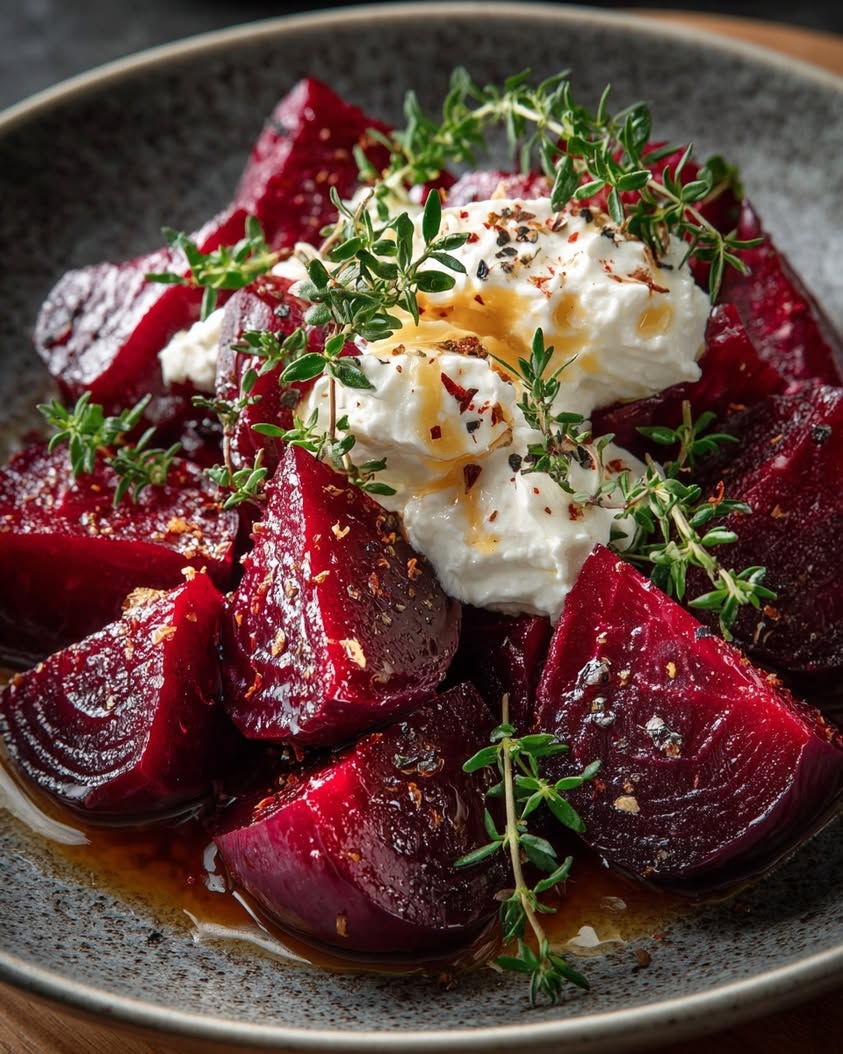
Golden Glazed Beets on Creamy Whipped Goat Cheese: An Elegant Sweet-Savory Side Dish
This recipe for golden glazed beets on creamy whipped goat cheese is a true celebration of flavor and texture. Consequently, it transforms the humble beetroot into a stunning centerpiece dish. The process involves roasting beets to caramelized perfection, then glazing them in a sweet and savory mixture. Finally, they rest atop a cloud of tangy, whipped goat cheese, all finished with a warm spiced maple drizzle that ties every element together beautifully.
Imagine the first bite: the earthy sweetness of the beets, the bright tang of the cheese, and the warm spice of the maple syrup. This dish is a symphony for the senses, perfect for impressing guests or elevating a weeknight meal. Moreover, it showcases how simple ingredients can create extraordinary results. The vibrant colors alone make it a feast for the eyes, promising a memorable dining experience.
Ultimately, this recipe proves that vegetable sides can be the star of the show. It bridges the gap between rustic comfort and elegant presentation. Whether you serve it as a substantial appetizer or a luxurious side, it delivers complex flavors with surprisingly straightforward steps. Let’s explore how to create this masterpiece of sweet, savory, and tangy harmony.
Quick Recipe Highlights
- Flavor Profile: This dish masterfully balances earthy sweetness from the roasted beets with the bright, tangy punch of whipped goat cheese. Furthermore, the spiced maple drizzle adds warm notes of cinnamon and a subtle heat that enhances every component without overpowering them.
- Texture: You will experience a wonderful contrast between the tender, slightly caramelized bite of the glazed beets and the impossibly light, fluffy texture of the whipped cheese. Additionally, the drizzle adds a glossy, syrupy mouthfeel that coats everything in a layer of spiced sweetness.
- Aroma: As the beets roast, they release a deep, earthy sweetness. Meanwhile, the warm spices in the maple glaze—cinnamon and a hint of cayenne—create an inviting, fragrant scent that fills your kitchen with the essence of a sophisticated fall harvest.
- Visual Appeal: The presentation is stunning, featuring vibrant golden or red beets against the stark white backdrop of the cheese. Subsequently, the amber-hued maple drizzle artfully zig-zags across the plate, creating a restaurant-worthy dish that is almost too beautiful to eat.
- Skill Level Needed: This is an accessible recipe for most home cooks. Basic skills like roasting vegetables and using a hand mixer are sufficient. Importantly, the assembly is simple but allows for creative plating, making it perfect for cooks who enjoy presentation.
- Special Equipment: You will need a baking sheet, aluminum foil, a small saucepan, and a hand mixer or stand mixer to achieve the light, whipped consistency of the goat cheese. A microplane for zesting the orange is also helpful but not strictly required.
Recipe Overview
- Difficulty Level: We classify this recipe as easy because it relies on fundamental techniques like roasting and whisking. The steps are sequential and forgiving; for instance, the beets can roast unattended, and the cheese can be whipped ahead of time. Therefore, even novice cooks can achieve impressive results with careful attention to the glazing process.
- Category: This dish is incredibly versatile. It functions brilliantly as a shareable appetizer when served with crostini or crackers. Alternatively, it makes a show-stopping side dish for holiday meals like Thanksgiving or a elegant accompaniment to roasted chicken or pork.
- Cuisine: While not tied to one specific tradition, it draws inspiration from modern American farm-to-table cooking and French bistro cuisine, where vegetable-centric dishes and goat cheese are celebrated. The use of maple syrup nods to North American ingredients, creating a fusion that feels both rustic and refined.
- Cost: This is a moderately priced recipe. Beets and oranges are typically affordable, especially in season. Goat cheese and pure maple syrup are the premium ingredients, but a little goes a long way. Overall, you can create this elegant dish for a fraction of the cost of a similar offering at a restaurant.
- Season: This recipe shines in the fall and winter when beets are at their peak and warm spices are most comforting. However, it can be enjoyed year-round; for example, using golden beets in the summer gives a lighter, sunnier feel to the presentation.
- Occasion: It is perfect for dinner parties, holiday gatherings, or date nights at home. Its elegant appearance makes it suitable for festive occasions, while its simple preparation makes it achievable for a special weekend family meal.
Why You’ll Love This Golden Glazed Beets Recipe
First and foremost, the taste and texture appeal is undeniable. Each forkful delivers a complex journey: the deep, caramelized sweetness of the beet, immediately cut by the creamy, tangy spread of whipped goat cheese. Then, the warm spiced maple drizzle sweeps in, adding a final layer of aromatic flavor that makes the entire dish sing. This combination is unexpectedly addictive, transforming a simple vegetable into a crave-worthy component of your meal. Furthermore, the contrast between the warm beets and the cool cheese creates a temperature play that is deeply satisfying.
Next, consider the convenience and preparation benefits. Surprisingly, this elegant dish is not labor-intensive. The beets roast quietly in the oven, requiring only an occasional check. Meanwhile, you can whip the cheese and prepare the glaze in just minutes. This staged approach means you are not rushing at the last minute. Additionally, many components can be prepared ahead of time, which we will detail later, making it a stress-free option for entertaining. The final assembly is quick and allows for artistic plating, giving you the joy of creating a beautiful presentation without professional chef skills.
From a nutritional standpoint, this recipe offers significant advantages. Beets are a powerhouse of nutrients, packed with fiber, folate, and beneficial nitrates. Goat cheese is often easier to digest than cow’s milk cheese for some people and provides protein and calcium. Using pure maple syrup as a sweetener adds antioxidants and a more complex sweetness than refined sugar. Consequently, you are serving a dish that is as wholesome as it is delicious, proving that healthy eating does not mean sacrificing flavor or indulgence.
The social and entertaining value of this dish is exceptionally high. When you bring this platter to the table, it invariably garners compliments and curiosity. It serves as a fantastic conversation starter about the ingredients or the technique. Moreover, it caters to various dietary preferences when served as part of a spread; for instance, it is naturally gluten-free and can be adapted for other needs. Sharing a visually stunning, homemade creation fosters a sense of warmth and hospitality, making your guests feel truly special.
Finally, its cost-effectiveness and accessibility are major wins. Gourmet appetizers at restaurants can be pricey, but this recipe allows you to create a similar—or superior—experience at home. The ingredients are readily available at most grocery stores. Even the “splurge” items like good goat cheese and real maple syrup are investments that elevate the entire dish without breaking the bank. Ultimately, this recipe delivers maximum flavor, presentation, and satisfaction from a modest list of ingredients, making it a valuable addition to your culinary repertoire.
Historical Background and Cultural Significance
The story of beets as a cultivated food stretches back thousands of years. Initially, their wild ancestors grew along coastlines from Europe to Asia. Historically, people first consumed the leafy greens, with the roots being used medicinally or as animal feed. It was not until the Roman era that the swollen root began to be appreciated as a food source in its own right. Over centuries, selective breeding produced the sweet, plump beets we know today, with their vibrant colors becoming a symbol of bounty in many European cultures.
Culturally, beets hold significant importance across Eastern Europe and Russia, where they are the star of iconic dishes like borscht. In these regions, they symbolize warmth, sustenance, and survival through harsh winters. Meanwhile, goat cheese has its own rich history in the Mediterranean and Middle Eastern diets, prized for its digestibility and the ability to produce it in arid, mountainous regions where cows could not thrive. The marriage of these two ingredients in modern cuisine represents a beautiful fusion of Old World food traditions with contemporary, health-conscious cooking styles.
The evolution of this specific recipe is a testament to modern gastronomy’s love for contrasting flavors and textures. The concept of glazing root vegetables with sweet elements like maple or honey has roots in early American cooking, where these natural sweeteners were abundant. Whipping cheese to create a light, spreadable texture is a technique borrowed from French cuisine, often used with fromage blanc or ricotta. Combining these techniques—roasting, glazing, and whipping—into a single, composed dish is a relatively recent innovation, showcasing the current trend towards vegetable-forward, elegantly plated appetizers that don’t rely on meat.
Regional variations of this concept abound, demonstrating its adaptability. In the Mediterranean, one might find roasted beets with a whipped feta and a honey-herb drizzle. In a Nordic-inspired version, the maple could be replaced with a lingonberry reduction and the goat cheese with a creamy Skyr. Some modern interpretations add crunchy elements like toasted walnuts or hazelnuts for textural contrast, or fresh herbs like dill or thyme to brighten the earthy notes. This versatility ensures the core idea of sweet beets and tangy cheese remains a global favorite, constantly reinvented with local flavors.
Ingredient Deep Dive
Let’s start with the star: beets. These vibrant root vegetables have been cultivated since ancient times, originally for their greens. Nutritionally, they are a fantastic source of fiber, folate, manganese, and potassium. They also contain betalains, pigments with potent antioxidant and anti-inflammatory properties. When selecting beets, look for firm, smooth globes with vibrant, unwilted greens attached if possible—a sign of freshness. Store them unwashed in a plastic bag in your refrigerator’s crisper drawer for up to two weeks. For this recipe, you can use classic red beets or golden beets; the golden variety will not “bleed” and offers a slightly milder, sweeter flavor. If you cannot find fresh, pre-cooked vacuum-packed beets can be a time-saving substitute, though roasting fresh will yield superior sweetness and texture.
Next, goat cheese, or chèvre. This cheese has been produced for thousands of years, particularly in regions where goats were more adaptable livestock than cows. It is often easier to digest for those sensitive to cow’s milk due to its different protein structure and lower lactose content. It provides protein, calcium, and healthy fats. For the best flavor and whip-ability, choose a fresh, soft goat cheese log. Avoid pre-crumbled varieties, as they contain anti-caking agents that can hinder whipping. Store it tightly wrapped in the original packaging in the coldest part of your fridge. For a dairy-free adaptation, a whipped tofu or cashew “cheese” can be used, though the tangy profile will differ.
Pure maple syrup is the third key player. This is not just a sweetener; it’s a reduction of maple tree sap, a practice pioneered by Indigenous peoples of North America. It contains antioxidants like polyphenols and minerals including manganese and zinc. Always opt for “pure maple syrup,” not “pancake syrup,” which is primarily corn syrup and artificial flavor. The grade (usually Grade A Amber Color) is perfect for its balanced flavor. Store it in the pantry before opening and in the refrigerator afterward to prevent fermentation. For a vegan version or if you lack maple syrup, a good quality agave nectar or even a reduced balsamic glaze can provide a different but equally delicious sweetness.
The supporting cast adds crucial dimensions. Fresh orange zest and juice bring a bright, citrusy acidity that cuts through the richness and enhances the beet’s sweetness. The warm spices—cinnamon and a pinch of cayenne—are not just for holiday pies. Cinnamon has a long history as a treasured spice, and it adds woody warmth, while the cayenne provides a subtle, lingering heat that elevates the entire flavor profile. Using fresh citrus and high-quality spices makes a noticeable difference. Finally, good extra-virgin olive oil for roasting and a pinch of flaky sea salt for finishing are essential for building layers of flavor and texture.
Common Mistakes to Avoid
- Underseasoning the Beets: Beets need generous seasoning before roasting. If you only salt them after cooking, the flavor will sit on the surface. Always toss the cubed beets with oil, salt, and pepper thoroughly to ensure the seasoning penetrates during the roasting process.
- Overcrowding the Pan: Spreading the beets in a single layer with space between them is crucial. If the pan is too crowded, the beets will steam instead of roast, resulting in soggy, less caramelized cubes. For proper browning, use a large baking sheet or roast in batches.
- Skipping the Foil Packet: Wrapping the whole beet in foil before roasting for the initial hour is not just a suggestion. This step traps steam, which gently and evenly cooks the beet all the way through, making it tender and easy to peel. Baking them uncovered will lead to dry, shriveled outsides and undercooked centers.
- Whipping Cold Goat Cheese: Attempting to whip goat cheese straight from the refrigerator is difficult and can lead to a grainy texture. Let it sit at room temperature for at least 30 minutes before whipping. This allows it to soften, resulting in a smoother, fluffier, and more spreadable consistency.
- Over-Reducing the Maple Glaze: The glaze should be syrupy and warm, not thick like candy. Once you add the orange juice and spices, simmer it only until it slightly thickens and coats the back of a spoon. Overcooking it will cause it to harden and become sticky when it cools on the plate.
- Using Imitation Maple Syrup: The flavor of pure maple syrup is complex and irreplaceable. Pancake or table syrup is primarily flavored corn syrup and will make your glaze taste artificial and overly sweet. Investing in the real thing is non-negotiable for the quality of this dish.
- Assembling Too Early: If you assemble the entire dish—spreading the cheese, placing warm beets, and adding drizzle—too far in advance, the whipped cheese can wilt and the presentation can become messy. For best results, prepare components ahead but assemble just before serving.
- Neglecting the Acid Balance: The orange juice and zest are vital for balancing the sweetness of the beets and maple. Without this acidic component, the dish can taste one-dimensional and cloying. Do not omit it, and consider a final tiny sprinkle of zest over the top for a fresh aroma.
Essential Techniques
Roasting Beets to Caramelized Perfection: This technique is fundamental for developing the deep, sweet flavor of the beets. Roasting at a high heat (400°F) encourages the natural sugars to caramelize on the surface of the cubes. The key is to ensure the beets are dry after peeling and cubing, and evenly coated in oil. Oil conducts heat and promotes browning. Do not stir them too frequently; letting them sit undisturbed on the hot pan for stretches of time allows a delicious crust to form. A visual cue for success is edges that are slightly darkened and crisp, while the interior remains tender when pierced with a fork.
Whipping Goat Cheese to a Light Consistency: Whipping incorporates air into the soft cheese, transforming it from a dense log into a light, fluffy, spreadable cloud. The importance lies in texture and mouthfeel; it makes the cheese more palatable and elegant. To master it, ensure your cheese is at room temperature. Use a hand mixer or stand mixer on medium speed. Whip just until the cheese is smooth, increased in volume, and holds soft peaks—usually 2-3 minutes. Over-whipping can cause it to become too soft and loose its shape. A common pitfall is starting with cold cheese, which will result in a lumpy, difficult-to-whip mixture.
Creating a Balanced Spiced Maple Drizzle: This is a simple reduction, but technique matters. Combining maple syrup and orange juice dilutes the syrup slightly and adds acidity. Simmering the mixture gently allows some water to evaporate, thickening the glaze so it clings to the beets instead of running off. The spices are added off the heat to preserve their volatile aromatic oils. The crucial point is to cook it just until it coats the back of a spoon. If you cook it too long, it will become too thick and sticky as it cools. The perfect glaze should be fluid and warm when drizzled, setting slightly as it hits the cooler components.
Pro Tips for Perfect Golden Glazed Beets
First, wear disposable gloves when peeling and cutting red beets to avoid stained hands. Alternatively, use a paper towel to hold the beet while you peel it. This simple step saves you from days of pink-tinted fingers.
For the most flavorful whipped goat cheese, add a tiny pinch of finely grated garlic or a teaspoon of fresh chopped herbs like thyme or chives into the mixer. This infuses the cheese with a subtle savory background note.
To achieve perfectly uniform beet cubes for even cooking, slice a thin piece off one side of the peeled beet to create a stable base. Then, cut it into planks, stack the planks, and cut into strips, and finally cube the strips.
If your maple glaze cools and thickens too much before serving, gently reheat it for a few seconds in the microwave or over low heat on the stove. Add a teaspoon of warm water or orange juice to loosen it back to a drizzling consistency.
Toast the spices. Before adding the cinnamon and cayenne to the maple glaze, warm them for 30 seconds in a dry saucepan over low heat. This “blooms” the spices, releasing their essential oils and creating a more potent, aromatic flavor in your drizzle.
For an extra layer of texture and flavor, sprinkle the finished dish with a crunchy element. Toasted and chopped walnuts, pecans, or pumpkin seeds add a wonderful contrast to the soft beets and creamy cheese.
Use the beet greens! If your beets come with fresh, crisp greens attached, do not throw them away. Sauté them with a little garlic and oil for a delicious, nutritious side dish that complements your main beet creation.
Let the roasted beet cubes rest for a minute in the hot glaze off the heat. This allows them to absorb some of the spiced maple flavor from the inside out, rather than just being coated on the surface.
Variations and Adaptations
For regional variations, consider the flavors of your locale. A Mediterranean twist could use whipped feta cheese with a drizzle of honey and fresh oregano. A Nordic version might employ a whipped horseradish-infused crème fraîche and a drizzle of reduced apple cider. In the Middle Eastern style, you could add a sprinkle of za’atar to the whipped cheese and use a pomegranate molasses drizzle instead of maple. These adaptations show how the core concept travels beautifully across culinary borders.
Seasonal adaptations are easy and rewarding. In spring, use baby beets and incorporate fresh lemon zest and mint. For summer, choose golden or Chioggia (candy-stripe) beets and pair with a whipped ricotta and a basil-infused honey. In deep winter, lean into the warmth by adding a star anise pod to the maple glaze as it simmers. This ensures the dish remains a relevant and exciting part of your menu throughout the year.
Dietary modifications are straightforward. For a vegan adaptation, replace the goat cheese with a whipped base of soaked cashews blended with lemon juice, nutritional yeast, and salt. Use agave or date syrup instead of honey if your maple syrup is not vegan-certified. For a nut-free version, ensure any added crunch comes from seeds like sunflower or pepitas. A low-FODMAP adaptation would use only the green parts of scallions instead of garlic in the cheese and ensure the maple glaze portion size is small.
Flavor variations can personalize the dish immensely. Add a tablespoon of bourbon or apple brandy to the maple glaze for a deeper, adult flavor. Infuse the olive oil for roasting with rosemary or thyme. Mix a tablespoon of prepared horseradish into the whipped goat cheese for a spicy kick. Swap the orange for a blood orange in winter for a stunning color and slightly berry-like flavor, or use a grapefruit for a more bitter, sophisticated edge.
Serving and Presentation Guide
Plating techniques can elevate this dish from home-cooked to haute cuisine. Instead of a large pile, consider an artistic smear. Use the back of a spoon to drag the whipped goat cheese across the center of a plate or platter in a wide, swooping motion. Artfully arrange the glazed beet cubes on and around the cheese. Alternatively, for individual servings, place a quenelle (a smooth, oval scoop) of cheese in the center of each plate and surround it with beets. The goal is to create height and negative space for a modern look.
Garnishing is the final touch that adds freshness and color. A final microplaning of orange zest over the top adds vibrant color and intense aroma. Scatter small, delicate leaves of fresh herbs like chervil, tarragon, or microgreens. A few edible flowers, such as nasturtiums or pansies, make a stunning statement for a special occasion. A final pinch of flaky sea salt (like Maldon) not only seasons but adds a delightful textural crunch and visual sparkle.
For traditional accompaniments, serve this dish with slices of a crusty, toasted baguette or sturdy crackers for scooping. It also pairs beautifully as a side to simply prepared proteins. Modern serving suggestions include using it as a topping for a warm grain bowl with farro or quinoa, or as a luxurious addition to a green salad with a simple vinaigrette. Consider serving it in a shallow, wide bowl for a more casual, shareable family-style presentation.
Temperature considerations are key. The whipped goat cheese should be cool but not ice-cold. The beets and maple drizzle should be warm, not scalding hot. This contrast is part of the experience. If you must assemble ahead, keep the cheese plated in the fridge and warm the beets and glaze just before serving. Portion control tips: as an appetizer, plan for about one medium beet per person. As a side dish, one to two beets per person is sufficient given the richness of the cheese and glaze.
Wine and Beverage Pairing
Choosing the right wine can enhance this dish’s complex profile. A dry Rosé is a fantastic all-around choice; its berry notes and acidity complement the earthiness of the beets and cut through the creamy cheese. A light-bodied Pinot Noir with its red fruit and earthy undertones mirrors the beet’s flavor beautifully without overwhelming it. For white wine lovers, a crisp Sauvignon Blanc or a Grüner Veltliner offers sharp acidity that balances the sweetness and cleanses the palate. Avoid heavily oaked Chardonnays or bold, tannic reds like Cabernet Sauvignon, as they can clash with the dish’s subtlety.
For non-alcoholic alternatives, think about beverages that offer contrast or complement. A sparkling water with a twist of orange or a dash of bitters mimics the citrus notes. A tart cherry or pomegranate juice spritzer can mirror the fruitiness of a red wine pairing. A warm, spiced apple cider (non-alcoholic) served in a mug echoes the warm spices in the maple drizzle, creating a cohesive fall-themed experience.
While not a classic coffee or tea dish, certain pairings could work if serving as part of a brunch. A light roast coffee with bright acidity would not be overwhelmed by the flavors. A smoky Lapsang Souchong tea could create an intriguing contrast with the sweet beets. However, these are less traditional pairings and depend heavily on personal preference and the meal context.
Serving suggestions for beverages are simple: always serve wines at their proper temperature—chilled for Rosé and whites, slightly cool for Pinot Noir. Non-alcoholic spritzers should be well-chilled. The goal is for the beverage to refresh the palate between bites of the rich, flavorful beets and cheese, making each mouthful as enjoyable as the first.
Storage and Shelf Life
Proper storage methods are essential for maintaining quality. Store components separately for best results. The cooled, glazed beet cubes can be kept in an airtight container in the refrigerator for up to 4 days. The whipped goat cheese should be stored in a separate sealed container for up to 3 days. The maple glaze can be stored in a small jar or container in the fridge for up to 2 weeks. Do not assemble the complete dish until you are ready to serve, as the cheese will weep and the beets may make it soggy.
Temperature requirements are straightforward: everything must be refrigerated. The whipped cheese is especially perishable. Do not leave the assembled dish at room temperature for more than two hours. For longer gatherings, consider placing the serving platter on a bed of ice to keep the cheese cool while allowing guests to enjoy it.
For container recommendations, use glass or BPA-free plastic containers with tight-fitting lids. For the whipped cheese, a shallow container is better than a deep one, as it minimizes surface area that can dry out. When reheating the beets and glaze, do so gently in a saucepan over low heat or in the microwave in short bursts. Do not boil the glaze, as it can break or become too thick.
Signs of spoilage include an off or sour smell from the cheese, visible mold (which can appear as fuzzy spots of blue, green, or white), or a slimy texture on the beets. If the maple glaze develops bubbles or an alcoholic smell, it may be fermenting and should be discarded. Freezing is not recommended for any component, as the texture of the whipped cheese and the roasted beets will become watery and grainy upon thawing.
Make Ahead Strategies
This recipe is excellent for advanced preparation, reducing day-of stress. Your prep timeline can span two days. On Day 1, roast and peel the whole beets. Store them whole, wrapped tightly, in the fridge. You can also make the maple glaze and store it in a jar. On the day of serving, cube the chilled beets, toss them with oil, and re-roast to caramelize (this takes less time than starting from raw). While they roast, whip the goat cheese and gently reheat the glaze.
Storage between steps is simple. The whole, cooked and peeled beets will keep for 3 days refrigerated. The maple glaze keeps for up to 2 weeks. The whipped cheese is best made the day you plan to serve it, but it can be made up to a day ahead; store it covered with plastic wrap pressed directly onto its surface to prevent a skin from forming.
The quality impact of making components ahead is minimal if done correctly. The beets may lose a tiny amount of moisture but will regain their appeal during the second roast for caramelization. The glaze’s flavors often meld and improve overnight. The only component that suffers slightly from advance prep is the whipped cheese, which can deflate a little, so a quick re-whisk before serving is advisable.
Assembly tips for a make-ahead plan: have your serving platter ready. Spread the whipped cheese on the platter just before your guests arrive or before you sit down to eat. Keep the warm beets in the glaze in the pan off the heat. Right before serving, give the beets a final stir and arrange them over the cheese. Drizzle the extra warm glaze over everything, garnish, and serve immediately for the best texture and temperature contrast.
Scaling Instructions
Halving the recipe is simple for a smaller meal. Use one large or two small beets, 4 ounces of goat cheese, and proportionally reduce all other ingredients by half. Use a smaller baking sheet for roasting. The cook times will remain roughly the same, though you should check the beets a few minutes earlier as a smaller batch may cook slightly faster.
Doubling or tripling the recipe for a crowd is very feasible. The key is to use multiple baking sheets and rotate them in the oven halfway through roasting to ensure even cooking. Do not overcrowd the sheets. For the whipped cheese, you may need to work in batches with your mixer unless you have a very large stand mixer bowl. Make the maple glaze in a larger saucepan to prevent boil-overs.
Equipment adjustments are necessary when scaling up. You will need more baking sheets, a larger mixer bowl, and a bigger serving platter or multiple platters. Consider setting up a “build-your-own” station if serving a very large group, with bowls of whipped cheese, warm glazed beets, and garnishes, allowing guests to assemble their own portions to keep textures perfect.
Timing modifications are minimal for scaling, but be mindful of the glaze. When making a larger quantity of glaze, it may take a few extra minutes to reduce to the proper syrupy consistency. Storage considerations are more important for large batches; ensure you have enough refrigerator space for the components stored in separate, appropriately sized containers.
Nutritional Deep Dive
Looking at the macro breakdown, this dish provides a balance of complex carbohydrates from the beets, healthy fats from the olive oil and goat cheese, and a moderate amount of protein from the cheese. It is not a high-protein meal but serves excellently as a side or appetizer within a balanced diet. The maple syrup and beets contribute natural sugars, but these are accompanied by fiber, which helps moderate blood sugar response.
The micronutrient analysis is impressive. Beets are rich in folate, essential for cell growth and function, and manganese, important for bone health and metabolism. They also provide potassium for blood pressure regulation and vitamin C for immunity. Goat cheese contributes calcium and phosphorus for bone health, along with vitamin A and B vitamins. The spices, while used in small amounts, add trace minerals and beneficial plant compounds.
Overall health benefits include support for heart health (from beet nitrates and fiber), anti-inflammatory effects (from betalains in beets and antioxidants in maple syrup), and gut health (from the fiber in beets and probiotics sometimes present in fresh goat cheese). It’s a dish that satisfies the palate while delivering substantive nutritional value.
For dietary considerations, it is naturally gluten-free. Those monitoring sodium can reduce the added salt. For portion analysis as a side dish, a serving provides a satisfying amount of vegetables and healthy fats. For weight management, it is relatively low in calories for its visual impact and satisfaction factor, especially when you focus on the vegetable component and use the cheese and glaze as accents rather than the main event.
Dietary Adaptations
Gluten-Free: This recipe is naturally gluten-free as written. Simply ensure that any crackers or bread served alongside are certified gluten-free. Check labels on your maple syrup and spices to confirm they are processed in a gluten-free facility if you have celiac disease or a severe sensitivity.
Dairy-Free/Vegan: Replace the goat cheese with a creamy plant-based alternative. A popular option is to blend 1.5 cups of soaked raw cashews with 3 tablespoons of lemon juice, 2 tablespoons of nutritional yeast, 1/4 cup of water, and salt until completely smooth and fluffy. Use agave nectar or vegan-certified maple syrup. Ensure the orange juice is fresh and not from concentrate with added ingredients.
Low-Carb/Keto: This adaptation is challenging due to the natural sugars in beets and maple syrup. You could use a small amount of roasted radishes instead of beets for a similar texture without the carbs. Replace the maple syrup with a sugar-free maple-flavored syrup and a pinch of xanthan gum to thicken it. Increase the amount of goat cheese for fat content.
Paleo: Omit the goat cheese, as dairy is not Paleo. Serve the glazed beets over a whipped coconut cream or a mashed avocado base. Ensure your maple syrup is 100% pure and that no non-Paleo ingredients (like conventional processed oils) are used in the roasting process.
Low-FODMAP: Beets are low-FODMAP in servings of about 2 ounces (roughly 1/4 cup cubed) per meal. Stick to a small portion size. Use only the green parts of scallions instead of garlic in the cheese, if adding any. Ensure the maple glaze portion is limited to about 1 tablespoon per serving.
Troubleshooting Guide
Beets are too hard after roasting: This means they are undercooked. If you cubed them before roasting, return them to the oven for another 10-15 minutes. If you roasted them whole for peeling, wrap them back in foil and continue roasting until a knife inserts easily. Next time, ensure your oven temperature is accurate with an oven thermometer and that the foil packet is sealed tightly to trap steam.
Whipped cheese is grainy or lumpy: This is almost always because the cheese was too cold. To salvage it, let it sit at room temperature for another 15 minutes and whip again. If lumps persist, press it through a fine-mesh sieve and then whip it. For future success, always plan for the 30-minute tempering time.
Maple glaze is too thick/hard: You have over-reduced it. Gently reheat it on the stove over low heat and whisk in a tablespoon of warm water or orange juice at a time until it returns to a syrupy, drizzling consistency. It will thin as it warms. Next time, remove it from the heat as soon as it coats the back of a spoon.
Dish tastes too sweet: The balance is off. You can correct this by adding more acidity. A squeeze of fresh lemon juice over the assembled dish can help. Next time, ensure you are using the full amount of orange juice and zest, and don’t be shy with the black pepper and salt on the beets, as savory elements counter sweetness.
Cheese A vibrant and elegant dish featuring roasted beets glazed in a sweet-tangy sauce, served over creamy whipped goat cheese and finished with a warm spiced maple drizzle. You can customize the seasonings to taste.
PrintGlazed Beets with Whipped Goat Cheese and Spiced Maple Drizzle
Description
Ingredients
For the Crust:
Instructions
1. Prepare the Crust:
Notes

I’m Shaykee—born in Morocco, seasoned across continents. From airplane galleys to home kitchens, I share the flavors and stories that shaped my journey.