
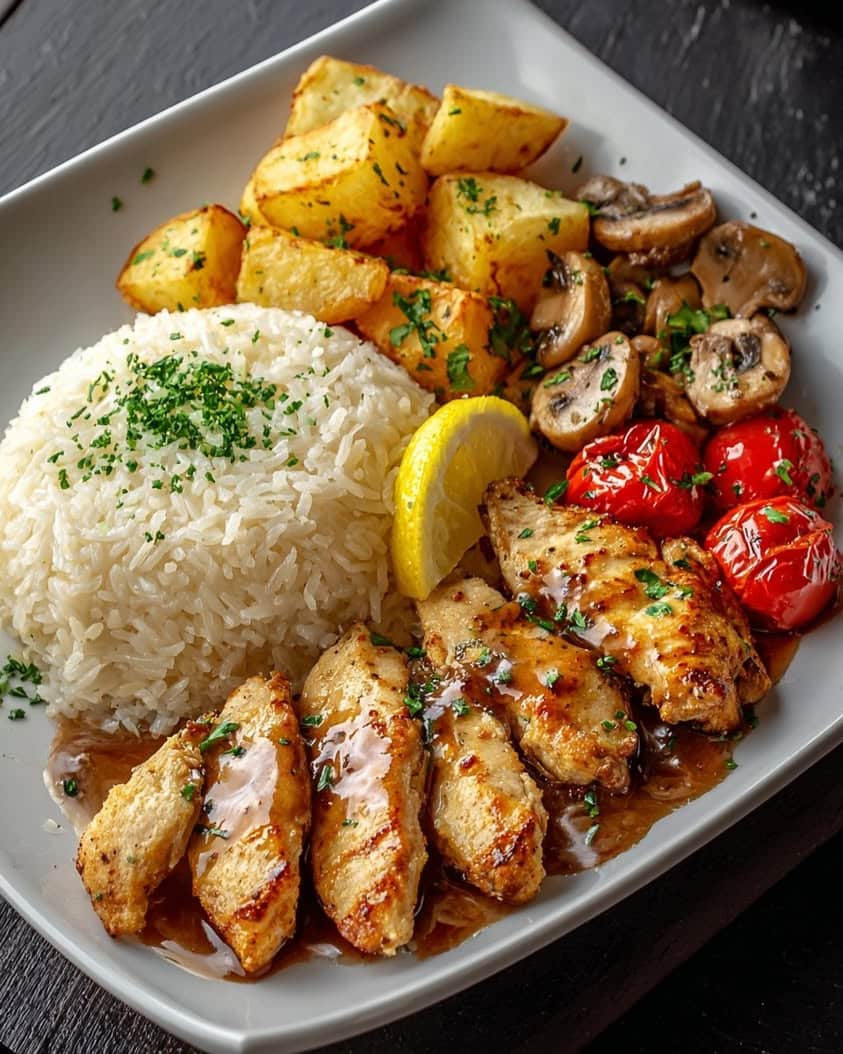
Lemon-Glazed Chicken with Herb Rice, Crispy Potatoes & Garlic Mushrooms: A Complete, Flavor-Packed Dinner That’s Easy to Make and Sure to Impress!
Imagine a dinner plate that delivers a symphony of textures and flavors, all perfectly balanced and cooked to golden perfection. This recipe for Lemon-Glazed Chicken with Herb Rice, Crispy Potatoes & Garlic Mushrooms is exactly that kind of meal. It transforms simple, wholesome ingredients into a restaurant-worthy dinner that feels special yet is completely achievable on a busy weeknight. Consequently, this dish is designed to be a complete, flavor-packed dinner that’s easy to make and sure to impress your family or guests.
The magic of this recipe lies in its harmonious combination. You get succulent chicken breasts coated in a sticky, sweet-tart lemon glaze. Alongside, fluffy herb-infused rice absorbs all the delicious pan juices. Furthermore, crispy roasted potatoes provide a satisfying crunch, and savory garlic mushrooms add an earthy, umami-rich component. Ultimately, every element complements the others, creating a meal that is far greater than the sum of its parts. This is the ultimate answer to the perennial question of what to make for a satisfying and impressive family dinner.
Moreover, this Lemon-Glazed Chicken dinner is a masterclass in efficient kitchen management. While the potatoes roast to crispy perfection in the oven, you can pan-sear the chicken and whip up the herb rice on the stovetop. The process flows seamlessly, allowing you to coordinate all components to finish at the same time. As a result, you are left with a beautiful, well-rounded plate that delivers gourmet taste without gourmet stress. It is a testament to how strategic cooking can yield spectacular results for any easy meal.
Quick Recipe Highlights
- Flavor Profile: This dish masterfully balances bright, zesty lemon from the glaze with the savory depth of garlic and herbs. The sweet notes in the glaze caramelize on the chicken, creating a complex flavor that is both tangy and rich. Meanwhile, the earthy mushrooms and aromatic rice round out the palate perfectly.
- Texture: You will experience a delightful contrast in every bite. The chicken boasts a slightly sticky exterior giving way to tender, juicy meat. Additionally, the potatoes offer a fantastic crispy crunch, while the rice is fluffy and the mushrooms are tender yet meaty. This variety keeps every mouthful interesting.
- Aroma: As this meal cooks, your kitchen will fill with an irresistible fragrance. Initially, you will smell the earthy roast of potatoes and the pungent scent of garlic. Then, the bright, citrusy aroma of lemon glaze will mingle with the herbal notes of thyme and parsley. Ultimately, it creates an olfactory promise of the delicious meal to come.
- Visual Appeal: The plate is a feast for the eyes with its vibrant colors and varied shapes. Golden-brown chicken, crispy yellow potatoes, fluffy white rice flecked with green herbs, and rich brown mushrooms create a beautiful and appetizing mosaic. Presentation is effortless because each component is naturally attractive.
- Skill Level Needed: This is a fantastic recipe for intermediate home cooks looking to practice multitasking. However, beginners can absolutely succeed by following the clear steps for each component sequentially. The techniques involved—pan-searing, making a simple glaze, and roasting—are fundamental building blocks for any cook.
- Special Equipment: You only need basic kitchen tools: a large oven-safe skillet or baking sheet for the potatoes and chicken, a medium saucepan for the rice, and a cutting board. A good chef’s knife and a whisk for the glaze are helpful. No fancy gadgets are required, making this an accessible easy meal.
Recipe Overview
- Difficulty Level: We rate this recipe as “Easy” because it breaks down into very manageable steps. Each component uses straightforward techniques like chopping, searing, and simmering. While coordinating them requires some attention, the instructions provide a clear timeline. Therefore, even a novice cook can produce an impressive result with careful reading.
- Category: This dish firmly sits in the main course category, designed as a hearty dinner recipe. It is a complete protein-and-starch meal that needs no side dishes, though a simple green salad is a lovely addition. It is perfect for family dinners, weeknight meals, and even casual entertaining.
- Cuisine: The recipe draws inspiration from modern American home cooking and Mediterranean flavors. The use of lemon, garlic, and olive oil is classically Mediterranean, while the concept of a “meat and potatoes” plate is quintessentially American. This fusion creates a universally appealing and familiar yet vibrant dinner.
- Cost: This is a very cost-effective meal. Chicken breasts, potatoes, rice, and mushrooms are all affordable, pantry-staple ingredients. The fresh herbs and lemon are the only items you might need to purchase specifically. Overall, you can feed four people a restaurant-quality meal for a fraction of the takeout price.
- Season: This Lemon-Glazed Chicken dinner is truly a year-round winner. The bright lemon makes it feel fresh and light for spring and summer. Conversely, the hearty potatoes and savory mushrooms provide the comfort needed in fall and winter. It is a versatile recipe that adapts to any season.
- Occasion: It is ideal for a busy weeknight when you want something special without hours of work. Simultaneously, it is impressive enough for a weekend family gathering or a casual dinner party with friends. It is a reliable, crowd-pleasing option for almost any occasion.
Why You’ll Love This Recipe
First and foremost, the taste and texture appeal of this dish is undeniable. Each component is cooked to highlight its best qualities, creating a perfect bite when combined. The lemon glaze on the chicken is the star, offering a punch of flavor that is neither too sweet nor too sour. Meanwhile, the crispy potatoes provide that irresistible crunchy contrast that makes the meal feel indulgent. The garlic mushrooms add a savory, umami depth that ties all the other flavors together beautifully. Ultimately, this is a dinner recipe that satisfies on every sensory level, making it a guaranteed hit with both adults and children.
Furthermore, the convenience and preparation benefits are a major reason to love this meal. The recipe is designed with a practical flow that maximizes your time in the kitchen. You can prep the potatoes and get them roasting first, as they take the longest. While they cook, you can prepare the chicken, mushrooms, and rice. This parallel cooking process means your active time is efficient and the total hands-on work is minimal. As a result, you get a complex-tasting, multi-component dinner on the table in about an hour. For anyone seeking an easy meal that doesn’t sacrifice quality, this recipe is a perfect solution.
Additionally, this Lemon-Glazed Chicken dinner offers notable nutritional advantages. Chicken breast is a fantastic source of lean protein, essential for muscle repair and satiety. Potatoes, often misunderstood, provide vitamin C, potassium, and fiber, especially when you eat the skin. Brown rice adds whole grains and more fiber, promoting digestive health. Mushrooms are low in calories but rich in B vitamins and antioxidants. When you cook with olive oil and fresh herbs, you are using heart-healthy fats and phytonutrients. Consequently, this is a balanced meal that fuels your body well, proving that delicious food can also be wholesome.
From a social perspective, this recipe has tremendous entertaining value. It presents beautifully on the plate, giving the impression of a chef-crafted meal. Because it is a complete dinner in one recipe, you can focus on your guests instead of juggling multiple complicated sides. The flavors are universally appealing, avoiding overly exotic ingredients that might intimidate some palates. Serving this Lemon-Glazed Chicken shows care and effort, making your guests feel special. Therefore, it is an excellent choice for hosting without the high stress often associated with dinner parties.
Finally, the cost-effectiveness and accessibility of this dish cannot be overstated. The ingredient list is simple and relies on staples you likely already have or can find at any grocery store. There is no need for expensive cuts of meat or rare, imported items. This makes it an incredibly budget-friendly option for a family dinner. Moreover, the recipe is highly adaptable; you can swap vegetable oil for olive oil or use dried herbs if fresh are unavailable. This flexibility ensures that you can make a delicious, impressive meal regardless of your budget or pantry stock. In short, it delivers maximum flavor and satisfaction for minimal financial investment.
Historical Background and Cultural Significance
The concept of glazing poultry with citrus and sweeteners has deep roots in various culinary traditions. In particular, the practice of using lemon as a primary flavoring agent is a hallmark of Mediterranean cuisine, spanning countries like Italy, Greece, and Morocco. Historically, lemons were prized for their ability to preserve food and cut through the richness of meats. Meanwhile, the Chinese were early masters of glazing techniques for duck and pork, using honey and vinegar. The modern “lemon glaze” for chicken likely evolved from these cross-cultural exchanges, combining European citrus traditions with global glazing methods to create the bright, sticky sauces we love today.
Culturally, a meal centered around a protein with multiple starches and vegetables represents a classic “center of the plate” dining philosophy prevalent in Western, and especially American, home cooking. This structure—a meat, a potato, a grain, and a vegetable—defines the traditional dinner plate for many families. Consequently, this recipe for Lemon-Glazed Chicken with all its components taps into a deep-seated cultural expectation of a “complete dinner.” It modernizes that tradition by incorporating vibrant, fresh flavors and efficient cooking methods, making the classic format feel new and exciting again for contemporary weeknight dinners.
The evolution of this specific recipe mirrors broader trends in home cooking over recent decades. As home cooks sought to move away from heavy, cream-based sauces and processed ingredients, bright, acid-forward flavors like lemon became increasingly popular. The desire for “one-pan” or “complete meal” recipes also grew with busier lifestyles. This recipe is a direct response to those trends: it uses fresh lemon for a light yet impactful sauce and coordinates multiple elements into a single cooking session. It represents the evolution of family dinner from a labor-intensive, multi-course affair to a streamlined, flavor-focused event that respects time constraints without compromising on taste or nutrition.
Regional variations of this concept are endless, showcasing the recipe’s fantastic adaptability. In the American South, you might find a similar glaze made with lemon and brown sugar served with rice pilaf. A French interpretation could use white wine and herbs de Provence alongside crispy pommes fondant. In the Middle East, the chicken might be flavored with sumac and served with saffron rice and roasted vegetables. This global tapestry of similar ideas highlights a universal truth: people everywhere enjoy the combination of tangy, sweet, savory, and crispy elements. Our specific version sits comfortably within this global family, offering a reliable and delicious take on a universally loved theme.
Ingredient Deep Dive
Chicken Breasts: Boneless, skinless chicken breast is the lean canvas for our flavorful glaze. A great source of high-quality protein and B vitamins, it’s a versatile staple. For the best results, look for breasts that are similar in size and thickness to ensure even cooking. You can also gently pound the thicker ends to an even ½-inch thickness. To store, keep raw chicken in the coldest part of your refrigerator for 1-2 days, or freeze for up to 9 months. For substitution, boneless chicken thighs will work beautifully, offering more fat and a richer flavor, though cooking time may increase slightly.
Lemons: The lemon provides the essential bright, acidic backbone for the glaze and the dish’s namesake flavor. Historically, lemons traveled from Asia to the Mediterranean, becoming integral to the region’s cuisine. They are packed with vitamin C and antioxidants. Choose lemons that are heavy for their size with smooth, vibrant yellow skin and no soft spots. They can be stored at room temperature for a week or in the fridge for up to a month. In a pinch, you can substitute bottled lemon juice, but fresh is vastly superior for flavor. The zest is also key, adding potent citrus oils without additional liquid.
Potatoes: Yukon Gold or similar waxy potatoes are ideal for achieving crispy exteriors and creamy interiors. Potatoes have been a global dietary staple for centuries, providing essential carbohydrates and nutrients like potassium and vitamin C. Select firm potatoes without sprouts or green tinges. Store them in a cool, dark, well-ventilated place—not in the refrigerator. For this crispy roast, russet potatoes can also be used, but they will yield a fluffier interior. The key is cutting them to a uniform size for consistent roasting. Tossing them in oil and seasoning before roasting is non-negotiable for perfect crispness.
Mushrooms: Cremini or white button mushrooms add a deep, savory umami element. Mushrooms have been foraged and cultivated for thousands of years across cultures. They are low in calories but provide B vitamins, selenium, and other minerals. Choose mushrooms that are firm with closed caps, avoiding any that are slimy or wrinkled. Store them in a paper bag in the refrigerator; plastic bags trap moisture and accelerate spoilage. While other mushroom varieties like shiitake can be used, cremini offer a robust flavor and meaty texture that holds up well to sautéing with garlic.
Long-Grain Rice & Fresh Herbs: The rice acts as a fluffy, neutral base that soaks up all the delicious pan juices. Long-grain rice like basmati or jasmine stays separate and fluffy when cooked. Historically, rice cultivation shaped civilizations in Asia, later spreading worldwide. It’s a great source of energy. Fresh parsley and thyme bring a burst of herbal freshness that balances the rich components. Dried herbs can substitute in a pinch, but use one-third the amount. Always add fresh herbs at the end of cooking to preserve their vibrant color and delicate flavor.
Common Mistakes to Avoid
- Overcrowding the Pan with Chicken: Adding too many chicken breasts to the skillet at once will steam them instead of searing them. Consequently, you will not get that beautiful golden-brown crust essential for flavor and texture. Always cook in batches if your pan is not large enough to give each piece ample space.
- Not Preheating the Baking Sheet for Potatoes: Placing potatoes on a cold baking sheet slows down the cooking process and prevents immediate crisping. For the crispiest results, preheat your empty baking sheet in the oven as it warms up. The hot surface will sizzle the potatoes on contact.
- Using Bottled Lemon Juice Exclusively: While convenient, bottled lemon juice lacks the bright, complex flavor of fresh lemons. It can also contain preservatives that affect the taste of your glaze. Always use fresh lemon juice for the best, most vibrant flavor in this lemon-glazed chicken recipe.
- Neglecting to Rest the Chicken: Slicing into the chicken immediately after cooking causes all the precious juices to run out onto the cutting board. Let the chicken rest for 5-10 minutes after glazing. This allows the juices to redistribute, ensuring every bite is moist and tender.
- Underseasoning the Components: Potatoes, rice, and mushrooms all need adequate seasoning at different stages. Season each element layer by layer—not just at the end. Taste your rice before serving and adjust the salt. Well-seasoned individual parts create a perfectly balanced final dish.
- Boiling the Glaze Instead of Simmering: After adding the glaze ingredients to the pan, you must bring it to a simmer, not a rolling boil. A vigorous boil can cause the sugars to burn or the sauce to become too thick and sticky too quickly. A gentle simmer allows it to reduce and thicken evenly.
- Cutting Potatoes Inconsistently: If your potato pieces are different sizes, some will be burnt while others are still undercooked. Take the time to cut them into uniform 1-inch cubes. This ensures they roast at the same rate for consistent crispness throughout the batch.
- Adding Garlic Too Early: Garlic burns quickly and becomes bitter. When cooking the mushrooms, add the minced garlic during the last minute of sautéing. The residual heat will cook it through without scorching, preserving its sweet, aromatic flavor for your complete dinner.
Essential Techniques
Pan-Searing for Golden-Brown Chicken: This technique is crucial for developing deep flavor through the Maillard reaction—a chemical process that browns proteins and creates complex tastes. To master it, ensure your pan and oil are hot before adding the chicken. You should hear a definite sizzle. Do not move the chicken for the first few minutes; let a crust form. A common pitfall is flipping too early, which tears the sear. The visual cue for success is a golden-brown, easily releasable crust on the first side before flipping. This step is the foundation for a flavorful lemon-glazed chicken.
Building and Reducing a Glaze: A glaze is a sauce that becomes shiny and coats the back of a spoon. After searing the chicken, you use the same pan to build the glaze, incorporating the flavorful browned bits (fond). The key is to simmer the liquid (lemon juice, stock, honey) gently, allowing it to reduce and thicken naturally. A rapid boil can cause separation or burning. The technique’s importance lies in concentrating flavors and creating a sticky, glossy coating. You know it’s ready when it thickly coats a spoon and leaves a clear trail when you run your finger through it.
Roasting for Crispy Potatoes: Roasting uses dry, circulating hot air to dehydrate the potato’s surface while cooking the interior. The essential steps are cutting uniform pieces, coating them evenly in oil (which conducts heat and promotes browning), and giving them space on the pan. Crowding causes steaming. Preheating the pan gives an instant sear. The technique transforms a humble potato into a crispy, golden delight. The visual cue for perfection is a deep golden-brown color and a crispy texture that crackles when bitten. This contrast is vital for the overall texture of your dinner recipe.
Sautéing Mushrooms Properly: Mushrooms contain a lot of water. The goal of sautéing is to drive off this moisture and concentrate their flavor. Start with a hot pan and avoid crowding. Initially, the mushrooms will release liquid; continue cooking over medium-high heat until this liquid evaporates and the mushrooms begin to brown. Adding salt too early draws out more water, which can be helpful. The technique is important for developing a meaty, umami-rich texture. They are done when shrunken, deeply browned, and no longer watery. This step adds a crucial savory element to the complete meal.
Pro Tips for Perfect Lemon-Glazed Chicken
First, bring your chicken breasts to room temperature for 15-20 minutes before cooking. This simple step helps them cook more evenly from edge to center, preventing a dry exterior and raw interior. Pat them thoroughly dry with paper towels as well; moisture is the enemy of a good sear.
For the crispiest potatoes, toss the cubed potatoes in the oil and seasoning in a bowl before spreading them on the hot sheet. This ensures every surface is coated. Resist the urge to stir them too often during roasting; letting them sit undisturbed promotes browning.
When making the glaze, add a teaspoon of cold butter at the very end, off the heat. Swirl it in until melted and incorporated. This French technique, called “monter au beurre,” gives the glaze a richer flavor, a silkier texture, and a beautiful sheen that makes the chicken look professional.
Toast your rice in the saucepan with a little oil or butter before adding the liquid. Sauté the dry rice for 1-2 minutes until it becomes slightly translucent at the edges and smells nutty. This step helps the grains stay separate and fluffy after cooking, preventing a gummy texture.
Use a microplane to zest your lemon directly into the glaze pan. The fine zest disperses evenly and infuses the sauce with intense citrus oil. Be careful to zest only the yellow outer skin, avoiding the bitter white pith underneath. This maximizes flavor without adding bitterness.
If your potatoes are done before everything else, simply turn off the oven and leave the door slightly ajar. They will stay warm and crisp for a good 10-15 minutes. This gives you a buffer to finish the chicken and rice without rushing, ensuring all components are served at their peak.
For a deeper flavor in your herb rice, use chicken or vegetable broth instead of water. The rice will absorb the seasoned liquid, becoming incredibly flavorful on its own. This transforms it from a simple side into a standout component of your easy meal.
Finally, garnish the entire plated dish with a final sprinkle of freshly chopped parsley and a light grating of lemon zest right before serving. This last-minute addition provides a burst of fresh aroma and a vibrant color contrast that elevates the visual appeal instantly.
Variations and Adaptations
Regional Variations: To take this dish around the world, consider simple swaps. For a Greek twist, use oregano in the rice and add kalamata olives and feta cheese as a garnish. An Italian version could feature rosemary with the potatoes and a splash of white wine in the glaze, served with a side of roasted cherry tomatoes. For an Asian-inspired profile, substitute the lemon glaze with a mix of soy sauce, honey, ginger, and lime, and serve the chicken over jasmine rice with stir-fried bok choy.
Seasonal Adaptations: Embrace seasonal produce to keep this recipe fresh year-round. In spring, add asparagus tips to the roasting pan with the potatoes for the last 10 minutes. Summer calls for fresh basil and cherry tomatoes in the rice. For fall, incorporate roasted cubes of butternut squash with the potatoes and use sage instead of thyme. In winter, hearty greens like kale or Swiss chard sautéed with the mushrooms add warmth and nutrition.
Dietary Modifications: This recipe is wonderfully adaptable. For a gluten-free meal, ensure your chicken broth and any other packaged ingredients are certified gluten-free; the recipe is naturally so. To make it dairy-free, simply omit the optional butter finish for the glaze. For a lower-carb or keto version, replace the potatoes with roasted cauliflower florets and the rice with cauliflower rice. The core concept of lemon-glazed protein with flavorful sides remains intact.
Flavor Variations: Change up the glaze profile easily. Substitute the lemon with orange for a sweeter, milder citrus note, or use lime for a more tropical flair. Incorporate a tablespoon of whole-grain mustard or a teaspoon of smoked paprika into the glaze for complexity. For an herbal punch, stir a tablespoon of chopped fresh tarragon or dill into the finished glaze just before spooning it over the chicken.
Texture Modifications: If you prefer a different texture for your starch, the potatoes can be swapped for crispy polenta squares or creamy mashed potatoes. The rice could become quinoa, couscous, or orzo pasta cooked in broth. For extra crunch on the chicken, after glazing you could sprinkle it with toasted panko breadcrumbs or chopped nuts like almonds or pistachios for the final minute under the broiler.
Presentation Alternatives: Instead of plating each component separately, consider a family-style presentation. Pile the fluffy herb rice in the center of a large platter. Arrange the sliced lemon-glazed chicken over the rice. Scatter the crispy potatoes and garlic mushrooms around the edges. This encourages sharing and creates a stunning, abundant centerpiece for your family dinner table.
Serving and Presentation Guide
Plating Techniques: For individual plates, start with a generous scoop of the fluffy herb rice, slightly off-center. Fan 3-4 slices of the glazed chicken breast over one part of the rice, allowing the glossy sauce to drizzle down. Artfully arrange a portion of crispy potatoes and garlic mushrooms in the remaining space, letting the different colors and textures show. The goal is to create height and separation so each component is distinct yet part of a cohesive picture. Using a white or neutral-colored plate makes the vibrant food colors truly pop.
Garnishing Ideas: Garnishes should be fresh, flavorful, and add a final touch of color. A light sprinkle of finely chopped fresh parsley or chives is classic. Thin lemon slices or twists add a professional touch and reinforce the main flavor. For a bit of luxury, a few shavings of Parmesan cheese over the mushrooms or a drizzle of high-quality extra virgin olive oil over the potatoes just before serving elevates the entire dish. Edible flowers like nasturtiums add a stunning, restaurant-quality finish for special occasions.
Traditional Accompaniments: While this is a complete meal, a simple, crisp green salad with a light vinaigrette is a perfect traditional partner. The acidity and freshness of the salad cut through the richness of the glaze and potatoes, cleansing the palate. A crusty baguette or warm dinner rolls are also welcome for sopping up any remaining glaze and juices on the plate. For a vegetable-forward addition, steamed green beans or roasted broccoli complement the flavors without complicating the meal prep.
Modern Serving Suggestions: For a casual, modern feel, serve the components in separate bowls or on a large board and let everyone build their own plate. This is especially fun for family dinners with kids. Another contemporary idea is to deconstruct the dish: serve the lemon-glazed chicken sliced over a bowl of the herb rice, topped with the mushrooms and potatoes, creating a hearty “dinner bowl.” You can also mince the chicken and mix all components for a flavorful “dinner fried rice” the next day.
Temperature Considerations: This meal is best served hot, with all components freshly cooked. The crispy potatoes lose their crunch as they sit, and the glaze on the chicken will congeal if it gets cold. Warm your serving plates slightly before plating to keep everything hot longer. If you must hold components, keep the rice covered and the potatoes in the turned-off oven with the door ajar. Tent the chicken loosely with foil to keep it warm without steaming the crispy skin of the glaze.
Portion Control Tips: This recipe is designed to serve four with satisfying portions. For lighter appetites or if serving multiple sides, you can stretch it to five or six. A standard portion is one chicken breast half, about ¾ to 1 cup of cooked rice, and a heaping ½ cup each of potatoes and mushrooms. To visually enhance portion size on the plate, focus on height (piling the rice) and spread (fanning the chicken) rather than just surface area. This makes the plate look abundant and satisfying.
Wine and Beverage Pairing
Wine Pairings: The bright acidity of the lemon glaze and the savory elements of this dish call for versatile wines. A crisp, unoaked Chardonnay or a French Chablis complements the citrus while standing up to the chicken’s richness. A dry Riesling with its notes of lime and stone fruit is another brilliant match, as its sweetness balances the glaze’s tang. For red wine lovers, a light-bodied Pinot Noir with its bright red fruit and earthy notes pairs beautifully with the mushrooms and herbs without overpowering the chicken. Ultimately, the goal is a wine with good acidity to cut through the glaze and refresh the palate.
Non-Alcoholic Alternatives: Sparkling water with a twist of lemon or lime is a classic and refreshing choice that echoes the dish’s citrus theme. For something more complex, a homemade herbal iced tea with lemon verbena or mint provides a soothing, aromatic companion. A tart cherry or pomegranate spritzer (sparkling water mixed with a splash of juice) offers sweetness and acidity that pairs well. Ginger beer, with its spicy kick, can also stand up to the bold flavors, especially if you choose a less-sweet, premium brand.
Coffee and Tea Pairings: While not traditional dinner pairings, certain teas can work wonderfully as a post-meal digestif. A cup of peppermint or ginger tea after this meal can soothe the stomach and cleanse the palate. For coffee lovers, a light roast coffee with citrusy notes (like some Ethiopian beans) served after dessert could surprisingly echo the lemon flavors from dinner. However, these are best enjoyed after the meal rather than during, as their strong flavors can compete with the food.
Temperature Considerations: White and sparkling wines should be served well-chilled, between 45-50°F (7-10°C). A light red like Pinot Noir is best served slightly cooler than room temperature, around 55°F (13°C). Non-alcoholic sparkling drinks should be ice-cold. The contrast between a cool, crisp beverage and the warm, savory food is part of the pleasure. Avoid serving any drink too icy, as extreme cold can numb the taste buds and mute the complex flavors of your lemon-glazed chicken dinner.
Serving Suggestions: Always pour wine and other beverages into appropriate glassware to enhance the experience. A white wine glass for Chardonnay, a smaller tulip glass for Riesling, or a large balloon glass for Pinot Noir allows the aromas to develop. For non-alcoholic options, a tall highball glass with plenty of ice is perfect. Encourage guests to take a sip of their beverage between bites of different components—a taste of wine after a bite of mushroom, then after a bite of glazed chicken—to discover how the pairing changes and evolves.
Storage and Shelf Life
Storage Methods: Store all components separately in airtight containers in the refrigerator for best results. The lemon-glazed chicken, rice, potatoes, and mushrooms will keep for 3-4 days. Combining them in one container can cause the crispy potatoes to become soggy from the moisture of the other ingredients. If you must store a complete plate, place a paper towel in the container to absorb excess moisture and help the potatoes retain some texture.
Temperature Requirements: Prompt refrigeration is crucial. Allow the food to cool to room temperature (no longer than 2 hours after cooking) before sealing and placing in the refrigerator. Do not leave the complete dinner out on the counter overnight. The ideal refrigerator temperature is at or below 40°F (4°C) to inhibit bacterial growth and preserve the quality of your easy meal.
Container Recommendations: Glass containers with tight-fitting lids are ideal as they don’t absorb odors and are microwave-safe for reheating. For the crispy potatoes, store them in a container lined with a paper towel and leave the lid slightly ajar to allow any residual steam to escape, helping them stay crispier. Shallow containers cool food faster and more evenly than deep ones, promoting food safety.
Signs of Spoilage: Discard any component that shows signs of spoilage: an off or sour smell, visible mold (often fuzzy spots in white, green, or black), or a slimy texture, especially on the chicken or mushrooms. If the rice develops an unusual smell or becomes excessively dry and hard, it’s best to err on the side of caution and not consume it. When in doubt, throw it out.
Reheating Instructions: For best results, reheat components separately. Reheat the chicken gently in a covered skillet with a splash of water or broth over low heat to prevent drying out. The rice can be revived in the microwave with a damp paper towel over it. Potatoes are best reheated in an air fryer or toaster oven at 375°F (190°C) for 5-10 minutes to recrisp. Mushrooms can be quickly sautéed again in a pan. Avoid microwaving the complete assembled plate, as it will steam everything and ruin textures.
Freezing Guidelines: This meal can be frozen, but with texture compromises. The lemon-glazed chicken and the garlic mushrooms freeze reasonably well for up to 2 months. The herb rice can become grainy upon thawing. The crispy potatoes will lose their crispness entirely and become mealy; they do not freeze well. To freeze, place cooled portions in freezer-safe bags or containers, removing as much air as possible. Thaw overnight in the refrigerator before reheating as described above.
Make Ahead Strategies
Prep Timeline: You can significantly speed up your dinner preparation by prepping components the night before. Cube the potatoes and store them submerged in cold water in the refrigerator to prevent browning. Trim the chicken breasts and store them in a sealed bag or container. Clean and slice the mushrooms, storing them in a paper bag in the fridge. Measure out your rice, broth, and herbs. Zest and juice the lemons, storing the juice in a jar and the zest in a small container. This advance work turns the 60-minute active cook time into a streamlined 30-minute process on the day of serving.
Storage Between Steps: Proper storage of prepped ingredients is key. The water-submerged potatoes will keep for 24 hours. The chicken should be kept on the bottom shelf of the fridge to prevent cross-contamination. The lemon juice may lose a bit of vibranency but is still usable. Keep all prepped ingredients in clearly labeled containers. Bringing the chicken to room temperature for 15 minutes before cooking is even more important when it’s been refrigerated. This make-ahead strategy is perfect for planning an impressive yet easy weeknight dinner.
Quality Impact Assessment: Prepping ahead has minimal negative impact on this recipe. Potatoes may lose a tiny amount of starch but will still roast beautifully. Fresh herbs might wilt slightly but will still impart flavor. The chicken and mushrooms are unaffected. The only component that should not be prepped too far ahead is mincing the garlic, as it can develop a bitter flavor. Mince your garlic the day you cook. Overall, the time savings far outweigh the negligible quality difference, making this a fantastic strategy for a stress-free family dinner.
Assembly Tips: On the day of cooking, follow the recipe flow but skip the prep steps. Drain and thoroughly pat dry the potatoes before tossing with oil and roasting. Your mise en place will be ready, allowing you to focus on cooking techniques. You can even mix the glaze ingredients (lemon juice, honey, broth) in a measuring cup ahead of time. This organized approach turns cooking into a calm, enjoyable process rather than a frantic race against the clock.
Reheating Guidelines for Make A flavorful one-pan meal featuring tender lemon-glazed chicken served over fragrant herb rice, accompanied by crispy roasted potatoes and savory garlic mushrooms. You can customize the seasonings to taste.
PrintGlazed Chicken with Herb Rice, Crispy Potatoes & Garlic Mushrooms
Description
Ingredients
For the Crust:
Instructions
1. Prepare the Crust:
Notes

I’m Shaykee—born in Morocco, seasoned across continents. From airplane galleys to home kitchens, I share the flavors and stories that shaped my journey.