
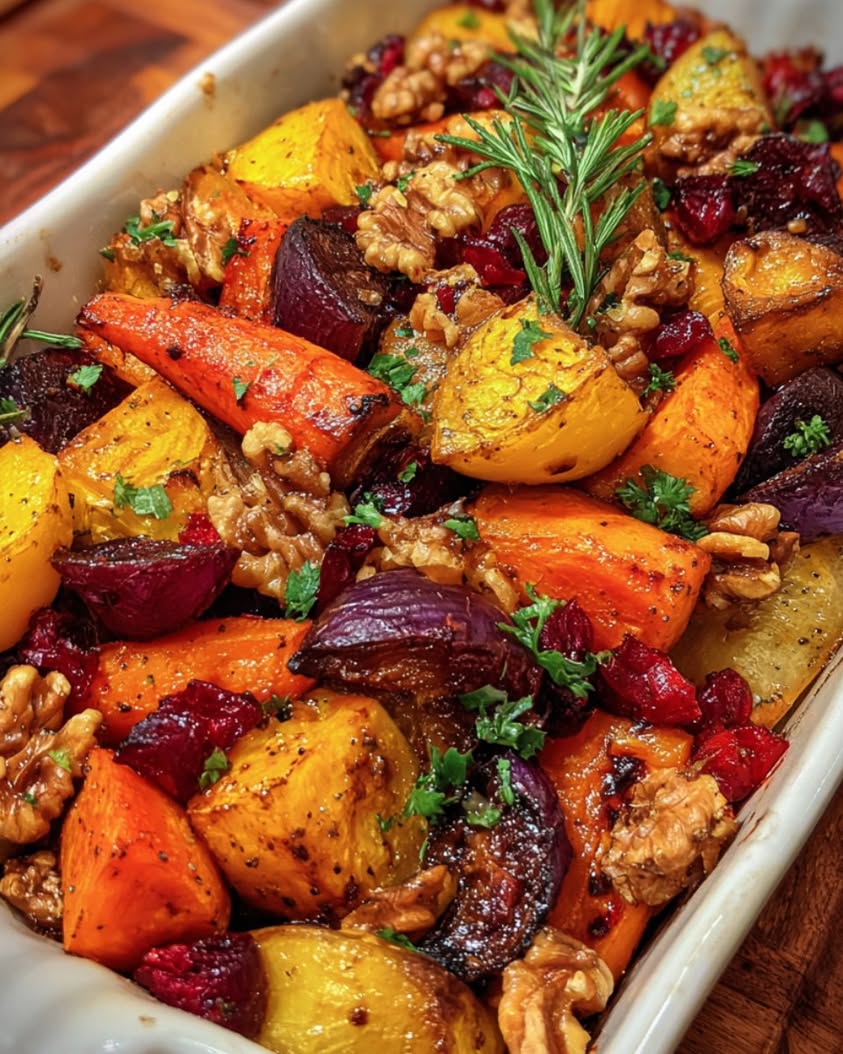
Golden Roasted Fall Vegetables with Toasted Walnuts & Sweet-Tangy Cranberry Glaze: The Ultimate Holiday Side Dish
Imagine a platter filled with jewel-toned vegetables, each piece caramelized to perfection and glistening with a sweet-tangy cranberry glaze. This stunning dish of golden roasted fall vegetables brings together the very best of autumn’s bounty in one spectacular presentation. Furthermore, the aroma that fills your kitchen as these vegetables roast is nothing short of magical, promising a side dish that will steal the spotlight at any holiday gathering.
These golden roasted fall vegetables offer a symphony of textures and flavors that will delight every palate. Consequently, the natural sweetness of the roasted roots pairs beautifully with the tart cranberry glaze, while the toasted walnuts provide a satisfying crunch. Ultimately, this dish elevates simple ingredients into an extraordinary culinary experience that feels both rustic and elegant.
Quick Recipe Highlights
- Flavor Profile: These golden roasted fall vegetables deliver a perfect balance of savory, sweet, and tangy notes. The natural earthiness of the vegetables combines with the bright acidity of the cranberry glaze for a complex taste experience. Additionally, the toasted walnuts add a nutty depth that ties everything together.
- Texture: You will experience multiple satisfying textures in every bite. The vegetables become tender inside while developing crispy, caramelized edges during roasting. Meanwhile, the toasted walnuts provide a delightful crunch that contrasts beautifully with the glossy glaze coating the vegetables.
- Aroma: As these golden roasted fall vegetables cook, your kitchen will fill with warm, comforting scents. The earthy sweetness of roasting root vegetables mingles with the festive aroma of cranberries and maple. Finally, the toasting walnuts release their nutty fragrance, creating an irresistible olfactory experience.
- Visual Appeal: This dish presents a beautiful autumnal color palette that looks spectacular on any table. The vibrant orange carrots, deep green Brussels sprouts, and ruby-red cranberry glaze create a feast for the eyes. Moreover, the garnished walnuts add visual texture and sophistication to the final presentation.
- Skill Level Needed: This recipe requires only basic kitchen skills, making it accessible to cooks of all experience levels. You simply need to chop vegetables evenly, whisk together a simple glaze, and monitor roasting times. Therefore, even novice cooks can achieve impressive results with this approachable method.
- Special Equipment: You need only standard kitchen tools to prepare these golden roasted fall vegetables. A large baking sheet, mixing bowls, and a whisk are the primary equipment requirements. However, parchment paper is recommended for easier cleanup and to prevent sticking.
Recipe Overview
- Difficulty Level: This recipe earns its easy rating because it involves straightforward techniques that most home cooks already know. The preparation mainly consists of chopping vegetables and whisking a simple glaze. Furthermore, the roasting process requires minimal active attention, allowing you to multitask in the kitchen.
- Category: These golden roasted fall vegetables function beautifully as a side dish for holiday meals and Sunday dinners. They also work well as a main course for vegetarian meals when served over grains. Additionally, the dish can be served at room temperature, making it excellent for potlucks and buffets.
- Cuisine: This recipe draws inspiration from contemporary American farm-to-table cooking traditions. It celebrates seasonal produce with modern flavor combinations that highlight natural ingredients. The use of maple syrup and cranberries also nods to traditional New England culinary heritage.
- Cost: This dish offers excellent value, utilizing affordable seasonal vegetables as its foundation. The walnuts and maple syrup represent the priciest components, but both are used judiciously. Overall, you can feed six people generously for less than the cost of most specialty side dishes.
- Season: Autumn is the perfect season for these golden roasted fall vegetables because root vegetables and Brussels sprouts reach their peak flavor. The cranberry glaze also complements the holiday season perfectly. Furthermore, the warming, comforting nature of roasted dishes suits cooler weather beautifully.
- Occasion: This versatile dish shines at Thanksgiving and Christmas dinners as an elegant side. It also works wonderfully for casual autumn weeknights or special weekend meals. Moreover, it makes an impressive contribution to potluck gatherings and friendsgiving celebrations.
Why You’ll Love This Recipe
The exceptional flavor combination will immediately win you over when you taste these golden roasted fall vegetables. The caramelized edges of the vegetables provide a savory depth that contrasts wonderfully with the bright, tangy cranberry glaze. Each component brings something special to the dish, yet they harmonize beautifully on the palate. Furthermore, the toasted walnuts add not just crunch but also a rich, buttery note that elevates the entire experience. This dish manages to feel both comforting and sophisticated simultaneously, making it suitable for everything from weeknight dinners to holiday feasts.
Preparation convenience represents another significant advantage of this recipe for golden roasted fall vegetables. The hands-on time remains minimal, with most of the cooking happening unattended in the oven. This means you can prepare other components of your meal while the vegetables roast to perfection. The simple glaze comes together in minutes while the vegetables cook, maximizing your efficiency in the kitchen. Additionally, the dish holds well at warm temperatures, eliminating the stress of last-minute timing coordination.
Nutritional benefits abound in every serving of these golden roasted fall vegetables. Root vegetables provide excellent sources of fiber, vitamins, and complex carbohydrates that deliver sustained energy. Brussels sprouts offer remarkable antioxidant content and anti-inflammatory properties. The walnuts contribute healthy fats and omega-3 fatty acids that support brain health. Meanwhile, the cranberries bring their renowned urinary tract health benefits and vitamin C content. This dish truly nourishes your body while delighting your taste buds.
Entertaining value makes these golden roasted fall vegetables a standout choice for holiday gatherings. The vibrant colors and elegant presentation create immediate visual appeal on any table. Guests consistently rave about the sophisticated flavor profile that seems much more complex than the actual preparation suggests. The dish accommodates various dietary preferences since it’s naturally vegetarian and can easily be made vegan. Moreover, it pairs beautifully with traditional holiday proteins like turkey and ham without competing with their flavors.
Cost-effectiveness and accessibility further enhance the appeal of these golden roasted fall vegetables. Seasonal root vegetables remain remarkably affordable during autumn months, making this dish budget-friendly. The ingredients are readily available at most grocery stores without requiring special trips to specialty markets. You can easily adapt the vegetable selection based on what looks freshest or what you already have on hand. This flexibility makes the recipe practical for spontaneous preparation when unexpected guests arrive or when your meal planning needs adjustment.
Historical Background and Cultural Significance
Roasting vegetables represents one of humanity’s oldest cooking methods, dating back to when people first discovered fire. Ancient civilizations throughout Europe and Asia regularly roasted root vegetables in hearths and primitive ovens. The technique developed naturally as a way to cook hardy vegetables that could withstand prolonged exposure to heat. These traditional methods eventually evolved into the modern oven-roasting we practice today. The fundamental principle remains unchanged: applying dry heat to transform raw vegetables into tender, caramelized delights.
American holiday traditions particularly embraced roasted root vegetables as staple side dishes. Early Thanksgiving celebrations featured native ingredients like squash and potatoes prepared through roasting. Colonial cooks adapted European roasting techniques to New World ingredients, creating distinctive American culinary traditions. The addition of sweet elements like maple syrup and cranberries reflects the resourcefulness of early American cooks who utilized local ingredients. These flavor combinations have become deeply embedded in our cultural understanding of holiday meals.
The recipe for golden roasted fall vegetables with cranberry glaze represents a contemporary evolution of these traditions. Modern chefs and home cooks have refined ancient techniques with updated flavor profiles and presentation styles. The conscious combination of sweet and savory elements reflects current culinary trends that prioritize balanced, complex flavors. The inclusion of Brussels sprouts, once overlooked, demonstrates how vegetable preferences have expanded beyond traditional roots. This recipe beautifully bridges historical cooking methods with contemporary taste preferences.
Regional variations of roasted vegetable dishes appear in cuisines worldwide, each reflecting local ingredients and traditions. Mediterranean countries typically roast vegetables with olive oil and herbs like rosemary and thyme. Asian versions might incorporate soy sauce, ginger, and sesame oil for distinctly different flavor profiles. The cranberry and maple combination in this recipe specifically celebrates North American ingredients and culinary heritage. This cultural specificity gives the dish a sense of place while remaining accessible to cooks everywhere.
Ingredient Deep Dive
Carrots bring both visual appeal and nutritional benefits to these golden roasted fall vegetables. Historically, carrots originated in Central Asia and were originally purple or yellow rather than orange. The familiar orange carrot we know today was developed by Dutch growers in the 17th century. Nutritionally, carrots are renowned for their beta-carotene content, which converts to vitamin A in the body and supports vision health. They also provide significant fiber, vitamin K1, potassium, and antioxidants. When selecting carrots, choose firm, smooth specimens without cracks or soft spots. For roasting, medium-sized carrots work better than very large ones, which can be woody. Store unwashed carrots in the coldest part of your refrigerator in a plastic bag for several weeks.
Brussels sprouts have experienced a remarkable culinary renaissance after years of being misunderstood. These miniature cabbages originated in Brussels, Belgium, hence their name, and have been cultivated since the 13th century. Modern breeding has developed sweeter varieties that have largely eliminated the bitterness people once associated with them. Nutritionally, Brussels sprouts are powerhouses containing vitamins C and K, folate, manganese, and fiber. They also contain special compounds called glucosinolates that have demonstrated cancer-fighting properties. Choose firm, bright green sprouts that feel heavy for their size, with tightly closed leaves. Avoid those with yellowing leaves or black spots. Store them unwashed in your refrigerator’s crisper drawer for up to a week.
Sweet potatoes provide vibrant color and natural sweetness to balance the other flavors in these golden roasted fall vegetables. Despite their name, sweet potatoes are only distantly related to regular potatoes and belong to the morning glory family. They originated in Central or South America and have been cultivated for thousands of years. Nutritionally, they excel as sources of beta-carotene, vitamin C, manganese, and several B vitamins. Their orange flesh indicates high antioxidant content, particularly anthocyanins. Select firm sweet potatoes without soft spots, cracks, or signs of sprouting. Store them in a cool, dark, well-ventilated place but not in the refrigerator, where cold temperatures can negatively affect their texture and flavor.
Cranberries contribute the distinctive tangy flavor that makes the glaze for these golden roasted fall vegetables so memorable. Native to North America, cranberries were used by Indigenous peoples both as food and medicine long before European colonization. The name “cranberry” derives from “craneberry,” as early European settlers thought the plant’s flowers resembled the head of a sandhill crane. Nutritionally, cranberries are most famous for preventing urinary tract infections through unique compounds called proanthocyanidins. They also provide vitamin C, fiber, and various antioxidants. For this recipe, frozen cranberries work perfectly and are often more economical than fresh. Store fresh cranberries in the refrigerator for up to a month or freeze them for longer storage.
Walnuts add crucial textural contrast and rich flavor to these golden roasted fall vegetables. Walnuts are among the oldest tree foods known to humans, dating back to 7000 BC in Persia. California now produces nearly all walnuts grown in the United States. Nutritionally, walnuts stand out for their high content of alpha-linolenic acid, an omega-3 fatty acid that supports heart and brain health. They also provide protein, magnesium, and antioxidants. When selecting walnuts, choose plump, crisp pieces without dark spots or shriveled appearance. Store walnuts in an airtight container in the refrigerator or freezer to prevent their oils from turning rancid. Toasting them before use enhances their flavor dramatically.
Common Mistakes to Avoid
- Cutting vegetables unevenly causes inconsistent cooking, with some pieces burning while others remain undercooked. Always aim for uniform-sized pieces, approximately 1-inch chunks, to ensure even roasting. This attention to detail guarantees that all vegetables achieve perfect caramelization simultaneously.
- Overcrowding the baking sheet prevents proper browning and creates steamed rather than roasted vegetables. Use two baking sheets if necessary to allow adequate space between pieces. The vegetables need exposure to hot air on all sides to develop those desirable caramelized edges.
- Neglecting to toss the vegetables during roasting results in uneven browning and potentially burnt spots. Make sure to rotate the pan and stir the vegetables at least once during the cooking process. This simple step ensures all sides receive equal exposure to the heat.
- Using old, dried-out walnuts diminishes both flavor and texture in the final dish. Always taste your walnuts before using to ensure they haven’t turned rancid. Fresh walnuts should taste mildly sweet and buttery rather than bitter or sharp.
- Adding the glaze too early can cause burning because of the sugar content in the maple syrup and cranberries. Wait until the final 10-15 minutes of roasting to brush on the glaze. This timing allows the glaze to caramelize slightly without burning.
- Underseasoning the vegetables before roasting misses a crucial flavor-building opportunity. Season generously with salt and pepper at the beginning of the roasting process. The seasoning penetrates the vegetables as they cook, enhancing their natural flavors.
- Skipping the toasting step for the walnuts sacrifices significant flavor depth. Raw walnuts taste mild and sometimes slightly bitter compared to toasted ones. The toasting process releases their essential oils and develops a richer, more complex nutty flavor.
- Rushing the cranberry glaze prevents proper thickening and flavor development. Simmer the glaze until it visibly coats the back of a spoon for the ideal consistency. This patience ensures the glaze will properly adhere to the vegetables rather than running off.
Essential Techniques
Proper vegetable cutting represents the foundation for successful golden roasted fall vegetables. Uniform pieces ensure even cooking, preventing some vegetables from burning while others remain hard. Aim for approximately 1-inch chunks, cutting denser vegetables like sweet potatoes slightly smaller than Brussels sprouts. Use a sharp chef’s knife for clean cuts that won’t crush the vegetable cells. This technique preserves texture and promotes beautiful caramelization on cut surfaces. The visual result will be more appealing, with consistently golden-brown edges throughout the dish.
High-heat roasting transforms ordinary vegetables into extraordinary golden roasted fall vegetables. The technique works by caramelizing natural sugars in the vegetables, creating complex flavors and appealing brown coloration. Preheat your oven thoroughly before adding the vegetables to ensure immediate searing. Arrange vegetables in a single layer with space between pieces to allow steam to escape. This placement promotes roasting rather than steaming, yielding crisp-tender results with delicious caramelized spots. The high temperature also creates Maillard reactions that develop deep, savory flavors beyond simple sweetness.
Toasting nuts might seem simple but requires attention to prevent burning. Spread walnuts in a single layer on a dry baking sheet for even heat distribution. Watch carefully during the final minutes since nuts can go from perfectly toasted to burnt quickly. The walnuts should become fragrant and develop a slightly darker color when ready. Immediately transfer them to a cool surface after toasting to stop the cooking process. Properly toasted walnuts provide superior crunch and deeper flavor compared to raw or store-bought pre-toasted versions.
Reduction glazes like the cranberry version for these golden roasted fall vegetables concentrate flavor through evaporation. Simmering the liquid ingredients causes water to evaporate, leaving behind intensified flavors and thicker consistency. Watch for the bubbles to change from large and rapid to smaller and slower as the glaze thickens. The finished glaze should coat the back of a spoon without immediately running off. This proper consistency ensures the glaze will adhere to the vegetables rather than pooling on the baking sheet. The reduction process also mellows the cranberries’ sharpness while enhancing their fruity character.
Pro Tips for Perfect Golden Roasted Fall Vegetables
Pat your vegetables completely dry before tossing them with oil to ensure proper roasting. Any surface moisture will create steam that prevents browning and crisp edges. This simple step makes a remarkable difference in achieving beautifully caramelized results.
Use a high-smoke-point oil like avocado or grapeseed oil rather than olive oil for roasting. These oils withstand the high oven temperature better without breaking down or creating off-flavors. The neutral flavor also allows the natural vegetable tastes to shine through.
Add fresh herbs like thyme or rosemary partway through roasting to prevent burning. The dried herbs can go on at the beginning, but fresh herbs contain more volatile oils that burn easily. Sprinkle them during the last 10-15 minutes for maximum flavor impact.
Finish the dish with a flaky sea salt like Maldon after roasting for textural and flavor contrast. The large crystals provide delightful crunch and bursts of salinity that enhance the sweet vegetables. This final touch elevates the dish from homey to restaurant-quality.
Let the roasted vegetables rest for 5 minutes after removing them from the oven before serving. This brief waiting period allows the vegetables to reabsorb some of their natural juices. The result is better flavor distribution and improved texture throughout the dish.
Reserve some toasted walnuts to sprinkle on top just before serving for optimal crunch. If mixed in completely, the walnuts can soften from the heat and glaze. The last-minute addition preserves their satisfying texture contrast against the tender vegetables.
Consider roasting your vegetables on a preheated baking sheet for extra caramelization. The immediate contact with hot metal creates a better sear on the vegetables. Just be careful when adding the vegetables to avoid splattering the hot oil.
Variations and Adaptations
Regional variations can transform these golden roasted fall vegetables to reflect different culinary traditions. Mediterranean versions might include olives, artichoke hearts, and lemon zest with oregano and garlic. Southwest adaptations could feature chili powder, cumin, and lime with the addition of poblano peppers. Asian-inspired variations might incorporate ginger, soy sauce, and sesame oil with daikon radish and shiitake mushrooms. Each variation maintains the core roasting technique while introducing distinctive flavor profiles. These adaptations demonstrate the recipe’s wonderful flexibility across different cuisines and personal preferences.
Seasonal adaptations allow you to enjoy this roasting method throughout the year with different produce. Spring versions could feature asparagus, radishes, and new potatoes with a lemon-herb glaze. Summer adaptations might include zucchini, eggplant, and bell peppers with a balsamic reduction. Even winter variations can spotlight hardy vegetables like parsnips, turnips, and cauliflower with a pomegranate molasses glaze. The basic technique remains constant while the vegetable selection changes with what’s freshest each season. This approach encourages cooking with local, seasonal produce year-round.
Dietary modifications make these golden roasted fall vegetables accessible to various eating preferences. Vegan versions simply require ensuring the maple syrup is vegan-friendly (most are) and using agave if concerned. For keto diets, reduce the carrots and sweet potatoes while increasing above-ground vegetables like Brussels sprouts and cauliflower. Low-FODMAP adaptations would omit garlic and use garlic-infused oil instead while limiting certain vegetables. Gluten-free needs are naturally met since the recipe contains no gluten-containing ingredients. Each modification maintains the dish’s essential character while accommodating specific dietary requirements.
Flavor variations can customize these golden roasted fall vegetables to suit different meal contexts. Savory versions might include mustard, tamari, or miso in the glaze instead of cranberry for a different profile. Herb-focused variations could highlight rosemary, sage, or thyme with lemon for a brighter character. Spicy adaptations might incorporate harissa, chili crisp, or cayenne for those who prefer heat. Smoky versions could include smoked paprika or chipotle powder for depth. Each variation creates a distinctly different dish while utilizing the same reliable roasting technique.
Serving and Presentation Guide
Plating techniques significantly impact how guests perceive these golden roasted fall vegetables. For family-style serving, arrange the vegetables on a large platter rather than leaving them in the roasting pan. Create height by mounding the vegetables slightly in the center for visual interest. Place the glazed vegetables first, then scatter the toasted walnuts over the top to maintain their crunch. Finally, garnish with fresh herbs like parsley or thyme sprigs for color contrast. This presentation approach makes the dish look abundant and professionally prepared.
Garnishing ideas can elevate these golden roasted fall vegetables from simple to spectacular. Beyond the traditional walnuts, consider pomegranate arils for jewel-like color and bursts of sweetness. Fresh herb sprigs like rosemary or thyme add fragrance and visual appeal. Toasted pumpkin seeds or pecans offer alternative crunch elements with seasonal relevance. Microgreens or arugula scattered over the top provide fresh color contrast and peppery notes. Even a drizzle of high-quality balsamic reduction can create beautiful visual lines and additional flavor complexity.
Traditional accompaniments for these golden roasted fall vegetables include holiday classics like roast turkey, baked ham, or prime rib. The vegetables’ sweet and tangy profile complements rich meats without overwhelming them. For vegetarian meals, serve alongside wild rice stuffing, lentil loaf, or creamy polenta. The dish also pairs beautifully with other classic sides like mashed potatoes, green bean casserole, or dinner rolls. Consider the overall menu balance to ensure varied textures, colors, and flavors across all dishes.
Modern serving suggestions might include presenting these golden roasted fall vegetables in unexpected ways. For individual portions, serve in small cast iron skillets or rustic ceramic bowls. As a salad, toss the cooled vegetables with bitter greens and a light vinaigrette. For brunch, top with a fried egg to transform the dish into a complete meal. As an appetizer, serve smaller portions in lettuce cups or on crostini. These creative presentations demonstrate the recipe’s versatility beyond the traditional holiday table.
Wine and Beverage Pairing
Wine pairings should complement both the sweetness and acidity in these golden roasted fall vegetables. Off-dry Rieslings or Gewürztraminers work beautifully because their slight sweetness mirrors the maple glaze while their acidity cuts through the richness. Light-bodied Pinot Noir offers another excellent option with its red fruit notes that harmonize with the cranberry elements. For white wine lovers, an oak-aged Chardonnay provides enough body to stand up to the robust flavors without overwhelming them. The wine’s buttery notes can enhance the caramelization on the vegetables. Ultimately, choose wines with good acidity to balance the dish’s sweet components.
Non-alcoholic alternatives can be just as sophisticated when pairing with these golden roasted fall vegetables. Sparkling apple cider provides effervescence and autumnal flavor that complements the dish beautifully. Cranberry spritzers made with cranberry juice, club soda, and a twist of lime echo the glaze ingredients. For warmer options, butternut squash soup makes an excellent companion beverage in small cups. Chai tea with its warming spices can enhance the cozy, comforting aspects of the roasted vegetables. Each non-alcoholic option should provide either contrasting or complementary flavors to create a balanced experience.
Coffee and tea pairings work surprisingly well with these golden roasted fall vegetables, especially for brunch servings. Medium-roast coffees with nutty or chocolate notes can complement the toasted walnuts and caramelized vegetables. Avoid bitter dark roasts that might clash with the sweet elements. For tea, Earl Grey’s bergamot notes provide a lovely contrast to the earthiness of the root vegetables. Chai tea’s warming spices mirror traditional autumn flavors beautifully. Even a simple green tea can work by cleansing the palate between bites of the richer vegetables.
Storage and Shelf Life
Storage methods for these golden roasted fall vegetables impact both safety and quality. Always cool the vegetables completely before storing to prevent condensation that creates sogginess. Transfer to airtight containers, separating the walnuts if possible to maintain their crunch. Properly stored, the vegetables will keep in the refrigerator for 3-4 days. For longer storage, freezing is an option though texture will soften upon thawing. The glaze may separate slightly when frozen but can be reincorporated when reheating.
Temperature requirements are crucial for maintaining the quality and safety of leftover golden roasted fall vegetables. Never leave the roasted vegetables at room temperature for more than two hours total, including serving time. Refrigerate promptly at 40°F or below to prevent bacterial growth. When reheating, ensure the internal temperature reaches 165°F for food safety. If transporting to another location, keep the dish hot in an insulated container or thoroughly chilled in a cooler with ice packs.
Reheating instructions can make the difference between revived leftovers and disappointing mush. For best results, reheat in a 375°F oven for 10-15 minutes until warmed through. This method helps restore some of the original texture better than microwaving. If using a microwave, spread in a single layer and heat in short intervals, stirring between sessions. Add a splash of water or broth to prevent drying out. Always check that the center is piping hot before serving reheated vegetables.
Make Ahead Strategies
Prep timeline for these golden roasted fall vegetables can be spread over two days to reduce holiday stress. The day before serving, wash, peel, and chop all vegetables, storing them in airtight containers in the refrigerator. Make the glaze completely and refrigerate it separately. Toast the walnuts and store at room temperature in an airtight container. On serving day, simply toss the prepped vegetables with oil and roast, adding the glaze during the final minutes. This approach cuts active preparation time significantly when you need to coordinate multiple dishes.
Storage between steps requires attention to maintain quality when preparing components in advance. Cut vegetables can be stored submerged in water overnight to prevent oxidation, though this isn’t necessary for root vegetables. Drain and pat thoroughly dry before roasting. The cranberry glaze will thicken when refrigerated; gently reheat it before using to return to brushable consistency. Toasted walnuts become stale quickly if exposed to air; ensure they’re in an absolutely airtight container. Each component maintains better quality when stored separately until final assembly.
Fresh element additions can revive make-ahead golden roasted fall vegetables just before serving. If preparing completely in advance, reserve some of the toasted walnuts to add after reheating for maximum crunch. A final drizzle of high-quality olive oil can restore sheen and freshness to the appearance. Fresh herb garnishes added at the last minute provide both visual appeal and aromatic complexity. Even a quick squeeze of lemon juice can brighten flavors that may have muted during storage. These final touches make the dish taste freshly prepared even when mostly made ahead.
Scaling Instructions
Halving the recipe works beautifully when cooking for smaller households or fewer guests. Use a standard baking sheet rather than crowding a smaller one to maintain proper roasting conditions. Reduce the oven temperature by 25°F and check for doneness 5-10 minutes earlier than the original time. The glaze can be tricky to make in very small quantities; consider making the full batch and storing half for another use. The walnuts can be toasted in a small dry skillet over medium heat rather than using the oven. Scaling down works particularly well since the roasting process remains the same regardless of quantity.
Doubling or tripling the recipe requires practical adjustments for successful golden roasted fall vegetables. Use multiple baking sheets and rotate them between oven racks halfway through cooking to ensure even browning. You may need to extend the roasting time by 5-10 minutes due to increased moisture in the oven. Make the glaze in batches if your saucepan isn’t large enough to accommodate the multiplied quantity. Consider toasting the walnuts in separate batches to ensure even coloring. For very large quantities, roasting in consecutive batches may yield better results than overcrowding the oven.
Nutritional Deep Dive
Macro breakdown of these golden roasted fall vegetables provides a balanced nutritional profile. The dish offers complex carbohydrates from the root vegetables that deliver sustained energy release. Healthy fats come primarily from the olive oil and walnuts, providing monounsaturated and omega-3 fatty acids. Protein content is modest but present from both the vegetables and walnuts. The fiber content is significant, supporting digestive health and promoting satiety. This macro balance makes the dish satisfying without being overly heavy, perfect as part of a balanced meal.
Micronutrient analysis reveals an impressive array of vitamins and minerals in these golden roasted fall vegetables. Vitamin A dominates from the sweet potatoes and carrots, supporting vision, immune function, and skin health. Brussels sprouts contribute substantial vitamin K, crucial for blood clotting and bone health. The vegetables collectively provide potassium for blood pressure regulation and various B vitamins for energy metabolism. Walnuts add important minerals like manganese, copper, and magnesium. The cranberries contribute vitamin C and unique phytonutrients with antioxidant properties.
Health benefits extend throughout the body when consuming these golden roasted fall vegetables regularly. The high fiber content supports digestive health and helps maintain healthy cholesterol levels. Antioxidants from the colorful vegetables combat oxidative stress and inflammation throughout the body. The healthy fat profile supports cardiovascular health and cognitive function. The low glycemic impact, despite the sweet elements, makes the dish suitable for blood sugar management when consumed in appropriate portions. Overall, the dish represents a nutrient-dense addition to any eating pattern.
Dietary Adaptations
Gluten-free needs are naturally met with these golden roasted fall vegetables since all ingredients are inherently gluten-free. Always check labels on processed ingredients like maple syrup to ensure no cross-contamination if celiac disease is a concern. The dish can be safely served to those with gluten sensitivities without modifications. For potlucks, clearly label the dish as gluten-free to help those with dietary restrictions. This makes the recipe particularly valuable when cooking for groups with mixed dietary needs.
Vegan adaptations require only minimal attention to ingredient sourcing. Standard maple syrup is typically vegan, but those following strict vegan principles may want to verify the production methods. The rest of the ingredients are plant-based, making the transition straightforward. For added assurance, use organic sugar in the glaze if preferred over conventional processing methods that sometimes use bone char. The dish already aligns with vegan principles without significant modification, making it inclusive for diverse dietary preferences.
Low-carb and keto adaptations require selective vegetable choices and glaze modifications. Focus on above-ground vegetables like Brussels sprouts while reducing or eliminating carrots and sweet potatoes. Increase the walnut proportion for healthy fats and add other low-carb vegetables like cauliflower or broccoli. For the glaze, use a sugar-free maple syrup alternative and reduce the cranberries significantly or use cranberry extract instead. Thicken with xanthan gum rather than relying on natural fruit pectin from the cranberries. These modifications create a dish that fits low-carb eating patterns while maintaining the essential flavor profile.
Troubleshooting Guide
Texture issues commonly involve vegetables that are either too soft or not tender enough. If your golden roasted fall vegetables are mushy, you likely overcrowded the pan or roasted at too low a temperature. For undercooked vegetables, return to the oven in 5-minute increments until tender. If some vegetables cook faster than others, remove the done pieces and continue cooking the harder ones. Soggy results usually indicate insufficient oil or overcrowding that created steam. Each issue has straightforward solutions for rescue or prevention in future batches.
Flavor balance problems might include excessive sweetness or overwhelming tartness. If your golden roasted fall vegetables taste too sweet, balance with a splash of vinegar or lemon juice at the end. For excessive tartness, a drizzle of honey or maple syrup can soften the sharp edges. If the dish tastes bland, you likely underseasoned; add salt gradually until the flavors pop. Herbs that taste bitter may have burned; pick off visibly blackened herbs and add fresh ones. Most flavor issues can be corrected with simple adjustments even after cooking.
Recipe Success Stories
Community feedback consistently praises these golden roasted fall vegetables as a holiday game-changer. Many home cooks report that this dish has become their most requested contribution to family gatherings. Several readers have shared that previously vegetable-resistant family members enthusiastically enjoy this preparation. The balance of flavors receives particular appreciation, with many noting that the dish satisfies both sweet and savory preferences. The visual appeal consistently earns compliments, with multiple readers mentioning that the vibrant colors look spectacular in holiday photos. These testimonials confirm the recipe’s reliability and crowd-pleasing potential.
Variation successes demonstrate the recipe’s wonderful adaptability to different tastes and ingredient availability. One reader created a beautiful version using purple sweet potatoes and golden beets for a stunning color contrast. Another substituted pecans for walnuts due to allergy concerns and reported excellent results. Several cooks have successfully incorporated parsnips and celery root when other vegetables were unavailable. A creative adaptation included adding crumbled goat cheese at the end for extra creaminess and tang. These successful variations illustrate how the recipe serves as a template for culinary creativity while maintaining its essential character.
Frequently Asked Questions
Can I use frozen vegetables instead of fresh? While fresh vegetables yield the best texture for golden roasted fall vegetables, frozen can work in a pinch. Thaw completely and pat very dry to remove excess moisture. Expect slightly softer results since freezing breaks down cell structure. The flavor will still be delicious, though the texture differences will be noticeable to discerning palates.
How can I make this dish ahead of time? You can prepare golden roasted fall vegetables completely up to 2 days in advance. Store covered in the refrigerator and reheat in a 375°F oven for 10-15 minutes until warmed through. For best texture, add the walnuts just before serving rather than storing them with the vegetables.
What can I substitute for maple syrup? Honey makes an excellent substitute for maple syrup in the glaze for golden roasted fall vegetables. Agave nectar works well for vegan versions. For sugar-free options, monk fruit syrup or sugar-free maple-flavored syrup can work, though the flavor profile will change slightly.
Can I use different nuts? Absolutely! Pecans, almonds, or pistachios all work beautifully in place of walnuts for golden roasted fall vegetables. Adjust toasting times accordingly since different nuts have varying oil contents and thicknesses. Always taste nuts before using to ensure freshness.
How do I prevent the glaze from burning? Prevent burning by applying the glaze during the final 10-15 minutes of roasting for golden roasted fall vegetables. The sugar content caramelizes quickly, so earlier application risks burning. If you notice excessive browning, tent with foil for the remaining cooking time.
Can I make this without oil? While oil promotes browning and prevents sticking in golden roasted fall vegetables, you can use vegetable broth for oil-free versions. The results will be less caramelized and more steamed, but still flavorful. Consider using parchment paper to prevent sticking without oil.
What other vegetables work well in this recipe? Many vegetables complement golden roasted fall vegetables beautifully. Try parsnips, turnips, cauliflower, butternut squash, or red onions. Adjust cutting sizes based on density and add quicker-cooking vegetables partway through the roasting process.
How can I make this dish more savory? Increase savory notes in golden roasted fall vegetables by adding garlic powder, onion powder, or dried herbs to the oil coating. A splash of tamari or b
Print
Golden Roasted Fall Vegetables with Toasted Walnuts & Sweet-Tangy Cranberry Glaze
Description
A vibrant medley of seasonal root vegetables roasted to golden perfection, topped with crunchy toasted walnuts and a glossy sweet-tangy cranberry glaze.
Ingredients
For the Crust:
- 2 cups butternut squash, peeled and cubed
- 1 cup carrots, sliced into rounds
- 1 cup parsnips, peeled and cubed
- 1 large sweet potato, peeled and cubed
- 3 tablespoons olive oil
- 1 teaspoon dried thyme
- 1 teaspoon smoked paprika
- Salt and black pepper to taste
- 1/2 cup walnuts, roughly chopped
- 1/2 cup fresh or frozen cranberries
- 2 tablespoons maple syrup
- 1 tablespoon balsamic vinegar
- 1/4 cup water
Instructions
1. Prepare the Crust:
- Preheat oven to 400°F (200°C). Line a large baking sheet with parchment paper.
- In a large bowl, toss butternut squash, carrots, parsnips, and sweet potato with olive oil, thyme, smoked paprika, salt, and pepper until evenly coated.
- Spread vegetables in a single layer on the prepared baking sheet. Roast for 25-30 minutes, or until tender and golden, stirring halfway through.
- While vegetables roast, toast walnuts in a dry skillet over medium heat for 3-5 minutes until fragrant. Set aside.
- In a small saucepan, combine cranberries, maple syrup, balsamic vinegar, and water. Bring to a simmer over medium heat, stirring occasionally, until cranberries burst and sauce thickens (about 8-10 minutes).
- Arrange roasted vegetables on a serving platter, drizzle with cranberry glaze, and sprinkle with toasted walnuts. Serve warm.
Notes
You can customize the seasonings to taste.

I’m Shaykee—born in Morocco, seasoned across continents. From airplane galleys to home kitchens, I share the flavors and stories that shaped my journey.