
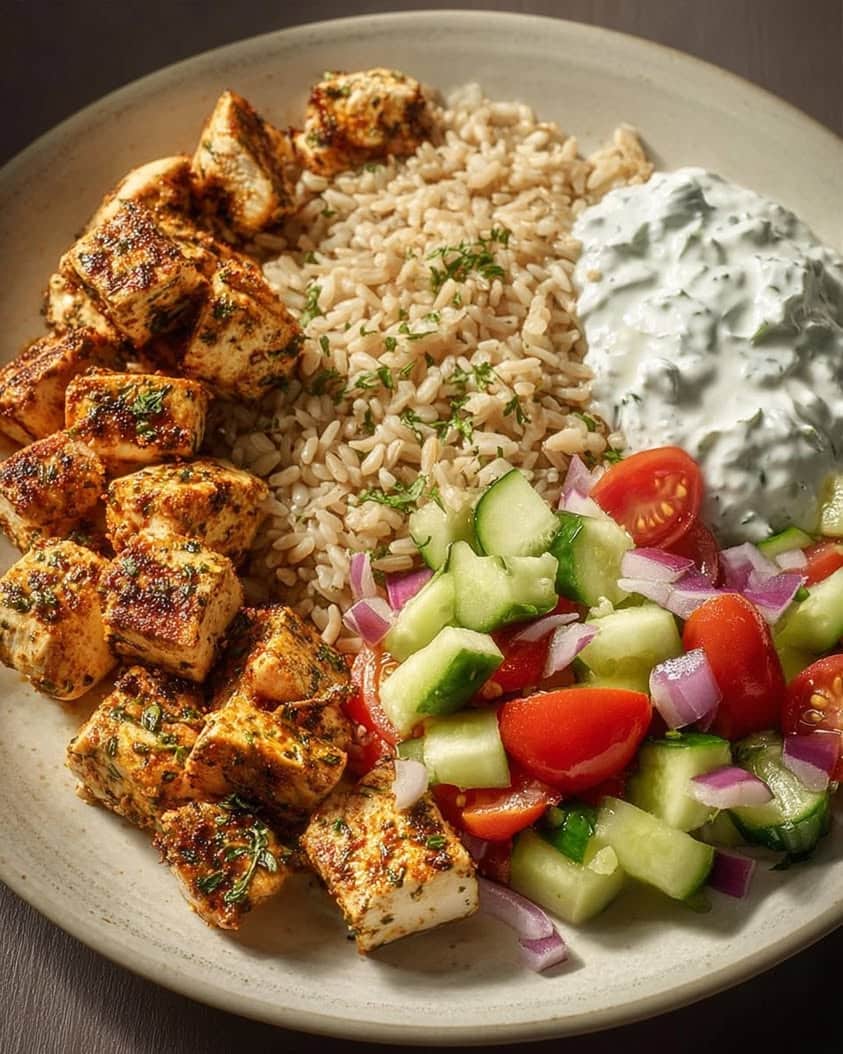
Greek-Style Chicken Bowl with Brown Rice, Tzatziki & Cucumber-Tomato Salad: A Vibrant Mediterranean Feast
Imagine a meal that transports you straight to a sun-drenched taverna overlooking the Aegean Sea. This Greek-style chicken bowl with brown rice, tzatziki, and cucumber-tomato salad delivers exactly that experience. Creamy tzatziki & fresh salad top this easy Greek chicken bowl with brown rice. A healthy, protein-packed meal prep lunch or dinner idea! Consequently, you get a complete, balanced, and utterly delicious plate in under an hour.
The beauty of this recipe lies in its harmonious layers. First, you have perfectly seasoned, juicy chicken. Next, a bed of nutty brown rice provides a wholesome foundation. Furthermore, a crisp, lemony cucumber-tomato salad adds a refreshing crunch. Finally, a generous dollop of cool, garlicky tzatziki sauce ties everything together. Ultimately, each bite is a celebration of classic Mediterranean flavors that are both light and deeply satisfying.
This dish is a true crowd-pleaser for busy weeknights. Moreover, it doubles as a fantastic meal prep solution. You can easily assemble components ahead of time for quick lunches. Therefore, if you are seeking a recipe that is flavorful, nutritious, and versatile, this Greek chicken bowl is your answer. It perfectly embodies the principles of the Mediterranean diet, making healthy eating an absolute delight.
Quick Recipe Highlights
- Flavor Profile: This bowl bursts with bright, herby, and tangy notes. The chicken features classic oregano and lemon, while the tzatziki offers a creamy garlic punch. Meanwhile, the salad contributes a fresh, acidic bite from red wine vinegar.
- Texture: You will enjoy a wonderful contrast of textures. The chicken is tender and juicy, the brown rice is pleasantly chewy, and the salad provides a crisp, refreshing crunch. Additionally, the tzatziki adds a smooth, cooling creaminess.
- Aroma: As you cook, your kitchen will fill with the irresistible scent of garlic, lemon, and dried oregano. The aroma is distinctly Mediterranean, warm, and inviting, promising a delicious meal ahead.
- Visual Appeal: This bowl is a feast for the eyes with its vibrant colors. You will see golden-brown chicken, white rice, red tomatoes, green cucumbers, and creamy white tzatziki. It is a colorful and appetizing presentation.
- Skill Level Needed: This is a beginner-friendly recipe. Basic techniques like chopping, mixing, and pan-searing are all you need. No special culinary skills are required for success.
- Special Equipment: You only need standard kitchen tools: a good knife, cutting board, mixing bowls, a skillet for the chicken, and a pot for the rice. A box grater for the cucumber in the tzatziki is helpful but not mandatory.
Recipe Overview
- Difficulty Level: We rate this recipe as easy. The steps are straightforward and sequential. You simply prepare individual components and assemble them. There are no complex techniques or precise timings that could lead to failure.
- Category: This dish fits multiple categories beautifully. It is a hearty main course for dinner, a perfect packed lunch for meal prep, and a fantastic healthy eating option. It truly is an all-in-one bowl meal.
- Cuisine: This recipe is inspired by the culinary traditions of Greece and the wider Mediterranean. It uses hallmark ingredients like olive oil, lemon, oregano, cucumber, and feta. The flavors are authentic and recognizable.
- Cost: This is a very cost-effective meal. Chicken thighs or breasts, rice, and seasonal vegetables are budget-friendly staples. The most expensive item might be the feta cheese, but a little goes a long way in terms of flavor.
- Season: This bowl is ideal for spring and summer when cucumbers and tomatoes are at their peak. However, its bright flavors also make it a wonderful way to combat the gloom of winter, so it truly works year-round.
- Occasion: It is perfect for casual weeknight family dinners, healthy lunch prep, or even a relaxed dinner party where guests can build their own bowls. It is versatile and universally appealing.
Why You’ll Love This Recipe
First and foremost, the taste and texture combination is unbeatable. Each component brings something unique to the table, creating a symphony in your mouth. The savory, herby chicken pairs perfectly with the cool, tangy tzatziki. Simultaneously, the fresh salad cuts through the richness, and the brown rice soaks up all the delicious juices. Every forkful is balanced, exciting, and deeply satisfying. You will not find a boring bite in this vibrant Greek chicken bowl.
From a convenience standpoint, this recipe is a lifesaver. The components can be prepared independently, which is ideal for multitasking or dividing kitchen duties. Furthermore, it is an exemplary meal prep champion. You can cook a large batch of chicken and rice on Sunday. Then, you can quickly assemble a fresh salad and tzatziki throughout the week for instant, healthy lunches. Therefore, it saves you time, money, and the stress of deciding what to eat daily.
Nutritionally, this bowl is a powerhouse. It aligns perfectly with the heart-healthy Mediterranean diet. Lean chicken provides high-quality protein for muscle repair. Brown rice offers complex carbohydrates and fiber for sustained energy. Meanwhile, the vegetables deliver essential vitamins and antioxidants. The olive oil and yogurt contribute healthy fats and probiotics. Consequently, this meal supports overall wellness without sacrificing flavor.
For social and entertaining value, this dish is a fantastic choice. It is visually stunning and feels special, yet it is not overly complicated to make for guests. You can even set up a “bowl bar” with all the components laid out, allowing everyone to customize their perfect meal. This interactive element makes dinner fun and engaging. It is a surefire way to impress friends and family with minimal chef stress.
Finally, this Greek-style chicken bowl is incredibly cost-effective and accessible. It utilizes simple, whole ingredients that are easy to find at any grocery store. There is no need for expensive or exotic items. Additionally, the recipe is forgiving and allows for substitutions based on what you have on hand. Ultimately, it proves that eating delicious, restaurant-quality, healthy food does not require a big budget or a trip to a specialty market.
Historical Background and Cultural Significance
The concept of the “bowl meal” is modern, but its components are deeply rooted in ancient Greek culinary tradition. Greek cuisine is one of the oldest in the world, celebrated for its simplicity and reliance on fresh, local ingredients. Dishes were traditionally built around the Mediterranean triad: olives (for oil), grapes (for wine), and wheat. Proteins like chicken, lamb, and fish were often grilled with wild herbs like oregano, which grows abundantly in the Greek hills.
Culturally, meals in Greece are a social cornerstone, often lengthy affairs shared with family and friends. The idea of combining various small dishes, or “meze,” onto one plate is very common. This Greek chicken bowl is a contemporary, deconstructed take on that tradition. It brings together classic elements—seasoned meat, a grain, a fresh salad, and a yogurt sauce—in a convenient, single-serving format that honors the communal, varied spirit of Greek eating.
The recipe has evolved by incorporating global influences and modern health trends. Traditionally, the grain might have been barley or farro. Brown rice introduces a whole-grain, fiber-rich element popular in contemporary nutrition. Tzatziki, with its origins in the Ottoman Empire, has become a globally beloved condiment. The bowl format itself speaks to our modern desire for balanced, visually appealing, and portable meals. It is a fusion of ancient wisdom and modern convenience.
Regional variations across Greece are fascinating. On the islands, you might find more seafood like grilled octopus or shrimp in place of chicken. In the north, a spicy cheese dip might accompany the meal. The salad, known as “horiatiki” or village salad, sometimes includes green peppers, onions, or capers. Some regions use mint in their tzatziki instead of or in addition to dill. This recipe provides a fantastic base from which you can explore these delicious regional twists.
Ingredient Deep Dive
Let us start with the chicken. In this Greek chicken bowl, boneless, skinless chicken breasts or thighs are marinated in lemon juice, olive oil, and dried oregano. Oregano, known as “rigani” in Greece, is the quintessential Greek herb, prized for its aromatic, slightly bitter flavor. From a nutritional standpoint, chicken is an excellent source of lean protein, essential for building and repairing tissues. For the best results, choose organic or free-range chicken if possible, as it often has better flavor and texture. You can store raw chicken in the coldest part of your refrigerator for 1-2 days before cooking.
Next, consider the brown rice. Unlike white rice, brown rice retains its nutrient-rich bran and germ layer. Consequently, it is higher in fiber, magnesium, and B vitamins. It provides a nutty flavor and chewy texture that stands up well to the other bowl components. When selecting brown rice, look for intact grains without a rancid smell. You can store uncooked rice in a cool, dry pantry for months. For a substitution, you could use quinoa, farro, or even cauliflower rice for a lower-carb option.
The star of the sauce is undoubtedly the tzatziki. This creamy condiment is made from strained yogurt (Greek yogurt), cucumber, garlic, lemon, and dill. Yogurt has been a staple in Eastern Mediterranean diets for centuries, valued for its probiotics which aid digestion. Using full-fat Greek yogurt will give you the creamiest, most authentic result and helps the sauce stay stable. Always strain your grated cucumber thoroughly to prevent a watery tzatziki. Fresh dill is traditional, but mint makes a wonderful variation. Store tzatziki in a sealed container in the fridge for up to 4 days.
Finally, the cucumber-tomato salad brings freshness and acidity. English or Persian cucumbers are ideal because they have fewer seeds and thinner skin. Tomatoes are rich in lycopene, an antioxidant with numerous health benefits. The salad is dressed simply with extra virgin olive oil and red wine vinegar, a classic Greek combination. For the best flavor, use ripe, in-season tomatoes and a high-quality olive oil. Feta cheese, a brined curd cheese made from sheep’s or goat’s milk, adds a salty, tangy finish that is irreplaceable in Greek cuisine.
Common Mistakes to Avoid
- Not Drying the Chicken: Patting your chicken pieces dry with paper towels before seasoning is crucial. If the chicken is wet, it will steam instead of sear, resulting in pale, rubbery meat without the desired golden-brown crust.
- Overcooking the Chicken: Chicken, especially breasts, can become dry and tough if cooked too long. Use a meat thermometer to ensure it reaches a safe 165°F internally, then remove it from the heat immediately. The residual heat will carry it to perfection.
- Watery Tzatziki: The most common tzatziki error is not removing enough moisture from the grated cucumber. After grating, squeeze it in a clean kitchen towel or cheesecloth until no more liquid comes out. This step is non-negotiable for a thick, creamy sauce.
- Using Fresh Garlic Carelessly: Raw garlic in tzatziki can be overpowering. Let the finished sauce sit in the fridge for at least an hour before serving. This allows the garlic flavor to mellow and integrate beautifully with the other ingredients.
- Skipping the Resting Time for Chicken: After cooking, let the chicken rest for 5-10 minutes before slicing. This allows the juices to redistribute throughout the meat. If you slice it immediately, all those flavorful juices will run out onto your cutting board.
- Dressing the Salad Too Early: If you dress the cucumber-tomato salad more than 15-20 minutes before serving, the vegetables will start to wilt and release water, creating a soggy, diluted salad. Always dress it just before assembly.
- Using Instant or Minute Rice: While convenient, instant brown rice often has a mushy texture. Taking the extra 20-25 minutes to cook traditional brown rice yields a far superior, chewier grain that holds up better in the bowl.
- Not Seasoning in Layers: Remember to season each component individually—the chicken marinade, the rice cooking water, the salad dressing. Building layers of seasoning at every stage is the secret to a deeply flavorful final dish.
Essential Techniques
Mastering the pan sear for your chicken is essential. First, ensure your skillet is properly preheated over medium-high heat before adding the oil. A hot pan creates an immediate sear, locking in juices. Add the chicken and resist the urge to move it for the first 3-4 minutes. This allows a proper crust to form. Then, flip and cook until done. The visual cue for success is a golden-brown, caramelized exterior. The common pitfall is crowding the pan, which lowers the temperature and causes the chicken to steam.
Properly cooking brown rice is another key technique. The standard ratio is 2 cups of water to 1 cup of rice. Bring it to a boil, then reduce to a low simmer and cover tightly. Do not lift the lid during cooking, as this releases steam. Cook for the package-recommended time, usually 40-45 minutes, then remove from heat and let it sit, covered, for 10 minutes. This resting period allows the grains to steam fully and become fluffy. The pitfall is stirring the rice while it cooks, which breaks the grains and makes them sticky.
The technique for perfect tzatziki is all about moisture management. After grating the cucumber, salt it lightly and let it sit in a colander for 10 minutes. The salt draws out excess water. Then, use your hands to squeeze the grated cucumber in a clean kitchen towel until it is as dry as possible. This step is why your sauce will be luxuriously thick instead of watery. Combine it with thick Greek yogurt, minced garlic, lemon juice, and dill. Stir gently to combine.
Finally, learn the art of the simple vinaigrette for the salad. The basic ratio is 3 parts oil to 1 part acid (vinegar or lemon juice). For this recipe, use extra virgin olive oil and red wine vinegar. Whisk them together vigorously with salt and pepper until they emulsify into a slightly thickened, unified dressing. You can do this in the bottom of your salad bowl before adding the vegetables. Tossing the salad just before serving ensures maximum crispness and flavor distribution.
Pro Tips for Perfect Greek-Style Chicken Bowl
For the most flavorful chicken, marinate it for at least 30 minutes, or ideally up to 4 hours in the refrigerator. The acid in the lemon juice helps tenderize the meat while the herbs infuse it with flavor.
Cook your brown rice in chicken or vegetable broth instead of water. This simple swap adds a tremendous amount of savory depth to the entire bowl with zero extra effort.
Add a tablespoon of chopped fresh oregano to the dried oregano in the chicken marinade if you have it. Fresh herbs provide a brighter, more complex flavor profile that elevates the dish.
For an extra layer of texture and flavor, toast a handful of pine nuts or slivered almonds and sprinkle them over the assembled bowl just before serving.
If you are meal prepping, store the tzatziki and salad dressing in separate small containers. Add them to your bowl only when you are ready to eat to keep everything fresh and crisp.
Warm your pita bread in a dry skillet for a minute on each side until pliable and slightly toasted. It makes the perfect utensil for scooping up every last bit of your Greek chicken bowl.
Let all components come to room temperature for about 10 minutes before assembling if they have been refrigerated. This allows the flavors to shine and prevents the cold tzatziki from making the rice hard.
Use a sharp knife to slice the chicken against the grain. This cuts through the muscle fibers, making each piece more tender and easier to eat.
Variations and Adaptations
For regional variations, consider a Cypriot twist by adding a spoonful of “pourgouri” (bulgur wheat) pilaf instead of brown rice. Alternatively, a Cretan influence might include a handful of wild greens like dandelion or amaranth sautéed with olive oil and lemon alongside the chicken. You could also mimic coastal flavors by replacing the chicken with large shrimp or chunks of firm white fish like cod or halibut, seasoned with the same marinade.
Seasonal adaptations are easy and rewarding. In the fall, roast cubes of butternut squash or sweet potato to add to the bowl. During winter, incorporate roasted red peppers from a jar and kalamata olives for a deeper flavor. For spring, add fresh peas or artichoke hearts. Summer is the prime time to use heirloom tomatoes and the freshest cucumbers from the farmer’s market. This flexibility makes the Greek bowl a year-round staple.
Dietary modifications are straightforward. For a gluten-free version, ensure your tzatziki and seasonings are gluten-free and serve with gluten-free pita or extra rice. To make it dairy-free, substitute the tzatziki with a tahini-lemon sauce thinned with water. For a vegan adaptation, use marinated and grilled chickpeas or crispy baked tofu in place of chicken, and choose a vegan yogurt for the sauce. A low-carb or keto version would replace the brown rice with cauliflower rice.
Flavor variations can keep this recipe exciting. Add a spoonful of sun-dried tomato pesto to the chicken marinade for a richer taste. Mix some za’atar seasoning into the olive oil for drizzling. For a spicy kick, add a pinch of red pepper flakes to the chicken or a dash of hot sauce to the tzatziki. You could also swap the dill in the tzatziki for fresh mint or parsley for a different herbal note.
Serving and Presentation Guide
Plating is key to making this bowl restaurant-worthy. Start with a wide, shallow bowl. Place a generous scoop of warm brown rice slightly off-center. Then, artfully fan the sliced chicken against the rice. Next, arrange a mound of the cucumber-tomato salad on the opposite side, allowing the colors to show. Finally, use a spoon to place a generous dollop of tzatziki in the center or in a visible spot on the chicken. Drizzle a little extra virgin olive oil over everything just before serving.
Garnishing adds the final touch of elegance. A sprinkle of fresh chopped dill or parsley over the entire bowl adds color and freshness. A few extra crumbles of feta cheese on the salad look beautiful. You can also add a lemon wedge on the side for those who want an extra citrus punch. For a textural garnish, a light sprinkle of sumac or smoked paprika adds color and a subtle flavor boost.
Traditional accompaniments are simple. Warm, soft pita bread is a must for scooping. A small dish of mixed olives and perhaps some pepperoncini on the side completes the Greek taverna experience. For a more substantial meal, you could serve a small cup of avgolemono (lemon-egg soup) or a simple lentil soup on the side. These additions stay true to the cuisine’s roots.
Modern serving suggestions include a “build-your-own-bowl” bar for gatherings. Place each component—rice, chicken, salad, tzatziki, feta, olives, pita—in separate bowls with serving utensils. Let guests create their own perfect combination. This is interactive, fun, and accommodates various dietary preferences effortlessly. It transforms a simple meal into a social event.
Wine and Beverage Pairing
Wine pairings for this Greek chicken bowl should complement its bright, herbal, and tangy profile. A classic Greek Assyrtiko from Santorini is a perfect match. Its high acidity and citrus notes harmonize with the lemon and cut through the creamy tzatziki. Alternatively, a crisp, dry rosé from Provence or Greece works wonderfully, offering red fruit flavors without heaviness. For a red wine, choose a light-bodied, low-tannin option like a Greek Xinomavro or a Beaujolais. These will not overpower the chicken’s delicate seasoning.
Non-alcoholic alternatives are just as important. A sparkling lemonade or limeade provides a sweet-tart counterpoint. Iced herbal tea, such as mint or lemon verbena, is incredibly refreshing. For a truly Greek experience, seek out “virgin” versions of a Cypriot frappé (iced coffee) or enjoy a glass of chilled sour cherry juice. These beverages maintain the Mediterranean theme without alcohol.
If you prefer coffee or tea, consider serving strong Greek coffee after the meal. Its intense, unfiltered character is a traditional digestive. For tea, a pot of chamomile or mountain tea (“tsai tou vounou”), a popular Greek herbal infusion, would be a soothing and authentic finish. Serve these warm to contrast the cool elements of the bowl and aid digestion.
Temperature considerations are crucial. White and rosé wines should be served well-chilled, around 45-50°F. This crispness is vital for balancing the dish’s flavors. Non-alcoholic sparkling drinks should also be ice-cold. Conversely, post-meal coffee or herbal tea should be served hot to provide a comforting conclusion. Always have plenty of cold water on the table as well, as the garlic and saltiness will naturally make guests thirsty.
Storage and Shelf Life
Proper storage methods are essential for food safety and quality. Store all components separately in airtight containers in the refrigerator. The cooked chicken and brown rice will last for 3-4 days. The tzatziki, if made with fresh ingredients, is best within 3-4 days as the garlic flavor will intensify over time. The assembled cucumber-tomato salad (without dressing) can be kept for 1-2 days, but it is best when freshly made.
Temperature requirements are straightforward: your refrigerator should be at or below 40°F. Do not leave assembled bowls or any of the components at room temperature for more than 2 hours. If you are packing a lunch, use an insulated lunch bag with an ice pack to keep everything cold until you are ready to eat.
Container recommendations include glass meal prep containers with dividers. These keep components separate and prevent sogginess. For the tzatziki, a small glass jar with a tight lid is perfect. For the salad, a container that allows for some air circulation is better than an completely airtight one if storing undressed vegetables, as it reduces condensation.
Signs of spoilage to watch for include an off or sour smell from any component, especially the chicken or tzatziki. The chicken may develop a slimy texture. The salad vegetables will become obviously wilted and mushy. If you see any mold, discard the entire portion immediately. When in doubt, it is always safer to throw it out.
Make Ahead Strategies
You can efficiently prep this entire meal over the weekend for easy weekday lunches or dinners. The ideal prep timeline is 1-2 days in advance. Cook the brown rice and the chicken. Prepare the tzatziki sauce and the chopped vegetables for the salad (store them separately, undressed). This front-loaded work means a healthy meal is just minutes away on a busy night.
Storage between steps is simple. Let the cooked chicken and rice cool completely to room temperature before covering and refrigerating. This prevents condensation that can make the rice gummy. Store the tzatziki in its own container. Keep the chopped cucumber and tomato for the salad in a container lined with a paper towel to absorb excess moisture.
The quality impact is minimal if you follow these steps. The chicken may lose a slight amount of juiciness but will still be flavorful. The tzatziki’s flavors actually improve after a day as the garlic mellows. The brown rice reheats well. The only component that suffers is the pre-dressed salad, which is why you should always dress it fresh.
Assembly tips for make-ahead meals are key. In your meal prep container, place the rice on one side and the chicken on the other. Keep the tzatziki in a small separate container or in a compartment that seals tightly. Pack the undressed chopped salad in its own bag or compartment. Add the dressing in a tiny container. At mealtime, combine the salad with its dressing, then add it and the tzatziki to the bowl.
Scaling Instructions
Halving the recipe for two people is simple. Use exactly half of all ingredients. Cooking times for the chicken and rice will remain roughly the same, but keep a closer eye as smaller quantities can cook slightly faster. Use a smaller skillet for the chicken to maintain good contact with the pan. The tzatziki recipe halves beautifully, but you may want to make a full batch anyway as it is a delicious dip for vegetables throughout the week.
Doubling or tripling the recipe for a crowd requires some planning. You will likely need to cook the chicken in batches to avoid overcrowding the pan, which leads to steaming. Use multiple skillets or cook it on a sheet pan in a 400°F oven for 20-25 minutes. For the rice, use a larger pot and maintain the same 2:1 water-to-rice ratio. You may need to extend the cooking time by a few minutes for a larger volume.
Equipment adjustments are necessary when scaling up. Ensure you have a large enough pot for the rice and enough mixing bowls for the salad and tzatziki. For a big group, consider using an electric rice cooker for foolproof, large-batch rice. A large sheet pan for oven-roasting the chicken is more efficient than pan-searing multiple batches on the stovetop.
Timing modifications are minimal when scaling. The prep time will increase linearly as you have more vegetables to chop. The active cook time for the chicken may increase if cooking in batches. However, the passive cooking time for the rice remains about the same regardless of quantity, as long as the pot size is appropriate. Plan your start time accordingly.
Nutritional Deep Dive
This Greek chicken bowl offers an excellent macro breakdown. A typical serving provides a balanced ratio of approximately 35-40 grams of high-quality protein from the chicken and yogurt, 40-45 grams of complex carbohydrates from the brown rice and vegetables, and 15-20 grams of healthy fats primarily from the olive oil and yogurt. This balance supports sustained energy, muscle maintenance, and satiety, making it an ideal meal for active individuals or weight management.
The micronutrient analysis is impressive. The dish is rich in B vitamins from the chicken and brown rice, which are essential for energy metabolism. The cucumbers and tomatoes provide vitamin C, vitamin K, and potassium. Olive oil contributes vitamin E, a powerful antioxidant. The garlic in the tzatziki offers allicin, a compound with noted health benefits. Feta cheese adds calcium for bone health. Together, they create a nutrient-dense meal.
Specific health benefits are tied to the Mediterranean diet principles this bowl exemplifies. The monounsaturated fats from olive oil support heart health. The fiber from brown rice and vegetables aids digestion and helps regulate blood sugar. The lean protein promotes muscle health and keeps you full. The antioxidants from the vegetables combat inflammation. Regularly consuming meals like this is linked to a reduced risk of chronic diseases.
For dietary considerations, this bowl is naturally high in protein and fiber, which is great for most diets. Those on a low-sodium diet may want to reduce or omit the added salt and feta cheese. The dish contains dairy (yogurt, feta) and is not suitable for a strict vegan or dairy-free diet without modifications. It is naturally gluten-free if you ensure no cross-contamination and serve with gluten-free pita.
Dietary Adaptations
For a gluten-free version, this recipe is already nearly compliant. Simply ensure your chicken seasoning and vegetable broth (if used for rice) are certified gluten-free. Serve with gluten-free pita bread or enjoy it without. This is one of the easiest adaptations, as the core ingredients are naturally gluten-free.
A dairy-free adaptation requires replacing the tzatziki and feta. For the sauce, blend soaked cashews with lemon juice, garlic, dill, and a little water until smooth and creamy. Alternatively, use a plain, unsweetened dairy-free yogurt. For the cheesy element, sprinkle with nutritional yeast or a vegan feta alternative made from tofu or almonds. The rest of the bowl remains delightfully dairy-free.
To create a vegan Greek bowl, replace the chicken with a can of drained and rinsed chickpeas or baked, marinated tofu cubes. Use the dairy-free tzatziki alternative mentioned above. Ensure the brown rice is cooked in vegetable broth. The result is a plant-powered bowl that is still packed with protein, fiber, and all the classic Greek flavors you love.
For a low-carb or keto adaptation, substitute the brown rice with cauliflower rice. Sauté riced cauliflower in a little olive oil until tender. The chicken, salad, and tzatziki are already low in carbs, but be mindful of the tomatoes and onions in the salad, using them sparingly. Use full-fat Greek yogurt for the tzatziki to align with keto fat requirements.
Troubleshooting Guide
If your chicken turns out dry, it was likely overcooked. Next time, use a digital meat thermometer and pull the chicken at 160-162°F. It will carry over to 165°F as it rests. Also, consider using chicken thighs, which are more forgiving and stay juicy due to their higher fat content. For immediate rescue, slice the dry chicken and drizzle it with a little extra olive oil or lemon juice before serving.
If the overall flavor seems bland, you probably underseasoned. Remember to season each component—the chicken marinade, the rice cooking water, and the salad dressing—adequately with salt. The feta and olives also add saltiness. Before serving, taste and adjust. You can add a pinch of salt and a squeeze of lemon to the assembled bowl to brighten and balance the flavors instantly.
If your tzatziki is too runny, the issue is excess cucumber moisture. Unfortunately, you cannot remove water once it is mixed in. For future batches, salt and squeeze the grated cucumber thoroughly. For the current batch, you can try straining the whole mixture through a fine-mesh sieve for a while, or simply use it as a dressing and plan for a saucier bowl. Next time, you will know the squeezing step is critical.
If the brown rice is crunchy or hard, it did not absorb enough water. Ensure you are using the correct 2:1 water-to-rice ratio. Also, make sure the pot maintains a steady, low simmer with the lid tightly on. If it is undercooked, add a few tablespoons of hot water, return to a low heat, cover, and cook for another 5-10 minutes until tender.
Recipe Success Stories
Community feedback on this Greek chicken bowl has been overwhelmingly positive. Many home cooks report that it has become a weekly staple in their meal rotation. Families love it because it is a healthy meal that even picky eaters enjoy, especially when they can customize their own bowls. The bright, familiar flavors are a hit with all age groups, making it a reliable dinner solution.
Variation successes from readers are inspiring. One reader substituted the chicken with grilled halloumi cheese for a vegetarian version and raved about the result. Another added roasted eggplant and zucchini to the bowl for extra vegetables. A third used quinoa instead of rice and loved the protein boost. These adaptations show the recipe’s fantastic flexibility and how it can inspire creativity in the kitchen.
Adaptation stories for specific diets have been particularly heartening. Several readers following the Mediterranean diet for heart health have shared that this recipe makes eating well feel indulgent, not restrictive. Others on a weight loss journey appreciate that it is filling and satisfying without being calorie-dense. The recipe’s structure empowers people to make it work for their unique nutritional needs.
Reader suggestions have also improved the recipe. One tip was to add a pinch of sugar to the salad dressing to balance the vinegar, which we now often recommend. Another suggested marinating the red onion for the salad in the vinegar first to mellow its bite. Incorporating these community-driven tips makes the shared cooking experience richer and the final dish even better.
Frequently Asked Questions
Can I use chicken breasts instead of thighs? Absolutely. Chicken breasts work perfectly. Just be vigilant about not overcooking them, as they can dry out faster than thighs. Use a meat thermometer and pull them at 160°F. Let them rest before slicing to retain juiciness.
How long does the tzatziki last in the fridge? Homemade tzatziki will keep well in an airtight container in the refrigerator for 3-4 days. The garlic flavor will intensify over time. Do not freeze tzatziki, as the yogurt and cucumber will separate and become watery upon thawing.
Can I make this recipe ahead for meal prep? Yes, it is an excellent meal prep recipe. Store the cooked chicken, rice, undressed salad, and tzatziki in separate containers. Assemble your bowl just before eating, adding the dressing and tzatziki at the last minute for the best texture.
What can I use instead of dill in the tzatziki? Fresh mint is a wonderful and traditional substitute for dill. You could also use parsley, though the flavor profile will be different. In a pinch, a teaspoon of dried dill can work, but fresh herbs are vastly superior for this sauce.
Is this recipe gluten-free? The recipe as written is naturally gluten-free, provided your specific brands of chicken broth (if used) and seasonings are gluten-free. Always check labels if you have celiac disease or a severe gluten intolerance.
Can I cook the chicken in the oven instead of on the stove? Yes.
Print
Greek-Style Chicken Bowl with Brown Rice, Tzatziki & Cucumber-Tomato Salad
Description
A vibrant, protein-packed bowl featuring lemon-herb marinated chicken, fluffy brown rice, creamy tzatziki, and a fresh cucumber-tomato salad.
Ingredients
For the Crust:
- 1 lb boneless, skinless chicken breasts, cut into strips
- 1 cup uncooked brown rice
- 1 cup plain Greek yogurt
- 1 cucumber, divided (half grated, half diced)
- 1 pint cherry tomatoes, halved
- 1/4 red onion, thinly sliced
- 3 tbsp olive oil, divided
- 2 tbsp lemon juice
- 2 cloves garlic, minced
- 1 tsp dried oregano
- 1/2 tsp salt
- 1/4 tsp black pepper
- 2 tbsp fresh dill, chopped
- 1 tbsp fresh mint, chopped (optional)
Instructions
1. Prepare the Crust:
- Cook brown rice according to package instructions; set aside to cool slightly.
- In a bowl, combine chicken strips with 2 tbsp olive oil, lemon juice, minced garlic, oregano, salt, and pepper. Marinate for 10 minutes.
- While chicken marinates, prepare tzatziki: mix Greek yogurt, grated cucumber (squeezed dry), 1 tbsp chopped dill, and a pinch of salt. Refrigerate.
- For the salad, combine diced cucumber, halved cherry tomatoes, red onion, remaining dill, mint (if using), and 1 tbsp olive oil. Toss gently.
- Heat a skillet over medium-high heat. Cook marinated chicken for 6-8 minutes until golden and cooked through.
- Assemble bowls: divide brown rice among four bowls, top with cooked chicken, cucumber-tomato salad, and a generous dollop of tzatziki.
Notes
You can customize the seasonings to taste.

I’m Shaykee—born in Morocco, seasoned across continents. From airplane galleys to home kitchens, I share the flavors and stories that shaped my journey.