
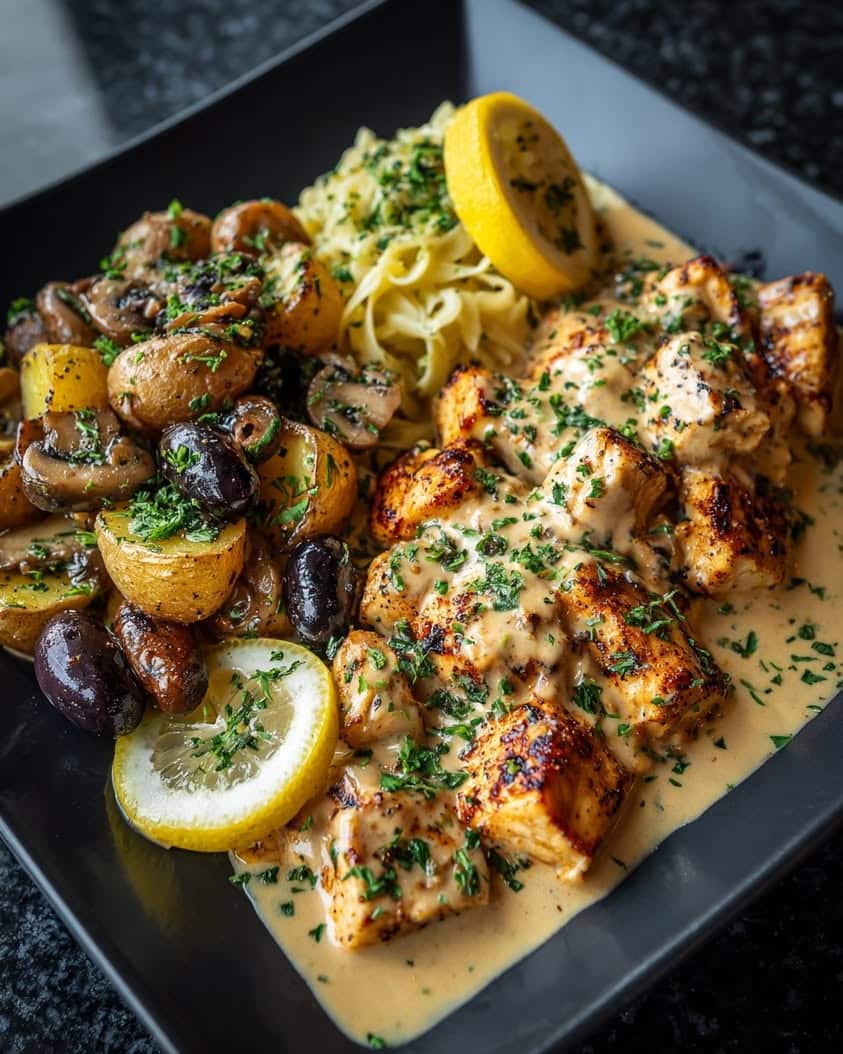
Grilled Chicken Bites in Cream Sauce with Herb Potatoes & Olive-Mushroom Medley: A Quick, Elegant Dinner That’s Full of Flavor!
Imagine a dinner that feels like a special occasion but comes together on a busy weeknight. This recipe for creamy grilled chicken bites with crispy herb potatoes and a savory olive-mushroom medley delivers exactly that. The combination of tender, golden chicken pieces swimming in a rich, velvety sauce alongside perfectly roasted potatoes and a briny, earthy vegetable mix is a symphony of comfort and sophistication. Moreover, this dish is designed to impress without stress, making it a perfect solution for both family dinners and casual entertaining.
The magic of this meal lies in its beautiful balance. For instance, the creamy sauce clings to the juicy grilled chicken bites, creating a luxurious mouthfeel that contrasts wonderfully with the crispy exterior of the herb-roasted potatoes. Meanwhile, the olive-mushroom medley adds a pop of umami and a slightly tangy note that cuts through the richness. Ultimately, every component complements the others, resulting in a cohesive and deeply satisfying plate that will have everyone asking for seconds.
Furthermore, this recipe is incredibly versatile. You can easily adapt it based on what you have in your pantry or to suit different dietary needs. The process is straightforward, but the final presentation looks like it came from a boutique bistro. Consequently, whether you are a seasoned home cook or just building your confidence in the kitchen, this guide will walk you through every step to ensure a flawless and delicious result every single time.
Quick Recipe Highlights
- Flavor Profile: This dish features a masterful blend of savory, creamy, and herbal notes. The grilled chicken bites offer a smoky, charred foundation, while the cream sauce introduces a luxurious, peppery richness. Additionally, the olive-mushroom medley contributes a salty, umami depth that ties everything together beautifully.
- Texture: You will experience a delightful contrast in every bite. The chicken is tender and juicy, the potatoes are crispy on the outside and fluffy within, and the mushrooms provide a meaty, substantial chew. The smooth, velvety cream sauce acts as the perfect cohesive element, binding all the textures harmoniously.
- Aroma: As this meal cooks, your kitchen will fill with an irresistible fragrance. Initially, you will smell the earthy rosemary and thyme from the roasting potatoes. Subsequently, the sizzling chicken and garlic will release their savory scent, followed finally by the deep, woodsy aroma of sautéed mushrooms and briny olives.
- Visual Appeal: This plate is a feast for the eyes with its varied colors and textures. Golden-brown chicken bites rest in a pale cream sauce, surrounded by crispy, golden potato wedges and a dark, glossy medley of mushrooms and black olives. A final sprinkle of fresh green herbs adds the perfect finishing touch.
- Skill Level Needed: This is an accessible recipe for most home cooks. It requires basic techniques like chopping, sautéing, and roasting. Managing multiple components simultaneously is the main challenge, but with clear instructions and a bit of organization, even a beginner can achieve excellent results.
- Special Equipment: You will need a reliable skillet or grill pan for the chicken, a sturdy baking sheet for the potatoes, and a medium saucepan for the cream sauce. A good set of kitchen knives and mixing bowls are also helpful. No specialized or expensive equipment is necessary.
Recipe Overview
- Difficulty Level: We rate this recipe as “Easy” because it breaks down into simple, manageable steps. While there are three components to prepare, each one uses fundamental cooking methods. The timeline is efficient, and most of the cook time is hands-off while the potatoes roast. With proper prep, the entire meal synchronizes perfectly for a stress-free dinner.
- Category: This dish fits perfectly into the “Main Course” category for lunch or dinner. It is a complete, balanced meal featuring protein, starch, and vegetables. Furthermore, it can be classified as a “Comfort Food” recipe due to its creamy, satisfying nature, and also as a “Gourmet Home Cooking” dish because of its elegant presentation and layered flavors.
- Cuisine: This recipe draws inspiration from modern American bistro cuisine and Mediterranean flavors. The use of olives, garlic, and herbs is classically Mediterranean, while the creamy pan sauce is a technique beloved in French and contemporary American cooking. It is a fusion dish that prioritizes fresh, high-quality ingredients and robust flavors.
- Cost: This is a very cost-effective meal to prepare. Chicken breast, potatoes, and common mushrooms are budget-friendly staples. Cream, olives, and fresh herbs are the only slightly pricier items, but they are used in modest amounts. Overall, you can expect to feed four people a restaurant-quality meal for a fraction of the cost of dining out.
- Season: This recipe is truly versatile across seasons. It is hearty enough for cooler fall and winter evenings, yet the bright herbal notes and grilled elements feel appropriate for spring and summer. You can easily adapt the herb potatoes with seasonal varieties like new potatoes in the spring or sweet potatoes in the fall.
- Occasion: It is ideal for a special weeknight dinner, a casual Friday night feast, or a small gathering with friends. The recipe scales well, and the impressive presentation makes it suitable for a date night at home or a family celebration. It is comforting yet refined, fitting a variety of informal occasions.
Why You’ll Love This Recipe
First and foremost, the taste and texture appeal is undeniable. Each component of this creamy grilled chicken bites dish is designed to delight your senses. The chicken is succulent and infused with a subtle smokiness from the grill pan. Meanwhile, the cream sauce is velvety and rich, with a peppery kick that enhances the chicken without overwhelming it. The potatoes provide a satisfying crunch, and the olive-mushroom medley introduces a complex, savory note that makes each forkful interesting. Consequently, you get a restaurant-quality dining experience with layers of flavor and contrast in every single bite.
Secondly, the convenience and preparation benefits are major wins. This recipe looks elaborate but is built on efficient, parallel cooking. While the potatoes roast in the oven, you can focus on the stovetop components. The steps are clearly segmented, preventing kitchen chaos. Additionally, most ingredients are pantry staples or easy to find, meaning you can decide to make this dish spontaneously. The total active prep time is minimal compared to the impressive outcome, making it a perfect blueprint for a stress-free yet special dinner any night of the week.
From a nutritional standpoint, this meal offers a well-rounded balance. Chicken breast is an excellent source of lean protein, essential for muscle repair and satiety. Potatoes, often misunderstood, provide valuable vitamin C, potassium, and fiber, especially when you eat the skin. Mushrooms are a low-calorie source of B vitamins and antioxidants. By using a moderate amount of cream and balancing it with plenty of vegetables, you create a meal that feels indulgent while still providing substantive nutritional value. It is a satisfying way to enjoy comfort food without excessive guilt.
Furthermore, the social and entertaining value of this dish is high. It plates beautifully, making it ideal for sharing photos or serving to guests. The process of bringing the components together on a platter or individual plates feels chef-like and special. Because it is a complete meal in one recipe, you can spend less time planning multiple courses and more time enjoying your company. It is a guaranteed conversation starter that will make you feel like a culinary host, all with a manageable amount of effort.
Finally, the cost-effectiveness and accessibility are key advantages. As mentioned, the core ingredients are affordable. You can easily adapt the recipe based on sales or preferences; for example, using chicken thighs instead of breasts or swapping cremini mushrooms for button mushrooms. This flexibility ensures the recipe remains within budget. Compared to ordering similar dishes for delivery or dining out, preparing this creamy grilled chicken bites meal at home saves significant money while allowing you to control ingredient quality and portion sizes. It is gourmet cooking made practical and accessible for everyday life.
Historical Background and Cultural Significance
The concept of pairing grilled meat with a creamy sauce and potatoes has deep roots in European culinary traditions. Specifically, the technique of creating a pan sauce after searing meat is a cornerstone of French cuisine, where deglazing the fond with wine or stock and finishing with cream is a classic method. This approach, known as “à la crème,” was developed to maximize flavor and create a luxurious texture from simple pan drippings. Our recipe for creamy grilled chicken bites modernizes this technique, making it quicker and more accessible for the contemporary home cook while honoring its elegant origins.
Culturally, the combination reflects a universal desire for hearty, satisfying meals that combine protein, starch, and vegetables. In many cultures, a “meat and potatoes” dish is the epitome of a comforting, complete dinner. The addition of mushrooms and olives, however, introduces a Mediterranean influence. Olives have been a staple in Southern European and Middle Eastern diets for millennia, prized for their oil and preserved fruit. Incorporating them into a vegetable medley adds a historical touch of preservation and flavor concentration that has sustained people across regions and seasons.
The evolution of this recipe is a story of convenience meeting tradition. Historically, such a meal might have involved longer cooking times, whole birds, and more complex sauce preparations. The modern adaptation uses quick-cooking chicken bites, which cater to today’s faster pace of life. Similarly, roasting potato wedges is a simpler, healthier alternative to traditional frying or rich potato gratins. This evolution demonstrates how classic flavor profiles can be maintained while adapting techniques and formats to suit modern kitchens, dietary awareness, and time constraints without sacrificing soul or satisfaction.
Regional variations of this concept are endless. In the American South, you might find a similar dish with a country cream gravy. In Switzerland, it could involve a richer mushroom cream sauce, or “Geschnetzeltes.” The use of different herbs—rosemary and thyme here, but perhaps dill or tarragon elsewhere—also speaks to regional availability and taste. This particular version with its olive-mushroom medley leans into a Provençal or Italian coastal vibe. Understanding these roots enriches the cooking experience, allowing you to see your meal as part of a global tapestry of comforting, creamy, and savory dishes that have nourished families for generations.
Ingredient Deep Dive
Chicken Breast is the star protein. Culturally, chicken is one of the most universally consumed meats, valued for its mild flavor and versatility. Nutritionally, it is an excellent source of lean protein, niacin, selenium, and vitamin B6. For best results, select plump, evenly sized breasts with a pink hue and no gray spots. Pat them thoroughly dry before cutting to ensure a good sear. You can store raw chicken in the coldest part of your refrigerator for 1-2 days, or freeze for longer. For substitution, boneless, skinless chicken thighs offer more flavor and moisture, though they will have a slightly higher fat content.
Heavy Cream forms the base of the luxurious sauce. Historically, cream has been used for centuries to enrich sauces and soups, especially in dairy-rich regions of Europe. It provides a smooth texture and carries flavors beautifully. Nutritionally, it is high in fat and calories, so it is used in moderation here to create richness without excess. When selecting, choose pasteurized heavy cream or whipping cream with at least 36% milk fat for the best stability and flavor. It should be stored tightly sealed in the refrigerator. For a lighter version, half-and-half can be used, but the sauce will be thinner and less luxurious. For a dairy-free alternative, full-fat coconut cream can provide a similar richness, though it will impart a coconut flavor.
Potatoes are the foundational starch. Potatoes originated in the Andes and became a global staple due to their hardiness and nutritional value. They are a good source of vitamin C, potassium, and fiber, particularly with the skin on. For this recipe, choose starchy potatoes like Russets or all-purpose varieties like Yukon Golds, which will become crispy on the outside and fluffy inside. Store them in a cool, dark, well-ventilated place—not in the refrigerator. There is no direct substitute for the texture of roasted potato wedges, though sweet potato wedges would offer a different nutritional profile and flavor while following the same cooking method.
Cremini Mushrooms add earthy depth to the medley. These are simply immature portobello mushrooms, offering a deeper flavor than white button mushrooms. They have been foraged and cultivated for thousands of years across many cultures for their umami quality. They are low in calories and provide B vitamins, selenium, and antioxidants. Select mushrooms that are firm, dry, and smooth, with tightly closed caps. Store them in a paper bag in the refrigerator. You can substitute with white button mushrooms or more exotic varieties like shiitake for a stronger flavor. Avoid washing them under water; instead, wipe clean with a damp cloth or brush.
Kalamata Olives bring a briny, tangy punch. These dark purple olives hail from Greece and are traditionally preserved in a vinegar brine. They are a hallmark of Mediterranean cuisine. They contain healthy monounsaturated fats and antioxidants. Select olives sold in brine from the deli section for the best flavor and texture. You can store them in their brine in the refrigerator for several weeks. Pitted olives save prep time. For substitution, other black olives like Niçoise or Gaeta can be used, though green olives like Castelvetrano will offer a milder, buttery flavor that changes the character of the dish.
Common Mistakes to Avoid
- Overcrowding the Pan with Chicken: When searing the chicken bites, give them space. If the pan is too crowded, the chicken will steam instead of developing a golden-brown crust. This crust is crucial for flavor and texture. Cook in batches if necessary to ensure each piece gets proper contact with the hot surface.
- Underseasoning the Potatoes: Potatoes need generous seasoning. Do not just sprinkle salt on top after roasting. Toss the potato wedges thoroughly with oil, salt, pepper, and herbs until every surface is coated. This ensures the seasoning penetrates and creates a flavorful, crispy exterior during roasting.
- Using Cold Cream: Adding cold heavy cream directly to a hot pan can cause it to seize or curdle. To prevent this, let the cream sit out for 10-15 minutes to take the chill off before incorporating it into the sauce. Furthermore, add it gradually while stirring constantly for a smooth emulsion.
- Overcooking the Chicken Bites: Because they are small pieces, chicken bites cook quickly and can become dry and tough if left on the heat too long. Use a meat thermometer and remove them from the pan at 160-165°F; they will carry over to a safe 165°F as they rest. The goal is juicy, tender meat.
- Skipping the Deglazing Step: After removing the chicken, those browned bits (fond) at the bottom of the pan are packed with flavor. Do not skip adding a splash of broth or wine to scrape them up. This step forms the flavor foundation of your cream sauce and should not be wasted.
- Neglecting to Preheat the Baking Sheet: For the crispiest herb potatoes, place your empty baking sheet in the oven while it preheats. Adding the potatoes to a hot surface immediately starts the crisping process on the bottom, preventing them from sticking and yielding a superior texture.
- Chopping Vegetables Inconsistently: Cut the potato wedges and chicken bites to roughly uniform sizes. Inconsistent pieces will cook at different rates, leading to some being overcooked and others undercooked. Taking time with prep ensures even cooking and a professional result.
- Adding Garlic Too Early: Garlic burns easily and becomes bitter. When sautéing the mushrooms, add the minced garlic towards the end of their cooking time, just for the last 30-60 seconds, until it becomes fragrant. This preserves its sweet, aromatic quality without introducing bitterness.
Essential Techniques
Pan Searing for Chicken Bites: This technique is vital for developing flavor through the Maillard reaction, which creates complex, savory compounds and a beautiful brown crust. To master it, ensure your pan is properly preheated over medium-high heat and your chicken pieces are patted completely dry. Add oil just before the chicken, and do not move the pieces for the first few minutes to allow a crust to form. A common pitfall is flipping too early; wait until the chicken releases easily from the pan. Visual cues for success include a golden-brown color and audible sizzling when the chicken first hits the pan.
Deglazing to Build Sauce: Deglazing is the process of adding liquid to a hot pan to dissolve the flavorful browned bits stuck to the bottom. This technique is crucial for capturing all the savory fond left from searing the chicken. Use a wooden spoon or spatula to scrape vigorously as you add warm broth or wine. The key is to do this immediately after removing the chicken while the pan is still hot. The liquid should bubble and steam, quickly lifting the fond. You will know it is working when the liquid in the pan turns a rich, dark color and the bottom of the pan looks clean.
Roasting Potato Wedges: Roasting transforms potatoes by driving off moisture and caramelizing their natural sugars, creating a crispy exterior and fluffy interior. The essential technique here is high heat and adequate space. Toss the potatoes in oil and seasoning until thoroughly coated. Spread them in a single layer on a preheated baking sheet, ensuring they are not touching. This allows hot air to circulate. Do not stir them too frequently; letting them sit promotes browning. Visual cues for perfect potatoes are deep golden edges, a crispy skin, and a fork-tender center.
Building a Cream Sauce: A simple cream sauce requires gentle cooking to prevent breaking. After deglazing, reduce the heat to medium-low before adding the cream. Stir constantly as you pour it in to encourage emulsification. Let it simmer gently—not boil vigorously—to thicken slightly. The sauce is ready when it coats the back of a spoon. A common pitfall is boiling too hard, which can cause the fat to separate. The visual cue for success is a smooth, velvety texture with no visible separation of oils on the surface.
Pro Tips for Perfect Grilled Chicken Bites in Cream Sauce
First, brine your chicken breasts for 30 minutes in a simple saltwater solution. This step, though optional, guarantees incredibly juicy and flavorful chicken bites, even if you accidentally overcook them slightly. Simply dissolve a tablespoon of salt in two cups of cold water, submerge the chicken, and refrigerate before patting dry and cubing.
Use an instant-read thermometer for the chicken. Visual cues can be misleading, especially with irregularly sized pieces. Pull the chicken from the pan when it reaches 160-165°F; the residual heat will bring it to the safe temperature of 165°F without drying it out. This is the single best way to achieve perfect doneness.
For an extra flavor boost in the cream sauce, add a teaspoon of whole grain mustard or a pinch of freshly grated nutmeg along with the black pepper. These ingredients complement the cream and chicken beautifully, adding a subtle complexity that elevates the entire dish without being identifiable.
Finish the dish with fresh herbs. While dried herbs are fine for roasting the potatoes, adding a sprinkle of freshly chopped parsley, chives, or thyme over the plated dish just before serving introduces a burst of color and a bright, fresh aroma that makes the meal feel restaurant-quality.
Let the chicken rest before adding it back to the sauce. After searing, transfer the chicken bites to a plate and tent loosely with foil for 5 minutes. This allows the juices to redistribute throughout the meat. Then, add them to the finished sauce, ensuring they stay succulent.
If your cream sauce seems too thin, create a quick slurry. Mix a teaspoon of cornstarch with a tablespoon of cold water or broth until smooth. Whisk this into the simmering sauce and cook for an additional minute until thickened. This is a foolproof fix for a sauce that needs more body.
Variations and Adaptations
For regional variations, consider a Tuscan-inspired twist by adding a handful of sun-dried tomatoes and spinach to the cream sauce. Alternatively, for a French flair, use Herbes de Provence on the potatoes and finish the sauce with a splash of brandy instead of broth. An American Southern version might include a splash of hot sauce in the cream and use smoked paprika on the potatoes.
Seasonal adaptations are simple and effective. In spring, use new potatoes and fresh peas in the medley. During summer, grill the potato wedges on the barbecue alongside the chicken for a smoky flavor. For autumn, swap regular potatoes for sweet potatoes and add sautéed kale to the mushroom mix. In winter, use heartier mushrooms like shiitake or oyster.
Dietary modifications are straightforward. For a gluten-free version, ensure your broth is certified gluten-free. To make it dairy-free, use full-fat coconut cream and a tablespoon of nutritional yeast for a cheesy note. For a keto or low-carb adaptation, replace the potatoes with roasted cauliflower or turnip wedges, and thicken the sauce with a touch of xanthan gum instead of a cornstarch slurry.
Flavor variations can personalize the dish. Add a teaspoon of smoked paprika or chipotle powder to the seasoning for a smoky, spicy kick. Stir a tablespoon of pesto into the finished cream sauce for an herbal, garlicky punch. For a brighter profile, add the zest and juice of half a lemon to the sauce just before serving.
Texture modifications can cater to different preferences. For extra crispy potatoes, parboil the wedges for 5 minutes before tossing with oil and roasting. If you prefer a smoother sauce, blend it briefly with an immersion blender after adding the cream. For a chunkier medley, use larger cuts of mushroom and leave the olives whole.
Presentation alternatives can change the dining experience. Serve the components deconstructed on a large platter for a family-style meal. Alternatively, plate individually by stacking potato wedges, topping with chicken and sauce, and garnishing with the medley. For an appetizer, serve the creamy grilled chicken bites on skewers with the sauce for dipping and the potatoes on the side.
Serving and Presentation Guide
For plating, choose a wide, shallow bowl or a large dinner plate to contain the sauce. Start by placing a portion of the crispy herb potatoes on one side of the plate. Then, spoon the creamy grilled chicken bites and sauce next to or slightly over the potatoes. Finally, artfully scatter the olive-mushroom medley over the top and around the edges. This method showcases each component while allowing them to mingle.
Garnishing is the final touch that elevates visual appeal. A sprinkle of freshly chopped flat-leaf parsley or chives adds a vibrant green contrast. A light dusting of paprika or a few cracks of black pepper on the cream sauce adds color. For a special occasion, a few microgreens or edible flowers make a stunning impression.
Traditional accompaniments for such a rich dish are simple. A light, crisp green salad with a lemon vinaigrette is perfect for cutting through the creaminess. Crusty bread, like a baguette, is essential for sopping up every last drop of the delicious sauce. These sides keep the focus on the main event while providing balance.
Modern serving suggestions might include a side of roasted asparagus or grilled zucchini. For a low-carb option, a simple arugula salad with shaved Parmesan works beautifully. You could also serve the dish in a single large skillet or baking dish at the center of the table for a rustic, communal feel that encourages sharing.
Temperature considerations are critical. Serve this dish immediately after assembling. The potatoes are best piping hot and crispy, the sauce should be warm and fluid, and the chicken must be served hot for food safety and optimal texture. Warm your serving plates slightly to keep everything hot longer once it hits the table.
Portion control is easy with this recipe. The stated servings are generous. For lighter appetites, you can stretch it to serve five or six by increasing the portion of potatoes and medley relative to the chicken. When serving family-style, provide serving utensils for each component so guests can build their own plates according to their preferences.
Wine and Beverage Pairing
For wine pairings, you want something that can stand up to the creamy sauce and earthy mushrooms without overpowering the chicken. A medium-bodied white like an oaked Chardonnay complements the cream’s richness with its buttery notes. Alternatively, a light to medium-bodied red with low tannins, such as a Pinot Noir or Grenache, pairs beautifully with the mushrooms and olives. The key is to avoid highly tannic reds, which can clash with the cream.
Non-alcoholic alternatives should offer cleansing bubbles or bright acidity. A sparkling water with a squeeze of lemon or lime is always refreshing. For a more crafted option, try a ginger beer or a tart cherry spritzer. Herbal iced teas, like rosemary-lemon or mint, can also mirror the herbal notes in the dish and cleanse the palate between bites.
While not traditional, certain coffees or teas can work if serving this as a hearty lunch. A light roast coffee with bright acidity can cut through the fat. A smoky Lapsang Souchong tea might surprisingly complement the grilled notes of the chicken. However, these are more adventurous pairings best saved for those who enjoy experimenting with flavors.
Temperature considerations for beverages are standard. Serve white wines and non-alcoholic sparklers well chilled. Red wines should be served slightly below room temperature, around 60-65°F. Iced beverages should be cold but not diluted; use large ice cubes to prevent watering them down too quickly during the meal.
Serving suggestions include offering both a white and a red wine option if you have guests with different preferences. Always pour water as well. When serving non-alcoholic options, present them in elegant glassware to make the experience feel just as special. Encourage sipping between bites to reset the palate for the next flavorful forkful.
Storage and Shelf Life
For storage, place leftovers in an airtight container in the refrigerator. It is best to store the components separately if possible, as the potatoes will lose their crispness when mixed with the sauce. The creamy grilled chicken bites and sauce can be stored together, and the olive-mushroom medley can be kept in its own container. This method preserves textures best for reheating.
Temperature requirements are straightforward: refrigeration below 40°F is mandatory. Do not leave the assembled dish at room temperature for more than two hours. When storing, cool the components to room temperature before sealing and refrigerating to prevent condensation, which can make the potatoes soggy and dilute the sauce.
Container recommendations include glass containers with tight-fitting lids, which are non-reactive and allow you to see the contents. For the potatoes, a container that allows some air circulation can help, but an airtight container is fine for short-term storage. Always use shallow containers to promote rapid, even cooling.
Signs of spoilage include an off or sour smell, especially from the dairy-based sauce. Mold growth, a slimy texture on the chicken or vegetables, or significant separation of the sauce are all indicators the food should be discarded. When in doubt, it is always safer to throw it out.
Reheating instructions are crucial for quality. Reheat the sauce and chicken gently in a saucepan over low heat, adding a splash of broth or milk if the sauce has thickened too much. Re-crisp the potatoes in a 400°F oven or air fryer for 5-10 minutes. Reheat the medley quickly in a skillet. Avoid microwaving the assembled dish, as it will make everything soggy.
Freezing is not recommended for the complete dish due to the dairy-based sauce and potatoes, which can separate and become grainy or mushy upon thawing. However, you can freeze the plain grilled chicken bites separately for up to 3 months. Thaw in the refrigerator overnight and reheat gently in a sauce you make fresh.
Make Ahead Strategies
You can prep a full day in advance. Cube the chicken and store it in a sealed container in the fridge. Scrub and cut the potato wedges; submerge them in cold water in a bowl to prevent browning. Clean and slice the mushrooms, and measure out your olives, herbs, and cream. Having everything prepped and ready makes the actual cooking process incredibly fast and smooth.
For storage between steps, keep prepped ingredients in separate containers. The water-submerged potatoes can stay in the fridge for 24 hours; just drain and pat them very dry before tossing with oil and roasting. The chicken can be seasoned lightly before refrigerating. Keep the cream and broth in their original containers until ready to use.
Assessing quality impact is important. Pre-cut potatoes may lose a tiny amount of crispness potential but the difference is minimal if dried thoroughly. Pre-cut mushrooms are fine. The chicken may release a little moisture, so pat it dry again before cooking. The overall flavor and quality of the final dish will not be compromised by this advance prep.
Assembly tips for serving day: Start by roasting the potatoes, as they take the longest. While they roast, cook the chicken and make the sauce. Sauté the medley last, as it comes together quickly. You can hold the cooked chicken in the warm sauce over very low heat, and keep the potatoes warm in the turned-off oven with the door ajar.
Reheating guidelines for make-ahead components are simple. If you fully cook everything ahead, gently reheat the chicken and sauce on the stovetop. Re-crisp the potatoes in a hot oven. The medley is best reheated quickly in a pan. Avoid holding the fully assembled dish for more than an hour before serving, as the potatoes will soften.
For fresh element additions, always add a final garnish of fresh herbs just before serving, even if you used dried herbs in the cooking process. This provides a burst of fresh aroma and color that makes the dish taste freshly made. You can also finish with a fresh drizzle of extra virgin olive oil or a squeeze of lemon juice to brighten the flavors.
Scaling Instructions
Halving the recipe is simple for smaller households. Use one large chicken breast, one large potato, and reduce all other ingredients by roughly half. Use a smaller skillet and baking sheet. Cooking times may be slightly shorter, so rely on visual and temperature cues rather than the timer alone. This is a perfect way to create a romantic dinner for two.
Doubling or tripling for a crowd requires some adjustments. Use multiple baking sheets for the potatoes, rotating them in the oven halfway through. Sear the chicken in batches to avoid overcrowding. You may need to make the cream sauce in a larger pot or in two batches. Consider keeping the components warm in separate serving dishes on a low-heat setting or in warming trays.
Equipment adjustments are necessary when scaling up. Ensure you have a large enough skillet or use a Dutch oven for batching the chicken. For a large group, roasting the potatoes on parchment-lined sheet pans is essential for easy cleanup. Having multiple sets of tongs and spatulas will make the process more efficient.
Timing modifications are minimal when scaling. The potato roasting time may increase slightly if the pans are very crowded. The chicken searing time will increase proportionally with the number of batches. The sauce may take a minute or two longer to thicken if made in a larger quantity. Always taste and adjust seasoning at the end, as larger volumes require more salt and pepper.
Storage considerations for leftovers change with scale. If you double the recipe but don’t have double the guests, be prepared with adequate storage containers. Remember that leftovers are best stored in portion-sized containers for easy reheating. Clearly label containers with the date to keep track of freshness.
Nutritional Deep Dive
This meal provides a balanced macronutrient profile. A typical serving offers a substantial amount of high-quality protein from the chicken, which supports muscle maintenance and satiety. The carbohydrates come primarily from the potatoes, providing energy and fiber, especially with the skin on. The fats are a mix from the olive oil, cream, and olives, contributing to the feeling of fullness and carrying fat-soluble flavors. The balance helps maintain steady energy levels after eating.
The micronutrient analysis is impressive. Chicken breast is rich in B vitamins, particularly B6 and niacin, which are crucial for energy metabolism. Potatoes provide more potassium than a banana, along with vitamin C. Mushrooms offer selenium and additional B vitamins. Olives contribute vitamin E and beneficial monounsaturated fats. Together, these ingredients create a meal dense in essential vitamins and minerals that support overall health.
Health benefits extend beyond basic nutrition. The lean protein aids in weight management by promoting fullness. The fiber from potatoes and mushrooms supports digestive health. The monounsaturated fats from olives and olive oil are heart-healthy. The herbs like rosemary and thyme contain antioxidants. This dish is a good example of how comforting food can also be nourishing when prepared with wholesome ingredients and mindful techniques.
Dietary considerations are important to note. The dish contains dairy (cream) and is not suitable for those with lactose intolerance or a dairy allergy without modification. It is naturally gluten-free if using a certified gluten-free broth. For those on a low-carb or keto diet, the potatoes would need to be substituted. It is a high-protein meal, making it suitable for active individuals.
Portion analysis shows that one serving as described is satisfying and complete. You can adjust the ratio on your plate if you have specific dietary goals: increase the medley and chicken for more protein and vegetables, or increase the potatoes for more carbohydrates. The cream sauce, while rich, is used in moderation to coat rather than drown the other components, keeping the fat content per serving in check.
For weight management, this recipe is an excellent choice because it is satiating. The combination of protein, fiber, and healthy fats helps control hunger. To reduce calories further, you can use a lighter cream alternative or slightly increase the proportion of the vegetable medley while slightly reducing the amount of potatoes and sauce on your plate. Cooking sprays can be used for the potatoes instead of oil for a minor reduction in fat.
Dietary Adaptations
For a gluten-free version, this recipe is naturally compliant as written, provided you use a certified gluten-free chicken broth. Always check labels on pre-made broths and creams, as some may contain additives with gluten. No other substitutions are needed, making this an easy and safe choice for those with celiac disease or gluten sensitivity.

I’m Shaykee—born in Morocco, seasoned across continents. From airplane galleys to home kitchens, I share the flavors and stories that shaped my journey.