
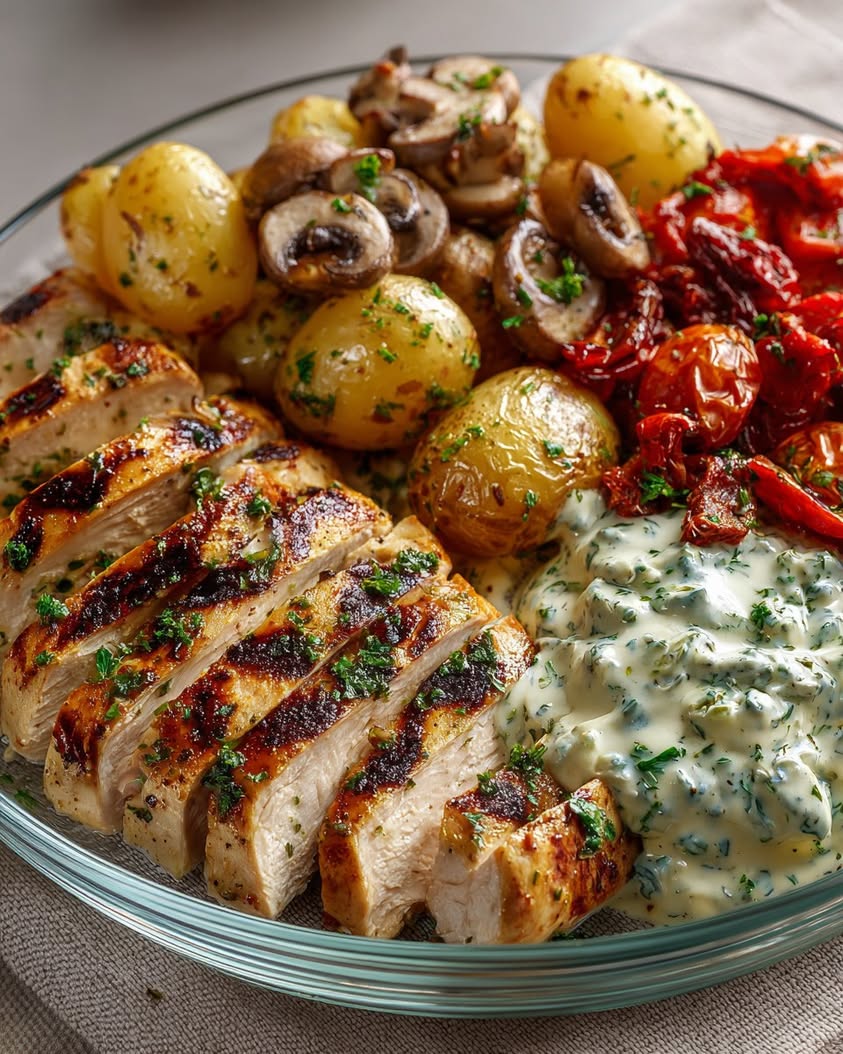
Grilled Chicken with Creamy Herb Sauce, Golden Potatoes & Roasted Veggies: A Complete, Flavor-Packed Dinner Ready in No Time!
Imagine a dinner plate that delivers on every promise of comfort and nutrition. This recipe for grilled chicken with creamy herb sauce, golden potatoes, and roasted veggies is exactly that. It is a symphony of textures and flavors designed to satisfy the whole family without demanding hours in the kitchen. The star of the show is undoubtedly the creamy herb sauce drizzled over juicy grilled chicken, creating a restaurant-quality experience right at your table. Meanwhile, the golden potatoes and roasted veggies provide a hearty and colorful foundation that makes this meal feel complete and utterly satisfying.
Furthermore, this dish is a masterclass in efficient cooking. By utilizing your oven and grill or stovetop simultaneously, you can have a stunning, balanced meal on the table in about an hour. The process is straightforward, and the results are consistently impressive. The aroma of herbs and garlic mingling with the sizzle of chicken and the caramelizing edges of vegetables is pure kitchen magic. Ultimately, this recipe proves that a healthy, delicious dinner doesn’t require complicated techniques or obscure ingredients.
Finally, the visual appeal of this meal is undeniable. The vibrant colors of the roasted vegetables, the golden-brown crust on the potatoes, and the perfectly grilled chicken create a plate that is as beautiful as it is tasty. It is the kind of meal that is perfect for a casual weeknight but special enough for weekend guests. This grilled chicken with creamy herb sauce, golden potatoes, and roasted veggies is your new go-to for a reliable, flavor-packed dinner.
Quick Recipe Highlights
- Flavor Profile: This dish offers a beautiful balance. The grilled chicken is savory and slightly smoky, perfectly complemented by the bright, tangy, and herbaceous creamy sauce. The golden potatoes are crispy and salty, while the roasted veggies add a natural, caramelized sweetness.
- Texture: You get a wonderful contrast in every bite. The chicken is tender and juicy, the sauce is luxuriously smooth, the potatoes offer a satisfying crunch on the outside with a fluffy interior, and the roasted veggies are tender with slightly crisp edges.
- Aroma: As it cooks, your kitchen will fill with the irresistible scents of roasting garlic and herbs, the savory smell of chicken on the grill, and the earthy, sweet fragrance of caramelizing vegetables.
- Visual Appeal: The plate is a feast for the eyes with a colorful array of roasted vegetables like bell peppers and zucchini, golden-brown potato wedges, succulent chicken, and a vibrant green herb sauce drizzled on top.
- Skill Level Needed: This is an accessible recipe for most home cooks. It involves basic techniques like chopping, seasoning, roasting, and grilling or pan-searing. Organization is key, but no advanced skills are required.
- Special Equipment: You will need a sheet pan for roasting, a grill or large skillet for the chicken, and a blender or food processor for the smoothest creamy herb sauce. A good set of kitchen knives is also helpful.
Recipe Overview
- Difficulty Level: We rate this recipe as easy. The steps are simple and linear. Most of the work involves prep—chopping vegetables and potatoes—and then letting the oven and grill do their jobs. The sauce comes together quickly in a blender. There is no intricate timing or complex techniques, making it very approachable for beginners.
- Category: This is a quintessential main course or dinner entree. It is a complete protein-and-vegetable meal that stands on its own. You could also consider it a fantastic meal prep option, as all components reheat well for lunches throughout the week.
- Cuisine: The dish draws inspiration from modern American home cooking and bistro-style fare. The use of a creamy, fresh herb sauce has nods to French cuisine, while the method of roasting vegetables and potatoes is a universal, healthy technique loved globally.
- Cost: This is a very cost-effective meal. Chicken breasts, potatoes, and seasonal vegetables like bell peppers, zucchini, and onions are typically affordable. The sauce ingredients—fresh herbs, garlic, lemon, yogurt, or mayonnaise—are pantry staples for many. Overall, it delivers high value and restaurant-quality taste on a sensible budget.
- Season: This recipe is truly versatile across seasons. In summer, use fresh garden herbs and vegetables. In winter, root vegetables like carrots and parsnips roast beautifully alongside the potatoes. The hearty nature of the dish makes it comforting in cooler months, yet the fresh sauce keeps it light enough for warmer evenings.
- Occasion: It is perfect for busy weeknights, casual weekend family dinners, or even for entertaining. You can easily double the recipe to feed a crowd. The impressive presentation makes guests feel special, while the simple preparation keeps stress low for the host.
Why You’ll Love This Recipe
First and foremost, the taste and texture combination is absolutely unbeatable. Each component brings something unique to the plate. The juicy, well-seasoned grilled chicken provides a protein-rich base. Then, the creamy herb sauce drizzled over the top adds a burst of fresh, tangy flavor that elevates the entire dish. Simultaneously, the golden potatoes offer a comforting, starchy element with a delightful crispy exterior. Finally, the roasted veggies contribute sweetness and depth, ensuring every forkful is interesting and satisfying. This harmony of flavors makes the meal feel indulgent yet balanced.
Another significant benefit is the sheer convenience and streamlined preparation. Although the total time is about an hour, the active prep time is minimal. You simply chop, toss, and let the oven work its magic. The potatoes and veggies roast together on one pan, minimizing cleanup. While they cook, you can focus on grilling the chicken and blending the sauce. This efficient use of time and appliances means you are not stuck at the stove stirring multiple pots. Consequently, you get a complete, home-cooked dinner with surprisingly little hands-on effort.
From a nutritional standpoint, this meal is a powerhouse. It is packed with lean protein from the chicken, complex carbohydrates and fiber from the potatoes and vegetables, and healthy fats from the olive oil and sauce ingredients like yogurt or avocado oil mayo. You are consuming a wide variety of vitamins and minerals from the colorful vegetable medley. Importantly, you control the sodium and quality of ingredients, unlike with takeout or pre-made meals. Therefore, this recipe supports a healthy lifestyle without sacrificing flavor or satisfaction.
Moreover, this dish has tremendous social and entertaining value. It is visually impressive and universally appealing, making it a fantastic choice for dinner parties. You can prepare components in advance, so you are not cooking while guests are over. The act of drizzling the creamy herb sauce tableside adds a lovely finishing touch. For family meals, it is a great way to encourage everyone to eat their vegetables, as roasting brings out their natural sweetness. Ultimately, it is a meal that brings people together around a delicious and wholesome table.
Finally, the cost-effectiveness and accessibility of this recipe cannot be overstated. It utilizes common, affordable ingredients that are easy to find at any grocery store. You can adapt the vegetable selection based on what is on sale or in season. Compared to ordering similar meals from a restaurant, cooking this at home saves a substantial amount of money. Additionally, it yields generous portions, often with leftovers for another meal. This grilled chicken with creamy herb sauce, golden potatoes, and roasted veggies is the definition of a smart, delicious, and reliable dinner solution.
Historical Background and Cultural Significance
The concept of pairing roasted meats with herbs and vegetables is ancient, rooted in global culinary traditions. Specifically, the practice of roasting vegetables and tubers like potatoes over fire dates back centuries across Europe and the Americas. The method concentrates flavors and creates appealing textures, a technique our ancestors discovered and perfected. Meanwhile, using fresh herbs in sauces to accompany simply cooked protein is a hallmark of Mediterranean and French provincial cooking, where garden-fresh ingredients are celebrated.
Culturally, this type of meal represents the ideal of a “complete dinner” in modern Western home cooking. The formula of protein, starch, and vegetable on one plate became standardized in the mid-20th century, influenced by nutritional guidelines and family meal planning. The grilled chicken breast, in particular, rose to prominence as a health-conscious protein choice in the 1980s and 1990s. Consequently, this recipe is a contemporary evolution of that classic dinner plate, updated with a focus on fresh herbs, vibrant vegetables, and a sauce that adds gourmet flair.
The evolution of the recipe is also tied to kitchen technology. The widespread use of reliable home ovens made sheet-pan roasting a convenient weeknight technique. The popularity of electric blenders and food processors in the latter half of the 20th century democratized the creation of smooth, emulsified sauces like the creamy herb sauce featured here. Previously, such sauces required more laborious manual chopping and whisking. Therefore, this dish is a product of both timeless cooking principles and modern kitchen convenience.
Regional variations of this concept are endless. In the American South, the herbs might include parsley and dill with a buttermilk base. In California, the sauce could feature cilantro and lime with avocado. In Europe, the vegetables might be simpler—just potatoes and onions—with a sauce of crème fraîche and tarragon. This adaptability is key to its enduring appeal. It is a template that welcomes local ingredients and personal taste, making it a truly global and perennial favorite for a flavorful, balanced meal.
Ingredient Deep Dive
Chicken breasts are the lean canvas for this dish. Culturally, chicken is one of the most universally consumed meats, prized for its mild flavor and versatility. Nutritionally, it is an excellent source of high-quality protein and essential nutrients like niacin and selenium. For best results, select plump, evenly sized breasts for consistent cooking. You can also use chicken thighs for more flavor and juiciness. Always pat them dry before seasoning to ensure a good sear. Store raw chicken in the coldest part of your refrigerator and use within 1-2 days, or freeze for longer storage.
Yukon Gold potatoes are ideal for roasting. They have a naturally buttery flavor and creamy texture that becomes fluffy inside while crisping beautifully outside. Historically, potatoes were domesticated in South America and became a global staple. They provide complex carbohydrates, vitamin C, potassium, and fiber. Choose firm potatoes without sprouts or green tinges. For this recipe, cutting them into even wedges is crucial for uniform cooking. Store potatoes in a cool, dark, well-ventilated place—not in the refrigerator. Sweet potatoes make a vibrant and nutrient-dense substitution.
The roasted vegetable medley, typically including bell peppers, zucchini, and red onion, adds color, fiber, and vitamins. Bell peppers, native to Central and South America, are rich in vitamin C and antioxidants. Zucchini, a summer squash, is low in calories and high in water content. Red onions add sweetness and sulfur compounds with health benefits. Cut vegetables into similar-sized pieces to roast evenly. You can substitute with broccoli, carrots, asparagus, or mushrooms based on season and preference. Store fresh vegetables in your refrigerator’s crisper drawer.
The creamy herb sauce is the flavor powerhouse. Fresh herbs like parsley, dill, and chives are central. Herbs have been used medicinally and culinarily for millennia. They are packed with phytonutrients and vibrant flavor. Using fresh herbs is non-negotiable for the brightest taste. The creamy base often includes Greek yogurt or mayonnaise, garlic, lemon juice, and olive oil. Greek yogurt adds protein and tang, while mayonnaise creates a richer emulsion. For a dairy-free version, use vegan mayo or soaked cashews. Always blend the sauce until completely smooth for the best texture and appearance.
Common Mistakes to Avoid
- Crowding the Sheet Pan: Overloading the pan with potatoes and vegetables steams them instead of roasting. This results in soggy, pale food. Always use two pans if necessary to ensure everything is in a single layer with space between pieces.
- Underseasoning the Components: Seasoning only at the end is a critical error. You must generously season the chicken, potatoes, and vegetables with salt and pepper before cooking. This builds layers of flavor from the inside out.
- Not Preheating the Oven: Starting with a cold oven guarantees your potatoes and veggies will not get crispy. Always preheat your oven fully so the food starts cooking at the right temperature immediately.
- Skipping the Pat Dry Step: Failing to pat the chicken breasts dry with a paper towel prevents proper browning. Moisture on the surface creates steam, hindering the development of a flavorful crust.
- Overcooking the Chicken: Chicken breasts cook quickly and can become dry and tough. Use a meat thermometer and remove them from heat at 165°F (74°C), as carryover cooking will raise the temperature further.
- Blending a Warm Sauce: If using ingredients like garlic that you’ve lightly cooked, let them cool before blending with yogurt or mayo. Adding hot ingredients can cause the dairy to separate or the sauce to become runny.
- Cutting Vegetables Unevenly: Inconsistent sizes lead to uneven cooking—some pieces will burn while others remain hard. Take time to cut potatoes and veggies into uniform wedges and chunks.
- Neglecting to Toss Halfway: For even browning and caramelization, you must toss the potatoes and vegetables on the sheet pan about halfway through the roasting time. This ensures all sides get exposure to the hot pan surface.
Essential Techniques
Sheet Pan Roasting is the foundation for the potatoes and vegetables. This technique uses dry, high heat to caramelize the natural sugars in vegetables, creating deep flavor and appealing texture. To master it, preheat your oven, use enough oil to coat, and arrange food in a single layer. A common pitfall is stirring too often; let the food sit to develop a crust. Visual cues for success are golden-brown edges and tender interiors when pierced with a fork. This method is efficient because it cooks multiple components simultaneously with minimal cleanup.
Pan Searing or Grilling Chicken creates a flavorful Maillard reaction crust. This chemical reaction between amino acids and sugars gives the chicken its savory, complex taste and appealing color. The key is a hot cooking surface and leaving the chicken undisturbed for several minutes to form the crust. A common mistake is moving the chicken too soon, causing it to stick and tear. Visual cues include easy release from the pan or grill and clear grill marks. The chicken should feel firm but still have a slight give when pressed.
Emulsifying a Creamy Sauce involves blending fats and liquids into a smooth, unified mixture. For the herb sauce, the oil, yogurt/mayo, and lemon juice must combine seamlessly. Using a blender or food processor is crucial for a stable emulsion. The common pitfall is adding oil too quickly, which can cause separation. To avoid this, start with the softer ingredients (herbs, garlic, yogurt) and drizzle in the oil while the blender is running. Success is a pale green, uniformly smooth sauce that coats the back of a spoon without being greasy or broken.
Pro Tips for Perfect Grilled Chicken with Creamy Herb Sauce
Bring your chicken to room temperature for about 15 minutes before cooking. This simple step promotes even cooking from edge to center, preventing a dry exterior and raw interior.
Use an instant-read thermometer. This is the only foolproof way to know your chicken is perfectly cooked to 165°F (74°C) without guessing and risking dryness.
Let the chicken rest for 5-10 minutes after grilling. This allows the juices, which have been driven to the center by the heat, to redistribute throughout the meat, ensuring every bite is moist.
For extra-crispy potatoes, soak the cut wedges in cold water for 30 minutes before drying and tossing with oil. This removes excess surface starch, which leads to a crispier final product.
Make the creamy herb sauce ahead of time. Allowing it to sit in the refrigerator for an hour or more lets the flavors meld and intensify beautifully.
If your sauce is too thick, thin it with a teaspoon of water, milk, or extra lemon juice until it reaches your desired drizzling consistency.
For deeper flavor, toss your vegetables with a splash of balsamic vinegar or a sprinkle of smoked paprika along with the olive oil, salt, and pepper.
Garnish the finished plate with a final sprinkle of fresh chopped herbs and a crack of black pepper. This adds a fresh aroma and professional finish.
Variations and Adaptations
For regional variations, consider a Mediterranean twist with oregano, lemon zest, and kalamata olives in the vegetables, and a sauce of yogurt, cucumber, and mint. A Tex-Mex version could use a chili-lime rub on the chicken, roast corn and poblanos with the veggies, and a cilantro-lime crema sauce. An Italian-inspired take might feature rosemary on the potatoes, a sauce with basil and pine nuts (a quick pesto), and roasted cherry tomatoes.
Seasonal adaptations are easy and recommended. In spring, use asparagus and new potatoes. Summer is perfect for zucchini, eggplant, and cherry tomatoes. Fall calls for Brussels sprouts, sweet potatoes, and carrots. In winter, hearty roots like parsnips, turnips, and beets roast wonderfully. Adjust roasting times slightly for denser vegetables, as they may take a few minutes longer to become tender.
Dietary modifications are straightforward. For gluten-free, ensure all packaged ingredients like mayonnaise are certified GF. For dairy-free, use vegan mayonnaise and skip any yogurt. For a vegan main, replace chicken with large portobello mushroom caps or chickpea patties. For low-carb or keto, increase the volume of non-starchy vegetables like broccoli and cauliflower and substitute the potatoes with radishes or turnips, which roast well.
Flavor variations can personalize the dish. Add heat with red pepper flakes in the veggie toss or a dash of hot sauce in the creamy herb sauce. Incorporate umami with a sprinkle of grated Parmesan on the potatoes in the last 5 minutes of roasting or a teaspoon of miso paste blended into the sauce. For an herbal change, try using cilantro, basil, or tarragon as the primary herb in your sauce.
Serving and Presentation Guide
Plating techniques matter for visual impact. For a family-style presentation, arrange the golden potatoes and roasted veggies on a large platter, top with sliced or whole grilled chicken breasts, and drizzle generously with the creamy herb sauce. For individual plates, place a portion of potatoes and veggies as a base, lean a chicken breast against it, and artfully drizzle the sauce over and around the chicken. Leave a little sauce on the side for dipping.
Garnishing adds the final touch. A sprinkle of finely chopped fresh herbs (parsley, dill, or chives) over the entire plate adds color and a fresh aroma. A light grating of lemon zest over the chicken brightens the dish. For a touch of elegance, a few edible flowers or microgreens can transform a weeknight meal into a special occasion presentation.
Traditional accompaniments are minimal since this is a complete meal. However, a simple side salad with a light vinaigrette can provide a refreshing, crisp contrast. A crusty baguette is also welcome for soaking up any extra sauce on the plate. For a heartier meal, a side of rice or quinoa can stretch the servings.
Modern serving suggestions include deconstructing the elements. Serve the creamy herb sauce in a small pitcher or bowl for everyone to add their own amount. You can also chop the grilled chicken and toss it with the veggies and potatoes for a hearty “roast bowl,” then drizzle sauce over the top. This is especially good for meal prep lunches.
Wine and Beverage Pairing
Wine pairings should complement the herbaceous sauce and savory chicken. A crisp, unoaked Chardonnay or a French Chablis has the acidity to cut through the creaminess of the sauce. A dry Rosé, with its notes of red fruit and herbs, is another fantastic match, especially in warmer months. For red wine lovers, a light-bodied Pinot Noir with low tannins won’t overpower the chicken and will harmonize with the roasted vegetables.
Non-alcoholic alternatives can be just as thoughtful. Sparkling water with a squeeze of lemon or lime and a few fresh herb sprigs mirrors the dish’s flavors. An herbal iced tea, like mint or lemon verbena, is refreshing. For a more substantial option, a virgin mojito with muddled mint and lime complements the herbal notes beautifully.
Temperature considerations are key. White wines and rosés should be served well-chilled, around 45-50°F. Red wines like Pinot Noir are best slightly cooler than room temperature, around 55°F. Non-alcoholic sparkling drinks should be very cold to provide a refreshing contrast to the warm, savory meal.
Storage and Shelf Life
Store all components separately for best results. Place cooled grilled chicken, potatoes, and vegetables in airtight containers in the refrigerator. The creamy herb sauce should be stored in its own sealed container. Properly stored, the chicken and veggies will last for 3-4 days. The sauce, if made with fresh herbs and dairy, is best used within 2-3 days.
Signs of spoilage include an off or sour smell, significant discoloration (like grayish chicken or slimy vegetables), or mold. If the sauce separates and cannot be re-emulsified with a stir, it may be past its prime. Always use your senses—when in doubt, throw it out.
Reheating instructions are simple. Reheat the chicken, potatoes, and vegetables on a sheet pan in a 350°F oven until warmed through, about 10-15 minutes. This method helps re-crisp the potatoes and veggies. You can also use an air fryer for a few minutes. The microwave is quick but will make the potatoes and veggies soft. Reheat the sauce gently at room temperature or briefly in the microwave at low power.
Make Ahead Strategies
You can prep this meal efficiently over a couple of days. Up to two days ahead, chop all your vegetables and potatoes. Store them submerged in water in airtight containers in the fridge to prevent browning (drain and pat very dry before roasting). Make the creamy herb sauce 1-2 days in advance; the flavors will improve. The chicken can be seasoned and stored in the fridge the night before.
For day-of assembly, simply drain and dry your pre-cut veggies and potatoes, toss with oil and seasonings, and roast. Cook the chicken while the sheet pan is in the oven. This cuts active prep time on the day of cooking to under 10 minutes. The quality impact is minimal if vegetables are stored properly in water.
When reheating pre-assembled portions, add a splash of water or broth to the container to prevent drying out. Add the cold creamy herb sauce after reheating the main components to preserve its fresh flavor and texture. A final garnish of fresh herbs added just before serving will revive the dish’s bright appearance.
Scaling Instructions
Halving the recipe is simple for smaller households. Use one chicken breast, one medium potato, and reduce vegetables proportionally. Use a smaller sheet pan. Cooking times may be slightly shorter, so start checking for doneness 5-10 minutes earlier. The sauce recipe can be halved, but consider making a full batch as it keeps well and is delicious on salads and sandwiches.
Doubling or tripling for a crowd requires planning. Use multiple sheet pans, rotating their positions in the oven halfway through cooking for even browning. You may need to cook the chicken in batches to avoid steaming. A large batch of sauce can be made in a standard blender. Consider keeping the chicken warm in a low oven (200°F) on a platter tented with foil while finishing other batches.
Equipment adjustments are necessary when scaling. For large batches, a commercial-sized sheet pan or roasting tray is invaluable. If grilling many chicken breasts, ensure your grill has distinct temperature zones (hot for searing, cooler for finishing). A high-powered blender or food processor is essential for making a large quantity of smooth sauce.
Nutritional Deep Dive
This meal offers a balanced macronutrient profile. A typical serving provides approximately 35-40 grams of high-quality protein from the chicken and Greek yogurt, supporting muscle repair and satiety. The complex carbohydrates from the potatoes and vegetables supply sustained energy and dietary fiber, crucial for digestive health. Healthy fats from olive oil contribute to hormone health and aid in the absorption of fat-soluble vitamins present in the vegetables.
The micronutrient analysis is impressive. The colorful vegetables deliver a spectrum of vitamins: vitamin C from bell peppers, vitamin A from zucchini and peppers, and various B vitamins. Potatoes provide potassium, which supports heart health. The fresh herbs are not just flavor agents; they are dense with antioxidants and phytonutrients that combat inflammation. Garlic in the sauce adds allicin, known for its immune-supporting properties.
For weight management, this meal is an excellent choice due to its high protein and fiber content, which promote feelings of fullness. The cooking method—roasting and grilling with minimal added fat—is healthier than frying. Portion control is intuitive: one chicken breast, a quarter of the potatoes, and a quarter of the veggies per person. For a lower-calorie version, increase the vegetable portion and slightly decrease the potatoes and oil.
Dietary Adaptations
For a gluten-free version, this recipe is naturally compliant if you use certified gluten-free mayonnaise or yogurt. Always check labels on pre-made condiments to ensure no hidden gluten-containing additives are present.
For a dairy-free adaptation, replace the Greek yogurt in the sauce with a dairy-free yogurt alternative or vegan mayonnaise. Ensure the chicken is brushed with olive oil instead of butter if used. The rest of the recipe is naturally dairy-free.
For a vegan main course, omit the chicken. Instead, use extra-firm tofu pressed and cubed, large seasoned portobello mushroom caps, or store-bought vegan chicken substitutes. Roast them on the sheet pan with the vegetables. Use vegan mayo or soaked cashews as the base for the creamy herb sauce.
For a low-carb or keto adaptation, replace the potatoes with low-starch vegetables like cauliflower florets, broccoli, or halved Brussels sprouts. Increase the healthy fat content by using full-fat mayonnaise in the sauce and ensuring a generous drizzle of olive oil on the vegetables.
Troubleshooting Guide
If your potatoes are not crispy, the likely culprits are overcrowding the pan, insufficient oil, or an oven that isn’t hot enough. Ensure pieces are spaced out, well-coated in oil, and that your oven is fully preheated. Soaking the potatoes first to remove starch can also be a game-changer for crispiness.
If your chicken is dry, it was likely overcooked. Next time, use a thermometer and remove it at 165°F. Also, consider brining the chicken breasts in a saltwater solution for 30 minutes before cooking, which helps them retain moisture. Letting the chicken rest after cooking is non-negotiable for juiciness.
If your creamy herb sauce is too runny, you may have added too much liquid (lemon juice or oil) too quickly. To fix it, you can add more of the base (yogurt or mayo) or a thickener like a teaspoon of Dijon mustard and blend again. If it’s too thick, simply blend in a teaspoon of water or milk at a time until it reaches the desired consistency.
If your vegetables are burning before they are tender, your oven temperature may be too high, or your pieces may be cut too small. Try reducing the oven temperature by 25°F and checking for doneness earlier. Ensure you are using a middle rack position, not too close to the top heating element.
Recipe Success Stories
Community feedback on this recipe consistently highlights its reliability and crowd-pleasing nature. Many home cooks report that it has become a weekly staple in their dinner rotation. Parents especially love that the roasted vegetables are sweet and appealing enough for kids to enjoy. The creamy herb sauce receives particular praise for being a “game-changer” that elevates simple ingredients into something special.
Readers have shared brilliant variations, such as using the sauce as a dip for the potatoes, adding feta cheese to the roasted veggies in the last five minutes, or swapping chicken for salmon fillets cooked on the sheet pan. One reader even uses the leftover sauce as a salad dressing for lunch the next day, demonstrating its versatility.
For photography tips, readers suggest natural daylight for the best shots of the vibrant colors. Shooting from overhead captures the beautiful arrangement of the components. A final drizzle of the green sauce just before taking the photo, with a few fresh herb leaves scattered around, makes the image look fresh and appetizing.
Frequently Asked Questions
Can I use chicken thighs instead of breasts? Absolutely. Bone-in, skin-on thighs will add more flavor and be more forgiving regarding juiciness. Adjust cooking time slightly, as thighs may take a few minutes longer to reach a safe internal temperature of 165°F.
What can I use if I don’t have a blender for the sauce? You can make a chunkier version by very finely mincing the herbs and garlic and whisking them vigorously with the yogurt, lemon juice, and oil. The texture will be different but still delicious.
Can I roast everything on one pan? You can, but the potatoes need more time than softer veggies like zucchini. Add the vegetables to the sheet pan about 15-20 minutes after the potatoes have started roasting so everything finishes at the same time.
How do I know when the potatoes are done? They should be golden brown on the outside and easily pierced with a fork all the way through. The fork should meet little to no resistance in the center.
Is this recipe good for meal prep? It is excellent for meal prep. Store components separately and assemble portions in containers. Reheat the chicken and veggies, then add the cold sauce. The flavors hold up very well for 3-4 days.
Can I freeze this meal? The grilled chicken and roasted vegetables can be frozen for up to 3 months, though the vegetables may lose some texture upon thawing. The creamy herb sauce does not freeze well, as dairy-based sauces can separate. It’s best made fresh or refrigerated.
My sauce turned out bitter. What happened? Bitterness often comes from over-blending herbs, which can release bitter compounds, or from using the bitter white pith of the lemon. Use only the lemon juice and zest, and blend just until smooth, not for an extended period.
What are the best herbs to use in the sauce? Parsley, dill, and chives are a classic combination. Basil, cilantro, tarragon, or mint can be used for different flavor profiles. Always use fresh herbs for the brightest taste.
Can I make this in an air fryer? Yes. Cook the potatoes and vegetables in the air fryer in batches to avoid crowding. Air fry the chicken as well, following your appliance’s guidelines for time and temperature. The sauce is still made separately.
How can I add more protein? Besides the chicken, the Greek yogurt in the sauce adds protein. You can also add a can of drained chickpeas to the sheet pan with the vegetables for a plant-based protein boost.
Additional Resources
If you loved this complete dinner, explore our related recipes for other balanced meals. Try our Lemon Herb Salmon with Asparagus and Quinoa, or our One-Pan Sausage and Pepper Bake. For more sauce inspiration, our guide to 5 Essential Healthy Sauces will give you versatile condiments for countless dishes.
For technique guides, we have detailed posts on “How to Get the Perfect Sear on Chicken” and “The Ultimate Guide to Sheet Pan Roasting.” These will help you master the fundamental skills used in this recipe and apply them to many others.
For deeper ingredient information, visit our profiles on fresh herbs, the different types of potatoes and their best uses, and a seasonal vegetable guide to help you pick the best produce year-round. Understanding your ingredients is the first step to becoming a more confident and creative cook.
PrintGrilled Chicken with Creamy Herb Sauce, Golden Potatoes & Roasted Veggies
Description
A hearty and flavorful meal featuring tender grilled chicken breasts, crispy golden potatoes, and a medley of roasted vegetables, all topped with a rich and tangy creamy herb sauce.
Ingredients
For the Crust:
- 4 boneless, skinless chicken breasts
- 1 lb baby potatoes, halved
- 2 cups mixed vegetables (such as bell peppers, zucchini, and carrots, chopped)
- 2 tbsp olive oil
- 1 tsp garlic powder
- 1 tsp paprika
- Salt and black pepper to taste
- 1/2 cup sour cream
- 1/4 cup mayonnaise
- 2 tbsp fresh parsley, chopped
- 1 tbsp fresh dill, chopped
- 1 tbsp lemon juice
- 1 clove garlic, minced
Instructions
1. Prepare the Crust:
- Preheat the oven to 400°F (200°C). Toss the halved potatoes and chopped vegetables with olive oil, garlic powder, paprika, salt, and pepper. Spread on a baking sheet and roast for 25-30 minutes until golden and tender.
- Season the chicken breasts with salt and pepper. Heat a grill or grill pan over medium-high heat. Grill the chicken for 6-7 minutes per side, or until cooked through and juices run clear. Let rest for 5 minutes before serving.
- In a small bowl, mix together sour cream, mayonnaise, parsley, dill, lemon juice, and minced garlic to make the creamy herb sauce. Adjust seasoning with salt and pepper if desired.
- Serve the grilled chicken alongside the roasted potatoes and vegetables, drizzled with the creamy herb sauce.
Notes
You can customize the seasonings to taste.

I’m Shaykee—born in Morocco, seasoned across continents. From airplane galleys to home kitchens, I share the flavors and stories that shaped my journey.