
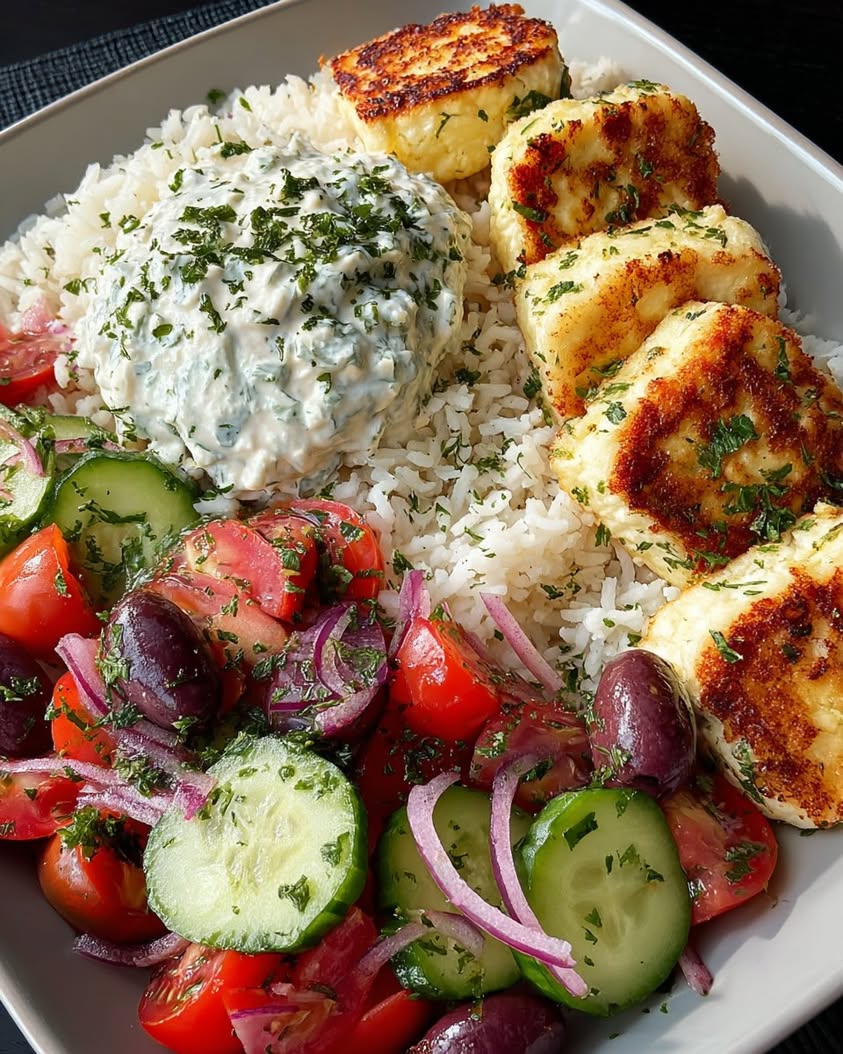
Grilled Halloumi Bowl with Tzatziki, Greek Salad & Herbed Rice: A Vibrant, Protein-Packed Mediterranean Meal
Imagine a meal that perfectly captures the sun-drenched essence of the Mediterranean. This Grilled Halloumi Bowl with Tzatziki, Greek Salad & Herbed Rice is exactly that. It is a vibrant, protein-packed Mediterranean meal ready in minutes. The recipe brings together salty, squeaky grilled halloumi cheese, a crisp and refreshing Greek salad, cool and garlicky tzatziki sauce, and fragrant herbed rice. Consequently, every bite offers a symphony of textures and flavors that feel both indulgent and nourishing.
This bowl is a celebration of fresh, simple ingredients. For instance, the halloumi cheese develops a beautiful golden crust on the grill while staying soft inside. Meanwhile, the salad bursts with juicy tomatoes, crunchy cucumber, and briny olives. Ultimately, the creamy tzatziki ties everything together with its refreshing dill and cucumber notes. This dish is not just a meal; it is a colorful, satisfying experience that transports your taste buds straight to a Greek seaside taverna.
Furthermore, this recipe is incredibly versatile. You can easily enjoy it for a quick weeknight dinner, a impressive lunch for guests, or even as a meal-prep superstar. The components hold up well, and the assembly is a breeze. Whether you are craving something light yet filling or a dish that looks as good as it tastes, this grilled halloumi bowl delivers on every promise. It is a foolproof way to bring restaurant-quality Mediterranean flavors to your own kitchen table.
Quick Recipe Highlights
- Flavor Profile: This bowl delivers a masterful balance of salty, tangy, fresh, and herbal notes. The salty halloumi pairs perfectly with the tangy feta and lemon-dressed salad. Meanwhile, the cool tzatziki and fragrant dill rice add creamy and aromatic layers.
- Texture: Experience a delightful contrast in every forkful. You get the satisfying squeak and crisp exterior of the grilled halloumi against the juicy crunch of fresh vegetables. Additionally, the creamy tzatziki and fluffy rice provide a soft, comforting base.
- Aroma: The scent of halloumi sizzling in a hot pan is unmistakably inviting. It combines with the fresh herbs like dill and oregano and the bright aroma of lemon. This aromatic profile immediately signals a fresh and wholesome meal.
- Visual Appeal: This bowl is a feast for the eyes with its vibrant colors. Think of the white halloumi and feta, red tomatoes, green cucumbers and herbs, and black olives. The presentation is naturally beautiful and incredibly appetizing.
- Skill Level Needed: This is a beginner-friendly recipe requiring only basic kitchen skills like chopping, mixing, and pan-frying. There is no complex technique involved. Therefore, even novice cooks can achieve fantastic results with confidence.
- Special Equipment: You only need a good non-stick or cast-iron skillet or grill pan to cook the halloumi perfectly. A box grater for the cucumber in the tzatziki is helpful. Other than that, standard bowls, knives, and a cutting board are all you require.
Recipe Overview
- Difficulty Level: We rate this recipe as “Easy” because it involves straightforward techniques like chopping, mixing, and simple pan-frying. The steps are clearly separated, allowing you to prepare components simultaneously. There is no fancy knife work or precise baking required. Essentially, if you can handle a skillet, you can master this dish.
- Category: This dish fits perfectly into several categories: it is a hearty main course salad, a satisfying grain bowl, and an excellent vegetarian dinner option. It also works wonderfully as a packed lunch. Its versatility makes it a fantastic addition to your regular meal rotation for any time of day.
- Cuisine: This recipe is firmly rooted in Greek and broader Eastern Mediterranean cuisine. It features hallmark ingredients like halloumi, tzatziki, feta, olives, and oregano. The combination celebrates the region’s focus on fresh vegetables, high-quality dairy, olive oil, and aromatic herbs.
- Cost: The cost is moderate, largely depending on the price of halloumi cheese, which can be a premium item. However, the other ingredients like rice, cucumber, tomatoes, and herbs are very affordable. Overall, you can create a restaurant-quality meal for a fraction of the dine-out price.
- Season: This is a quintessential summer dish, perfect for when tomatoes and cucumbers are at their peak sweetness and freshness. However, it is truly a year-round recipe because the core ingredients are always available. It brings a much-needed burst of sunshine and freshness to colder months.
- Occasion: It is ideal for casual weeknight dinners, healthy meal prep, and elegant al fresco lunches with friends. The components can be prepared ahead, making it stress-free for entertaining. It is also a fantastic meatless Monday option or a post-workout meal thanks to its high protein content.
Why You’ll Love This Recipe
First and foremost, the taste and texture appeal is absolutely undeniable. This grilled halloumi bowl is a party in your mouth. You experience the initial salty, savory hit from the perfectly seared cheese, followed by the juicy acidity of the tomato and red onion. Then, the cool, garlicky tzatziki cuts through, while the fluffy herbed rice soaks up all the delicious juices. Every component has a purpose, and together they create a harmonious and deeply satisfying eating experience that is far greater than the sum of its parts.
From a convenience standpoint, this recipe is a dream. The preparation is simple and the cook time is minimal. You can have all components ready and assembled in well under an hour. Moreover, the tasks are easily divided; one person can chop veggies while another cooks the rice and halloumi. This makes it an excellent choice for busy households. The clean-up is also relatively quick, as most of the work involves bowls and a single skillet.
Nutritionally, this bowl is a powerhouse. Halloumi provides a solid dose of protein and calcium, keeping you full and supporting bone health. The Greek salad is loaded with vitamins, antioxidants, and fiber from all the colorful vegetables. Using olive oil as the primary fat source adds heart-healthy monounsaturated fats. This meal is naturally balanced with complex carbs from the rice, protein from the cheese, and plenty of healthy fats and fiber. It is indulgence you can feel good about.
For social and entertaining value, this dish is a true winner. It is visually stunning when served in a large bowl or assembled individually for guests. The vibrant colors and fresh aromas are instantly impressive. Because it is vegetarian, it caters to a wide range of dietary preferences without feeling like a compromise. You can easily set up a “bowl bar” with all the components separate, allowing everyone to build their own perfect combination. It is interactive, fun, and guaranteed to receive compliments.
Finally, this recipe is cost-effective and accessible. While halloumi can be a splurge, the rest of the ingredients are pantry and fridge staples. You can find halloumi in most well-stocked supermarkets today. Compared to ordering a similar dish at a restaurant, making it at home saves a significant amount of money. You also have complete control over ingredient quality, opting for organic vegetables or high-quality olive oil if you choose. This accessibility makes it easy to enjoy a taste of the Mediterranean anytime.
Historical Background and Cultural Significance
The story of this bowl begins with its individual components, each with deep roots in Eastern Mediterranean history. Halloumi cheese originated in Cyprus, with a history dating back to the Byzantine era. Its unique ability to withstand high heat without melting made it a valuable source of protein for shepherds and farmers. Traditionally made from a mixture of sheep’s and goat’s milk, its salty, robust flavor and grilling properties are legendary. This cheese is so cherished it has a Protected Designation of Origin in the European Union.
Culturally, the elements of this bowl represent the heart of Greek and Cypriot “mezze” culture. Mezze refers to a selection of small dishes meant for sharing, emphasizing community, conversation, and savoring food slowly. A plate of grilled halloumi, a bowl of tzatziki with pita, and a fresh horiatiki (village) salad are classic mezze offerings. This recipe modernizes that tradition by compiling these shared plates into a single, satisfying individual meal. It captures the communal, fresh, and flavorful spirit of Mediterranean dining.
The recipe has evolved significantly with global food trends, particularly the rise of the “grain bowl” or “Buddha bowl.” While the traditional components are ancient, assembling them in a single bowl for a complete meal is a contemporary twist. This format appeals to modern desires for balanced, Instagram-worthy, and convenient meals. The evolution lies in the presentation and portability, taking timeless flavors and adapting them to today’s fast-paced, health-conscious lifestyle without sacrificing authenticity.
Regional variations of this concept abound. In Cyprus, halloumi might be served with a drizzle of honey and sesame seeds. In Turkey, a similar cheese called hellim is paired with watermelon. The Greek salad can vary from island to island; some include capers, green peppers, or even a sprinkle of oregano. The tzatziki might be thicker or thinner depending on the region. This recipe acts as a delicious blueprint. You can explore these regional twists by adding a pinch of mint to the rice, a few capers to the salad, or a light honey drizzle over the grilled halloumi.
Ingredient Deep Dive
Halloumi Cheese: This brined cheese from Cyprus is the star. Historically, it was a way to preserve milk in a warm climate. Nutritionally, it is high in protein and calcium, though also in sodium due to the brine. When selecting halloumi, look for a firm, white block without excessive moisture. Authentic halloumi is often made from sheep’s or goat’s milk. Store it in its brine in the refrigerator. If you cannot find halloumi, a good substitute is paneer or queso para freír, as they also hold their shape when fried.
Greek Yogurt (for Tzatziki): Thick, strained Greek yogurt is essential for an authentic, creamy tzatziki. This straining process removes whey, concentrating the protein and creating a rich texture. It is a fantastic source of probiotics, protein, and calcium. Always choose full-fat or 2% Greek yogurt for the best flavor and texture. Low-fat versions can be watery. Store yogurt tightly sealed in the fridge. For a dairy-free version, use a thick, unsweetened coconut or almond-based yogurt, though the flavor profile will change.
Cucumber: The cucumber in the tzatziki and salad provides crucial hydration and crunch. In Mediterranean cuisine, it is valued for its cooling properties. It is low in calories and a good source of vitamin K and potassium. For tzatziki, use English or Persian cucumbers as they have fewer seeds and thinner skin, requiring less prep. Always grate and drain the cucumber thoroughly to prevent a watery sauce. Store whole cucumbers in the fridge; once cut, wrap tightly in plastic.
Extra Virgin Olive Oil: This is the liquid gold of the Mediterranean. Its fruity, peppery flavor is irreplaceable. Rich in monounsaturated fats and antioxidants, it is a cornerstone of the heart-healthy Mediterranean diet. Choose a cold-pressed, high-quality oil for drizzling on the finished bowl. A more affordable, lighter olive oil is fine for cooking the rice. Store it in a cool, dark place to prevent rancidity. Do not substitute with neutral oils like canola, as you will lose the distinctive flavor that defines the dish.
Fresh Dill and Oregano: These herbs are the aromatic soul of the dish. Dill, with its feathery fronds and slight anise note, is classic in tzatziki and pairs beautifully with cucumber. Oregano, especially dried Greek oregano, is robust and earthy, essential for the salad and rice. Fresh herbs provide brighter, more complex flavors than dried. To store, treat them like flowers: trim the stems and place in a glass of water in the fridge. If you must substitute, use fresh mint with the dill, and dried oregano can work in a pinch for the fresh.
Common Mistakes to Avoid
- Not Draining the Grated Cucumber: Skipping this step is the number one reason for watery, bland tzatziki. After grating, squeeze the cucumber pulp in a clean kitchen towel or your hands until no more liquid comes out. This concentrates the cucumber flavor and ensures your sauce stays thick and creamy.
- Overcrowding the Pan with Halloumi: If you pack the skillet, the halloumi will steam instead of sear. You need space between slices so moisture can evaporate and a golden crust can form. Cook in batches if necessary. A proper sear is key to achieving that desirable crispy exterior and soft interior.
- Using Cold Halloumi Straight from the Fridge: Cooking ice-cold halloumi can cause it to seize up and become tough. Let it sit at room temperature for 10-15 minutes before cooking. This allows for more even cooking and a better texture throughout the slice.
- Salting the Greek Salad Too Early: If you dress and salt the salad components long before serving, they will release all their water and become soggy. Always assemble the salad just before serving, or keep the dressing separate until the last moment to maintain perfect crunch.
- Rinsing the Rice After Cooking: For fluffy herbed rice, you want the grains to be separate. Rinsing cooked rice washes away the starch that helps the herbs and seasoning cling to each grain. Simply fluff it with a fork after cooking to achieve the right texture.
- Skimping on Resting Time for Tzatziki: Tzatziki tastes best after the flavors have had time to meld. Making it at least 30 minutes to an hour ahead allows the garlic to mellow and the dill to infuse the yogurt. This resting period transforms it from a simple mix into a cohesive, flavorful sauce.
- Using a Dull Knife to Chop Vegetables: A dull knife crushes tomatoes and bruises herbs, leading to loss of juices and vibrant color. A sharp chef’s knife ensures clean cuts, preserving the integrity, freshness, and visual appeal of your Greek salad ingredients.
- Not Patting the Halloumi Dry: Any surface moisture on the halloumi will create steam and prevent browning. Before it hits the hot pan, gently pat each slice dry with a paper towel. This simple step is crucial for achieving that perfect, appetizing golden sear.
Essential Techniques
Perfectly Grilling Halloumi: Mastering this technique is crucial. Use a well-heated, dry non-stick or cast-iron skillet over medium-high heat. The halloumi will release its own fat. Do not move the slices for 2-3 minutes until a deep golden-brown crust forms. Then, flip once. Overcooking makes it rubbery; you want a crisp exterior with a soft, slightly yielding center. The visual cue is a uniform, appetizing golden color on each side.
Creating a Thick, Flavorful Tzatziki: The key is moisture control. After grating the cucumber, you must drain it thoroughly by squeezing out all excess water. Combine it with thick, full-fat Greek yogurt, finely minced garlic, lemon juice, olive oil, and chopped dill. Let it rest in the fridge. This resting period allows the flavors to marry and the sauce to thicken further. A good tzatziki should be creamy enough to coat the back of a spoon, not runny.
Building a Balanced Greek Salad: This is about texture and timing. Use ripe, in-season tomatoes and crisp cucumber. Cut ingredients into hearty chunks, not fine dice. Add the red onion and olives. Dress simply with good olive oil, red wine vinegar, dried oregano, salt, and pepper. Toss gently just before serving to prevent sogginess. The salad should be vibrant, with each vegetable retaining its distinct crunch and flavor.
Cooking Fluffy Herbed Rice: Use a 1:2 ratio of rice to liquid (water or broth). Bring to a boil, then reduce to a simmer, cover tightly, and do not peek. After cooking, remove from heat and let it steam, covered, for 5-10 minutes. Then, fluff with a fork and fold in the fresh herbs and lemon zest. This technique ensures separate, fluffy grains that are the perfect base for your bowl.
Pro Tips for Perfect Grilled Halloumi Bowl
First, for the crispiest halloumi, ensure your pan is properly preheated before adding the cheese. A drop of water should sizzle and evaporate instantly. Second, add a very light drizzle of olive oil to the pan if you are not using a non-stick surface; this can help promote browning. Third, let the tzatziki rest for at least an hour, or even overnight, for the deepest, most harmonious flavor. Fourth, cook your rice in vegetable broth instead of water for an extra layer of savory depth. Fifth, if your tomatoes are not very sweet, a tiny pinch of sugar in the salad dressing can balance the acidity beautifully. Sixth, warm your serving bowls slightly before assembling; this keeps the meal enjoyable longer. Seventh, finish the assembled bowl with a final drizzle of high-quality extra virgin olive oil and a sprinkle of flaky sea salt. Eighth, for added texture, toast some pine nuts or slivered almonds to sprinkle on top.
Variations and Adaptations
Regional Variations: Explore Cypriot style by drizzling the grilled halloumi with a little honey and sprinkling with toasted sesame seeds. For a Turkish twist, replace the tzatziki with a cacik sauce and add a pinch of sumac to the salad. A Lebanese adaptation might include a spoonful of garlic toum and some pomegranate molasses drizzle.
Seasonal Adaptations: In summer, add fresh sweet corn or grilled zucchini to the bowl. For autumn, incorporate roasted cubes of butternut squash and swap dill for sage in the rice. Winter calls for adding roasted red peppers and using kale massaged with lemon juice in place of some lettuce. Spring is perfect with fresh peas and asparagus tips mixed into the rice.
Dietary Modifications: For a vegan version, use a firm, grilled tofu marinated in lemon and oregano, and a dairy-free yogurt for the tzatziki. To make it gluten-free, ensure all packaged ingredients are certified GF (like vegetable broth) – the natural ingredients are already safe. For a lower-carb option, replace the rice with a base of cauliflower rice or a big bed of mixed greens.
Flavor Variations: Add a spicy element with a sprinkle of crushed red pepper flakes on the halloumi or a dash of harissa mixed into the tzatziki. For an umami boost, add a few chopped sun-dried tomatoes or kalamata olive tapenade to the rice. A squeeze of fresh orange juice in the salad dressing can add a surprising citrus sweetness.
Texture Modifications: For extra crunch, include toasted pepitas or walnuts. For a creamier bowl, add a dollop of hummus alongside the tzatziki. If you prefer softer vegetables, you can quickly pickle the red onion and cucumber slices for a different mouthfeel.
Presentation Alternatives: Serve it deconstructed on a large platter for family-style sharing. Pack it into a wrap or pita for a portable lunch. Layer it in a mason jar for meal prep, putting the dressing at the bottom, then rice, then salad, then halloumi on top to stay dry.
Serving and Presentation Guide
Plating is key to the experience. Start with a wide, shallow bowl. Place a generous scoop of warm herbed rice as your base, slightly off-center. Arrange a portion of the vibrant Greek salad next to it, letting the colors show. Lean two or three slices of golden grilled halloumi against the rice and salad. Then, add a generous dollop of cool, white tzatziki in the remaining space, allowing it to drizzle slightly.
Garnishing adds the final touch. A fresh sprig of dill or oregano on top looks beautiful. A light dusting of dried Greek oregano over the halloumi and salad enhances aroma. A final drizzle of your best extra virgin olive oil adds shine and richness. A wedge of lemon on the side allows guests to add a fresh squeeze.
Traditional accompaniments include warm, grilled pita bread or crusty bread for scooping. A small bowl of mixed olives and perhaps some marinated artichoke hearts on the side can extend the mezze feeling. For a modern touch, serve with a glass of chilled Assyrtiko wine or sparkling water with lemon.
Consider temperature carefully. The rice and halloumi should be warm, the salad should be cool and crisp, and the tzatziki should be chilled. This contrast is part of the magic. For portion control, a standard serving is about 1 cup of rice, 1/4 of the salad mix, 3-4 slices of halloumi, and 1/4 cup of tzatziki. Adjust based on appetite.
Wine and Beverage Pairing
Wine pairings for this bowl should complement its salty, tangy, and herbal notes. A crisp, acidic Greek Assyrtiko is the classic choice, cutting through the richness of the cheese and yogurt beautifully. A New Zealand Sauvignon Blanc with its grassy, citrus notes also pairs excellently. For a light red option, try a chilled Beaujolais or a Greek Xinomavro, which has the acidity to stand up to the dish.
Non-alcoholic alternatives are just as exciting. A sparkling lemonade or limeade mimics the needed acidity. Iced herbal tea, like mint or lemon verbena, is wonderfully refreshing. For a more authentic touch, try a glass of chilled ayran, a savory yogurt drink popular in the Eastern Mediterranean.
While not traditional post-meal pairings for this dish, a medium-roast coffee or a mint tea would be lovely after enjoying this meal. The key for any beverage is to ensure it is served well-chilled if it is a cooler, or hot if it is a tea or coffee, to continue the theme of temperature contrast.
General serving suggestions include always offering water. If serving wine, chill whites thoroughly. For non-alcoholic sparkling drinks, serve in a tall glass with ice and a citrus wedge. Presentation of the drink alongside the colorful bowl completes the sensory experience.
Storage and Shelf Life
Store all components separately in airtight containers in the refrigerator for best results. The assembled bowl does not store well as the salad wilts and the halloumi loses its crispness. Properly stored, tzatziki will last 3-4 days. The Greek salad (undressed) is best within 1-2 days. Cooked rice is safe for 3-5 days. Grilled halloumi can be refrigerated for up to 3 days but will soften.
Temperature requirements are strict: everything must be refrigerated below 40°F. Do not leave the assembled bowl or dairy-based tzatziki at room temperature for more than 2 hours. Use glass or BPA-free plastic containers with tight-fitting lids to maintain freshness and prevent odor transfer.
Signs of spoilage include an off or sour smell, visible mold (especially on dairy or vegetables), a slimy texture on the salad vegetables, or separated, watery tzatziki. When in doubt, throw it out. Do not taste food you suspect has gone bad.
Reheating instructions apply only to the rice and halloumi. Reheat rice with a splash of water in the microwave, covered, or in a steamer. Reheat halloumi in a dry skillet over medium heat to try and recrisp the exterior. Do not microwave halloumi, as it will become very rubbery. The salad and tzatziki should be served cold.
Freezing is not recommended for this dish. The high-water content in the cucumber, tomatoes, and yogurt causes texture degradation upon thawing, resulting in a mushy, separated mess. This is a fresh meal best enjoyed soon after preparation.
Make Ahead Strategies
You can efficiently prep this meal over a couple of days. Day 1: Make the tzatziki and store it in the fridge; its flavor improves. Cook the rice, let it cool completely, and store it separately (do not add herbs yet). Day 2: Chop all the vegetables for the salad, except the tomatoes. Store the cucumber, onion, and olives together in one container. Chop tomatoes separately just before assembly.
Storage between steps is simple. Keep the tzatziki in its own sealed container. Store the plain, cooled rice in another. Keep pre-chopped veggies in a sealed container lined with a paper towel to absorb moisture. Store the block of halloumi in its original brine until ready to cook.
The quality impact is positive for most components. Tzatziki is better made ahead. Rice reheats well. Pre-chopped veggies save time but chop tomatoes last-minute. The only element that must be cooked fresh is the halloumi to preserve its perfect texture.
Final assembly tips: Reheat the rice gently and fold in the fresh herbs and lemon zest. Cook the halloumi. Slice the tomatoes and combine with the other pre-chopped veggies, then dress the salad. Assemble bowls while the halloumi is still warm. This method ensures every element is at its peak.
If you must reheat pre-cooked halloumi, use a skillet, not a microwave. For meal prep, pack components in divided containers with the tzatziki and salad dressing at the bottom, then rice, then veggies, with halloumi in a separate small baggie to add before eating.
Always add the final fresh elements just before serving. This includes folding herbs into the rice, dressing the salad, and adding any final garnishes like a fresh herb sprig or a last drizzle of oil. These touches make the meal taste freshly made.
Scaling Instructions
Halving the recipe for two people is straightforward. Simply divide all ingredient quantities by two. Use a smaller skillet for the halloumi to maintain proper searing space. Cooking times will remain roughly the same. This scaling is perfect for a romantic dinner or a small household.
Doubling or tripling for a crowd requires slight adjustments. You may need to cook the halloumi in more batches to avoid steaming. Consider using a large sheet pan under the broiler to cook multiple halloumi slices at once, flipping halfway. Use a larger pot for the rice or cook it in two batches.
Equipment adjustments are necessary when scaling up. Ensure you have a large enough bowl for the multiplied salad and tzatziki quantities. You may need multiple skillets or a commercial-sized griddle to cook all the halloumi efficiently without compromising texture.
Timing modifications become important for large batches. Start with components that hold well, like the tzatziki and rice. Cook the halloumi last, just before serving, to ensure it is hot and crispy. Stagger your cooking so everything comes together at the right time.
Storage considerations change with volume. If you have significant leftovers from a doubled batch, remember to store components separately as usual. Large batches of rice cool slower; spread it on a sheet pan to cool quickly before refrigerating to prevent bacterial growth.
Nutritional Deep Dive
This bowl offers a well-rounded macro breakdown. A typical serving provides approximately 35-40 grams of protein from the halloumi and Greek yogurt, 45-50 grams of complex carbohydrates from the rice and vegetables, and 25-30 grams of healthy fats primarily from olive oil, olives, and cheese. This balance supports sustained energy, muscle repair, and satiety.
The micronutrient analysis is impressive. You get a wealth of vitamins A, C, and K from the tomatoes, cucumber, and herbs. Calcium and phosphorus are abundant from the dairy. Potassium from the cucumber and tomatoes supports heart health. The olive oil and olives provide vitamin E and potent antioxidants like oleocanthal, which has anti-inflammatory properties.
Specific health benefits include supporting gut health through the probiotics in Greek yogurt. The high fiber content from vegetables and whole-grain rice (if used) aids digestion. The monounsaturated fats promote healthy cholesterol levels. The protein and fiber combination is excellent for blood sugar management and keeping you full for hours.
Dietary considerations are mostly positive. It is naturally vegetarian and can be adapted to be gluten-free easily. Those monitoring sodium should be aware that halloumi, feta, and olives are quite salty; you can rinse the olives and reduce added salt in the salad dressing. The dish is not suitable for a strict vegan or dairy-free diet without significant modifications.
Portion analysis shows this is a substantial meal. For weight management, it is very filling due to its high protein and fiber content, which can help prevent overeating later. To reduce calories slightly, you can use a smaller portion of rice or halloumi, increase the volume of non-starchy vegetables in the salad, or use a light hand with the olive oil drizzle.
Dietary Adaptations
Gluten-Free: This recipe is naturally gluten-free as written. Simply double-check that any packaged vegetable broth or pre-made ingredients are certified gluten-free. There is no wheat, barley, or rye in the core ingredients. It is a safe and delicious option for those with celiac disease or gluten sensitivity.
Dairy-Free: Replacing the dairy requires swaps. For the halloumi, use extra-firm tofu that has been pressed, sliced, and marinated in lemon, salt, and oregano before grilling. For the tzatziki, use a thick, unsweetened coconut or almond-based yogurt. Omit the feta cheese from the salad or use a vegan feta alternative. The flavor profile will be different but can still be delicious.
Vegan: Follow the dairy-free adaptations above. Ensure your bread (if serving pita) is vegan. The core concept of a grilled protein with rice, salad, and sauce remains. You can also add chickpeas or lentils to the bowl for additional plant-based protein and heartiness to replace the cheese’s substance.
Low-Carb/Keto: Replace the rice with a base of cauliflower rice sautéed in olive oil with herbs. Be mindful that tomatoes, onions, and carrots contain more carbs, so reduce their quantities in the salad. Focus on cucumber, olives, and leafy greens. Halloumi and full-fat tzatziki are excellent keto-friendly components.
Paleo: Omit the grains and dairy. Replace the rice with a cauliflower rice base. Omit the halloumi and tzatziki. Instead, add a grilled protein like chicken or shrimp. For the sauce, make an herbaceous avocado cream or a tahini-lemon sauce. Ensure the olive oil and vegetables are the stars.
Low-FODMAP: This requires careful modification. Halloumi is low-FODMAP in a 40g serving. Use garlic-infused olive oil instead of fresh garlic in the tzatziki and dressing. Replace onion with the green tops of spring onions. Use lactose-free Greek yogurt. Ensure no high-FODMAP vegetables like large amounts of artichoke are added.
Troubleshooting Guide
Halloumi is Rubbery and Tough: This means it was overcooked or cooked at too high a heat. Halloumi only needs 2-3 minutes per side over medium-high heat to develop color while staying soft inside. If it is tough, try slicing it slightly thicker next time and cooking it for a shorter duration. Letting it come to room temperature before cooking also helps.
Tzatziki is Watery and Bland: You likely did not drain the grated cucumber enough. Next time, squeeze it in a clean tea towel until no more liquid comes out. Also, ensure you are using full-fat Greek yogurt, not regular yogurt. Letting it rest in the fridge allows flavors to concentrate. Season adequately with salt, which brings out all the other flavors.
Greek Salad is Soggy: This happens if you dress it too far in advance or salt it early. Always dress the salad immediately before serving. If prepping ahead, keep the chopped vegetables and dressing separate until the last moment. Also, avoid using overripe, mushy tomatoes. The quality of your vegetables directly impacts the salad’s texture.
Rice is Mushy or Sticky: You may have used too much water or stirred it during cooking. Use the correct 1:2 rice-to-liquid ratio. Once it simmers, cover it and do not lift the lid or stir. After cooking, let it steam off the heat, covered, for 5-10 minutes, then fluff with a fork. Rinsing the rice before cooking can also help reduce stickiness.
Dish Lacks Overall Flavor: This often comes from underseasoning or using low-quality ingredients. Season each component layer: salt the tzatziki, salt and pepper the salad, season the rice with herbs and lemon zest. Use a good, flavorful extra virgin olive oil for dressing and drizzling. The saltiness of the halloumi and feta should also season the dish.
Meal is Cold by the Time You Eat: Temperature contrast is good, but the rice and halloumi should be warm. Warm your serving bowls. Cook the halloumi last, right before assembly. Reheat the rice gently just before building the bowls. Assemble quickly and serve immediately to enjoy the intended warm-and-cool contrast.
Recipe Success Stories
Community feedback on this grilled halloumi bowl has been overwhelmingly positive. Many readers report it has become a weekly staple in their homes, praising its simplicity and crowd-pleasing nature. Parents love that even picky eaters
Print
Grilled Halloumi Bowl with Tzatziki, Greek Salad & Herbed Rice
Description
A vibrant and satisfying Mediterranean-inspired bowl featuring grilled halloumi cheese, fresh Greek salad, creamy tzatziki, and fragrant herbed rice.
Ingredients
For the Crust:
- 1 cup uncooked long-grain white rice
- 2 cups water or vegetable broth
- 1 tablespoon olive oil
- 1 teaspoon dried oregano
- 8 oz halloumi cheese, sliced into 1/2-inch thick pieces
- 1 large cucumber, diced
- 1 pint cherry tomatoes, halved
- 1/2 red onion, thinly sliced
- 1/2 cup Kalamata olives, pitted
- 4 oz feta cheese, crumbled
- 1 cup plain Greek yogurt
- 1 clove garlic, minced
- 2 tablespoons fresh dill, chopped
- 1 tablespoon fresh lemon juice
- Salt and black pepper to taste
- Extra virgin olive oil for drizzling
Instructions
1. Prepare the Crust:
- Cook the rice by combining rice, water or broth, olive oil, and oregano in a saucepan. Bring to a boil, reduce heat to low, cover, and simmer for 15-18 minutes until tender. Fluff with a fork and set aside.
- Prepare the tzatziki by mixing Greek yogurt, minced garlic, chopped dill, and lemon juice in a bowl. Season with salt and pepper. Refrigerate until ready to serve.
- Make the Greek salad by combining diced cucumber, halved cherry tomatoes, sliced red onion, Kalamata olives, and crumbled feta in a large bowl. Drizzle with a little olive oil and season lightly.
- Grill the halloumi by heating a grill pan or skillet over medium-high heat. Cook halloumi slices for 2-3 minutes per side until golden brown and grill marks appear.
- Assemble the bowls by dividing the herbed rice among four bowls. Top with Greek salad, grilled halloumi slices, and a generous dollop of tzatziki. Drizzle with extra olive oil if desired and serve immediately.
Notes
You can customize the seasonings to taste.

I’m Shaykee—born in Morocco, seasoned across continents. From airplane galleys to home kitchens, I share the flavors and stories that shaped my journey.