
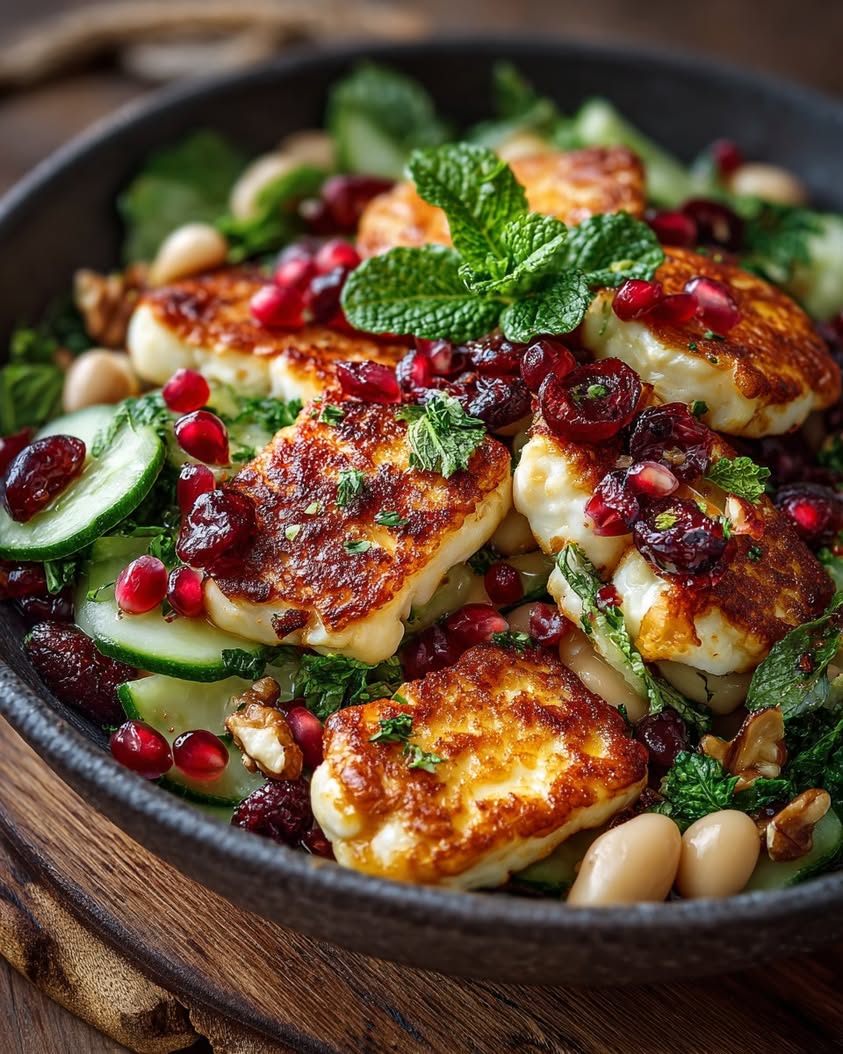
Halloumi & Cranberry Butter Beans Salad: A Vibrant, Protein-Packed Feast
Imagine a salad that delivers a symphony of textures and tastes in every single bite. This Halloumi & Cranberry Butter Beans Salad does exactly that, combining creamy butter beans, crispy halloumi, and sweet cranberries in a zesty mint-lemon dressing. Consequently, it stands out as a vibrant, protein-packed salad ready in minutes. Moreover, it’s a perfect solution for busy weeknights or impressive enough for weekend entertaining.
The magic of this dish lies in its beautiful contrasts. For instance, you get the satisfying squeak and golden crispness of pan-fried halloumi cheese against the soft, buttery texture of the beans. Simultaneously, tart dried cranberries pop with sweetness, while a fresh mint-lemon dressing ties everything together with a bright, herbal zing. Ultimately, this recipe transforms simple ingredients into a spectacular meal that feels both nourishing and indulgent.
Furthermore, this salad is a celebration of color and freshness. Visually, it’s a feast with white beans, golden cheese, ruby-red cranberries, and vibrant green herbs. Importantly, it’s a hearty vegetarian recipe that will satisfy even the most dedicated meat-eaters. Whether you need a quick lunch, a light dinner, or a stunning side dish, this Halloumi & Cranberry Butter Beans Salad is your answer.
Quick Recipe Highlights
- Flavor Profile: This salad masterfully balances salty, creamy, sweet, and tangy notes. The halloumi provides a savory, salty base, while the cranberries add a necessary fruity sweetness. Meanwhile, the mint-lemon dressing cuts through the richness with its refreshing acidity.
- Texture: Expect a delightful play of textures in every forkful. You’ll experience the crispy, golden exterior of the halloumi, the soft and creamy interior of the butter beans, and the pleasing chew of the dried cranberries. Additionally, fresh mint leaves add a final note of delicate freshness.
- Aroma: As you cook, the kitchen fills with the irresistible scent of frying halloumi, which is mildly salty and milky. Then, the bright, citrusy aroma of fresh lemon zest and the cool, clean scent of chopped mint take over, creating an incredibly inviting fragrance.
- Visual Appeal: This dish is a rainbow on a plate. The stark white of the butter beans, the deep gold of the fried cheese, the jewel-toned red cranberries, and the specks of green mint create a visually stunning presentation that is perfect for social media or a dinner party.
- Skill Level Needed: This is a beginner-friendly recipe requiring only basic kitchen skills. Essentially, you need to be able to chop herbs, zest a lemon, and pan-fry a block of cheese. Therefore, it’s an excellent recipe for building confidence in the kitchen.
- Special Equipment: You need only a standard non-stick or cast-iron skillet for frying the halloumi. Otherwise, a mixing bowl, a whisk for the dressing, and a good chef’s knife are the only tools required. Consequently, cleanup is a breeze.
Recipe Overview
- Difficulty Level: We rate this recipe as “Easy” because it involves straightforward techniques like chopping, whisking, and pan-frying. There are no complex reductions, baking stages, or tricky tempering of ingredients. The process is linear and forgiving, making it ideal for novice cooks or anyone seeking a stress-free cooking experience.
- Category: This dish is wonderfully versatile across meal categories. Primarily, it serves as a magnificent main course salad for a light lunch or dinner. Alternatively, it can be presented as a substantial side dish alongside grilled meats or fish. It also fits beautifully into a mezze or buffet spread.
- Cuisine: While halloumi hails from Cyprus, this recipe is a modern fusion creation. It draws inspiration from Mediterranean flavors—the lemon, olive oil, and fresh herbs—and combines them with pantry staples like butter beans and cranberries popular in Western cooking. The result is a globally-inspired, contemporary salad.
- Cost: This is a cost-effective recipe, especially when using canned butter beans. Halloumi can be a pricier ingredient, but a little goes a long way in terms of flavor and protein. Dried cranberries and fresh herbs are typically affordable, making this a restaurant-quality meal you can make on a budget.
- Season: This salad shines year-round but feels particularly apt in spring and summer when fresh mint is abundant. Its bright, fresh flavors are perfect for warmer weather. However, the hearty beans and warm fried cheese also make it a comforting yet light option during the fall and winter months.
- Occasion: It’s perfect for casual weeknight dinners, meal-prepped lunches, or last-minute gatherings. Importantly, its festive colors and elegant presentation also make it a stunning addition to holiday tables, potlucks, or brunch menus. It’s a truly adaptable crowd-pleaser.
Why You’ll Love This Recipe
First and foremost, the taste and texture appeal is immediate and undeniable. Each component brings something unique to the table, creating a harmonious and exciting eating experience. The salty, crispy halloumi perfectly complements the sweet, chewy cranberries, while the creamy butter beans act as a soothing, neutral base. Furthermore, the mint-lemon dressing elevates everything with a burst of freshness that prevents the dish from feeling heavy. You will find yourself craving the specific combination of creamy, crispy, sweet, and tangy that this salad delivers so effortlessly.
Next, consider the sheer convenience and preparation benefits. This vibrant, protein-packed salad is ready in under 30 minutes, making it a lifesaver on busy evenings. Most of the components require minimal prep—just open a can, chop some herbs, and fry some cheese. There’s no need to cook grains or pasta. Consequently, you can have a restaurant-quality meal on the table faster than you could get takeout delivered. It’s the ultimate proof that fast food can also be wholesome, delicious, and beautiful.
From a nutritional standpoint, this salad is a powerhouse. Halloumi and butter beans are both excellent sources of protein and calcium, helping to keep you full and support bone health. Butter beans are also rich in fiber, which aids digestion. Meanwhile, the olive oil in the dressing provides heart-healthy fats, and the lemon juice offers a dose of vitamin C. By choosing this salad, you’re nourishing your body with a balanced meal that fuels you without weighing you down.
This recipe also holds incredible social and entertaining value. Its stunning visual presentation is guaranteed to impress guests, making it perfect for dinner parties or festive gatherings. Because it’s served at room temperature, you can prepare it ahead of time, allowing you to enjoy your own party. Moreover, it’s a fantastic conversation starter and a delightful way to introduce friends to the wonders of halloumi cheese if they haven’t tried it before.
Finally, its cost-effectiveness and accessibility are major wins. You can create this gourmet-tasting dish with a handful of easy-to-find ingredients. Canned butter beans are a pantry staple, and halloumi is now widely available in most major supermarkets. You don’t need any special equipment or exotic spices. Therefore, this recipe proves that eating well doesn’t require a complicated shopping list or a hefty budget. It’s accessible, affordable, and utterly delicious.
Historical Background and Cultural Significance
The story of this salad begins with its star ingredient: halloumi. This unique cheese originated in Cyprus and has a history dating back to the Medieval Byzantine period. Traditionally made from a mixture of sheep’s and goat’s milk, halloumi was prized for its high melting point, which allowed it to be grilled or fried without losing its shape. This characteristic made it an essential protein source for shepherds and travelers in the Eastern Mediterranean. Consequently, halloumi became deeply woven into the culinary fabric of Cypriot culture, often served at celebrations and family meals.
Butter beans, also known as lima beans, have a parallel history rooted in the Americas. Indigenous peoples cultivated them for thousands of years before they were introduced to Europe and Africa. Their creamy texture and mild flavor made them a versatile staple, easily adopted into various cuisines worldwide. In the American South, they became a cornerstone of comfort food. The fusion of these two ingredients—halloumi from the Mediterranean and butter beans from the Americas—exemplifies modern global cooking, where traditional elements are combined to create exciting new dishes.
The evolution of this specific recipe is a testament to contemporary food trends. As vegetarian and flexitarian diets gained popularity, cooks sought hearty, satisfying meat-free mains. Halloumi, with its meaty texture, became a popular vegetarian “centerpiece.” Simultaneously, the trend towards vibrant, bowl-based meals celebrating texture and color inspired the addition of sweet cranberries and a bright herb dressing. This salad is a direct product of our current desire for meals that are visually appealing, nutritionally balanced, and full of contrasting flavors and textures.
Regional variations of this concept are endless. In Greece, one might find a similar salad with grilled feta and giant beans. In the Middle East, fried halloumi is often paired with watermelon and mint. The version with cranberries and a mint-lemon dressing has a particularly festive, Anglo-American twist, making it popular around holidays. This adaptability shows how a simple concept—pairing fried cheese with beans and fruit—can travel across borders and be reinvented with local ingredients, creating a delicious dialogue between different culinary traditions.
Ingredient Deep Dive
Let’s start with halloumi, the star of the show. This semi-hard, brined cheese from Cyprus is traditionally made from sheep’s and goat’s milk, though cow’s milk versions are common. Its unique protein structure allows it to be fried or grilled without melting, instead developing a gorgeous golden crust. Nutritionally, it’s high in protein and calcium but also in sodium due to the brine. When selecting halloumi, look for a firm, moist block without excessive dryness. Store it in its brine in the refrigerator. If you can’t find halloumi, a good substitute is paneer or even thick slices of firm tofu, though the salty flavor profile will differ.
Butter beans are the hearty foundation. These large, creamy beans are also known as lima beans. They are an excellent source of plant-based protein, fiber, and essential minerals like iron and magnesium. Their mild, buttery flavor makes them the perfect canvas for the other bold ingredients. For this recipe, canned butter beans are ideal for convenience—just be sure to rinse and drain them well to remove the excess sodium from the canning liquid. Dried butter beans can be used if soaked and cooked until tender. Store opened canned beans in a sealed container in the fridge for up to 3 days.
Dried cranberries add essential sweetness and chew. Unlike fresh cranberries, which are intensely tart, dried cranberries are typically sweetened, providing a necessary counterpoint to the salty halloumi. They are a good source of antioxidants and dietary fiber. For a less processed option, seek out unsweetened dried cranberries or try substituting with chopped dried apricots, cherries, or even pomegranate seeds when in season. Store dried cranberries in a cool, dark pantry in a sealed container to maintain their chewiness.
The mint-lemon dressing is the vibrant lifeline of the salad. Fresh mint is non-negotiable here; its cool, aromatic quality cannot be replicated with dried herbs. Mint aids digestion and adds a burst of freshness. Lemon juice and zest provide bright acidity and floral notes, while extra virgin olive oil creates a silky emulsion and carries the flavors. Use the best olive oil you have for dressing. For a twist, you could substitute the mint with fresh dill or basil, and the lemon with lime or a splash of white wine vinegar. Always add the dressing just before serving to keep the herbs vibrant.
Common Mistakes to Avoid
- Using a Cold Pan for Halloumi: Adding halloumi to a cold skillet will cause it to stew in its own moisture rather than fry. Always ensure your pan is properly heated over medium-high heat before adding the cheese. This guarantees a quick, crisp sear without making the halloumi tough or oily.
- Overcrowding the Pan: Frying all the halloumi pieces at once in a small pan drops the pan temperature dramatically. Cook in batches if necessary to give each piece enough space. This ensures even browning and that perfect crispy exterior everyone loves.
- Not Draining the Canned Beans: Forgetting to rinse and drain canned butter beans leaves a starchy, salty liquid that can make your salad dressing watery and overly salty. Always rinse beans under cold water in a colander and shake them dry before adding to your bowl.
- Adding Dressing Too Early: Pouring the mint-lemon dressing onto the salad long before serving is a common error. The acid in the lemon will start to “cook” the fresh herbs and dull their color, and the halloumi may lose its crispness. Dress the salad just before you sit down to eat.
- Using Dried Mint: The flavor of dried mint is dusty and concentrated, completely different from the bright, fresh quality of the fresh herb. This dressing relies on the lively punch of freshly chopped mint. There is no adequate substitute in this recipe.
- Skipping the Lemon Zest: The zest holds the potent, aromatic citrus oils that juice alone cannot provide. It adds a layer of complex, floral lemon flavor that permeates the entire dish. Always zest your lemon before juicing it for maximum impact.
- Cutting the Halloumi Too Thin: Slices thinner than ½-inch risk overcooking and becoming rubbery before they develop a proper crust. Aim for hearty slices that will remain soft and slightly springy inside while achieving a golden-brown exterior.
- Not Patting the Halloumi Dry: Any surface moisture on the halloumi will create steam in the pan, hindering the Maillard reaction that creates browning and flavor. Always use a paper towel to gently pat the cheese slices dry before they hit the hot pan.
Essential Techniques
Pan-Frying Halloumi to Perfection: This technique is crucial for achieving the signature crispy exterior and soft interior. The key is high, consistent heat. Use a non-stick or well-seasoned cast-iron skillet over medium-high heat. Add a minimal amount of oil—halloumi releases its own fats. Listen for the confident sizzle when the cheese touches the pan. Do not move the slices for 1-2 minutes to allow a crust to form. Then, flip once you see a deep golden brown color. The common pitfall is fiddling with the cheese or turning the heat down too low, which leads to steaming instead of frying. Visual success is a uniformly golden-brown surface with slight grill marks if using a grill pan.
Emulsifying a Simple Vinaigrette: A well-emulsified dressing coats ingredients evenly rather than pooling at the bottom of the bowl. The technique involves slowly combining the oil with the acidic component (lemon juice) while agitating vigorously. For this mint-lemon dressing, whisk the lemon juice, zest, and Dijon mustard (an emulsifier) first. Then, drizzle in the extra virgin olive oil in a thin, steady stream while constantly whisking. This breaks the oil into tiny droplets suspended in the lemon juice. The pitfall is adding the oil too quickly, which causes separation. Mastery results in a slightly thickened, homogenous dressing that clings to every bean and leaf.
Balancing Flavors in a Composite Salad: This technique involves considering how each ingredient contributes to the whole. Taste components individually and together. Is the halloumi salty enough? Do the cranberries provide sufficient sweetness to balance it? Does the dressing have enough acid to cut the fat? The key is to layer and adjust. Often, the final seasoning with salt and pepper after combining everything is the most important step. The common mistake is assuming that because each ingredient is seasoned, the final dish needs no adjustment. Success is a harmonious bite where no single flavor overpowers the others.
Pro Tips for Perfect Halloumi & Cranberry Butter Beans Salad
Tip 1: For extra flavor, add a smashed garlic clove to the olive oil as you gently heat it for the dressing. Let it infuse for 5 minutes, then remove the garlic before whisking the oil into the lemon juice. This creates a subtle, aromatic background note.
Tip 2: Let the fried halloumi rest on a wire rack for a minute instead of paper towels. This allows air to circulate, keeping the bottom crust crisp instead of becoming soggy from trapped steam.
Tip 3: Toast your butter beans lightly. After rinsing, pat them very dry and sauté them in the empty halloumi pan for just 60 seconds. This warms them through and gives them a slightly nutty, enhanced flavor.
Tip 4: Chop your mint at the very last moment. The cut edges of delicate herbs like mint oxidize and turn dark quickly. Chopping right before use preserves their vibrant green color and brightest flavor.
Tip 5: Add a textural crunch. Sprinkle the finished salad with toasted pine nuts, chopped walnuts, or pumpkin seeds. This adds a wonderful nutty flavor and another layer of texture that contrasts with the creamy beans.
Tip 6: Use the halloumi brine. Don’t throw away the liquid from the halloumi packet. A teaspoon of it whisked into the dressing can amplify the cheesy, salty flavor in a subtle, clever way.
Tip 7: Warm your serving bowls. For a more restaurant-style experience, run your salad bowls under hot water and dry them quickly before assembling. A slightly warm bowl keeps the salad at the perfect eating temperature longer.
Variations and Adaptations
Regional Variations: Travel the Mediterranean with simple swaps. For a Greek twist, substitute butter beans with giant beans (gigantes) and add chopped Kalamata olives and oregano. For a Middle Eastern flair, add a spoonful of za’atar to the dressing and garnish with pomegranate arils instead of cranberries. An Italian version could feature cannellini beans, fresh basil, and sun-dried tomatoes.
Seasonal Adaptations: Make this salad a year-round favorite by rotating ingredients with the seasons. In summer, add fresh corn kernels and cherry tomatoes. In autumn, use roasted squash cubes and dried figs. For spring, incorporate fresh peas and asparagus tips. In winter, add segments of orange or grapefruit for a citrus boost.
Dietary Modifications: This recipe is naturally vegetarian, but it’s easy to adapt for other needs. For a vegan version, substitute halloumi with thick slices of marinated and pan-fried tofu or tempeh. To make it gluten-free, simply ensure your Dijon mustard is certified GF—most are, but always check. For a lower-carb option, reduce the quantity of butter beans and add more non-starchy vegetables like cucumber and bell peppers.
Flavor Variations: Experiment with the dressing profile. Swap mint for fresh dill, cilantro, or tarragon. Add a teaspoon of honey or maple syrup for a sweeter dressing, or a pinch of chili flakes for heat. A tablespoon of capers or chopped cornichons can introduce a lovely briny, pickle-like note that complements the halloumi beautifully.
Texture Modifications: If you prefer a smoother texture, lightly mash half of the butter beans before adding them to the salad—this will create a creamier base. For more crunch, add diced celery, radishes, or fennel bulb. You can also use different beans like chickpeas or kidney beans for a variation in size and firmness.
Presentation Alternatives: Instead of tossing everything in a bowl, create a composed salad. Artfully arrange the butter beans on a platter, top with the fried halloumi slices, and sprinkle cranberries and mint over the top. Drizzle the dressing over everything just before serving. This is especially effective for entertaining.
Serving and Presentation Guide
Plating Techniques: For individual servings, use a wide, shallow bowl or a rimmed plate. Start with a base of the butter bean and cranberry mixture, creating a slight mound in the center. Then, artfully lean the warm halloumi slices against or on top of the beans. This showcases the golden cheese and creates height. Finally, spoon the mint-lemon dressing over everything, allowing it to cascade down the sides. The goal is to make the dish look abundant and inviting.
Garnishing Ideas: The final garnish adds a professional touch. A final sprinkle of flaky sea salt (like Maldon) over the halloumi enhances its saltiness. A few whole mint leaves or edible flowers add color. A final grind of black pepper and a drizzle of your best extra virgin olive oil just before serving adds sheen and richness. A little extra lemon zest grated on top brightens the aroma.
Traditional Accompaniments: In a Cypriot context, this salad might be served alongside other mezze like hummus, tzatziki, dolmades, and warm pita bread. The bread is perfect for scooping up any leftover dressing and beans. A simple tomato and cucumber salad (horiatiki) would also complement it wonderfully.
Modern Serving Suggestions: For a complete modern meal, serve this salad as a main with a side of crusty sourdough bread to mop up the juices. Alternatively, pair it with a simple soup for a lighter dinner. It also makes a fantastic filling for a wrap or pita pocket for a next-day lunch—just chop the halloumi into smaller pieces.
Temperature Considerations: This salad is best served immediately while the halloumi is still warm and crisp. The beans and cranberries should be at room temperature. The contrast between the warm cheese and the cooler beans is part of the magic. If you must prepare ahead, keep all components separate and combine at the last minute.
Portion Control Tips: This recipe generously serves four as a main. For a lighter appetizer or side dish, it can easily serve six. To stretch it further for a crowd, increase the bean-to-halloumi ratio, adding an extra can of beans and more fresh vegetables like diced cucumber or bell pepper. The halloumi provides such a powerful flavor that a little goes a long way.
Wine and Beverage Pairing
Wine Pairings: The salty halloumi and bright acidity of this salad call for wines with good acidity and minimal oak. A crisp, dry Rosé from Provence is a fantastic all-rounder, balancing fruit and acidity. A New Zealand Sauvignon Blanc, with its notes of grapefruit and fresh herbs, will mirror the lemon and mint in the dressing beautifully. For a red option, choose a light, low-tannin red like a Pinot Noir or a Beaujolais, served slightly chilled, which won’t clash with the cheese.
Non-Alcoholic Alternatives: Sparkling water with a squeeze of lemon or a few muddled mint leaves is a refreshing and simple choice. For something more special, try a homemade mint lemonade or a tart cherry spritzer. Iced herbal teas, like a citrus or hibiscus blend, also complement the Mediterranean flavors without adding sweetness that might compete with the cranberries.
Coffee/Tea Pairings: While not a typical pairing for a salad, if serving this for a brunch or lunch, follow with a light, bright coffee. A pour-over or Chemex brew with citrusy notes would be lovely. For tea, a mint tea would be thematic, or a green tea like Sencha, which has vegetal notes that can harmonize with the fresh herbs and beans.
Temperature Considerations: Always serve white and rosé wines well-chilled, between 45-50°F. Light reds like Pinot Noir should be served cool, around 55°F. Non-alcoholic sparkling drinks should be ice-cold to provide a refreshing contrast to the warm, salty halloumi. The goal is for the beverage to cleanse the palate between bites.
Serving Suggestions: Present wine in appropriate stemware to enhance the aroma. For non-alcoholic options, use tall glasses with plenty of ice and a garnish that echoes the salad—a lemon wheel or a sprig of mint. This attention to detail makes the entire meal feel cohesive and thoughtfully prepared.
Storage and Shelf Life
Storage Methods: Store components separately for best results. Keep undressed butter bean and cranberry mixture in an airtight container in the refrigerator. Store the mint-lemon dressing in a separate small jar. Place cooled halloumi pieces in a container, but do not seal tightly while still warm to prevent condensation from making them soggy.
Temperature Requirements: All components must be refrigerated at or below 40°F. The dressed salad should not be left at room temperature for more than two hours to prevent bacterial growth. If you’ve brought it to a picnic or potluck, keep it in a cooler with ice packs.
Container Recommendations: Use glass containers with tight-fitting lids for the bean mixture and dressing. For the halloumi, a shallow container lined with a paper towel can help absorb any residual moisture. Avoid storing the fried halloumi in a completely airtight container while it’s still warm, as trapped steam will ruin its crisp texture.
Signs of Spoilage: Discard the salad if you notice an off or sour smell, significant wilting or browning of the herbs, or any signs of mold. The halloumi will become unpleasantly rubbery and may develop a slimy surface if it has gone bad. When in doubt, it’s safest to throw it out.
Reheating Instructions: The halloumi is best enjoyed fresh. If you must reheat, do so in a dry non-stick skillet over medium heat for 1-2 minutes per side to re-crisp. Do not microwave, as it will become tough and rubbery. The bean mixture and dressing are best served cold or at room temperature and should not be reheated.
Freezing Guidelines: This salad does not freeze well. Freezing will completely destroy the texture of the butter beans (making them mushy), the halloumi (making it spongy and watery), and the fresh herbs (causing them to blacken and wilt). It is designed to be made and eaten fresh.
Make Ahead Strategies
Prep Timeline: You can prep nearly everything 1 day in advance. The night before, rinse and drain the butter beans, chop the herbs (except mint—wait on that), and make the dressing. Store each in separate containers in the fridge. You can even measure out the cranberries. This leaves only frying the halloumi and a final chop of mint for the day of serving.
Storage Between Steps: Keep the prepared bean mixture (without cranberries and mint) in the fridge. Store the dressing in its jar. Keep the unopened halloumi in its brine. This compartmentalization prevents flavors from mingling prematurely and textures from degrading.
Quality Impact Assessment: Prepping the beans and dressing ahead has no negative impact—it may even allow the flavors to meld slightly. However, frying the halloumi ahead is not recommended, as it will lose its crisp texture. Chopping mint more than an hour in advance will cause it to oxidize and darken.
Assembly Tips: For the best results, follow this order: Fry the halloumi. While it’s cooking, chop the fresh mint. In your serving bowl, combine the cold bean mixture, cranberries, and mint. Add the warm halloumi straight from the pan. Drizzle with dressing, toss gently, and serve immediately. This workflow ensures optimal texture and temperature.
Reheating Guidelines: As noted, only the halloumi can be reheated, and it’s best done in a pan. If you must prep it ahead, let it cool completely, then store it uncovered in the fridge. Reheat in a dry skillet to restore some crispness, though it won’t be quite as perfect as fresh.
Fresh Element Additions: The key to a make-ahead salad is identifying the “fresh elements” that must be added last. For this recipe, those are the fried halloumi and the chopped mint. Protecting these two components until the final moment guarantees a salad that tastes freshly made, even with advanced prep.
Scaling Instructions
Halving the Recipe: Halving is straightforward for a quick meal for two. Use half a block of halloumi (about 125g), one 15-oz can of butter beans, and scale down the dressing ingredients proportionally. The cooking time for the halloumi will be slightly shorter. Use a smaller skillet to maintain the proper oil depth for frying.
Doubling or Tripling: For a crowd, simply multiply all ingredients. The main consideration is frying the halloumi—you will need to work in multiple batches to avoid overcrowding the pan. Use two skillets simultaneously to save time. Mix the bean salad in a very large bowl. You may need to make the dressing in two separate batches to ensure proper emulsification.
Equipment Adjustments: When scaling up, ensure you have a bowl large enough to toss everything together without spilling. For large batches, a roasting pan can work as a mixing vessel. Have multiple wire racks ready for the fried halloumi to cool without steaming. A large serving platter is more practical than individual bowls for a buffet.
Timing Modifications: The prep time will increase linearly as you chop more herbs and open more cans. The active cooking time will only increase due to the need for multiple halloumi batches. Plan for about 5-7 extra minutes of frying time per additional batch. Start the halloumi frying while you begin assembling the bean base.
Storage Considerations: A large batch of leftovers will keep just as well as a single batch, provided it’s stored correctly in multiple containers. However, for food safety, divide a large amount of leftover dressed salad into several smaller, shallow containers. This allows it to cool quickly and evenly in the refrigerator, reducing the risk of bacterial growth.
Nutritional Deep Dive
Macro Breakdown: This salad provides a balanced macronutrient profile. The halloumi and butter beans are excellent sources of protein, contributing to muscle repair and satiety. The olive oil and the fat in the halloumi provide healthy fats for hormone function and nutrient absorption. The butter beans and cranberries offer complex carbohydrates and fiber for sustained energy. It’s a meal designed to keep you full and energized.
Micronutrient Analysis: You’ll get a wealth of micronutrients here. Halloumi is rich in calcium and phosphorus for bone health. Butter beans provide iron, magnesium, and potassium, supporting blood health and muscle function. Lemon juice offers vitamin C, which boosts immunity and aids iron absorption. Mint contains small amounts of vitamin A and antioxidants. Together, they create a nutrient-dense plate.
Health Benefits: The combination of protein and fiber promotes stable blood sugar levels and prolonged fullness. The monounsaturated fats from olive oil are heart-healthy. The antioxidants from cranberries, lemon, and mint help combat oxidative stress. This salad supports digestive health, cardiovascular health, and provides essential vitamins and minerals in a delicious package.
Dietary Considerations: This recipe is naturally vegetarian and high in protein. It contains dairy (halloumi) and is not suitable for a vegan diet without modification. It is typically gluten-free, but always check your Dijon mustard. It is not low-carb due to the beans, but they are a high-quality, fiber-rich carb source.
Portion Analysis: One serving (approximately one-quarter of the recipe) is a satisfying main course portion. It’s volumous and filling due to the fiber from the beans. For those watching calorie intake, you can reduce the amount of olive oil in the dressing slightly or use a light spray oil to fry the halloumi. The portion size is generous without being excessive.
Weight Management Tips: This salad is an excellent ally for weight management. Its high protein and fiber content increase satiety, helping to prevent overeating later. To make it even lighter, increase the ratio of beans to halloumi, adding more volume for fewer calories. Be mindful of the portion of dried cranberries, as they are calorie-dense; a small handful is sufficient for flavor.
Dietary Adaptations
Gluten-free: This recipe is inherently gluten-free as it contains no wheat, barley, or rye. The only potential hidden source is in some brands of Dijon mustard, which may use a vinegar derived from gluten grains. Simply ensure your Dijon mustard is certified gluten-free, which most major brands are.
Dairy-free/Vegan: To make this dairy-free and vegan, replace the halloumi. The best substitute is extra-firm tofu, pressed and sliced thickly. Marinate it in a mixture of lemon juice, salt, and a splash of white miso paste (for umami) for 30 minutes, then pan-fry until golden. Use agave or maple syrup instead of honey if your dressing recipe calls for it.
Low-carb/Keto: For a keto adaptation, significantly reduce or omit the butter beans and cranberries, as they are higher in carbs. Increase the halloumi portion for protein and fat. Add low-carb vegetables like spinach, avocado, bell peppers
Print
Halloumi & Cranberry Butter Beans Salad with Mint-Lemon Dressing
Description
A vibrant, protein-packed salad featuring pan-fried halloumi, sweet cranberries, creamy butter beans, and a zesty mint-lemon dressing. Perfect for a light lunch or side dish.
Ingredients
For the Crust:
- 1 block halloumi cheese, sliced
- 1 can butter beans, drained and rinsed
- 1/4 cup dried cranberries
- 2 cups mixed greens
- 1/4 cup fresh mint leaves, chopped
- 2 tablespoons olive oil
- 1 lemon, juiced and zested
- 1 clove garlic, minced
- Salt and pepper to taste
Instructions
1. Prepare the Crust:
- Heat 1 tablespoon olive oil in a pan over medium heat. Add halloumi slices and cook for 2-3 minutes per side until golden. Remove and set aside.
- In a large bowl, combine butter beans, cranberries, mixed greens, and chopped mint.
- Whisk together remaining olive oil, lemon juice, lemon zest, minced garlic, salt, and pepper to make the dressing.
- Pour dressing over the salad and toss gently to combine.
- Top the salad with warm halloumi slices and serve immediately.
Notes
You can customize the seasonings to taste.

I’m Shaykee—born in Morocco, seasoned across continents. From airplane galleys to home kitchens, I share the flavors and stories that shaped my journey.