
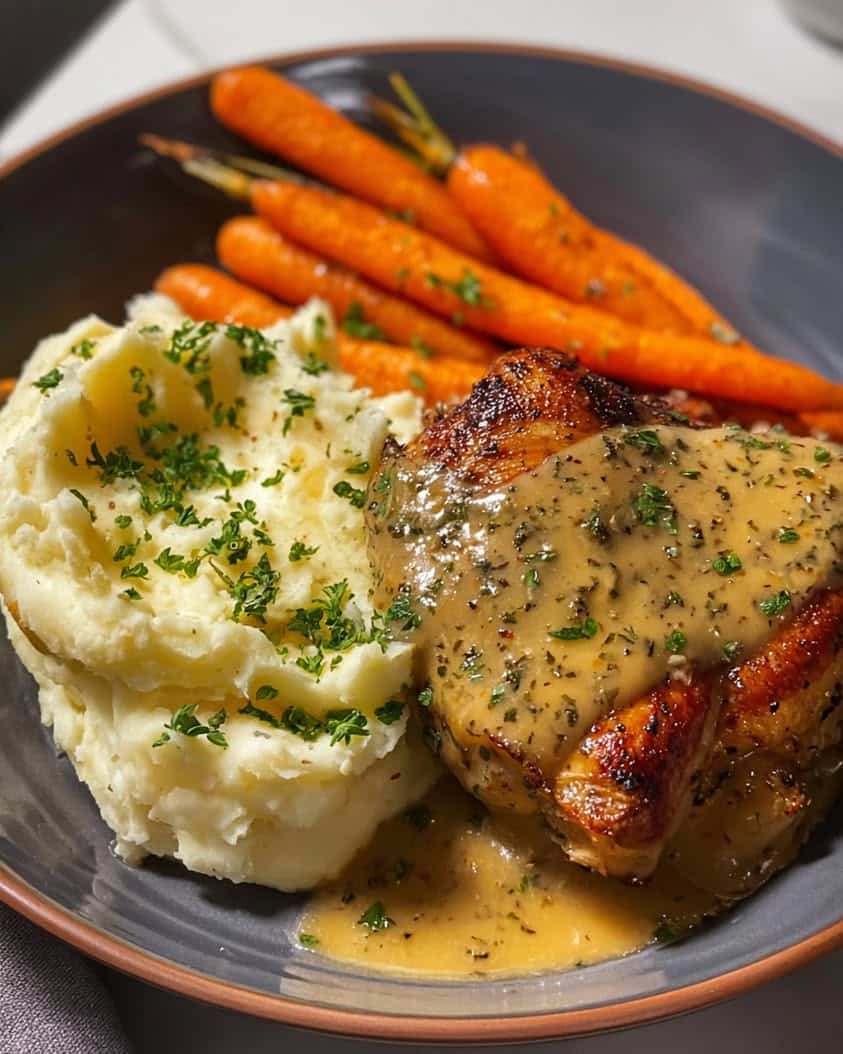
Herb-Roasted Chicken Thighs with Creamy Gravy, Mashed Potatoes & Glazed Carrots: A Complete, Comforting Dinner
Imagine a dinner plate that feels like a warm hug. This recipe for herb-roasted chicken thighs with creamy gravy, mashed potatoes, and glazed carrots delivers exactly that. It is the quintessential comfort food, a complete meal that satisfies every craving. The chicken thighs roast to a golden, crispy-skinned perfection, while the carrots caramelize into sweet, tender bites. Meanwhile, the mashed potatoes provide a creamy, buttery base, all brought together by a rich, savory gravy made from the chicken’s own pan drippings.
Furthermore, this meal is a fantastic choice for a busy weeknight or a relaxed Sunday dinner. It uses simple, wholesome ingredients that you likely already have in your pantry. The process is straightforward, yet the results are deeply impressive. The aroma of roasting herbs and chicken will fill your kitchen, creating an inviting atmosphere that promises a delicious meal ahead. Ultimately, this dish is about bringing people together over food that is both nourishing and deeply satisfying.
Additionally, this recipe is incredibly versatile. You can easily adapt it to suit different tastes or dietary needs. For instance, the herbs can be swapped based on what you have fresh or dried. Similarly, the vegetables can change with the seasons. This flexibility makes it a reliable staple in your cooking repertoire. Consequently, you will find yourself returning to this recipe again and again, especially when you need a guaranteed crowd-pleaser.
Quick Recipe Highlights
- Flavor Profile: This dish offers a beautiful harmony of savory, herbal, and sweet notes. The chicken is deeply savory with aromatic herbs, the carrots add a natural sweetness, and the gravy brings a rich, umami depth that ties everything together.
- Texture: You get a wonderful contrast of textures: crispy, crackling chicken skin against juicy meat, smooth and fluffy mashed potatoes, and tender-crisp glazed carrots with a slight bite.
- Aroma: As it cooks, your kitchen will fill with the warm, inviting scents of roasting garlic, thyme, rosemary, and savory chicken fat, creating an unmistakable aroma of home-cooked comfort.
- Visual Appeal: The plate is a feast for the eyes with golden-brown chicken, vibrant orange carrots, creamy white potatoes, and a rich brown gravy, making it as beautiful as it is tasty.
- Skill Level Needed: This is a beginner-friendly recipe. It requires basic techniques like chopping, roasting, and making a simple pan sauce, making it perfect for cooks of all levels looking to create an impressive meal.
- Special Equipment: You only need a large sheet pan, a medium pot for potatoes, a skillet for gravy, and basic kitchen tools. A potato masher or ricer is helpful for the smoothest potatoes.
Recipe Overview
- Difficulty Level: We rate this recipe as easy. The steps are sequential and logical, with most of the cooking being hands-off oven time. The techniques, like making a roux-based gravy, are fundamental and explained clearly. Even a novice cook can achieve excellent results by following the instructions.
- Category: This is a main course, a complete dinner. It falls squarely into the categories of comfort food, family meals, and Sunday suppers. It is hearty, balanced, and designed to be a centerpiece dish that requires minimal additional sides.
- Cuisine: The dish draws from classic American and European home cooking traditions. The technique of roasting chicken with herbs is timeless, while the sides of mashed potatoes and glazed carrots are staples in many Western comfort food cuisines.
- Cost: This is a very cost-effective meal. Chicken thighs are an affordable cut, and potatoes and carrots are inexpensive root vegetables. Using pan drippings for the gravy maximizes flavor without extra cost. Overall, it feeds a family generously without straining the grocery budget.
- Season: This recipe shines in the fall and winter, perfectly suited for cooler weather when hearty, warming meals are most desired. However, it uses readily available ingredients year-round, making it a fantastic option for any season when you crave classic comfort.
- Occasion: It is ideal for casual family dinners, Sunday gatherings, potlucks, or even a comforting weeknight treat. The presentation is elegant enough for a simple dinner party but homey enough for an everyday meal.
Why You’ll Love This Recipe
First and foremost, the taste and texture are utterly irresistible. The chicken thighs, with their higher fat content, stay incredibly juicy and develop a crackling, herb-infused skin that is pure gold. Paired with the sweet, buttery glazed carrots and the cloud-like mashed potatoes, each bite is a perfect balance. The creamy gravy, made from the flavorful pan drippings, is the luxurious ribbon that brings every component together. This symphony of flavors and textures defines what comfort food is all about.
From a convenience standpoint, this recipe is a winner. While it feels special, the preparation is straightforward and manageable. You can prep the vegetables while the chicken roasts, making efficient use of your time. Moreover, everything can be ready to serve at once with a little planning. The recipe also uses one sheet pan for the chicken and carrots, minimizing cleanup. Consequently, you get a restaurant-quality, complete plate without the stress or the pile of dishes.
Nutritionally, this meal offers a good balance of protein, carbohydrates, and vegetables. Chicken thighs provide high-quality protein and essential nutrients like iron and B vitamins. Carrots are packed with beta-carotene, which supports eye health. Potatoes offer vitamin C, potassium, and fiber, especially if you leave the skins on. By making the gravy from scratch, you control the sodium and avoid unnecessary additives found in store-bought versions. It is a wholesome, satisfying meal.
For social and entertaining value, this dish is a proven crowd-pleaser. It appeals to all ages and feels celebratory. Serving a complete, home-cooked meal like this shows care and effort. You can easily double the recipe to feed a larger group. The familiar, comforting elements make guests feel at home, sparking conversation and creating a warm, communal dining experience. It is the kind of meal people remember and request again.
Finally, its cost-effectiveness and accessibility cannot be overstated. It transforms humble, affordable ingredients into something extraordinary. Chicken thighs are a budget-friendly superstar, and potatoes and carrots are pantry staples. You do not need any exotic or expensive components. This makes it an accessible recipe for anyone wanting to cook a delicious, impressive meal without a big grocery bill. It proves that great food does not have to be complicated or costly.
Historical Background and Cultural Significance
The concept of roasting meat with herbs is ancient, rooted in traditions across Europe and the Americas. Before modern refrigeration, herbs were used not only for flavor but also to help preserve meat and mask any off-flavors. Thyme, rosemary, and garlic, the stars of this recipe, have been culinary staples in Mediterranean regions for millennia. The technique of using the pan drippings to create a sauce or gravy is a cornerstone of frugal, resourceful cooking, ensuring no flavor is wasted.
In cultural terms, this specific combination of roast chicken, mashed potatoes, and a vegetable like carrots epitomizes the “meat and potatoes” ideal in American and British home cooking. It represents a hearty, satisfying meal that fueled families through hard work. The Sunday roast dinner, a tradition in the UK, often features a similar composition. This recipe is a direct descendant of those traditions, adapted for modern kitchens and weeknight timelines while retaining its soul-warming essence.
The evolution of this recipe is interesting. Historically, a whole chicken might have been roasted. The use of specifically chicken thighs is a more modern preference, recognizing their superior flavor and juiciness compared to leaner breast meat. Similarly, the expectation of a “creamy” gravy made with a roux (butter and flour) is a French technique that became standard in many Western cuisines. This dish is a fusion of rustic roasting methods and refined sauce-making techniques.
Regional variations are endless. In the American South, the herbs might include sage and a touch of paprika. In Provence, herbes de Provence would be used. The carrots could be swapped for parsnips or turnips in other regions. The mashed potatoes might be enriched with cream cheese in some homes or roasted garlic in others. This adaptability is a testament to the recipe’s solid foundation. It provides a template that welcomes personal and regional touches, allowing it to belong to many culinary traditions at once.
Ingredient Deep Dive
Chicken Thighs (Bone-In, Skin-On): This cut is the hero for a reason. The bone contributes immense flavor during roasting and helps conduct heat evenly. The skin protects the meat from drying out and, when seasoned and roasted properly, transforms into a crispy, flavorful delicacy. Culturally, dark meat chicken is prized in many cuisines for its richness. Nutritionally, it provides more iron and zinc than white meat. When selecting, look for plump thighs with evenly colored skin. For storage, keep refrigerated and use within 1-2 days of purchase, or freeze for longer storage. For a substitution, chicken legs (drumsticks) work well, though cooking time may vary slightly.
Fresh Herbs (Thyme & Rosemary): Fresh herbs are non-negotiable for the brightest flavor. Thyme offers a subtle, earthy complexity, while rosemary provides a piney, robust punch. Historically, these Mediterranean herbs were symbols of strength and purification. They are rich in antioxidants and have anti-inflammatory properties. Select bunches with vibrant, green leaves and firm stems, avoiding any that are wilted or brown. Store them loosely wrapped in a damp paper towel in the refrigerator. If you must substitute, use dried herbs but reduce the quantity by two-thirds, as dried herbs are more potent.
Yukon Gold Potatoes: Chosen for their naturally buttery flavor and creamy texture when mashed, Yukon Golds have a perfect balance of starch and moisture. They originated in Canada and have become a gold standard for mashed potatoes. They are a good source of potassium and vitamin C, especially with the skin on. Select firm potatoes without sprouts or green tinges. Store in a cool, dark, well-ventilated place—not the refrigerator. Russet potatoes can be substituted for a fluffier mash, but they may require more butter or cream to achieve creaminess.
Carrots: This humble root vegetable adds sweetness, color, and nutrition. Carrots have been cultivated for thousands of years, originally prized for their aromatic leaves and seeds before the root became popular. They are famously rich in beta-carotene, which converts to vitamin A, crucial for vision and immune health. Choose firm, smooth carrots with a bright orange color. Avoid limp or rubbery ones. Store them in the crisper drawer of your refrigerator. For a variation, try using rainbow carrots or adding a pinch of ground cumin to the glaze for a warm, earthy note.
Chicken Broth & Heavy Cream: These form the liquid base of the luxurious gravy. Quality chicken broth is key—it provides the savory backbone. Homemade is ideal, but a good low-sodium store-bought brand works perfectly. Heavy cream adds richness and body, creating a velvety sauce that clings to the food. Historically, sauces made from pan drippings (jus) were extended with broth and enriched with cream or butter. For storage, keep broth in the pantry until opened, then refrigerate. Cream should always be refrigerated. For a lighter gravy, you can substitute half-and-half for the heavy cream, though it will be slightly less rich.
Common Mistakes to Avoid
- Not Patting the Chicken Dry: Skipping this step is a major error. Moisture on the skin steams instead of crisps. Always thoroughly pat chicken thighs dry with paper towels before seasoning to ensure the skin becomes perfectly crispy and golden brown.
- Crowding the Pan: Placing chicken thighs too close together on the sheet pan causes them to steam in their own juices. For proper roasting and browning, leave at least an inch of space between each piece so hot air can circulate effectively.
- Underseasoning: Chicken thighs and root vegetables need generous seasoning. Do not be shy with salt and pepper, both under the skin and on the vegetables. Remember, seasoning builds layers of flavor throughout the cooking process.
- Using Cold Butter or Cream in Mashed Potatoes: Adding cold dairy to hot potatoes can make them gluey. Always warm your butter, milk, or cream before incorporating it into the drained potatoes. This helps them absorb the fat and liquid smoothly.
- Overworking the Mashed Potatoes: Vigorous mashing or using a food processor releases too much starch, resulting in a gummy, paste-like texture. Mash gently until just smooth, or use a ricer for the fluffiest, lump-free results.
- Not Deglazing the Pan Properly for Gravy: After removing the chicken, you must scrape up all the flavorful browned bits (fond) from the pan with your broth. This step is crucial for building a deep, savory flavor in your gravy.
- Adding Flour Directly to Hot Fat: When making the roux, if you dump flour into very hot butter or fat, it can clump instantly. Whisk the flour in quickly and continuously to form a smooth paste before it has a chance to burn.
- Overcooking the Carrots: Carrots should be tender but still have a slight bite (al dente). If roasted until completely soft, they can become mushy and lose their vibrant color and sweet flavor. Check them a few minutes before the timer goes off.
- Serving Everything Lukewarm: Comfort food is best served hot. Time your components so the mashed potatoes are finished last, and have your gravy warm and ready. Use warm plates to keep everything at the ideal temperature.
- Not Letting the Chicken Rest: Slicing into the chicken immediately after roasting lets all the precious juices run out. Let it rest for 5-10 minutes tented with foil. This allows the juices to redistribute, ensuring every bite is moist.
Essential Techniques
Patting Chicken Dry: This is the single most important step for crispy skin. Surface moisture creates steam, which prevents browning. Use several layers of paper towels and press firmly on all sides of the chicken thigh, especially the skin. The skin should feel slightly tacky but not wet. Doing this ensures the seasoning sticks and the skin renders and crisps beautifully in the oven’s dry heat.
Making a Roux: A roux is a cooked mixture of equal parts fat and flour, used to thicken sauces and gravies. In this recipe, you use the fat from the pan drippings plus butter. The key is to cook the flour in the fat for a minute or two to eliminate the raw flour taste. Whisk constantly over medium heat until it forms a smooth paste and turns a light golden color. This is the foundation for a lump-free, velvety gravy.
Deglazing: This technique uses liquid to dissolve the caramelized bits of food stuck to the bottom of a pan after roasting or sautéing. Those bits, called “fond,” are packed with flavor. After removing the chicken, you pour broth into the hot skillet and vigorously scrape the bottom with a wooden spoon. This incorporates all that concentrated flavor into the liquid, which becomes the base of your incredible gravy.
Glazing Vegetables: Glazing carrots involves cooking them in a small amount of liquid (like broth or water) with butter and a touch of sweetener (like honey or brown sugar). As the liquid reduces, it forms a shiny, flavorful coating that clings to the carrots. The technique caramelizes the natural sugars in the carrots, enhancing their sweetness and giving them a beautiful glossy finish and tender-crisp texture.
Pro Tips for Perfect Herb-Roasted Chicken Thighs
First, for the crispiest skin, let the patted-dry chicken thighs sit uncovered on a rack in the refrigerator for 30 minutes before cooking. This air-dries the skin further. Second, season under the skin. Gently lift the skin and rub some of the herb mixture directly onto the meat for maximum flavor penetration. Third, use a meat thermometer. Chicken is done at 165°F internally, but taking it out at 160°F accounts for carryover cooking, preventing dryness.
Fourth, roast your vegetables on a separate sheet pan or the same one as the chicken, but ensure they are in a single layer. Crowding causes steaming. Fifth, for ultra-smooth gravy, strain it through a fine-mesh sieve after adding the cream to remove any herb bits or flour lumps. Sixth, warm your serving plates. This simple step keeps the entire meal hot from the first bite to the last, elevating the dining experience significantly.
Seventh, reserve some of the starchy potato cooking water. If your mashed potatoes seem too thick after adding the dairy, a splash of this hot water can loosen them perfectly without diluting flavor. Eighth, garnish with purpose. A final sprinkle of fresh chopped herbs over the plated dish adds a burst of color and a fresh aroma that makes the meal look professionally prepared.
Variations and Adaptations
For regional variations, consider a French twist by using herbes de Provence on the chicken and adding a splash of white wine to the gravy. An American Southern version might include a paprika and brown sugar rub on the chicken and collard greens instead of carrots. For seasonal adaptations, in spring, use fresh asparagus or baby potatoes roasted alongside the chicken. In summer, swap the carrots for zucchini and yellow squash medleys.
Dietary modifications are straightforward. For a gluten-free version, use a cornstarch slurry (1 tbsp cornstarch mixed with 2 tbsp cold water) instead of flour to thicken the gravy. For dairy-free, use olive oil on the potatoes and chicken, and substitute the gravy’s butter and cream with dairy-free alternatives and full-fat coconut milk for richness. To lower carbs, serve the chicken and gravy over cauliflower mash instead of potatoes and reduce the honey in the carrot glaze.
Flavor variations can keep this recipe exciting. Add lemon zest and slices to the chicken pan for a bright, citrusy note. Incorporate a tablespoon of Dijon mustard into the gravy for tang. For a smoky element, add a pinch of smoked paprika to the herb rub. Texture modifications could include leaving the potato skins on for a rustic mash or cutting the carrots into different shapes like coins or batons for visual interest.
Presentation alternatives offer fun ways to serve. Instead of plating individually, present the chicken on a large platter over a bed of mashed potatoes, with carrots scattered around, and pour the gravy into a small pitcher for guests to add themselves. For a family-style approach, serve each component in its own warm bowl, allowing everyone to build their perfect plate. These small changes can make the same delicious meal feel new and special.
Serving and Presentation Guide
Plating techniques matter for visual appeal. Start with a generous scoop of fluffy mashed potatoes slightly off-center on a warm plate. Use the back of a spoon to create a small well. Place one or two herb-roasted chicken thighs leaning against the potatoes. Arrange a portion of the glazed carrots artfully alongside. Finally, ladle the creamy gravy over the chicken and just a bit onto the potatoes, allowing some of the crispy skin to remain visible.
Garnishing ideas are simple but effective. A final sprinkle of freshly chopped parsley, chives, or thyme adds a pop of green color and fresh flavor. A light grind of black pepper over the gravy looks elegant. For special occasions, a few edible flowers or a tiny sprig of rosemary can elevate the plate. Traditional accompaniments might include a simple green salad with a vinaigrette to cut the richness, or a crusty loaf of bread to soak up any extra gravy.
Modern serving suggestions could involve deconstructing the elements. Serve the shredded chicken over the mashed potatoes, with the carrots pureed into a smooth side. Alternatively, for a casual gathering, serve the components in separate bowls and let guests create their own “comfort food bowls.” Temperature considerations are critical; ensure everything is piping hot. Use warmed serving dishes and plates to maintain heat. For portion control, one large or two smaller chicken thighs per person is standard, with about ¾ cup of mashed potatoes and a half-cup of carrots.
Wine and Beverage Pairing
Wine pairings for this rich, savory meal should complement without overpowering. A medium-bodied white wine like an oaked Chardonnay works beautifully; its buttery notes mirror the mashed potatoes and gravy, while its acidity cuts through the fat. For red wine lovers, a Pinot Noir is an excellent choice. Its bright red fruit flavors and low tannins pair well with the chicken and the sweet carrots without clashing. Ultimately, avoid heavily tannic reds like Cabernet Sauvignon, which can fight with the herbs and cream.
Non-alcoholic alternatives can be just as thoughtful. A sparkling apple cider offers sweetness and effervescence that cleanses the palate. For a warmer option, a rosemary-infused lemonade or thyme tea complements the herbal notes in the dish. Rich, creamy beverages like a chai latte or a steamer also pair nicely, echoing the comfort food theme. Temperature considerations are key here as well; serve chilled drinks very cold and warm beverages piping hot to provide a pleasing contrast to the warm meal.
Coffee and tea pairings are excellent after the meal. A medium-roast coffee with low acidity and notes of caramel or nut will complement the meal’s savory and sweet elements without bitterness. For tea, a robust black tea like English Breakfast or Earl Grey stands up to the hearty flavors. If serving with dessert, a decaf option is considerate. Serving suggestions include offering a small carafe of cream and sugar alongside, allowing guests to customize their post-dinner drink to their liking.
Storage and Shelf Life
Proper storage methods are essential for food safety and quality. Store all components separately in airtight containers. This prevents the crispy chicken skin from becoming soggy and keeps the gravy from making the potatoes mushy. Refrigerate within two hours of cooking. The mashed potatoes and gravy should be transferred to shallow containers to cool quickly. Temperature requirements are strict; your refrigerator should be at 40°F or below to safely store cooked food.
For container recommendations, glass or BPA-free plastic containers with tight-fitting lids are best. You can store the chicken, carrots, and potatoes together if you plan to consume them within a day, but for best texture, keep the gravy separate. Signs of spoilage include an off or sour smell, visible mold, or a slimy texture on the chicken or vegetables. When in doubt, throw it out. Do not taste food you suspect may be spoiled.
Reheating instructions vary by component. Reheat chicken thighs in an oven or toaster oven at 350°F until warmed through to help re-crisp the skin. Microwave reheating will make the skin rubbery. Mashed potatoes and gravy are best reheated gently on the stovetop with a splash of milk or broth to restore creaminess. Carrots can be quickly reheated in a skillet. Freezing guidelines: You can freeze the cooked chicken (without gravy) and carrots for up to 3 months. Mashed potatoes can be frozen but may become grainy upon thawing. Gravy can separate when frozen and reheated, so it’s best made fresh.
Make Ahead Strategies
A smart prep timeline can turn this into a nearly effortless weeknight meal. The day before, you can peel and cut the carrots and potatoes, storing them submerged in water in the refrigerator. You can also make the herb seasoning mix. You can even pat dry and season the chicken thighs, then store them uncovered on a rack in the fridge; this actually improves the skin’s crispiness. Storage between steps is simple: keep prepped vegetables in water, chicken on a plate in the fridge, and herbs in a bag.
Assessing the quality impact is important. Pre-chopping vegetables has no negative effect. Pre-seasoning chicken enhances flavor. However, mashing potatoes a day ahead is not recommended, as they can become gluey. It is best to cook and mash them fresh. For assembly, have all your prepped ingredients measured and ready to go. This “mise en place” makes the cooking process smooth and enjoyable. Reheating guidelines for make-ahead components: bring chilled, prepped vegetables to room temperature for 10 minutes before roasting for even cooking.
For fresh element additions, always add final garnishes like fresh herbs just before serving. If you make the gravy ahead, it will thicken significantly when chilled. Reheat it gently on the stove, whisking in a little extra broth or cream to bring it back to the right consistency. Taste and re-season after reheating, as flavors can mellow when chilled. With these strategies, you can have a magnificent, from-scratch dinner on the table with minimal active cooking time on a busy evening.
Scaling Instructions
Halving the recipe for two people is simple. Use two large chicken thighs, one pound of potatoes, and three medium carrots. Use a smaller sheet pan or skillet. The cooking times will remain roughly the same, but keep a closer eye as smaller quantities can cook slightly faster. When doubling or tripling for a crowd, you will need multiple sheet pans. Rotate the pans in the oven halfway through cooking to ensure even browning. You may also need to extend the roasting time by 5-10 minutes if the pans are very full.
Equipment adjustments are necessary when scaling. For a doubled recipe, you will likely need a very large pot for boiling potatoes or need to boil them in two batches. Your gravy will require a larger skillet. A whisk is essential for smoothly incorporating the larger amount of flour into the roux. Timing modifications are minimal for scaling up; the prep time will increase linearly, but the oven time remains similar. However, allow extra time for making a larger batch of gravy, as it will take longer to come to a simmer and thicken properly.
Storage considerations change with scale. If cooking for a large event, plan your refrigerator space ahead of time for storing the increased volume of ingredients and leftovers. Consider using disposable aluminum pans for easy transport and cleanup if it’s a potluck. Label and date all containers if you have significant leftovers. Remember, food safety is paramount; large quantities of hot food, like a big pot of gravy, take longer to cool. Divide them into smaller, shallow containers before refrigerating to cool them quickly and safely.
Nutritional Deep Dive
A macro breakdown for one serving (1 large thigh, ¾ cup potatoes, ½ cup carrots, gravy) provides a balanced profile. You get approximately 35-40 grams of high-quality protein from the chicken, essential for muscle repair and satiety. The carbohydrates, primarily from potatoes and carrots, offer around 45-50 grams, providing sustained energy. Fats, from the chicken skin, butter, and cream, contribute about 25-30 grams, including both saturated and unsaturated fats that aid in nutrient absorption and flavor.
The micronutrient analysis reveals a wealth of vitamins and minerals. Chicken thighs are rich in B vitamins, particularly B12 and niacin, crucial for energy metabolism. Carrots deliver a massive dose of Vitamin A (as beta-carotene), vital for vision and immune function. Potatoes provide a significant amount of Vitamin C and potassium, which supports heart health and fluid balance. The herbs, though used in small quantities, contribute antioxidants and phytonutrients. Health benefits of this meal include supporting muscle health, providing antioxidant protection, and promoting satiety due to its balanced macronutrient profile.
Dietary considerations are important to note. This meal is naturally gluten-free if you use a cornstarch slurry for the gravy. It is high in protein and can be adapted to be lower in carbs. For portion analysis, this is a hearty, satisfying meal. For those managing weight, you can moderate portions by having one smaller chicken thigh, reducing the butter in the potatoes, and increasing the portion of carrots. The key is the balance; the protein and fat help regulate blood sugar spikes from the carbohydrates, making it a fulfilling meal that can support weight management goals when consumed as part of a balanced diet.
Dietary Adaptations
For a gluten-free adaptation, the only change needed is the gravy thickener. Instead of all-purpose flour, use a cornstarch slurry. Mix one tablespoon of cornstarch with two tablespoons of cold water until smooth. After deglazing the pan with broth and bringing it to a simmer, whisk in the slurry. Cook for 1-2 minutes until the gravy thickens and becomes clear, then proceed with adding cream and herbs. Ensure your chicken broth is certified gluten-free.
For a dairy-free version, substitute the butter on the chicken and vegetables with a high-heat oil like avocado oil. In the mashed potatoes, use olive oil or a vegan butter alternative, and replace the milk/cream with unsweetened almond milk or oat milk warmed with a splash of olive oil for richness. For the gravy, use a dairy-free butter substitute for the roux and full-fat canned coconut milk instead of heavy cream. The coconut flavor is subtle and works well with the herbs.
A vegan adaptation requires more significant changes but is possible. Replace chicken thighs with large, thick slices of cauliflower steaks or seasoned, pressed extra-firm tofu. Use vegetable broth for the gravy. For a “creamy” element, a cashew cream (soaked cashews blended with water) can mimic the richness of dairy in both the potatoes and gravy. Glaze the carrots with maple syrup instead of honey. While the flavor profile shifts, you can create a plant-based meal with similar comforting textures and herbal notes.
For low-carb and keto diets, replace the mashed potatoes with mashed cauliflower. Steam or boil cauliflower florets until very tender, then drain thoroughly and mash with butter, cream cheese, and heavy cream. Reduce or omit the honey in the carrot glaze, or replace carrots with a lower-carb vegetable like green beans. The chicken and gravy, being high in fat and protein, are already keto-friendly. Ensure any thickener used in the gravy is keto-approved, like xanthan gum, used sparingly.
Troubleshooting Guide
If your chicken skin isn’t crispy, the culprit is likely moisture or overcrowding. Next time, pat the skin drier and ensure space between thighs on the pan. For now, you can briefly broil the cooked chicken for 1-2 minutes, watching closely to avoid burning. If your gravy is too thin, create a small additional roux in a separate pan (1 tbsp butter + 1 tbsp flour), cook for a minute, then whisk in a ladle of the thin gravy to combine before stirring this mixture back into the main pot. Simmer to thicken.
If your mashed potatoes are gluey, you likely overworked them. Unfortunately, this is hard to fix. You can try folding in more warm cream or milk to loosen them, but the texture may remain sticky. For future reference, use a ricer or mash gently until just combined. If your carrots are mushy, they were overcooked. Next time, check for doneness earlier. For now, you can puree them with a bit of butter and serve as a carrot puree side, which is still delicious.
If your gravy is lumpy, strain it through a fine-mesh sieve into a clean pot. Press the solids through with a spoon to extract flavor, leaving the lumps behind. Reheat gently. If the flavor is bland, it likely needs more salt. Season gradually, tasting as you go. A splash of lemon juice or a teaspoon of Dijon mustard can also brighten and deepen the flavors. If the gravy is too salty, dilute it with more unsalted broth or a bit of water, and balance with a pinch of sugar.
Recipe Success Stories
Community feedback on this recipe has been overwhelmingly positive. Many home cooks report it becoming their go-to “impress the in-laws” or “cheer up a friend” meal. One reader shared how doubling the recipe for a potluck resulted in empty pans and multiple requests for the recipe. Another mentioned that their kids, who typically avoid vegetables, devoured the glazed carrots and asked for seconds. These stories highlight the universal appeal of well-executed comfort food.
Variation successes from readers are inspiring. One cook added a tablespoon of grainy mustard to the gravy for extra tang, which they now consider essential. Another roasted sweet potatoes instead of carrots for a fall twist. A family with dietary restrictions successfully made the gluten-free and dairy-free adaptations and said it was the first “normal” comforting meal they’d enjoyed in months. These adaptations prove the recipe’s solid foundation can support personal creativity and necessity.
Reader suggestions have also improved the recipe. Several suggested adding a pinch of red pepper flakes to the herb rub for a subtle heat, which works wonderfully. Another recommended saving the potato-peeling water to use for watering plants, as the starches are beneficial. Photography tips from amateur food bloggers emphasize natural light and shooting the moment the gravy is poured. The steam rising from the plate makes for a dynamic, mouth-watering image that captures the essence of the meal.
Frequently Asked Questions
Can I use boneless, skinless chicken thighs? Yes, but the result will be different. You will lose the crispy skin and some flavor from the bone. Reduce the cooking time by 5-10 minutes, as boneless thighs cook faster. The gravy will also have less rendered fat, so you may need to supplement with butter.
Can I make this with chicken breasts? You can, but breasts are much leaner and can dry out. If using breasts, brine them for 30 minutes first and reduce the oven temperature to 375°F. Watch the internal temperature closely and remove at 160°F. The cooking time will be shorter than for thighs.
What can I use instead of heavy cream in the gravy? For a lighter option, half-and-half works, though the gravy will be slightly less rich. For a dairy-free version, full-fat canned coconut milk is an excellent substitute. Do not use milk, as it can curdle when simmered.
Herb-Roasted Chicken Thighs with Creamy Gravy, Mashed Potatoes & Glazed Carrots
Description
A comforting and hearty meal featuring juicy herb-roasted chicken thighs, creamy mashed potatoes, sweet glazed carrots, and a rich gravy.
Ingredients
For the Crust:
- 4 bone-in, skin-on chicken thighs
- 2 tablespoons olive oil
- 1 teaspoon dried thyme
- 1 teaspoon dried rosemary
- 1 teaspoon garlic powder
- Salt and black pepper to taste
- 4 large potatoes, peeled and cubed
- 1/2 cup milk
- 2 tablespoons butter
- 1 pound carrots, peeled and sliced
- 2 tablespoons brown sugar
- 1 tablespoon butter
- 2 tablespoons all-purpose flour
- 1 cup chicken broth
- 1/2 cup heavy cream
Instructions
1. Prepare the Crust:
- Preheat oven to 400°F. Toss chicken thighs with olive oil, thyme, rosemary, garlic powder, salt, and pepper. Roast for 30-35 minutes until golden and cooked through.
- Boil potatoes in salted water until tender, about 15 minutes. Drain, mash with milk and butter, and season with salt and pepper.
- In a skillet, cook carrots with butter and brown sugar over medium heat until tender and glazed, about 10 minutes.
- For gravy, whisk flour into pan drippings from chicken. Gradually add chicken broth and heavy cream, simmer until thickened.
- Serve chicken thighs over mashed potatoes with glazed carrots on the side, drizzled with gravy.
Notes
You can customize the seasonings to taste.

I’m Shaykee—born in Morocco, seasoned across continents. From airplane galleys to home kitchens, I share the flavors and stories that shaped my journey.