
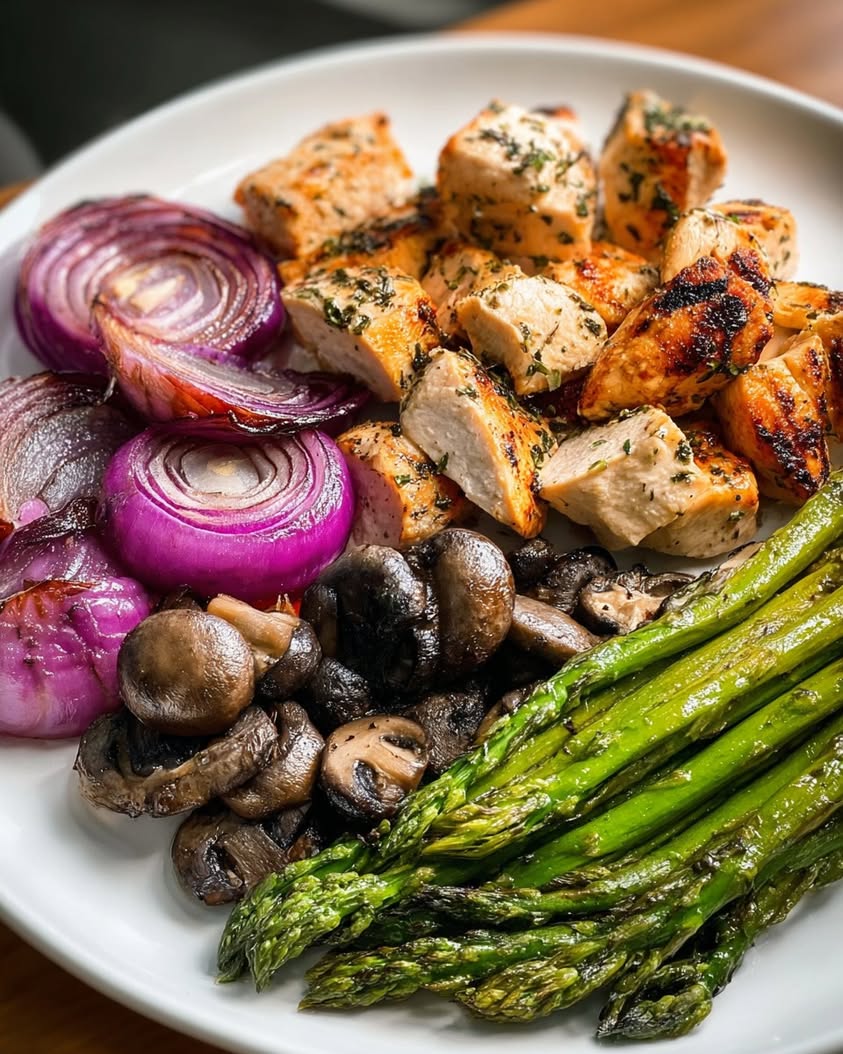
Herby Grilled Chicken with Sautéed Mushrooms, Asparagus & Roasted Red Onions: A Complete, Flavorful Low-Carb Dinner
Imagine a dinner plate that delivers on every promise: juicy, char-kissed chicken infused with fresh herbs, savory mushrooms cooked to golden perfection, crisp-tender asparagus, and sweet, caramelized red onions. This herby grilled chicken with savory mushrooms, tender asparagus & sweet roasted onions is that dream meal, a complete, flavorful low-carb dinner ready in 30 minutes. It is a symphony of textures and tastes that feels both restaurant-worthy and wonderfully approachable for a weeknight.
Furthermore, this recipe masterfully balances simplicity with sophistication. The process is straightforward, yet the final result is incredibly impressive. Each component is cooked using a method that maximizes its natural flavor, from the high heat of the grill to the gentle sauté and the deep roasting. Consequently, you get a meal that is greater than the sum of its parts, perfect for impressing guests or simply treating your family to something special without spending hours in the kitchen.
Quick Recipe Highlights
- Flavor Profile: This dish features a beautiful harmony of savory, sweet, and herbal notes. The garlic and herb-marinated chicken provides a robust base, while the roasted red onions add a touch of caramelized sweetness that perfectly balances the earthy, umami-rich sautéed mushrooms.
- Texture: You will enjoy a fantastic contrast in every bite. Expect juicy and slightly charred chicken, meaty and tender mushrooms, asparagus with a satisfying snap, and soft, sweet ribbons of onion. This variety makes the eating experience dynamic and enjoyable.
- Aroma: As it cooks, your kitchen will fill with the irresistible scent of sizzling garlic and herbs, the earthy fragrance of mushrooms hitting a hot pan, and the sweet, almost nutty aroma of onions caramelizing in the oven. It is an olfactory preview of the delicious meal to come.
- Visual Appeal: The plate is a feast for the eyes with vibrant green asparagus, deep golden-brown mushrooms, ruby-red onion strips, and beautifully grilled chicken. The varied colors and shapes create an attractive, restaurant-style presentation that is sure to impress.
- Skill Level Needed: This is an accessible recipe for most home cooks. It requires basic skills like chopping vegetables, using a grill or grill pan, and managing a couple of components simultaneously on the stovetop and in the oven. With a little organization, it comes together seamlessly.
- Special Equipment: You will need a grill or a stovetop grill pan for the chicken, a baking sheet for roasting the onions, and a large skillet for the mushrooms and asparagus. A pair of tongs and a sharp chef’s knife are also essential tools for success.
Recipe Overview
- Difficulty Level: We rate this recipe as “Easy” because it breaks down into simple, manageable tasks. The techniques—grilling, sautéing, roasting—are fundamental. Additionally, the components can be prepared in stages, preventing kitchen overwhelm. With clear instructions, even a novice cook can achieve excellent results.
- Category: This dish firmly sits in the “Main Course” category, specifically as a protein-and-vegetable-centric dinner. It is also an excellent fit for “Healthy Recipes,” “Low-Carb Meals,” “Weeknight Dinners,” and “Spring & Summer Grilling” collections due to its fresh ingredients and cooking method.
- Cuisine: While not tied to one specific tradition, this recipe draws inspiration from modern American “clean eating” and bistro-style cuisine. It emphasizes high-quality, fresh ingredients prepared with simple techniques to let their natural flavors shine, a hallmark of contemporary healthy cooking.
- Cost: This is a moderately priced meal. Chicken breasts are typically affordable, and mushrooms, asparagus, and onions are seasonal vegetables that can be found at good value. Fresh herbs might be the biggest variable; however, you can often use dried in a pinch. Overall, it delivers restaurant-quality taste for a fraction of the cost.
- Season: This recipe is truly versatile year-round. It shines in spring and summer when asparagus is at its peak and grilling outdoors is ideal. Conversely, you can easily prepare it indoors during fall and winter using a grill pan and enjoying the hearty, comforting flavors of mushrooms and roasted onions.
- Occasion: Perfect for a quick and healthy family dinner, it also scales beautifully for casual entertaining. The colorful plate looks elegant, and the components are generally crowd-pleasers. It is also a fantastic option for Sunday meal prep, as the components reheat well for lunches throughout the week.
Why You’ll Love This Recipe
First and foremost, the taste and texture combination is utterly irresistible. Each element brings something unique to the fork. The herby grilled chicken is succulent and packed with flavor, while the savory mushrooms offer a deep, meaty umami. Meanwhile, the tender asparagus provides a fresh, green crunch, and the sweet roasted onions tie everything together with their mellow sweetness. This variety ensures that no single bite is boring, making the entire eating experience deeply satisfying from start to finish.
From a convenience standpoint, this recipe is a weeknight hero. It requires minimal prep—mostly just chopping and mixing a simple marinade. The cooking process is efficient because you can roast the onions while you prep the other vegetables and have the chicken marinating. Then, you simply move from the stovetop to the grill. In about 30 minutes of active time, you have a complete, balanced meal on the table that feels special and nourishing.
Nutritionally, this herby grilled chicken dinner is a powerhouse. It is naturally high in lean protein from the chicken, which supports muscle maintenance and keeps you feeling full. The assortment of vegetables delivers a wide range of vitamins, minerals, and antioxidants. Asparagus is a great source of folate and fiber, mushrooms provide B vitamins and selenium, and red onions are rich in quercetin, a powerful antioxidant. As a complete low-carb dinner, it aligns with many healthy eating plans.
For social and entertaining value, this dish is a winner. It presents beautifully on a platter or individual plates, giving the impression of a chef-crafted meal. The flavors are sophisticated yet familiar, appealing to a broad range of palates. You can easily double or triple the recipe for a dinner party without significantly increasing your workload. Serving a meal this vibrant and delicious is a sure way to impress your guests and make any occasion feel celebratory.
Finally, it is cost-effective and accessible. The ingredients are common and can be found at any grocery store. You are not relying on expensive specialty items or complicated techniques. By cooking this at home, you save a considerable amount compared to ordering a similar protein-and-vegetable plate at a restaurant. Moreover, it teaches foundational cooking skills that you can apply to countless other recipes, making you a more confident and capable cook in your own kitchen.
Historical Background and Cultural Significance
The concept of pairing grilled meat with seasonal vegetables is ancient and universal, found in culinary traditions across the globe. Our specific combination, however, speaks to a modern culinary movement. This herby grilled chicken with savory mushrooms, tender asparagus & sweet roasted onions reflects a contemporary focus on “clean eating” and plate composition that prioritizes vegetables alongside a lean protein. It is less about a specific cultural origin and more about a current philosophy of health-conscious, flavor-forward cooking that celebrates whole ingredients.
Culturally, grilled chicken holds a significant place in American backyard cuisine, especially during summer. Adding a sophisticated vegetable medley elevates it from simple barbecue fare to a meal suitable for any season. The inclusion of asparagus and mushrooms, often considered gourmet ingredients, bridges the gap between everyday home cooking and the vegetable-centric plates seen in modern bistros and health-focused restaurants. This recipe embodies a cultural shift towards meals that are as aesthetically pleasing as they are nutritious.
The evolution of this recipe style is interesting. Historically, vegetable sides were often an afterthought—boiled or steamed with little seasoning. Today, there is a greater appreciation for treating vegetables with the same care as the main protein. Techniques like high-heat roasting and sautéing to develop caramelization, as used here for the onions and mushrooms, are now standard practice for extracting maximum flavor. This recipe is a product of that evolution, where each vegetable component is deliberately prepared to stand on its own.
Regional variations of this concept are endless. In the Mediterranean, you might find similar grilled chicken served with roasted peppers, zucchini, and olives. In Asia, the vegetables might be stir-fried with ginger and soy. The beauty of this formula is its adaptability. Our version, with its emphasis on fresh herbs and straightforward preparation, leans into a modern American sensibility that values brightness, texture, and visual appeal, making it a perfect example of how global influences shape our everyday cooking.
Ingredient Deep Dive
Let us start with the chicken. Boneless, skinless chicken breasts are a lean, versatile canvas. Culturally, they became a dietary staple in the latter half of the 20th century as health guidelines promoted lean protein. Nutritionally, they are an excellent source of high-quality protein and essential nutrients like niacin and selenium. For the best results, select breasts that are relatively uniform in thickness to ensure even cooking. You can also pound them gently to an even thickness. Store them in the coldest part of your refrigerator and use within 1-2 days of purchase, or freeze for longer storage.
Next, consider the mushrooms. Cremini mushrooms, often called “baby bellas,” are simply young portobellos. They have a deeper, earthier flavor than white button mushrooms. Historically, mushrooms have been foraged for millennia and are prized in many cuisines for their savory umami quality. They are low in calories but provide B vitamins, potassium, and antioxidants. Choose mushrooms that are firm with closed caps. Avoid slimy or wrinkled specimens. Store them in a paper bag in the refrigerator; plastic traps moisture and accelerates spoilage. For a different flavor, you can substitute shiitake or oyster mushrooms.
Asparagus is a celebrated spring vegetable, with a history dating back to ancient Egypt and Rome. Its seasonal arrival is often a marker of the changing season. It is rich in folate, vitamins A, C, and K, and is a natural diuretic. Look for firm, bright green spears with tight, compact tips. The cut ends should not be too woody. To store, trim the ends and stand the spears upright in a jar with an inch of water, loosely covered with a bag, in the fridge. For a variation, broccolini or green beans make excellent substitutes.
Finally, the red onion. While all onions are foundational to cooking worldwide, red onions are particularly valued for their color and slightly milder, sweeter flavor when cooked. They contain quercetin and other antioxidants. Roasting them transforms their sharp bite into a mellow, jam-like sweetness. Choose onions that are firm, heavy for their size, with dry, papery skins. Store them in a cool, dark, well-ventilated place—not in the plastic bag from the store. Yellow or sweet onions can be used if red onions are unavailable, though the vibrant color will be lost.
Common Mistakes to Avoid
- Over-marinating the Chicken: Marinating chicken breasts in an acidic mixture (with lemon juice or vinegar) for more than 30-60 minutes can actually begin to “cook” the surface proteins, resulting in a mushy, grainy texture. For tender chicken, keep the marinating time brief or use an oil-and-herb-based rub instead.
- Not Preheating the Grill: Placing chicken on a cool grill leads to sticking and prevents the formation of those desirable grill marks and flavorful crust. Always preheat your grill or grill pan on medium-high heat for at least 10-15 minutes before adding the protein.
- Crowding the Mushroom Pan: Adding too many mushrooms to the skillet at once causes them to steam rather than sauté. They release their water and become soggy. Cook mushrooms in a single layer with space between them to allow moisture to evaporate and promote proper browning.
- Overcooking the Asparagus: Asparagus cooks quickly and continues to soften from residual heat after being removed from the pan. Overcooked asparagus becomes limp, mushy, and loses its vibrant green color. Aim for a crisp-tender texture with a bright green hue.
- Cutting the Onions Too Thick or Too Thin: If onion slices are too thick, they will take forever to caramelize and soften. If they are too thin, they can burn quickly. Aim for ¼-inch thick slices or wedges for the perfect balance that allows for thorough roasting without burning.
- Using a Dull Knife: A dull knife crushes herbs and vegetables rather than cutting them cleanly. This can bruise herbs, releasing bitter flavors, and damage vegetable cell walls. A sharp chef’s knife makes prep faster, safer, and yields better-looking, better-tasting results.
- Not Letting the Chicken Rest: Slicing into the chicken immediately after grilling causes all the precious juices to run out onto the cutting board, leaving the meat dry. Always let grilled chicken rest for 5-10 minutes tented with foil. This allows the juices to redistribute throughout the meat.
- Seasoning at the Wrong Time: Seasoning the vegetables only at the end of cooking means the flavor just sits on the surface. Season mushrooms and asparagus with salt early in the cooking process to help draw out moisture and allow the seasoning to penetrate for deeper flavor.
Essential Techniques
Grilling Chicken Breasts Evenly is crucial for juicy results. The key is managing thickness. Chicken breasts are often uneven, with one end much thicker than the other. To solve this, place the breast flat on a cutting board and press down firmly with the palm of your hand. Alternatively, you can gently pound the thicker end with a meat mallet or rolling pin until the breast is a uniform ½ to ¾-inch thick. This ensures the entire piece cooks at the same rate, preventing a dry, overcooked thin end and an undercooked thick center.
Sautéing Mushrooms to Perfection requires patience and the right pan. Start with a hot pan and enough oil to coat the bottom. Add the mushrooms in a single layer without crowding—you may need to work in batches. Do not stir them immediately; let them sit for a few minutes to develop a golden-brown sear. Once they have browned on one side, toss them and continue cooking. They will release their liquid; continue cooking until that liquid evaporates and the mushrooms are deeply browned and tender. This process builds complex, savory flavor.
Roasting Red Onions for Sweetness is a simple technique with transformative results. The high, dry heat of the oven caramelizes the natural sugars in the onions. Toss the sliced onions with oil, salt, and pepper, ensuring they are well-coated. Spread them in a single layer on a baking sheet. Crowding will cause them to steam. Roast in a hot oven (around 425°F), stirring once or twice, until they are soft, slightly shrunken, and have browned, caramelized edges. The visual cue for success is a tender texture and patches of deep golden-brown color.
Blanching or Sautéing Asparagus for a Crisp-Tender Snap can be done two ways. For blanching, briefly cook spears in boiling salted water, then immediately plunge them into ice water to stop the cooking and lock in the bright green color. For sautéing, use a hot pan with a little oil. Cook the asparagus, turning occasionally, until it is bright green and just tender when pierced with a fork, usually 5-7 minutes for medium spears. The core technique is to avoid overcooking; the asparagus should still have a pleasant resistance when bitten.
Pro Tips for Perfect Herby Grilled Chicken
Bring your chicken breasts to room temperature for 15-20 minutes before grilling. Consequently, they will cook more evenly, preventing a cold center that requires extended cooking time and leads to dry edges.
Pat your chicken completely dry with paper towels before applying the herb marinade. Moisture on the surface creates steam, which impedes the development of a flavorful, caramelized sear on the grill.
Use a mix of fresh and dried herbs for layered flavor. For example, use fresh parsley and thyme in the marinade but add a pinch of dried oregano or rosemary for a deeper, more complex herbal background note.
Do not move the chicken once it hits the grill. Place it on the preheated grates and let it cook undisturbed for 5-7 minutes to develop those classic grill marks and a proper crust before attempting to flip it.
Invest in an instant-read thermometer. The most reliable way to know your chicken is perfectly cooked (165°F at the thickest part) is to use a thermometer, removing guesswork and guaranteeing juicy, safe-to-eat results every time.
After sautéing the mushrooms, deglaze the pan with a splash of chicken broth, white wine, or even water. Scrape up the flavorful browned bits (fond) left in the pan and pour this liquid gold over the finished mushrooms for an extra boost of flavor.
Prep your vegetables while the onions roast and the chicken marinates. This “mise en place” approach streamlines the cooking process, making the final assembly calm and organized rather than chaotic.
Finish the entire plated dish with a final flourish. A light drizzle of high-quality extra virgin olive oil, a squeeze of fresh lemon juice, or a sprinkle of flaky sea salt just before serving can elevate the flavors dramatically.
Variations and Adaptations
For regional variations, take this recipe on a global tour. Give it a Mediterranean twist by adding kalamata olives, sun-dried tomatoes, and crumbled feta cheese, using oregano and lemon zest in the chicken marinade. For an Asian-inspired version, marinate the chicken in soy sauce, ginger, and sesame oil, and stir-fry the mushrooms and asparagus with garlic and a splash of rice vinegar, serving everything over cauliflower rice.
Seasonal adaptations are simple and rewarding. In summer, swap asparagus for grilled zucchini or yellow squash. During fall, use Brussels sprout halves instead of asparagus and add hearty shiitake mushrooms. In winter, roasted root vegetables like carrots or parsnips can replace the asparagus, offering a comforting, sweet earthiness that pairs wonderfully with the savory mushrooms and chicken.
Dietary modifications are straightforward. For a gluten-free meal, ensure your seasonings and broth are certified gluten-free. To make it dairy-free, simply omit any butter used for sautéing and stick with olive oil. For a paleo or Whole30 version, use compliant ingredients and avoid any sugars or non-compliant sauces. The recipe is naturally low-carb and keto-friendly as written.
Flavor variations can keep this dinner exciting. Add a spicy kick by including red pepper flakes or a diced jalapeño to the herb marinade. For a smoky note, use smoked paprika in the seasoning blend for the chicken or vegetables. Incorporate umami depth by adding a teaspoon of tomato paste or a splash of balsamic glaze to the mushrooms as they finish cooking.
Texture modifications can cater to personal preference. If you love extra-crispy mushrooms, sauté them over slightly higher heat and resist stirring too often. For softer, melt-in-your-mouth onions, roast them at a slightly lower temperature (400°F) for a longer period, allowing them to caramelize slowly and deeply.
Presentation alternatives offer creative freedom. Instead of serving components separately, slice the grilled chicken and toss it with the warm mushrooms, asparagus, and onions for a hearty “hash” or bowl. Alternatively, arrange the sliced chicken over a bed of the vegetable medley, or serve everything family-style on a large platter for a rustic, shareable presentation.
Serving and Presentation Guide
Plating techniques matter for visual impact. For individual servings, place a portion of the sautéed mushrooms and asparagus in the center of a warm plate. Artfully lean the grilled chicken breast against the vegetable pile or slice it on a bias and fan it out. Scatter the sweet roasted onions over the top and around the plate. This creates height and dimension, making the plate look professionally composed.
Garnishing ideas add the final touch of freshness and color. A sprinkle of chopped fresh parsley, chives, or thyme leaves brightens the entire dish. A light grating of lemon zest over the chicken adds a pop of citrus aroma. For a richer finish, a few shavings of Parmesan cheese or a drizzle of reduced balsamic vinegar can introduce a new layer of flavor and sophistication.
Traditional accompaniments for a meal like this are often simple starches. While this is a complete low-carb dinner, you can certainly serve it over a bed of fluffy quinoa, couscous, or creamy mashed potatoes to soak up the delicious juices. A crusty piece of whole-grain bread is also perfect for mopping up the plate.
Modern serving suggestions embrace the bowl trend. Serve all the components in a shallow bowl for a cozy, contained meal. You can also add a base of cauliflower rice, zucchini noodles, or a simple green salad to bulk it out without adding significant carbs. This approach is especially popular for meal prep lunches.
Temperature considerations are key for the best experience. Serve this dish immediately after cooking while the chicken is still warm and juicy and the vegetables are hot. The contrast between the hot components and a cool garnish, like fresh herbs, is delightful. If you must hold components, keep them warm in a low oven, but be aware that asparagus may continue to soften.
Portion control tips are helpful for meal planning. A standard serving is one medium chicken breast (about 6 oz raw) and a generous cup of the combined vegetables. When plating, aim for the vegetables to occupy about half the plate, with the protein taking up a quarter, mirroring healthy plate guidelines. The remaining “quarter” is effectively the flavorful juices and onions that tie it all together.
Wine and Beverage Pairing
Wine pairings for this dish should complement its herbal and earthy notes without overpowering the chicken. A crisp, unoaked Chardonnay or a Sauvignon Blanc with herbal characteristics pairs beautifully, cutting through the richness and matching the fresh herbs. For red wine lovers, a light to medium-bodied Pinot Noir is an excellent choice. Its bright acidity and red fruit flavors harmonize with the savory mushrooms and sweet onions without dominating the plate.
Non-alcoholic alternatives can be just as thoughtful. A sparkling water with a squeeze of lemon or lime and a fresh herb sprig (like rosemary or thyme) mirrors the dish’s flavors. For something more substantial, a chilled herbal iced tea—such as lemon verbena or mint—offers a refreshing counterpoint. Alternatively, a tart cherry juice spritzer provides a sweet-and-sour note that complements the savory elements.
While not traditional for dinner, certain teas can be lovely with the leftover flavors the next day. A green tea with grassy notes can echo the asparagus, while a light oolong tea might pick up on the caramelized notes of the onion. Consider these more for a post-meal digestif rather than a primary pairing.
Temperature considerations are straightforward: white wines and non-alcoholic spritzers should be well-chilled, while red wines like Pinot Noir are best served slightly below room temperature, around 55-60°F. Iced beverages should be cold but not watered down; use large ice cubes to prevent rapid dilution.
Serving suggestions include pouring drinks just before serving the meal. Have a pitcher of your non-alcoholic spritzer ready in the fridge. If serving wine, open the bottle about 15 minutes before drinking to allow it to breathe slightly, especially for reds. Providing options allows guests to choose what best suits their taste and makes the meal feel more curated and special.
Storage and Shelf Life
Storage methods are crucial for maintaining quality. Allow all components to cool completely to room temperature before storing—but do not leave them out for more than two hours to prevent bacterial growth. Store the chicken, mushrooms, asparagus, and onions separately in airtight containers. This prevents moisture from the vegetables from making the chicken soggy and allows you to reheat each component optimally.
Temperature requirements are standard for cooked foods. All stored components must be kept in the refrigerator at 40°F or below. The chicken and vegetables will keep safely for 3-4 days when stored properly. Do not store them in the refrigerator door, as the temperature fluctuates too much; use the main body of the fridge instead.
Container recommendations include glass meal prep containers with tight-fitting lids or reusable silicone storage bags. Glass is ideal because it does not absorb odors and can go from fridge to microwave for easy reheating. If using plastic, ensure it is BPA-free and designated for food storage.
Signs of spoilage to watch for include an off or sour smell, a slimy texture on the chicken or vegetables, or any visible mold. If the asparagus becomes excessively limp and mushy or develops a foul odor, it is time to discard it. When in doubt, throw it out; food safety is paramount.
Reheating instructions are best done gently to avoid drying out the food. For the chicken, slice it and reheat it in a covered skillet with a tablespoon of water or broth over low heat, or microwave it at 50% power. Reheat vegetables in a skillet over medium heat until just warmed through. The microwave can make asparagus and mushrooms rubbery, so the stovetop is preferred.
Freezing guidelines are possible but with caveats. Cooked chicken freezes well for 2-3 months. Thaw in the refrigerator overnight before reheating. Mushrooms and asparagus do not freeze well as they become watery and lose their texture upon thawing. Roasted onions can be frozen, but they may become a bit mushy. For best results, freeze only the chicken and make fresh vegetables when ready to eat.
Make Ahead Strategies
Prep timeline can significantly speed up dinner. The day before, you can marinate the chicken (for no more than 1 hour if acidic, or overnight if just oil and herbs). You can also wash and trim the asparagus, clean and slice the mushrooms, and slice the onions. Store each prepped vegetable in separate containers or bags in the refrigerator. This reduces your active cooking time to just grilling, roasting, and sautéing.
Storage between steps is simple with organization. Keep the marinating chicken in a sealed container or zip-top bag in the fridge. Store sliced onions in an airtight container; they may smell up your fridge, so placing the container inside a larger sealed bag can help. Keep mushrooms in a paper bag or a container lined with a paper towel to absorb excess moisture.
Quality impact assessment is important. Pre-marinating chicken for a short time is fine, but avoid acidic marinades for extended periods. Pre-chopped vegetables are perfectly acceptable; mushrooms may darken slightly, and asparagus tips may dry out a bit, but the flavor and nutrition remain intact. The onions will be absolutely fine pre-sliced.
Assembly tips for serving day are efficient. Take the marinated chicken out of the fridge 20 minutes before grilling. Start roasting the onions first, as they take the longest. While they roast, cook the mushrooms, then the asparagus. Finally, grill the chicken. This staggered approach ensures everything finishes at roughly the same time and is served hot.
Reheating guidelines for make-ahead components differ. If you fully cook everything ahead, gently reheat as described in the storage section. However, for the best texture, consider making the vegetables fresh and only pre-cooking the chicken and onions, which reheat more robustly.
Fresh element additions can revive a make-ahead meal. If reheating, add a fresh squeeze of lemon juice, a drizzle of new olive oil, or a sprinkle of freshly chopped herbs just before serving. This brightens the flavors and adds a layer of freshness that makes the meal taste newly made.
Scaling Instructions
Halving the recipe is straightforward for smaller households. Simply divide all ingredient quantities by two. Use a smaller skillet for the vegetables and a quarter-sheet pan for the onions. The cooking times may be slightly shorter for the vegetables, so keep a close eye on them. The chicken grilling time will remain roughly the same, as thickness is the primary factor, not quantity.
Doubling or tripling the recipe for a crowd requires some planning. Use multiple baking sheets for the onions, rotating them in the oven halfway through for even roasting. Sauté the mushrooms in batches to avoid crowding. You may need to grill the chicken in batches as well; keep finished batches warm in a 200°F oven on a wire rack set over a baking sheet to prevent steaming.
Equipment adjustments are necessary when scaling up. Ensure you have enough sheet pans, large skillets, and grill space. If you are using an outdoor grill, create different heat zones—a hotter zone for searing and a cooler zone for holding and finishing thicker pieces. For very large batches, consider using your oven’s broiler for the chicken, cooking it on a wire rack set over a sheet pan.
Timing modifications become important with larger quantities. While the active prep time increases linearly, the oven and stovetop space may limit how much you can cook simultaneously. Start with the components that hold heat best, like the roasted onions, and finish with the most delicate items, like the asparagus and the chicken, to ensure everything is served at peak freshness and temperature.
Storage considerations for leftovers change with scale. If you have intentionally made a large batch for meal prep, invest in a set of uniform, stackable containers. Portion out complete meals (chicken + veggies) for easy grab-and-go lunches. Label containers with the date to keep track of freshness. Remember that larger volumes of food will take longer to cool in the refrigerator, so spread containers out initially to cool quickly before stacking them.
Nutritional Deep Dive
Macro breakdown for one serving is impressive. You can expect approximately 35-40 grams of high-quality protein from the chicken, which supports satiety and muscle health. The fat content is primarily from healthy cooking oils, contributing around 10-15 grams. Carbohydrates are low, roughly 10-15 grams net carbs, coming almost exclusively from the fibrous vegetables. This makes it an ideal macro profile for low-carb, high-protein dietary approaches.
Micronutrient analysis reveals a wealth of vitamins and minerals. Asparagus provides vitamin K for bone health, folate for cell function, and antioxidants. Mushrooms offer B vitamins like riboflavin and niacin for energy metabolism, plus selenium for immune support. Red onions contribute vitamin C and the antioxidant quercetin. Chicken is a source of B vitamins, particularly B6 and niacin, and minerals like phosphorus and selenium.
Health benefits of this meal are comprehensive. The high protein and fiber content promote stable blood sugar levels and prolonged fullness, aiding in weight management. The array of antioxidants from the colorful vegetables helps combat oxidative stress and inflammation. The meal is heart-healthy, being low in saturated fat and sodium (depending on seasoning), and supports overall wellness through its nutrient density.
Dietary considerations are largely positive. The recipe is naturally gluten-free and dairy-free as written. It is suitable for paleo and Whole30 diets if you verify your seasonings. It is an excellent keto-friendly dinner, well within standard net carb limits. For low-FODMAP diets, modifications are needed: use garlic-infused oil instead of fresh garlic and limit the onion portion, as both garlic and onion are high in FODMAPs.
Portion analysis shows this is a satisfying, balanced meal. The standard serving size provides a substantial amount of food volume from the vegetables, which adds bulk and fiber with minimal calories. This volume eating strategy can help prevent overeating while ensuring you consume ample nutrients. The portion is designed to be filling enough to be a standalone dinner without the need for additional sides.
Weight management tips tied to this recipe include its high satiety factor. The combination of protein and fiber is scientifically proven to increase feelings of fullness. Eating a visually appealing, flavorful meal like this can also increase meal satisfaction, reducing the likelihood of snacking on less healthy options later. It is a perfect candidate for weekly meal prep, which is a proven strategy for maintaining dietary consistency and avoiding impulsive, less healthy choices.
Dietary Adaptations
For a gluten-free adaptation, this recipe is naturally compliant. Simply ensure that any pre-made seasoning blends, broths, or marinade ingredients you use are certified gluten-free. Cross-contamination is rarely an issue with whole ingredients like these, making it a safe and easy choice for those with celiac disease or gluten sensitivity.
A dairy-free version requires no changes if you use only oil for cooking. If a recipe variation suggests butter for sautéing, simply substitute an equal amount of olive oil, avocado oil, or a dairy-free butter alternative. The core recipe contains no dairy, making it an excellent option for those avoiding lactose or casein.
Creating a vegan adaptation involves replacing the chicken with a plant-based protein. Excellent options include thick slices of marinated extra-firm tofu, tempeh, or a store-bought vegan chicken alternative. Increase the quantity of mushrooms or add hearty vegetables like roasted cauliflower steaks to maintain a satisfying, center-of-the-plate element. Use vegetable broth for any deglazing.
For a strict keto or very low-carb adaptation, the recipe as written is already excellent. To reduce carbs further, you can slightly decrease the amount of onion used, though the carbs from the vegetables are primarily fiber. Ensure any marinade contains no added sugar. This dish fits perfectly into a ketogenic macronutrient profile.
A paleo or Whole30 adaptation requires checking labels. Use fresh herbs and spices rather than blends that may contain anti-caking agents or sugar. Ensure your cooking fat is compliant (olive oil, avocado oil). Avoid any legumes or dairy, which the base recipe already does. It is a simple, wholesome meal that aligns perfectly with these dietary frameworks.
For a low-FODMAP adaptation, which is crucial for those with IBS, modifications are needed. Replace the garlic in the marinade with garlic-infused oil (the fructans are not oil-soluble). Use only the green tops of spring onions (scallions) instead of red onions, or a very small amount of the onion’s green part. This allows you to enjoy the flavors while managing digestive triggers.
Troubleshooting Guide
If your chicken is dry, the most common cause is overcooking. Invest in that instant-read thermometer and pull the
Print
Herby Grilled Chicken with Sautéed Mushrooms, Asparagus & Roasted Red Onions
Description
A vibrant and healthy meal featuring juicy grilled chicken marinated in fresh herbs, served alongside earthy sautéed mushrooms, crisp asparagus, and sweet roasted red onions.
Ingredients
For the Crust:
- 4 boneless, skinless chicken breasts
- 1/4 cup olive oil, divided
- 3 tablespoons chopped fresh herbs (such as rosemary, thyme, and parsley)
- 2 cloves garlic, minced
- 1 teaspoon salt, divided
- 1/2 teaspoon black pepper, divided
- 1 large red onion, sliced into wedges
- 8 ounces cremini mushrooms, sliced
- 1 bunch asparagus, trimmed
- 1 tablespoon balsamic vinegar
- Lemon wedges for serving
Instructions
1. Prepare the Crust:
- Preheat oven to 400°F (200°C). Toss red onion wedges with 1 tablespoon olive oil, 1/4 teaspoon salt, and 1/4 teaspoon pepper. Spread on a baking sheet and roast for 20-25 minutes until tender and caramelized.
- In a bowl, combine 2 tablespoons olive oil, chopped herbs, minced garlic, 1/2 teaspoon salt, and 1/4 teaspoon pepper. Coat chicken breasts in the marinade and let sit for 10 minutes.
- Heat a grill or grill pan over medium-high heat. Grill chicken for 6-7 minutes per side until cooked through and internal temperature reaches 165°F (74°C). Let rest for 5 minutes before slicing.
- While chicken rests, heat remaining 1 tablespoon olive oil in a large skillet over medium heat. Add mushrooms and sauté for 5-6 minutes until browned. Add asparagus and cook for another 4-5 minutes until tender-crisp. Drizzle with balsamic vinegar and season with remaining salt and pepper.
- Serve sliced chicken alongside sautéed mushrooms, asparagus, and roasted red onions. Garnish with lemon wedges.
Notes
You can customize the seasonings to taste.

I’m Shaykee—born in Morocco, seasoned across continents. From airplane galleys to home kitchens, I share the flavors and stories that shaped my journey.