
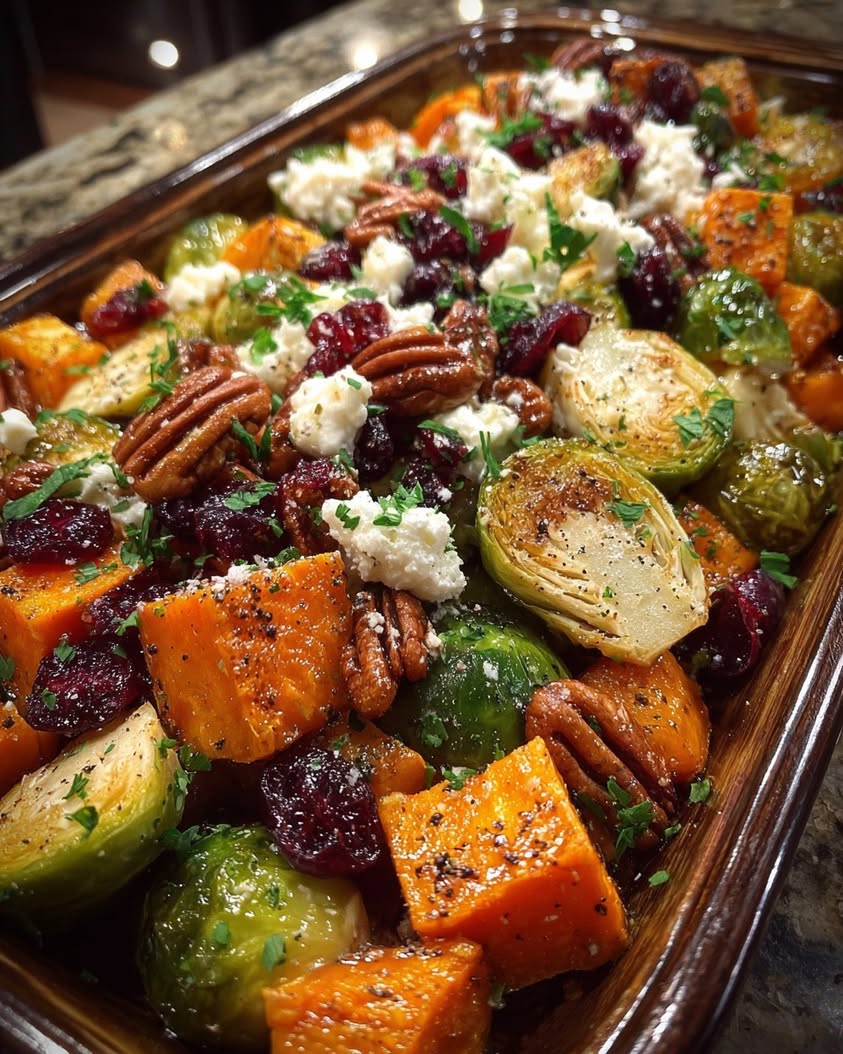
Honey-Roasted Sweet Potato, Brussels Sprouts & Cranberries with Pecans and Feta: A Festive Side Dish Sensation
This honey-roasted sweet potato, Brussels sprouts, and cranberries dish with pecans and feta is a true celebration of flavors and textures. Imagine tender, caramelized sweet potatoes and crispy Brussels sprouts tossed with a sweet and savory honey glaze. Then, picture vibrant, tart cranberries bursting with juice and crunchy pecans adding a buttery richness. Finally, creamy, salty feta cheese brings everything together in a symphony of taste. This dish is not just a side; it is an experience that will elevate any meal from ordinary to extraordinary.
Furthermore, this recipe offers incredible versatility for any occasion. You can serve it as a stunning holiday side dish that complements your main course perfectly. Alternatively, enjoy it as a hearty vegetarian main course over a bed of greens or grains. The combination of sweet, savory, and tangy elements creates a complex flavor profile that appeals to a wide range of palates. Consequently, this dish is guaranteed to become a new family favorite, requested time and again for its delicious simplicity and beautiful presentation.
Moreover, the aroma that fills your kitchen while this dish roasts is absolutely intoxicating. The sweet scent of honey and roasting vegetables mingles with the earthy fragrance of Brussels sprouts and the warm, nutty notes from the pecans. This sensory experience builds anticipation for the delicious meal to come. Ultimately, this honey-roasted sweet potato and Brussels sprouts recipe is more than just food; it is a way to create warm, lasting memories around the dinner table with loved ones.
Quick Recipe Highlights
- Flavor Profile: This dish masterfully balances sweet and savory notes. The natural sweetness of the honey-roasted sweet potatoes contrasts beautifully with the earthy, slightly bitter Brussels sprouts. Meanwhile, the tart cranberries and salty feta cheese create a dynamic flavor explosion in every single bite.
- Texture: You will experience a wonderful textural journey from the tender, almost creamy sweet potatoes to the crispy, caramelized edges of the Brussels sprouts. The pecans contribute a satisfying crunch, while the soft feta and juicy cranberries add further layers of mouthfeel that keep each forkful interesting.
- Aroma: As this dish roasts, your kitchen will fill with an irresistible fragrance. The primary aromatic notes include the warm, caramel-like scent of roasting sweet potatoes and honey, the earthy, robust smell of Brussels sprouts, and the toasty, rich aroma of pecans, creating a truly comforting atmosphere.
- Visual Appeal: This recipe is a feast for the eyes with its stunning color palette. You get vibrant orange from the sweet potatoes, deep green from the Brussels sprouts, pops of ruby red from the cranberries, and white crumbles from the feta, making it an exceptionally beautiful addition to any table setting.
- Skill Level Needed: This is an ideal recipe for cooks of all experience levels. Beginners will find the simple steps easy to follow, while seasoned cooks can appreciate the sophisticated flavor combinations. Basically, if you can chop vegetables and use an oven, you can successfully create this impressive dish.
- Special Equipment: You only need a few basic kitchen tools. A large baking sheet is essential for ensuring the vegetables roast properly instead of steaming. Additionally, you will need a good chef’s knife for prepping the vegetables and a couple of mixing bowls for tossing the ingredients with the oil and honey glaze.
Recipe Overview
- Difficulty Level: This honey-roasted sweet potato and Brussels sprouts recipe earns its easy rating for several key reasons. The preparation involves straightforward chopping and tossing, with no complicated techniques required. The oven does most of the work, allowing for hands-off cooking time. Consequently, even a novice cook can achieve restaurant-quality results with minimal effort and basic kitchen skills.
- Category: This versatile dish fits perfectly into multiple meal categories. It shines brightest as a spectacular holiday side dish that pairs wonderfully with roasted turkey or ham. Simultaneously, it can serve as a satisfying vegetarian main course when served with quinoa or farro. It also works beautifully as a potluck contribution or a special weeknight dinner upgrade.
- Cuisine: This recipe draws inspiration from modern American culinary traditions, particularly the farm-to-table movement that celebrates seasonal produce. It incorporates global influences, using ingredients like feta from Mediterranean cuisines and a honey-glazing technique that appears in various international dishes. The result is a contemporary, fusion-style creation that feels both familiar and excitingly new.
- Cost: Preparing this dish is surprisingly budget-friendly, especially when you use in-season vegetables. Sweet potatoes and Brussels sprouts are typically affordable, particularly during the autumn and winter months. The pecans and feta cheese represent the main cost, but since they are used as accents rather than main components, the overall expense remains reasonable for such an impressive result.
- Season: This recipe is perfectly suited for the cooler months of fall and winter. These seasons are when sweet potatoes and Brussels sprouts are at their peak of flavor and availability. The warm, roasted flavors provide comfort during chilly weather, while the festive colors make it ideal for holiday celebrations from Thanksgiving through Christmas and into the new year.
- Occasion: This dish is incredibly versatile for various events. It is an obvious choice for major holiday feasts like Thanksgiving and Christmas dinners. Moreover, it elevates everyday family meals, impresses guests at dinner parties, and travels well for potlucks. Its stunning appearance and crowd-pleasing flavors make it appropriate for both casual and formal gatherings.
Why You’ll Love This Recipe
First and foremost, the taste and texture combination is absolutely phenomenal. Each component brings something unique to the experience. You get the caramelized sweetness from the honey-roasted sweet potatoes, the savory depth from the roasted Brussels sprouts, the bright tartness from the cranberries, the rich crunch from the pecans, and the creamy saltiness from the feta cheese. Consequently, every single bite delivers a complex and satisfying symphony of flavors that will delight your taste buds and keep you coming back for more.
Additionally, the convenience factor of this recipe cannot be overstated. The preparation is remarkably simple, involving mostly chopping and tossing ingredients. Once the vegetables are in the oven, you have hands-free time to prepare the rest of your meal or simply relax. This makes it an ideal choice for busy weeknights or stressful holiday cooking when you need a reliable, delicious side dish that practically cooks itself while you focus on other tasks.
From a nutritional standpoint, this dish is packed with health benefits. Sweet potatoes provide abundant vitamin A and fiber, while Brussels sprouts are loaded with vitamins C and K. The pecans contribute healthy fats and protein, and the cranberries offer antioxidants. Together, these ingredients create a nutrient-dense side dish that supports overall health. Furthermore, the roasting process enhances the natural sweetness of the vegetables, reducing the need for excessive added sugars or unhealthy fats.
This recipe also offers tremendous social and entertaining value. Its beautiful, colorful presentation immediately impresses guests and makes it a standout addition to any potluck or dinner party. The combination of familiar ingredients with an elevated preparation makes it approachable yet special. People will consistently ask for the recipe, making you the star of any gathering. It is a guaranteed conversation starter that brings people together over wonderful food.
Finally, this dish is remarkably cost-effective and accessible. The main ingredients are budget-friendly, especially when purchased in season. You likely already have many of the pantry staples like olive oil, salt, and pepper. The recipe is forgiving and allows for substitutions based on what you have available. This accessibility means you can create a restaurant-quality dish without restaurant prices, making gourmet eating achievable for any home cook on any budget.
Historical Background and Cultural Significance
The individual components of this dish have rich and diverse historical backgrounds. Sweet potatoes have been cultivated for thousands of years, originating in Central or South America and eventually spreading across the globe through exploration and trade. Brussels sprouts, members of the cabbage family, have a more recent history, developing in what is now Belgium during the 16th century. The combination of these New World and Old World ingredients represents a beautiful fusion of agricultural histories that now come together in modern cuisine.
Roasting vegetables as a cooking method dates back to prehistoric times when humans first discovered fire. This technique enhances natural sugars through caramelization, creating deep, complex flavors. The practice of combining sweet and savory elements in dishes has roots in many culinary traditions, from Middle Eastern tagines with dried fruits to European dishes that pair meat with fruit-based sauces. This honey-roasted vegetable dish continues this ancient tradition of balancing flavor profiles for a more satisfying eating experience.
The inclusion of cranberries adds a distinctly North American element to the dish. Native Americans used cranberries both as food and medicine long before European settlers arrived. They introduced cranberries to pilgrims, and the fruit eventually became a staple of Thanksgiving celebrations. The practice of adding cheese to vegetable dishes has Mediterranean origins, particularly in Greek cuisine where feta is commonly paired with roasted vegetables. This recipe therefore represents a cultural melting pot of culinary influences.
In contemporary food culture, this type of dish reflects the modern emphasis on vegetable-forward cooking and the farm-to-table movement. It showcases how home cooks and chefs alike are creating innovative recipes that highlight seasonal produce in exciting ways. The dish embodies current trends toward healthier eating without sacrificing flavor, and its popularity at holiday gatherings shows how new traditions are constantly being created in our evolving food landscape, connecting us to both past and present through the simple act of sharing a delicious meal.
Ingredient Deep Dive
Sweet potatoes are nutritional powerhouses with a fascinating history. Originally domesticated in Central America over 5,000 years ago, they journeyed across the Pacific to Polynesia long before European contact. These vibrant tubers are packed with beta-carotene, which converts to vitamin A in the body, supporting vision, immunity, and skin health. When selecting sweet potatoes, choose firm specimens with smooth, unblemished skins. Store them in a cool, dark, well-ventilated place—not the refrigerator, as cold temperatures can alter their texture and flavor. If needed, regular potatoes or winter squash like butternut make excellent substitutes.
Brussels sprouts have evolved dramatically in popularity and cultivation. These miniature cabbages were likely developed in ancient Rome but gained their name from their popularity in Brussels, Belgium, during the 16th century. Modern breeding has reduced their bitterness, making them more appealing to contemporary palates. Nutritionally, they are superstars, providing high levels of vitamins C and K, folate, and fiber. Look for firm, bright green sprouts with tightly packed leaves. Smaller sprouts tend to be sweeter and more tender. Store them unwashed in a plastic bag in your refrigerator’s crisper drawer. Broccoli or cauliflower florets can work as alternatives if necessary.
Dried cranberries bring a burst of tart sweetness and vibrant color to this dish. Native to North America, cranberries were used by Indigenous peoples for food, medicine, and dye. The drying process concentrates their flavor and preserves them, making them available year-round. They contain beneficial antioxidants and proanthocyanidins, which support urinary tract health. When purchasing dried cranberries, check the ingredient list for added sugars if that is a concern. For storage, keep them in a cool, dark place in an airtight container. Dried cherries, raisins, or chopped dried apricots can provide similar chewy sweetness if you need a substitution.
Pecans are the only tree nut native to North America, with a history dating back thousands of years among Native American tribes. The name “pecan” comes from an Algonquin word meaning “a nut requiring a stone to crack.” These buttery nuts are rich in healthy monounsaturated fats, antioxidants, and various vitamins and minerals. Select pecans that feel heavy for their size and smell fresh, not rancid. Store them in an airtight container in the refrigerator or freezer to prevent their oils from spoiling. Walnuts or almonds would make suitable replacements, though they will impart a slightly different flavor profile.
Feta cheese adds a creamy, salty element that balances the dish’s sweetness. This brined cheese has protected designation of origin status in the European Union, meaning authentic feta must come from specific regions of Greece and be made primarily from sheep’s milk, sometimes with added goat’s milk. Feta provides protein, calcium, and beneficial probiotics. When buying feta, look for blocks stored in brine rather than pre-crumbled varieties, which often contain anti-caking agents. Store feta in its brine in the refrigerator. For dairy-free versions, cubed tofu marinated in lemon juice and salt or vegan feta alternatives can provide a similar salty, tangy component.
Common Mistakes to Avoid
- Overcrowding the baking sheet is a frequent error. When vegetables are too crowded, they steam instead of roast, resulting in soggy textures rather than crispy, caramelized edges. Always use a large enough baking sheet and spread the vegetables in a single layer with some space between pieces to ensure proper air circulation and browning.
- Neglecting to cut vegetables to uniform size leads to uneven cooking. If your sweet potato pieces are much larger than your Brussels sprouts, one will be undercooked while the other burns. Take the time to chop all vegetables to similar sizes, approximately 1-inch pieces, so they cook at the same rate and achieve perfect tenderness simultaneously.
- Adding the delicate components too early ruins their texture. If you add the cranberries, pecans, and feta at the beginning, they will burn or become unpleasantly soft. Always incorporate these ingredients toward the end of cooking or after removing the dish from the oven to preserve their distinct textures and flavors.
- Using old, stale spices diminishes the overall flavor. Ground spices lose their potency over time, so if your black pepper has been in the cupboard for years, it will not contribute much flavor. Check your spices before using them, and consider grinding whole peppercorns fresh for the most vibrant taste experience.
- Skipping the preheating step affects cooking time and results. Placing vegetables in an oven that has not reached the proper temperature will extend cooking time and prevent proper caramelization. Always preheat your oven completely before adding your baking sheet to ensure the vegetables start cooking immediately at the right temperature.
- Forgetting to toss the vegetables during cooking creates uneven browning. The side touching the pan will brown more than the top if left undisturbed. Gently stir and flip the vegetables halfway through the roasting time to promote even caramelization on multiple surfaces for better flavor and appearance.
- Using a weak, flavored honey can overwhelm other ingredients. While all honey works, a very strong variety like buckwheat honey might dominate the more subtle vegetable flavors. A mild, clover, or wildflower honey typically works best, allowing the natural tastes of the sweet potatoes and Brussels sprouts to shine through.
- Underseasoning is a common pitfall with vegetable dishes. Vegetables need adequate salt to enhance their natural flavors. Do not be shy with seasoning, but add salt in stages—some before roasting and a final adjustment after cooking—to build layers of flavor without making the dish taste overly salty.
Essential Techniques
Proper vegetable cutting is fundamental to this recipe’s success. Uniform pieces ensure even cooking, preventing some vegetables from burning while others remain undercooked. For sweet potatoes, peel them first, then slice into rounds, and cut those into approximately 1-inch cubes. For Brussels sprouts, trim the dry stem end and remove any discolored outer leaves, then halve or quarter them depending on their size to match the sweet potato pieces. Using a sharp chef’s knife makes this process safer and more efficient, giving you clean cuts rather than crushed vegetables.
Mastering the roasting technique transforms simple vegetables into something extraordinary. Roasting at a high temperature, around 400°F (200°C), causes the natural sugars in the vegetables to caramelize, creating deep, complex flavors and appealing browned edges. The key is ensuring the vegetables have enough space on the baking sheet—if they are too crowded, they will steam rather than roast. Tossing them with just enough oil to coat lightly promotes browning without making them greasy. The halfway point toss is crucial for even cooking and color development on all sides.
Understanding when to add different ingredients prevents burning and preserves textures. Sturdy root vegetables like sweet potatoes and hearty Brussels sprouts can withstand the full roasting time. However, delicate additions like nuts and dried fruit will burn if added too early. Pecans should be added in the last 5-10 minutes of roasting to toast lightly without burning. Meanwhile, dried cranberries ideally go in after removing the dish from the oven, allowing the residual heat to plump them slightly without making them tough or bitter.
The final assembly technique brings all the elements together harmoniously. Adding the feta cheese after the roasted vegetables have cooled slightly prevents it from completely melting and losing its distinct texture. Gently folding all components together ensures even distribution without crushing the tender vegetables. This staging of ingredients—roasting the main vegetables first, toasting the nuts briefly, then adding the cranberries and feta off-heat—creates a dish where each component maintains its ideal texture and contributes its unique character to the final masterpiece.
Pro Tips for Perfect Honey-Roasted Sweet Potato and Brussels Sprouts
First, pat your chopped vegetables completely dry before tossing them with oil. Any excess moisture on the surface will create steam during roasting, which prevents proper caramelization and results in softer rather than crispy textures. This simple step significantly improves the final texture and browning of your vegetables.
Consider using an oven thermometer to verify your oven’s temperature accuracy. Many home ovens run hot or cold, which can affect cooking times and results. Knowing your oven’s true temperature helps you adjust accordingly, ensuring your vegetables roast perfectly every single time without guesswork.
For extra crispy Brussels sprouts, place them cut-side down on the baking sheet. This positioning maximizes contact with the hot surface, promoting better browning on the flat cut surface. The result is deliciously crispy edges with tender interiors that provide wonderful textural contrast in the finished dish.
Toast your pecans separately if you have time. While adding them to the sheet pan for the last few minutes works, toasting them in a dry skillet over medium heat for 3-5 minutes gives you more control. Watch them carefully as they can burn quickly, and you will achieve a more evenly toasted, flavorful nut.
If your sweet potatoes are sticking to the pan, consider lining it with parchment paper. This prevents sticking without affecting browning and makes cleanup significantly easier. Alternatively, a well-seasoned baking sheet or a light coating of oil on the pan surface can also prevent this issue.
For a more complex flavor profile, consider adding a pinch of spice. A small amount of smoked paprika, cinnamon, or nutmeg can complement the sweet and savory notes without overwhelming the dish. Start with just ¼ teaspoon mixed with the oil and honey to avoid dominating the natural vegetable flavors.
Let the roasted vegetables rest for 5 minutes after removing them from the oven before adding the final ingredients. This brief cooling period allows the vegetables to firm up slightly, making them less likely to become mushy when you fold in the cranberries, pecans, and feta cheese.
If making this dish for a crowd, prepare the components separately and combine them just before serving. Roast the vegetables, toast the nuts, and have the cranberries and feta ready. Combine them at the last minute to preserve the distinct textures, especially if you need to transport the dish to another location.
Variations and Adaptations
For regional variations, you can take this dish in numerous exciting directions. A Mediterranean version might include kalamata olives, artichoke hearts, and oregano instead of the pecans and cranberries. Alternatively, a Southwestern twist could feature chili powder, cumin, black beans, and corn with a lime juice finish. An Asian-inspired adaptation might use a sesame-soy-honey glaze and garnish with scallions and sesame seeds. These variations demonstrate the recipe’s incredible flexibility while maintaining the core concept of roasted vegetables with complementary flavors and textures.
Seasonal adaptations allow you to enjoy this concept year-round with the best available produce. In spring, try using asparagus and new potatoes with fresh herbs. Summer versions might feature zucchini, bell peppers, and eggplant with fresh cherries instead of dried cranberries. Autumn obviously suits the original recipe perfectly, while winter could incorporate parsnips, carrots, and turnips with dried figs or apricots. Using what is freshest and most flavorful in each season ensures the dish always tastes its best and reduces your environmental impact.
Dietary modifications make this dish accessible to almost everyone. For a vegan version, simply omit the feta or use a plant-based alternative, and ensure your honey substitute is maple syrup or agave nectar. For a nut-free option, replace pecans with sunflower or pumpkin seeds. Lower-carb adaptations might use more Brussels sprouts and less sweet potato, while those avoiding dairy can simply leave out the feta or use nutritional yeast for a cheesy flavor. The basic recipe is naturally gluten-free, making it suitable for those with celiac disease or gluten sensitivity.
Flavor variations can completely transform the character of the dish. Instead of honey, try maple syrup for a deeper sweetness or balsamic glaze for tanginess. Herb-infused oils can add another dimension, such as rosemary oil for earthiness or thyme oil for lightness. Spice blends like za’atar, herbes de Provence, or garam masala can take the flavor profile in entirely new directions. Even changing the cheese—using goat cheese for tang, blue cheese for boldness, or halloumi for saltiness—creates a different experience while maintaining the same preparation method.
Serving and Presentation Guide
Plating techniques can elevate this humble side dish to restaurant-quality presentation. For individual servings, use a ring mold to create a neat, vertical stack in the center of each plate. Alternatively, serve family-style in a shallow, wide bowl or on a platter with raised edges to contain the ingredients beautifully. Create visual interest by arranging some Brussels sprouts with the cut side up to show their caramelized surfaces and strategically placing a few cranberries and pecan halves on top rather than mixing them all in. These small touches make the dish look professionally prepared.
Garnishing adds the final flourish that completes the dish. Fresh herb sprigs like parsley, thyme, or rosemary provide color contrast and a hint of fresh aroma. A light drizzle of high-quality olive oil or reduced balsamic glaze just before serving adds shine and an extra flavor dimension. For special occasions, edible flowers like nasturtiums or pansies create a stunning visual impact. Additional crumbled feta or whole pecans placed strategically on top reinforce what is inside the dish and make it look more abundant and carefully composed.
Traditional accompaniments for this dish include holiday main courses like roasted turkey, baked ham, or prime rib. It also pairs wonderfully with roasted chicken or pork chops for everyday meals. For vegetarian menus, serve it alongside grain-based dishes like wild rice pilaf, quinoa with herbs, or farro salad. The sweet and savory profile complements a wide range of proteins and starches, making it an incredibly versatile side dish for numerous culinary contexts and menu plans.
Modern serving suggestions might include using this dish as a topping for grain bowls or salads. Spoon it over a bed of arugula or mixed greens for a hearty lunch option. It also makes an excellent filling for wraps or pitas, especially when paired with a yogurt-based sauce. For brunch, serve it alongside eggs or as part of a breakfast hash. These contemporary applications demonstrate how this versatile recipe can extend beyond the traditional side dish role into various meal occasions throughout the day.
Wine and Beverage Pairing
Wine pairings for this dish should complement its sweet and savory profile without overwhelming the delicate vegetable flavors. A slightly off-dry Riesling or Gewürztraminer works beautifully, as their touch of sweetness mirrors the honey glaze while their acidity cuts through the richness. For red wine lovers, a light-bodied Pinot Noir with its red fruit notes complements the cranberries without dominating the palate. Rosé, particularly a dry Provencal style, offers the versatility to bridge the sweet and savory elements while refreshing the palate between bites.
Non-alcoholic alternatives provide sophisticated options for all guests. Sparkling apple cider mirrors the autumnal flavors in the dish, while a ginger beer with its spicy kick contrasts the sweetness pleasantly. For a more elegant option, create a mocktail with cranberry juice, soda water, and a twist of orange peel. Iced herbal teas, particularly those with mint or hibiscus, cleanse the palate effectively between bites of the rich, flavorful vegetables and cheese components.
If considering coffee or tea pairings, opt for lighter roasts and varieties that will not overpower the dish. A medium-roast coffee with low acidity complements rather than conflicts with the vegetable flavors. For tea, an oolong with its natural stone fruit notes or a white tea with delicate floral characteristics makes an excellent companion. These beverages work particularly well if serving this dish as part of a brunch menu or as a lighter dinner option where coffee or tea might traditionally follow the meal.
Storage and Shelf Life
Proper storage methods are crucial for maintaining quality and food safety. Always allow the dish to cool completely before storing, but do not leave it at room temperature for more than two hours to prevent bacterial growth. Transfer the leftovers to an airtight container, removing as much air as possible to preserve texture. For best results, store the components separately if possible—the roasted vegetables in one container and the nuts, cranberries, and feta in another. This approach maintains the distinct textures better than storing everything mixed together.
The refrigerator is the best short-term storage solution for this dish. Properly stored in an airtight container, the roasted vegetable base will maintain good quality for 3-4 days. The texture will soften over time, but the flavors will continue to meld and develop. If you have stored components separately, the nuts may lose some crispness but can be refreshed in a dry skillet. The feta should be stored in its brine if possible to prevent drying out. Always check for signs of spoilage like off odors, mold, or significant texture changes before consuming leftovers.
Freezing is possible but will significantly alter the textures. The roasted vegetables will become soft and watery upon thawing due to their high water content. If you must freeze, do so without the feta cheese, as dairy products often separate and become grainy when frozen and thawed. Place the cooled roasted vegetable mixture in freezer-safe bags or containers, removing excess air. They will keep for 2-3 months frozen. When ready to use, thaw in the refrigerator overnight and reheat in the oven to restore some texture, then add fresh feta, cranberries, and pecans.
Make Ahead Strategies
An efficient prep timeline can make holiday cooking significantly less stressful. Up to two days ahead, wash and chop the sweet potatoes and Brussels sprouts, then store them separately in airtight containers in the refrigerator. The vegetables will maintain their quality better if cut close to cooking time, but this advance prep saves considerable time on the day of serving. You can also measure out the dried cranberries, pecans, and feta cheese in advance, keeping them at room temperature in sealed containers or bags until needed.
Storage between steps requires attention to maintain ingredient quality. Pre-chopped vegetables should be stored in the refrigerator with a slightly damp paper towel in the container to prevent drying out. The oil and honey mixture can be combined ahead of time and kept at room temperature. If preparing components more than a day in advance, consider waiting to chop the sweet potatoes, as they can oxidize and discolor. Brussels sprouts hold up better to advance prep, especially if kept whole until the final day.
Quality impact assessment helps determine which steps work best in advance. The actual roasting should ideally be done the same day for the best texture, though you can roast the vegetables several hours ahead and reheat them briefly before serving. The nuts can be toasted a day ahead but will lose some crispness. The feta should always be crumbled fresh. Understanding how each component holds up over time allows you to strategically plan your preparation to maximize both convenience and final dish quality.
Scaling Instructions
Halving the recipe works beautifully for smaller households or when you want to test it before serving to guests. Simply divide all ingredient quantities by two and use a standard baking sheet instead of a large one. The cooking time may decrease slightly, so begin checking for doneness around the 20-minute mark. All other techniques remain the same, including the single layer arrangement on the baking sheet and the halfway point toss. This scaled-down version still delivers the same fantastic flavors and textures in a more manageable quantity.
Doubling or tripling the recipe requires some adjustments for optimal results. Use multiple baking sheets rather than overcrowding a single one, and rotate the sheets halfway through cooking for even browning. You may need to extend the cooking time by 5-10 minutes due to the increased volume in the oven. Consider toasting the nuts in a separate batch if doubling, as they can burn easily when attention is divided between multiple trays. When serving large crowds, you can prepare the components in stages to manage oven space and timing more effectively.
Equipment adjustments become necessary when scaling the recipe significantly. For doubled recipes, ensure you have at least two large baking sheets that fit in your oven with proper air circulation. If tripling, you might need to work in batches or use the convection setting if your oven has one. For very large quantities, consider using hotel pans in a commercial oven if available. The key principle remains the same regardless of quantity: the vegetables need space around them to roast properly rather than steam, so never sacrifice this crucial element when scaling up.
Nutritional Deep Dive
The macro breakdown of this dish reflects its balanced nature. Sweet potatoes provide complex carbohydrates for sustained energy, while the olive oil and pecans contribute healthy monounsaturated fats. The feta cheese adds protein, making this more nutritionally complete than many vegetable side dishes. The natural sugars from the honey and sweet potatoes are balanced by the fiber from the vegetables, which helps moderate blood sugar response. This combination of macronutrients makes the dish satisfying without being overly heavy, supporting stable energy levels after consumption.
Micronutrient analysis reveals an impressive array of vitamins and minerals. Sweet potatoes deliver exceptionally high levels of vitamin A in the form of beta-carotene, which supports vision, immune function, and skin health. Brussels sprouts provide vitamins C and K, along with folate and potassium. Pecans contribute manganese and copper, while feta offers calcium and phosphorus. The diverse colors in this dish signal its phytonutrient content, particularly the antioxidants in the deeply colored vegetables and cranberries that help combat oxidative stress in the body.
Health benefits extend beyond basic nutrition due to the cooking method and ingredient combinations. Roasting vegetables preserves more nutrients than boiling while making them more digestible. The healthy fats from olive oil and pecans increase the absorption of fat-soluble vitamins from the vegetables. The fiber content supports digestive health and promotes feelings of fullness. Additionally, the combination of protein, fiber, and healthy fats creates a dish with a relatively low glycemic impact despite the natural sugars, making it suitable for those monitoring blood sugar levels.
Dietary Adaptations
For gluten-free needs, this recipe is naturally appropriate as it contains no gluten-containing ingredients. However, always check labels on processed items like dried cranberries, as some brands may use wheat-based anti-caking agents. Similarly, ensure your honey is pure and has not been processed in facilities that handle gluten products if cross-contamination is a concern. This dish can confidently be served to those with celiac disease or gluten sensitivity with these simple verification steps.
Dairy-free adaptation simply requires omitting the feta cheese or replacing it with a plant-based alternative. Many excellent vegan feta options made from tofu, almonds, or coconut oil are available commercially. Alternatively, increase the pecans for richness or add sliced avocado just before serving for creaminess. The dish remains delicious without cheese, as the other flavor components create a satisfying profile. For the dressing, ensure you are using dairy-free products if any prepared sauces or marinades are included beyond the basic recipe.
Vegan transformation involves two simple substitutions. Replace honey with maple syrup, agave nectar, or brown rice syrup to maintain the sweetness without animal products. Omit the feta cheese or use a vegan alternative. All other ingredients are plant-based, making this an easy adaptation. The resulting dish will have slightly different flavor nuances but maintains the same appealing combination of sweet, savory, and textural elements that make the original so popular.
For low-carb and keto diets, reduce the sweet potato quantity significantly and increase the Brussels sprouts. Use a sugar-free sweetener like monk fruit or erythritol instead of honey, and be mindful that dried cranberries are high in sugar—either omit them or use a very small amount of sugar-free dried cranberries if available. The pecans and feta fit well within keto parameters, providing healthy fats and protein. These modifications create a vegetable side dish that aligns with low-carbohydrate eating plans while delivering similar flavors and satisfaction.
Troubleshooting Guide
If your vegetables are soggy rather than crispy, the issue likely stems from overcrowding the pan or insufficient oven temperature. Always spread vegetables in a single layer with space between pieces to allow moisture to evaporate. Verify your oven temperature with a thermometer, as ovens can run cool over time. If your vegetables release a lot of water during roasting, you may need to extend the cooking time by 5-10 minutes to evaporate the excess moisture and achieve proper caramelization.
When flavors seem unbalanced, simple adjustments can restore harmony. If the dish tastes too sweet, add a squeeze of lemon juice or a splash of vinegar to brighten it. If it needs more savory depth, a pinch of smoked paprika or an extra sprinkle of salt can help. For excessive saltiness, adding more vegetables or a neutral element like cooked quinoa can dilute the seasoning. Remember that flavors continue to develop as the dish rests, so make final seasoning adjustments just before serving.
If some components are burning while others remain undercooked, your vegetable pieces are likely uneven in size. The solution for future preparations is more consistent cutting. For the current batch, remove the done pieces to a serving platter and return the undercooked vegetables to the oven for additional time. Stirring more frequently during roasting can also help prevent hot spots from causing uneven cooking. Using a light-colored baking sheet rather than a dark one may reduce the risk of burning on the bottom.
Recipe Success Stories
Community feedback consistently highlights this recipe’s crowd-pleasing qualities. Many home cooks report that it has become their most requested holiday side dish, with family members specifically asking for it year after year. Several readers have shared stories of converting Brussels sprouts skeptics with this preparation, as the combination with sweet potatoes and honey makes the vegetable more approachable for those who previously disliked its stronger flavor when prepared other ways.
Print
Honey-Roasted Sweet Potato, Brussels Sprouts & Cranberries with Pecans and Feta
Description
A vibrant and flavorful side dish featuring roasted sweet potatoes and Brussels sprouts, tossed with honey, dried cranberries, pecans, and tangy feta cheese.
Ingredients
For the Crust:
- 2 medium sweet potatoes, peeled and cubed
- 1 lb Brussels sprouts, trimmed and halved
- 3 tbsp olive oil
- 2 tbsp honey
- 1/2 cup dried cranberries
- 1/2 cup pecans, roughly chopped
- 1/2 cup crumbled feta cheese
- 1 tsp salt
- 1/2 tsp black pepper
- 1/2 tsp garlic powder
Instructions
1. Prepare the Crust:
- Preheat oven to 400°F (200°C). Line a baking sheet with parchment paper.
- In a large bowl, toss sweet potatoes and Brussels sprouts with olive oil, honey, salt, pepper, and garlic powder until evenly coated.
- Spread vegetables in a single layer on the prepared baking sheet. Roast for 25-30 minutes, stirring halfway, until tender and lightly browned.
- Remove from oven and transfer to a serving bowl. Stir in dried cranberries and pecans.
- Top with crumbled feta cheese just before serving. Toss gently and serve warm.
Notes
You can customize the seasonings to taste.

I’m Shaykee—born in Morocco, seasoned across continents. From airplane galleys to home kitchens, I share the flavors and stories that shaped my journey.