
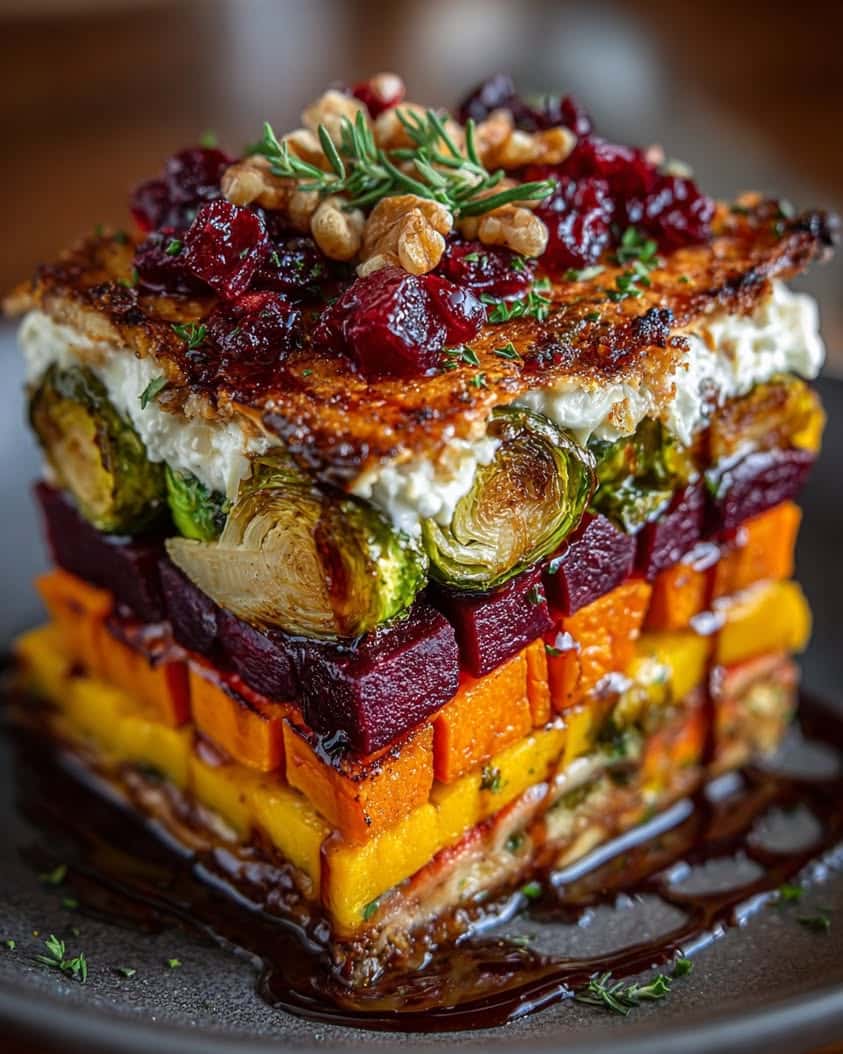
Layered Brussels Sprouts, Sweet Potato, Butternut Squash, Carrot & Beet Medley Lasagna with Feta, Walnuts & Cranberry-Ho: A Stunning Vegetarian Holiday Centerpiece
Imagine a dish that captures the entire essence of the festive season in one glorious, bubbling pan. This Layered Brussels Sprouts, Sweet Potato, Butternut Squash, Carrot & Beet Medley Lasagna with Feta, Walnuts & Cranberry-Ho does exactly that. Consequently, it transforms humble root vegetables and winter greens into a spectacular layered masterpiece. Moreover, it is a creamy roasted veggie lasagna layered with feta, walnuts & a sweet-tart cranberry sauce. Ultimately, this recipe is a stunning, flavorful vegetarian holiday centerpiece designed to impress every guest at your table.
The magic begins with a medley of colorful vegetables, each roasted to caramelized perfection. Simultaneously, sweet potatoes and butternut squash develop a deep, natural sweetness. Meanwhile, carrots and beets offer an earthy depth, and Brussels sprouts contribute a delightful, slightly charred bitterness. Subsequently, these layers are nestled between pasta sheets with a rich, creamy sauce, tangy feta, and crunchy walnuts. Finally, a vibrant cranberry-honey reduction drizzle cuts through the richness with its sweet-tart punch, creating a symphony of flavors and textures in every single bite.
This dish is far more than just a meatless alternative; it is the star of the show. Therefore, it is perfect for holiday dinners, festive potlucks, or any special occasion where you want to serve something truly memorable. Furthermore, it is a celebration of seasonal produce, showcasing how vegetables can be the undisputed heroes of a comforting, luxurious meal. In essence, this creamy roasted veggie lasagna layered with feta, walnuts & a sweet-tart cranberry sauce promises to become a new cherished tradition.
Quick Recipe Highlights
- Flavor Profile: This lasagna delivers a complex and satisfying taste journey. Initially, you experience the sweet, caramelized notes from the roasted root vegetables. Then, the salty, briny feta and the rich, creamy sauce create a luxurious mouthfeel. Finally, the bright, tangy cranberry-honey sauce and the earthy walnuts bring everything into perfect, harmonious balance.
- Texture: The texture contrast is absolutely key to this dish’s success. For instance, you get the tender, almost melt-in-your-mouth layers of roasted vegetables. Conversely, the al dente pasta provides a pleasing chew, and the toasted walnuts add a crucial, satisfying crunch. Additionally, the creamy sauce binds it all together, ensuring each forkful is cohesive yet varied.
- Aroma: As this lasagna bakes, your kitchen will fill with an irresistible fragrance. Primarily, you will smell the sweet, nutty scent of roasting squash and sweet potatoes. Subsequently, the savory aroma of caramelizing onions and garlic joins in. Ultimately, the final notes of bubbling cheese and the warm, spiced cranberry sauce create a truly festive and welcoming scent.
- Visual Appeal: This dish is a feast for the eyes before it even reaches the plate. Notably, the vibrant layers of orange sweet potato, deep red beet, green Brussels sprouts, and white feta create a stunning cross-section. Furthermore, the deep crimson cranberry drizzle and the sprinkled walnuts on top add beautiful finishing touches, making it ideal for holiday photography.
- Skill Level Needed: This recipe is accessible to confident home cooks. Specifically, it involves several components like roasting vegetables and making a sauce, but the steps are straightforward. However, organization is crucial, so mise en place—having all ingredients prepped—will make the assembly process smooth and enjoyable.
- Special Equipment: You will need a few key tools for efficiency. Firstly, a good quality baking sheet or two for roasting the vegetables is essential. Secondly, a 9×13 inch baking dish is standard for lasagna. Finally, a blender or food processor is helpful for creating a perfectly smooth cranberry-honey sauce, though a sturdy fork and bowl can also work.
Recipe Overview
- Difficulty Level: We rate this recipe as Intermediate. The reason is that it involves coordinating multiple components—roasting several trays of vegetables, preparing a creamy sauce, and making a cranberry reduction—before the final assembly. However, each individual step is simple and well within the capability of a cook who follows recipes carefully. The challenge and reward lie in the beautiful layering and timing.
- Category: This dish firmly sits in the main course category, capable of being the centerpiece of a holiday meal. It also fits beautifully into the realm of comfort food and special occasion cooking. Furthermore, it is an excellent vegetarian entrée that is substantial enough to satisfy even dedicated meat-eaters with its robust flavors and textures.
- Cuisine: This is a modern, fusion-inspired creation that draws from Italian-American and contemporary vegetarian culinary traditions. While the layered pasta structure is classically Italian, the use of roasted root vegetables, feta cheese, and a cranberry sauce reflects a more global, seasonal approach to cooking. It is a celebration of winter produce through a comforting, familiar format.
- Cost: This recipe is moderately priced, largely dependent on whether produce is in season. Typically, winter vegetables like squash and carrots are very affordable during the colder months. Meanwhile, ingredients like feta cheese, walnuts, and fresh cranberries may represent a higher cost but are used thoughtfully to maximize flavor impact. Overall, it provides a luxurious dining experience without an exorbitant price tag.
- Season: This lasagna is quintessential fall and winter fare. It utilizes the peak harvest of sturdy root vegetables and winter greens that are at their sweetest and most flavorful after a frost. Additionally, the warming, hearty nature of the dish is perfect for cold-weather gatherings. The cranberry sauce also ties it directly to Thanksgiving and Christmas holiday menus.
- Occasion: It is the ideal centerpiece for vegetarian Thanksgiving or Christmas dinners. Moreover, it shines at festive potlucks, Sunday family suppers, or any dinner party where you want to showcase beautiful, seasonal cooking. It is also a spectacular dish for a Meatless Monday that feels far from ordinary.
Why You’ll Love This Recipe
First and foremost, the taste and texture appeal of this lasagna is extraordinary. Each layer offers a new discovery, from the sweet softness of roasted squash to the pop of tangy cranberry. The creamy sauce melds the vegetables and pasta together, while the feta provides little salty bursts and the walnuts ensure a satisfying crunch. Consequently, every bite is a perfect balance of sweet, savory, creamy, and crunchy, making it endlessly interesting and deeply comforting. This is not a one-note vegetarian dish; it is a complex symphony of winter flavors that will delight all palates.
From a convenience standpoint, this recipe offers significant preparation benefits. For example, many components can be made ahead of time. You can roast all the vegetables a day in advance and store them in the refrigerator. Similarly, the cranberry-honey sauce and the creamy béchamel can be prepared ahead, streamlining the day-of assembly. Therefore, when it’s time to serve, you simply layer the components and bake, allowing you to enjoy your own party rather than being stuck in the kitchen. This make-ahead flexibility is a game-changer for stress-free holiday entertaining.
Nutritionally, this dish is a powerhouse of vitamins, minerals, and fiber. The colorful array of vegetables provides a broad spectrum of antioxidants; for instance, beta-carotene from the sweet potatoes and squash, anthocyanins from the beets, and glucosinolates from the Brussels sprouts. The walnuts contribute healthy fats and plant-based protein, while the whole dish is packed with dietary fiber to aid digestion and promote satiety. Choosing a vegetarian centerpiece like this can be a delicious way to incorporate more plant-based diversity into your festive meals.
Regarding social and entertaining value, this lasagna is a true showstopper. Its stunning visual presentation, with vibrant layers and a glossy cranberry drizzle, guarantees it will be the talk of the table. It caters beautifully to mixed-diet gatherings, satisfying vegetarians and intriguing omnivores with its depth of flavor. Serving a homemade, from-scratch centerpiece demonstrates care and culinary skill, making guests feel special. Furthermore, it is a complete meal in one dish, simplifying your menu planning and serving logistics.
Finally, this recipe is cost-effective and accessible. The primary ingredients are seasonal vegetables, which are often at their most affordable during the fall and winter. While specialty items like feta and fresh cranberries are used, they are employed strategically to maximize their impact without requiring large, expensive quantities. You likely already have many pantry staples like flour, butter, and pasta on hand. Ultimately, this creamy roasted veggie lasagna layered with feta, walnuts & a sweet-tart cranberry sauce delivers restaurant-quality elegance and flavor from humble, accessible ingredients.
Historical Background and Cultural Significance
The concept of layering food dates back centuries, but the modern lasagna we know is rooted in Italian culinary tradition, specifically from the Emilia-Romagna region. Traditionally, lasagna featured rich meat ragù, béchamel, and Parmigiano-Reggiano cheese between sheets of pasta. However, the evolution towards vegetable-based versions is a more recent phenomenon, driven by global trends in vegetarianism, health consciousness, and a desire for seasonal cooking. This particular recipe represents a creative departure, weaving in New World ingredients like sweet potatoes and cranberries with Old World technique.
Culturally, lasagna holds a place of honor as a celebratory dish, often reserved for Sunday dinners, holidays, and large family gatherings. Its layered structure symbolizes abundance and care, as it requires time and attention to prepare. The act of assembling a lasagna is itself a ritual, one that many home cooks find meditative and rewarding. Transforming this classic format into a vegetable-forward centerpiece respects its communal heritage while adapting it for contemporary dietary preferences and a focus on plant-based abundance.
The evolution of this recipe mirrors broader culinary shifts. Initially, vegetarian lasagnas often relied heavily on cheese and spinach. Subsequently, cooks began experimenting with roasted vegetables, discovering that caramelization unlocked deep, savory flavors that could stand in for meat. The inclusion of ingredients like feta, a cheese with Greek and Balkan origins, and walnuts, a global staple, shows how modern recipes freely cross cultural boundaries to create new, fusion dishes that prioritize flavor and texture over strict authenticity.
Regional variations of vegetable lasagna are endless. In other words, you might find a Mediterranean version with roasted eggplant, zucchini, and ricotta. Alternatively, a Provençal take could feature ratatouille layered with goat cheese. This specific medley of Brussels sprouts, sweet potato, butternut squash, carrot, and beet is distinctly rooted in the Northern Hemisphere’s winter harvest. The cranberry sauce adds a distinctly North American holiday touch, linking it to Thanksgiving traditions. Therefore, this recipe is a beautiful example of how local, seasonal produce can inspire a new twist on a global classic.
Ingredient Deep Dive
Butternut Squash & Sweet Potato: These two staples of the autumn harvest are nutritional powerhouses rich in beta-carotene, which the body converts to vitamin A. Historically, sweet potatoes have been a crucial crop in the Americas for thousands of years, while squash is one of the “Three Sisters” cultivated by Indigenous peoples. When selecting them, look for firm, heavy specimens without soft spots. Roasting concentrates their natural sugars, creating a sweet, creamy layer that forms the flavor foundation of the lasagna. For storage, keep them in a cool, dark place; once cut, wrap tightly and refrigerate. If needed, you can substitute either with pumpkin or another dense winter squash like kabocha.
Brussels Sprouts: Once maligned, Brussels sprouts have undergone a culinary renaissance, especially when roasted. This method caramelizes their edges and mitigates bitterness. They are members of the brassica family, packed with vitamins C and K, fiber, and antioxidants. Choose small, firm, bright green sprouts for the best flavor and texture. Trimming the stem and halving them ensures even cooking and allows for more surface area to caramelize. Store them unwashed in a plastic bag in the refrigerator’s crisper drawer. For a variation, you could use broccolini or even kale, though the cooking time would need adjustment.
Beets & Carrots: Beets provide a stunning crimson color and an earthy, sweet flavor that pairs wonderfully with the tangy feta. They are a historic source of sugar and are rich in folate, manganese, and nitrates. Carrots add sweetness and a different texture, contributing vitamin A and biotin. When prepping beets, wearing gloves can prevent staining. Roasting both vegetables whole or in large chunks before peeling and dicing intensifies their flavor. For storage, remove beet greens (which are edible) and keep the roots in the fridge. Golden beets can be used for a less-staining option, and parsnips make a fine substitute for carrots.
Feta Cheese: This brined curd cheese, traditionally made from sheep’s or goat’s milk in Greece, introduces a salty, tangy punch that cuts through the richness of the roasted vegetables and creamy sauce. Its crumbly texture provides delightful pockets of flavor. Opt for block feta packed in brine for superior taste and texture compared to pre-crumbled varieties, which often contain anti-caking agents. For storage, keep it submerged in its brine in the refrigerator. If you need a substitute, ricotta salata or a firm goat cheese would work, though the flavor profile will shift slightly.
Cranberries & Honey: Fresh cranberries are essential for the sweet-tart sauce that defines this dish. Native to North America, they are a classic holiday ingredient high in vitamin C and proanthocyanidins. Cooking them with honey (or maple syrup for a vegan version) creates a glossy, vibrant reduction. The honey balances the cranberries’ intense tartness without overpowering it. Look for plump, bright red berries; avoid any that are shriveled or brown. Fresh cranberries freeze beautifully, so you can buy extra bags in season. This sauce is not just a garnish; it is a critical component that brings acidity and brightness to each rich, savory bite.
Common Mistakes to Avoid
- Underseasoning the Vegetables Before Roasting: Vegetables need ample seasoning before they go into the oven. If you only salt the final assembled dish, the individual layers will taste bland. Consequently, toss each type of vegetable generously with salt, pepper, and oil. This step builds flavor from the inside out.
- Crowding the Baking Sheets: Overcrowding causes vegetables to steam rather than roast, resulting in a soggy, less flavorful texture. For proper caramelization, spread them in a single layer with space between pieces. Therefore, use multiple sheets or roast in batches to ensure each vegetable gets beautifully browned edges.
- Using No-Boil Noodles Without Extra Sauce: No-boil lasagna noodles are convenient, but they require sufficient moisture to cook through. If your vegetable layers and sauce are too dry, the noodles will remain hard. Make sure your creamy sauce is on the thinner side and that the roasted vegetables release some moisture during baking.
- Neglecting to Cool the Roasted Vegetables: Assembling the lasagna with piping hot vegetables can start to cook the eggs in your sauce or make the noodles gummy. Let the roasted vegetables cool to room temperature before layering. This also makes them easier to handle and distribute evenly.
- Skipping the Nut Toasting Step: Toasting the walnuts is non-negotiable. Raw walnuts can have a slightly bitter flavor and a soft texture. Toasting them in a dry pan for a few minutes unlocks their nutty aroma, improves their flavor, and gives them a satisfying crunch that stands up to baking.
- Overloading the Layers: More is not always better. Piling the layers too high can prevent even cooking, leaving the center cold while the top burns. Aim for even, moderate layers of vegetables, sauce, and cheese. A well-structured, balanced lasagna will cook more evenly and slice cleanly.
- Not Letting it Rest After Baking: Cutting into a lasagna straight from the oven is a recipe for a soupy, collapsed slice. The resting period (at least 20 minutes) allows the layers to set, the sauces to thicken, and the temperature to even out. This patience is crucial for picture-perfect servings.
- Using a Baking Dish That’s Too Small: Forcing all the ingredients into a dish that’s too small leads to overflow in the oven and uneven cooking. Always use a standard 9×13 inch baking dish. If your dish is slightly smaller, you may need to reduce the layers slightly to prevent a mess.
Essential Techniques
Roasting Vegetables for Maximum Flavor: This technique is the cornerstone of the recipe. Roasting at a high heat (around 400°F) drives off moisture and caramelizes the natural sugars in the vegetables, creating deep, concentrated flavors and appealing browned edges. The key is to cut vegetables into uniform sizes for even cooking. Toss them thoroughly with oil and seasonings to coat every surface. Do not stir them too frequently; allowing them to sit undisturbed on the hot pan is what creates the desirable caramelization. The visual cue for success is tender vegetables with golden-brown, slightly crispy spots.
Building a Flavorful Creamy Sauce (Béchamel): A good béchamel sauce adds richness and moisture, binding the lasagna layers together. The technique involves creating a roux by cooking equal parts fat (butter) and flour until it smells nutty but is not browned. Then, you gradually whisk in warm milk to prevent lumps, cooking until the sauce thickens and coats the back of a spoon. Season it well with salt, pepper, and a hint of nutmeg. The common pitfall is adding the milk too quickly, which leads to a lumpy sauce. A smooth, velvety béchamel should pour easily but not be runny.
Creating a Balanced Cranberry Reduction: A reduction sauce intensifies flavor by simmering a liquid until it thickens. For the cranberry-honey sauce, combine fresh cranberries, honey, and a little water or orange juice in a saucepan. As it simmers, the cranberries will pop and release their pectin, which naturally thickens the sauce. The honey mellows the intense tartness. Stir frequently to prevent sticking and burning. The sauce is done when it has thickened to a syrup-like consistency that will drizzle but not run off the lasagna. It will continue to thicken as it cools.
Layering for Structural Integrity: Proper layering ensures each serving has a bit of every component and that the lasagna holds its shape when cut. Start with a thin layer of sauce on the bottom to prevent sticking. Then follow a consistent pattern: noodles, a portion of roasted vegetables, a drizzle of sauce, a sprinkle of feta and walnuts. Repeat, finishing with a top layer of noodles, the remaining sauce, and a final sprinkle of cheese and nuts. Press down gently on each layer to eliminate large air pockets. This technique creates distinct, cohesive layers that slice cleanly.
Pro Tips for Perfect Layered Vegetable Lasagna
Firstly, roast your vegetables on parchment paper-lined baking sheets. This prevents sticking without needing excessive oil and makes cleanup incredibly easy. Secondly, consider roasting different vegetables on separate trays if their cooking times vary significantly; for example, beets and carrots may take longer than Brussels sprouts. Add quicker-cooking veggies to the oven later.
For the creamiest sauce, warm your milk before adding it to the roux. Cold milk will shock the roux and can make the sauce grainy. You can warm it gently on the stove or in the microwave. Additionally, freshly grated nutmeg is vastly superior to pre-ground; just a tiny amount adds a warm, complex note that complements the sweet vegetables perfectly.
When assembling, have all your components—cooled veggies, sauce, cheese, nuts, noodles—lined up and ready to go. This assembly-line approach makes the process fast and helps you distribute ingredients evenly. Use a ladle or measuring cup to portion the sauce for consistent layers.
To prevent the top layer of noodles from drying out or curling, make sure they are completely covered with sauce. You can also place a piece of foil loosely over the dish for the first half of baking, then remove it to allow the top to brown. If the edges are browning too quickly, a foil tent can protect them.
Let the cranberry-honey sauce cool slightly before drizzling. If it’s too hot, it will sink into the top layer. If it’s too cold, it will be difficult to drizzle. Aim for a warm, pourable consistency. You can also serve extra sauce on the side for guests who want an extra tangy punch.
Finally, use a sharp, serrated knife to cut the lasagna. A straight-edged knife can drag and pull the layers apart. A serrated knife uses a gentle sawing motion for cleaner cuts. Wipe the knife clean between slices for the most pristine presentation.
Variations and Adaptations
For regional variations, consider a Mediterranean twist by swapping the vegetable medley for roasted eggplant, zucchini, bell peppers, and onions, and using a combination of ricotta and mozzarella instead of feta. A French-inspired version could incorporate sautéed wild mushrooms and leeks with a Gruyère cheese sauce. The cranberry sauce could be replaced with a sun-dried tomato pesto or a rosemary-infused olive oil drizzle, completely transforming the flavor profile while keeping the stunning layered structure.
Seasonal adaptations are easy with this flexible format. In spring, use asparagus, peas, and artichoke hearts. For summer, layer roasted corn, zucchini, and tomatoes with a basil pesto swirl. The cranberry sauce could become a fresh tomato coulis or a basil oil. In autumn, stick with the original medley or incorporate mushrooms and kale. This adaptability makes the recipe a year-round favorite, always showcasing what’s fresh and at its peak.
Dietary modifications are straightforward. For a gluten-free version, use your favorite gluten-free lasagna noodles and ensure your sauce is thickened with a gluten-free flour blend or cornstarch. To make it vegan, replace the butter in the sauce with olive oil, use plant-based milk and a vegan butter for the roux, substitute the feta with crumbled firm tofu marinated in lemon juice and salt or a commercial vegan feta, and use maple syrup instead of honey in the cranberry sauce.
Flavor variations can cater to different preferences. Add heat by incorporating red pepper flakes into the roasted vegetables or a dash of hot honey to the cranberry sauce. For an herby note, mix chopped fresh rosemary or thyme into the vegetable toss before roasting. A sprinkle of smoked paprika on the vegetables can add a subtle, smoky depth. For a richer, cheesier experience, add a layer of ricotta mixed with an egg and herbs between the vegetable layers.
Serving and Presentation Guide
Plating begins with that crucial rest time; allow the lasagna to set for at least 20 minutes after baking. Use a sharp, thin-bladed knife to cut clean portions. A square spatula or pie server helps lift each piece out intact. For individual plating, place a square slightly off-center on a warm plate. Alternatively, for a family-style presentation, bring the whole baking dish to the table and let guests serve themselves, showcasing the beautiful layered cross-section.
Garnishing elevates the visual appeal. Drizzle the cranberry-honey sauce in an artistic zig-zag or dot pattern over the plated slice. Sprinkle a few extra toasted walnut pieces and some microgreens or fresh parsley leaves on top for color and freshness. A final flake of sea salt or a twist of black pepper adds a professional touch. If serving on a platter, garnish the edges with fresh cranberries and rosemary sprigs for a festive holiday look.
Traditional accompaniments for a rich lasagna are simple, crisp salads. A bitter greens salad with a lemony vinaigrette (arugula, endive, radicchio) cuts through the richness beautifully. Alternatively, a simple mixed green salad with a sharp Italian dressing works well. For a heartier meal, serve with crusty garlic bread or focaccia to soak up any extra sauce. Since this is a complete meal, you typically do not need additional sides, keeping the focus on the stunning main dish.
Modern serving suggestions might include deconstructing the elements for a more casual gathering. Serve the roasted vegetable medley, creamy sauce, crumbled feta, and toasted walnuts in separate bowls with cooked lasagna sheets or pappardelle pasta, allowing guests to build their own bowls. For a holiday brunch, bake the lasagna in individual ramekins for personalized portions. Consider temperature by serving it warm, not piping hot, to allow the flavors to be more discernible.
Wine and Beverage Pairing
Wine pairings should complement the sweet earthiness of the vegetables and the tangy saltiness of the feta. A medium-bodied white wine with good acidity, such as an Oregon Pinot Gris or a French Viognier, works wonderfully. Their stone fruit notes harmonize with the squash and sweet potato. For red wine lovers, choose a low-tannin, fruity red like a Beaujolais (Gamay) or a lighter Pinot Noir. These wines have enough brightness to handle the cranberry sauce without overpowering the dish. Avoid heavily oaked Chardonnays or bold, tannic reds like Cabernet Sauvignon, which could clash with the vegetable sweetness.
Non-alcoholic alternatives can be just as sophisticated. A sparkling apple cider provides effervescence and autumnal flavor that pairs perfectly. For a more complex option, try a tart cherry or pomegranate spritzer made with soda water and a splash of syrup. A warm mulled cranberry punch with cinnamon and orange would be a festive and thematic choice, echoing the flavors on the plate. Iced herbal teas, like hibiscus or lemon-ginger, offer a refreshing, palate-cleansing contrast to the rich lasagna.
Coffee and tea pairings are excellent for a holiday brunch or late-afternoon meal. A medium-roast coffee with low acidity will complement the dish without bitterness. For tea, consider a smoky Lapsang Souchong to match the roasted vegetable notes, or a bright, citrusy Earl Grey to cut through the creaminess. Serve these beverages after the meal as a digestif rather than alongside, as their strong flavors are better suited to concluding the dining experience than accompanying each bite.
Storage and Shelf Life
Storage methods are crucial for maintaining quality. Cool the lasagna completely before storing. Cover the baking dish tightly with plastic wrap or aluminum foil, or transfer individual portions to airtight containers. Refrigerate for up to 4 days. For longer storage, freezing is an excellent option. Wrap the entire cooled lasagna or individual slices tightly in plastic wrap, then in foil, or place in freezer-safe containers. It will keep for up to 3 months. Label with the date for easy reference.
Reheating instructions differ based on storage. For refrigerated portions, reheat in a 350°F oven, covered with foil, until warmed through (about 20-30 minutes for a full pan). You can also microwave individual slices on medium power, but this may soften the texture of the noodles. For frozen lasagna, thaw overnight in the refrigerator before reheating as above. You can reheat from frozen, but it requires a lower oven temperature (300°F) and a longer time, covered for most of the process to prevent drying out.
Signs of spoilage include an off smell (sour or unpleasant), visible mold (often fuzzy spots in white, green, or blue), or a significant change in texture becoming overly slimy or watery. If you see any of these signs, discard the lasagna immediately. Properly stored and reheated, this dish retains its flavor well, though the vegetables may soften slightly upon reheating. The cranberry sauce is best added fresh when serving leftovers for the brightest flavor and texture contrast.
Make Ahead Strategies
Prep timeline can be spread over two days for stress-free entertaining. On Day 1, roast all the vegetables. Let them cool completely, then store them in separate containers or a large mixed container in the refrigerator. Prepare the creamy béchamel sauce and the cranberry-honey sauce. Store the béchamel in an airtight container with plastic wrap pressed directly onto the surface to prevent a skin from forming. Store the cranberry sauce in a jar. Both sauces can be refrigerated.
On the day of serving, take the chilled components out of the fridge about 30 minutes before assembly to take the chill off. Gently re-warm the béchamel sauce in a saucepan over low heat, adding a splash of milk if it has thickened too much. Assemble the lasagna in your baking dish. You can assemble it up to several hours in advance, cover it, and keep it in the refrigerator until you are ready to bake. Add 5-10 minutes to the baking time if putting a cold dish directly into the oven.
Fresh element additions should be considered. The toasted walnuts are best added during final assembly, not made days ahead, as they can lose their crunch. If you prepared the cranberry sauce ahead, give it a quick stir and warm it slightly to make it drizzle-able. You can also prepare extra feta crumbles and walnuts for garnishing after baking. This make-ahead approach transforms this impressive dish from a day-of marathon into a manageable, enjoyable cooking project.
Scaling Instructions
Halving the recipe is simple for smaller households. Use an 8×8 inch baking dish. Precisely halve all ingredient quantities. Roasting times may be slightly shorter due to less volume on the baking sheets, so keep a close eye on the vegetables. The assembly and baking process remains the same, though the total bake time may be reduced by 5-10 minutes. Check for doneness when the top is golden and the sauce is bubbling at the edges.
Doubling or tripling for a crowd requires planning. You will need multiple baking dishes or a very large, deep hotel pan. Double or triple all ingredients systematically. Roast the vegetables in batches to avoid steaming; you may need to use multiple oven racks and rotate the sheets. The assembly will take longer, so organize your workstation. Baking time for a doubled recipe in a deeper dish will be longer—expect to add 15-25 minutes. Cover with foil for the first half of baking to prevent the top from over-browning before the center is hot.
Equipment adjustments are necessary when scaling. For a doubled recipe, ensure you have a large enough pot for the béchamel sauce; otherwise, make it in two batches. A large whisk and a big mixing bowl for the vegetables are helpful. Timing modifications are key: start the vegetable roasting well in advance. Stagger the preparation so you are not overwhelmed. Remember, a larger, deeper lasagna will need a longer resting time after baking (30+ minutes) to set properly before serving.
Nutritional Deep Dive
Macro breakdown of a serving is balanced. It provides complex carbohydrates from the vegetables and pasta for sustained energy. The fats come primarily from the olive oil, milk/butter in the sauce, feta, and walnuts, offering a mix of monounsaturated and saturated fats. Plant-based protein is present in the walnuts, feta, and to a lesser extent, the vegetables and milk. This combination promotes satiety and stable blood sugar levels. It is a hearty dish, so portion awareness is helpful if managing calorie intake.
Micronutrient analysis reveals a vitamin and mineral powerhouse. The orange vegetables are exceptionally high in Vitamin A (as beta-carotene), crucial for vision and immune function. Brussels sprouts and other greens contribute significant Vitamin C and K. Beets provide folate and manganese. The dairy and leafy greens offer calcium. Walnuts add magnesium and omega-3 fatty acids. This diverse nutrient profile supports overall health, from anti-inflammatory benefits to bone health and cardiovascular support, making it a nourishing choice for a celebratory meal.
Health benefits are extensive due to the high vegetable content. The fiber promotes digestive health and feeds beneficial gut bacteria. Antioxidants from the colorful veggies combat oxidative stress. The healthy fats from olive oil and walnuts support heart and brain health. Choosing a plant-forward centerpiece like this is associated with a lower risk of chronic diseases. It is a satisfying way to enjoy a festive meal while still prioritizing nutrient-dense, whole-food ingredients.
Dietary Adaptations
For a gluten-free adaptation, use certified gluten-free lasagna noodles. Ensure your all-purpose flour for the béchamel is a gluten-free 1:1 substitute blend. Check that all other ingredients, like broth or pre-shredded cheese, are certified gluten-free, as cross-contamination can occur. The rest of the recipe is naturally gluten-free, making this a straightforward swap that yields excellent results.
Dairy-free and vegan adaptations require a few more changes. For the sauce, use a plant-based butter and milk (unsweetened oat or soy milk work best for creaminess). Thicken with a roux as usual. Replace the feta with a vegan alternative or use marinated, crumbled extra-firm tofu. For the cranberry sauce, substitute maple syrup or agave for honey. These changes create a fully plant-based version that is still rich, flavorful, and impressive.
For low-carb or keto adaptations, the structure changes significantly. Replace the lasagna noodles with thin slices of zucchini or eggplant. Reduce or omit the sweet potato and carrots, focusing on lower-carb vegetables like zucchini, mushrooms, and bell peppers. Use a high-fat sauce made with heavy cream and cream cheese instead of a flour
Print
Layered Brussels Sprouts, Sweet Potato, Butternut Squash, Carrot & Beet Medley Lasagna with Feta, Walnuts & Cranberry-Honey Glaze
Description
A hearty vegetarian lasagna featuring layers of roasted seasonal vegetables, creamy ricotta, tangy feta, crunchy walnuts, and a sweet-tart cranberry-honey glaze.
Ingredients
For the Crust:
- 1 lb Brussels sprouts, trimmed and halved
- 1 large sweet potato, peeled and thinly sliced
- 1 small butternut squash, peeled and thinly sliced
- 2 large carrots, peeled and thinly sliced
- 2 medium beets, peeled and thinly sliced
- 1 tbsp olive oil
- Salt and black pepper to taste
- 15 oz ricotta cheese
- 1 cup crumbled feta cheese
- 1 large egg
- 1/2 cup chopped walnuts
- 9 no-boil lasagna noodles
- 2 cups marinara sauce
- 1/2 cup dried cranberries
- 2 tbsp honey
- 1 tbsp balsamic vinegar
- 1/2 tsp dried thyme
Instructions
1. Prepare the Crust:
- Preheat oven to 400°F. Toss Brussels sprouts, sweet potato, butternut squash, carrots, and beets with olive oil, salt, and pepper. Spread on baking sheets and roast for 25 minutes until tender.
- In a bowl, mix ricotta, half the feta, egg, thyme, salt, and pepper. In a small saucepan, combine cranberries, honey, and balsamic vinegar over low heat until cranberries soften, about 5 minutes.
- Spread 1/2 cup marinara in a 9×13 baking dish. Layer 3 lasagna noodles, half the ricotta mixture, half the roasted vegetables, and 1/2 cup marinara. Repeat layers.
- Top with remaining noodles, marinara, ricotta mixture, vegetables, and sprinkle with remaining feta and walnuts. Cover with foil and bake at 375°F for 30 minutes.
- Uncover and bake 10 more minutes until golden. Let rest 10 minutes, then drizzle with cranberry-honey glaze before serving.
Notes
You can customize the seasonings to taste.

I’m Shaykee—born in Morocco, seasoned across continents. From airplane galleys to home kitchens, I share the flavors and stories that shaped my journey.