
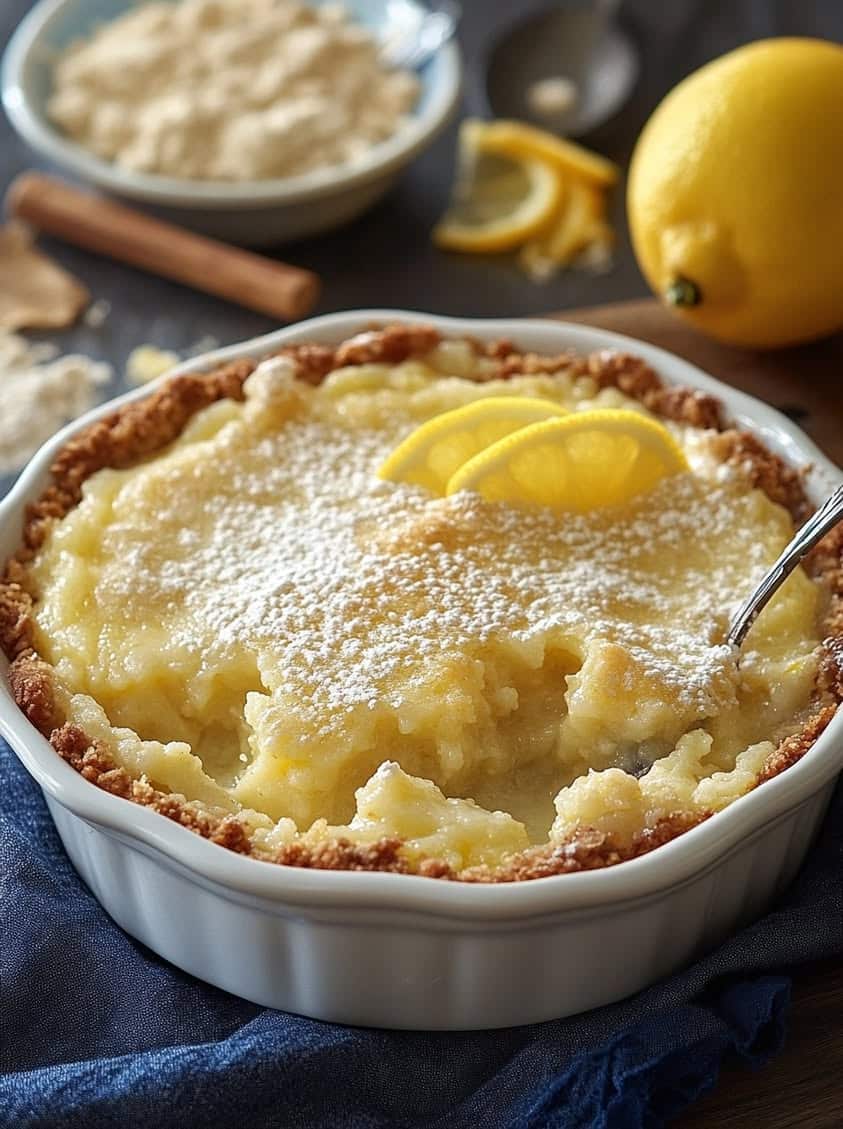
Magic Lemon Cobbler: A Self-Saucing Dessert Wonder! Tangy Lemon Cake Meets a Rich, Gooey Sauce—All From One Pan. Easy, Impressive, and Utterly Delicious.
Imagine pulling a simple baking dish from your oven to discover a dessert that has magically created its own luxurious lemon sauce. This is the enchanting promise of Magic Lemon Cobbler, a classic comfort food dessert that never fails to delight. Fundamentally, this recipe is a brilliant one-pan wonder where a simple batter transforms during baking. As a result, you get a fluffy, golden cake topping floating atop a pool of tangy, sweet lemon curd-like sauce. The contrast between the tender cake and the vibrant sauce creates a symphony of textures and flavors in every single bite.
Perfect for any season, this Magic Lemon Cobbler brings a burst of sunshine to your table even on the dreariest of days. Its appeal lies not just in its dazzling flavor, but also in its incredible simplicity. You likely have all the ingredients in your pantry right now: flour, sugar, butter, milk, and of course, plenty of fresh lemons. Consequently, this dessert is both accessible and impressive, making it an ideal choice for weeknight treats or last-minute guests. The “magic” happens in the oven as the layers separate, a process that feels like a little bit of culinary alchemy you can achieve in your own kitchen.
Moreover, the sensory experience of this lemon dessert is truly unforgettable. Firstly, the aroma of baking lemon and butter will fill your home with an irresistible, cozy fragrance. Then, visually, the golden-brown cobbled surface gives way to the bright yellow sauce beneath. Finally, the first spoonful delivers a perfect balance of sweet and tart, with a warm, gooey sauce that begs to be soaked up by the soft cake. This Magic Lemon Cobbler is the epitome of homestyle baking magic, offering maximum reward for minimal effort.
Quick Recipe Highlights
- Flavor Profile: This Magic Lemon Cobbler masterfully balances bright, tangy citrus with a deep, buttery sweetness. The fresh lemon juice and zest provide a vibrant, aromatic punch that cuts through the richness, creating a perfectly harmonious and refreshing dessert.
- Texture: The dessert boasts a delightful duality: a tender, almost pudding-like cake layer on top with a slightly crisp edge, giving way to a luxuriously smooth and silky lemon sauce underneath. Each spoonful offers a comforting mix of soft and saucy elements.
- Aroma: As it bakes, the kitchen fills with the warm, comforting scent of melted butter and sugar caramelizing, beautifully underscored by the bright, zesty fragrance of fresh lemon. It’s an aroma that promises pure comfort food delight.
- Visual Appeal: The cobbler emerges from the oven with a beautifully golden, craggy top that hints at the fluffy cake beneath. When scooped, the reveal of the bright, sunny lemon sauce against the pale cake creates a stunning and inviting presentation.
- Skill Level Needed: This is a beginner-friendly recipe requiring only basic mixing skills. No special techniques like folding or whipping egg whites are needed. Essentially, if you can stir ingredients together in a bowl, you can successfully make this magical dessert.
- Special Equipment: You need only a standard 9×13 inch baking dish, a couple of mixing bowls, and a whisk or spoon. No stand mixer, pastry blender, or unusual pans are required, making this an accessible recipe for any home cook.
Recipe Overview
- Difficulty Level: We rate this Magic Lemon Cobbler as “Easy” because it involves straightforward, dump-and-stir methods with no complex steps. The magic happens passively in the oven, so there’s no need for precise tempering or intricate layering. Even novice bakers can achieve perfect results on their first try.
- Category: This dish falls squarely into the beloved category of comfort food desserts and homestyle baking. It’s a warm, pudding-based dessert that evokes nostalgia and simplicity, perfect for finishing a family dinner or celebrating a casual gathering.
- Cuisine: While cobblers have deep roots in American Southern cuisine, this lemon version is a bright, sunny adaptation that draws on the use of citrus common in many coastal and European baking traditions. It’s a fusion of homey American baking with vibrant citrus flair.
- Cost: This is an extremely cost-effective dessert. The main ingredients—flour, sugar, milk, butter, and lemons—are pantry staples. One batch serves a crowd for just a few dollars, making it a fantastic choice for budget-friendly entertaining or family treats.
- Season: Although fantastic year-round, this Magic Lemon Cobbler truly shines in the spring and summer when lemons are at their peak and we crave lighter, fruit-forward desserts. Conversely, it also brings a much-needed burst of brightness to gray winter days.
- Occasion: Incredibly versatile, this cobbler is perfect for potlucks, family barbecues, weeknight desserts, holiday meals like Easter or Mother’s Day, and even casual dinner parties. Its make-ahead ease and crowd-pleasing flavor make it suitable for almost any event.
Why You’ll Love This Magic Lemon Cobbler
First and foremost, the taste and texture of this Magic Lemon Cobbler are utterly irresistible. The flavor profile hits the perfect sweet spot between tangy and sweet, with the fresh lemon providing a clean, bright note that prevents the dessert from being cloying. Texturally, it’s a dream: the top bakes into a soft, fluffy cake with slight crisp edges, while underneath, a velvety, lemon-infused sauce forms. This delightful contrast ensures every bite is interesting and satisfying. Ultimately, it’s a dessert that feels both indulgent and somehow light, leaving you completely satisfied without feeling overly heavy.
Furthermore, the convenience factor is a major win. This Magic Lemon Cobbler comes together in about ten minutes of active prep time with simple ingredients. You don’t need to make a separate sauce or filling; the oven does all the work, performing the “magic” of layer separation. This one-pan wonder also means minimal cleanup. For busy home cooks, parents, or anyone wanting an impressive dessert without the stress, this recipe is a true gift. It proves that you don’t need complicated techniques to create something truly special and delicious.
From a nutritional perspective, while clearly a treat, this lemon dessert offers some benefits compared to richer options. Lemons are a good source of vitamin C and antioxidants. Using fresh lemon juice and zest maximizes this natural goodness and flavor without artificial additives. When you control the sugar in a homemade dessert like this Magic Lemon Cobbler, you can often use slightly less than commercial versions. Served with a scoop of vanilla ice cream or a dollop of whipped cream, it becomes a balanced treat where the fruit’s brightness is the star.
Additionally, the social and entertaining value of this dessert is incredibly high. There’s a undeniable “wow” factor when you scoop into the cobbler and reveal the hidden sauce underneath. It’s a conversation starter and a surefire crowd-pleaser. Because it’s easy to transport and serve directly from the baking dish, it’s the ultimate potluck or picnic dessert. Sharing a warm, homemade Magic Lemon Cobbler fosters connection and creates lasting memories, embodying the very heart of comfort food and hospitality.
Finally, its cost-effectiveness and accessibility cannot be overstated. This recipe uses inexpensive, shelf-stable ingredients you probably already own. A bag of lemons is often one of the most affordable fruits year-round. Consequently, you can whip up a dessert that feeds eight people for a fraction of the cost of store-bought cakes or pastries. This accessibility ensures that creating a beautiful, homemade dessert is never out of reach, regardless of your grocery budget or baking experience. This Magic Lemon Cobbler is democratic deliciousness at its finest.
Historical Background and Cultural Significance
The cobbler is a dessert with humble, practical origins deeply embedded in American culinary history, particularly in the South and during frontier times. Early settlers needed to make do with limited ingredients and equipment, often cooking over open fires. The cobbler’s design—a fruit filling topped with a simple biscuit or cake dough—was a efficient way to create a filling dessert using seasonal fruit and basic staples like flour and fat. The name “cobbler” itself is thought to refer to the rough, cobbled-stone appearance of the dropped biscuit topping. This Magic Lemon Cobbler is a direct descendant of that tradition, swapping summer berries for the bright, preserved flavor of lemon.
Culturally, cobblers represent comfort, resourcefulness, and community. They were, and still are, a staple at church socials, family reunions, and potluck dinners across the United States. The act of sharing a warm cobbler from a large dish is a gesture of generosity and home. The lemon variation adds a twist, often associated with sunnier climates and a slightly more refined, yet still approachable, palate. It bridges the gap between the down-home fruit cobbler and the elegant lemon curd tart, creating its own unique niche in the dessert canon.
The evolution of the recipe towards this “magic” or self-saucing version is a fascinating bit of kitchen science that gained popularity in mid-20th century community cookbooks. By pouring a hot liquid (often water, but here a combination of lemon juice and boiling water) over a specific batter formulation, bakers discovered the layers would separate during baking. The heavier liquid sinks, forming a saucy bottom layer, while the batter rises to the top to bake into a cake. This clever technique eliminated the step of making a separate sauce, simplifying the process and creating a delightful surprise. Our Magic Lemon Cobbler perfects this formula with the vibrant addition of citrus.
Regional variations of the cobbler are endless, but lemon versions seem to have a special foothold in areas where citrus is grown or where a brighter, less sweet dessert is preferred. Some versions use buttermilk in the batter for extra tang, while others might sprinkle a crunchy sugar topping on before baking. In some family recipes, you might find a hint of vanilla or a pinch of nutmeg added to the batter. The basic framework, however, remains wonderfully consistent: a simple batter, a tart fruit element, and a hot liquid poured over to create the magic. This particular Magic Lemon Cobbler recipe honors that history while delivering flawless, consistent results every time.
Ingredient Deep Dive
Fresh Lemons: The undisputed star of this Magic Lemon Cobbler, fresh lemons provide both juice and zest, delivering the essential bright, tangy flavor. Lemons have a storied history, originating in Asia and spreading via trade routes to the Mediterranean and eventually the Americas. They are packed with vitamin C and antioxidants. For the best flavor, choose lemons that are heavy for their size with smooth, vibrant yellow skin; avoid any with green tinges or soft spots. Always zest your lemons before juicing them, and roll them on the counter under your palm to maximize juice yield. In a pinch, you could use bottled lemon juice, but the zest is irreplaceable for aromatic depth.
All-Purpose Flour: This forms the structure of the cobbler’s cake topping. Flour’s gluten proteins create the network that traps air and gives the cake its tender crumb. For consistent results, spoon the flour into your measuring cup and level it off; don’t scoop directly from the bag, as this can pack in too much flour and lead to a dense cake. Stored in an airtight container in a cool, dry place, flour can last for up to a year. For a gluten-free adaptation, a 1:1 gluten-free flour blend can typically be substituted with good results, though the texture may be slightly more delicate.
Granulated Sugar: Sugar serves multiple crucial roles: it sweetens, tenderizes the cake by inhibiting gluten development, and helps create that beautiful golden-brown crust through caramelization. In the sauce layer, it balances the intense tartness of the lemon juice. For storage, keep sugar in an airtight container to prevent clumping from humidity. While you can experiment with reducing the sugar slightly if you prefer a tarter dessert, be cautious, as sugar also affects the sauce’s consistency and the cake’s texture. There is no ideal direct substitute that performs all the same functions, so adjustments may alter the final product.
Unsalted Butter: Butter contributes rich flavor, moisture, and tenderness to the cobbler topping. Using unsalted butter allows you to control the overall salt content of the dessert. Butter should be melted but not scorched; gently melt it in the microwave or in a small saucepan. For storage, keep butter tightly wrapped in the refrigerator or freezer. If you only have salted butter, simply omit the added salt in the recipe. While margarine or a plant-based butter can be used for a dairy-free version, the flavor profile will change, so choose a high-quality brand known for baking.
Milk: Milk adds moisture, richness, and helps activate the leavening agents in the batter. Whole milk will give the richest flavor and texture, but 2% or even a non-dairy milk like almond or oat milk can work in a pinch. The milk should be at room temperature to prevent the melted butter from solidifying when combined. If you forget to take it out, a quick 15-second zap in the microwave will suffice. Buttermilk is also a fantastic substitution here; it will add a lovely tang that complements the lemon beautifully and can make the cake topping even more tender.
Common Mistakes to Avoid
- Overmixing the Batter: Once you combine the wet and dry ingredients for the cobbler topping, mix just until no dry streaks of flour remain. Overmixing develops the gluten in the flour, which can lead to a tough, chewy cake layer instead of a light and tender one. A few small lumps are perfectly fine.
- Using Cold Ingredients: Using cold milk or eggs can cause the melted butter to re-solidify into little chunks, creating an uneven batter. For a smooth, homogenous mixture, ensure your milk is at least at room temperature before combining it with the melted butter.
- Incorrect Baking Dish Size: Using a dish that is too small will cause the cobbler to overflow as it bakes. Conversely, a dish that is too large will result in a thin, overcooked layer. Stick to the recommended 9×13 inch baking dish for the perfect depth and baking time.
- Not Using Boiling Water: The “magic” in this Magic Lemon Cobbler relies on the hot liquid being poured over the batter. Using room temperature or cold water will not create the necessary thermal shock to help the layers separate properly. Always use freshly boiled water.
- Skipping the Lemon Zest: The zest holds potent aromatic lemon oils that provide a depth of flavor the juice alone cannot. Do not substitute more juice for the zest. If you don’t have a zester, use the fine side of a box grater, being careful to avoid the bitter white pith.
- Opening the Oven Door Early: Resist the urge to peek during the first 30 minutes of baking. The sudden drop in temperature can cause the rising cake to fall or disrupt the sauce formation process. Trust the timer and use the light to check on progress.
- Underbaking: The cobbler is done when the top is a deep golden brown and the sauce is visibly bubbling around the edges. If you remove it too early, the sauce may be too thin and the cake layer may be gummy in the center. The visual cues are your best guide.
- Not Letting it Rest: While it’s tempting to dive right in, allowing the Magic Lemon Cobbler to rest for 15-20 minutes after baking lets the sauce thicken slightly and the cake set. This makes for cleaner serving and allows the flavors to meld beautifully.
Essential Techniques
Proper Zesting: Zesting is critical for capturing the full essence of the lemon. Use a fine microplane or the small holes of a box grater. Gently rub the lemon against the blades, rotating it to get only the bright yellow outer skin. The white pith underneath is bitter and should be avoided. This technique maximizes the fragrant citrus oils in your batter, providing an aromatic backbone that baking cannot destroy. A common pitfall is pressing too hard and grating into the pith. For success, use a light touch and a clean, dry lemon.
Creating a Smooth Batter: The goal is a lump-free batter without overworking it. First, whisk your dry ingredients thoroughly to distribute the leavening agents. In a separate bowl, combine your wet ingredients. Then, make a well in the dry ingredients and pour the wet mixture in. Using a spatula or wooden spoon, fold the mixtures together with broad, gentle strokes just until combined. This technique, known as the “muffin method,” minimizes gluten development for a tender cake. The visual cue for success is a thick, pourable batter with no dry flour pockets.
The Magic Pour: This is the signature step that creates the self-saucing effect. After spreading your batter evenly in the baking dish, you will slowly and evenly pour a mixture of lemon juice and boiling water over the entire surface. Do not stir. The heavy, liquid mixture will seep through the batter, beginning the separation process. The key is a steady, gentle pour to cover all areas. Pouring too quickly or in one spot can disrupt the batter unevenly. Trust the process; the oven’s heat will complete the transformation.
Pro Tips for Perfect Magic Lemon Cobbler
Firstly, for an extra burst of lemon flavor, add a teaspoon of pure lemon extract to the wet ingredients along with the juice and zest. This amplifies the citrus notes beautifully.
Secondly, place your baking dish on a rimmed baking sheet before putting it in the oven. This catches any potential bubble-overs and makes cleanup effortless.
Thirdly, if you love a slightly crunchy, sugary top, sprinkle an extra tablespoon of granulated sugar evenly over the batter right before you pour on the lemon-water mixture.
Furthermore, test for doneness not just by color, but by gently jiggling the dish. The center should be set with only a slight jiggle, and bubbles should be actively breaking the surface around the edges.
Additionally, for the most beautiful presentation, serve the cobbler directly from the baking dish at the table. Use a large spoon to scoop down to the bottom, ensuring each serving gets plenty of the magical lemon sauce.
Finally, always serve it warm. If it has cooled completely, reheat individual portions in the microwave for 20-30 seconds to restore the gooey sauce texture and release the aromas.
Variations and Adaptations
Regional Variations: In the American South, a buttermilk cobbler is classic. Try substituting the milk in the batter with an equal amount of buttermilk for a tangier, more tender cake. In coastal areas, a sprinkle of flaked sea salt on top before serving enhances the sweet-tart balance beautifully.
Seasonal Adaptations: While lemon is perennial, you can add seasonal fruit. Scatter a cup of fresh blueberries or raspberries over the batter before pouring the liquid. In winter, a tablespoon of minced candied ginger added to the dry ingredients brings a warm, spicy note.
Dietary Modifications: For a gluten-free Magic Lemon Cobbler, use a certified 1:1 gluten-free flour blend. For dairy-free, use plant-based milk and a high-quality vegan butter stick. The recipe is naturally vegetarian.
Flavor Variations: Infuse the boiling water with a sprig of fresh thyme or rosemary for an herbal twist. Alternatively, replace half the lemon juice with lime juice for a “Magic Lemon-Lime Cobbler.” A teaspoon of vanilla extract in the batter adds a lovely, warm depth.
Texture Modifications: For a richer, almost pudding-like cake, use half-and-half instead of milk. For a slightly denser, more shortbread-like topping, increase the melted butter in the batter by two tablespoons.
Presentation Alternatives: Bake individual portions in ramekins for a elegant, personal dessert. Reduce the baking time to 25-30 minutes. You can also decorate the finished cobbler with thin slices of lemon or a dusting of powdered sugar just before serving.
Serving and Presentation Guide
Plating this Magic Lemon Cobbler is part of its charm. Serve it directly from the baking dish at the table for a rustic, family-style presentation. Use a large serving spoon to scoop deeply, ensuring you capture both the fluffy cake top and the saucy bottom in each serving. For individual plates, place a generous scoop in the center of a shallow bowl or plate, allowing the sauce to pool around it.
Garnishing is simple but effective. A dusting of powdered sugar adds a pretty contrast and a hint of extra sweetness. Fresh mint leaves or a twist of lemon zest on top provide color and a fresh aroma. A few fresh raspberries or blueberries scattered around the plate make it look restaurant-worthy.
Traditional accompaniments are a must. A scoop of high-quality vanilla ice cream is classic—the cold creaminess melting into the warm cobbler is divine. Alternatively, a dollop of freshly whipped cream or a drizzle of cold heavy cream offers a similar contrast. For a lighter option, a spoonful of Greek yogurt or lemon curd can be delightful.
Modern serving suggestions include pairing it with a scoop of tangy lemon sorbet for a double-citrus hit or a sprinkle of toasted coconut flakes for texture. Consider drizzling a little homemade berry coulis on the plate underneath the cobbler scoop for a multi-fruit dessert.
Temperature is crucial. This Magic Lemon Cobbler is best served warm, not scalding hot. The 15-minute rest after baking allows it to settle to the perfect serving temperature where the sauce is still fluid but not runny. Reheat leftovers gently to restore the ideal texture.
Portion control is easy visually. The baked cobbler can be cut or scooped into eight equal portions. Since it is rich and satisfying, a moderate serving is usually perfect, especially when paired with ice cream. For a larger crowd, the recipe can easily be doubled and baked in two dishes.
Wine and Beverage Pairing
Wine pairings for this vibrant dessert should complement its sweetness and acidity. A late-harvest Riesling or a Moscato d’Asti are excellent choices—their natural sweetness and bright acidity mirror the lemon flavors without overpowering them. A French Sauternes or a good quality Icewine would be a luxurious pairing, their honeyed notes playing beautifully with the tart lemon. Avoid heavy, tannic reds, as they will clash with the dessert’s delicate profile.
For non-alcoholic alternatives, sparkling water with a squeeze of lemon or lime keeps the palate refreshed. A homemade lavender lemonade complements the floral and citrus notes beautifully. Iced herbal tea, such as mint or chamomile, provides a soothing, aromatic counterpoint to the sweet dessert.
Coffee and tea pairings work wonderfully. A medium-roast coffee with low acidity offers a warm, bitter balance to the sweetness. For tea, Earl Grey is a classic partner—its bergamot citrus notes are a natural match for the lemon. A cup of soothing peppermint tea can also cleanse the palate and aid digestion after the rich dessert.
Temperature considerations are straightforward: serve chilled beverages with the warm cobbler to create a pleasing contrast. Iced tea, cold milk, or a crisp white wine straight from the fridge are ideal. Hot coffee or tea should be served piping hot to maintain the temperature differential that makes the pairing so enjoyable.
Serving suggestions include offering a selection of beverages to cater to different preferences. Place a pitcher of iced water with lemon slices on the table alongside the coffee pot and a bottle of dessert wine. This allows guests to choose their perfect pairing and enhances the overall dining experience.
Storage and Shelf Life
Proper storage is key to enjoying your Magic Lemon Cobbler beyond the first serving. Once completely cooled to room temperature, cover the baking dish tightly with plastic wrap or aluminum foil, or transfer leftovers to an airtight container. Store it in the refrigerator. The cobbler will keep well for up to 3-4 days when refrigerated properly.
Temperature requirements are simple: it must be refrigerated if not consumed within two hours of baking. The dairy and egg content make it susceptible to spoilage at room temperature. For longer storage, freezing is an excellent option.
Container recommendations include the original baking dish if covered very well, but for best freshness, portion the cobbler into individual airtight containers. Glass containers with locking lids are ideal as they don’t absorb odors and allow you to see the contents.
Signs of spoilage to watch for include an off or sour smell, visible mold (usually fuzzy spots of green or white), or an excessively watery separation that wasn’t there before. If in doubt, it’s safest to discard the dessert.
Reheating instructions are easy. For single servings, microwave on medium power for 45-60 seconds until warm. For larger portions, reheat in a 300°F oven, covered with foil, for 15-20 minutes. Adding a splash of water or lemon juice before reheating can help revive the sauce if it has thickened too much.
Freezing guidelines: Cool the cobbler completely, then wrap the entire dish (or portions) tightly in plastic wrap followed by a layer of heavy-duty foil. Label with the date. It will freeze well for up to 2 months. Thaw overnight in the refrigerator before reheating as directed above.
Make Ahead Strategies
Prep timeline for this Magic Lemon Cobbler is very flexible. You can prepare the dry ingredient mix (flour, sugar, baking powder, salt) up to a week in advance and store it in an airtight container at room temperature. The lemon zest can be grated a day ahead and kept wrapped in the refrigerator. The lemon juice can be squeezed and refrigerated for 2-3 days.
Storage between steps is straightforward. If pre-measuring wet ingredients, keep them separate and refrigerated until ready to use. The melted butter will need to be re-melted if it solidifies. Having everything measured and ready makes assembly a quick 5-minute task before baking.
Quality impact assessment shows that fully assembling the cobbler and refrigerating it unbaked is not recommended, as the baking powder will begin to activate prematurely, and the liquid will soak into the batter, preventing the proper “magic” layer separation. For best results, mix and bake on the same day.
Assembly tips for efficiency: Use the baking dish you’ll cook in to melt the butter in the oven as it preheats. This saves a bowl and a step. Then, mix your dry ingredients right in the same warm dish (once the butter is poured out), add the wet ingredients to it, and proceed. It’s a true one-bowl method.
Reheating guidelines for a make-ahead bake: You can bake the cobbler fully, cool it, cover, and refrigerate. To serve, reheat the entire dish, covered with foil, in a 325°F oven for 20-25 minutes until warmed through. This works very well for planning dessert for a dinner party.
Fresh element additions should be done just before serving. Any fresh berry garnish, mint leaves, or a dusting of powdered sugar should be added after reheating, not before storage. This ensures vibrant color, texture, and the best visual appeal.
Scaling Instructions
Halving the recipe is simple for smaller households. Divide all ingredient quantities exactly in half. Use an 8×8 inch or 9×9 inch square baking dish. The baking time may need to be reduced by 5-10 minutes; start checking for doneness at the 35-minute mark. All other instructions remain the same.
Doubling or tripling the recipe is excellent for large gatherings. Double or triple all ingredients precisely. You will need to bake the cobbler in multiple 9×13 inch dishes—do not try to bake a double batch in one dish, as it will not cook through properly. You may need to rotate the dishes in the oven halfway through baking for even browning.
Equipment adjustments when scaling: Ensure you have mixing bowls large enough to hold the increased batter volume. A large whisk or even a hand mixer on low speed can help combine a double or triple batch more easily. Have all your baking dishes prepared with non-stick spray before you begin mixing.
Timing modifications are minimal when scaling up. For multiple dishes, the baking time may increase slightly by 5-10 minutes due to the added volume in the oven affecting heat circulation. Rely on the visual cues of a golden-brown top and bubbling sauce rather than the timer alone.
Storage considerations for scaled recipes: If making multiple dishes, you can bake one for immediate serving and freeze the other unbaked batter (not recommended) or fully baked cobbler for later. Label everything clearly. Remember that a larger quantity of leftovers will need adequate refrigerator space for safe cooling and storage.
Nutritional Deep Dive
A typical serving of this Magic Lemon Cobbler provides energy primarily from carbohydrates (from flour and sugar) and fats (from butter). The exact macro breakdown will vary, but expect a balance that makes it a satisfying treat. The dessert is not a significant source of protein, but the milk and eggs contribute small amounts. The fat content provides satiety and carries the rich, buttery flavors that are key to its comfort food appeal.
Micronutrient analysis highlights the contribution from fresh lemons. Lemons are a notable source of Vitamin C, a powerful antioxidant that supports immune function and skin health. They also provide small amounts of potassium and B vitamins. Using the whole zest maximizes the bioflavonoids present in the peel, which have additional antioxidant properties.
Health benefits of this dessert are tied to its homemade nature and citrus component. You control the ingredients, avoiding artificial preservatives and excessive additives. The psychological benefit of enjoying a warm, comforting, homemade dessert is also a real aspect of well-being. The lemon content provides a refreshing quality and a dose of vitamin C.
Dietary considerations are important to note. This is a dessert containing gluten, dairy, eggs, and refined sugar. It is not suitable for those with celiac disease, lactose intolerance, or egg allergies without modification. For those managing sugar intake, portion size is key, and the recipe can tolerate a modest reduction in sugar if desired.
Portion analysis shows that one-eighth of a 9×13 pan is a standard serving. This is a generous portion that, when paired with ice cream, constitutes a decadent dessert. For a lighter option, consider serving a slightly smaller scoop and complementing it with fresh berries to increase volume and nutrients without excessive calories.
Weight management tips include savoring a single, mindful portion as part of an overall balanced diet. Enjoy it as an occasional treat rather than a daily indulgence. Pairing it with a protein-rich meal earlier can help stabilize blood sugar. Remember, the pleasure of a well-made dessert is part of a healthy relationship with food.
Dietary Adaptations
Gluten-Free: Substitute the all-purpose flour with a 1:1 gluten-free baking blend that contains xanthan gum. Brands like Bob’s Red Mill or King Arthur Measure for Measure work well. Be gentle when mixing the batter, as GF blends can sometimes result in a more fragile crumb. The baking time may be slightly less, so check for doneness a few minutes early.
Dairy-Free: Replace the milk with an unsweetened, unflavored plant-based milk such as almond, oat, or soy milk. Use a high-quality vegan butter stick (not spread) in place of regular butter. The flavor will be slightly different but still delicious. Ensure your chosen butter substitute is suitable for baking at high temperatures.
Vegan: Follow the dairy-free adaptations above. To replace the egg, use a commercial egg replacer equivalent to one egg, or a “flax egg” (1 tbsp ground flaxseed mixed with 3 tbsp water, let sit for 5 mins). The binding may be slightly less firm, but the cobbler will still set and taste wonderful.
Low-Carb/Keto: This is a significant adaptation. Replace flour with a fine almond flour or coconut flour blend, and use a granulated sugar substitute like erythritol or allulose that measures 1:1 like sugar. Be aware that alternative flours and sweeteners behave differently; the sauce may not thicken in the same way, and the texture will be denser. Specific keto baking recipes are recommended over direct substitution.
Refined Sugar-Free: Substitute the granulated sugar with coconut sugar or a monk fruit/allulose blend. Note that coconut sugar will darken the color of the cobbler and impart a mild caramel flavor. Liquid sweeteners like maple syrup or honey are not recommended as they will throw off the liquid balance in the batter and sauce.
Troubleshooting Guide
Texture Issues (Cake is Gummy): A gummy texture usually indicates underbaking. Ensure your oven is fully preheated and use an oven thermometer to verify accuracy. The cobbler must bake until the top is deep golden and the center springs back lightly when touched. Another cause could be overmixing the batter, which develops too much gluten.
Flavor Balance (Too Tart or Too Sweet): If your cobbler is too tart, you may have used very large, juicy lemons. Balance it by serving with sweet vanilla ice cream. If it’s too sweet, a dollop of plain Greek yogurt or a sprinkle of lemon zest on top can cut the sweetness. Next time, adjust the sugar in the sauce layer by 1/4 cup based on your preference.
Temperature Problems (Sauce Didn’t Form): If you have a dry cake with little sauce, the boiling water may not have
Print
Magic Lemon Cobbler
Description
A delightful, self-saucing dessert with a tangy lemon flavor and a golden cake-like topping that forms magically during baking.
Ingredients
For the Crust:
- 1 cup all-purpose flour
- 1 cup granulated sugar, divided
- 1/2 teaspoon salt
- 1/2 cup milk
- 1/4 cup unsalted butter, melted
- 1 teaspoon vanilla extract
- 1 cup water
- 1 tablespoon lemon zest
- 1/4 cup fresh lemon juice
Instructions
1. Prepare the Crust:
- Preheat oven to 350°F (175°C). Grease an 8×8-inch baking dish.
- In a medium bowl, whisk together flour, 3/4 cup sugar, and salt. Stir in milk, melted butter, and vanilla until just combined. Spread batter evenly in the prepared dish.
- In a small saucepan, combine water, remaining 1/4 cup sugar, lemon zest, and lemon juice. Bring to a simmer over medium heat, stirring until sugar dissolves. Carefully pour the hot lemon mixture evenly over the batter (do not stir).
- Bake for 30-35 minutes, until the top is golden brown and set. The cobbler will have a saucy bottom layer and a cake-like top. Let cool for 10 minutes before serving.
Notes
You can customize the seasonings to taste.

I’m Shaykee—born in Morocco, seasoned across continents. From airplane galleys to home kitchens, I share the flavors and stories that shaped my journey.