
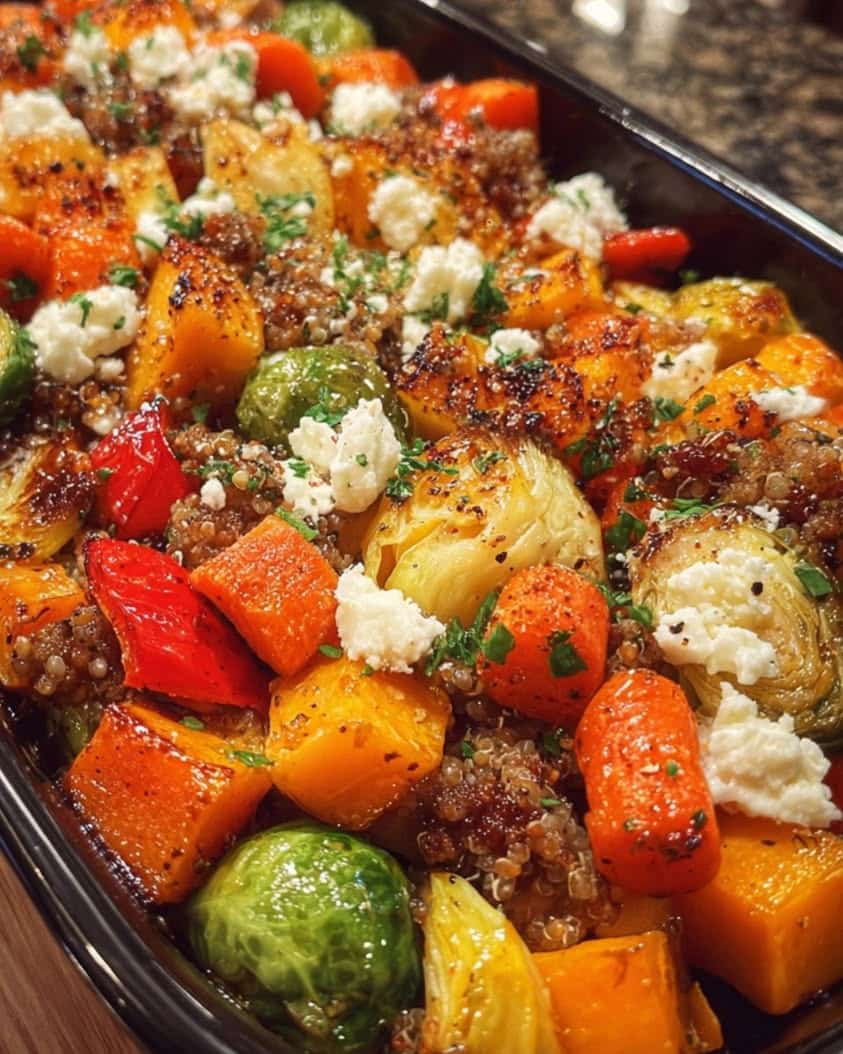
Maple-Cinnamon Caramelized Butternut Squash, Sweet Potato, Carrots & Brussels Sprouts with Quinoa, Ground Turkey & Goat Cheese: A Healthy Fall Harvest Bowl
This maple-cinnamon caramelized harvest bowl is the ultimate healthy fall dinner that satisfies every craving. Imagine sweet roasted butternut squash and carrots mingling with earthy Brussels sprouts, all coated in a warm maple-cinnamon glaze that caramelizes into perfection. Meanwhile, this dish combines fluffy quinoa with savory ground turkey and creamy goat cheese for a protein-packed meal that keeps you full for hours. Consequently, you get a symphony of autumn flavors in every single bite.
Furthermore, this recipe transforms simple, wholesome ingredients into an extraordinary culinary experience perfect for busy weeknights or cozy weekend meals. The aroma of cinnamon and maple syrup roasting with fall vegetables will fill your kitchen with an irresistible scent of comfort. Additionally, the combination of textures from the tender vegetables, fluffy quinoa, and crispy turkey creates a delightful eating experience. Ultimately, this harvest bowl delivers restaurant-quality presentation with home-cooked simplicity.
Moreover, this maple-cinnamon roasted harvest bowl with turkey and goat cheese serves as fantastic meal prep, tasting even better the next day as the flavors continue to meld. The beautiful colors of orange squash, deep green Brussels sprouts, and white goat cheese make for an Instagram-worthy dish that celebrates the season. Importantly, it provides complete nutrition with lean protein, complex carbohydrates, and healthy fats. Therefore, it represents the perfect balance of indulgence and nourishment for your clean eating goals.
Quick Recipe Highlights
- Flavor Profile: This dish features a beautiful balance of sweet and savory notes, with the maple-cinnamon glaze complementing the natural sweetness of the roasted vegetables. Meanwhile, the savory ground turkey and tangy goat cheese provide a sophisticated counterpoint that prevents the dish from becoming too sweet. Finally, a hint of earthiness from the Brussels sprouts grounds the entire flavor experience.
- Texture: You will experience multiple satisfying textures including the tender-crisp roasted vegetables with caramelized edges and the fluffy, light quinoa. Additionally, the ground turkey provides a pleasant crumbly texture that contrasts beautifully with the creamy, soft goat cheese. Consequently, each component contributes to a complex mouthfeel that keeps every bite interesting.
- Aroma: As this harvest bowl roasts, your kitchen will fill with the warm, comforting scent of cinnamon and maple syrup blending with the savory notes of roasting turkey and vegetables. Furthermore, the caramelization process releases the natural sugars in the vegetables, creating an aroma reminiscent of autumn festivals and holiday gatherings. Ultimately, the fragrance alone will make this recipe a family favorite.
- Visual Appeal: This dish presents a stunning color palette of vibrant orange from the squash and carrots, deep green from the Brussels sprouts, white from the goat cheese, and golden brown from the turkey. Moreover, the caramelized edges on the vegetables create visual texture and depth. Therefore, it makes for an impressive presentation that looks as good as it tastes.
- Skill Level Needed: This recipe requires basic kitchen skills including vegetable chopping, simple stovetop cooking, and oven roasting. However, the steps are straightforward and well-explained, making it accessible for beginner cooks while still enjoyable for experienced chefs. Importantly, no special techniques are required beyond basic food preparation.
- Special Equipment: You will need a standard baking sheet, a medium saucepan with a lid for the quinoa, and a large skillet for the ground turkey. Additionally, parchment paper or a silicone baking mat is recommended for easier cleanup and to prevent sticking. Otherwise, standard kitchen utensils like cutting boards and knives are all that’s required.
Recipe Overview
- Difficulty Level: This recipe earns its easy rating because it involves straightforward techniques that most home cooks already possess. The vegetable preparation requires basic knife skills for chopping, while the quinoa cooking follows simple absorption method directions. Furthermore, the ground turkey cooks quickly in a single skillet with minimal attention needed. Ultimately, the oven does most of the work, allowing you to multitask efficiently.
- Category: This harvest bowl falls perfectly into multiple categories including healthy dinner recipes, meal prep options, and autumn comfort food. It serves as a complete one-bowl meal containing protein, complex carbohydrates, and vegetables in perfect balance. Additionally, it fits into clean eating regimens and gluten-free diets without modification. Therefore, it represents a versatile option for various dietary preferences and occasions.
- Cuisine: This dish draws inspiration from contemporary American farm-to-table cuisine with its emphasis on seasonal produce and balanced nutrition. The use of maple syrup nods to North American culinary traditions, while the quinoa adds a modern, health-conscious element. Meanwhile, the combination of sweet and savory flavors reflects current culinary trends that prioritize flavor complexity. Consequently, it represents a modern approach to comfort food that feels both familiar and innovative.
- Cost: This recipe utilizes affordable, seasonal ingredients that maximize flavor and nutrition without straining your grocery budget. Butternut squash, sweet potatoes, and carrots typically cost less during autumn months, while ground turkey represents an economical protein choice. Furthermore, quinoa, while initially seeming expensive, stretches far when used as a base grain. Therefore, this harvest bowl delivers restaurant-quality meals at a fraction of the cost.
- Season: Autumn is the perfect season for this recipe because the featured vegetables reach their peak flavor and affordability during fall months. The warming spices and roasted elements provide comfort as temperatures drop, while the nutrient density supports immune health during cold and flu season. Additionally, the colors and flavors embody the essence of harvest time. Consequently, this dish captures the seasonal transition perfectly.
- Occasion: This versatile recipe works equally well for busy weeknight family dinners, elegant weekend entertaining, or make-ahead meal prep for busy schedules. The beautiful presentation makes it suitable for casual dinner parties, while the simple preparation ensures stress-free cooking. Furthermore, it travels well for potlucks or office lunches. Therefore, it adapts to virtually any dining situation with grace and flavor.
Why You’ll Love This Maple-Cinnamon Roasted Harvest Bowl
First and foremost, the taste experience will captivate you from the very first bite. The caramelized vegetables develop deep, complex flavors that balance perfectly against the savory turkey and tangy goat cheese. Meanwhile, the maple-cinnamon glaze adds warmth and sweetness without overwhelming the other components. Consequently, each element complements the others, creating a harmonious flavor profile that satisfies both sweet and savory cravings simultaneously. Furthermore, the variety of textures keeps your palate engaged throughout the entire meal.
From a convenience perspective, this recipe simplifies dinner preparation while delivering impressive results. The majority of active cooking time involves simple vegetable chopping, while the oven handles the roasting process hands-free. Additionally, you can cook the quinoa and turkey simultaneously with the vegetables, making efficient use of your time. Therefore, you can create a restaurant-quality meal with minimal fuss and maximum flavor. Moreover, the cleanup remains manageable with just a few pots and pans.
Nutritionally, this harvest bowl provides a perfectly balanced meal in a single dish. The combination of lean protein from the turkey, complex carbohydrates from the quinoa and vegetables, and healthy fats from the goat cheese ensures sustained energy release. Furthermore, the colorful vegetables deliver a wide spectrum of vitamins, minerals, and antioxidants essential for optimal health. Consequently, this meal supports your clean eating goals without sacrificing flavor or satisfaction. Importantly, it keeps you full and energized for hours.
For social and entertaining purposes, this dish offers both visual appeal and crowd-pleasing flavors that impress guests. The beautiful color combination makes for stunning presentation, while the familiar yet elevated flavors appeal to diverse tastes. Additionally, the recipe scales easily to accommodate larger groups without complicating the preparation process. Therefore, it serves as a reliable option for dinner parties or family gatherings where you want to serve something special without excessive stress. Moreover, it accommodates various dietary preferences with minimal adjustments.
Finally, the cost-effectiveness of this recipe makes it a smart choice for budget-conscious home cooks. Seasonal vegetables provide maximum flavor at minimum cost, while ground turkey offers an affordable protein source compared to other meats. Furthermore, quinoa, though premium-priced, expands significantly during cooking, making a little go a long way. Consequently, you can create multiple generous servings for less than the cost of a single restaurant meal. Therefore, this harvest bowl represents exceptional value without compromising on quality or satisfaction.
Historical Background and Cultural Significance
The concept of harvest bowls traces its roots to ancient culinary traditions across various cultures that celebrated seasonal bounty through mixed grain and vegetable dishes. However, the modern interpretation as a composed meal bowl gained popularity during the health food movement of the early 21st century. Meanwhile, the specific combination of maple and cinnamon reflects North American culinary heritage, particularly New England traditions of using maple syrup as both sweetener and flavoring agent. Consequently, this recipe represents a contemporary take on time-honored practices of celebrating seasonal produce.
Culturally, the use of quinoa marks a significant shift in Western eating habits toward incorporating ancient grains from indigenous foodways. Originally cultivated in the Andean region of South America for thousands of years, quinoa gained global popularity due to its nutritional profile and gluten-free status. Furthermore, the inclusion of goat cheese connects to Mediterranean and Middle Eastern culinary traditions where tangy cheeses frequently balance sweet elements in savory dishes. Therefore, this harvest bowl represents a fusion of global food traditions united by modern nutritional understanding.
The evolution of this specific recipe reflects broader trends in contemporary home cooking toward balanced, vegetable-forward meals that don’t sacrifice flavor for health. The maple-cinnamon roasting technique demonstrates how modern cooks have adapted traditional glazing methods to highlight natural vegetable sweetness rather than masking it. Additionally, the combination of ground meat with grains and vegetables shows how home cooks have reinvented casserole concepts for faster cooking and brighter flavors. Consequently, this dish embodies the current preference for meals that are simultaneously nutritious, delicious, and visually appealing.
Regional variations of this concept abound, reflecting local ingredients and culinary traditions. In the American South, similar bowls might feature sweet potatoes with pecans and a bourbon-maple glaze. Meanwhile, West Coast interpretations often include kale or other hearty greens and might substitute farro for quinoa. Furthermore, European versions might incorporate root vegetables traditional to their regions with local cheeses and grains. Therefore, this recipe serves as a template that welcomes adaptation based on seasonal availability and personal preference while maintaining its core balance of flavors and nutrition.
Ingredient Deep Dive
Butternut squash serves as the foundational vegetable in this harvest bowl, providing sweet, nutty flavor and vibrant color. Historically, squash originated in Central America over 10,000 years ago and became a staple for Native American tribes who developed various cultivation techniques. Nutritionally, it delivers significant amounts of vitamin A, vitamin C, and fiber while being low in calories. When selecting squash, choose ones that feel heavy for their size with firm, unblemished skin. Store whole squash in a cool, dark place for up to three months, but once cut, wrap tightly and refrigerate for up to five days. For substitutions, sweet potatoes or pumpkin work well with similar roasting characteristics.
Brussels sprouts contribute earthy flavor and pleasant texture contrast to the dish, balancing the sweetness of other components. Originally cultivated in ancient Rome, they gained their name from their popularity in Brussels, Belgium, during the 16th century. Nutritionally, they provide exceptional amounts of vitamin K, vitamin C, and folate, along with cancer-fighting compounds called glucosinolates. Select firm, bright green sprouts with tightly closed leaves, avoiding those with yellowing or loose leaves. Store unwashed in the refrigerator for up to one week in a perforated plastic bag. If substituting, broccolini or cauliflower florets offer similar roasting characteristics and flavor profiles.
Maple syrup functions as both sweetener and flavoring agent, creating the caramelized glaze that defines this dish. Indigenous peoples of North America developed maple syrup production long before European arrival, using traditional methods of tapping trees and boiling sap. Pure maple syrup contains antioxidants and minerals like manganese and zinc, unlike refined sugars. Always choose grade A maple syrup for its balanced flavor rather than pancake syrup containing corn syrup. Store in the refrigerator after opening to prevent mold. For alternatives, honey or agave syrup can substitute, though they will impart different flavor notes to the final dish.
Quinoa forms the nutritious base of this harvest bowl, providing complete protein and fluffy texture. This ancient grain originated in the Andean region of South America, where Incas considered it sacred and called it the “mother of all grains.” Nutritionally, it stands out as a complete protein containing all nine essential amino acids, along with fiber, magnesium, and iron. Always rinse quinoa thoroughly before cooking to remove its natural bitter coating called saponin. Store uncooked quinoa in an airtight container in a cool, dark place for up to two years. For substitutions, couscous, farro, or brown rice work well, though cooking times will vary accordingly.
Goat cheese provides the finishing touch with its creamy texture and tangy flavor that cuts through the sweetness. Historians believe goat domestication for milk production began around 10,000 years ago in the Middle East, with cheese-making developing soon after. Nutritionally, goat cheese contains less lactose than cow’s milk cheese and offers protein, calcium, and healthy fats. Select fresh, soft goat cheese (chèvre) that appears bright white and feels firm yet spreadable. Store tightly wrapped in the refrigerator for up to two weeks. For alternatives, feta cheese provides similar tanginess, while ricotta salata offers mild flavor with firm texture.
Common Mistakes to Avoid
- Overcrowding the baking sheet prevents proper caramelization because the vegetables steam rather than roast. Always spread vegetables in a single layer with space between pieces to allow hot air circulation. Consequently, you achieve those beautifully browned edges that develop deep flavor instead of soggy, steamed vegetables.
- Neglecting to rinse quinoa results in a bitter taste from the natural coating called saponin. Always place quinoa in a fine-mesh strainer and rinse under cold water for at least one minute while rubbing the grains. Therefore, you remove this protective coating and ensure the neutral flavor needed to balance the other components.
- Using the wrong maple syrup type dramatically affects flavor and quality. Avoid pancake syrups containing corn syrup and artificial flavors, which burn easily and taste overly sweet. Instead, always choose pure maple syrup for its complex flavor profile and proper caramelization characteristics during roasting.
- Underseasoning the ground turkey creates a bland protein component that fails to complement the flavorful vegetables. Season the turkey generously with salt and pepper while cooking, and consider adding complementary herbs like thyme or sage. Consequently, the savory element properly balances the sweet roasted vegetables.
- Cutting vegetables unevenly leads to inconsistent cooking where some pieces burn while others remain undercooked. Aim for uniform ¾-inch pieces to ensure everything cooks at the same rate. Additionally, consider the density of different vegetables when cutting to account for varying cooking times.
- Skipping the preheating step for the oven compromises the roasting process because vegetables need immediate high heat for proper caramelization. Always preheat your oven completely before adding the baking sheet. Furthermore, position the rack in the center for even heat distribution and optimal browning.
- Overcooking the quinoa results in a mushy texture that fails to provide the desired fluffy base for the bowl. Follow package instructions precisely and remove from heat immediately when the liquid absorbs. Then, let it steam with the lid on for exactly five minutes before fluffing with a fork.
- Adding goat cheese while components are too hot causes it to melt completely rather than maintaining its creamy texture. Allow the roasted vegetables and turkey to cool slightly before assembling the bowls and adding cheese. Consequently, you preserve those delightful pockets of cool, tangy creaminess throughout the dish.
Essential Techniques
Proper vegetable roasting requires understanding the relationship between temperature, space, and oil distribution. Preheat your oven to 400°F to ensure immediate caramelization when vegetables hit the hot surface. Meanwhile, cut vegetables uniformly to guarantee even cooking, and toss them thoroughly with oil to coat every surface without pooling. Additionally, spread them in a single layer with space between pieces to allow steam escape and proper browning. Watch for the visual cues of done-ness: golden brown edges, slightly shrunken appearance, and tender texture when pierced with a fork.
Quinoa preparation seems simple but benefits from specific techniques for perfect results. Always rinse quinoa thoroughly under cold water while rubbing the grains between your fingers to remove the bitter saponin coating. Use the absorption method with a 2:1 liquid-to-quinoa ratio, bringing to a boil then reducing to a simmer covered for 15 minutes. Remove from heat and let steam covered for exactly five minutes before fluffing with a fork. Perfect quinoa appears translucent with visible germ rings and has a light, separate texture rather than clumping together.
Caramelization represents the chemical process that creates deep flavor and appealing color in the roasted vegetables. The natural sugars in the vegetables break down at high heat, creating hundreds of new flavor compounds and that characteristic brown color. Achieve this by ensuring your oven temperature reaches at least 400°F and the vegetables have adequate space on the baking sheet. Additionally, the maple syrup accelerates this process while adding its own distinct flavor notes. Proper caramelization results in vegetables with deep golden-brown spots and intensified sweetness balanced by slight bitterness at the edges.
Ground turkey cooking requires attention to achieve proper texture and flavor development. Use a large skillet over medium-high heat and break the turkey into small crumbles as it cooks to ensure even browning. Season generously during cooking rather than afterward to allow flavors to penetrate the meat. Cook until no pink remains and the turkey develops slight browning for enhanced flavor. Properly cooked ground turkey should appear uniformly white with golden brown spots and have a moist but not greasy texture when finished.
Pro Tips for Perfect Maple-Cinnamon Harvest Bowls
First, consider roasting your vegetables on parchment paper or a silicone baking mat to prevent sticking without excessive oil. This technique also simplifies cleanup dramatically while ensuring those caramelized edges release easily from the pan. Furthermore, it promotes even browning across all vegetable pieces for consistent results.
Second, toast your quinoa briefly in a dry skillet before adding cooking liquid to enhance its nutty flavor profile. Heat over medium heat for 3-5 minutes until fragrant, stirring constantly to prevent burning. This simple step deepens the flavor complexity and makes the quinoa even more complementary to the sweet vegetables.
Third, reserve a tablespoon of the maple-cinnamon glaze to drizzle over the assembled bowls just before serving. This adds visual appeal and an extra burst of flavor that highlights the dish’s signature taste. Additionally, it ensures the maple-cinnamon notes remain prominent even after combining with the other components.
Fourth, consider adding a handful of toasted pecans or walnuts when assembling the bowls for additional texture contrast. The crunch of nuts provides pleasant contrast to the tender vegetables and creamy goat cheese. Furthermore, their rich flavor complements both the sweet and savory elements beautifully.
Fifth, let the roasted vegetables rest for five minutes after removing from the oven before assembling bowls. This allows them to reabsorb some of their natural juices and firm up slightly, preventing sogginess in the finished dish. Meanwhile, the slight cooling helps maintain the goat cheese’s texture.
Sixth, experiment with fresh herb garnishes like thyme, sage, or rosemary to add aromatic complexity that complements the warm spices. Add these just before serving to preserve their fresh flavor and visual appeal. Consequently, you elevate the dish with minimal additional effort.
Variations and Adaptations
For regional variations, consider adapting the ingredients to reflect local seasonal produce and culinary traditions. A Southern interpretation might include pecans, collard greens, and a bourbon-maple glaze, while a Mediterranean version could feature olives, artichokes, and feta cheese. Meanwhile, a California-inspired bowl might incorporate avocado and citrus vinaigrette for brightness. Furthermore, a New England adaptation could include cranberries and walnuts for traditional flavor pairings. Therefore, the basic template welcomes endless regional interpretation while maintaining its core concept.
Seasonal adaptations allow this recipe to shine year-round with appropriate ingredient substitutions. During summer, replace the root vegetables with zucchini, eggplant, and bell peppers while using fresh basil garnish. For spring, incorporate asparagus, peas, and radishes with lemon zest and fresh dill. Meanwhile, deep winter versions might include parsnips, turnips, and kale for heartier cold-weather nourishment. Consequently, you can enjoy this concept regardless of the season by focusing on what’s freshest and most flavorful.
Dietary modifications make this recipe accessible to various eating preferences and restrictions. For vegan versions, omit the turkey and goat cheese, adding chickpeas or lentils for protein and avocado for creaminess. Gluten-free needs are naturally met, while dairy-free adaptations simply omit the goat cheese or use vegan alternatives. Furthermore, low-carb versions can replace quinoa with cauliflower rice and increase the protein portion. Therefore, this flexible recipe accommodates numerous dietary needs without sacrificing flavor satisfaction.
Flavor variations let you customize the profile based on personal preference or available ingredients. For deeper savory notes, add umami ingredients like mushrooms or a splash of tamari to the roasting vegetables. If preferring less sweetness, reduce the maple syrup and increase herbs like rosemary or thyme. Meanwhile, spice lovers can add chili flakes or cayenne to the maple glaze for sweet heat. Consequently, you can tailor the flavor balance to perfectly suit your palate while maintaining the dish’s structural integrity.
Serving and Presentation Guide
Proper plating techniques transform this harvest bowl from simple dinner to restaurant-quality presentation. Begin by creating a uniform base layer of fluffy quinoa in the bottom of wide, shallow bowls. Then, artfully arrange the roasted vegetables in distinct sections rather than mixing everything together, showcasing the beautiful colors. Next, scatter the ground turkey crumbles strategically across the vegetables, followed by crumbling the goat cheese over the top. Finally, garnish with fresh herbs and any additional toppings for visual interest and flavor accents.
Garnishing ideas range from simple to elaborate depending on the occasion and available ingredients. Fresh herb sprigs like thyme or rosemary provide aroma and elegance, while toasted nuts add texture and visual contrast. Meanwhile, pomegranate arils contribute vibrant color and bursts of sweetness during autumn months. Additionally, a final drizzle of maple syrup or balsamic glaze creates professional-looking presentation. Therefore, choose garnishes that complement the existing flavors while enhancing visual appeal.
Traditional accompaniments for this type of dish include crusty bread for soaking up any remaining glaze or a simple green salad for freshness contrast. For heartier appetites, consider serving with roasted chicken or additional protein beyond the ground turkey. Meanwhile, a cup of soup makes an excellent starter that complements the harvest themes without overwhelming the palate. Consequently, you can create a complete meal experience by considering what elements might enhance rather than compete with the main bowl.
Modern serving suggestions include deconstructed presentations where components remain separate for custom assembly at the table. This approach works particularly well for family-style meals or entertaining where guests enjoy creating their own combinations. Alternatively, consider serving in wide-mouth jars for portable meals with visual appeal. Furthermore, mini versions in small bowls or cups make excellent appetizers or tasting portions for parties. Therefore, contemporary presentation methods can refresh this traditional concept for various dining situations.
Wine and Beverage Pairing
Wine pairings should complement both the sweetness from the maple glaze and the savory elements from the turkey and vegetables. A lightly oaked Chardonnay works beautifully with its balanced acidity and subtle vanilla notes that harmonize with the cinnamon. Alternatively, Pinot Noir provides enough fruitiness to complement the sweetness without overwhelming the dish with tannins. Meanwhile, Riesling with its natural sweetness and acidity cuts through the richness while enhancing the caramelized flavors. Therefore, medium-bodied wines with good acidity generally serve as the safest choices for this complex flavor profile.
Non-alcoholic alternatives should provide refreshment while balancing the sweet and savory elements of the dish. Sparkling apple cider offers autumnal flavors that complement the maple and cinnamon beautifully. Alternatively, ginger beer provides spicy complexity that cuts through the richness while cleansing the palate. Meanwhile, hibiscus tea served iced delivers tartness that balances the sweetness and adds vibrant color to the meal. Consequently, beverages with some sweetness, acidity, or spice typically pair most successfully with this harvest bowl.
Coffee and tea pairings work surprisingly well with this dish, particularly when considering the cinnamon and maple flavors. Medium-roast coffee with its balanced acidity and subtle sweetness complements the roasted vegetable notes without overwhelming the palate. Chai tea naturally echoes the warm spices in the dish while providing creamy texture if prepared with milk. Meanwhile, herbal options like rooibos offer caffeine-free alternatives with natural sweetness that harmonizes with the maple glaze. Therefore, warm beverages can extend the comforting qualities of this autumn-inspired meal.
Storage and Shelf Life
Proper storage methods ensure your harvest bowl maintains quality and food safety when enjoying leftovers. Store components separately in airtight containers in the refrigerator for optimal texture preservation. The roasted vegetables keep for 3-4 days, while the cooked quinoa and ground turkey last 4-5 days when properly refrigerated. Meanwhile, store goat cheese in its original packaging or wrapped tightly in parchment paper inside an airtight container. Consequently, you maximize freshness by preventing cross-contamination of flavors and textures between components.
Reheating instructions vary by component to preserve texture and flavor integrity. Reheat roasted vegetables in a 350°F oven for 10-15 minutes or in an air fryer for 5-7 minutes to restore crispness. Meanwhile, gently reheat quinoa and turkey in a skillet with a tablespoon of water or broth to prevent drying out. Always add fresh goat cheese and garnishes after reheating the other components. Therefore, you can enjoy leftovers that taste nearly as good as the freshly made version with proper technique.
Freezing guidelines apply best to certain components while others don’t freeze well due to texture changes. The roasted vegetables freeze surprisingly well for up to three months when spread on a baking sheet first before transferring to freezer bags. Cooked quinoa also freezes successfully for up to three months, though it may release more water upon thawing. However, avoid freezing the complete assembled bowls or the goat cheese, which becomes crumbly and grainy after freezing. Consequently, selective freezing lets you preserve meal components for future quick assembly.
Make Ahead Strategies
Advanced preparation timelines let you enjoy this harvest bowl with minimal effort on busy days. Up to three days ahead, chop all vegetables and store them in separate airtight containers in the refrigerator. Two days before serving, cook the quinoa and store it refrigerated in its cooking container to retain moisture. The day before, you can even roast the vegetables and cook the ground turkey, storing them separately. Then, simply reassemble and reheat components before serving, adding fresh goat cheese and garnishes at the last moment.
Storage between steps requires attention to food safety and quality preservation. Always cool components completely before refrigerating, spreading them in shallow containers for rapid cooling. Place parchment paper between layers of roasted vegetables to prevent them from sticking together. Meanwhile, store quinoa with a damp paper towel over the surface to maintain moisture without making it soggy. Consequently, proper intermediate storage ensures each component retains its optimal texture and flavor until final assembly.
Fresh element additions during final assembly transform make-ahead components into vibrant, restaurant-quality meals. Always reserve some of the maple syrup for drizzling just before serving to refresh the flavor impact. Add fresh herbs as garnish rather than incorporating them during initial cooking or storage. Meanwhile, consider adding a squeeze of lemon juice or a sprinkle of flaky sea salt at the end to brighten flavors. Therefore, strategic last-minute additions elevate pre-prepared components with minimal additional effort.
Scaling Instructions
Halving the recipe works beautifully for smaller households or when testing the dish for the first time. Reduce all ingredients by half, but maintain the same oven temperature and roasting time since vegetable volume doesn’t significantly affect cooking duration. Use a smaller baking sheet to ensure the vegetables still have adequate space for proper caramelization. Meanwhile, cooking times for the quinoa and turkey may decrease slightly due to smaller quantities, so check for doneness a few minutes early. Consequently, you can enjoy this harvest bowl without excessive leftovers while maintaining quality.
Doubling or tripling the recipe requires some adjustments to ensure consistent results across larger batches. Use multiple baking sheets rotated halfway through cooking rather than overcrowding a single sheet, which causes steaming. Cook the quinoa in batches or use a rice cooker with larger capacity to prevent uneven cooking. Meanwhile, brown the ground turkey in batches to ensure proper browning rather than steaming in an overcrowded pan. Therefore, with proper technique adjustments, you can successfully scale this recipe for crowds or meal prep purposes.
Equipment adjustments become necessary when significantly increasing or decreasing recipe quantities. For larger batches, consider using sheet pans with roasting racks to improve air circulation around the vegetables. A food processor with slicing attachments can dramatically speed up vegetable preparation for multiple batches. Meanwhile, a stand mixer with paddle attachment can crumble and cook ground turkey in larger quantities when using a heating element. Consequently, the right tools maintain recipe quality while managing increased volume efficiently.
Nutritional Deep Dive
Macronutrient breakdown reveals why this harvest bowl provides sustained energy and satisfaction. The combination offers balanced proportions of complex carbohydrates from the vegetables and quinoa, lean protein from the turkey, and healthy fats from the goat cheese and olive oil. A typical serving contains approximately 400-500 calories with 30g protein, 45g carbohydrates, and 15g fat, though exact numbers vary based on specific ingredients and portions. Furthermore, the fiber content from the vegetables and quinoa promotes digestive health and prolonged fullness. Therefore, this meal represents nutritional excellence in macronutrient balance.
Micronutrient analysis shows exceptional vitamin and mineral density from the colorful vegetable variety. The orange vegetables provide massive amounts of vitamin A as beta-carotene, essential for vision, immune function, and skin health. Brussels sprouts contribute significant vitamin K for bone health and blood clotting, along with vitamin C for immune support. Meanwhile, the quinoa offers complete protein with all essential amino acids plus minerals like magnesium, manganese, and phosphorus. Consequently, this single meal delivers diverse micronutrients often missing from modern diets.
Health benefits extend beyond basic nutrition to functional advantages for overall wellness. The anti-inflammatory compounds in the colorful vegetables may help reduce chronic disease risk, while the fiber supports healthy cholesterol and blood sugar levels. The complete protein supports muscle maintenance and satiety hormones, aiding weight management. Furthermore, the combination of nutrients supports energy production, cognitive function, and immune defense. Therefore, regular consumption of meals like this harvest bowl contributes significantly to long-term health maintenance and disease prevention.
Dietary Adaptations
Vegan adaptations replace animal products while maintaining the dish’s structural integrity and flavor balance. Substitute the ground turkey with cooked lentils or crumbled tempeh sautéed with umami seasonings like tamari and nutritional yeast. Replace goat cheese with avocado slices for creaminess or vegan feta alternatives available in most markets. Use maple syrup as the sweetener since it’s plant-based, and ensure all other ingredients meet vegan standards. Consequently, you can create a completely plant-based version that delivers similar satisfaction and nutrition.
Paleo adaptations focus on removing grains and dairy while increasing protein and healthy fats. Replace quinoa with cauliflower rice sautéed in coconut oil for a grain-free base that still provides volume and texture. Omit the goat cheese entirely or substitute with sliced avocado for creaminess. Increase the ground turkey portion slightly to compensate for the removed quinoa, and ensure the maple syrup used is 100% pure without additives. Therefore, this modification aligns with paleo principles while maintaining the dish’s essential character.
Low-carb and keto adaptations require more significant modifications to reduce carbohydrate content substantially. Replace the quinoa with cauliflower rice and reduce the amount of sweet potatoes and carrots in the vegetable mix. Increase above-ground vegetables like Brussels sprouts and add non-starchy options like bell peppers or zucchini. Significantly reduce the maple syrup quantity or replace with a keto-friendly sweetener that caramelizes similarly. Meanwhile, increase the goat cheese and turkey portions to maintain satisfaction with higher fat and protein ratios. Consequently, these adjustments create a version suitable for low-carb and ketogenic eating plans.
Troubleshooting Guide
For vegetables that won’t caramelize, the issue typically involves overcrowding, insufficient oil, or low oven temperature. Ensure vegetables have space between them on the baking sheet and are thoroughly coated with oil before roasting. Verify your oven temperature with an independent thermometer since home oven calibrations often drift over time. Additionally, consider roasting on the upper rack position where heat circulation is typically better. Therefore, addressing these common issues typically resolves caramelization problems for perfectly browned vegetables.
If your quinoa turns out mushy or sticky, the likely causes include insufficient rinsing, incorrect water ratio, or overhandling after cooking. Always rinse quinoa thoroughly until water runs clear to remove the natural starch coating. Measure water precisely using a 2:1 ratio, and resist the urge to peek during the steaming process after cooking. If quinoa does become sticky, spread it on a baking sheet to dry slightly before using. Consequently, these adjustments typically yield the light, fluffy quinoa ideal for harvest bowls.
When flavors seem unbalanced with excessive sweetness, counterbalance with acidic or savory elements. A squeeze of fresh lemon juice over the assembled bowl can brighten flavors and cut through sweetness effectively. Increasing the black pepper in the ground turkey seasoning adds savory complexity that balances the maple. Alternatively, a sprinkle of flaky sea salt over the finished dish enhances all flavors while particularly tempering sweetness. Therefore, simple seasoning adjustments can restore perfect flavor balance when components seem too sweet.
Recipe Success Stories
Community feedback consistently highlights how this recipe converts vegetable skeptics into enthusiastic fans, particularly regarding Brussels sprouts. Many readers report that the maple-cinnamon caramelization technique makes previously disliked vegetables irresistible to family members of all ages. Furthermore, numerous testimonials mention how the dish has become a weekly staple for meal prep, saving both time and money while improving nutrition. Consequently, this recipe demonstrates how strategic flavor combinations can transform healthy eating from obligation to pleasure.
Variation successes showcase the recipe’s adaptability to different dietary needs and ingredient availability. One reader created a vegan version with chickpeas and avocado that satisfied mixed-diet holiday guests beautifully. Another adapted it for diabetic family members by reducing the maple syrup and adding extra herbs, reporting excellent blood sugar responses. Meanwhile, several outdoor cooking enthusiasts have successfully prepared it in Dutch ovens during camping trips. Therefore, the basic template proves remarkably resilient across cooking methods, dietary restrictions, and ingredient substitutions.
Photography tips from successful recipe makers emphasize natural lighting and strategic composition for capturing the dish’s visual appeal. Shoot in daylight near a window but out of direct sun to highlight the vibrant colors without harsh shadows. Arrange components to show the variety of textures and colors, with a drizzle of maple syrup visible on some vegetables. Meanwhile, using rustic bowls and natural backgrounds enhances the harvest theme and seasonal feeling. Consequently, these simple photographic techniques help showcase the dish’s visual qualities that match its exceptional flavor.
Frequently Asked Questions
Can I use different vegetables in this harvest bowl? Absolutely, this recipe welcomes seasonal substitutions based on what’s available. Root vegetables like parsnips, turnips, or beets work beautifully, while above-ground
Print
Maple-Cinnamon Caramelized Butternut Squash, Sweet Potato, Carrots & Brussels Sprouts with Quinoa, Ground Turkey & Goat
Description
A hearty and flavorful autumn dish featuring caramelized roasted vegetables, savory ground turkey, and creamy goat cheese over fluffy quinoa.
Ingredients
For the Crust:
- 1 small butternut squash, peeled and cubed
- 1 large sweet potato, peeled and cubed
- 2 large carrots, sliced
- 1 lb Brussels sprouts, trimmed and halved
- 1 lb ground turkey
- 1 cup quinoa, rinsed
- 2 tbsp olive oil
- 3 tbsp maple syrup
- 1 tsp cinnamon
- 1/2 tsp nutmeg
- Salt and pepper to taste
- 4 oz goat cheese, crumbled
- 2 cups vegetable broth
Instructions
1. Prepare the Crust:
- Preheat oven to 400°F (200°C). Toss butternut squash, sweet potato, carrots, and Brussels sprouts with olive oil, maple syrup, cinnamon, nutmeg, salt, and pepper. Spread on a baking sheet and roast for 25-30 minutes until tender and caramelized.
- While vegetables roast, cook quinoa according to package directions using vegetable broth instead of water. Fluff with a fork when done.
- In a skillet over medium heat, brown ground turkey until fully cooked, seasoning with salt and pepper. Drain any excess fat.
- Combine roasted vegetables, cooked quinoa, and ground turkey in a large bowl. Gently fold in crumbled goat cheese.
- Serve warm, garnished with extra goat cheese and a drizzle of maple syrup if desired.
Notes
You can customize the seasonings to taste.

I’m Shaykee—born in Morocco, seasoned across continents. From airplane galleys to home kitchens, I share the flavors and stories that shaped my journey.