
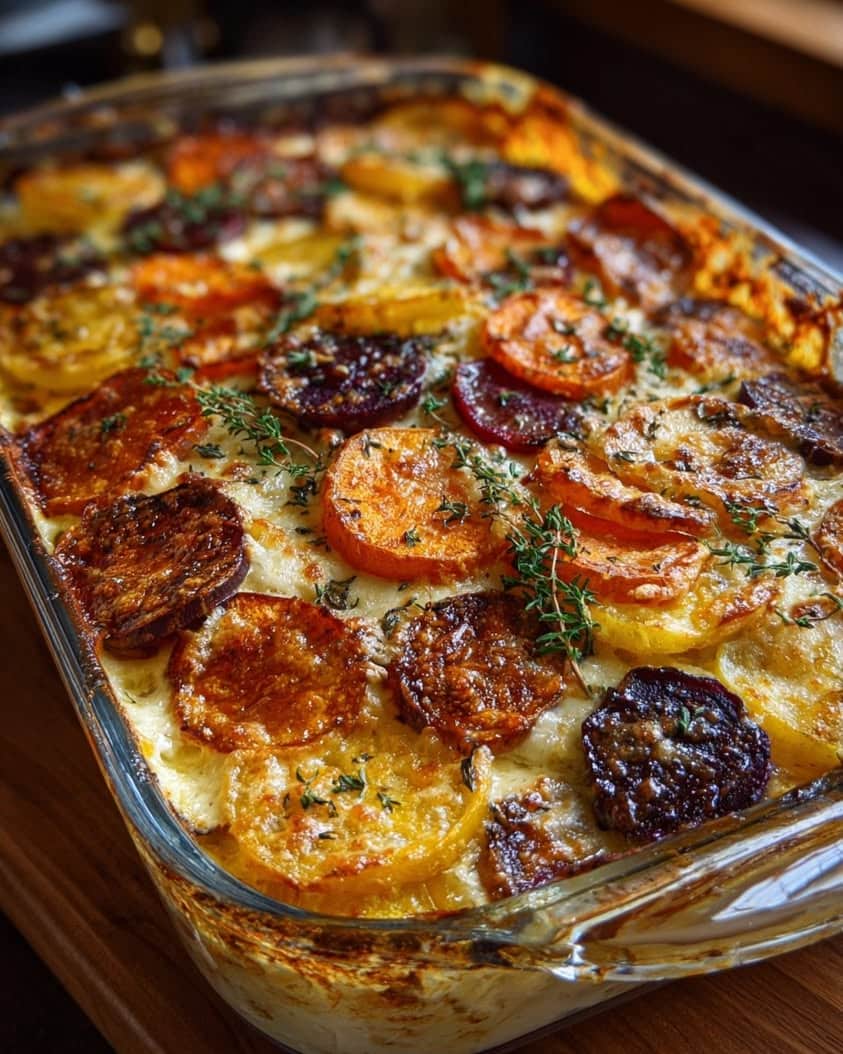
Maple-Glazed Beet, Gruyere Sweet Potato & Hot Honey Yam Gratin: The Ultimate Holiday Side Dish
This Maple-Glazed Beet, Gruyere Sweet Potato & Hot Honey Yam Gratin is the ultimate holiday side dish that will completely transform your dinner table. Imagine tender, thinly sliced root vegetables layered with nutty Gruyère cheese, all baked in a creamy sauce and finished with an incredible sweet and spicy glaze. This gratin recipe elevates humble ingredients into a spectacular centerpiece worthy of any celebration. Furthermore, the vibrant colors from the golden yams, orange sweet potatoes, and ruby red beets create a stunning visual presentation that guests will admire before they even take their first bite.
The combination of flavors in this vegetable gratin is nothing short of magical. Sweet maple syrup harmonizes with the earthy depth of roasted beets, while the subtle heat from the hot honey yam component provides a delightful contrast. Meanwhile, the rich, creamy sauce and melted Gruyère cheese bring everything together in a luxurious embrace. This dish represents the perfect balance of sweet, savory, and spicy elements that complement rather than compete with each other. Consequently, every forkful delivers a complex symphony of tastes and textures that will have everyone asking for your recipe.
What makes this sweet potato gratin truly special is its ability to feel both comforting and elegant simultaneously. The familiar creamy, baked goodness of a traditional gratin meets innovative flavor combinations that surprise and delight the palate. Additionally, this dish is surprisingly versatile, pairing beautifully with everything from holiday roasts to simple weeknight proteins. Whether you are hosting a formal dinner party or creating a special family meal, this gratin recipe promises to become an instant classic in your culinary repertoire.
Quick Recipe Highlights
- Flavor Profile: This gratin recipe delivers a sophisticated balance of earthy sweetness from the maple-glazed beets, creamy richness from the Gruyère cheese, and a gentle spicy kick from the hot honey yam component. The flavors develop depth through baking, creating a complex taste experience that evolves with each bite.
- Texture: Expect perfectly tender vegetable slices that maintain their structure, contrasted with the creamy sauce and beautifully melted, slightly crispy cheese topping. The layers create a satisfying mouthfeel that is both comforting and interesting texturally.
- Aroma: As this vegetable gratin bakes, your kitchen will fill with the warm, nutty scent of melting Gruyère cheese combined with the sweet caramelization of maple and honey and the earthy fragrance of root vegetables. The aroma alone will have everyone eagerly awaiting dinner.
- Visual Appeal: The striking color contrast between the golden yams, orange sweet potatoes, and deep red beets creates a beautiful layered effect that looks spectacular when served. The bubbly, golden-brown cheese topping adds the perfect finishing touch to this visually stunning dish.
- Skill Level Needed: This sweet potato gratin requires basic knife skills for slicing vegetables and some multitasking ability for preparing multiple components simultaneously. While not difficult, it does involve several steps that need coordination, making it ideal for cooks with some kitchen experience.
- Special Equipment: A mandoline slicer is highly recommended for achieving uniformly thin vegetable slices, which ensures even cooking. You will also need a 9×13 inch baking dish, a medium saucepan for the cream sauce, and a small bowl for preparing the glazes.
Recipe Overview
- Difficulty Level: This Maple-Glazed Beet, Gruyere Sweet Potato & Hot Honey Yam Gratin falls into the intermediate category because it involves multiple components that need preparation before assembly. The vegetable slicing requires attention to consistency, and coordinating the cream sauce with the vegetable preparation demands some kitchen organization. However, with careful reading of the instructions, even determined beginners can achieve excellent results.
- Category: This dish beautifully fits into several categories including holiday side dishes, vegetarian main courses, comfort food classics, and special occasion recipes. Its versatility allows it to shine alongside roasted meats or stand proudly as a centerpiece for vegetarian gatherings, making it a valuable addition to any cook’s repertoire.
- Cuisine: While gratins originate from French cuisine, this particular recipe incorporates North American ingredients like maple syrup and sweet potatoes, creating a delightful fusion of culinary traditions. The use of hot honey adds a contemporary twist that reflects modern flavor preferences while maintaining the classic technique of layered baking.
- Cost: The ingredients for this vegetable gratin are generally affordable, with root vegetables being budget-friendly, especially in season. Gruyère cheese represents the most significant expense, though its distinctive flavor is essential to the dish. Overall, this recipe offers excellent value, producing an impressive dish that feeds eight people for approximately twenty to thirty dollars depending on seasonal pricing.
- Season: This sweet potato gratin is particularly wonderful during fall and winter when root vegetables are at their peak sweetness and availability. The warm, comforting nature of the dish makes it ideal for cooler weather, though it can certainly be enjoyed year-round thanks to the consistent availability of its core ingredients in most markets.
- Occasion: Perfect for holiday dinners including Thanksgiving and Christmas, this gratin recipe also shines at dinner parties, potlucks, and family gatherings. Its stunning appearance and crowd-pleasing flavor profile make it suitable for everything from casual Sunday suppers to the most formal celebratory meals.
Why You’ll Love This Recipe
The taste and texture appeal of this Maple-Glazed Beet, Gruyere Sweet Potato & Hot Honey Yam Gratin is truly remarkable. Each component brings something special to the dish, creating a harmonious balance that delights the senses. The sweet potatoes offer creamy sweetness, the yams provide substantial texture, and the beets contribute earthy depth that grounds the other flavors. Meanwhile, the Gruyère cheese adds a nutty richness that complements rather than overwhelms the vegetables. The final glazes provide the perfect finishing touches, with the maple enhancing the natural sugars in the vegetables and the hot honey adding a subtle warmth that lingers pleasantly on the palate.
From a convenience perspective, this vegetable gratin offers significant preparation benefits despite its impressive final presentation. You can prepare many components ahead of time, making final assembly quick and stress-free. The vegetable slicing can be done hours in advance, and the cream sauce can be prepared and refrigerated until needed. This make-ahead flexibility is particularly valuable during busy holiday seasons when kitchen time is at a premium. Additionally, the baking time allows you to focus on other dishes or spend time with guests rather than attending to last-minute cooking tasks.
The nutritional advantages of this sweet potato gratin are substantial, featuring root vegetables packed with vitamins, minerals, and dietary fiber. Sweet potatoes and yams provide excellent sources of vitamin A, vitamin C, and potassium, while beets contain folate, manganese, and beneficial antioxidants. Using a combination of vegetables creates a more diverse nutrient profile than single-vegetable dishes. While the cheese and cream add richness, they do so in moderate amounts that complement rather than dominate the nutritional benefits of the vegetable foundation.
Regarding social and entertaining value, this gratin recipe consistently earns compliments and requests for the recipe. Its stunning visual presentation makes it a conversation starter, while its crowd-pleasing flavor profile ensures it will satisfy diverse palates. The dish serves eight generously, making it ideal for family gatherings and dinner parties alike. Furthermore, it holds well after baking, so you do not need to worry about precise timing between oven and table. This reliability under entertaining pressure makes it a trusted choice for both experienced and novice hosts.
The cost-effectiveness and accessibility of this dish make it an excellent choice for budget-conscious cooks who still want to create something special. Root vegetables are typically affordable, especially when purchased in season, and the other ingredients are readily available in most supermarkets. The impressive yield means you are feeding a crowd for a reasonable investment, making it significantly more economical than restaurant-quality side dishes. Additionally, the recipe is forgiving with substitutions, allowing you to adapt based on what is available or on sale without compromising the final result.
Historical Background and Cultural Significance
The gratin technique originates from French cuisine, specifically from the Dauphiné region in southeastern France. The term “gratin” derives from the French verb “gratter,” meaning “to scrape” or “to grate,” originally referring to the scraped-off crust that formed on the bottom of the cooking pot. Traditionally, gratins featured sliced potatoes baked with cream and cheese, creating a comforting peasant dish that made inexpensive ingredients feel luxurious. Over time, this cooking method gained popularity throughout France and eventually across the culinary world, with cooks adapting the technique to local ingredients and preferences.
The cultural importance of gratin dishes lies in their ability to transform simple, humble ingredients into something special and celebratory. In many European cultures, baked casserole dishes similar to gratins have long been associated with family gatherings and holiday meals, where feeding a crowd with limited resources was essential. The technique of layering thinly sliced vegetables with creamy elements represents a practical approach to creating satisfying, visually appealing dishes from basic pantry staples. This tradition of elevation through technique and presentation continues in modern interpretations like our Maple-Glazed Beet, Gruyere Sweet Potato & Hot Honey Yam Gratin.
The evolution of the gratin recipe reflects broader culinary trends, particularly the fusion of traditional techniques with global ingredients. While classic potato gratin remains beloved, contemporary versions incorporate diverse vegetables, cheeses, and flavor profiles that would have been unfamiliar to earlier generations of cooks. The inclusion of sweet potatoes and yams, for instance, represents North American influence, while the use of maple syrup acknowledges indigenous foodways. Similarly, the addition of hot honey reflects recent trends toward sweet-heat combinations in modern cuisine, showing how traditional dishes continue to evolve while maintaining their essential character.
Regional variations of gratin dishes appear throughout the world, each adapting the basic technique to local ingredients and culinary traditions. In Scandinavia, gratins might feature root vegetables like rutabagas and parsnips with Scandinavian cheeses. Mediterranean versions often include tomatoes, eggplant, and herbs like rosemary and thyme. Latin American interpretations might incorporate corn, peppers, and local cheeses. Our specific recipe represents a contemporary North American approach, combining French technique with New World ingredients and modern flavor combinations that reflect our increasingly global pantry and evolving taste preferences.
Ingredient Deep Dive
Sweet potatoes form the foundation of this gratin recipe, providing creamy texture and natural sweetness. Historically, sweet potatoes originated in Central or South America over 5,000 years ago and were later distributed throughout the world by European explorers. Nutritionally, they are powerhouse vegetables rich in beta-carotene (which converts to vitamin A), vitamin C, manganese, and fiber. When selecting sweet potatoes, choose firm specimens with smooth, unblemished skins and consistent coloring. Store them in a cool, dark, well-ventilated place but not in the refrigerator, as cold temperatures can negatively affect their flavor and texture. For substitutions, ordinary potatoes or carrots can work, though the flavor profile will change significantly.
Yams contribute substantial texture and subtle sweetness to this vegetable gratin, though true yams are often confused with sweet potatoes in American markets. Authentic yams originated in Africa and Asia and have rough, bark-like skin with white, purple, or reddish flesh. They contain good amounts of fiber, potassium, manganese, and antioxidant compounds. Select yams that feel firm and heavy for their size with tight, unwrinkled skin. Store them similarly to sweet potatoes in a cool, dark place with good air circulation. If true yams are unavailable, orange-fleshed sweet potatoes can substitute, though the textural difference will be noticeable in the final dish.
Beets provide earthy depth and stunning color contrast in this sweet potato gratin. Historically, beets descend from sea beet native to coasts of Europe, North Africa, and southern Asia, with cultivated varieties appearing around the Mediterranean. They are nutritional powerhouses containing folate, manganese, potassium, iron, and vitamin C, along with unique antioxidants called betalains that provide both color and health benefits. Choose beets that feel firm with smooth skins and vibrant green tops if still attached. Store beets unwashed in the refrigerator crisper drawer, where they will keep for several weeks. For substitutions, parsnips or carrots can provide similar texture though different flavor and color profiles.
Gruyère cheese delivers the distinctive nutty, slightly salty flavor that makes this gratin recipe so memorable. This Swiss cheese has been produced in the canton of Fribourg since the 12th century, with strict regulations governing its production and aging. Nutritionally, Gruyère provides high-quality protein, calcium, phosphorus, and vitamin A, though it is also relatively high in fat and sodium. When selecting Gruyère, look for cheese that is firm but not hard, with a natural rind and small, shiny cracks characteristic of properly aged specimens. Store wrapped in parchment or wax paper inside a loosely sealed container in the refrigerator. For substitutions, Comté, Emmental, or even a good quality Swiss cheese can work, though the flavor will vary.
The cream sauce forms the luxurious base that binds this vegetable gratin together. Combining heavy cream with aromatics like garlic and thyme creates a rich medium that carries flavors while encouraging the vegetables to become tender during baking. Heavy cream provides fat-soluble vitamins and energy, though it is high in saturated fat. When selecting cream, choose products without added thickeners or stabilizers for the purest flavor and best texture. For a lighter version, half-and-half can substitute, though the sauce will be less rich and may require slight thickening with a tablespoon of flour. Non-dairy alternatives like cashew cream can work for vegan adaptations, though the flavor profile will differ significantly.
Common Mistakes to Avoid
- Uneven vegetable slicing leads to inconsistent cooking, with some pieces becoming mushy while others remain unpleasantly firm. Always use a mandoline slicer for uniform thickness, and take your time to ensure every slice matches the others in dimension. This attention to detail pays dividends in the final texture of your gratin.
- Overcrowding the baking dish prevents proper caramelization and can result in steaming rather than baking the vegetables. Arrange the slices in neat, slightly overlapping layers without pressing down too firmly. This allows the cream sauce to circulate properly and promotes even browning throughout the dish.
- Skipping the seasoning between layers creates bland spots in an otherwise flavorful dish. Season each layer lightly with salt and pepper as you assemble the gratin, remembering that the vegetables themselves need seasoning, not just the sauce. This simple step ensures balanced flavor in every single bite.
- Using cheese that is too freshly grated can cause clumping and uneven melting. Purchase a block of Gruyère and grate it yourself just before using, as pre-shredded cheeses often contain anti-caking agents that affect melting quality. Freshly grated cheese distributes more evenly and creates a superior texture.
- Baking at too high a temperature causes the sauce to break or the cheese to burn before the vegetables become properly tender. Follow the recommended temperature and use an oven thermometer to verify accuracy if possible. Patient, moderate heat allows the vegetables to cook through while developing flavor complexity.
- Neglecting to let the gratin rest before serving results in a soupy consistency as the liquid hasn’t had time to be reabsorbed. Always allow at least 10-15 minutes of resting time after removing from the oven. This crucial step allows the starches to thicken the sauce and makes serving much cleaner.
- Applying the glazes too early in the baking process can cause them to burn or become bitter. Follow the timing instructions precisely, adding the maple glaze and hot honey during the final stages of cooking. This ensures they caramelize beautifully without crossing into burnt territory.
- Using vegetables with high water content without accounting for it can create excess liquid in the finished dish. Be sure to pat sliced vegetables dry if they appear particularly moist, and avoid substituting vegetables with significantly different water contents without adjusting technique accordingly.
Essential Techniques
Proper vegetable slicing represents the most critical technique for successful gratin preparation. Using a mandoline slicer ensures uniform thickness, which directly translates to even cooking throughout the dish. Set the mandoline to approximately 1/8-inch thickness for ideal results—thick enough to maintain structure but thin enough to become properly tender during baking. Always use the safety guard to protect your fingers, and work methodically through each vegetable type. If you do not own a mandoline, practice consistent knife skills with a very sharp chef’s knife, though this will require more time and attention to achieve the necessary precision.
Layering technique significantly impacts both the visual appeal and textural quality of the final gratin. Begin with a thin layer of the cream sauce in the bottom of your baking dish to prevent sticking. Then arrange vegetable slices in slightly overlapping rows, mixing the types for color distribution or creating distinct layers based on personal preference. Season each layer lightly before adding the next, and distribute the grated cheese in moderate amounts between some but not necessarily all layers. The top layer should feature an attractive pattern since it will be most visible, with extra cheese reserved for creating a beautiful golden crust.
Sauce preparation requires careful attention to prevent curdling or breaking. Gently heat the cream with aromatics like garlic and thyme until just steaming but not boiling, which allows the flavors to infuse without causing the fat to separate. If adding any flour for thickening, create a roux first by cooking it briefly in butter before gradually whisking in the cream. For this particular recipe, the natural starches from the vegetables typically provide sufficient thickening power during baking. The key is maintaining gentle heat throughout the process and avoiding vigorous boiling, which can cause the sauce to break and appear grainy in the finished dish.
Glaze application timing and technique determine the final flavor impact of the maple and hot honey components. Apply the maple glaze during the last 15 minutes of baking, brushing it evenly over the partially set gratin surface. This timing allows the syrup to caramelize slightly without burning. Similarly, the hot honey should be drizzled during the final 5-10 minutes, giving it just enough time to meld with the other flavors while maintaining its distinctive spicy character. Applying glazes too early causes them to incorporate completely into the dish rather than providing their intended flavor accents on the finished product.
Pro Tips for Perfect Maple-Glazed Beet, Gruyere Sweet Potato & Hot Honey Yam Gratin
Partially roast the beets before slicing and assembling to enhance their sweetness and ensure they become perfectly tender. Simply wrap whole beets in foil and bake at 400°F for 30-40 minutes until just beginning to soften but still firm enough to slice neatly. This step prevents the beets from remaining too firm compared to the other vegetables during the gratin baking process.
Infuse the cream sauce with additional flavor by steeping fresh thyme, garlic, and a bay leaf in the warm cream for 20-30 minutes before straining. This gentle infusion method extracts maximum flavor without the risk of burning the aromatics during the baking process. Simply heat the cream with these ingredients until steaming, then remove from heat, cover, and let steep before proceeding with the recipe.
Create custom hot honey by gently warming quality honey with your preferred chili flakes or hot sauce until just combined. This allows you to control the heat level precisely and use higher quality ingredients than store-bought versions. Let the mixture cool completely before using to ensure the flavors meld properly and the consistency remains ideal for drizzling.
Experiment with layering patterns for visual impact, such as concentric circles of alternating vegetable colors or distinct horizontal layers of each vegetable type. The presentation makes a significant difference in the final appearance, especially when serving directly from the baking dish. Whatever pattern you choose, maintain consistent pressure when arranging to ensure even cooking throughout.
Test for doneness by inserting a thin paring knife into the center of the gratin; it should slide through the vegetable layers with minimal resistance. The top should be beautifully golden brown with bubbling visible around the edges. If the top browns too quickly before the vegetables are tender, cover loosely with foil and continue baking until properly cooked through.
Allow proper resting time before serving to let the gratin set for cleaner slicing. The residual heat continues cooking the vegetables slightly while the starches thicken the sauce further. This waiting period, though challenging when everyone is eager to eat, dramatically improves both the texture and serving presentation of the finished dish.
Variations and Adaptations
Regional variations of this gratin recipe can incorporate local ingredients and culinary traditions. A Mediterranean version might include layers of spinach, roasted red peppers, and feta cheese with oregano and lemon zest. Southern-inspired adaptations could feature collard greens, black-eyed peas, and cornbread crumbs with a touch of smoked paprika. Asian-fusion interpretations might incorporate coconut milk instead of cream, with ginger, lemongrass, and a topping of crispy shallots. These regional twists maintain the essential gratin technique while reflecting local flavor profiles and ingredient availability.
Seasonal adaptations allow this dish to shine throughout the year with appropriate ingredient adjustments. In spring, incorporate thin asparagus spears, fresh peas, and young leeks with herb-infused cream. Summer versions might feature zucchini, eggplant, and tomatoes with basil and fresh mozzarella. Autumn preparations could include mushrooms, kale, and roasted squash with sage and fontina cheese. Winter adaptations might highlight Brussels sprouts, parsnips, and cabbage with rosemary and aged gouda. These seasonal variations keep the concept fresh while taking advantage of peak produce throughout the year.
Dietary modifications make this gratin accessible to various eating preferences and restrictions. For vegan versions, replace the cream with cashew or coconut cream and use nutritional yeast or vegan cheese alternatives instead of Gruyère. Gluten-free adaptations require no changes to the base recipe, making it naturally suitable for those avoiding gluten. Lower-carb versions might reduce the sweeter root vegetables in favor of cauliflower, broccoli, or turnips while maintaining the creamy sauce and cheese elements. Dairy-free adaptations can utilize olive oil or vegan butter with plant-based cream alternatives and cheese substitutes.
Flavor variations can transform the profile while maintaining the satisfying gratin format. Italian-inspired versions might use Parmesan and mozzarella cheeses with marinara sauce layers and Italian herbs. Mexican-inspired adaptations could incorporate roasted poblano peppers, corn, black beans, and Monterey Jack cheese with cumin and chili powder. Indian-inspired versions might feature curry-spiced cream, paneer cheese, and spinach with garam masala. French-inspired traditional versions would focus on potatoes with cream, garlic, and Comté or Emmental cheese. These flavor variations demonstrate the incredible versatility of the gratin technique across global cuisines.
Serving and Presentation Guide
Plating techniques significantly enhance the visual appeal of this already beautiful dish. For individual servings, use a round cookie cutter to create neat portions that maintain their layered structure when transferred to plates. Alternatively, serve directly from the baking dish at the table, allowing guests to appreciate the beautiful layers before serving. For buffet-style meals, pre-portion the gratin into squares or rectangles for easy self-service. Always use a sharp, thin-bladed knife for cutting clean portions, and a sturdy spatula for transferring servings without breaking the layers.
Garnishing ideas should complement rather than compete with the dish’s natural beauty. Fresh herb sprigs like thyme or rosemary provide elegant simplicity that echoes the flavors within. Toasted nuts such as pecans or walnuts add textural contrast and visual interest. A light dusting of paprika or smoked paprika enhances the golden color while adding a subtle flavor accent. Microgreens or edible flowers create a sophisticated restaurant-quality presentation for special occasions. Remember that garnishes should be edible and enhance the eating experience rather than merely decorating the plate.
Traditional accompaniments for gratins typically include simply prepared proteins that allow the vegetable dish to shine. Roasted chicken, turkey, or pork loin provide classic pairings that complement without overwhelming the gratin’s flavors. For vegetarian meals, consider protein-rich sides like lentils, beans, or tofu preparations that balance the meal nutritionally. Green vegetables like steamed broccoli, sautéed kale, or a simple green salad provide freshness and color contrast to the rich, baked gratin. Crusty bread is almost essential for soaking up every last bit of the delicious creamy sauce.
Modern serving suggestions might include deconstructed presentations for contemporary appeal. Consider serving the gratin in individual ramekins for personalized portions with perfect crust-to-interior ratios. Alternatively, create gratin stacks by cutting neat rounds and layering them vertically with complementary elements between layers. For cocktail parties, prepare bite-sized versions in mini muffin tins for elegant passed appetizers. These contemporary approaches maintain the essential flavors while updating the presentation for modern dining preferences and occasions.
Wine and Beverage Pairing
Wine pairings should complement the sweet, earthy, and creamy elements of this gratin recipe. A lightly oaked Chardonnay provides enough richness to match the cream sauce without overwhelming the vegetable flavors. Pinot Noir offers red wine lovers an option with sufficient acidity to cut through the richness while complementing the earthy notes of the beets. For a truly special pairing, consider a dry Riesling whose acidity balances the sweetness while its stone fruit notes harmonize with the maple elements. Rosé Champagne or sparkling wine provides celebratory bubbles that cleanse the palate between bites of the rich gratin.
Non-alcoholic alternatives can be just as sophisticated and thoughtfully paired as their alcoholic counterparts. Sparkling apple cider mirrors the autumnal flavors while providing refreshing carbonation. Ginger beer offers spicy complexity that stands up to the gratin’s robust flavors. Herbal teas like rosemary-thyme or sage blends can be served iced or hot to complement the herbal notes in the dish. For something truly special, create a custom shrub using maple syrup and apple cider vinegar with sparkling water for a complex alcohol-free option that echoes the gratin’s flavor profile.
Coffee and tea pairings work wonderfully with this gratin, especially for brunch or lunch servings. Medium-roast coffee with low acidity complements the earthy notes without competing with the dish’s subtle sweetness. Earl Grey tea provides bergamot notes that cut through the richness while complementing the maple elements. Chai tea offers warming spices that harmonize with the hot honey component. For after-dinner service, consider a dark roast coffee that provides bitterness to balance the residual sweetness from the glazes. These hot beverage pairings create comforting combinations perfect for cooler weather meals.
Storage and Shelf Life
Storage methods for leftover gratin require proper cooling and containment to maintain quality and safety. Allow the gratin to cool completely at room temperature for no more than two hours before transferring to the refrigerator. Portion larger amounts into smaller, shallow containers to promote rapid, even cooling. Cover tightly with lids or plastic wrap to prevent absorption of other refrigerator odors while maintaining moisture. Properly stored, the gratin will maintain good quality for 3-4 days in the refrigerator, though the texture will continue to soften with each day of storage.
Reheating instructions are crucial for restoring the gratin’s appealing texture and flavor. For best results, reheat portions in a 350°F oven until warmed through, which typically takes 15-20 minutes depending on portion size. Cover with foil if the top begins to overbrown during reheating. Microwave reheating is possible but often results in uneven heating and sogginess, so if using this method, place on a paper towel to absorb excess moisture and use medium power in short intervals, stirring between if possible. Always ensure reheated gratin reaches an internal temperature of 165°F for food safety.
Freezing guidelines can preserve gratin for longer storage, though texture changes are inevitable. Cool completely before wrapping individual portions tightly in plastic wrap and then foil to prevent freezer burn. Alternatively, freeze in airtight freezer-safe containers with minimal headspace. Frozen gratin maintains best quality for 2-3 months. Thaw overnight in the refrigerator before reheating, and expect some textural changes, particularly increased softness in the vegetables and potential separation in the sauce. For best results after freezing, consider repurposing the gratin in other dishes like vegetable pies or casseroles where texture is less critical.
Make Ahead Strategies
Prep timeline for this gratin allows significant advance preparation to streamline final assembly. Vegetables can be sliced 1-2 days ahead and stored in separate airtight containers in the refrigerator, though beets may bleed color so keep them separate. The cream sauce can be prepared 2 days in advance and refrigerated, then gently reheated before using. Cheese can be grated 1-2 days ahead and refrigerated in an airtight container. The hot honey and maple glaze components can be prepared up to a week in advance and stored at room temperature. This advance work reduces active preparation time on serving day to approximately 20 minutes for assembly.
Storage between steps requires attention to food safety and quality maintenance. Always refrigerate prepared components promptly and never leave dairy-based sauces at room temperature for extended periods. When storing sliced vegetables, place a slightly damp paper towel in the container to prevent drying out, but avoid excess moisture that could make them soggy. Keep components in separate containers until assembly to maintain their individual qualities and prevent flavor transfer. If preparing more than a day in advance, consider vacuum sealing for optimal freshness, though this is not essential for good results.
Assembly tips for make-ahead preparation include slightly underseasoning components since flavors intensify during storage. When assembling in advance, cover the unbaked gratin tightly with plastic wrap pressed directly against the surface to prevent discoloration and moisture loss. Refrigerate for up to 12 hours before baking, though bring to room temperature for 30-60 minutes before baking to ensure even cooking. If the top appears dry after refrigeration, brush lightly with additional cream before baking to promote beautiful browning. These adjustments compensate for the extended refrigeration period and ensure optimal results from make-ahead preparation.
Scaling Instructions
Halving the recipe works beautifully for smaller households or intimate meals. Use an 8×8 inch baking dish or similar 2-quart capacity vessel to maintain proper depth for layering. Reduce all ingredient quantities by exactly half, taking care to measure precisely, especially with seasonings. Baking time may decrease by 10-15 minutes due to the reduced volume, so begin checking for doneness earlier than the original recipe suggests. The glazes should still be applied during the final stages of baking, though you may have leftover glaze that can be refrigerated for other uses.
Doubling or tripling the recipe requires adjustments to ensure proper cooking and food safety. Use multiple baking dishes rather than one extremely large vessel to promote even heat distribution and reasonable baking times. Increase baking time by 15-25 minutes for doubled recipes and 25-40 minutes for tripled versions, checking frequently for doneness. Rotate baking dishes in the oven halfway through cooking if using multiple racks to ensure even browning. When preparing very large batches, consider staggering baking times or keeping completed gratins warm in a low oven until service to ensure everything is hot and fresh.
Equipment adjustments become necessary when scaling the recipe significantly. For larger batches, ensure you have adequate mixing bowls, baking dishes, and workspace for efficient preparation. A commercial-grade mandoline or food processor with slicing attachment becomes particularly valuable when preparing large quantities of uniformly sliced vegetables. For very large gatherings, consider using disposable aluminum baking pans for easy transport and cleanup, though these may require adjusted baking times due to different heat conduction properties. Always have appropriate cooling space planned for scaled-up recipes to ensure food safety protocols can be properly followed.
Nutritional Deep Dive
Macro breakdown of this gratin reflects its status as a substantial side dish rather than a light vegetable preparation. A typical serving provides approximately 350-400 calories, with carbohydrates comprising the majority from the root vegetables, followed by fats from the cream and cheese, and moderate protein primarily from the dairy components. The exact nutritional profile varies based on specific ingredient proportions, vegetable sizes, and serving sizes. While not a low-calorie dish, it provides significant nutritional value beyond empty calories, with complex carbohydrates, quality fats, and complete proteins contributing to its substantial nutritional profile.
Micronutrient analysis reveals impressive diversity thanks to the combination of different colored root vegetables. Sweet potatoes and yams contribute significant vitamin A as beta-carotene, along with vitamin C, manganese, and potassium. Beets provide folate, manganese, potassium, and unique antioxidants called betalains. Dairy components contribute calcium, phosphorus, vitamin B12, and vitamin A. The herb and spice elements, though used in smaller quantities, add trace amounts of various micronutrients and beneficial plant compounds. This diverse micronutrient profile makes the gratin more nutritionally complete than single-vegetage preparations.
Health benefits extend beyond basic nutrition due to the synergistic combination of ingredients. The colorful array of vegetables provides diverse antioxidants that combat oxidative stress in the body. The combination of dietary fiber from vegetables and fats from dairy promotes satiety and stable blood sugar response. The calcium and phosphorus support bone health, while the potassium content helps regulate blood pressure. The vitamin A supports vision and immune function, while the B vitamins aid energy metabolism. Though rich, this dish offers legitimate health benefits when consumed as part of a balanced diet.
Dietary Adaptations
Gluten-free adaptation requires no changes to the standard recipe, as all ingredients are naturally gluten-free. However, always verify that packaged ingredients like pre-shredded cheese do not contain anti-caking agents derived from wheat sources. For complete assurance, purchase block cheese and shred it yourself, and verify that any prepared hot honey or maple syrup products are certified gluten-free if cross-contamination is a concern. This gratin represents an excellent option for gluten-free entertaining since it feels indulgent while remaining safe for those with celiac disease or gluten sensitivity.
Dairy-free adaptation replaces the cream sauce and cheese with plant-based alternatives. For the sauce, cashew cream provides the richest, most neutral-flavored base, though coconut cream can work if the coconut flavor complements your other planned dishes. Vegan cheese alternatives have improved significantly, with nut-based or coconut oil-based options that melt reasonably well. Nutritional yeast can add cheesy flavor to the sauce, while breadcrumbs tossed with olive oil can provide the crispy topping element. These substitutions create a satisfying vegan gratin that maintains the layered, baked concept while accommodating dairy restrictions.
Low-carb adaptation reduces the higher-carb root vegetables in favor of lower-carb alternatives. Replace some or all of the sweet potatoes, yams, and beets with cauliflower, broccoli, zucchini, or turnips. The sauce can be made with heavy cream and thickened with a small amount of xanthan gum if necessary rather than relying on vegetable starches. Cheese remains an excellent low-carb component, and the glazes can be made with sugar-free maple-flavored syrup and low-carb sweetener blended with hot sauce instead of honey. These modifications can reduce the carbohydrate content significantly while maintaining the gratin’s essential character.
Troubleshooting Guide
Texture issues commonly include watery results or uneven doneness. Watery gratins typically result from vegetables releasing too much liquid during baking or insufficient resting time before serving. To fix, return to the oven for additional baking time uncovered, or carefully pour off excess liquid if possible. For prevention, ensure vegetables are patted dry if particularly moist, and always allow proper resting time after baking. Uneven doneness usually stems from inconsistent slicing, which can only be prevented through careful uniform
Print
Maple-Glazed Beet, Gruyere Sweet Potato & Hot Honey Yam Gratin
Description
A rich and savory gratin layered with sweet potatoes, yams, and beets, glazed with maple and hot honey, and topped with nutty Gruyere cheese.
Ingredients
For the Crust:
- 2 medium sweet potatoes, peeled and thinly sliced
- 2 medium yams, peeled and thinly sliced
- 2 medium beets, peeled and thinly sliced
- 1 cup Gruyere cheese, shredded
- 1/4 cup maple syrup
- 2 tbsp hot honey
- 1/2 cup heavy cream
- 2 cloves garlic, minced
- 1 tsp fresh thyme leaves
- Salt and black pepper to taste
- 1 tbsp olive oil
Instructions
1. Prepare the Crust:
- Preheat oven to 375°F (190°C). Grease a baking dish with olive oil.
- In a bowl, toss the sweet potato, yam, and beet slices with maple syrup, hot honey, minced garlic, thyme, salt, and pepper.
- Layer the vegetable slices evenly in the prepared baking dish, alternating between sweet potato, yam, and beet.
- Pour the heavy cream over the layered vegetables, then sprinkle shredded Gruyere cheese on top.
- Cover the dish with foil and bake for 20 minutes. Remove foil and bake for another 10 minutes, or until the cheese is golden and vegetables are tender.
- Let rest for 5 minutes before serving.
Notes
You can customize the seasonings to taste.

I’m Shaykee—born in Morocco, seasoned across continents. From airplane galleys to home kitchens, I share the flavors and stories that shaped my journey.