
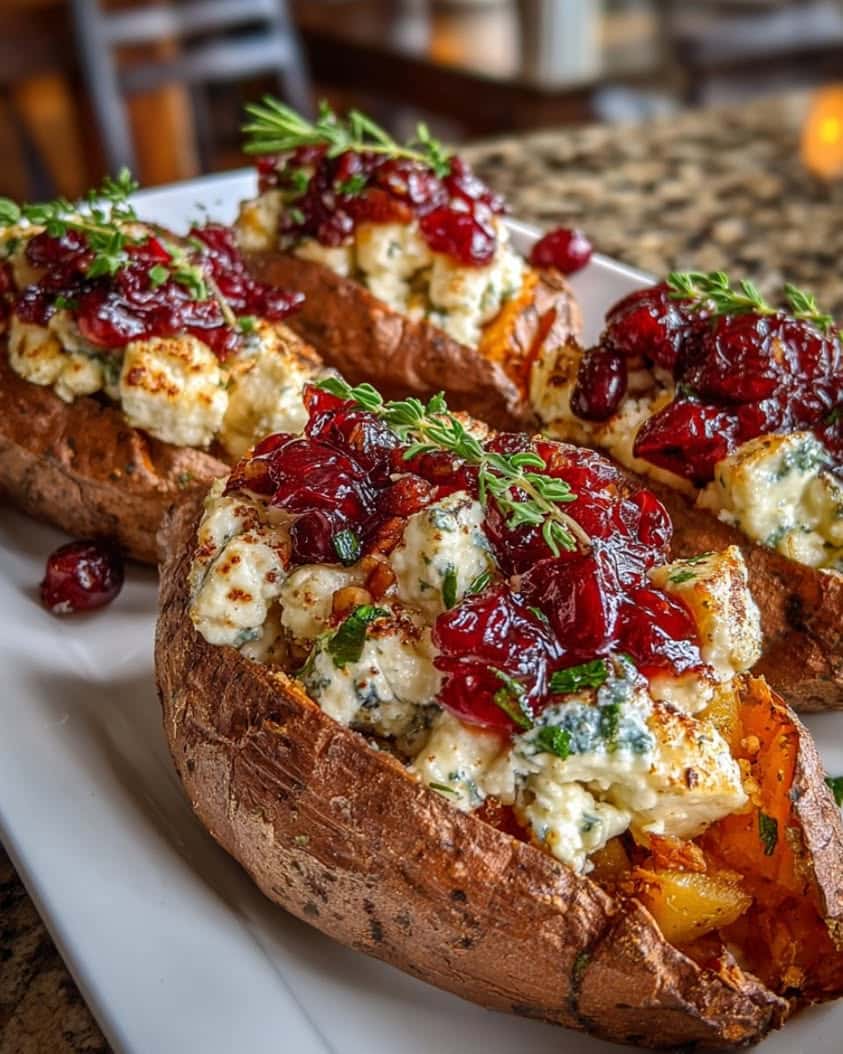
Maple Pecan & Brie Stuffed Sweet Potatoes with Cranberry Glaze: A Sweet and Savory Holiday Masterpiece
Imagine the ultimate comfort food, elegantly transformed into a show-stopping holiday side dish. These Maple Pecan & Brie Stuffed Sweet Potatoes with Cranberry Glaze deliver an unforgettable symphony of flavors and textures. Creamy Brie and crunchy pecans stuffed in a sweet potato, drizzled with a tart maple-cranberry glaze, create a stunning sweet and savory side dish that will become the star of your holiday table. This recipe masterfully balances rich, creamy, crunchy, and sweet elements in every single bite.
Furthermore, this dish offers incredible visual appeal with its vibrant orange flesh, golden melted cheese, and glossy ruby-red glaze. The aroma that fills your kitchen as these sweet potatoes roast is simply intoxicating, blending earthy sweetness with toasty nuts and warm maple. Consequently, this recipe not only tastes magnificent but also creates a memorable dining experience from the moment you start preparation until the last bite is enjoyed. It is the perfect centerpiece for any festive gathering.
Additionally, these stuffed sweet potatoes feel indulgent and luxurious while remaining surprisingly simple to prepare. They use wholesome, recognizable ingredients that come together in a truly spectacular way. Whether you are hosting a large Thanksgiving dinner or an intimate winter meal, this dish promises to impress your guests and leave them asking for the recipe. Ultimately, it is a celebration of seasonal flavors that captures the essence of holiday cooking at its finest.
Quick Recipe Highlights
- Flavor Profile: These stuffed sweet potatoes offer a perfect balance of sweet and savory notes. The natural sweetness of the potato pairs beautifully with the rich, creamy Brie and the earthy, buttery pecans. Meanwhile, the tart cranberry glaze cuts through the richness, creating a complex and satisfying flavor experience.
- Texture: This dish is a textural masterpiece featuring a velvety smooth sweet potato flesh contrasted with the satisfying crunch of toasted pecans. The melted Brie adds a gooey, luxurious creaminess, while the glossy glaze provides a slight sticky finish that delights the palate with every mouthful.
- Aroma: As these sweet potatoes bake, your kitchen will fill with a warm, comforting fragrance. Key aromatic notes include the earthy sweetness of roasting tubers, the toasty, nutty scent of pecans, and the warm, caramel-like aroma of maple syrup mingling with the sharp, fruity tang of cranberries.
- Visual Appeal: The presentation is truly stunning with vibrant orange potato flesh spilling out of its skin, topped with golden-brown melted Brie and crunchy pecans. The final drizzle of deep red cranberry glaze creates beautiful color contrast, making this dish as photogenic as it is delicious.
- Skill Level Needed: This is an accessible recipe perfect for cooks of all levels, from beginners to experienced chefs. The techniques involved are straightforward, primarily requiring basic roasting and mixing skills. Therefore, anyone can achieve restaurant-quality results with minimal culinary experience.
- Special Equipment: You need only standard kitchen tools like a baking sheet, a small saucepan, and a mixing bowl. A fork for testing potato doneness and a spoon for scooping and mixing are the only other essentials, making this recipe approachable for any home cook.
Recipe Overview
- Difficulty Level: We classify this recipe as easy because it involves fundamental cooking techniques like roasting and simple sauce preparation. The steps are sequential and logical, with minimal hands-on time required. Most importantly, the margin for error is small, and even minor variations will still yield delicious results. This makes it an ideal choice for stressful holiday cooking when you need reliable, impressive dishes.
- Category: This versatile dish fits multiple meal categories beautifully. It functions perfectly as a substantial side dish for holiday feasts, yet it is satisfying enough to serve as a vegetarian main course. Additionally, it makes an elegant appetizer for smaller gatherings or a luxurious weeknight dinner when you want something special without excessive effort.
- Cuisine: While not tied to a specific traditional cuisine, this recipe draws inspiration from modern American holiday cooking with French influences from the Brie cheese. It embodies the contemporary farm-to-table movement that celebrates seasonal, whole ingredients combined in innovative ways to create comforting, flavorful dishes that feel both familiar and excitingly new.
- Cost: This recipe uses moderately priced ingredients, with sweet potatoes being an affordable base. Brie cheese and pecans represent the primary cost drivers, but since this dish serves as a centerpiece, the investment is justified. You can expect to spend approximately fifteen to twenty dollars for four generous portions, making it an economical choice for a special occasion meal.
- Season: This dish shines brightest during the fall and winter months when sweet potatoes are at their peak sweetness and cranberries are freshly harvested. The warm, comforting flavors perfectly complement cooler weather, and the festive appearance makes it ideal for holiday tables from October through December. However, its appeal is year-round for those craving its unique flavor combination.
- Occasion: These stuffed sweet potatoes are perfect for Thanksgiving, Christmas dinners, and festive potlucks. They also make an impressive dish for dinner parties, romantic meals, or any special family gathering where you want to serve something extraordinary. Furthermore, they are excellent for vegetarian holiday options that please both meat-eaters and plant-based guests alike.
Why You’ll Love This Recipe
First, the taste and texture appeal is absolutely undeniable. Each component brings something unique to the experience: the sweet, fluffy potato, the rich and creamy Brie, the crunchy toasted pecans, and the bright, tart glaze. This combination creates a symphony in your mouth that is both comforting and sophisticated. The flavors meld together perfectly, with each bite offering a balance that keeps you coming back for more. Moreover, the contrast between the hot, soft interior and the cool, glossy glaze is particularly delightful.
Second, the convenience and preparation benefits make this recipe a winner for busy cooks. While the potatoes roast, you have ample time to prepare the other components, making the process stress-free. The recipe uses simple techniques that yield impressive results, meaning you do not need advanced culinary skills to create a dish that looks and tastes professional. Additionally, most of the cooking time is hands-off, allowing you to focus on other meal preparations or simply relax before your guests arrive.
Third, the nutritional advantages provide a welcome balance to holiday indulgence. Sweet potatoes are packed with vitamin A, fiber, and antioxidants, offering substantial health benefits. Compared to traditional heavy holiday sides, this dish provides more nutritional value without sacrificing flavor. The pecans contribute healthy fats and protein, while the cranberries add vitamin C and other phytonutrients. Consequently, you can feel good about serving this dish to your loved ones.
Fourth, the social and entertaining value of this recipe cannot be overstated. These stuffed sweet potatoes make a dramatic presentation that immediately signals a special occasion. They serve as a fantastic conversation starter at dinner parties and holiday gatherings. Furthermore, the recipe is easily adaptable to various dietary needs, making it inclusive for guests with different preferences. Its crowd-pleasing nature ensures it will become a requested favorite at your gatherings.
Fifth, the cost-effectiveness and accessibility of the ingredients make this recipe practical for regular rotation. Sweet potatoes are available year-round at reasonable prices, and the other components are typically easy to find in standard grocery stores. While Brie and pecans might be considered splurge items, they transform an humble vegetable into a luxurious experience. This approach allows you to create restaurant-quality dishes at home for a fraction of the cost.
Historical Background and Cultural Significance
The sweet potato has a rich history dating back thousands of years to Central and South America, where it was domesticated as early as 2500 BCE. Spanish and Portuguese explorers subsequently transported sweet potatoes to Europe, Africa, and Asia, where they became dietary staples in many cultures. In the United States, sweet potatoes became particularly associated with Southern cuisine and holiday traditions, especially Thanksgiving. Their natural sweetness and versatility made them perfect for both savory and sweet preparations, leading to their prominent place on American tables.
Cultural importance of the sweet potato varies globally, from being a survival food in many developing nations to a gourmet ingredient in modern Western cuisine. In the American South, sweet potato casserole became a Thanksgiving staple, often topped with marshmallows or pecans. Our recipe represents an evolution of this tradition, incorporating sophisticated ingredients like Brie cheese for a more contemporary take. This blending of humble origins with gourmet elements reflects the current food culture that values both tradition and innovation.
The evolution of this specific recipe follows broader culinary trends that emphasize balancing flavors and textures. The combination of sweet and savory elements has become increasingly popular in modern cooking, moving beyond traditional pairings. The use of cheese with sweet potatoes represents this trend, as chefs and home cooks alike explore new ways to elevate familiar ingredients. Additionally, the focus on visually stunning dishes has grown with the influence of food media and social media, making presentation as important as taste.
Regional variations of stuffed sweet potatoes exist worldwide, from the Mexican camote topped with cinnamon and sugar to Japanese satsumaimo featuring miso or soy glaze. Our version with maple and cranberry draws particularly from North American ingredients and flavor profiles. The maple pecan combination has deep roots in New England cuisine, while cranberries are native to North America and have been part of indigenous foodways for centuries. This recipe therefore represents a fusion of indigenous ingredients with European influences like Brie cheese, creating a truly modern American dish.
Ingredient Deep Dive
Sweet potatoes form the foundation of this dish, offering both structural integrity and nutritional benefits. Historically, sweet potatoes were cultivated in Peru as early as 8000 BC and were later spread globally by European explorers. Nutritionally, they are packed with beta-carotene (which converts to vitamin A), vitamin C, manganese, and fiber. When selecting sweet potatoes, look for firm specimens with smooth, unblemished skins and uniform shape for even cooking. Store them in a cool, dark, well-ventilated place – not the refrigerator – where they will keep for about 3-5 weeks. For substitutions, you could use regular potatoes, winter squash like acorn or butternut, or even large parsnips, though the flavor profile will change significantly.
Brie cheese brings a luxurious creaminess and rich flavor that contrasts beautifully with the sweet potato. Originating from the Brie region of France, this soft cheese has been produced since the Middle Ages and was famously declared the “King of Cheeses” at the Congress of Vienna in 1815. Nutritionally, Brie provides protein, calcium, and vitamins, though it is also high in fat. When selecting Brie, choose a wheel that feels springy to the touch and has a white, bloomed rind without gray or pink spots. Store Brie in the refrigerator in its original packaging or wax paper, and bring to room temperature before using for optimal flavor and texture. For substitutions, Camembert offers a similar profile, while goat cheese or feta would provide a tangier alternative, and vegan cream cheese can work for dairy-free versions.
Pecans contribute essential crunch and nutty flavor to balance the dish’s creaminess. Native to North America, pecans were foraged by Native Americans for centuries and remain a staple of Southern U.S. cuisine. They are nutritionally dense, providing healthy monounsaturated fats, protein, fiber, and various minerals including manganese and copper. When selecting pecans, look for plump, uniform pieces that feel heavy for their size and smell fresh, not rancid. Store them in an airtight container in the refrigerator or freezer to prevent their oils from spoiling. For substitutions, walnuts offer a similar texture with slightly more bitterness, while almonds or hazelnuts would provide different but complementary flavor profiles.
Pure maple syrup serves as the sweet component that ties the other elements together. Maple syrup has deep roots in Indigenous North American traditions, particularly among Algonquian and Iroquois peoples who developed the harvesting and processing techniques later adopted by European settlers. Nutritionally, it contains antioxidants and minerals like manganese and zinc, though it is still primarily sugar. When selecting maple syrup, always choose 100% pure maple syrup rather than pancake syrup, which contains artificial flavors and corn syrup. Grade A Amber Color and Rich Taste works well for this recipe. Store maple syrup in the refrigerator after opening. For substitutions, honey offers a different floral sweetness, while agave nectar works for vegan versions, though both will alter the final flavor profile.
Fresh cranberries provide the tart counterpoint to the dish’s sweetness in the glaze. Native to North America, cranberries were used by Native Americans for food, medicine, and dye long before European arrival. They are nutritionally notable for their high vitamin C content and unique phytonutrients called proanthocyanidins that may help prevent urinary tract infections. When selecting fresh cranberries, look for firm, plump berries with deep red color that bounce when dropped – a sign of freshness. Store them in the refrigerator in their original packaging or a sealed bag for up to a month, or freeze for longer storage. For substitutions, dried cranberries can be reconstituted in liquid, though they will be sweeter, while pomegranate molasses or a reduction of red currant jelly can provide similar tart-sweet complexity.
Common Mistakes to Avoid
- Undercooking the sweet potatoes leads to difficult scooping and incomplete mashing. Always test for doneness by inserting a fork – it should slide in effortlessly without resistance. Additionally, the skin should appear slightly puckered and the flesh should feel soft when gently squeezed with oven mitts.
- Overtoasting the pecans creates a bitter flavor that overwhelms the other ingredients. Watch them carefully in the oven as they can burn quickly due to their high oil content. Remove them when they become fragrant and lightly browned, remembering they will continue to cook slightly after removal from heat.
- Using cold Brie straight from the refrigerator makes it difficult to incorporate evenly. Always allow Brie to come to room temperature before cubing and mixing it into the sweet potato flesh. This ensures creamy distribution throughout the filling rather than clumpy pockets of cold cheese.
- Over-reducing the cranberry glaze results in an overly thick, sticky consistency that is difficult to drizzle. The glaze should coat the back of a spoon but still be fluid enough to flow. Remember it will thicken further as it cools, so err on the side of slightly thinner.
- Scooping out too much sweet potato flesh leaves the skins too fragile to hold the filling. Maintain about a quarter-inch border of flesh inside the skin to provide structural integrity. This creates a sturdy vessel that can be filled generously without collapsing during serving.
- Overmixing the sweet potato flesh creates a gummy texture rather than light fluffiness. Use a gentle folding motion when combining ingredients, and stop as soon as they are incorporated. Some small lumps are preferable to overworking the mixture into a paste-like consistency.
- Rushing the baking process by increasing oven temperature causes uneven cooking. Sweet potatoes benefit from slower, lower-temperature roasting that allows their natural sugars to caramelize properly. Patience during this step is crucial for developing the deepest, sweetest flavor profile.
- Skipping the toasting step for pecans misses an opportunity for flavor development. Raw pecans lack the nutty depth that toasted pecans contribute to the dish. This simple extra step makes a significant difference in the final flavor complexity.
- Adding salt too early in the process can draw moisture from the sweet potatoes. Season the filling at the end, after tasting, to ensure proper seasoning without making the mixture watery. Remember that the Brie also contributes saltiness to the overall dish.
- Neglecting to let the stuffed potatoes rest before serving causes them to fall apart. Allowing them to sit for five minutes after baking helps the filling set slightly, making them easier to transfer from baking sheet to plate intact.
Essential Techniques
Properly roasting sweet potatoes forms the foundation of this dish. This technique transforms the hard, starchy tuber into a sweet, creamy vessel perfect for stuffing. To master this, pierce the potatoes thoroughly with a fork to allow steam to escape during cooking, which prevents bursting. Roast directly on the oven rack or on a baking sheet at 400°F until completely tender when pierced with a fork, which typically takes 45-60 minutes depending on size. The key visual cue for success is skin that appears slightly puckered and flesh that offers no resistance to a fork. Common pitfalls include undercooking, which leaves hard spots, and overcooking, which makes the skins too fragile to hold filling.
Toasting pecans unlocks their full flavor potential and creates the satisfying crunch that contrasts with the creamy filling. This technique involves heating the nuts briefly in a dry skillet or the oven to release their natural oils and develop a deeper, nuttier taste. To master toasting, spread pecans in a single layer on a baking sheet and bake at 350°F for 5-8 minutes, shaking the pan halfway through. Watch carefully as they burn quickly – the visual cue for perfect toasting is a light golden brown color and a fragrant, nutty aroma. Common pitfalls include walking away during toasting (resulting in burned nuts) and toasting too many nuts at once (which steams rather than toasts them).
Creating the cranberry glaze requires balancing tartness and sweetness while achieving the ideal consistency. This technique involves cooking fresh cranberries with maple syrup until they burst and release their pectin, which naturally thickens the mixture. To master the glaze, combine ingredients in a saucepan over medium heat, stirring occasionally until cranberries pop open (about 8-10 minutes). Then simmer for an additional 2-3 minutes until the mixture thickens slightly. The visual cue for perfect consistency is when the glaze coats the back of a spoon but still drips off slowly. Common pitfalls include overcooking (which makes the glaze too thick) and undercooking (which leaves it too thin and watery).
Stuffing the potato skins properly ensures both structural integrity and optimal flavor distribution. This technique involves carefully scooping out the cooked flesh while leaving enough structure to create an edible container. To master stuffing, slice the roasted potatoes lengthwise and use a spoon to remove most of the flesh, leaving about a quarter-inch border. Then mix the flesh with other ingredients before returning it to the shells. The visual cue for proper stuffing is a slightly mounded appearance that doesn’t overflow the skin boundaries. Common pitfalls include breaking the skins during scooping and overfilling, which causes spillage during baking.
Pro Tips for Perfect Maple Pecan & Brie Stuffed Sweet Potatoes
Select uniformly sized sweet potatoes to ensure even cooking. This simple step prevents the frustration of some potatoes being perfectly cooked while others remain underdone. Medium-sized potatoes, approximately 8 ounces each, work ideally for individual servings and consistent roasting times.
Roast potatoes directly on the oven rack rather than a baking sheet for better air circulation. This technique promotes more even cooking and helps develop a better texture in the skin. Place a baking sheet on the rack below to catch any drips for easy cleanup.
Allow roasted potatoes to cool slightly before handling to avoid burns and make scooping easier. The flesh will set up slightly as it cools, making it simpler to remove without tearing the skins. Approximately ten minutes of cooling time makes the process much more manageable.
Toast extra pecans to have on hand for garnish. The additional toasted nuts sprinkled over the finished dish just before serving provide extra crunch and visual appeal. Store any leftovers in an airtight container for future recipes.
Bring the Brie to room temperature before cubing for easier preparation. Cold Brie is difficult to cut neatly and doesn’t incorporate as smoothly into the sweet potato mixture. About thirty minutes on the counter should suffice.
Make the cranberry glaze while the potatoes roast to maximize efficiency. This timing allows both components to be ready simultaneously, streamlining your cooking process. The glaze can sit at room temperature until needed.
Season the filling mixture thoughtfully, tasting before adding salt. Remember that the Brie contributes saltiness, so you may need less additional salt than expected. Freshly ground black pepper can enhance the savory elements beautifully.
Create a decorative pattern when drizzling the final glaze for professional presentation. Use a spoon or squeeze bottle to create zigzags or spirals over the stuffed potatoes just before serving. This final touch elevates the visual impact dramatically.
Variations and Adaptations
Regional variations can transform this dish to reflect different culinary traditions. For a Southern twist, incorporate cooked bacon or country ham into the filling and substitute bourbon for some of the maple syrup. A Southwestern version might include roasted green chiles, cotija cheese instead of Brie, and a sprinkle of chili powder. For Mediterranean inspiration, use feta cheese, Kalamata olives, and fresh oregano, skipping the sweet elements entirely. Asian-inspired variations could feature miso paste, sesame oil, and scallions, creating a completely different but equally delicious profile.
Seasonal adaptations keep this recipe exciting throughout the year. During spring, incorporate fresh peas and mint with goat cheese instead of Brie. Summer versions might feature fresh corn, basil, and cherry tomatoes with a lighter cheese like ricotta. Autumn remains the classic season for this recipe as written, while winter variations could include roasted chestnuts or Brussels sprouts leaves for added depth. Additionally, using different sweet potato varieties like Japanese purple sweet potatoes or Hannah white sweet potatoes creates visual and flavor interest.
Dietary modifications make this dish accessible to various eating preferences. For vegan versions, substitute the Brie with vegan cream cheese or cashew cheese and use maple syrup instead of honey. Gluten-free needs are naturally met with this recipe as written. For lower-carb options, reduce the maple syrup and increase the pecans while adding more herbs. Dairy-free adaptations simply omit the Brie or use vegan alternatives, focusing on the other flavor components. Nut allergies can be accommodated by substituting toasted pumpkin seeds or sunflower seeds for the pecans.
Flavor variations allow for endless creativity with this versatile recipe. Savory versions might include caramelized onions, sautéed mushrooms, or fresh herbs like rosemary and thyme. Spicy interpretations could incorporate minced jalapeños, chipotle powder, or a drizzle of hot honey. For sweeter profiles, increase the maple syrup and add warm spices like cinnamon, nutmeg, or cardamom. Umami-rich versions might include a sprinkle of Parmesan cheese, sautéed mushrooms, or a dash of soy sauce to deepen the savory notes beyond the Brie.
Texture modifications cater to different preferences while maintaining the dish’s integrity. For extra creaminess, blend the sweet potato flesh with cream cheese or Greek yogurt before stuffing. Additional crunch can come from topping with panko breadcrumbs mixed with Parmesan before the final bake. For a smoother filling, process the mixture in a food processor rather than mashing by hand. Alternatively, leave the filling chunkier for a more rustic presentation with distinct pieces of sweet potato and Brie throughout.
Presentation alternatives offer creative ways to serve this dish for different occasions. For individual appetizers, use small sweet potatoes or cut large ones into halves crosswise rather than lengthwise. For a family-style presentation, slice the roasted sweet potatoes into rounds, top with the filling mixture, and bake until bubbly. Deconstructed versions might feature the mashed sweet potato mixture in a bowl topped with the toasted pecans, cubed Brie, and drizzled glaze. For elegant plating, pipe the filling using a pastry bag for a refined appearance.
Serving and Presentation Guide
Plating techniques significantly impact the visual appeal of this already beautiful dish. For individual servings, place each stuffed sweet potato half on a warm plate with a slight tilt to show off the filling. Use a small amount of the cranberry glaze underneath the potato as an accent sauce, then drizzle more over the top. For family-style presentation, arrange the stuffed potatoes on a platter with fresh herbs like rosemary or thyme sprigs tucked between them. Create height variation by propping some potatoes at angles against others for a more dynamic presentation.
Garnishing ideas enhance both appearance and flavor when applied thoughtfully. Fresh herb sprigs like rosemary, thyme, or sage provide color contrast and aromatic appeal. Additional toasted pecans scattered over the top reinforce the crunch element visually. Microgreens or arugula leaves add a fresh, peppery note and vibrant green color. Pomegranate arils make a stunning seasonal garnish that echoes the cranberry flavor. For special occasions, edible flowers like nasturtiums or pansies create an unforgettable presentation that photographs beautifully.
Traditional accompaniments complement the sweet and savory profile of these stuffed sweet potatoes. Roasted turkey or ham makes a classic protein pairing for holiday meals. Green vegetables like roasted Brussels sprouts, sautéed green beans, or a crisp salad provide balance to the rich dish. For starch accompaniments, consider wild rice pilaf or creamy polenta. Bread options might include crusty dinner rolls, cornbread, or focaccia to soak up any remaining glaze. These traditional pairings create a well-rounded meal that satisfies diverse preferences.
Modern serving suggestions update this dish for contemporary dining experiences. For brunch, serve alongside poached eggs and breakfast sausages for a luxurious morning meal. As part of a grazing board, include smaller stuffed potato portions alongside charcuterie, cheeses, and other vegetable dishes. For vegetarian feasts, pair with mushroom Wellington, roasted root vegetables, and a grain salad. In buffet settings, keep the potatoes whole but provide small serving spoons for guests to take portions, alongside various other side dishes for mixing and matching.
Temperature considerations ensure optimal enjoyment of this dish. Serve the stuffed sweet potatoes hot from the oven when the Brie is perfectly melted and bubbly. Warm the plates beforehand to maintain the ideal temperature longer during service. The cranberry glaze can be at room temperature or slightly warmed – avoid serving it cold, which would cool the potatoes too quickly. If preparing ahead, have all components ready to assemble and bake just before serving for the best textural experience.
Portion control tips help manage serving sizes for different meal contexts. As a side dish, one potato half per person is typically sufficient alongside other substantial items. For a main course, consider serving two halves per person with lighter accompaniments. For appetizer portions, use small sweet potatoes or cut standard ones into quarters. When serving a rich menu with multiple courses, slightly smaller portions prevent overwhelming guests. Always consider the overall menu when determining appropriate serving sizes for this satisfying dish.
Wine and Beverage Pairing
Wine pairings should complement the sweet and savory elements of this dish without overwhelming its delicate balance. A slightly sweet white wine like Riesling or Gewürztraminer works beautifully, as their residual sugar highlights the sweet potato while their acidity cuts through the rich Brie. For red wine lovers, a light Pinot Noir with its red fruit notes complements the cranberry glaze without tannins that might clash. Rosé Champagne or sparkling wine provides celebratory bubbles that cleanse the palate between bites. Ultimately, medium-bodied wines with good acidity and some fruitiness create the most harmonious pairings.
Non-alcoholic alternatives offer sophisticated options for all guests. Sparkling apple cider mirrors the sweet-tart profile of the dish while providing festive bubbles. Cranberry juice spritzers made with club soda and a squeeze of lime echo the glaze flavors refreshingly. For warmer options, maple-sweetened chai tea complements the spices and sweetness beautifully. Herbal teas like peppermint or chamomile provide a soothing contrast to the rich dish. Additionally, craft sodas with natural flavors like blood orange or ginger offer complexity without alcohol.
Coffee and tea pairings work exceptionally well with this dish, particularly for brunch or holiday meals. Medium-roast coffee with notes of caramel and nuts enhances the toasted pecan flavors without bitterness. Chai tea’s warm spices like cinnamon and cardamom mirror the comforting qualities of the sweet potatoes. For black tea, Earl Grey’s bergamot notes provide a bright contrast to the richness. Herbal teas like rooibos offer a naturally sweet, nutty profile that complements without caffeine. Ultimately, beverages with some sweetness and spice notes create the most complementary pairings.
Temperature considerations for beverages ensure they enhance rather than detract from the dining experience. White wines and sparkling options should be properly chilled but not ice-cold, which would mute their flavors. Red wines should be slightly cooler than room temperature to refresh the palate. Non-alcoholic sparkling drinks benefit from thorough chilling to provide contrast to the warm dish. Hot beverages should be served at traditional brewing temperatures. Proper beverage temperatures maintain the intended flavor profiles and create the most enjoyable pairing experience.
Serving suggestions for beverages complete the overall presentation. Offer wine in appropriate glassware to enhance aroma and flavor perception. Serve non-alcoholic options in attractive pitchers or bottles with garnishes like citrus slices or herb sprigs. Present coffee and tea in thermal carafes to maintain ideal temperatures throughout the meal. Provide multiple beverage options to accommodate different preferences, especially during holiday gatherings. Thoughtful beverage service elevates the entire dining experience and shows care for your guests’ enjoyment.
Storage and Shelf Life
Storage methods vary depending on whether you’re saving leftovers or preparing components in advance. For completely assembled and baked stuffed sweet potatoes, allow them to cool completely before transferring to an airtight container. Separate layers with parchment paper if stacking to prevent sticking. Refrigerate within two hours of cooking to ensure food safety. The filling may cause the skins to soften during storage, but the flavor will remain excellent. For best results, store the components separately whenever possible.
Temperature requirements are crucial for maintaining quality and safety. Refrigerate leftovers promptly at 40°F or below, where they will keep for 3-5 days. For longer storage, freezing is an option, though the texture of the potatoes may become slightly watery upon thawing. Do not leave stuffed sweet potatoes at room temperature for more than two hours, as the dairy content creates food safety concerns. When reheating, ensure the internal temperature reaches 165°F to destroy any potential bacteria.
Container recommendations impact how well the dish maintains its quality during storage. Glass containers with tight-fitting lids work best as they don’t absorb odors and allow for easy reheating. Alternatively, use shallow containers rather than deep ones to promote rapid, even cooling. For freezing, heavy-duty freezer bags pressed to remove excess air help prevent freezer burn. If storing the glaze separately, use a squeeze bottle or jar with a tight seal. Proper containers significantly extend the shelf life while preserving flavor and texture.
Signs of spoilage include off odors, visible mold, or significant texture changes. Discard any stuffed sweet potatoes that develop a sour smell or slimy texture. If the cranberry glaze develops bubbles or appears fizzy, this indicates fermentation and spoilage. When in doubt, follow the principle: when in doubt, throw it out. Properly stored stuffed sweet potatoes typically maintain quality for 3-4 days in the refrigerator, though the pecans may lose some crunch over time.
Reheating instructions vary depending on the desired outcome. For best results, reheat in a 350°F oven until warmed through, which takes 15-20 minutes. Cover loosely with foil to prevent excessive browning. Microwave reheating is quicker but may make the texture slightly rubbery – use medium power and stir the filling if possible. For single servings, an air fryer at 325°F for 8-10 minutes restores some crispness to the edges. Always check that the center is piping hot before serving.
Freezing guidelines require some considerations for texture preservation. The assembled stuffed sweet potatoes can be frozen for up to 3 months, though the potato texture may become slightly grainy upon thawing. Freeze individually on a baking sheet before transferring to containers to prevent sticking. Thaw overnight in the refrigerator before reheating. Alternatively, freeze the components separately – the sweet potato flesh freezes well, as does the cranberry glaze. Toast fresh pecans when ready to serve for optimal crunch.
Make Ahead Strategies
Prep timeline options provide flexibility for busy cooks. For minimal advance preparation, roast the sweet potatoes and toast the pecans up to two days ahead. For moderate advance work, prepare the complete filling (without baking) and store separately from the skins for 24 hours. For maximum time savings, fully assemble the stuffed potatoes (without the final bake) and refrigerate for up to 12 hours before cooking. The cranberry glaze can be made up to one week ahead and stored in the refrigerator. These staggered options accommodate different schedules while ensuring freshness.
Storage between steps maintains quality when preparing components at different times. Store roasted sweet potatoes whole in the refrigerator wrapped in foil to retain moisture. Keep toasted pecans at room temperature in an airtight container to preserve crunch. Refrigerate the filling mixture separately from the potato skins if not assembling immediately. The cranberry glaze should always be stored in the refrigerator in a sealed container. Proper separation of components prevents textural issues and flavor mingling before final assembly.
Quality impact assessment helps determine which steps work best in advance. Roasting sweet potatoes ahead has minimal impact on final quality, though they may release some moisture upon rewarming. Preparing the filling mixture in advance can actually improve flavor as ingredients meld together. Toasting nuts too far in advance may cause them to lose some crunch, so this is best done closer to serving. Fully assembled unbaked potatoes hold well for several hours but may release more liquid during baking. Understanding these impacts guides efficient preparation.
Assembly tips for make-ahead preparation ensure optimal results. When stuffing potatoes in advance, mound the filling slightly higher as it may settle during storage. Place assembled potatoes on a parchment-lined baking sheet ready for the oven to minimize last-minute handling. If the filling seems dry after refrigeration, stir in a tablespoon of milk or cream before baking. For the glaze, bring to room temperature or warm slightly before drizzling for proper consistency. These small adjustments compensate for changes that occur during refrigeration.
Reheating guidelines for make-ahead versions differ from fresh preparation. For refrigerated assembled potatoes, add 5-10 minutes to the baking time since they start cold. If the tops aren’t browning sufficiently, remove the foil for the last 5-10 minutes of baking. For frozen assembled potatoes, bake covered for 30 minutes, then uncovered for 15-20 minutes until heated through. Always check that the center reaches 165°F with an instant-read thermometer. Adjustments ensure make-ahead versions taste as delicious as freshly prepared.
Fresh element additions restore brightness to make-ahead preparations. Even if you prepare everything in advance, consider toasting a few extra pecans just before serving for optimal crunch. A final sprinkle of flaky sea salt just before serving enhances flavors that may have muted during storage. If the glaze has thickened too much in refrigeration, thin it with a teaspoon of warm water before drizzling. Fresh herb garnishes added after baking provide visual appeal and aromatic freshness. These finishing touches bridge the gap between convenience and quality.
Scaling Instructions
Halving the recipe works beautifully for smaller households or intimate meals. Use two medium sweet potatoes instead of four, keeping the size consistent for even cooking. Reduce all other ingredients by
Print
Maple Pecan & Brie Stuffed Sweet Potatoes with Cranberry Glaze
Description
A sweet and savory dish featuring roasted sweet potatoes stuffed with creamy brie, toasted pecans, and a drizzle of maple syrup, topped with a tangy cranberry glaze.
Ingredients
For the Crust:
- 4 medium sweet potatoes
- 4 oz brie cheese, rind removed and cubed
- 1/2 cup pecans, chopped and toasted
- 3 tbsp pure maple syrup
- 1/2 cup fresh cranberries
- 1/4 cup water
- 2 tbsp brown sugar
- 1 tbsp butter
- 1/4 tsp cinnamon
- Salt and pepper to taste
Instructions
1. Prepare the Crust:
- Preheat oven to 400°F (200°C). Pierce sweet potatoes with a fork and bake for 45-50 minutes, or until tender.
- While potatoes bake, prepare the cranberry glaze: In a small saucepan, combine cranberries, water, brown sugar, and butter. Simmer over medium heat until cranberries burst and sauce thickens, about 10 minutes. Set aside.
- Once potatoes are cooked, let cool slightly. Slice each potato open lengthwise and scoop out some flesh, leaving a 1/4-inch border.
- Mix the scooped potato flesh with cubed brie, toasted pecans, maple syrup, cinnamon, salt, and pepper. Spoon the mixture back into the potato skins.
- Return stuffed potatoes to the oven for 5-7 minutes, or until brie is melted. Drizzle with cranberry glaze before serving.
Notes
You can customize the seasonings to taste.

I’m Shaykee—born in Morocco, seasoned across continents. From airplane galleys to home kitchens, I share the flavors and stories that shaped my journey.