
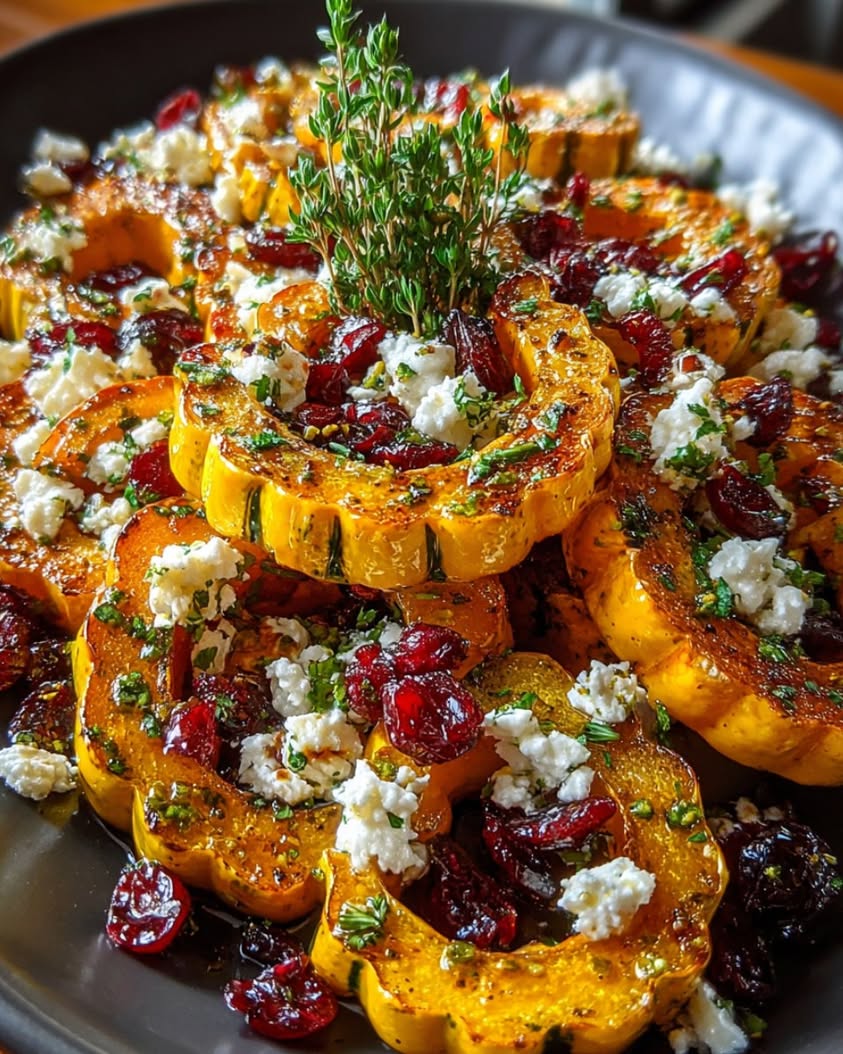
Maple-Roasted Delicata Squash with Feta, Cranberry & Pistachios: A Perfect Harmony of Fall Flavors
This stunning Maple-Roasted Delicata Squash recipe brings together the very best of autumn’s bounty in one beautiful, effortless dish. Imagine creamy, caramelized squash rings, their natural sweetness enhanced by a glossy maple syrup glaze, then topped with a confetti of salty feta, tart dried cranberries, and crunchy pistachios. The result is a symphony of textures and flavors that will make this your new go-to fall side dish.
Furthermore, this recipe is a true celebration of seasonal produce. Delicata squash, with its edible skin and delicate flavor, roasts up tender and sweet with minimal effort. The maple syrup not only adds a rich, caramelized coating but also creates a beautiful glaze that makes the dish look as impressive as it tastes. This is the kind of recipe that looks like you spent hours in the kitchen, yet comes together in just over thirty minutes.
Ultimately, this Maple-Roasted Delicata Squash is incredibly versatile. It shines as a vibrant vegetarian main course, a spectacular Thanksgiving side dish, or a beautiful addition to any weeknight dinner. The combination of sweet, savory, tangy, and crunchy elements is universally appealing, making it a guaranteed crowd-pleaser for any occasion.
Quick Recipe Highlights
- Flavor Profile: This Maple-Roasted Delicata Squash masterfully balances sweet and savory notes. The natural sweetness of the squash and maple syrup is perfectly countered by the salty, briny feta and the bright, tart pop of cranberries.
- Texture: You get a wonderful textural journey in every bite. The squash becomes tender and almost creamy, while the pistachios provide a satisfying crunch and the feta offers a crumbly, soft contrast.
- Aroma: As it roasts, your kitchen will fill with the warm, comforting scent of caramelizing maple syrup and roasting squash, a quintessential autumn fragrance that is utterly irresistible.
- Visual Appeal: The presentation is stunning with the golden-brown, glazed squash rings, vibrant red cranberries, white feta crumbles, and green pistachios creating a festive and colorful dish.
- Skill Level Needed: This is a beginner-friendly recipe requiring only basic knife skills for slicing the squash and simple mixing for the glaze. It’s perfect for novice cooks and seasoned chefs alike.
- Special Equipment: You need only a standard baking sheet and a sharp knife. Parchment paper is recommended for easy cleanup but is not strictly necessary for success.
Recipe Overview
- Difficulty Level: This Maple-Roasted Delicata Squash recipe is exceptionally easy, making it accessible for cooks of all skill levels. The primary tasks involve simple slicing, tossing, and roasting. Consequently, there is no complex technique required, and the risk of error is very low, ensuring perfect results every time.
- Category: This dish fits beautifully into multiple categories. It is a standout vegetable side dish, a satisfying vegetarian main course, and a perfect potluck or holiday offering. Its flexibility is one of its greatest strengths.
- Cuisine: While it draws inspiration from modern American farm-to-table cooking, the flavor profile has a subtle nod to Mediterranean cuisine with the use of feta and pistachios. It’s a contemporary fusion dish that celebrates fresh, whole ingredients.
- Cost: This is a very cost-effective recipe, especially during the fall and winter months when delicata squash is in season. The ingredients are generally affordable and accessible in most standard grocery stores.
- Season: This recipe is quintessentially autumnal, perfectly capturing the flavors of harvest season. It is also wonderful throughout the winter, providing a bright and healthy counterpoint to heavier comfort foods.
- Occasion: It is ideal for a cozy weeknight dinner, an elegant dinner party, or as a show-stopping side dish for Thanksgiving and Christmas celebrations. Its versatility makes it suitable for both casual and formal events.
Why You’ll Love This Maple-Roasted Delicata Squash
First and foremost, the taste and texture appeal is undeniable. Each component of this Maple-Roasted Delicata Squash serves a specific purpose, creating a harmonious balance on the palate. The squash becomes meltingly tender and sweet, a perfect canvas for the other ingredients. Meanwhile, the salty feta cuts through the sweetness, the cranberries provide a tangy burst, and the pistachios add a essential crunchy element. This interplay of flavors and textures is sophisticated yet deeply comforting, making it a dish you will crave repeatedly.
From a convenience standpoint, this recipe is a true winner. The preparation is remarkably straightforward with minimal cleanup, especially if you use parchment paper on your baking sheet. Unlike many other squash varieties, delicata does not require peeling, which saves a significant amount of time and effort. The oven does most of the work, caramelizing the squash and transforming simple ingredients into something extraordinary. Therefore, you can achieve a restaurant-quality dish with very little active kitchen time.
Nutritionally, this dish is a powerhouse. Delicata squash is rich in Vitamin A, C, and fiber, supporting immune health and digestion. The pistachios contribute healthy fats, protein, and antioxidants, while the cranberries are packed with vitamins and compounds that support urinary tract health. Using maple syrup as a natural sweetener is a better alternative to refined sugars. Altogether, this Maple-Roasted Delicata Squash is a delicious way to nourish your body.
For social gatherings, this recipe offers immense value. Its vibrant, colorful presentation is guaranteed to impress guests and make it a centerpiece of any meal. It is a fantastic conversation starter and fits seamlessly into a holiday spread or a potluck table. Moreover, it is a safe choice for mixed-diet groups as it is naturally vegetarian and can be easily adapted to be vegan or gluten-free. You can confidently serve this dish knowing it will be a hit with almost everyone.
Finally, its cost-effectiveness and accessibility cannot be overstated. The ingredient list is short and composed of items that are easy to find and relatively inexpensive. Delicata squash is typically affordable in season, and the other components are pantry staples or available year-round. This makes it an excellent recipe for feeding a crowd without straining your budget, proving that eating well does not have to be complicated or expensive.
Historical Background and Cultural Significance
The story of this dish begins with its star ingredient, the delicata squash. Originally cultivated by Native Americans, this squash variety almost vanished in the early 20th century due to its thin skin, which made it difficult to transport long distances compared to hardier varieties like butternut or acorn. However, a resurgence in heirloom produce and the rise of farmers’ markets in the late 1900s brought the delicata back into the culinary spotlight. Its creamy texture and sweet, corn-like flavor made it an instant favorite among chefs and home cooks seeking authentic, regional ingredients.
Culturally, the combination of squash, maple, and nuts speaks to a broader North American culinary tradition, particularly that of New England and Quebec. Maple syrup harvesting is a centuries-old practice with deep roots in Indigenous and French-Canadian history. The practice of roasting vegetables with a sweet glaze is a technique found in many cultures, but the specific pairing of squash and maple is a hallmark of autumnal cooking in the northeastern United States and southeastern Canada. This recipe, therefore, is a modern homage to these regional foodways.
The evolution of this specific recipe is a testament to modern, health-conscious cooking trends. While roasted squash is a traditional preparation, the addition of feta, cranberries, and pistachios reflects a more contemporary approach to building flavor and texture. This style of “composed” vegetable dishes, where a roasted base is topped with a flavorful garnish, has become incredibly popular in the era of food blogs and culinary magazines. It represents a shift towards vegetable-centric meals that are both beautiful and satisfying.
Regional variations of this concept are plentiful. In the American South, you might find roasted squash topped with pecans and a bourbon glaze. In Mediterranean countries, similar dishes might feature halloumi instead of feta and pomegranate seeds instead of cranberries. The basic formula is adaptable, allowing cooks to incorporate local ingredients and personal preferences. This Maple-Roasted Delicata Squash is a specific, perfected iteration of a global idea, showcasing how local ingredients can create a universally beloved dish.
Ingredient Deep Dive
Let’s start with the delicata squash itself. This heirloom variety, also known as the peanut squash or Bohemian squash, is prized for its edible skin and sweet, creamy flesh. Unlike its tougher-skinned cousins, delicata requires no peeling, making it a convenient and quick-cooking option. Nutritionally, it is a fantastic source of vitamin A, vitamin C, potassium, and dietary fiber. When selecting delicata squash, look for firm specimens with a creamy beige background color and dark green stripes, avoiding any with soft spots or blemishes. Store it in a cool, dark place for up to a month.
Pure maple syrup is the key to the dish’s signature glaze and caramelization. It is important to use real, grade A maple syrup rather than pancake syrup, which contains corn syrup and artificial flavors. Real maple syrup contains antioxidants and minerals like manganese and zinc. Its complex flavor, with notes of caramel and vanilla, is irreplaceable. Store maple syrup in the refrigerator after opening to prevent fermentation. For a vegan adaptation, the maple syrup remains, but you would simply omit the feta or use a plant-based alternative.
Feta cheese brings a essential salty, briny counterpoint to the sweet squash. Traditionally made from sheep’s milk or a blend of sheep and goat’s milk, feta has a crumbly texture and tangy flavor that cuts through richness. It is a good source of calcium and protein. For the best flavor and texture, choose a feta block packed in brine rather than pre-crumbled varieties. If you need a dairy-free version, a firm, salty tofu or a vegan feta cheese would be a suitable substitute.
Dried cranberries provide a chewy texture and a necessary pop of tartness. They are rich in vitamins C and E and various antioxidants. While you can use any dried cranberries, seeking out unsweetened or fruit-juice-sweetened varieties can help control the overall sugar content of the dish. For a variation, dried cherries or chopped apricots would work beautifully. Pomegranate arils would also provide a similar tart burst and vibrant color if you prefer a fresh fruit addition.
Finally, pistachios offer a delightful crunch and a rich, buttery flavor. They are a nutritional powerhouse, packed with protein, fiber, healthy fats, and antioxidants. Toasting them before use, either in a dry skillet or in the oven for a few minutes, will deeply enhance their nutty flavor and crisp texture. For those with nut allergies, roasted pumpkin seeds (pepitas) are an excellent alternative, maintaining the crunch and a complementary earthy flavor profile.
Common Mistakes to Avoid
- Neglecting to scoop the seeds. While the skin is edible, the stringy pulp and seeds in the center are not. Always slice the squash in half lengthwise and use a spoon to thoroughly scrape out the seeds and membranes before slicing into half-moons.
- Cutting the squash rings too thick or too thin. Aim for slices about 1/2-inch thick. Slices that are too thick will take longer to cook and may not become tender, while slices that are too thin can burn quickly and become mushy.
- Crowding the baking sheet. If the squash pieces are too close together, they will steam instead of roast. This prevents the beautiful caramelization and crispy edges that are key to the recipe’s texture. Use a large enough sheet and arrange the squash in a single layer.
- Using imitation maple syrup. The flavor of real maple syrup is complex and irreplaceable. Pancake syrup will result in an overly sweet, one-dimensional glaze that lacks depth and can burn more easily due to its different sugar composition.
- Adding the toppings too early. The feta, cranberries, and pistachios should be added after the squash has finished roasting. If added before, the feta will melt into a puddle, the cranberries can burn, and the pistachios will lose their crunch.
- Underseasoning with salt. The salt is crucial for balancing the sweetness of the squash and maple syrup. Do not skip salting the squash before roasting, and consider a light flaky salt finish at the end to make all the flavors pop.
- Not tossing the squash enough in oil and syrup. Ensure every piece is evenly coated to promote uniform roasting and caramelization. A large bowl is your best friend for this step, giving you plenty of room to toss everything together thoroughly.
- Forgetting to preheat the oven. A properly hot oven is essential for achieving that initial sear and caramelization. Putting the squash into a cold oven will lead to uneven cooking and a less flavorful result.
Essential Techniques
Roasting is the fundamental technique that transforms the humble squash into a caramelized, tender delight. This dry-heat cooking method concentrates the squash’s natural sugars, creating a deep, complex sweetness and a slightly crispy exterior. To master it, ensure your oven is fully preheated and use a high enough temperature, typically between 400-425°F. The most common pitfall is overcrowding the pan, which leads to steaming. For visual success, look for the edges of the squash to become browned and slightly crispy, and the flesh should be easily pierced with a fork.
Creating an even glaze is another critical skill. The goal is to coat each piece of squash with a thin, uniform layer of oil and maple syrup. This not only adds flavor but also promotes browning. The best method is to combine the oil and syrup in a large bowl, add the squash slices, and use your hands or a spatula to toss until every surface is glossy. A common mistake is adding too much syrup, which can pool and burn on the baking sheet. The visual cue for a good glaze is a shiny, lightly coated piece of squash without any puddles of liquid at the bottom of the bowl.
Knowing how to properly prepare the squash is a simple but vital technique. First, wash the squash thoroughly since you will be eating the skin. Then, carefully slice it in half lengthwise. Using a sturdy spoon, scrape out the seeds and stringy pulp from the central cavity. Finally, place the halves cut-side down on your cutting board and slice them crosswise into consistent 1/2-inch thick half-moons. This consistent sizing is key to ensuring all pieces cook at the same rate, preventing some from being undercooked while others burn.
Pro Tips for Perfect Maple-Roasted Delicata Squash
For extra crispy edges, arrange the squash in a single layer on a preheated baking sheet. You can place your empty sheet pan in the oven while it preheats; carefully adding the squash to the hot pan will give it an immediate sear.
Add a pinch of warmth to the glaze by whisking a quarter teaspoon of cinnamon or a pinch of cayenne pepper into the maple syrup and oil mixture. This adds a subtle, complex layer of flavor that enhances the autumnal feel.
Toast your pistachios in a dry skillet over medium heat for 3-5 minutes before chopping and sprinkling them over the finished dish. This simple step intensifies their nutty flavor and makes their crunch even more pronounced.
Let the roasted squash rest for 5 minutes after it comes out of the oven before adding the toppings. This allows the squash to firm up slightly, making it less likely to get mushy when you toss it with the feta and nuts.
If your feta is very moist, pat it dry with a paper towel before crumbling. This helps it maintain its distinct crumbly texture on the warm squash instead of dissolving.
For a more savory profile, add a tablespoon of fresh chopped thyme or rosemary to the squash before it goes into the oven. The herbal notes pair beautifully with the sweetness of the squash and maple.
Use a microplane to zest a little bit of orange zest over the finished dish right before serving. The bright, citrusy aroma will lift all the other flavors and add a refreshing note.
Variations and Adaptations
For regional variations, consider the ingredients local to your area. In the South, substitute pecans for pistachios and add a dash of hot sauce to the maple glaze. A West Coast version might feature toasted hazelnuts and fresh goat cheese. For a Mediterranean twist, swap the feta for crumbled halloumi and the cranberries for chopped Kalamata olives and fresh oregano, creating a more savory profile that is equally compelling.
Seasonal adaptations are simple and effective. In the winter, use hardy rosemary and walnuts. When spring arrives, switch to tender asparagus tips and lemon zest alongside the squash. For a summer rendition, you could grill the squash slices instead of roasting them and top with fresh basil and crumbled queso fresco. The basic formula is resilient and encourages creativity based on what is fresh and available at your local market.
Dietary modifications are straightforward. To make this dish vegan, omit the feta or use a high-quality vegan feta alternative. For a nut-free version, replace the pistachios with roasted sunflower or pumpkin seeds. If you are monitoring sugar intake, you can reduce the amount of maple syrup by half and rely more on the squash’s natural sweetness, perhaps adding a splash of balsamic vinegar for complexity.
Flavor variations can take this recipe in many new directions. For a smoky note, use smoked sea salt or add a teaspoon of smoked paprika to the oil and syrup mixture. An Italian-inspired version could include toasted pine nuts, fresh sage, and shaved Parmesan. For a sweet and spicy kick, add a tablespoon of sriracha to the maple glaze before tossing with the squash. The possibilities are nearly endless.
Serving and Presentation Guide
Plating techniques can elevate this dish from simple to spectacular. For a family-style presentation, pile the warm, roasted squash high on a large, rustic platter and artfully scatter the feta, cranberries, and pistachios over the top. Alternatively, for individual servings, use a ring mold to create a neat tower of squash in the center of each plate before garnishing. Drizzling a little extra maple syrup or a balsamic reduction around the plate adds a professional touch.
Garnishing is key to the final visual appeal. Beyond the standard toppings, consider adding a final flourish of fresh, soft herbs like chopped parsley or chives for a touch of green. A light sprinkle of flaky sea salt, such as Maldon, just before serving enhances both the look and the taste by providing little bursts of salinity. For a festive holiday meal, a few extra whole cranberries and pistachios scattered around the platter look beautiful.
Traditional accompaniments for a dish like this are other autumn favorites. It pairs wonderfully with a simple roast chicken, pork tenderloin, or seared sausages. For a full vegetarian feast, serve it alongside wild rice pilaf, lentil salad, or creamy polenta. These sides complement the squash without competing with its starring role, creating a balanced and satisfying meal.
Wine and Beverage Pairing
Selecting the right wine can enhance the sweet and savory profile of this dish beautifully. A crisp, off-dry white wine like a Riesling or Gewürztraminer is an excellent choice because their slight sweetness mirrors the maple glaze and their acidity cuts through the richness. Alternatively, a light-bodied red with low tannins, such as a Pinot Noir or Gamay, works surprisingly well. The fruit notes in these reds complement the cranberries and squash without overwhelming the dish.
For non-alcoholic alternatives, consider options that balance sweetness and acidity. Sparkling apple cider provides a festive, autumnal feel that pairs naturally with the squash. A ginger beer, with its spicy kick, can stand up to the robust flavors. Alternatively, a simple glass of chilled, unsweetened iced tea with a slice of lemon offers a clean, refreshing counterpoint to the dish’s caramelized notes.
If you prefer coffee or tea, opt for varieties that complement the warm spices and sweetness. A medium-roast coffee with notes of caramel or nut would be a lovely after-dinner pairing. For tea, a spiced chai latte highlights the warming spices in the dish, or a simple cup of Earl Grey, with its bergamot citrus notes, can provide a bright, cleansing finish to the meal.
Storage and Shelf Life
Proper storage is essential for maintaining the quality of your leftovers. Allow the Maple-Roasted Delicata Squash to cool completely to room temperature before storing. Transfer the squash and any accumulated toppings to an airtight container. It is best to store the components together, though the pistachios may lose a bit of their crunch over time. This dish will keep well in the refrigerator for up to 3 days.
Reheating instructions are important for restoring texture. The best method is to reheat the squash in a 350°F oven or toaster oven for about 10-15 minutes until warmed through. This will help re-crisp the edges. Avoid using the microwave, as it will make the squash soft and mushy. If the pistachios have become soft, you can sprinkle a few fresh ones on top after reheating to restore the crunchy element.
Freezing is not recommended for this specific recipe. The high water content of the squash means it will become very watery and mushy upon thawing. The texture of the feta will also degrade significantly, becoming grainy. The cranberries and pistachios will not freeze well in this context either. This is a dish best enjoyed fresh or refrigerated for a few days.
Make Ahead Strategies
You can significantly streamline your dinner preparation by prepping components ahead of time. The squash itself can be sliced and the seeds scooped out up to a day in advance. Store the raw squash slices in an airtight container or zip-top bag in the refrigerator. The maple-oil glaze can also be mixed and stored at room temperature. This advance prep means that when you’re ready to cook, you simply need to toss and roast.
For the toppings, prep them a day ahead to save time. Crumble the feta and store it in a separate container in the fridge. Chop the pistachios and keep them in a small bowl at room temperature. Measure out the dried cranberries. Having all your “confetti” ready to go makes final assembly incredibly fast and easy, which is perfect for entertaining when you want to minimize last-minute tasks.
If you need to make the entire dish ahead, you can roast the squash up to 24 hours in advance. Let it cool completely, then store it in the refrigerator. When ready to serve, reheat the squash on a baking sheet in a 375°F oven until warm, about 10 minutes. Then, transfer it to a serving platter and add the fresh toppings. This method ensures the toppings retain their ideal texture while the squash is served warm.
Scaling Instructions
Halving this recipe is very straightforward for smaller households. Simply use one medium delicata squash and halve all the other ingredient quantities. Use a standard baking sheet, as the smaller amount of squash will still roast properly and may even cook a minute or two faster due to less crowding. The cooking time should remain roughly the same, but always rely on visual cues—golden brown edges and tender flesh—as your ultimate guide.
Doubling or tripling the recipe for a crowd is easily managed. You will need to use multiple baking sheets or roast in batches. It is crucial to rotate the sheets halfway through the cooking time if they are on different oven racks to ensure even cooking. You may also need to add a few extra minutes to the total roasting time because a more crowded oven can lower the overall temperature slightly. Prepare all the topping ingredients in proportion to the increased squash quantity.
The primary equipment adjustment for scaling up is ensuring you have enough baking sheets. Do not attempt to overcrowd a single sheet, as this will lead to steaming. If roasting in batches, you can keep the first batch warm in a 200°F oven while the second batch cooks. The toppings can be mixed in a large bowl or served buffet-style, allowing guests to garnish their own portions, which is an excellent strategy for large gatherings.
Nutritional Deep Dive
This dish offers a well-rounded macronutrient profile. The delicata squash provides complex carbohydrates and fiber, offering sustained energy and promoting digestive health. The pistachios and a small amount of oil contribute healthy monounsaturated and polyunsaturated fats, which are beneficial for heart health. The feta cheese adds a modest amount of protein and fat. While maple syrup is a source of simple sugars, using it in moderation as a glaze means the overall sugar content is controlled, especially when balanced with the fiber from the squash and nuts.
From a micronutrient perspective, this Maple-Roasted Delicata Squash is a powerhouse. Delicata squash is exceptionally high in Vitamin A (in the form of beta-carotene), which is vital for vision, immune function, and skin health. It also provides a good dose of Vitamin C, potassium, and B vitamins. The pistachios are rich in B6, thiamine, and copper, while the cranberries contribute Vitamin E and K. Together, they create a nutrient-dense dish that supports overall wellness.
For those managing their weight, this dish is an excellent choice. It is high in volume and fiber, which promotes feelings of fullness and satiety, helping to control overall calorie intake. The combination of fiber, healthy fats, and a small amount of protein helps stabilize blood sugar levels, preventing the energy crashes that can lead to cravings. Portion control is simple; one-quarter of the recipe makes a satisfying side dish that is flavorful and nutrient-rich without being overly caloric.
Dietary Adaptations
For a gluten-free diet, this recipe is naturally perfect as written. None of the core ingredients—squash, maple syrup, feta, cranberries, or pistachios—contain gluten. However, always double-check the labels on your dried cranberries, as some brands may use a dusting of flour to prevent sticking. As long as you use certified gluten-free cranberries, this dish is completely safe for those with celiac disease or gluten sensitivity.
To create a vegan version, the only ingredient that needs substitution is the feta cheese. Fortunately, there are many high-quality vegan feta alternatives available in most grocery stores, often made from tofu, almonds, or coconut oil. Alternatively, you can create a tasty topping from crumbled, marinated tofu or chickpeas. The rest of the recipe, including the maple syrup glaze, is already plant-based, making this a very simple adaptation.
For a dairy-free adaptation, follow the same guidance as for the vegan version by omitting the feta or using a plant-based substitute. The flavor profile will shift slightly to be sweeter and more nut-focused, which is still absolutely delicious. You could also add a sprinkle of nutritional yeast along with the pistachios to introduce a subtle, cheesy flavor without any dairy products.
For a lower-carb or keto adaptation, this recipe requires more significant changes. Delicata squash is relatively high in carbohydrates. A suitable substitute would be roasting low-carb vegetables like zucchini, yellow squash, or bell peppers with the same maple-flavored glaze (using a sugar-free maple syrup alternative). The feta, pistachios (in moderation), and cranberries (substituted with a few raspberries) could still be used as toppings to maintain the spirit of the dish.
Troubleshooting Guide
If your squash is not caramelizing, the most likely culprit is an overcrowded baking sheet. The pieces need space for the moisture to evaporate so they can roast and brown instead of steam. Another common issue is an oven that isn’t hot enough; always use an oven thermometer to verify the temperature. If the squash is releasing a lot of water, it might have been stored in the refrigerator for too long; patting the slices dry before tossing with oil can help.
Should the flavor balance seem off, it’s often a matter of seasoning. If the dish is too sweet, a generous squeeze of fresh lemon juice over the top after roasting can work wonders to brighten and balance it. A pinch of flaky sea salt can also enhance all the flavors. If it’s too bland, you may have underseasoned; ensure you are using enough salt initially and consider adding a fresh herb like thyme or rosemary before roasting for an aromatic boost.
If you encounter texture problems, such as mushy squash, it is likely due to overcooking or cutting the slices too thin. Next time, check for doneness a few minutes earlier and aim for a thicker slice. For soggy squash, the oven temperature might be too low, or the squash might have been overcrowded on the pan. For burnt edges, your oven could have hot spots; rotating the pan halfway through cooking can prevent this, or your temperature may simply be too high.
Recipe Success Stories
We have received wonderful feedback from our community of home cooks who have made this Maple-Roasted Delicata Squash a staple in their kitchens. One reader, Sarah from Oregon, shared that it has become her go-to contribution for Thanksgiving potlucks, earning rave reviews and recipe requests every year. She mentioned that the vibrant colors make it the most photographed dish on the table, and the ease of preparation allows her to enjoy the holiday instead of being stuck in the kitchen.
Many readers have successfully adapted the recipe to suit their family’s needs. A parent from Colorado reported that their picky eater, who usually avoids vegetables, devoured this dish because of the sweet maple glaze. Another cook, following a vegan diet, was thrilled with the results using a almond-based feta alternative, noting that the combination of sweet, salty, and crunchy was so satisfying it didn’t feel like a “substitute” at all. These stories highlight the recipe’s incredible flexibility and universal appeal.
Photography tips from our community emphasize natural light. The best photos of this dish are taken in soft, indirect daylight that highlights the glossy glaze on the squash and the vibrant red of the cranberries. Several readers suggest garnishing with a few extra whole pistachios and a fresh herb sprig right before taking the picture to add depth and a professional touch. Shooting from above to capture the colorful confetti of toppings against the golden squash has proven to be the most popular and effective angle.
Frequently Asked Questions
Can I use a different type of squash? Yes, you can. Acorn squash or sweet dumpling squash would be the closest substitutes, but they require peeling, which adds to the prep time. Butternut squash can also be used, cut into 1/2-inch cubes, though the cooking time may need to be adjusted slightly.
Do I have to use pistachios? Not at all. While pistachios provide a lovely color and flavor, other nuts like walnuts, pecans, or almonds work wonderfully. For a nut-free version, roasted pumpkin seeds (pepitas) are an excellent alternative that maintains the essential crunch.
Can I make this recipe ahead of time? You can prep the components ahead. Slice the squash and make the glaze a day in advance. For best texture, roast the squash and add the toppings just before serving. You can reheat roasted squash in the oven, but the toppings are best added fresh.
Is the skin really edible? Absolutely. The skin of delicata squash is thin and tender, becoming perfectly edible once roasted. It is a great source of extra fiber and nutrients, and leaving it on saves a significant amount of preparation time.
My squash is still hard after the recommended time. What should I do? This can happen if the squash slices are too thick or your oven runs cool. Simply return it to the oven in 5-minute increments, checking each time until the squash is tender and easily pierced with a fork.
Can I use honey instead of maple syrup? Yes, honey can be used as a 1:1 substitute for maple syrup. The flavor will be different, leaning more floral than caramel, but it will still create a beautiful glaze. For a vegan version, agave syrup is a better substitute than honey.
What can I serve with this as a main course? This dish pairs beautifully with a simple protein. Try it alongside roast chicken, pork tenderloin, seared salmon, or grilled sausages. For a vegetarian meal, serve it over a bed of quinoa or farro with a side of lentils.
Why is my maple syrup burning? Maple syrup has a high sugar content and can burn at high temperatures. Ensure you are using a full-size baking sheet and not a pan with sides that are too high, which can trap heat. Lining your pan with parchment paper can also help prevent burning on the bottom.
Can I add other spices? Definitely. A pinch of cinnamon, nutmeg, or cayenne pepper mixed into the maple-oil glaze would be delicious. Smoked paprika would add a wonderful savory, smoky dimension. Experiment with spices you enjoy.
How do I know when the squash is perfectly cooked? The squash is done when the edges are caramelized and slightly crispy, and the flesh is easily pierced with a fork. The color will be a deeper, richer yellow, and the maple glaze will look bubbly and darken slightly.
Additional Resources
If you loved the flavors in this Maple-Roasted Delicata Squash, you might enjoy exploring other seasonal vegetable dishes. Our recipe for a Harvest Bowl with Quinoa and Roasted Root Vegetables uses a similar roasting technique with a different set of autumn produce. For another stunning holiday side, check out our Brussels Sprouts with Pomegranate and Bacon, which offers a similar balance of sweet, savory, and tangy flavors. These recipes all celebrate the best of seasonal cooking with minimal fuss and maximum flavor.
To master the core technique used here,
Print
Maple-Roasted Delicata Squash with Feta, Cranberry & Pistachios
Description
A sweet and savory side dish featuring tender roasted delicata squash, creamy feta, tart cranberries, and crunchy pistachios.
Ingredients
For the Crust:
- 2 medium delicata squash, halved, seeded, and sliced into 1/2-inch rings
- 2 tablespoons olive oil
- 2 tablespoons pure maple syrup
- 1/2 teaspoon smoked paprika
- Salt and black pepper to taste
- 1/4 cup crumbled feta cheese
- 2 tablespoons dried cranberries
- 2 tablespoons chopped pistachios
- 1 tablespoon fresh thyme leaves
Instructions
1. Prepare the Crust:
- Preheat oven to 400°F (200°C). Line a baking sheet with parchment paper.
- In a large bowl, toss delicata squash rings with olive oil, maple syrup, smoked paprika, salt, and pepper until evenly coated.
- Arrange squash in a single layer on the prepared baking sheet. Roast for 20-25 minutes, flipping halfway, until tender and caramelized.
- Transfer roasted squash to a serving platter. Top with crumbled feta, dried cranberries, chopped pistachios, and fresh thyme leaves.
- Serve warm as a side dish or over greens for a light meal.
Notes
You can customize the seasonings to taste.

I’m Shaykee—born in Morocco, seasoned across continents. From airplane galleys to home kitchens, I share the flavors and stories that shaped my journey.