
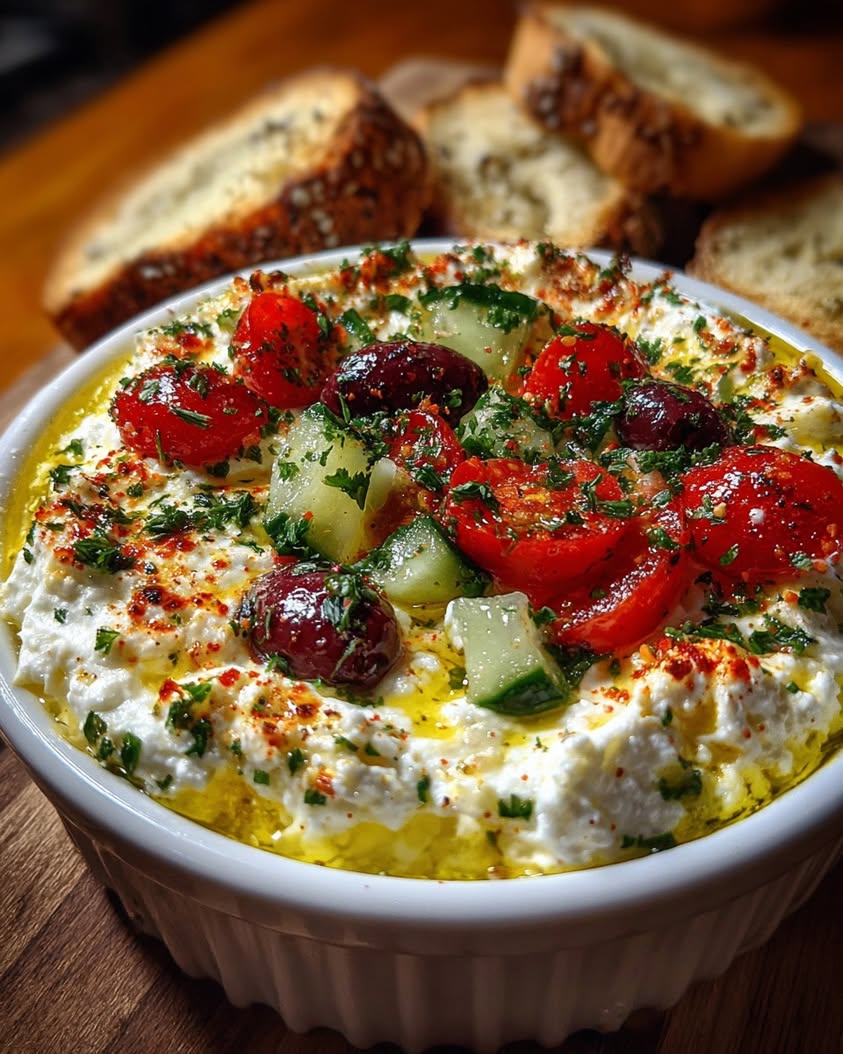
Mediterranean Feta Dip: Your New Go-To Creamy, Tangy Party Appetizer
Imagine a dip that captures the very essence of the sun-drenched Mediterranean coast in a single, irresistible bowl. This creamy, tangy Mediterranean Feta Dip with herbs and olive oil does exactly that. It is a vibrant, flavor-packed appetizer that feels both luxurious and incredibly simple to make. Moreover, it brings the bright, fresh flavors of Greek cuisine directly to your table, transforming everyday ingredients into a show-stopping centerpiece for any gathering. Whether you are hosting a summer party or simply craving a healthy snack, this dip delivers satisfaction in every scoop.
The magic of this Mediterranean Feta Dip lies in its perfect balance. Creamy, briny feta cheese melds with rich Greek yogurt and a generous pour of extra virgin olive oil. Fresh herbs like dill and mint add a garden-fresh aroma, while a squeeze of lemon juice provides the essential tangy brightness. Consequently, each component plays a crucial role, creating a harmonious blend that is far greater than the sum of its parts. This dip is not just food; it is an experience that evokes leisurely meals shared with good company.
Ultimately, this recipe proves that the best dishes often require the least effort. With just five minutes of prep time and no cooking involved, you can have a professional-quality appetizer ready to impress. This creamy, tangy Mediterranean Feta Dip is your secret weapon for effortless entertaining and a delicious way to embrace the principles of the wholesome Mediterranean diet. Therefore, grab your food processor and let us create something truly special.
Quick Recipe Highlights
- Flavor Profile: This dip masterfully balances salty, tangy, and fresh notes. The sharp, briny flavor of the feta is beautifully tempered by the creamy Greek yogurt, while fresh lemon juice and herbs create a lively, aromatic finish that is utterly addictive.
- Texture: Expect a luxuriously smooth and creamy base with delightful subtle texture from the chopped herbs. The final drizzle of olive oil adds a rich, velvety mouthfeel that coats your dipper perfectly, making it ideal for both sturdy pita chips and delicate vegetables.
- Aroma: As soon as you blend the ingredients, the air fills with the unmistakable scent of fresh dill and mint, underscored by the fruity, peppery notes of high-quality extra virgin olive oil. It is an aroma that promises fresh, clean, and vibrant flavors.
- Visual Appeal: The dip presents a beautiful, creamy white canvas speckled with green herbs. A final garnish of more herbs, a sprinkle of paprika or sumac, and a glistening pool of golden olive oil makes it visually stunning and incredibly appetizing on any spread.
- Skill Level Needed: This recipe is perfect for absolute beginners. In fact, if you can operate a food processor or blender, you can make this dip. There are no technical skills required, making it a foolproof choice for anyone.
- Special Equipment: A food processor or high-powered blender is essential for achieving the signature ultra-smooth and creamy texture. Alternatively, you can use a sturdy fork and some muscle power for a more rustic, chunkier version of the dip.
Recipe Overview
- Difficulty Level: We classify this Mediterranean Feta Dip as “Easy” because it involves zero cooking and uses a straightforward blending technique. The process is simply about combining quality ingredients. There is no risk of overcooking or complex timing, making it completely stress-free for cooks of all levels.
- Category: This recipe falls squarely into the appetizer and snack category. It is designed for sharing and social eating. Furthermore, it can also serve as a fantastic spread for sandwiches and wraps, or even as a flavorful sauce for grilled meats and vegetables, showcasing its versatile nature.
- Cuisine: This dip is firmly rooted in Greek and broader Eastern Mediterranean cuisine. It draws direct inspiration from traditional Greek tyrokafteri and other feta-based spreads. The use of specific ingredients like feta, olive oil, dill, and lemon is classic to the region’s culinary identity.
- Cost: Making this dip at home is remarkably cost-effective, especially compared to buying pre-made versions. A block of feta, a single lemon, and some fresh herbs are the primary investments. Notably, these ingredients often yield multiple batches, providing excellent value for your money.
- Season: While delicious year-round, this creamy, tangy Mediterranean Feta Dip truly shines in the spring and summer. This is when fresh herbs are at their peak, and its cool, refreshing quality is perfect for warm-weather gatherings, barbecues, and picnics.
- Occasion: It is the ultimate party food for casual get-togethers, game days, and potlucks. Additionally, it makes an elegant starter for dinner parties. It is also perfect for a quick, healthy afternoon snack or a light lunch when paired with a hearty salad.
Why You’ll Love This Recipe
First and foremost, the taste and texture of this creamy, tangy Mediterranean Feta Dip are utterly irresistible. The combination of salty feta and cool yogurt creates a complex flavor base that is both rich and refreshing. Each bite delivers a punch of herbal freshness from the dill and mint, followed by the bright acidity of lemon. The texture is luxuriously smooth yet substantial enough to cling to a chip or vegetable. This balance makes it deeply satisfying and moreish, ensuring your guests will keep coming back for just one more scoop.
From a convenience standpoint, this recipe is an absolute dream. With only five minutes of active prep time and no oven or stove required, it is the definition of a quick fix. You can literally decide to make it as your doorbell rings for unexpected guests. Furthermore, it uses simple, whole ingredients that are easy to find at any standard grocery store. The process is so straightforward that it eliminates any pre-entertaining stress, allowing you to focus on your company rather than fussing in the kitchen.
Nutritionally, this dip offers several advantages aligned with the celebrated Mediterranean diet. Feta cheese provides a good source of calcium and protein, while Greek yogurt adds probiotics and additional protein. The generous use of extra virgin olive oil contributes heart-healthy monounsaturated fats. When served with vegetable crudités, it becomes a vehicle for increasing your daily veggie intake. Consequently, it is a snack you can feel genuinely good about enjoying.
The social and entertaining value of this dip cannot be overstated. As a centerpiece on a snack board, it encourages sharing and conversation. Its vibrant appearance makes your spread look thoughtfully curated and inviting. It pairs wonderfully with a variety of dippers, catering to different preferences. This versatility makes it a universal crowd-pleaser that bridges dietary gaps and brings people together over great food.
Finally, this Mediterranean Feta Dip is incredibly cost-effective and accessible. Creating a large, impressive bowl costs significantly less than purchasing a comparable amount of pre-made specialty dips. The ingredients are pantry and fridge staples for many. You can easily adjust the quantities to feed a small family or a large party without complicating the process. This accessibility ensures that delicious, wholesome entertaining is available to everyone, regardless of their cooking budget or expertise.
Historical Background and Cultural Significance
The story of feta cheese itself is deeply intertwined with Greek history, dating back thousands of years. Homer’s Odyssey even references a cheese-making process similar to feta’s. The dip we know today, however, is a modern evolution of traditional Greek peasant food. Resourceful cooks would blend leftover feta with whatever fresh herbs and olive oil they had to create a flavorful spread for bread. This practice of making something delicious from simple, available ingredients is a cornerstone of Mediterranean culinary philosophy.
In Greek culture, food is synonymous with hospitality, or “philoxenia.” Sharing a meze platter with dips like this is a fundamental social ritual. This creamy, tangy Mediterranean Feta Dip, often served as part of a larger spread, embodies this spirit of generous sharing. It is rarely eaten alone but is instead a communal experience, encouraging conversation and connection. The act of dipping bread together from a shared plate breaks down formality and fosters a sense of community and warmth.
The recipe has evolved from a rustic, hand-mashed preparation to the smooth, blended version popular today, thanks to modern appliances like the food processor. While traditionalists might still prefer a chunkier texture, the creamy version has gained international popularity for its luxurious mouthfeel. The core ingredients, however, remain unchanged: feta (a PDO-protected product from Greece), Greek yogurt, olive oil, lemon, and herbs. This evolution shows how classic dishes can adapt to contemporary tastes while retaining their cultural soul.
Regional variations of feta dip abound throughout the Eastern Mediterranean. In Turkey, a similar dip might include walnuts or a touch of garlic. Some Greek island versions incorporate capers or roasted red peppers for a different flavor profile. The common thread is the celebration of local, fresh produce and the transformative power of good olive oil. Exploring these variations is a delicious way to appreciate the diverse yet connected culinary landscape of the region.
Ingredient Deep Dive
Feta Cheese: Authentic Greek feta is a Protected Designation of Origin (PDO) product, made from at least 70% sheep’s milk, often blended with goat’s milk. This combination gives it a tangy, salty, and slightly grassy flavor that is irreplaceable. Nutritionally, it is a good source of calcium, protein, and beneficial fatty acids. When selecting feta, look for blocks stored in brine, as they retain moisture and flavor better than pre-crumbled versions. For the creamiest Mediterranean Feta Dip, allow the feta to come to room temperature before blending.
Greek Yogurt: This ingredient is crucial for adding creaminess and tang while lightening the dip’s richness. Greek yogurt is strained, removing much of the whey, resulting in a thicker, protein-packed product. It introduces probiotics for gut health and helps create a smooth, spreadable consistency. For best results, use full-fat Greek yogurt for the richest flavor and texture. If you only have regular yogurt, you can strain it through a cheesecloth for a few hours to achieve a thicker consistency similar to the Greek style.
Extra Virgin Olive Oil: The highest quality olive oil you can use will profoundly impact the dip’s flavor. EVOO is pressed without heat or chemicals, preserving its fruity, peppery, and sometimes bitter notes. It adds a luxurious mouthfeel and carries the fat-soluble flavors of the herbs. Rich in monounsaturated fats and antioxidants, it is the heart-healthy cornerstone of the Mediterranean diet. Always add a final drizzle on top before serving to maximize its fresh aroma and flavor.
Fresh Dill and Mint: These herbs provide the signature fresh, aromatic lift. Dill offers a sweet, grassy note classic in Greek cuisine, while mint adds a cool, bright complexity. They are not just garnishes but integral flavor components. For the best flavor, use herbs that are vibrant and perky, not wilted. You can chop them roughly before adding to the processor, but reserving a few pretty sprigs for garnish enhances visual appeal dramatically.
Fresh Lemon Juice: The acidity from fresh lemon juice is non-negotiable. It cuts through the fat of the cheese and oil, balancing the dip and making all the flavors pop. Bottled juice lacks the bright, volatile oils present in fresh lemons and can impart a stale, metallic taste. Always roll your lemon on the counter before juicing to maximize yield. The zest can also be added for an extra layer of citrus perfume.
Common Mistakes to Avoid
- Using Pre-Crumbled Feta: Pre-crumbled feta is often coated in anti-caking agents which can make your dip gritty and dry. It also lacks the fresh, moist quality of a block stored in brine. Always start with a solid block of feta and crumble it yourself for the smoothest, creamiest texture.
- Skipping the Quality Olive Oil: Since olive oil is a primary flavor carrier, using a low-quality or rancid oil will ruin the dip. The oil should smell fresh and fruity. A final, generous drizzle of your best extra virgin olive oil before serving is essential for both flavor and presentation.
- Overprocessing the Herbs: If you blend the fresh herbs for too long with the other ingredients, they can become bitter and turn the entire dip a murky green color. For vibrant green specks and fresh flavor, pulse the herbs in at the very end or fold them in by hand after blending the base.
- Using Bottled Lemon Juice: The bright, clean acidity of fresh lemon is a key component. Bottled juice often contains preservatives and lacks the vibrant flavor needed to balance the rich ingredients. Always squeeze a fresh lemon for the best results in your Mediterranean Feta Dip.
- Not Letting Ingredients Warm Up: Blending cold feta and yogurt straight from the fridge can result in a grainy texture and cause the olive oil to seize. Let your dairy ingredients sit on the counter for 15-20 minutes before blending to ensure everything emulsifies smoothly.
- Underseasoning: Feta is salty, but the dip may still need a small pinch of salt or a crack of black pepper after blending. Taste and adjust carefully. Remember, you can always add more salt, but you cannot take it out.
- Serving Immediately Without Resting: While you can serve it right away, letting the dip rest in the fridge for 30 minutes allows the flavors to marry and deepen. This short rest period significantly improves the overall taste experience.
- Choosing the Wrong Dippers: Flimsy chips will break in this thick, creamy dip. Opt for sturdy pita chips, toasted baguette slices, or robust vegetables like bell pepper strips, cucumber rounds, and carrot sticks that can hold up to scooping.
Essential Techniques
Proper Blending/Emulsification: The goal is to create a perfectly smooth and creamy emulsion where the olive oil is fully incorporated into the cheese and yogurt. Start by blending the feta and yogurt first until completely smooth. Then, with the processor running, slowly drizzle in the olive oil. This slow incorporation allows the oil to bind with the other ingredients, creating a stable, creamy texture rather than a separated, greasy one. The visual cue for success is a homogeneous, pale, and creamy mixture with no visible oil slicks.
Herb Preparation and Incorporation: To preserve their color and delicate flavor, herbs should be handled with care. Wash and thoroughly dry them to prevent adding water to the dip. For a fully integrated yet textured result, add them at the final stage of pulsing the food processor. Pulse just 3-4 times until you see fine green specks distributed throughout. Over-processing will bruise the herbs, releasing chlorophyll that can taste bitter and turning the dip an unappealing shade of green.
Balancing Acidity and Fat: This is the key to the dip’s addictive quality. After your initial blend, taste it. It should taste rich and salty from the feta but also bright and lively. If it tastes flat or too heavy, add lemon juice one teaspoon at a time, blending and tasting after each addition. The lemon should lift the flavors without making the dip taste sour. The perfect balance is achieved when no single element overpowers the others.
Garnishing for Impact: Garnishing is the final technique that elevates the dip from homemade to professional. After transferring to a serving bowl, use the back of a spoon to create swirls or a well in the center. Drizzle your highest quality olive oil into this well so it pools beautifully. Then, sprinkle with additional chopped herbs, a pinch of flaky sea salt, or a dusting of paprika or sumac for color contrast. This not only adds flavor but creates visual depth and appeal.
Pro Tips for Perfect Mediterranean Feta Dip
For an ultra-smooth texture, ensure your feta and yogurt are not ice-cold. Letting them come closer to room temperature prevents graininess and helps the olive oil emulsify perfectly into the mixture.
If your dip seems too thick after blending, do not add water. Instead, thin it with an additional tablespoon of Greek yogurt or a touch more extra virgin olive oil to maintain the rich flavor profile.
Toast your pita bread before cutting it into chips. Brushing pita wedges with olive oil and baking until crisp provides a sturdy, flavorful vehicle that complements the creamy dip perfectly.
For a flavor twist, add one roasted garlic clove to the food processor. The sweet, mellow flavor of roasted garlic adds a wonderful depth that pairs beautifully with the tangy feta.
Make a double batch and save half. This Mediterranean Feta Dip often tastes even better the next day as the flavors have more time to meld together in the refrigerator.
Use the dip beyond just a snack. Spread it on sandwiches, use it as a topping for baked potatoes or grilled chicken, or thin it slightly with milk to create a creamy salad dressing.
When serving, place your bowl of dip on a larger platter and surround it with an array of colorful dippers. This creates a stunning, abundant presentation that is inviting and practical for guests.
If you prefer a chunkier, more rustic texture, skip the food processor. Instead, mash the feta with a fork and stir in the other ingredients by hand for a different but equally delicious experience.
Variations and Adaptations
Regional Variations: Explore the flavors of the Eastern Mediterranean by incorporating regional touches. For a Turkish twist, add a quarter cup of finely chopped walnuts and a pinch of pul biber (Aleppo pepper). A Cypriot version might include a tablespoon of chopped fresh oregano. For a Lebanese flair, substitute the dill with fresh parsley and add a teaspoon of za’atar spice blend to the mix.
Seasonal Adaptations: While the base recipe is timeless, you can highlight seasonal produce. In summer, fold in finely diced cucumber and tomato for a Greek salad-inspired chunkier dip. During fall, add a tablespoon of pureed roasted pumpkin or butternut squash for a subtle sweetness. In winter, a spoonful of preserved lemon peel can add a wonderful, complex citrus note.
Dietary Modifications: For a vegan Mediterranean “Feta” Dip, use a firm, brine-packed vegan feta alternative and vegan Greek-style yogurt. The olive oil and herbs remain the same. To reduce fat, you can increase the ratio of Greek yogurt to feta, though the flavor will be less intense. For a keto-friendly version, ensure full-fat dairy is used and serve with low-carb vegetable dippers like celery and radishes.
Flavor Variations: Introduce new dimensions with simple add-ins. Blend in two tablespoons of sun-dried tomato paste or a handful of oil-packed sun-dried tomatoes for a sweet, tangy twist. For a spicy kick, add one seeded jalapeño or a teaspoon of harissa paste to the food processor. A tablespoon of rinsed capers or chopped Kalamata olives will amplify the briny, savory notes.
Texture Modifications: Alter the mouthfeel to suit your preference. For a lighter, fluffier dip, add two tablespoons of the dip’s liquid (like the brine from the feta container or a little water) and blend on high for a full minute to incorporate air. For a denser, spreadable texture ideal for sandwiches, reduce the yogurt by half and rely more on the olive oil for creaminess.
Presentation Alternatives: Move beyond the bowl. Serve the dip in a hollowed-out round of sourdough bread for a stunning edible container. Alternatively, present individual portions in small glass jars or ramekins for a chic, modern look at a seated dinner. You can also pipe it onto endive leaves or cucumber rounds for elegant, pre-portioned canapés.
Serving and Presentation Guide
Plating is your first opportunity to impress. Choose a wide, shallow bowl rather than a deep one to maximize the surface area for garnishing and easy dipping. Use the back of a spoon to create decorative swirls or a central well. This texture catches the olive oil and garnishes beautifully. Place the bowl on a larger board or platter to contain any spills and to create a composed, intentional look for your appetizer spread.
Garnishing is essential for visual appeal and added flavor. Always finish with a generous drizzle of your best extra virgin olive oil. Then, sprinkle with the reserved chopped fresh herbs. For a pop of color and mild heat, add a dusting of sweet paprika, smoky paprika, or vibrant sumac. A final grind of black pepper or a few flakes of Maldon sea salt add texture and enhance the overall taste.
Traditional accompaniments focus on simple, sturdy vehicles. Warm, pillowy pita bread, either torn or cut into wedges, is the classic choice. For a crispier option, offer toasted pita chips or baguette slices. Do not forget a variety of fresh, colorful vegetables for a refreshing contrast. Think cucumber rounds, bell pepper strips, cherry tomatoes, carrot sticks, and radishes. This variety ensures there is something for everyone.
Modern serving suggestions can elevate the dip to a meal component. Use it as a base on a grain bowl, topped with grilled chicken, chickpeas, and chopped vegetables. Spread it thickly on toast and top with a fried egg for a decadent breakfast. Thin it with a little milk or buttermilk to create a creamy, herbaceous salad dressing for a Greek-style salad.
Temperature considerations are straightforward. This Mediterranean Feta Dip is best served cold or at a cool room temperature. If made ahead, take it out of the refrigerator 15-20 minutes before serving to take the chill off, which allows the flavors to be more pronounced. Never leave it sitting out for more than two hours at room temperature for food safety reasons.
Portion control is easy to manage. As a general rule, this recipe yields about 1.5 cups of dip, which comfortably serves 6 people as part of a larger appetizer spread. If it is the primary snack, it may serve 4. Plan for about 1/4 cup of dip per person if other items are available. Always have extra dippers on hand, as people tend to enjoy more of this creamy, tangy offering than they might initially anticipate.
Wine and Beverage Pairing
Wine pairings for this bold dip should focus on acidity and freshness to cut through the richness. A crisp, dry Greek white wine like Assyrtiko is the perfect regional companion, with its citrus and mineral notes echoing the lemon in the dip. Alternatively, a Sauvignon Blanc with its grassy, herbal character complements the dill and mint beautifully. For a red option, choose a light-bodied, low-tannin wine like a Beaujolais or a Greek Xinomavro rosé, which will not overpower the dip’s flavors.
Non-alcoholic alternatives can be just as sophisticated. A sparkling water with a squeeze of lemon or lime cleanses the palate between bites. For a more crafted option, a minty iced herbal tea, like a Moroccan mint tea served cold, mirrors the herbal notes in the dip. A cucumber-lemon infused water is another refreshing choice that aligns with the Mediterranean theme and keeps the palate feeling clean.
While not a typical coffee or tea dish, this dip could precede a Mediterranean-inspired brunch. In that context, a strong, black Greek coffee or a Turkish coffee would be a bold, traditional finish. The intense, almost bitter notes of the coffee provide a stark and pleasant contrast to the creamy, salty dip enjoyed earlier. A cup of mint tea would also be a light, digestif-style conclusion to the meal.
Temperature considerations are key for beverages. All drinks served alongside this cool dip should be well-chilled. Iced wines, cold beers, and iced non-alcoholic options maintain the refreshing quality of the overall experience. Serving warm beverages would create an unpleasant temperature contrast. Ensure your white wines and sparkling waters are properly chilled before your guests arrive.
General serving suggestions involve offering a variety. Set up a small beverage station with a bottle of chilled white wine, a craft lager, and a pitcher of infused water. This allows guests to choose what they prefer and encourages them to help themselves. Labeling the infused water adds a thoughtful touch. Providing simple, clear glassware lets the colors of the beverages shine and keeps the focus on the fresh, vibrant food.
Storage and Shelf Life
Proper storage is simple but crucial. Transfer any leftover creamy, tangy Mediterranean Feta Dip to an airtight container. Press a piece of plastic wrap directly onto the surface of the dip before sealing the lid. This step minimizes air exposure, which can cause oxidation (browning of herbs) and the absorption of other refrigerator odors. Always use a clean spoon to scoop out portions to prevent introducing bacteria that could shorten its shelf life.
Temperature requirements are standard for dairy-based products. The dip must be stored in the refrigerator at or below 40°F (4°C). It should never be left at room temperature for extended periods. If you are serving it at a party, consider placing the bowl on a larger platter filled with ice to keep it chilled safely, especially outdoors or in warm environments.
Container recommendations favor glass or hard plastic with a tight-sealing lid. Glass is non-porous and will not retain odors or stains from the garlic and herbs. If using a bowl with a lid, ensure the seal is tight. Mason jars are an excellent option for storage and can even be used for individual portions if you are meal-prepping snacks for the week.
Recognizing signs of spoilage is important for food safety. Before eating leftovers, look for any visible mold, which is rare but possible. More common signs are an off, sour smell that is different from the dip’s normal tangy aroma, or significant separation of liquids that cannot be reincorporated with a stir. If the color has turned an unappealing grey or dark green, it is best to discard it.
Reheating is not applicable or recommended for this cold dip. If it becomes too firm in the fridge, simply let it sit on the counter for 10-15 minutes before serving to soften slightly. You can also give it a vigorous stir to restore its creamy consistency. Adding a tiny drizzle of olive oil and stirring can also help revive the texture if it has dried out slightly at the edges.
Freezing is not recommended for this particular recipe. The dairy and olive oil may separate upon thawing, resulting in a grainy, broken texture. The fresh herbs will wilt and darken, losing their vibrant color and fresh flavor. For best quality, enjoy this dip fresh or refrigerated within the recommended time frame. It is so quick to make that preparing a fresh batch is always preferable to freezing.
Make Ahead Strategies
This dip is an ideal candidate for making ahead, as the flavors improve with a little rest. You can comfortably prepare the entire Mediterranean Feta Dip up to 24 hours in advance. Simply blend all ingredients except for the final garnish (the extra olive oil and fresh herbs on top). Transfer the dip to your serving bowl, press plastic wrap directly on the surface, and refrigerate. This timeline allows the flavors to meld beautifully without compromising the texture of the fresh herbs blended inside.
Storage between steps is straightforward since you are typically making the complete dip in one session. However, if you need to prep components separately, you can measure and chop your herbs a day ahead. Store them wrapped in a slightly damp paper towel inside a sealed bag in the crisper drawer. Crumble your feta ahead of time and keep it in an airtight container in the fridge. Having everything measured and ready makes final assembly a matter of minutes.
Assessing the quality impact of make-ahead prep is positive. The salt in the feta will gently season the other ingredients, and the lemon juice will mellow slightly, creating a more harmonious flavor profile. The texture may firm up in the fridge, but this is easily remedied by letting it sit out briefly and giving it a good stir before garnishing and serving. The overall result is a more developed and cohesive dip.
Final assembly tips for a make-ahead dip are crucial. Just before your guests arrive, take the dip out of the refrigerator. Let it sit for 15-20 minutes to lose its extreme chill. Give it a vigorous stir to re-cream the texture. Then, transfer it to your clean serving bowl if needed, create your swirls or well, and add the final garnishes: the fresh drizzle of olive oil, a sprinkle of extra herbs, and your chosen spice. This last-minute touch makes it look freshly made.
If you need to prepare elements more than 24 hours in advance, consider a hybrid approach. Blend the feta, yogurt, olive oil, and lemon juice base and store that alone for up to two days. Then, on the day of serving, stir in the freshly chopped herbs. This preserves the vibrant color and peak flavor of the delicate herbs while still benefiting from the melded base flavors.
Scaling Instructions
Halving this recipe is simple for smaller households. Use half of all listed ingredients. The blending process remains identical. Be mindful that a smaller quantity might not blend as efficiently in a large food processor bowl. If the mixture is not catching on the blades, stop the machine and scrape down the sides more frequently. You may also use a smaller processor or even a hand blender. The prep time remains about 5 minutes, and the yield will be roughly 3/4 cup, perfect for 2-3 people.
Doubling or tripling the recipe is excellent for parties. Simply multiply all ingredients accordingly. You may need to blend in batches if your food processor is not large enough to hold all ingredients at once. Blend each batch to the same consistency and then mix them together in a large bowl to ensure uniformity. The total time will increase slightly due to batch processing and extra scraping, but it remains a very quick appetizer solution for a crowd.
Equipment adjustments may be necessary when scaling. For a single batch, a standard 7-cup food processor is perfect. For a triple batch, you might need a larger 14-cup model or to work in batches. If you are making a very large quantity for an event, a powerful commercial-style blender can handle bigger volumes in one go. Ensure your serving vessel is large enough to hold the final product elegantly.
Timing modifications are minimal since there is no cooking involved. The primary time increase comes from prepping larger volumes of herbs and cheese. Crumbling two blocks of feta takes a bit longer than one. Chopping a bigger bunch of herbs adds a minute or two. The actual blending time per batch remains about 1-2 minutes. Factor in an extra 5-10 minutes of hands-on time when doubling the recipe.
Storage considerations for scaled recipes are important. A larger batch means more leftovers. Divide leftovers into smaller, meal-sized airtight containers rather than storing one huge container. This prevents the entire batch from being exposed to air each time you scoop some out, extending the shelf life. Label containers with the date made. Remember, the shelf life does not change with quantity; it is still best consumed within 3-4 days.
Nutritional Deep Dive
Analyzing the macronutrient breakdown reveals a balanced profile typical of Mediterranean diet foods. A serving provides a good amount of healthy fats from the olive oil and feta, which promote satiety. The protein comes from both the feta and Greek yogurt, helping to stabilize blood sugar. Carbohydrates are minimal and primarily come from the lactose in the dairy and any added dippers. This macro combination makes it a satisfying snack that can curb hunger between meals without a heavy carb load.
The micronutrient analysis is impressive. Feta cheese is an excellent source of calcium and phosphorus, crucial for bone health. It also provides vitamin B12 and riboflavin. Greek yogurt contributes additional calcium, potassium, and probiotics for gut health. Extra virgin olive oil is rich in vitamin E and polyphenols, powerful antioxidants. The fresh herbs, while used in smaller quantities, add traces of vitamins A, C, and K, along with various phytonutrients.
Specific health benefits are linked directly to its core ingredients. The monounsaturated fats in olive oil support heart health. The calcium and protein support muscle and bone integrity. The probiotics in yogurt aid digestion. The antioxidants throughout combat inflammation. Consistently consuming foods like this creamy, tangy Mediterranean Feta Dip as part of a balanced diet is associated with the well-documented benefits of the Mediterranean dietary pattern, including reduced risk of chronic disease.
Dietary considerations are important for some individuals. The dip contains dairy and is not suitable for those with lactose intolerance or a milk allergy. It is naturally gluten-free, but care must be taken with dippers. For those monitoring sodium, feta is a salty cheese, so portion control is key. For individuals on a low-fat diet, the fat content, though primarily healthy, may be high. Always consult your dietary needs when incorporating new recipes.
Portion analysis helps with mindful eating. A standard serving is about 1/4 cup of the dip itself. This portion provides a satisfying taste and nutritional benefits without excessive calories. It is energy-dense, so pairing it with voluminous, low-calorie dippers like fresh vegetables maximizes fullness. Using it as a condiment or spread rather than eating it by the spoonful is the best strategy for incorporating its flavor into a balanced diet.
Weight management tips center on strategic pairing. To enjoy this dip while managing weight, focus on vegetable dippers like cucumber, celery, and bell peppers, which are high in water and fiber. Limit the pita chips and bread, which add significant calories and carbohydrates. Be mindful of the portion of dip on your plate; scoop out a single serving instead of eating directly from the communal bowl. This dip can absolutely be part of a weight-conscious diet when consumed intentionally.
Dietary Adaptations
Gluten-Free: This Mediterranean Feta Dip is naturally gluten-free as none of the core ingredients contain gluten. The critical adaptation lies in the dippers. Ensure you serve it with certified gluten-free pita chips, corn tortilla chips, or an abundant array of fresh vegetables. Always check labels on pre-made dippers, as cross-contamination can occur in facilities that process wheat.
Dairy-Free/Vegan:
Print
Mediterranean Feta Dip
Description
A creamy and tangy dip made with feta cheese, Greek yogurt, and Mediterranean herbs, perfect for dipping vegetables or pita bread.
Ingredients
For the Crust:
- 8 oz feta cheese, crumbled
- 1 cup Greek yogurt
- 2 cloves garlic, minced
- 2 tbsp extra virgin olive oil
- 1 tbsp fresh lemon juice
- 1 tsp dried oregano
- 1/4 cup chopped fresh dill
- Salt and black pepper to taste
- Optional: red pepper flakes for garnish
Instructions
1. Prepare the Crust:
- In a food processor, combine the feta cheese, Greek yogurt, minced garlic, lemon juice, and olive oil.
- Blend until smooth and creamy, scraping down the sides as needed.
- Transfer the mixture to a bowl and stir in the dried oregano and chopped fresh dill.
- Season with salt and black pepper to taste, adjusting as desired.
- Chill in the refrigerator for at least 30 minutes to allow flavors to meld.
- Serve drizzled with additional olive oil and a sprinkle of red pepper flakes, if using, alongside fresh vegetables or warm pita bread.
Notes
You can customize the seasonings to taste.

I’m Shaykee—born in Morocco, seasoned across continents. From airplane galleys to home kitchens, I share the flavors and stories that shaped my journey.