
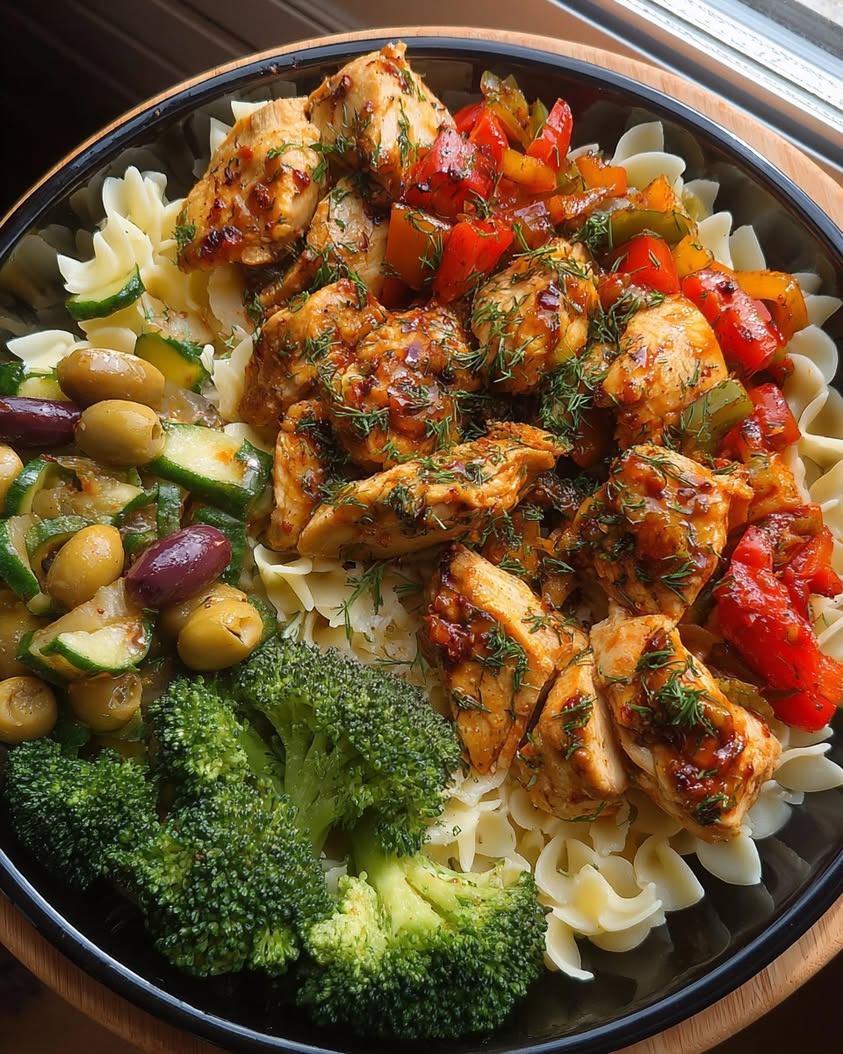
Mediterranean Herb Chicken with Veggies & Egg Noodles: A 30-Minute Dinner That’s Both Comforting and Fresh
Imagine a dinner that delivers the cozy satisfaction of a pasta night while simultaneously feeling light, vibrant, and incredibly flavorful. This Mediterranean herb chicken with veggies and egg noodles is precisely that dish. It masterfully bridges the gap between hearty comfort food and a fresh, nutritious meal. The result is a complete, balanced dinner that comes together in one pan with minimal fuss, making it an absolute hero for busy weeknights. Ultimately, this recipe proves that you do not need to sacrifice flavor or health for the sake of convenience.
The magic of this Mediterranean herb chicken lies in its harmonious blend of simple, high-quality ingredients. Tender chicken breast cooks alongside a rainbow of crisp vegetables, all infused with a fragrant blend of oregano, thyme, and basil. Meanwhile, these elements are tossed with buttery egg noodles that soak up every drop of the savory, garlicky pan juices. Each forkful offers a delightful contrast of textures and a symphony of Mediterranean flavors. Consequently, this meal feels both familiar and exciting, a guaranteed crowd-pleaser for both adults and kids alike.
Furthermore, this recipe is incredibly adaptable. You can easily swap vegetables based on what is in season or hiding in your crisper drawer. Similarly, the herb profile can be adjusted to suit your personal taste. Whether you are craving a quick family dinner or need an impressive yet simple meal for casual entertaining, this Mediterranean herb chicken with veggies and egg noodles delivers on every front. It is a testament to the power of uncomplicated, ingredient-driven cooking that celebrates bright, clean flavors.
Quick Recipe Highlights
- Flavor Profile: This dish features a robust and aromatic foundation from garlic, onion, and a classic Mediterranean herb blend. The savory pan juices from the chicken and vegetables create a light, flavorful sauce that coats the noodles perfectly. Additionally, a final touch of fresh parsley or lemon zest can add a bright, finishing note.
- Texture: You will enjoy a wonderful mix of textures, from the tender, juicy bites of chicken to the satisfying al dente chew of the egg noodles. The vegetables, such as bell peppers and zucchini, should retain a slight crispness, providing a pleasant contrast against the softer components. This variety keeps every bite interesting and satisfying.
- Aroma: As the dish cooks, your kitchen will fill with the irresistible, warm scent of sautéing garlic and onions, followed by the earthy fragrance of dried herbs like oregano and thyme. This aromatic promise is a key part of the cooking experience, building anticipation for the delicious meal to come.
- Visual Appeal: The final plate is a vibrant mosaic of colors. Look for the golden-brown sear on the chicken, the bright reds and yellows of bell peppers, the deep green of zucchini, and the pale yellow of the egg noodles. This colorful presentation makes the dish as beautiful to look at as it is delicious to eat.
- Skill Level Needed: This is a beginner-friendly recipe ideal for novice cooks. The techniques involved—sautéing chicken, stir-frying vegetables, and boiling pasta—are fundamental. With clear instructions and a short cook time, it is a fantastic recipe to build confidence in the kitchen.
- Special Equipment: You need only standard kitchen equipment: a large skillet or sauté pan with a lid, a pot for boiling noodles, and basic utensils like a knife, cutting board, and tongs. A high-sided pan is helpful for containing all the ingredients as you combine them at the end.
Recipe Overview
- Difficulty Level: We classify this Mediterranean herb chicken recipe as easy. The steps are sequential and straightforward, involving basic knife work and simple stovetop cooking. There is no complex sauce reduction or advanced techniques required. Therefore, even a cooking novice can achieve excellent results by following the clear instructions for timing and doneness cues.
- Category: This dish falls squarely into the main course category for dinner. It is a complete, one-pan meal featuring protein, vegetables, and carbohydrates. Moreover, it is perfect for a weeknight family dinner, a quick lunch prep option, or a casual weekend meal. Its balanced nature means you likely will not need to prepare elaborate sides.
- Cuisine: The recipe draws direct inspiration from the broad, sun-drenched flavors of Mediterranean cuisine. It emphasizes olive oil, garlic, and a signature blend of herbs like oregano and thyme that are staples in Greek, Italian, and Southern French cooking. While not a traditional regional dish, it encapsulates the healthy, flavorful, and simple cooking philosophy of the Mediterranean region.
- Cost: This is a very cost-effective meal. Chicken breast, egg noodles, and common vegetables like bell peppers and onions are typically affordable, especially when in season. The dried herbs and spices are pantry staples that offer high flavor impact for a low cost. Overall, you can expect to feed a family of four a restaurant-quality meal for a fraction of the price.
- Season: This Mediterranean herb chicken recipe is truly versatile across seasons. It is excellent in summer with the abundance of fresh zucchini and peppers. Conversely, in cooler months, it provides a comforting yet non-heavy meal. You can easily adapt the vegetable selection to use heartier options like carrots or mushrooms in the fall and winter.
- Occasion: Its primary strength is as a reliable, delicious weeknight dinner solution. Beyond that, it is also excellent for casual weekend lunches or potluck gatherings where you need a transportable, crowd-pleasing dish. It is not overly formal but is certainly special enough for a relaxed dinner with friends.
Why You’ll Love This Mediterranean Herb Chicken Recipe
First and foremost, the taste and texture appeal of this dish is immediate and profound. The chicken is succulent and infused with herbaceous notes, while the vegetables offer a sweet, slightly charred contrast. The egg noodles, acting as the perfect canvas, soak up the savory, garlic-infused pan juices, creating a cohesive and deeply satisfying flavor in every bite. This harmonious combination of protein, veg, and carb checks all the boxes for a comforting yet refined meal. Ultimately, it is the kind of dish that makes you look forward to dinner all afternoon.
From a convenience standpoint, this Mediterranean herb chicken recipe is a weeknight warrior. With a total time of just 30 minutes from start to finish, it fits perfectly into a busy schedule. The prep is simple, involving mostly chopping, and the cooking process is efficient, often allowing you to boil the noodles while the chicken and veggies sauté. Furthermore, it uses mostly one pan for the main components, meaning cleanup is a breeze. This efficiency does not compromise quality, making it a sustainable choice for regular rotation in your meal plan.
Nutritionally, this meal is a balanced powerhouse. Lean chicken breast provides high-quality protein to keep you full and support muscle maintenance. The variety of vegetables delivers essential vitamins, minerals, and fiber. Using olive oil as the primary fat source contributes heart-healthy monounsaturated fats. Compared to heavy, cream-based pasta dishes, this version feels light and energizing. You can enjoy a generous portion without the sluggish feeling that often follows richer meals, aligning perfectly with a health-conscious lifestyle.
For social and entertaining value, this dish is remarkably versatile. It is easy to double or triple the recipe to feed a crowd, and it presents beautifully on a large platter. The vibrant colors and inviting aroma make it a hit at potlucks or casual dinner parties. Because the flavors are universally appealing and not overly exotic, it is a safe bet for pleasing diverse palates, including picky eaters. Serving this Mediterranean herb chicken feels generous and thoughtful without requiring the host to be stuck in the kitchen all day.
Finally, the cost-effectiveness and accessibility of the ingredients cannot be overstated. You do not need any specialty or expensive items to make this meal shine. The core components are pantry staples and common grocery store finds. This accessibility makes it an excellent recipe for students, families on a budget, or anyone looking to eat well without overspending. Investing in a good bottle of olive oil and quality dried herbs will pay off across countless meals, starting with this delightful Mediterranean herb chicken and egg noodle dinner.
Historical Background and Cultural Significance
The concept of combining poultry, local vegetables, and pasta or grains is a culinary tradition with deep roots across the Mediterranean basin. While this specific recipe for Mediterranean herb chicken with egg noodles is a modern, streamlined creation, its spirit is ancient. For centuries, home cooks in regions from Italy to Greece to the Levant have prepared similar one-pan meals, utilizing what was fresh, seasonal, and readily available. This practice represents the essence of Mediterranean home cooking: resourceful, nutritious, and deeply connected to the land and sea.
Culturally, these types of dishes are the backbone of the much-celebrated Mediterranean Diet. This dietary pattern, recognized by UNESCO as an intangible cultural heritage of humanity, emphasizes plant-based foods, healthy fats, lean proteins, and communal eating. A dish like this Mediterranean herb chicken embodies those principles perfectly. It is more than just fuel; it is part of a lifestyle that values fresh ingredients, simple preparation, and the joy of sharing a meal. Consequently, cooking this recipe connects you to a rich, health-forward culinary tradition.
The evolution of this recipe is a story of adaptation and globalization. Traditional Mediterranean meals might feature regional pasta shapes like orzo or couscous, or perhaps no pasta at all, served instead with bread. The use of wide egg noodles speaks to a more global pantry, incorporating a beloved comfort food element from other culinary traditions. The blend of dried herbs—oregano, thyme, basil—is a simplified version of the fresh herb mixtures used throughout the region. This evolution makes the flavors accessible to cooks worldwide while retaining the core identity of the cuisine.
Regional variations of this concept are endless. In Greece, you might find a similar preparation with chicken, peppers, and onions served over hilopites, a traditional egg pasta. In Italy, the herbs might shift to include rosemary, and the pasta could be a short shape like penne. In the south of France, herbes de Provence would be the star, and the dish might include olives and tomatoes. Our version is a harmonious blend of these influences, designed for ease and broad appeal while paying clear homage to its Mediterranean inspiration.
Ingredient Deep Dive
Starting with the chicken breast, this lean protein is a blank canvas for flavor. Culturally, chicken is a prevalent meat across the Mediterranean, often grilled, roasted, or stewed with herbs and lemon. Nutritionally, it is an excellent source of lean protein, B vitamins, and selenium. For best results, select plump, evenly sized breasts for consistent cooking. You can store them in the coldest part of your refrigerator for 1-2 days before use, or freeze for longer storage. For a substitution, boneless, skinless chicken thighs offer more fat and flavor, or you can use turkey cutlets or even large shrimp.
Egg noodles are the comforting carbohydrate foundation. Unlike many traditional Mediterranean pastas made from just semolina and water, egg noodles include eggs, which give them a richer flavor, a tender bite, and a beautiful yellow color. They are excellent at clinging to light sauces and pan juices. Look for a good-quality brand in the pasta aisle. You can store dried egg noodles in your pantry for months. For a gluten-free adaptation, use a wide rice noodle or a gluten-free pasta blend. Alternatively, for a lower-carb option, spiralized zucchini (zoodles) make a fantastic substitute.
The Mediterranean herb blend is the soul of the dish. A classic combination includes dried oregano, thyme, and basil. Oregano, in particular, is synonymous with Greek and Italian cooking, offering a pungent, slightly bitter earthiness. Thyme adds a subtle, floral complexity, while basil contributes a sweet, peppery note. Together, they create an aromatic profile that is instantly recognizable. For the best flavor, ensure your dried herbs are not older than a year; their potency fades over time. You can substitute with an equal amount of Italian seasoning or herbes de Provence. In summer, using a larger quantity of these same herbs fresh will elevate the dish dramatically.
Bell peppers and zucchini are the classic vegetable duo. Bell peppers, especially red and yellow, bring a sweet, crisp texture and a burst of color and vitamin C. Zucchini provides a mild, slightly sweet flavor and a tender-crisp bite when cooked properly. These vegetables are staples in Mediterranean summer cuisine. Select firm, glossy peppers and small-to-medium zucchini with bright green skin. Store them unwashed in your refrigerator’s crisper drawer. You can easily adapt the vegetable mix: try adding sliced mushrooms, cherry tomatoes, eggplant, or asparagus based on the season.
Finally, the supporting cast of olive oil, garlic, and onion forms the essential flavor base. Extra virgin olive oil is non-negotiable for authentic Mediterranean flavor; it is used for both cooking and finishing. Garlic and onion, sautéed until fragrant, create the foundational aroma that defines so many dishes in this cuisine. Use fresh garlic cloves for the best flavor, and a yellow or white onion for its balanced sweetness. There are few good substitutes for this trio, though a mild avocado oil can be used for high-heat cooking if necessary, with the olive oil added at the end for flavor.
Common Mistakes to Avoid
- Overcrowding the Pan: Adding all the chicken at once to a small pan will cause it to steam instead of sear. You must cook in batches if necessary to ensure each piece gets proper browning. This browning, known as the Maillard reaction, is crucial for developing deep, savory flavor in your Mediterranean herb chicken.
- Using Old, Stale Dried Herbs: Dried herbs lose their potency and can taste dusty after about a year. If your oregano or thyme doesn’t smell fragrant when you rub it between your fingers, it is time to replace it. Fresh, potent herbs are essential for achieving the vibrant flavor profile this dish promises.
- Overcooking the Chicken Breast: Lean chicken breast can quickly become dry and tough if cooked too long. Use a meat thermometer and remove the chicken from the pan when it reaches an internal temperature of 165°F (74°C). Remember, it will continue to cook slightly from residual heat after being removed.
- Boiling the Egg Noodles to Mush: Egg noodles cook quickly and can become soggy if left in the boiling water too long. Cook them only until al dente, meaning they still have a slight bite. They will finish absorbing flavor and softening when tossed with the other ingredients in the pan.
- Adding Garlic Too Early: If you add minced garlic at the same time as the onions, it is likely to burn and turn bitter by the time the onions are soft. Always add garlic later in the sautéing process, just for the last 30-60 seconds, until it becomes fragrant.
- Neglecting to Season in Layers: Do not wait until the end to add all your salt and pepper. Season the chicken before cooking, season the vegetables as they sauté, and then taste and adjust the final dish. This layered seasoning ensures every component is properly seasoned throughout.
- Skipping the Resting Time for Chicken: Slicing the chicken immediately after cooking causes the juices to run out onto the cutting board. Let the cooked chicken rest for 5 minutes before slicing. This allows the juices to redistribute, resulting in much more tender and juicy meat in your final dish.
- Using a Low-Quality Olive Oil for Sautéing: While you do not need to use your most expensive extra virgin olive oil for the initial sauté, using a bland or poor-quality oil can impart an off flavor. Choose a decent, pure olive oil for cooking and save your finest bottle for a final drizzle.
Essential Techniques
Proper Searing of Chicken: Achieving a good sear on the chicken is fundamental for flavor and texture. First, ensure your pan is hot before adding the oil, and then ensure the oil is shimmering before adding the chicken. Pat the chicken breasts completely dry with paper towels; moisture is the enemy of browning. Do not move the chicken for the first few minutes, allowing a golden crust to form. This technique, called the Maillard reaction, creates hundreds of new flavor compounds, giving your Mediterranean herb chicken a rich, savory depth that steaming cannot replicate.
Sautéing Vegetables to Perfect Tenderness: The goal for the bell peppers and zucchini is to achieve a tender-crisp texture, not mushy. To do this, use high heat and do not overcrowd the pan, which would cause them to steam. Stir or toss them frequently for even cooking. Add them to the hot pan only after the aromatics like onion have softened. Cook just until they brighten in color and lose their raw stiffness but still offer a slight resistance when bitten. This technique preserves their nutritional value, vibrant color, and satisfying crunch.
Building Flavor with Aromatics: This technique involves slowly cooking onions, and later garlic, in fat to release their natural sugars and develop a sweet, savory base. Start with diced onions and cook over medium heat until they become translucent and soft, which can take 5-7 minutes. Adding a pinch of salt at this stage helps draw out moisture. Then, add the minced garlic and cook for just 30-60 seconds until fragrant. Rushing this step or cooking at too high a heat will result in burnt, bitter aromatics that can ruin the delicate balance of your Mediterranean herb chicken sauce.
Combining and Tossing the Final Dish: The final integration of components is a technique in itself. After the chicken is cooked and rested, and the vegetables are tender, you will add the cooked, drained noodles back to the vegetable pan. Slice the chicken and add it as well. The key is to toss everything together gently but thoroughly over low heat. This allows the noodles to absorb the flavorful pan juices and the herbs to distribute evenly. Use tongs for the best mixing action. This final toss is what transforms separate ingredients into a cohesive, unified dish.
Pro Tips for Perfect Mediterranean Herb Chicken
First, for the juiciest chicken, consider brining the breasts for 30 minutes in a simple solution of 4 cups water and 3 tablespoons salt before patting dry and cooking. This step seasons the meat deeply and helps it retain moisture during cooking.
Second, reserve about a half cup of the starchy pasta cooking water before you drain the egg noodles. Adding a splash of this water when you toss everything together at the end helps create a light, silky sauce that clings beautifully to the noodles.
Third, to maximize herb flavor, add half of your dried herb blend when sautéing the vegetables and the other half when you toss everything together at the end. This layers the flavor and ensures a fresh herbaceous note in the finished dish.
Fourth, let all your chopped vegetables come to room temperature before cooking. Adding ice-cold veggies to a hot pan can lower the temperature drastically, leading to steaming instead of proper sautéing.
Fifth, use a pair of kitchen shears to quickly slice the cooked chicken breast directly over the pan. This is faster than using a knife and cutting board, and any escaping juices will fall right into the dish, not onto your counter.
Sixth, finish the dish with a final flourish. A drizzle of high-quality extra virgin olive oil, a squeeze of fresh lemon juice, or a sprinkle of chopped fresh parsley or grated Parmesan cheese just before serving adds a layer of brightness and complexity.
Seventh, if you want a more pronounced sauce, after removing the cooked chicken, you can deglaze the pan with a quarter cup of chicken broth or white wine, scraping up the browned bits, and let it reduce slightly before adding the vegetables back in.
Variations and Adaptations
For regional variations, you can easily take this Mediterranean herb chicken in different directional influences. For a Greek twist, add a handful of pitted Kalamata olives and crumbled feta cheese at the end, and use oregano as the dominant herb. For an Italian version, use a blend of basil, oregano, and rosemary, and finish with a generous grating of Pecorino Romano cheese. A Provençal adaptation would involve using herbes de Provence and perhaps adding a spoonful of tomato paste with the garlic for depth.
Seasonal adaptations are straightforward and recommended. In spring, use asparagus tips and fresh peas. During summer, incorporate cherry tomatoes and fresh basil. For fall, swap in cubed butternut squash and sliced mushrooms. In winter, use hearty kale or Swiss chard, adding them at the very end to just wilt. This flexibility ensures you can make this comforting dish year-round with the best produce available.
Dietary modifications are simple to implement. For a gluten-free Mediterranean herb chicken, use your favorite gluten-free pasta or even chickpea pasta. To make it dairy-free, simply omit any cheese garnish or use a vegan Parmesan alternative. For a lower-carb or keto version, replace the egg noodles with spiralized zucchini (zoodles) or shirataki noodles, adding them at the very end to just heat through.
Flavor variations can cater to different palates. If you enjoy spice, add a pinch of red pepper flakes with the garlic. For a richer, creamier version, stir a quarter cup of heavy cream or crème fraîche into the pan after the vegetables are cooked. For a brighter, tangier profile, add the zest and juice of a whole lemon during the final toss. You can also incorporate capers or artichoke hearts for a briny, complex note.
Texture modifications can keep the dish interesting. Try using different pasta shapes like farfalle, penne, or orecchiette. For more texture, toast pine nuts or slivered almonds and sprinkle them on top before serving. You could also use a combination of vegetables with varying cook times, like adding crisp-tender broccoli florets or sugar snap peas.
Presentation alternatives can elevate the dish for entertaining. Instead of tossing everything together, arrange the sliced chicken on a platter over a bed of the herbed noodles and vegetables. Alternatively, serve the components separately in a family-style setting, allowing guests to build their own plates. For individual servings, use a ring mold to create a neat tower of noodles topped with chicken and veggies.
Serving and Presentation Guide
For plating techniques, simplicity often works best. Use a large, shallow bowl or pasta plate. Twirl a portion of the egg noodles and vegetables with tongs, creating a nest in the center of the plate. Artfully arrange the sliced chicken breast on top or around the sides. This method showcases all the colorful components and makes the dish look restaurant-worthy. Alternatively, for a family-style approach, present the entire dish in a large, warm serving bowl or skillet right at the table.
Garnishing ideas are the final touch that adds visual pop and fresh flavor. A generous sprinkle of chopped fresh flat-leaf parsley or basil is classic. A light dusting of grated Parmesan or Pecorino Romano cheese adds savoriness. For brightness, a few lemon wedges on the side allow diners to add a spritz of acidity to their taste. A final drizzle of your best extra virgin olive oil adds sheen and richness. Even a simple grind of black pepper over the top adds texture and aroma.
Traditional accompaniments for a Mediterranean meal like this are light and complementary. A simple side salad of mixed greens with a lemon vinaigrette cuts through the richness perfectly. Warm, crusty bread like a baguette or focaccia is ideal for sopping up any remaining juices on the plate. For a more substantial spread, you could add a small bowl of marinated olives or a plate of roasted peppers.
Modern serving suggestions might include turning leftovers into a cold pasta salad for lunch the next day, simply dressed with a little extra olive oil and lemon juice. You could also serve the Mediterranean herb chicken deconstructed in a lunch bowl with a base of greens, topped with the warm chicken, veggies, and noodles. For a fun twist, use the mixture as a filling for whole-wheat wraps or pita pockets.
Temperature considerations are key for enjoyment. This dish is best served immediately, while the noodles are hot and the chicken is still warm and juicy. If you must hold it, keep it covered in a warm oven (around 200°F) for no more than 15-20 minutes. Be aware that the noodles may continue to absorb liquid and soften. Avoid reheating the entire dish more than once, as the chicken can become dry.
Portion control tips are helpful for managing servings. A standard portion is about one chicken breast half and a generous cup of the noodle and vegetable mixture per person. If you are serving with bread and salad, this is perfectly satisfying. To stretch the meal for more people or for lighter appetites, you can increase the ratio of vegetables and noodles to chicken. Conversely, for a higher-protein meal, simply serve a larger piece of chicken alongside the standard noodle portion.
Wine and Beverage Pairing
For wine pairings, you want a bottle that complements the herbal, savory notes without overpowering the dish. A crisp, dry white wine like a Sauvignon Blanc or Pinot Grigio works beautifully, their acidity cutting through the dish and mirroring the herbal qualities. Alternatively, a light-bodied, fruity red like a Pinot Noir or a Grenache can also pair well if served slightly chilled, especially if you have used mushrooms or a richer variation. The key is to avoid heavily oaked wines or high-tannin reds, which can clash with the herbs and lean protein.
Non-alcoholic alternatives should provide refreshment and cleanse the palate. Sparkling water with a slice of lemon or cucumber is always a perfect match. For more flavor, try a homemade herbal iced tea infused with mint or lemon verbena. A tart lemonade or a ginger beer also pairs nicely, their sweetness and acidity balancing the savory elements of the Mediterranean herb chicken. You could even serve a non-alcoholic spritzer made with grape juice and soda water.
While not traditional, certain coffee or tea pairings can work after the meal. A light, citrusy herbal tea like lemon ginger or chamomile would be a soothing finish. For coffee, a medium-roast brew without heavy bitterness would complement the meal’s flavors without overwhelming them. However, these are better considered as post-meal beverages rather than direct pairings served alongside the food itself.
Temperature considerations for beverages are straightforward. White wines and non-alcoholic spritzers should be served well-chilled. Light reds are best served at a cool cellar temperature, around 55-60°F. Water and iced teas should be ice-cold to provide a refreshing contrast to the warm food. Having a pitcher of cold water on the table is always recommended.
Serving suggestions include setting the table with appropriate glassware. Use white wine glasses for your chosen white or light red. For non-alcoholic options, tall glasses are ideal. Always offer a water glass as well. If you are serving multiple options, consider a small tasting pour of wine alongside another beverage to let guests discover their preferred pairing with this versatile Mediterranean herb chicken dish.
Storage and Shelf Life
For storage methods, allow the leftover Mediterranean herb chicken and noodles to cool completely to room temperature before storing. Do not leave it out for more than two hours to prevent bacterial growth. Transfer the cooled leftovers to an airtight container. It is best to store the components together, as the noodles will continue to absorb flavor. You can store it in the refrigerator for up to 3-4 days.
Temperature requirements are critical for food safety. The dish must be refrigerated at or below 40°F (4°C). If you are making it ahead for later in the week, portion it into individual containers for easy grab-and-go lunches. Avoid storing it in the refrigerator door, as the temperature fluctuates there. For longer storage, freezing is an option, though the texture of the noodles and zucchini may become softer upon thawing.
Container recommendations include glass meal-prep containers with tight-fitting lids, which are ideal for both refrigeration and reheating. You can also use BPA-free plastic containers. If using plastic bags for freezing, squeeze out as much air as possible to prevent freezer burn. Label the container with the date so you can keep track of its shelf life.
Signs of spoilage are important to recognize. Discard the leftovers if you notice an off or sour smell, visible mold growth, or a slimy texture on the chicken or vegetables. If the noodles have become unpleasantly mushy or the entire dish has developed an unusual taste, it is safer to throw it out. When in doubt, follow the golden rule: when in doubt, throw it out.
Reheating instructions are best done gently to prevent the chicken from drying out. The preferred method is on the stovetop. Add a splash of water, broth, or a tiny bit of olive oil to a skillet over medium-low heat. Add the leftovers and cover, stirring occasionally, until heated through. You can also use a microwave: place in a microwave-safe dish, sprinkle with a teaspoon of water, cover loosely, and heat in 60-second intervals, stirring in between.
Freezing guidelines can extend the shelf life to about 2-3 months. Freeze in airtight containers or heavy-duty freezer bags. Thaw overnight in the refrigerator before reheating. Note that the texture of the zucchini and noodles will be softer after freezing and thawing. For best results, you can slightly undercook the noodles and vegetables if you know you plan to freeze the dish.
Make Ahead Strategies
Your prep timeline can be spread over two days for ultimate convenience. The day before, you can chop all vegetables (store them together in a container in the fridge), measure out your dried herbs and spices (keep them in a small bowl), and even pound the chicken breasts to an even thickness and store them in a separate container. This reduces your active prep time on cooking day to just minutes.
For storage between steps, keep prepped ingredients in separate, clearly labeled containers in the refrigerator. Keep cut vegetables away from raw chicken to prevent cross-contamination. You can also cook the egg noodles a day ahead; after draining, toss them with a tiny bit of olive oil to prevent sticking, store in a container, and refrigerate. They will reheat perfectly when tossed in the warm pan with the other ingredients.
Assessing the quality impact of make-ahead steps is important. Pre-chopped vegetables may lose a minimal amount of moisture but will cook just fine. Pre-measured herbs retain their flavor. The chicken may release some moisture in its container, so be sure to pat it dry again before cooking. Pre-cooked noodles are the component most affected; they may stick together, but a quick rinse with warm water or a gentle reheat in the sauce will revive them.
Assembly tips for a make-ahead meal are simple. When ready to cook, simply follow the recipe steps, pulling your pre-prepped ingredients from the fridge. Because your mise en place is done, the cooking process will be faster and less stressful. If you pre-cooked the noodles, add them to the pan a minute earlier to ensure they heat through completely.
Reheating guidelines for a fully assembled make-ahead dish are similar to reheating leftovers. If you cooked the entire dish and refrigerated it, reheat gently on the stovetop with a added splash of liquid. The key is low and slow to prevent the chicken from becoming tough and the vegetables from turning to mush.
Fresh element additions are crucial when using make-ahead components. Even if you prepped everything in advance, plan to add a final garnish of something fresh right before serving. This could be a sprinkle of freshly chopped herbs (not the dried ones you measured earlier), a drizzle of new olive oil, or a squeeze of lemon juice. This brightens the entire dish and makes it taste freshly made.
Scaling Instructions
Halving the recipe is straightforward for one or two people. Simply divide all ingredient quantities by two. Use a medium skillet instead of a large one. Cooking times may be slightly shorter, so keep a close eye on the chicken and vegetables, checking for doneness a few minutes earlier than the original recipe suggests. The rest of the method remains exactly the same.
Doubling or tripling the recipe for a crowd requires some adjustments. Do not attempt to cook all the chicken in one batch; you must cook it in batches to ensure proper searing. Use the largest skillet or Dutch oven you have, or consider using two pans simultaneously. You may need to boil the egg noodles in two separate pots to avoid overcrowding. When increasing spices, you can be slightly conservative and add more to taste at the end, as herb potency can become overwhelming if simply doubled.
Equipment adjustments are necessary when scaling. For larger batches, a wide, high-sided Dutch oven or a large electric skillet can be invaluable. Ensure you have a pot large enough to boil the increased quantity of noodles. Have extra bowls on hand to hold cooked chicken and vegetables as you work in batches. Good quality tongs and a large stirring spoon are essential for managing the greater volume.
Timing modifications are minimal but important. The initial steps of cooking chicken in batches will add to your total active cook time. However, the vegetable sauté time may increase only slightly as you add more volume. The most reliable method is to rely on visual and textural cues (chicken internal temperature, vegetable tenderness) rather than strict timer adherence when scaling up or down.
Storage considerations for scaled recipes are practical. If you have made a large batch, consider dividing it into meal-sized portions before storing. This makes reheating easier and prevents you from repeatedly heating and cooling the entire batch. Label each container with the date. A doubled or tripled batch is an excellent candidate for freezing a portion for a future easy meal.
Nutritional Deep Dive
The macro breakdown of this Mediterranean herb chicken dish is well-balanced. A typical serving provides a substantial amount of high-quality protein from the chicken breast, essential for muscle repair and satiety. The egg noodles contribute complex carbohydrates, offering sustained energy. The vegetables add fiber and minimal carbs. The primary fat source is olive oil, a heart-healthy monounsaturated fat. This balance of protein, carb, and fat makes it a meal that will keep you full and energized without causing a blood sugar spike and crash.
A micronutrient analysis reveals a wealth of vitamins and minerals. Bell peppers are exceptionally high in Vitamin C and Vitamin A. Zucchini provides potassium and manganese. Onions and garlic offer antioxidants and compounds with anti-inflammatory properties. Chicken breast is a good source of B vitamins, particularly B6 and niacin, which are crucial for energy metabolism. Using olive oil also adds Vitamin
Print
Mediterranean Herb Chicken with Veggies & Egg Noodles
Description
A vibrant and hearty dish featuring tender chicken breasts seasoned with Mediterranean herbs, roasted vegetables, and tossed with buttery egg noodles for a comforting meal.
Ingredients
For the Crust:
- 4 boneless, skinless chicken breasts
- 2 tablespoons olive oil
- 1 teaspoon dried oregano
- 1 teaspoon dried thyme
- 1/2 teaspoon garlic powder
- 1 red bell pepper, sliced
- 1 zucchini, sliced
- 1 yellow onion, sliced
- 8 ounces egg noodles
- 2 tablespoons butter
- Salt and black pepper to taste
- Fresh parsley for garnish
Instructions
1. Prepare the Crust:
- Preheat oven to 400°F (200°C). Toss chicken breasts with 1 tablespoon olive oil, oregano, thyme, garlic powder, salt, and pepper. Place on a baking sheet.
- In a bowl, combine bell pepper, zucchini, and onion with remaining olive oil, salt, and pepper. Spread around chicken on baking sheet. Roast for 20-25 minutes until chicken is cooked through and veggies are tender.
- While roasting, cook egg noodles according to package directions until al dente. Drain and toss with butter.
- Slice chicken into strips. Serve chicken and roasted veggies over buttered egg noodles, garnished with fresh parsley.
Notes
You can customize the seasonings to taste.

I’m Shaykee—born in Morocco, seasoned across continents. From airplane galleys to home kitchens, I share the flavors and stories that shaped my journey.