
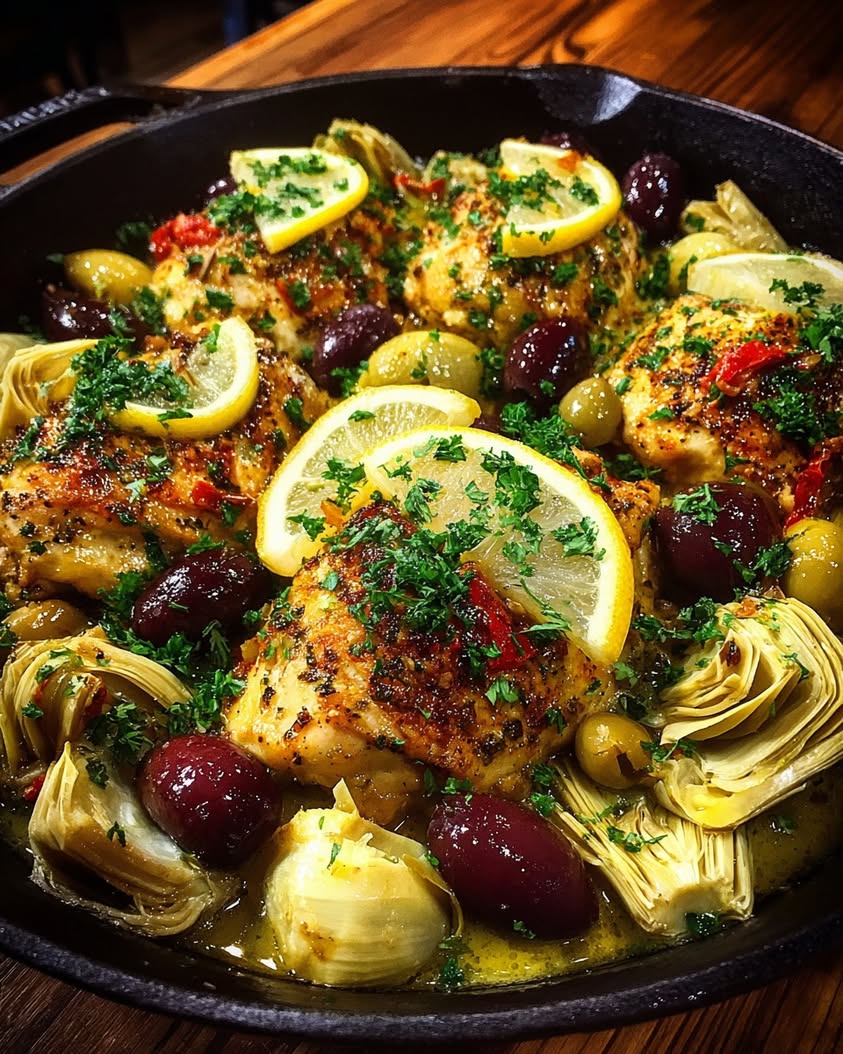
Mediterranean Lemon Chicken with Artichokes & Olives: A Bright, Zesty One-Pan Wonder
Imagine a dish that captures the essence of a sun-drenched Mediterranean coastline. This Mediterranean Lemon Chicken with Artichokes & Olives does exactly that, delivering a vibrant and healthy dinner to your table with minimal effort. The recipe combines tender chicken thighs with briny olives and tangy artichokes, all bathed in a garlicky lemon-herb sauce. Ultimately, it’s a one-pan meal that feels both elegant and utterly approachable for a busy weeknight.
The magic of this Mediterranean lemon chicken recipe lies in its harmonious balance of flavors. Bright, fresh lemon juice cuts through the richness of the chicken, while the artichokes and Kalamata olives add a savory depth that is unmistakably coastal. As the dish bakes, the aromas of oregano, garlic, and citrus will fill your kitchen, promising a meal that is as delightful to smell as it is to eat. This is the kind of recipe that turns simple ingredients into a memorable dining experience.
Furthermore, this dish is a testament to the principles of Mediterranean cooking, which celebrates fresh produce, lean proteins, and heart-healthy fats. It’s a nutritious powerhouse that doesn’t sacrifice an ounce of flavor. Whether you’re seeking a reliable family dinner or an impressive dish for casual entertaining, this lemon chicken bake consistently delivers. Let’s dive into how you can bring this taste of the Mediterranean into your own home.
Quick Recipe Highlights
- Flavor Profile: This dish offers a perfect symphony of bright, zesty lemon, savory garlic, and earthy oregano, punctuated by the salty punch of Kalamata olives and the mild, tangy sweetness of artichoke hearts. Every bite is a complex yet balanced taste of the sea and the sun.
- Texture: You’ll enjoy juicy, fork-tender chicken thighs alongside the firm, meaty texture of artichokes and the slight pop of olives. The sauce reduces slightly in the oven, creating a light glaze that clings beautifully to each component without being heavy or greasy.
- Aroma: While baking, the scent of roasting garlic and lemon melds with the herbal notes of dried oregano, creating an irresistibly inviting fragrance. The briny hint from the olives adds a final savory layer that makes your mouth water in anticipation.
- Visual Appeal: The presentation is rustic and colorful. Golden-brown chicken rests atop a bed of green artichokes and dark purple olives, all glistening with a lemony sauce. A final garnish of fresh parsley adds a vibrant green accent, making the dish as beautiful as it is delicious.
- Skill Level Needed: This is a beginner-friendly recipe designed for success. The techniques involve simple searing and oven-baking, requiring no advanced culinary skills. As long as you can handle a skillet and preheat an oven, you can master this healthy dinner.
- Special Equipment: You only need a reliable oven-safe skillet or braiser. A cast-iron or stainless steel pan works perfectly for achieving a good sear on the chicken before transferring it to the oven. Other than that, basic kitchen tools like a cutting board and knife are all that’s required.
Recipe Overview
- Difficulty Level: We classify this Mediterranean lemon chicken as “Easy” because it uses straightforward techniques like pan-searing and baking. The ingredient list is simple, with no complicated prep work. Most importantly, the oven does the majority of the work, melding the flavors together effortlessly while you prepare sides or simply relax.
- Category: This recipe fits beautifully into several categories. Primarily, it’s a main course protein dish. It also qualifies as a one-pan meal, a healthy dinner option, and a meal prep-friendly recipe. Its versatility allows it to star in a casual weeknight lineup or at a more deliberate weekend gathering.
- Cuisine: The dish is firmly rooted in Mediterranean cuisine, drawing inspiration from the coastal cooking of Greece and Southern Italy. The hallmark ingredients—lemon, olive oil, garlic, oregano, olives, and artichokes—are classic staples of this region, celebrated for creating flavorful, health-conscious meals.
- Cost: This is a moderately priced meal that delivers high perceived value. Chicken thighs are an affordable cut, and using jarred artichoke hearts and canned olives keeps costs manageable while maximizing flavor. The fresh herbs and lemon are inexpensive aromatics that provide a huge return on investment in terms of taste.
- Season: While truly a year-round dish, this lemon chicken bake sings in the spring and summer. The bright, zesty flavors complement warmer weather perfectly. Conversely, it also brings a welcome burst of sunshine to darker winter months, making it a versatile seasonal choice.
- Occasion: It’s incredibly adaptable for various occasions. It’s quick enough for a stress-free Tuesday night dinner yet elegant enough for a Friday night date night at home or a small dinner party with friends. It’s a universally appealing centerpiece.
Why You’ll Love This Recipe
First and foremost, the taste and texture are utterly captivating. The bright, zesty lemon marinade penetrates the chicken, ensuring every bite is moist and flavorful. Meanwhile, the artichokes absorb the savory juices, and the olives provide little bursts of salty complexity. This combination creates a satisfying mouthfeel that is both hearty and refreshing. Consequently, you get a restaurant-quality flavor profile from the comfort of your own kitchen with surprisingly little hands-on work.
From a convenience standpoint, this Mediterranean lemon chicken recipe is a weeknight hero. It requires just 15 minutes of active prep time before the oven takes over. Using a single oven-safe skillet means minimal cleanup, a major win after a long day. Additionally, the ingredients are pantry-friendly and easy to find at any standard grocery store. You can easily go from fridge to table in under an hour, making a healthy dinner achievable even on your busiest evenings.
Nutritionally, this dish aligns perfectly with the celebrated Mediterranean diet, which is linked to numerous health benefits. Chicken thighs provide high-quality protein and iron, while olive oil offers heart-healthy monounsaturated fats. Artichokes are a fantastic source of fiber and antioxidants, and olives contribute beneficial polyphenols. Together, they create a balanced meal that supports overall wellness without ever feeling like “diet food.” It’s nourishment that truly satisfies.
For social and entertaining value, this recipe is a reliable crowd-pleaser. Its vibrant colors and aromatic appeal make it impressive when served directly from the skillet at the table. The flavors are familiar yet interesting enough to feel special. Moreover, it pairs wonderfully with a variety of sides, from simple rice to roasted vegetables or a crisp salad, allowing you to easily build a complete menu around it for guests.
Finally, its cost-effectiveness and accessibility cannot be overstated. You create a beautiful, protein-rich meal that feeds four people without breaking the bank. Chicken thighs are economical, and the supporting ingredients are inexpensive staples. This accessibility means you can enjoy the flavors of a Mediterranean vacation regularly, turning an ordinary dinner into a small, delightful escape. It’s a recipe that gives back far more than it requires.
Historical Background and Cultural Significance
The origins of dishes combining chicken, lemon, and olive oil are deeply woven into the culinary tapestry of the Mediterranean basin. Specifically, similar preparations are found throughout Greece, Italy, and the coastal regions of the Middle East. Historically, these areas prized the lemon for its ability to preserve and brighten foods, while olive oil was the fundamental cooking fat. Consequently, the marriage of these ingredients with local poultry was a natural and enduring evolution, creating a foundation for countless regional variations.
Culturally, this style of cooking represents more than just sustenance; it embodies a lifestyle. The Mediterranean diet, of which this lemon chicken is a classic example, is recognized by UNESCO as an intangible cultural heritage. It emphasizes community, shared meals, and the use of fresh, local ingredients. A dish baked with artichokes and olives speaks to a tradition of resourcefulness, using preserved vegetables and brined items to add depth and flavor to simple proteins, ensuring delicious eating year-round.
The recipe has evolved significantly with global trade. While artichokes are native to the Mediterranean, their cultivation spread, and canned or jarred versions made them accessible worldwide. Similarly, Kalamata olives became a beloved export. This global exchange allowed the traditional framework of the recipe to adapt, incorporating these now-standard ingredients into a modern, streamlined bake. The core philosophy—simple ingredients, bold flavors—remains beautifully intact.
Regional variations of this concept are plentiful. In Greece, you might find “Kotopoulo Lemonato” often includes potatoes and is baked for longer. In Italy, “Pollo al Limone” might be finished with white wine or capers. The version with artichokes and olives particularly echoes the flavors of the Greek islands or coastal Sicily, where such ingredients are pantry staples. Each region adds its own signature, proving the incredible versatility of this foundational flavor combination.
Ingredient Deep Dive
Starting with chicken thighs, this cut is essential for a juicy result. Thighs have more fat and connective tissue than breasts, which translates to incredible flavor and tenderness after baking. They withstand the high heat well without drying out. For the best Mediterranean lemon chicken, choose bone-in, skin-on thighs for maximum flavor and a crispy top. If you prefer, boneless thighs work too; just reduce the cook time slightly. Pat them thoroughly dry before seasoning to ensure a proper sear.
Fresh lemons are the non-negotiable star, providing the bright, zesty backbone of the dish. You’ll use both the juice and the zest, which contains potent aromatic oils. Always zest your lemon before juicing it for easier handling. For the best flavor, choose firm, heavy lemons with vibrant yellow skin. The juice not only flavors the chicken and sauce but, thanks to its acidity, also helps tenderize the meat slightly. Never substitute bottled lemon juice; the fresh flavor is irreplaceable here.
Artichoke hearts bring a unique, slightly sweet and nutty flavor along with a meaty texture. Using canned or jarred water-packed hearts is a huge time-saver. Look for quarters or halves that are firm and not mushy. Before adding them to the pan, give them a quick rinse and drain to remove any overly briny liquid from the can. They are rich in fiber, antioxidants, and folate, making them a nutritious addition that complements the chicken perfectly in this healthy dinner.
Kalamata olives provide the essential salty, briny counterpoint to the bright lemon. These Greek olives are dark purple, almond-shaped, and have a rich, fruity flavor. Purchase them pitted to save time. If unavailable, you can substitute other black olives like Niçoise, but Kalamatas are ideal for their distinct taste. They are a hallmark of Mediterranean cooking and add healthy fats and complex flavor. Do not rinse them; their brine contributes to the sauce’s savory depth.
Extra virgin olive oil is the cooking medium and a key flavor component. Use a good-quality oil for sautéing the garlic and for the sauce, as its fruity, peppery notes will shine through. Dried oregano is the classic herb; its earthy, slightly bitter flavor is more authentic to the region than fresh in this application. Fresh garlic, minced, forms the aromatic base. Finally, fresh parsley added at the end provides a necessary pop of color and a clean, fresh flavor that brightens the entire dish.
Common Mistakes to Avoid
- Not Drying the Chicken: Failing to pat the chicken thighs completely dry with paper towels before seasoning will prevent a proper sear. Moisture on the surface creates steam, which inhibits the Maillard reaction that gives you that beautiful, flavorful golden-brown crust essential for depth of flavor.
- Crowding the Pan: When searing the chicken, avoid overcrowding the skillet. If the pieces are too close together, they will steam instead of sear. Cook in batches if necessary to ensure each thigh has enough space for direct contact with the hot pan, guaranteeing an even, crispy skin.
- Using Bottled Lemon Juice: This is a critical error. Bottled juice lacks the vibrant, fresh acidity and aromatic quality of freshly squeezed lemons. The bright, zesty character of this Mediterranean lemon chicken depends entirely on fresh citrus. Always zest and juice your lemons just before using them for the best results.
- Overcooking the Garlic: When sautéing the minced garlic, cook it only for about 30 seconds until fragrant. Garlic burns easily and becomes bitter, which can ruin the delicate balance of the sauce. Stir it constantly over medium heat to just wake up its flavors without taking on any color.
- Skipping the Deglaze: After searing the chicken, those browned bits (fond) stuck to the pan are packed with flavor. Pouring the lemon juice and broth into the hot pan and scraping them up incorporates that flavor into the sauce. Skipping this step leaves deliciousness behind.
- Using Boneless, Skinless Chicken Breasts: While you can adapt the recipe, breasts are much leaner and will easily dry out during the baking time required for the artichokes and olives to meld. For a guaranteed juicy result, stick with thighs as directed in this healthy dinner recipe.
- Forgetting to Season in Layers: Season the chicken generously with salt and pepper before searing. Then, season the sauce mixture as well. Building layers of seasoning at different stages ensures the entire dish is properly seasoned from the inside out, not just on the surface.
- Not Letting it Rest: Immediately after pulling the skillet from the oven, let the Mediterranean lemon chicken rest for 5-10 minutes. This allows the juices to redistribute throughout the meat. Cutting or serving it right away will cause those precious juices to run out onto the plate, leaving the chicken drier.
Essential Techniques
Pan Searing for Flavor: Searing the chicken thighs is the first and most crucial technique for building a deep flavor base. The goal is to create a golden-brown crust through the Maillard reaction, not to cook the chicken through. Use a preheated, oven-safe skillet with hot oil. Place the chicken skin-side down and do not move it for several minutes to allow a proper crust to form. This step provides texture and unlocks savory, complex flavors that will infuse the entire dish.
Deglazing the Pan: After removing the seared chicken, you’ll see browned bits stuck to the bottom of the pan. These are flavor gold. Deglazing involves adding a liquid—in this case, lemon juice and chicken broth—to the hot pan and using a wooden spoon to scrape those bits loose. This dissolves the fond into the liquid, creating an instant, flavorful sauce foundation. It’s a simple step that transforms potential waste into the soul of your meal.
Oven-Baking for Even Cooking: Transferring the skillet to the oven allows for gentle, radiant heat that cooks the chicken evenly from all sides. This method ensures the thighs cook through to a safe temperature without the skin burning and allows the artichokes and olives to warm and meld with the sauce. The oven’s ambient heat also reduces the sauce slightly, concentrating the flavors without requiring constant stirring or attention.
Pro Tips for Perfect Mediterranean Lemon Chicken
First, bring your chicken to room temperature for about 15-20 minutes before cooking. This promotes even cooking, preventing the outside from overcooking before the inside is done. Meanwhile, always zest your lemon before juicing it; it’s far easier to zest a whole fruit. Furthermore, use a microplane for the finest zest, which will disperse its aromatic oils more evenly throughout the dish.
For the crispiest skin, resist the urge to constantly move the chicken in the pan while searing. Let it sit undisturbed for a full 5-7 minutes to develop that perfect golden crust. Additionally, if your chicken thighs are very large or uneven, consider trimming excess fat to prevent curling and ensure flat contact with the pan. This guarantees an even sear across the entire surface.
When building the sauce, taste your chicken broth. If you’re using a low-sodium variety, you may need to adjust the final seasoning with a bit more salt. Conversely, if using regular broth, be cautious with added salt until the end. Also, for an extra layer of flavor, add a tablespoon of dry white wine to the pan with the lemon juice when deglazing.
To check for doneness, use an instant-read thermometer inserted into the thickest part of a thigh, avoiding the bone. The chicken is perfectly cooked at 165°F. Remember, it will continue to cook slightly while resting. Finally, garnish with the fresh parsley just before serving. The heat of the dish will wilt it slightly, releasing its fresh aroma without losing its vibrant green color.
Variations and Adaptations
For regional variations, consider adding different ingredients. A Greek-inspired version might include a sprinkle of crumbled feta cheese in the last five minutes of baking. An Italian twist could involve adding a handful of capers and using white wine in the sauce. For a Provençal feel, replace the oregano with herbes de Provence and add sun-dried tomatoes alongside the artichokes.
Seasonal adaptations are simple. In spring, add fresh asparagus spears or baby peas to the skillet. During summer, incorporate halved cherry tomatoes or sliced zucchini. For a heartier winter meal, add quartered baby potatoes or chunks of carrot to roast alongside the chicken, extending the bake time slightly to ensure they become tender.
Dietary modifications are straightforward. For a gluten-free meal, ensure your chicken broth is certified gluten-free. To make it dairy-free, simply omit any cheese garnish; the recipe is naturally dairy-free as written. For a lower-carb or keto version, you can increase the olive oil slightly and serve with cauliflower rice instead of grains.
Flavor variations can personalize the dish. Add a pinch of red pepper flakes to the sauce for a subtle heat. Swap the dried oregano for dried thyme or rosemary for a different herbal profile. For a richer sauce, stir a teaspoon of Dijon mustard into the lemon and broth mixture before adding it to the pan.
Serving and Presentation Guide
Plating this dish is part of its appeal. Serve it family-style directly from the oven-safe skillet for a rustic, inviting presentation. Place the chicken thighs in the center, surrounded by the artichokes and olives, and spoon the pan sauce generously over the top. This method keeps the food warm and allows guests to see the beautiful, glazed components.
Garnishing is key for color and freshness. A generous sprinkle of chopped fresh flat-leaf parsley is classic. For added brightness, you can also add a few very thin slices of fresh lemon or a sprinkle of lemon zest. A final drizzle of high-quality extra virgin olive oil just before serving adds a lovely sheen and reinforces the Mediterranean flavor.
Traditional accompaniments keep the meal authentic. Serve with a side of orzo pasta, couscous, or crusty bread to soak up the delicious sauce. A simple Greek salad with tomatoes, cucumber, red onion, and feta cheese provides a refreshing, crunchy contrast. Alternatively, roasted vegetables like broccoli or green beans complement the flavors perfectly.
Consider modern serving suggestions for a different twist. Shred the baked chicken and serve it over a bed of quinoa or farro for a grain bowl. Alternatively, use the leftovers the next day to fill warm pita bread with lettuce, tomato, and a dollop of tzatziki sauce for a fantastic lunch. The versatility of this healthy dinner is one of its greatest strengths.
Wine and Beverage Pairing
Choosing the right wine enhances the Mediterranean experience. A crisp, dry white wine like a Greek Assyrtiko, an Italian Pinot Grigio, or a Sauvignon Blanc pairs beautifully. These wines have enough acidity to match the lemon and cut through the richness of the chicken and olives. Their citrus and mineral notes echo the flavors on the plate, creating a harmonious pairing.
If you prefer red wine, opt for a light-bodied, low-tannin option. A Beaujolais, a Grenache, or a lighter Pinot Noir can work well served slightly chilled. The key is to avoid heavy, oaky reds that would overpower the bright, zesty character of the dish. The fruitiness of these lighter reds complements the savory olives and artichokes without clashing.
For non-alcoholic alternatives, consider sparkling water with a wedge of lemon or lime to mirror the citrus notes. A homemade lemonade, perhaps infused with herbs like mint or rosemary, makes a delightful pairing. Iced herbal teas, such as mint or chamomile, also offer a refreshing complement without competing with the meal’s robust flavors.
Storage and Shelf Life
Proper storage is simple. Allow the leftover Mediterranean lemon chicken to cool completely to room temperature, then transfer it to an airtight container. Store the chicken, artichokes, olives, and sauce together. It will keep safely in the refrigerator for 3-4 days. The flavors often meld and improve overnight, making the leftovers exceptionally tasty.
For reheating, gentle methods are best to prevent the chicken from drying out. Reheat individual portions in the microwave at a reduced power, covered, until warmed through. Alternatively, reheat in a covered skillet on the stovetop over low heat, adding a splash of chicken broth or water to loosen the sauce. You can also reheat in a 300°F oven in a covered dish.
This dish freezes reasonably well for longer storage. Place cooled portions in a freezer-safe container or heavy-duty bag, removing as much air as possible. It can be frozen for up to 2-3 months. Thaw overnight in the refrigerator before reheating. Note that the texture of the artichokes may become slightly softer after freezing and thawing, but the flavor will remain excellent.
Make Ahead Strategies
You can efficiently prep components ahead of time to streamline your week. Up to a day in advance, pat dry and season the chicken thighs, then store them covered on a plate in the refrigerator. You can also drain and rinse the artichoke hearts, pit the olives if needed, and mince the garlic. Store each prepped ingredient in separate containers in the fridge.
For a true make-ahead meal, you can fully assemble the dish up to the baking step. Sear the chicken and prepare the sauce in your oven-safe skillet as directed. Then, instead of baking, let the skillet cool, cover it tightly with foil, and refrigerate for up to 24 hours. When ready to cook, let it sit at room temperature for 20-30 minutes, then bake as directed, adding a few extra minutes to the cook time if needed.
When making ahead, always add the fresh parsley garnish just before serving, not before storing. This ensures it retains its vibrant color and fresh flavor. If you’ve refrigerated the assembled skillet, the sauce and fats may solidify; this is normal. The gentle heat of the oven will bring it all back together into a cohesive, flavorful sauce.
Scaling Instructions
Scaling this recipe up or down is straightforward because it bakes in a single layer. To halve the recipe, simply use two chicken thighs and reduce all other ingredients by half. Use a smaller oven-safe skillet to maintain the proper depth of sauce. The cook time may be reduced by 5-10 minutes, so start checking for doneness a bit earlier.
To double the recipe for a crowd, double all ingredients. The key is to use two large oven-safe skillets or a very large roasting pan. Do not overcrowd a single pan, as the chicken will steam instead of bake properly. You may need to sear the chicken in batches before dividing it between the two pans with the sauce and vegetables. The bake time should remain similar, but always verify doneness with a meat thermometer.
When tripling or more for a large gathering, consider using sheet pans. Sear the chicken in batches on the stovetop, then arrange it on rimmed baking sheets with the artichokes and olives. Whisk the sauce ingredients together in a bowl and distribute evenly over the chicken on the sheets. Bake, rotating pans halfway through, until the chicken reaches 165°F.
Nutritional Deep Dive
This Mediterranean lemon chicken is a nutritionally balanced meal. A typical serving provides a substantial amount of high-quality protein from the chicken, essential for muscle repair and satiety. The olive oil and olives contribute healthy monounsaturated fats, which are beneficial for heart health. Furthermore, the artichokes add a significant dose of dietary fiber, promoting digestive health and helping to regulate blood sugar levels.
Micronutrient-wise, the dish is rich in several key vitamins and minerals. Chicken thighs provide iron and B vitamins, particularly B12 and niacin. Lemon juice is an excellent source of vitamin C, which aids in iron absorption and supports the immune system. Artichokes are packed with folate, vitamin K, and antioxidants like cynarin. Together, these components create a meal that supports overall wellness and aligns with the principles of the nutrient-dense Mediterranean diet.
Dietary Adaptations
For a gluten-free version, this recipe is naturally compliant as written. Simply double-check that your chicken broth is certified gluten-free, as some brands may contain additives derived from wheat. Serve with gluten-free sides like rice, quinoa, or roasted potatoes to complete the meal.
To make it dairy-free, no changes are needed. The original recipe contains no dairy products. Just be mindful of any garnishes or sides; avoid adding cheese or butter-based sauces. A final drizzle of extra virgin olive oil and fresh herbs is the perfect dairy-free finish.
For a lower-carb or keto adaptation, the main recipe is already quite low in carbohydrates. To make it strictly keto, ensure there are no added sugars in your chicken broth. You can also increase the fat content slightly by adding more olives or a bit more olive oil. Serve it over cauliflower rice or alongside a leafy green salad to keep carbs in check.
Troubleshooting Guide
If your sauce is too thin after baking, transfer the chicken and vegetables to a serving platter and tent with foil. Then, place the skillet with the sauce back on the stovetop over medium-high heat. Let it simmer for 3-5 minutes, stirring occasionally, until it reduces and thickens to your liking. Pour the thickened sauce over the chicken before serving.
If the chicken skin isn’t crispy enough, you likely didn’t get a good sear initially, or the skillet was overcrowded. Next time, ensure the skin is very dry and the pan is properly preheated. For a fix on this batch, you can briefly broil the cooked dish for 2-3 minutes at the end, watching carefully to prevent burning, to crisp up the skin.
If the dish tastes bland, it’s almost always a seasoning issue. Remember to season in layers: on the chicken before searing, and in the sauce. Before serving, taste the sauce and adjust with a pinch more salt, a squeeze of fresh lemon juice, or a crack of black pepper. The bright, zesty flavor should be pronounced but balanced.
Recipe Success Stories
Home cooks consistently rave about how this recipe becomes a regular in their rotation. Many report that even picky eaters, especially children who might balk at olives or artichokes, enjoy the flavorful chicken and often try the vegetables. The one-pan cleanup is a universally celebrated feature, making the aftermath of dinner as pleasant as the meal itself.
Creative adaptations from our community are inspiring. One reader added sliced red bell pepper for extra color and sweetness. Another used a mix of green and Kalamata olives for visual appeal. Several have successfully made it with boneless, skinless thighs for an even quicker cook time, adjusting the bake time down to 20 minutes. These variations prove the recipe’s fantastic flexibility.
For photography tips, natural light is your best friend. Shoot the dish in the skillet with a simple, neutral background to let the golden chicken and colorful vegetables pop. A garnish of fresh parsley and a lemon wedge on the side adds professional flair. Overhead shots or angled shots that show the juicy interior of the chicken are always appealing and showcase the results of this reliable healthy dinner.
Frequently Asked Questions
Can I use chicken breasts instead of thighs? You can, but be cautious. Boneless, skinless breasts will cook much faster and can dry out. If substituting, reduce the bake time significantly, start checking for doneness at 15-20 minutes, and consider pounding them to an even thickness for consistent cooking.
Can I make this without an oven-safe skillet? Yes. Sear the chicken in any skillet, then transfer everything to a baking dish or casserole dish for the oven step. You might lose some of the fond from searing, so try to scrape as much as possible from the skillet into the baking dish with the sauce.
What can I use instead of artichoke hearts? Good substitutes include canned hearts of palm (sliced), well-drained canned white beans like cannellini, or even quartered mushrooms. Each will change the character slightly but will still work well with the lemon and olive sauce.
Is it necessary to sear the chicken first? While you can simply bake everything together, searing first is highly recommended. It creates a flavorful crust via the Maillard reaction and renders fat from the skin, resulting in a much deeper, more complex flavor and better texture in the final dish.
Can I use fresh oregano instead of dried? Dried oregano has a more concentrated, earthy flavor that is traditional here. If using fresh, triple the amount (so use 1 tablespoon chopped fresh oregano) and add it to the sauce just before baking, as fresh herbs can burn if sautéed too long.
How do I know when the chicken is done? The safest way is to use an instant-read meat thermometer. Insert it into the thickest part of a thigh, avoiding the bone. The chicken is done and safe to eat at 165°F. The juices should also run clear when pierced.
Can I add potatoes to this bake? Absolutely. Add 1-inch cubed Yukon Gold or red potatoes to the skillet when you add the artichokes and olives. They may need a few extra minutes of baking time to become tender. Ensure they are coated in the sauce for maximum flavor.
My sauce is too acidic. How can I fix it? Balance a too-tart sauce by stirring in a teaspoon of honey or a pinch of sugar. Alternatively, a small pat of butter stirred in at the end can mellow the sharpness. Next time, you can reduce the lemon juice slightly or add a bit more chicken broth.
Is this recipe suitable for meal prep? It’s excellent for meal prep. Divide the cooked chicken, vegetables, and sauce into airtight containers. It reheats well throughout the week. For best results, store the garnish (parsley) separately and add it fresh when you reheat and serve.
Can I use frozen artichoke hearts? Yes, but thaw and drain them thoroughly first. Squeeze out any excess water, as frozen vegetables can release a lot of liquid during baking and make your sauce too watery. Pat them dry with paper towels before adding to the skillet.
Additional Resources
If you loved the bright, zesty flavors of this Mediterranean lemon chicken, explore other recipes that use similar principles. Dishes like Greek Lemon Potatoes, Shrimp Saganaki, or a simple Lemon Oregano Vinaigrette for salads all celebrate the same vibrant, healthy flavor profile. Building a repertoire of Mediterranean-inspired meals is a wonderful way to eat deliciously and nutritiously.
For mastering the techniques used here, consider guides on how to properly sear protein or how to use an instant-read thermometer accurately. Understanding these fundamental skills will improve all your cooking, not just this one recipe. Additionally, learning about the art of deglazing a pan can transform your sauce-making for countless other dishes.
Finally, for ingredient exploration, dive into the world of different olive varieties or learn how to select and store fresh lemons for maximum juice yield. Understanding your ingredients elevates your cooking from following instructions to truly creating a meal. The journey into Mediterranean cooking is rich, flavorful, and endlessly rewarding.
PrintMediterranean Lemon Chicken with Artichokes & Olives
Description
A bright and savory one-pan chicken dish featuring tender chicken thighs simmered with artichokes, olives, and fresh lemon in a garlic-herb broth.
Ingredients
For the Crust:
- 4 boneless, skinless chicken thighs
- 1 can (14 oz) artichoke hearts, drained and quartered
- 1/2 cup Kalamata olives, pitted
- 1 lemon, thinly sliced
- 3 cloves garlic, minced
- 1/4 cup olive oil
- 1 cup chicken broth
- 1 tsp dried oregano
- 1/2 tsp dried thyme
- Salt and black pepper to taste
- 2 tbsp fresh parsley, chopped
Instructions
1. Prepare the Crust:
- Season chicken thighs with salt, pepper, oregano, and thyme.
- Heat olive oil in a large skillet over medium-high heat. Add chicken and cook until browned on both sides, about 4-5 minutes per side.
- Remove chicken and set aside. In the same skillet, add garlic and cook for 1 minute until fragrant.
- Pour in chicken broth, scraping up any browned bits from the bottom of the pan.
- Return chicken to the skillet. Add artichoke hearts, olives, and lemon slices. Bring to a simmer.
- Cover and cook for 20-25 minutes, until chicken is cooked through and tender.
- Garnish with fresh parsley before serving.
Notes
You can customize the seasonings to taste.

I’m Shaykee—born in Morocco, seasoned across continents. From airplane galleys to home kitchens, I share the flavors and stories that shaped my journey.