
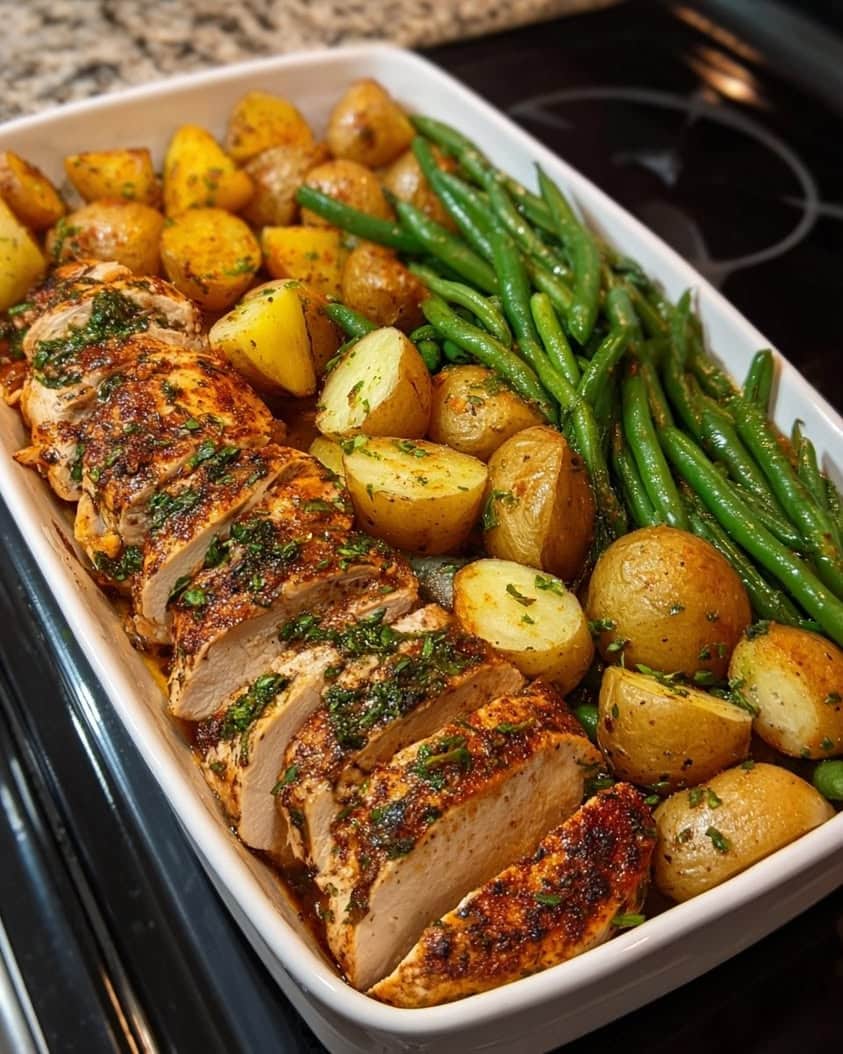
Crispy oven-baked chicken with golden potatoes & tender green beans. An easy, all-in-one-pan dinner the whole family will love! #EasyDinner #SheetPanMeal #FamilyMeal #ChickenRecipes #ComfortFood
Imagine opening your oven to find a complete, beautifully roasted dinner waiting on a single sheet pan. This recipe for crispy oven-baked chicken with golden potatoes and tender green beans delivers exactly that. It is the ultimate solution for busy weeknights when you crave something wholesome and delicious without a mountain of dishes. The magic lies in the simple, harmonious roasting process that transforms basic ingredients into a meal greater than the sum of its parts.
Furthermore, the aroma that fills your kitchen is pure comfort. As the chicken skin crisps and the potatoes turn golden, savory scents of garlic and herbs promise a satisfying meal ahead. This dish is a true crowd-pleaser, appealing to both adults and kids with its familiar, flavorful components. Ultimately, it proves that a healthy, home-cooked dinner does not require hours of complex preparation or specialized skills.
This crispy oven-baked chicken recipe is a masterclass in efficient cooking. By layering ingredients based on their cooking times, everything finishes perfectly together. The result is a plate with contrasting textures and complementary flavors that feel both rustic and refined. It is a reliable formula you will return to again and again, especially on those nights when time is short but standards are high.
Quick Recipe Highlights
- Flavor Profile: This dish features savory, herbaceous notes from rosemary and garlic, balanced by the natural sweetness of roasted potatoes and green beans. The chicken is seasoned with a simple yet powerful blend that creates a deeply satisfying umami crust.
- Texture: You get a fantastic contrast between the incredibly crispy, crackling chicken skin, the creamy-soft interior of the golden potatoes, and the tender-crisp snap of the fresh green beans. Each bite offers a satisfying mix of mouthfeels.
- Aroma: The roasting process releases warm, comforting scents of roasting garlic, fragrant rosemary, and savory chicken fat. It is the kind of aroma that draws everyone to the kitchen, promising a hearty and delicious meal.
- Visual Appeal: The presentation is stunning with golden-brown chicken, crispy potatoes boasting deep caramelized edges, and vibrant green beans. It is a colorful, rustic plate that looks like it came from a professional bistro.
- Skill Level Needed: This is a beginner-friendly recipe requiring only basic knife skills for chopping and the ability to use an oven. The sheet-pan method minimizes active cooking time and technical complexity.
- Special Equipment: You need just one large, rimmed baking sheet (a half-sheet pan is ideal) to ensure everything cooks evenly without overcrowding. Parchment paper or foil is recommended for easier cleanup.
Recipe Overview
- Difficulty Level: We rate this recipe as “Easy” because it involves straightforward techniques like chopping, seasoning, and roasting. There is no fussy searing or complicated sauces. The oven does most of the work, and the single-pan approach eliminates complex timing and multiple cooking vessels.
- Category: This dish fits perfectly into several categories: a hearty main course, a complete one-pan dinner, and a reliable family meal. It is substantial enough for dinner but also works for a weekend lunch. Additionally, it falls under the umbrella of healthy comfort food.
- Cuisine: While not tied to one specific tradition, this recipe draws inspiration from rustic American and European farmhouse cooking. The technique of roasting meat and vegetables together with hardy herbs is a timeless practice found in many culinary cultures focused on simplicity and whole ingredients.
- Cost: This is a very cost-effective meal. Chicken thighs are typically an affordable cut, and potatoes and green beans are inexpensive, especially in season. The herb and seasoning pantry staples make the per-serving cost remarkably low for such a satisfying and protein-rich dinner.
- Season: This recipe shines year-round but is particularly wonderful in fall and winter. The hearty, warming qualities are perfect for cooler weather. Conversely, using fresh summer green beans and herbs can make it a fantastic warm-weather meal when you want to avoid heating the stovetop.
- Occasion: It is ideal for casual weeknight family dinners, effortless weekend entertaining, or meal prep for the week ahead. The simple elegance also makes it suitable for a low-stress dinner party when you want to spend time with guests, not in the kitchen.
Why You’ll Love This Recipe
First and foremost, the taste and texture combination is utterly irresistible. The chicken emerges from the oven with skin so crispy it crackles, while the meat beneath stays incredibly juicy. Simultaneously, the potatoes soak up the flavorful chicken drippings, becoming golden and creamy inside with deliciously crisp edges. The green beans add a fresh, slightly sweet contrast and maintain a perfect tender-crisp bite. Every element complements the others, creating a balanced and deeply satisfying plate that feels both comforting and gourmet.
From a convenience standpoint, this recipe is a true lifesaver. The one-pan method means minimal active cooking and, best of all, just one dish to wash. You simply chop, season, arrange, and let the oven work its magic. This streamlined process makes it possible to get a wholesome dinner on the table even on the most chaotic evenings. Moreover, the hands-off cooking time allows you to set the table, help with homework, or simply relax.
Nutritionally, this meal is a well-rounded powerhouse. Chicken thighs provide high-quality protein and essential nutrients like iron and B vitamins. Potatoes offer complex carbohydrates, fiber, and a significant dose of vitamin C and potassium. Green beans contribute additional fiber, vitamins A, C, and K, and folate. Cooking everything together in one pan with a moderate amount of healthy fat like olive oil means you retain nutrients without needing excessive added oils or butter.
For social and entertaining value, this dish is a winner. It is easy to scale up for a crowd by using multiple sheet pans. The presentation is naturally beautiful and rustic, requiring little last-minute fuss. You can confidently serve it to guests, knowing it is universally appealing and allows you to be present instead of stuck at the stove. It is the kind of meal that sparks conversation about how something so simple can taste so extraordinary.
Finally, the cost-effectiveness and accessibility are major benefits. The ingredients are humble, affordable, and readily available at any grocery store. You likely have most of the seasonings in your pantry already. This recipe demonstrates how to create a restaurant-quality meal on a tight budget, making healthy eating accessible and sustainable for any family. It turns basic staples into a celebratory feast.
Historical Background and Cultural Significance
The concept of roasting meat and vegetables together over a fire is one of humanity’s oldest cooking methods. This recipe for crispy oven-baked chicken with potatoes and green beans is a direct descendant of that ancient practice, updated for the modern kitchen oven. Historically, communities worldwide would cook communal meals in a central hearth or oven, combining available proteins and starches. This method ensured efficient use of fuel and created deeply flavorful, communal food. Our contemporary sheet pan dinner honors that tradition of simplicity and resourcefulness.
Culturally, the combination of chicken, potatoes, and green beans resonates across many regions. In American cuisine, it echoes the classic “meat and potatoes” comfort food tradition, often associated with homey, family-style cooking. In various European countries, similar preparations of roasted poultry with root vegetables and garden greens are Sunday supper staples. This dish, therefore, carries a cross-cultural significance as a symbol of nourishment, family gathering, and the wholesome results of combining land and farm.
The evolution of this recipe is tied directly to kitchen technology. The transition from open-hearth roasting to the enclosed home oven allowed for more controlled, even cooking. The recent popularization of the “sheet pan dinner” as a culinary category reflects modern desires for efficiency, minimal cleanup, and healthy eating. This specific recipe represents an optimization of that trend, carefully timing the addition of quick-cooking green beans to ensure every component is perfectly done. It is a modern solution built on a timeless foundation.
Regional variations of this concept are endless. In Provence, you might find chicken roasted with herbes de Provence, potatoes, and olives. In Germany, it could involve caraway and serve with braised cabbage instead of green beans. The Mediterranean version might use lemon, oregano, and add artichokes. Our version uses the universally loved combination of garlic and rosemary, making it a versatile base. This adaptability is a testament to the formula’s strength, allowing cooks to incorporate local flavors and seasonal produce.
Ingredient Deep Dive
Chicken Thighs (Bone-In, Skin-On): This cut is the star for a reason. Historically, dark meat chicken was often more accessible and valued for its richer flavor and higher fat content, which prevents drying during longer cooking. Culturally, using the whole bird, including thighs, reflects a nose-to-tail ethos of minimizing waste. Nutritionally, thighs provide more iron, zinc, and B vitamins compared to breast meat. The skin is crucial for this recipe as it renders fat to cook the vegetables and becomes delectably crispy. Select thighs that are plump and evenly sized for consistent cooking. Always pat them thoroughly dry with paper towels before seasoning; this is the single most important step for achieving crackling skin.
Yukon Gold Potatoes: These potatoes are the ideal choice for roasting. They were developed in the 1960s in Canada, crossing a North American white potato with a wild South American yellow-fleshed variety. Their naturally buttery flavor and creamy texture make them superior for roasting, as they hold their shape while becoming tender inside. They are a good source of potassium and vitamin C. Choose potatoes that are firm, smooth, and without green spots. There is no need to peel them; the skin adds texture, nutrients, and helps them crisp up. Cutting them into uniform one-inch pieces ensures they cook at the same rate as the chicken.
Fresh Green Beans: Also known as string beans, they have been cultivated for centuries and are a staple in many global cuisines. They add necessary color, freshness, and a different texture to the hearty plate. Nutritionally, they are low in calories but high in fiber, vitamin K, and folate. For this recipe, select fresh, crisp beans that snap when bent. Avoid limp or rubbery ones. Trimming the stem end is the only prep needed. Adding them partway through cooking is the key technique to preserve their vibrant green color and pleasant snap, preventing them from becoming mushy.
Fresh Rosemary & Garlic: Rosemary is a woody, aromatic herb native to the Mediterranean. It has been used since ancient times for both culinary and medicinal purposes. Its piney, robust flavor stands up beautifully to long, high-heat roasting, infusing the chicken fat and oil with its essence. Garlic, with its ancient origins in Central Asia, provides the foundational savory note. Roasting whole cloves alongside the potatoes mellows their sharpness into a sweet, nutty, spreadable paste. Use fresh rosemary, not dried, for the best flavor. Smashing the garlic cloves releases their oils without creating burnt, bitter bits.
Olive Oil, Salt, and Pepper: These are the workhorses that tie everything together. A good quality extra-virgin olive oil not only prevents sticking but also contributes its own fruity, peppery notes. Salt is critical; it seasons each component deeply and draws out moisture to promote browning and crispness. Freshly cracked black pepper adds a subtle heat and complexity. Do not be shy with the salt, especially on the chicken skin and potatoes, as it is essential for developing flavor layers and texture.
Common Mistakes to Avoid
- Not Drying the Chicken Skin: This is the top mistake. Moist skin steams instead of crisps. Always pat chicken thighs thoroughly dry with paper towels before adding oil and seasoning. The result will be a world of difference in texture.
- Overcrowding the Pan: If the pan is too crowded, the ingredients will steam rather than roast. They need space for hot air to circulate. Use a large, rimmed half-sheet pan and ensure the potatoes are in a single layer. If necessary, use two pans.
- Adding the Green Beans Too Early: Green beans cook much faster than chicken and potatoes. Adding them at the beginning will result in burnt, shriveled beans. Always add them during the last 15-20 minutes of cooking to retain color and texture.
- Using Dried Rosemary Instead of Fresh: Dried rosemary becomes tough and woody when roasted. Fresh rosemary sprigs release their oils slowly and infuse the dish with a brighter, more authentic flavor. If you must substitute, use only a tiny amount of dried, crushed finely.
- Neglecting to Season Every Layer: Season the chicken generously. Season the potatoes generously. Even a light seasoning on the green beans makes a difference. Each component needs its own seasoning to build a complete flavor profile.
- Cutting Potatoes Unevenly: Inconsistent potato sizes lead to uneven cooking—some pieces will be burnt while others are undercooked. Take a moment to cut them into uniform one-inch chunks for perfect, simultaneous roasting.
- Not Preheating the Oven: A properly preheated oven is non-negotiable for immediate browning and cooking. Starting in a cold oven will cause the chicken to release too much moisture before the skin can crisp, leading to soggy results.
- Skipping the Final Rest: Pulling the chicken from the oven and serving immediately causes the precious juices to run out on the plate. Let it rest for 5-10 minutes; the residual heat will finish cooking the meat gently, and the juices will redistribute, ensuring maximum juiciness.
Essential Techniques
Patting Chicken Dry: This technique is paramount for crispy skin. Surface moisture creates steam, which is the enemy of browning and crispness. By using paper towels to blot the chicken skin completely dry, you allow the oven’s heat to directly crisp the proteins and fats in the skin. The visual cue for success is skin that looks matte and dry to the touch before you add oil. A common pitfall is rushing this step; take an extra minute to ensure no dampness remains.
Uniform Vegetable Cutting: Consistent sizing ensures even cooking. When potatoes are cut into different sizes, smaller pieces burn before larger ones cook through. The goal is one-inch pieces, which is the ideal size to become creamy inside and golden outside in the recipe’s timeframe. Use a sharp chef’s knife and take care to square off round potatoes for even chunks. This technique applies to all roasted vegetable dishes and is a fundamental skill for reliable results.
Layering Cooking Times (Staggered Addition): This is the core intelligence of any successful sheet pan meal. Dense root vegetables and bone-in meat require a long, hot roast. Quick-cooking vegetables like green beans would turn to mush under the same conditions. By adding the beans halfway through, you respect their individual cooking needs. The technique involves understanding the approximate cook times of different ingredients and planning the recipe sequence accordingly. It transforms a simple bake into a sophisticated, perfectly timed meal.
Pro Tips for Perfect Crispy Oven-Baked Chicken
For the crispiest skin imaginable, season the chicken thighs and leave them uncovered on a rack in the fridge for up to 24 hours before cooking. This dry-brining process draws out surface moisture and seasons the meat deeply.
Ensure your baking sheet is large enough. A standard half-sheet pan (18″x13″) is perfect for four servings. Crowding leads to steaming, so if doubling, definitely use two pans.
Toss the potatoes directly in the chicken fat and oil that’s already on the pan after arranging the chicken. This coats them in incredible flavor and helps them crisp up beautifully.
Use a meat thermometer to guarantee perfectly cooked chicken. Insert it into the thickest part of a thigh, avoiding the bone. Pull the pan at 165°F; carryover cooking will take it to the safe 175°F for dark meat.
For extra-crispy potatoes, give the pan a gentle shake or use a spatula to turn the potatoes once when you add the green beans. This exposes new surfaces to the hot pan.
If your green beans are very thick, you can blanch them in boiling water for 60 seconds before adding to the pan. This ensures they become perfectly tender-crisp alongside the chicken.
After removing the pan from the oven, immediately transfer the chicken to a clean plate or cutting board to rest. This prevents the skin from getting soggy from steam released by the hot vegetables underneath.
Finish the entire dish with a final flourish. A squeeze of fresh lemon juice over everything just before serving brightens all the flavors and adds a wonderful layer of freshness.
Variations and Adaptations
Regional Variations: Give this dish an Italian twist by using lemon slices, oregano, and adding halved cherry tomatoes with the green beans. For a French-inspired version, swap rosemary for herbes de Provence and scatter pitted olives on the pan. A Spanish flair comes from using smoked paprika and chorizo slices tossed with the potatoes.
Seasonal Adaptations: In spring, use asparagus or baby carrots instead of green beans. Summer opens up options like zucchini, bell peppers, or pattypan squash. In fall, swap potatoes for cubed sweet potatoes or squash and use hearty green beans or Brussels sprouts. Winter calls for root vegetables like parsnips, turnips, or carrots alongside the potatoes.
Dietary Modifications: For a lower-carb option, replace potatoes with cauliflower florets or halved Brussels sprouts. To make it dairy-free, ensure your seasoning blend contains no dairy (this recipe is naturally dairy-free). For a Whole30 or paleo version, simply verify your olive oil and seasonings are compliant.
Flavor Variations: Experiment with different global seasoning pastes rubbed under the chicken skin. Try a harissa paste for heat, a miso-ginger glaze for umami, or a jerk seasoning blend for Caribbean vibes. The cooking method remains the same, but the flavor profile transforms completely.
Texture Modifications: If you prefer ultra-crispy “roasted” potatoes, parboil the potato chunks for 5-7 minutes first, drain, and rough them up in the colander to create a fluffy surface. Then toss them in oil and roast. They will become incredibly crunchy on the outside.
Presentation Alternatives: For individual servings, use smaller cast-iron skillets or oven-safe dishes. Arrange one chicken thigh and a portion of vegetables in each before roasting. This creates a stunning personal presentation perfect for dinner parties.
Serving and Presentation Guide
Plating this meal is wonderfully simple due to its natural beauty. For a family-style presentation, bring the entire sheet pan to the table (use a trivet) and let everyone serve themselves—it’s rustic and inviting. For individual plates, place a golden chicken thigh in the center. Artfully arrange a portion of the golden potatoes and vibrant green beans around it, perhaps tucking a few potatoes under the chicken for height. Drizzle any flavorful pan juices collected on the resting plate over the chicken.
Garnishing adds the final touch. A sprinkle of flaky sea salt over the chicken skin enhances crispness. Freshly chopped parsley, chives, or a few extra rosemary leaves add color and a fresh aroma. A lemon wedge on the side is not just garnish; it’s an essential flavor tool for guests to brighten their meal. For a touch of richness, a dollop of garlic aioli or a simple yogurt sauce on the side is excellent.
Traditional accompaniments are minimal because the meal is complete. A simple green salad with a vinaigrette provides a fresh, acidic counterpoint. A crusty loaf of bread is perfect for sopping up the delicious juices. For a more substantial spread, consider a creamy soup as a starter or a light fruit dessert to finish.
Modern serving suggestions might include turning leftovers into a grain bowl the next day. Shred the chicken, chop the vegetables, and serve over quinoa or farro with a drizzle of sauce. Temperature is key: serve everything hot. Warm your serving platter or plates slightly to keep the food at an ideal temperature longer, especially the chicken fat on the potatoes.
Wine and Beverage Pairing
Wine pairings for this dish should complement its savory, herbal, and rustic qualities. A medium-bodied red wine like Pinot Noir or Grenache is fantastic; their bright acidity and red fruit notes cut through the richness without overpowering the chicken. For white wine lovers, an oak-aged Chardonnay has the body and buttery notes to match the potatoes, or a crisp Viognier can highlight the herbal rosemary. Rosé, especially a dry Provençal style, is a surprisingly perfect year-round match, bridging the gap between red and white.
Non-alcoholic alternatives are equally important. A sparkling water with a squeeze of lemon or lime cleanses the palate beautifully. For something more complex, try a chilled herbal iced tea, like rosemary or lemon verbena, which echoes the dish’s herbal notes. A tart cherry juice or a non-alcoholic sparkling cider also provides a nice sweet-tart contrast to the savory flavors.
While not traditional pairings for the meal itself, a post-dinner coffee or tea can be lovely. A medium-roast coffee or an espresso would stand up to the meal’s heartiness. For tea, a smoky Lapsang Souchong or a robust English Breakfast tea would be delightful companions. Serve these beverages hot to provide a warm, comforting end to the meal.
Storage and Shelf Life
Proper storage is key to enjoying leftovers. First, allow the components to cool to room temperature, but do not leave them out for more than two hours. Store the chicken, potatoes, and green beans together in a single airtight container, or separately if you prefer. They will keep in the refrigerator for 3 to 4 days. The chicken skin will lose its crispness in the fridge, but the flavor will remain excellent.
For reheating, the oven or toaster oven is best to restore texture. Reheat at 375°F until warmed through. This will help re-crisp the chicken skin and potatoes. The microwave is a quick option but will make the skin rubbery and the potatoes soft. If using a microwave, place a cup of water in with the food to help prevent it from drying out.
This meal freezes reasonably well with some caveats. Portion it into freezer-safe containers or bags. The chicken and potatoes will freeze best; the green beans may become softer upon thawing. Consume frozen portions within 2-3 months for best quality. Thaw overnight in the refrigerator before reheating in the oven. Signs of spoilage include an off smell, slimy texture on the chicken or vegetables, or any visible mold. When in doubt, throw it out.
Make Ahead Strategies
You can significantly speed up dinner time with smart prep. The day before, pat the chicken thighs dry, season them generously, and place them on a rack on a baking sheet uncovered in the fridge. This dry-brine step seasons the meat deeply and dries the skin for ultimate crispness. You can also wash and cut the potatoes, storing them submerged in cold water in the fridge to prevent browning. Trim the green beans and keep them in a sealed bag.
On cooking day, drain and thoroughly dry the potatoes. Toss them with oil and salt. Now, assembly is a matter of minutes. The quality impact of prepping the chicken ahead is profoundly positive. The vegetables prepped ahead maintain freshness, though the potatoes may lose a tiny bit of starchiness, which can actually help them crisp. For the freshest result, avoid pre-cutting green beans more than a day in advance.
If you want to fully assemble the pan ahead, you can arrange the seasoned chicken and potatoes on the parchment-lined sheet pan, cover tightly with plastic wrap, and refrigerate for up to 8 hours. Do not add the green beans. Pull the pan from the fridge while the oven preheats to take the chill off. Then add the fresh green beans at the appropriate time during roasting. Reheating a fully cooked meal is best done in the oven as described in storage.
Scaling Instructions
This recipe scales beautifully for different group sizes. For halving the recipe to serve two, use two chicken thighs and reduce potatoes and beans proportionally. Use a quarter-sheet pan or a smaller baking dish to maintain proper spacing. Cooking time may reduce slightly, so start checking for doneness at the 35-minute mark.
Doubling or tripling for a crowd is straightforward. Simply multiply all ingredients by your desired factor. The critical adjustment is equipment: you must use multiple sheet pans. Do not overcrowd a single pan. Rotate the pans in the oven (top to bottom, front to back) halfway through cooking to ensure even browning. Cooking time may increase by 5-10 minutes due to the larger volume of food in the oven. Always rely on a meat thermometer for the chicken (165°F) and a fork for the potatoes.
Storage considerations change when scaling up. If preparing a large batch for meal prep, let components cool completely before dividing into single-serving airtight containers. This ensures food safety and makes reheating easier. Label containers with the date. When reheating multiple servings from a large batch, spreading them out on a sheet pan again is more effective than stacking them in a dish.
Nutritional Deep Dive
This meal provides a balanced macronutrient profile. A typical serving offers a substantial amount of high-quality protein from the chicken thighs, essential for muscle repair and satiety. The carbohydrates come primarily from the potatoes and green beans, providing complex carbs and fiber for sustained energy. The fats are a mix of monounsaturated fat from olive oil and saturated fat from the chicken skin, contributing to flavor and helping absorb fat-soluble vitamins from the vegetables.
Micronutrient analysis reveals a wealth of vitamins and minerals. Chicken thighs are an excellent source of B vitamins, particularly B12 and niacin, crucial for energy metabolism. They also provide heme iron, which is easily absorbed. Potatoes are surprisingly rich in vitamin C and potassium, even more so with the skin on. Green beans contribute significant vitamin K for bone health, vitamin C, and folate. Together, these ingredients create a nutrient-dense plate that supports overall health.
From a dietary consideration standpoint, this recipe is naturally gluten-free and dairy-free. It can fit into many eating patterns, including Mediterranean-style diets. For those watching sodium, you can control the amount of added salt. The dish is relatively high in protein and can be part of a balanced diet for weight management when portion control is practiced, as the protein and fiber promote feelings of fullness.
Dietary Adaptations
Gluten-Free: This recipe is naturally gluten-free as written. Always double-check any pre-made seasoning blends for hidden gluten or wheat-based additives. Use single-ingredient spices like pure garlic powder, onion powder, salt, and pepper to be safe.
Dairy-Free: The standard recipe contains no dairy. It uses olive oil for fat, making it suitable for a dairy-free diet. Ensure any store-bought seasoning mixes do not contain milk solids or cheese powders.
Vegan/Vegetarian: For a vegan version, replace chicken thighs with large, firm tofu blocks (pressed and cut), cauliflower steaks, or seasoned chickpeas. Increase the olive oil slightly. Roast the potatoes and your protein choice together from the start, adding green beans later. The cooking time for plant-based proteins may be less, so monitor closely.
Low-Carb/Keto: Substitute the potatoes with low-carb vegetables like cauliflower florets, broccoli, or halved Brussels sprouts. These can roast for the full time. Ensure you use skin-on chicken thighs for the higher fat content, which is desirable on a keto diet. The green beans are acceptable in moderation on many low-carb plans.
Paleo/Whole30: This recipe is nearly compliant. Simply ensure your olive oil is approved (no seed oil blends) and that your salt and pepper contain no anti-caking agents or additives. Omit any non-compliant seasoning blends. It’s a perfect template for these diets.
Low-FODMAP: For a Low-FODMAP adaptation, replace garlic with garlic-infused olive oil (use this to toss the vegetables). Omit the fresh garlic cloves. Use only the green tops of green beans (the ends can be higher in FODMAPs). Potatoes are low-FODMAP in moderate servings. Ensure your seasoning is just salt, pepper, and rosemary.
Troubleshooting Guide
Chicken Skin is Soggy, Not Crispy: The culprit is almost always excess moisture. Next time, dry the skin more thoroughly before cooking. Also, ensure your oven is fully preheated and that you are not overcrowding the pan, which creates steam. For a last-minute fix, you can briefly broil the cooked chicken for 1-2 minutes, watching closely, to crisp the skin before serving.
Potatoes Are Not Golden or Crisp: This usually means they are not in direct contact with the hot pan or are too crowded. Toss them in the fat on the pan so they get coated. Make sure they are in a single layer with space between. If they seem soft at the end, spread them out and broil for 2-3 minutes.
Green Beans Are Mushy or Burnt: You added them too early or too late. Mushy beans were added too early; burnt beans were likely added to a too-hot pan or left too long. Stick to the 15-20 minute window before the end. If your oven runs hot, check them at 12 minutes.
Chicken is Cooked but Vegetables Are Undercooked: Your potato pieces may be too large, or the oven temperature may be off. Use an oven thermometer to verify accuracy. Cut potatoes into uniform one-inch pieces. If this happens, remove the chicken to rest, toss the vegetables in the juices, and return them to the oven for an extra 10-15 minutes.
Dish Lacks Flavor: Underseasoning is the issue. Remember to season every component—chicken, potatoes, and beans—individually and generously. Salt is essential for bringing out the natural flavors. Also, using fresh herbs (not dried) and good quality olive oil makes a significant difference.
Recipe Success Stories
Community feedback on this crispy oven-baked chicken recipe has been overwhelmingly positive. Many home cooks report it has become their “go-to” Sunday dinner or busy Wednesday lifesaver. One reader shared that her picky eater finally ate green beans because they were “cooked with the chicken and tasted like french fries.” Another mentioned doubling the recipe for a potluck, where it was the first dish to disappear, with multiple guests asking for the recipe. These stories highlight its universal appeal and reliability.
Variation successes are fun to hear about. A home cook from Texas added a sprinkle of smoked paprika and said it gave the whole meal a beautiful BBQ-like aroma without the grill. Another used sweet potatoes and apples for a fall twist that became a Thanksgiving side dish staple. A reader following a Mediterranean diet used the formula with fish fillets and zucchini, proving the technique’s versatility. Your adaptations inspire others to make the recipe their own.
Reader suggestions have also improved the recipe over time. One suggested adding a drizzle of balsamic glaze over everything after cooking for a sweet-tart finish—now a recommended tip. Another advised using a wire rack on the sheet pan for the chicken to elevate it, allowing heat to circulate underneath for even crispier skin. We love hearing how you make it work in your kitchen, and these community-driven tips make the recipe even better for everyone.
Frequently Asked Questions
Q: Can I use chicken breasts instead of thighs?
A: You can, but be cautious. Boneless, skinless chicken breasts will cook much faster and dry out more easily. If substituting, reduce the initial cook time before adding the green beans, and consider brining them first. The result will be different, as you’ll lose the crispy skin and rich flavor from the dark meat.
Q: My potatoes are always hard. What am I doing wrong?
A: Hard potatoes typically mean they were cut too large, the oven temperature is too low, or they’re not getting enough direct heat. Ensure they are cut to one-inch pieces, your oven is properly preheated and calibrated, and they are in a single layer on the hot pan, coated in oil.
Q: Can I make this with frozen green beans?
A: It’s not recommended. Frozen green beans release a lot of water as they thaw in the oven, which will steam the other ingredients and prevent browning. They also become mushy very quickly. Fresh green beans are essential for the right texture and cooking time in this recipe.
Q: Do I need to flip the chicken or potatoes during cooking?
A> No, flipping is not necessary for the chicken. The hot air of the oven and the rendered fat will crisp the skin on top. For the potatoes, giving them a single stir or shake when you add the green beans can help them brown more evenly, but it’s not mandatory if they are well-spaced.
Q: How do I know when the chicken is A simple, hearty one-pan meal featuring tender chicken thighs, crispy roasted potatoes, and fresh green beans, all seasoned with herbs and baked to perfection. You can customize the seasonings to taste.
PrintOven-Baked Chicken with Golden Potatoes & Green Beans
Description
Ingredients
For the Crust:
Instructions
1. Prepare the Crust:
Notes

I’m Shaykee—born in Morocco, seasoned across continents. From airplane galleys to home kitchens, I share the flavors and stories that shaped my journey.