
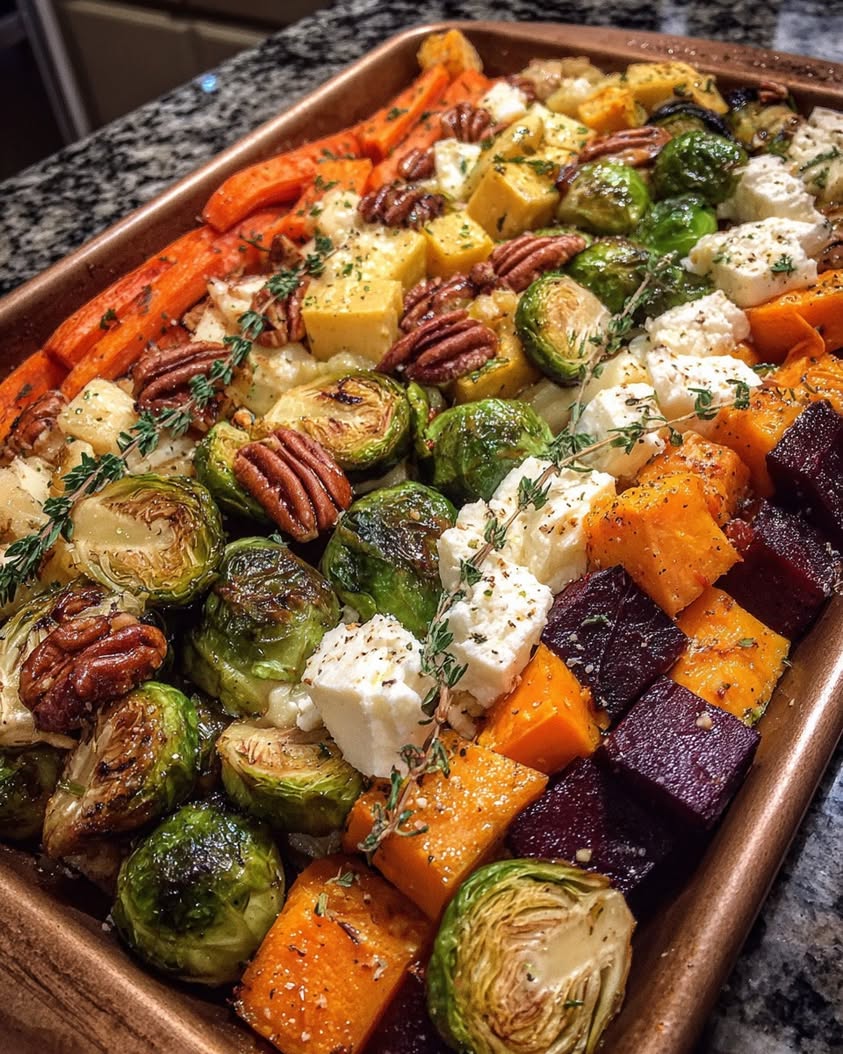
Creamy feta & brie meet sweet roasted roots & pecans in this stunning veggie medley. A vibrant, elegant side dish that’s full of flavor!
This roasted vegetable medley is a true celebration of autumn’s bounty. Imagine sweet potatoes and butternut squash caramelizing in the oven alongside earthy beets and crisp-tender Brussels sprouts. The result is a symphony of textures and flavors that will elevate any meal from ordinary to extraordinary. Furthermore, this dish fills your kitchen with an incredible aroma that promises a delicious dining experience.
What makes this recipe truly special is its elegant simplicity. You combine humble root vegetables with a few key ingredients to create a side dish worthy of a holiday feast. Consequently, even novice cooks can achieve impressive results. The final touch of creamy cheeses and crunchy pecans transforms the roasted vegetables into a luxurious culinary experience.
This vibrant veggie medley brings a stunning pop of color to your table. Deep ruby beets, orange sweet potatoes, and green Brussels sprouts create a visually appealing dish. Additionally, the melted brie and crumbled feta add a beautiful creamy contrast. Ultimately, this recipe proves that healthy food can be both beautiful and indulgent.
Quick Recipe Highlights
- Flavor Profile: This dish offers a perfect balance of sweet and savory notes. The natural sweetness of roasted root vegetables contrasts beautifully with the tangy feta and rich brie. Meanwhile, the toasted pecans add a nutty depth that ties everything together.
- Texture: You experience a wonderful combination of textures in every bite. The vegetables become tender with caramelized edges, while the pecans provide a satisfying crunch. Additionally, the melted brie creates a luxurious creamy element that complements the other components.
- Aroma: As the vegetables roast, your kitchen fills with warm, comforting scents. The sweet aroma of caramelizing roots mingles with the earthy scent of Brussels sprouts. Furthermore, toasting the pecans releases their nutty fragrance, enhancing the overall sensory experience.
- Visual Appeal: This medley is a feast for the eyes with its vibrant color palette. Ruby red beets, orange sweet potatoes, and green Brussels sprouts create a stunning presentation. Consequently, the white feta and golden pecans add the perfect finishing touches.
- Skill Level Needed: This recipe requires basic kitchen skills like chopping and roasting. You need no special techniques or advanced culinary knowledge. Therefore, even beginner cooks can confidently prepare this impressive dish.
- Special Equipment: You only need a good quality baking sheet and a sharp knife. A reliable oven is essential for proper roasting. However, using parchment paper makes cleanup much easier.
Recipe Overview
- Difficulty Level: This recipe is straightforward and accessible for all skill levels. You primarily need basic chopping skills and the ability to monitor roasting times. The steps are simple and clearly defined, making it difficult to make major mistakes. Consequently, even kitchen novices can achieve excellent results.
- Category: This versatile dish fits multiple meal categories beautifully. It works as an elegant side dish for holiday dinners or special occasions. Additionally, it can serve as a satisfying vegetarian main course when paired with grains or legumes.
- Cuisine: While not tied to a specific tradition, this recipe draws inspiration from Mediterranean and American farm-to-table cooking. The use of feta cheese nods to Greek influences, while the combination of roasted roots reflects contemporary American culinary trends. Ultimately, it represents modern fusion cuisine at its best.
- Cost: This recipe uses seasonal vegetables that are typically affordable, especially in autumn. The cheeses and pecans represent the main cost, but they transform the dish dramatically. Therefore, you create an impressive result without breaking your grocery budget.
- Season: Autumn and winter are the perfect seasons for this warm, comforting dish. Root vegetables are at their peak sweetness and availability during these months. Furthermore, the hearty nature of the recipe suits cooler weather perfectly.
- Occasion: This medley shines at holiday gatherings like Thanksgiving and Christmas dinners. It also makes an elegant side for dinner parties or special family meals. Additionally, it works well for meal prep throughout the week.
Why You’ll Love This Recipe
The taste experience of this roasted vegetable medley is truly exceptional. You get layers of flavor that develop beautifully during the roasting process. Sweet potatoes and butternut squash caramelize, creating natural sweetness that balances the earthiness of beets and Brussels sprouts. Meanwhile, the combination of creamy brie and tangy feta adds complexity that keeps your palate interested. Every bite offers a new combination of textures and tastes that never becomes monotonous. The toasted pecans provide the perfect crunchy counterpoint to the tender vegetables and soft cheeses.
Convenience is another major advantage of this recipe. You can prepare the vegetables ahead of time, making final assembly quick and stress-free. The roasting process requires minimal hands-on attention, freeing you to focus on other meal components. Furthermore, the ingredients are readily available at most grocery stores year-round. This makes the dish accessible regardless of your location or shopping preferences. The straightforward preparation means you can create an impressive result without spending hours in the kitchen.
Nutritionally, this veggie medley delivers substantial health benefits. Root vegetables are packed with vitamins, minerals, and dietary fiber. Brussels sprouts provide additional fiber along with vitamin C and vitamin K. The cheeses contribute protein and calcium, while pecans offer healthy fats and antioxidants. Consequently, you enjoy a dish that supports overall wellness while satisfying your taste buds. The combination of complex carbohydrates, healthy fats, and protein makes this a balanced addition to any meal.
For entertaining, this recipe offers tremendous social value. The beautiful presentation immediately impresses guests and stimulates conversation. The dish accommodates various dietary preferences since it’s naturally vegetarian. Additionally, you can easily adapt it for vegan or gluten-free guests with simple modifications. The comforting, familiar flavors appeal to most palates, making it a crowd-pleaser at potlucks and family gatherings. Hosting becomes more enjoyable when you can serve such an elegant dish with minimal last-minute effort.
Cost-effectiveness makes this recipe accessible for regular meal rotation. Root vegetables represent some of the most affordable produce options, especially when purchased in season. The small amounts of cheese and nuts provide big flavor impact without requiring large quantities. Therefore, you create a restaurant-quality dish at a fraction of the cost of dining out. The recipe scales easily for larger groups, making it economical for holiday entertaining. Ultimately, you get maximum flavor and visual appeal from reasonably priced ingredients.
Historical Background and Cultural Significance
Roasting vegetables represents one of humanity’s oldest cooking methods, dating back to prehistoric times. The technique evolved across cultures as people discovered that direct heat transformed tough roots into tender, sweet sustenance. Mediterranean cultures particularly perfected vegetable roasting, often enhancing them with local olive oils and herbs. Meanwhile, Native American cuisine featured similar preparations using indigenous squash, potatoes, and nuts. These parallel developments created a foundation for modern roasted vegetable dishes that combine global influences.
The cultural significance of root vegetables spans continents and centuries. In Europe, Brussels sprouts gained popularity during the 16th century, particularly in Belgium, from which they derive their name. Sweet potatoes have a long history in Central and South America, dating back thousands of years. Butternut squash, a winter squash variety, originated in North America and became a staple in Native American agriculture. Beets have Mediterranean origins and were initially cultivated for their greens rather than their roots. These diverse origins create a beautiful culinary melting pot in a single dish.
The evolution of cheese with vegetables reflects changing culinary trends. Ancient Greeks and Romans frequently combined local cheeses with vegetables and nuts. However, the specific combination of feta and brie with roasted roots represents more modern fusion cooking. Contemporary chefs began experimenting with multiple cheese varieties to create more complex flavor profiles. The addition of toasted nuts draws from Middle Eastern and Mediterranean traditions where nuts commonly garnish savory dishes. This recipe therefore represents a beautiful intersection of historical practices and modern innovation.
Regional variations of roasted vegetable dishes appear worldwide. In Morocco, roasted vegetables might include spices like cumin and coriander with preserved lemons. Italian versions often feature rosemary and garlic with Parmesan cheese. American Southern cooking might incorporate pecans and sweet potatoes with different seasoning profiles. Our recipe borrows elements from these diverse traditions while maintaining its own unique identity. The result honors multiple culinary heritages while creating something distinctly contemporary and accessible.
Ingredient Deep Dive
Brussels sprouts belong to the Gemmifera group of cabbages and have been cultivated since ancient Rome. They gained significant popularity in Brussels, Belgium during the 16th century, hence their name. Nutritionally, they’re powerhouses of vitamin C, vitamin K, and folate, while also providing substantial fiber. Select firm, bright green sprouts with tightly packed leaves, avoiding those with yellowing or loose leaves. Store them unwashed in your refrigerator’s crisper drawer for up to a week. For substitutions, broccoli or cauliflower florets work well, though cooking times may vary slightly.
Sweet potatoes have a rich history originating in Central and South America over 5,000 years ago. They traveled to Europe with Columbus and later became a Southern United States staple. These vibrant tubers deliver exceptional amounts of vitamin A, vitamin C, and manganese, along with complex carbohydrates. Choose firm sweet potatoes with smooth, unblemished skins, avoiding any with soft spots or signs of decay. Store them in a cool, dark place with good air circulation, but not in the refrigerator. As alternatives, regular potatoes or carrots can provide similar texture though with different flavor profiles.
Butternut squash, a winter squash variety, originated in North America and was a crucial Native American food source. Its sweet, nutty flavor and smooth texture make it ideal for roasting. This squash offers significant vitamin A, vitamin C, and potassium while being low in calories. Select squash that feel heavy for their size with hard, matte skin free from soft spots. Store whole squash in a cool, dark place for several months; once cut, refrigerate wrapped tightly in plastic. Acorn squash or pumpkin make suitable substitutes, though their textures and sweetness levels differ.
Carrots have a long culinary history dating back to ancient Persia, initially cultivated for their aromatic leaves and seeds rather than their roots. The orange carrot we know today developed in the Netherlands during the 17th century. They’re famously rich in beta-carotene, which converts to vitamin A, along with fiber and vitamin K. Look for firm, smooth carrots with bright color, avoiding those that are limp or cracked. Remove green tops before storing in plastic bags in your refrigerator’s crisper drawer. Parsnips make an excellent substitution, offering a similar texture with a slightly sweeter, nuttier flavor.
Beets have been consumed since ancient times, originally growing wild in North Africa and the Mediterranean region. The Romans were among the first to cultivate beets for their roots rather than just their greens. These vibrant roots provide folate, manganese, and potassium, along with unique antioxidants called betalains. Choose small to medium beets with smooth, firm skins and vibrant greens still attached if possible. Store beets unwashed in plastic bags in the refrigerator, separating the greens if present. Golden beets offer a similar flavor without the intense color, while turnips provide a different but complementary earthiness.
Common Mistakes to Avoid
- Overcrowding the baking sheet prevents proper browning and creates steamed rather than roasted vegetables. Always use a large enough pan and spread vegetables in a single layer. This ensures even cooking and the development of those desirable caramelized edges.
- Neglecting to dry vegetables thoroughly after washing leads to steaming instead of roasting. Use a clean kitchen towel or salad spinner to remove excess moisture. Proper drying is crucial for achieving crispy, caramelized results rather than soggy vegetables.
- Cutting vegetables unevenly causes some pieces to burn while others remain undercooked. Aim for uniform sizes, approximately 1-inch pieces, for consistent roasting. Taking time with prep work pays off with perfectly cooked vegetables throughout.
- Adding cheese too early results in burned or overly melted cheese that loses its texture. Always add delicate ingredients like cheese and nuts after removing vegetables from the oven. The residual heat will warm them perfectly without compromising their qualities.
- Using old or stale nuts diminishes their flavor impact and textural contribution. Always taste nuts before using and purchase from sources with high turnover. Toasting fresh nuts just before serving maximizes their flavor and crunch.
- Underseasoning vegetables before roasting misses a crucial flavor development opportunity. Season generously with salt and pepper before roasting to enhance natural flavors. Remember that larger vegetable pieces require more seasoning than you might expect.
- Roasting at too low a temperature prevents proper caramelization and browning. Maintain an oven temperature of 400°F to achieve the perfect balance of tender interiors and crispy edges. Use an oven thermometer to verify your oven’s accuracy.
- Skipping the resting time after roasting misses an important flavor development step. Let vegetables rest for 5-10 minutes after removing from oven before adding cheese and nuts. This allows flavors to meld and temperatures to equalize.
Essential Techniques
Proper vegetable cutting represents the foundation of successful roasting. Uniform pieces ensure even cooking, preventing some vegetables from burning while others remain hard. Use a sharp chef’s knife and aim for consistent 1-inch cubes or halves, depending on the vegetable. For Brussels sprouts, cutting them in half creates more surface area for browning while ensuring the cores cook through. With harder vegetables like sweet potatoes and squash, apply steady pressure and keep fingers curled under for safety. Mastering this technique transforms your roasting results immediately.
Seasoning distribution requires more attention than simply sprinkling salt and pepper. Place cut vegetables in a large bowl where you have room to toss them thoroughly with oil and seasonings. This method ensures every piece receives equal coating, leading to consistent flavor and browning. Use your hands to mix, as this provides the most effective coverage. The oil should lightly coat each piece without pooling at the bottom of the bowl. Proper seasoning at this stage enhances natural flavors rather than masking them.
Roasting temperature management is crucial for perfect vegetable texture. A hot oven around 400°F creates the ideal environment for caramelization while cooking vegetables through. The high heat causes natural sugars to caramelize, creating complex flavors and appealing color. However, monitor your oven’s performance, as some models run hot or cold. Rotate the baking sheet halfway through cooking if your oven has hot spots. The vegetables should be tender when pierced with a fork and beautifully browned at the edges.
Timing delicate additions like cheese and nuts separates good results from exceptional ones. Add these components after removing vegetables from the oven, using residual heat to warm them gently. This preserves the nuts’ crunch and prevents the cheeses from becoming greasy or separating. For brie, tear it into small pieces that will soften beautifully without completely melting away. With feta, crumble it evenly across the surface so each serving receives its tangy accent. This technique maximizes textural contrast and visual appeal.
Pro Tips for Perfect Roasted Vegetable Medley
Preheat your baking sheet in the oven before adding vegetables for instant sizzle and better browning. This technique jumpstarts the cooking process and prevents sticking. Furthermore, it creates those desirable crispy edges that make roasted vegetables so irresistible.
Toss vegetables with oil and seasonings in a large bowl rather than on the baking sheet. This ensures even coating and prevents uneven seasoning. Additionally, the bowl method is cleaner and more efficient than trying to season directly on the pan.
Arrange vegetables in a single layer with space between pieces for optimal air circulation. Overcrowding creates steam, which prevents proper browning and crisping. Consequently, using two baking sheets is better than cramming everything onto one.
Rotate your baking sheet halfway through the cooking time for even browning. Most ovens have hot spots that can cause uneven cooking. This simple step ensures all vegetables cook uniformly regardless of their position in the oven.
Let roasted vegetables rest for 5-10 minutes before adding cheese and nuts. This allows flavors to meld and temperatures to stabilize. Meanwhile, the vegetables continue to soften slightly from residual heat.
Toast pecans separately in a dry skillet for maximum flavor development. Watch them carefully, as nuts can burn quickly. The toasting process releases their natural oils and enhances their nutty character dramatically.
Combine different cheese textures for more interest in every bite. The creamy brie and crumbly feta create complementary experiences. This combination provides both richness and tanginess that elevates the entire dish.
Add fresh herbs like thyme or rosemary halfway through roasting for optimal flavor. Adding them too early can cause burning, while adding at the end doesn’t allow their flavors to meld properly. This timing provides the perfect balance of fresh herb flavor without bitterness.
Variations and Adaptations
Regional variations allow you to customize this medley to different culinary traditions. For a Mediterranean twist, add kalamata olives, artichoke hearts, and oregano with a lemon-olive oil drizzle. Southwestern style incorporates chili powder, cumin, and lime juice with cotija cheese instead of feta. Asian-inspired versions might include ginger, garlic, and sesame oil with a sprinkle of sesame seeds. European variations could feature rosemary and garlic with Parmesan cheese. Each adaptation maintains the core roasting technique while introducing new flavor profiles that keep the dish exciting.
Seasonal adaptations make this recipe work year-round with available produce. Spring versions might feature asparagus, new potatoes, and spring onions with fresh herbs. Summer adaptations could include zucchini, eggplant, and bell peppers with basil and tomatoes. Autumn remains perfect for the original root vegetable combination. Winter variations might incorporate parsnips, turnips, and different squash varieties. Using seasonal vegetables ensures peak flavor and optimal texture while supporting local agriculture when possible.
Dietary modifications accommodate various eating preferences and restrictions. Vegan versions omit cheese and use nutritional yeast or vegan feta alternatives with extra nuts. For dairy-free, increase toasted nuts and add a drizzle of flavored oil instead of cheese. Lower-carb adaptations focus on non-starchy vegetables like Brussels sprouts, broccoli, and cauliflower. Paleo versions use ghee or avocado oil and omit dairy, focusing on herbs and spices for flavor. Each modification maintains the dish’s essential character while meeting specific dietary needs.
Flavor variations can dramatically change the profile without altering the basic method. Spicy versions incorporate red pepper flakes, chipotle powder, or harissa paste for heat. Herb-focused variations might use different combinations like rosemary-thyme or dill-parsley. Umami-rich versions could include mushrooms or a sprinkle of Parmesan cheese. Sweet variations might incorporate maple syrup or honey glaze with warm spices like cinnamon or nutmeg. Savory versions could feature garlic, onion powder, and smoked paprika. These simple adjustments create entirely different experiences from the same basic technique.
Serving and Presentation Guide
Plating techniques significantly impact the visual appeal of your roasted vegetable medley. For family-style serving, use a large, shallow platter rather than a deep bowl to showcase the beautiful colors. Arrange the vegetables with intention, creating small groupings of different colors rather than mixing everything uniformly. Place the creamy brie pieces strategically where they’ll be visible, and sprinkle feta and pecans across the top. This approach creates visual interest and makes the dish look professionally prepared.
Garnishing adds the final touches that elevate the presentation from good to exceptional. Fresh herb sprigs like rosemary or thyme provide color contrast and fragrance. A drizzle of high-quality olive oil or balsamic glaze adds shine and sophistication. For special occasions, edible flowers like nasturtiums or pansies create a stunning visual impact. Microgreens or fresh parsley leaves scattered over the top provide fresh color and texture. These simple additions require minimal effort but dramatically enhance the overall appearance.
Traditional accompaniments complement the flavors and create a balanced meal. This medley pairs beautifully with roasted meats like chicken, turkey, or pork. For vegetarian meals, serve alongside grains like quinoa, farro, or wild rice. Hearty salads with bitter greens like arugula or radicchio provide a refreshing contrast. Creamy soups, particularly butternut squash or potato leek, create a cohesive menu. Consider the overall meal composition to ensure flavors and textures work harmoniously together.
Modern serving suggestions adapt this classic dish to contemporary dining trends. For appetizer portions, serve small amounts in individual ramekins or on toast points. As a brunch item, top with a fried egg for added protein and richness. In grain bowls, use the medley as a flavorful component alongside greens and dressing. For holiday buffets, present in a beautiful baking dish that keeps the vegetables warm. These approaches make the recipe versatile for different dining situations and preferences.
Wine and Beverage Pairing
Wine pairings should complement both the sweet roasted vegetables and the creamy cheeses. A crisp, acidic Sauvignon Blanc cuts through the richness while highlighting the vegetal notes. For red wine lovers, a light Pinot Noir with its cherry notes and earthiness complements without overwhelming. Rosé offers versatility with its fruit notes and refreshing acidity that cleanses the palate. For special occasions, Champagne or sparkling wine provides effervescence that contrasts beautifully with the dish’s richness. Always consider the main protein when selecting wine for a complete meal pairing.
Non-alcoholic alternatives provide sophisticated options for all guests. Sparkling water with a twist of lemon or lime cleanses the palate between bites. Herbal teas like peppermint or chamomile offer calming complements to the hearty vegetables. Fruit-infused waters with cucumber, citrus, or berries provide refreshment without sweetness. For cooler weather, warm apple cider with cinnamon sticks enhances the autumn flavors in the dish. These options ensure every guest enjoys thoughtful beverage pairing regardless of their alcohol preferences.
Coffee and tea pairings work surprisingly well with this savory vegetable dish. Light roast coffee with its bright acidity complements the caramelized vegetables without bitterness. Earl Grey tea’s bergamot notes provide an interesting contrast to the earthy vegetable flavors. Chai tea’s warm spices echo any cinnamon or nutmeg used in seasoning. For after-dinner serving, a decaf espresso provides richness that stands up to the robust flavors. These pairings are particularly relevant for brunch or lunch servings of the medley.
Temperature considerations ensure beverages enhance rather than compete with the dish. Chilled white wines and sparkling options should be properly chilled but not ice-cold to preserve flavor. Red wines should be slightly cooler than room temperature for optimal enjoyment. Non-alcoholic beverages should match the temperature profile of their alcoholic counterparts for consistency. Iced beverages work better for outdoor or warm-weather dining, while warm options suit cozy indoor meals. Proper temperature management maximizes the harmony between food and drink.
Storage and Shelf Life
Storage methods significantly impact how well your roasted vegetable medley maintains quality. Always cool completely before storing to prevent condensation that creates sogginess. Use airtight containers to protect against refrigerator odors and moisture loss. For best results, store the vegetable base separately from cheese and nuts if possible. This approach preserves the individual textures better than storing everything mixed together. Proper storage extends enjoyment of your culinary efforts while maintaining food safety.
Temperature requirements are crucial for food safety and quality preservation. Refrigerate leftovers within two hours of cooking to prevent bacterial growth. The ideal refrigerator temperature is 40°F or below for optimal food safety. For longer storage, freezing works for the vegetable base without cheese or nuts. Never leave the dish at room temperature for extended periods, especially when containing dairy products. Following these guidelines ensures your delicious creation remains safe to eat.
Container recommendations can make a noticeable difference in how well the medley keeps. Glass containers with tight-fitting lids prevent odor transfer and allow easy visibility of contents. For freezing, use heavy-duty freezer bags with all air pressed out to prevent freezer burn. If storing components separately, use smaller containers for cheeses and nuts to maintain their textures. Avoid storing in metal containers, as they can react with the acidic components in the vegetables. The right containers simplify storage while preserving quality.
Signs of spoilage are important to recognize for food safety. Discard any vegetables that develop an off odor, particularly a sour or rotten smell. Visible mold, especially on cheese components, means the entire dish should be discarded. Significant texture changes like excessive mushiness or slipperiness indicate spoilage. When in doubt, follow the basic food safety rule: when uncertain, throw it out. Recognizing these signs prevents foodborne illness while ensuring you only consume fresh, high-quality food.
Make Ahead Strategies
Prep timeline planning transforms this dish from stressful to manageable for entertaining. Two days ahead, wash and thoroughly dry vegetables, then store in separate airtight containers. One day before, chop all vegetables and store them in sealed bags or containers with paper towels to absorb moisture. On the day of serving, simply toss with oil and seasonings before roasting. This approach distributes the work while ensuring fresh-tasting results. The final assembly then becomes quick and stress-free.
Storage between steps maintains ingredient quality when preparing components in advance. Keep chopped root vegetables submersed in water to prevent oxidation, then drain and pat dry before using. Store Brussels sprouts whole until ready to use, as pre-cutting causes them to develop stronger flavors. Nuts can be toasted up to three days ahead and stored at room temperature in airtight containers. Cheeses should remain refrigerated in their original packaging until ready to use. Proper interim storage preserves the qualities of each component.
Quality impact assessment helps determine which steps work best in advance. Vegetables maintain excellent quality when chopped a day ahead if stored properly. Roasted vegetables can be prepared several hours ahead and reheated briefly before serving. Toasted nuts retain their crunch for several days when stored correctly. Cheeses should always be added fresh just before serving for optimal texture and appearance. Understanding these timelines ensures every component tastes its best when served.
Scaling Instructions
Halving the recipe works beautifully for smaller households or fewer guests. Use a standard baking sheet rather than reducing pan size to maintain proper air circulation. Reduce oven temperature slightly to 375°F to account for the smaller quantity cooking faster. Check for doneness 5-10 minutes earlier than the original recipe suggests. Seasoning measurements should be precisely halved to maintain the proper flavor balance. This approach ensures the smaller batch achieves the same quality as the full recipe.
Doubling or tripling requires adjustments for consistent results. Use multiple baking sheets rather than overcrowding a single pan, rotating them halfway through cooking. Increase oven temperature to 425°F to compensate for the larger volume lowering the oven temperature. Extend cooking time in 5-minute increments, checking frequently after the original time elapses. Seasoning may need slight adjustment beyond simple doubling—taste before roasting and adjust accordingly. These modifications ensure large batches cook evenly and develop proper caramelization.
Equipment adjustments become necessary when significantly scaling the recipe. For doubled batches, use two baking sheets of the same size for even cooking. Consider using convection oven settings if available, as the circulating air promotes even browning. For very large quantities, roast in sequential batches rather than overcrowding multiple pans simultaneously. Have additional mixing bowls prepared for properly coating vegetables with oil and seasonings. Proper equipment planning prevents compromises in quality when cooking for crowds.
Nutritional Deep Dive
Macro breakdown reveals this dish’s balanced nutritional profile. Complex carbohydrates from the root vegetables provide sustained energy release and dietary fiber. Healthy fats come from the olive oil, nuts, and cheeses, supporting nutrient absorption and satiety. Moderate protein content derives primarily from the cheeses, with additional plant-based protein from the vegetables and nuts. The combination creates a satisfying dish that provides energy without blood sugar spikes. This macro balance makes the medley suitable as either a substantial side or light main dish.
Micronutrient analysis shows exceptional vitamin and mineral density. Vitamin A appears abundantly from the orange vegetables, supporting vision and immune function. Vitamin C from Brussels sprouts and other vegetables acts as an antioxidant and supports collagen production. Vitamin K, particularly from the Brussels sprouts and leafy green components, aids blood clotting and bone health. Potassium from multiple vegetables helps regulate blood pressure and fluid balance. This diverse micronutrient profile contributes significantly to daily nutritional requirements.
Health benefits extend beyond basic nutrition to functional wellness support. The high fiber content promotes digestive health and helps maintain healthy cholesterol levels. Antioxidants from the colorful vegetables combat oxidative stress and inflammation. The combination of nutrients supports cardiovascular health through multiple mechanisms. The low glycemic impact of the fiber-rich vegetables helps maintain stable blood sugar levels. Regular consumption of such nutrient-dense dishes contributes to long-term health maintenance and disease prevention.
Dietary Adaptations
Gluten-free adaptation requires no changes, as the recipe naturally contains no gluten-containing ingredients. However, always verify that all packaged components like cheeses are processed in gluten-free facilities if cross-contamination is a concern. For added assurance, use certified gluten-free oats if incorporating any crumb toppings. This recipe easily accommodates gluten-free needs without compromising flavor or texture.
Dairy-free modification involves replacing the cheese components while maintaining richness and flavor. Nutritional yeast provides a cheesy flavor without dairy, while vegan cheese alternatives offer similar melting properties. Toasted sunflower seeds or pepitas can replace nuts for those with tree nut allergies. Increase herbs and spices slightly to compensate for flavor complexity lost without cheese. These substitutions create an equally satisfying dish for those avoiding dairy.
Vegan adaptation builds on dairy-free modifications while ensuring no animal products are used. Replace honey with maple syrup if sweetening is desired. Use vegan butter alternatives or additional olive oil for roasting. Consider adding marinated tofu cubes or chickpeas for additional protein if serving as a main dish. These simple changes transform the recipe while maintaining its essential character and appeal.
Troubleshooting Guide
Texture issues commonly involve vegetables that are either too hard or too soft. For undercooked vegetables, return to the oven in 5-minute increments until tender. If vegetables become too soft, they’ve likely been overcooked—use them in soups or purees instead. Soggy textures usually result from overcrowding the pan or insufficient oven temperature. For future attempts, ensure proper spacing and verify oven temperature with a thermometer. Understanding these corrections helps salvage situations and improve future results.
Flavor balance problems might include blandness or excessive sweetness. For bland vegetables, season with flaky salt and a squeeze of lemon juice after roasting to brighten flavors. If vegetables taste too sweet, add something acidic like vinegar or something bitter like additional greens. Overly earthy flavors can be balanced with a touch of sweetness like a drizzle of maple syrup. These adjustments can be made after cooking to fine-tune the final result.
Equipment challenges might include inadequate baking sheets or oven hot spots. If your baking sheet is too small, roast in batches rather than overcrowding. For oven hot spots, rotate the pan more frequently during cooking. If vegetables stick despite oiling, use parchment paper for foolproof non-stick performance. Understanding how to work with your specific equipment ensures consistent results regardless of kitchen limitations.
Recipe Success Stories
Community feedback consistently highlights this recipe’s versatility and crowd-pleasing appeal. Home cooks report successfully serving it at everything from casual family dinners to formal holiday gatherings. Many appreciate how the dish accommodates various dietary needs without requiring separate preparations. The beautiful presentation consistently receives compliments, with several readers mentioning it became the centerpiece of their holiday table. These real-world experiences confirm the recipe’s reliability across different cooking skill levels and occasions.
Variation successes demonstrate the recipe’s adaptability to different tastes and ingredient availability. One cook substituted delicata squash for butternut with excellent results, appreciating the easier preparation. Another used walnuts instead of pecans when that’s what they had available, creating a equally delicious version. Several vegetarian families have added chickpeas to make it a complete meal, reporting great satisfaction. These adaptations show how the recipe serves as a template rather than a rigid formula, encouraging culinary creativity.
Frequently Asked Questions
Can I use frozen vegetables instead of fresh? While fresh vegetables yield the best texture and flavor, frozen can work in a pinch. Thaw completely and pat dry thoroughly to remove excess moisture. Expect slightly softer results with less caramelization, but the dish will still be delicious.
How do I prevent the vegetables from getting soggy? Ensure vegetables are completely dry before roasting and don’t overcrowd the pan. Use a hot oven and avoid stirring too frequently during cooking. These steps promote evaporation and caramelization rather than steaming.
Can I make this recipe ahead of time? You can prep vegetables up to two days in advance, but roast them close to serving time for best texture. If necessary, reheat roasted vegetables briefly in a hot oven before adding cheese and nuts.
What can I substitute for brie if I don’t like it? Camembert offers a similar creamy texture, while goat cheese provides tanginess without the rind. For a firmer option, fresh mozzarella pearls work beautifully, though they won’t melt as dramatically.
How do I know when the vegetables are properly roasted? The vegetables should be tender when pierced with a fork and have caramelized edges. They should show some browning but not be blackened. Properly roasted vegetables will have intensified sweetness and developed complex flavors.
Can I add other vegetables to this medley? Absolutely—this recipe welcomes customization. Consider parsnips, turnips, cauliflower, or red onions. Adjust cutting sizes accordingly and be mindful that different vegetables may require adjusted cooking times.
Is this dish suitable for potlucks? It travels beautifully for potlucks. Transport the roasted vegetables separately from cheeses and nuts, then combine just before serving. Alternatively, bring it fully assembled and keep it warm in a slow cooker.
How can I make this recipe more kid-friendly? Cut vegetables into smaller, uniform pieces and consider omitting stronger flavors like beets initially. A light drizzle of maple syrup or honey can enhance natural sweetness that appeals to young palates.
What’s the best way to reheat leftovers? Use an oven or toaster oven at 350°F until warmed through. The microwave will make vegetables soft, so oven reheating is preferred. Add fresh cheese and nuts after reheating for best texture.
Can I roast the vegetables at a lower temperature for longer? While possible, lower temperatures won’t create the same caramelization. If you must use lower heat, increase roasting time significantly and consider finishing under the broiler for color.
Additional Resources
Related recipes that complement this roasted vegetable medley include grain dishes like wild rice pilaf or quinoa with herbs. Protein options like herb-roasted chicken or maple-glazed salmon make excellent main courses. For starters, consider a simple
Print
Oven-Roasted Brussels Sprouts, Sweet Potato, Butternut Squash, Carrot & Beet Medley with Feta, Brie, Toasted Pecans & Honey
Description
A colorful and flavorful roasted vegetable medley featuring Brussels sprouts, sweet potato, butternut squash, carrots, and beets, topped with creamy feta, melted brie, toasted pecans, and a drizzle of honey for a perfect balance of savory and sweet.
Ingredients
For the Crust:
- 1 lb Brussels sprouts, trimmed and halved
- 1 large sweet potato, peeled and cubed
- 1 small butternut squash, peeled and cubed
- 2 large carrots, peeled and sliced
- 2 medium beets, peeled and cubed
- 3 tbsp olive oil
- 1 tsp garlic powder
- 1 tsp dried thyme
- Salt and black pepper to taste
- 1/2 cup crumbled feta cheese
- 4 oz brie cheese, sliced
- 1/2 cup pecans, toasted
- 2 tbsp honey
Instructions
1. Prepare the Crust:
- Preheat oven to 400°F (200°C). Line a large baking sheet with parchment paper.
- In a large bowl, toss Brussels sprouts, sweet potato, butternut squash, carrots, and beets with olive oil, garlic powder, thyme, salt, and pepper until evenly coated.
- Spread vegetables in a single layer on the prepared baking sheet. Roast for 25-30 minutes, or until tender and lightly browned, stirring halfway through.
- Remove from oven and top with crumbled feta and sliced brie. Return to oven for 3-5 minutes, until brie is slightly melted.
- Sprinkle with toasted pecans and drizzle with honey before serving.
Notes
You can customize the seasonings to taste.

I’m Shaykee—born in Morocco, seasoned across continents. From airplane galleys to home kitchens, I share the flavors and stories that shaped my journey.